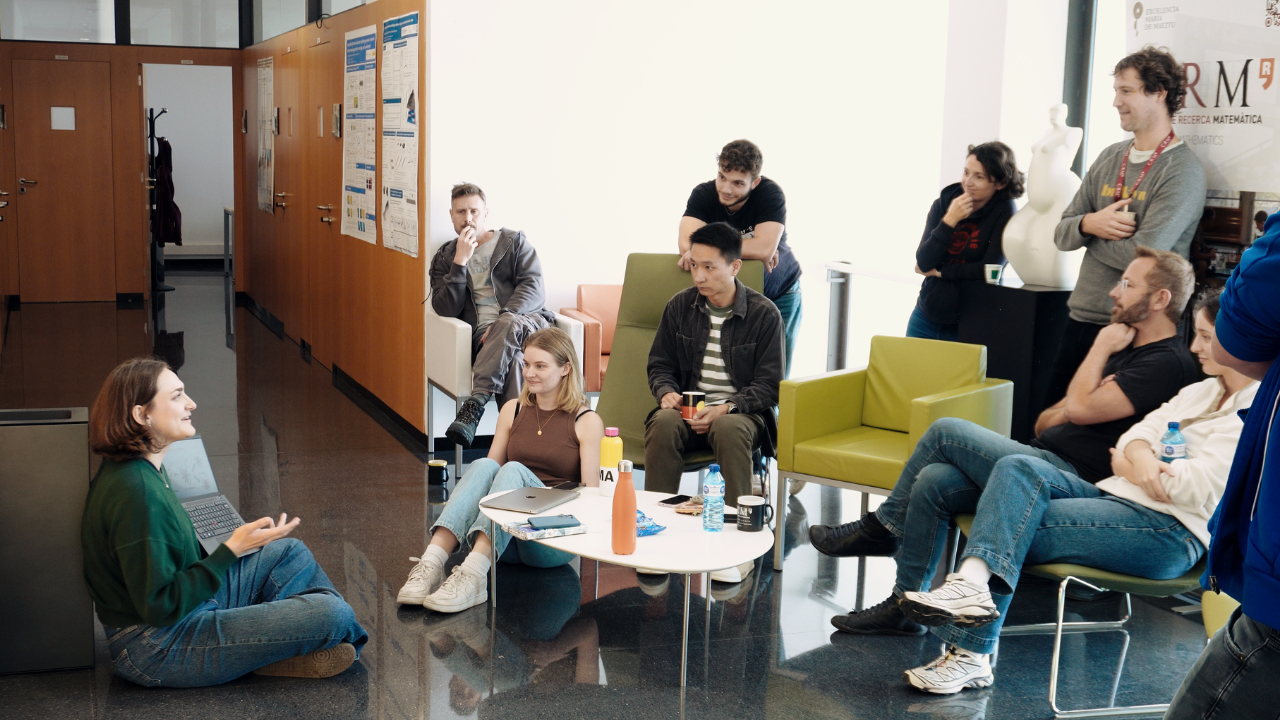
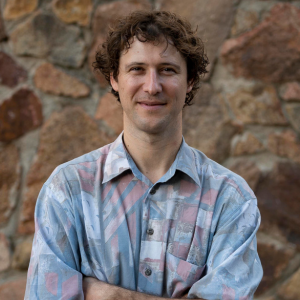
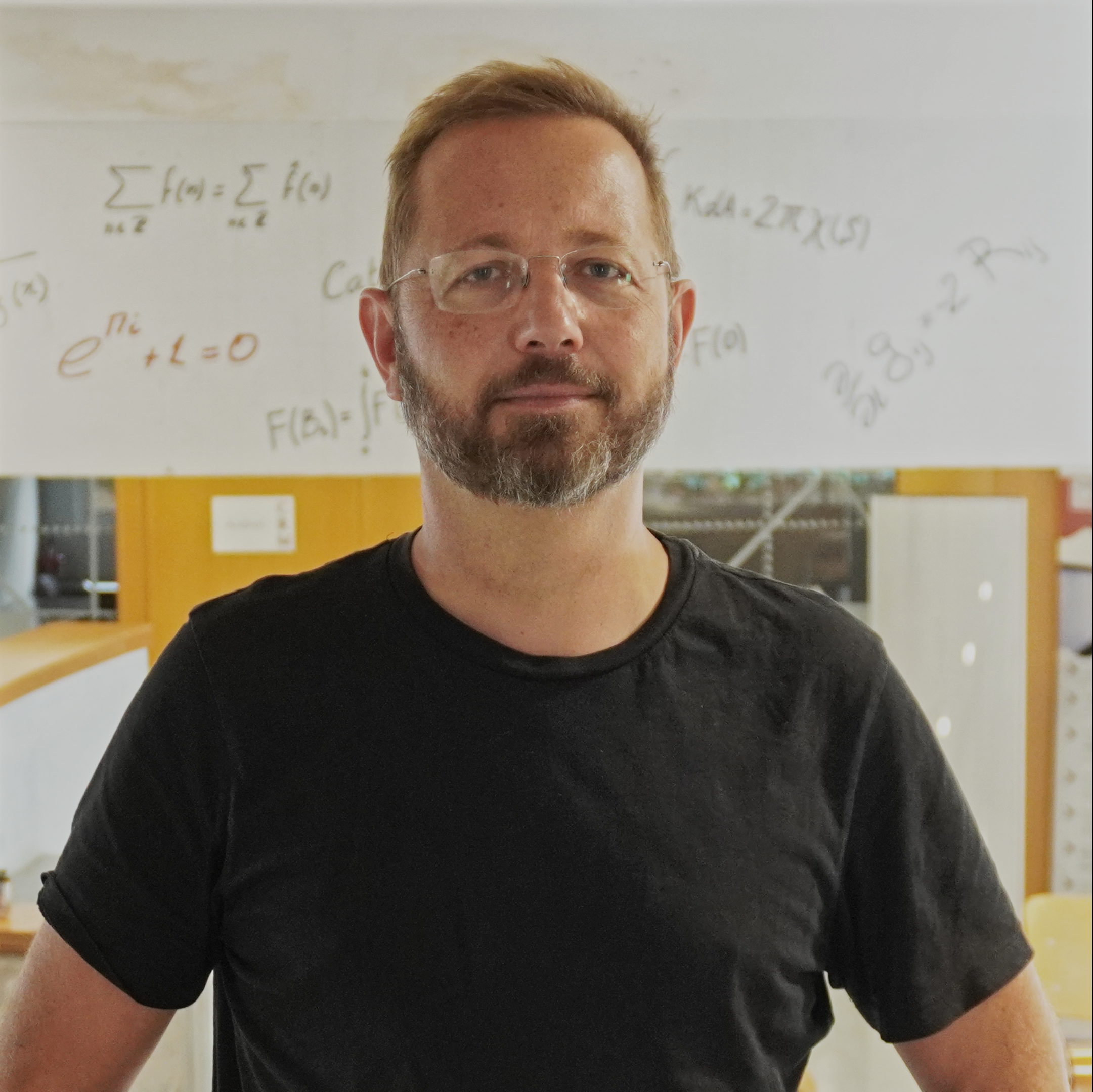
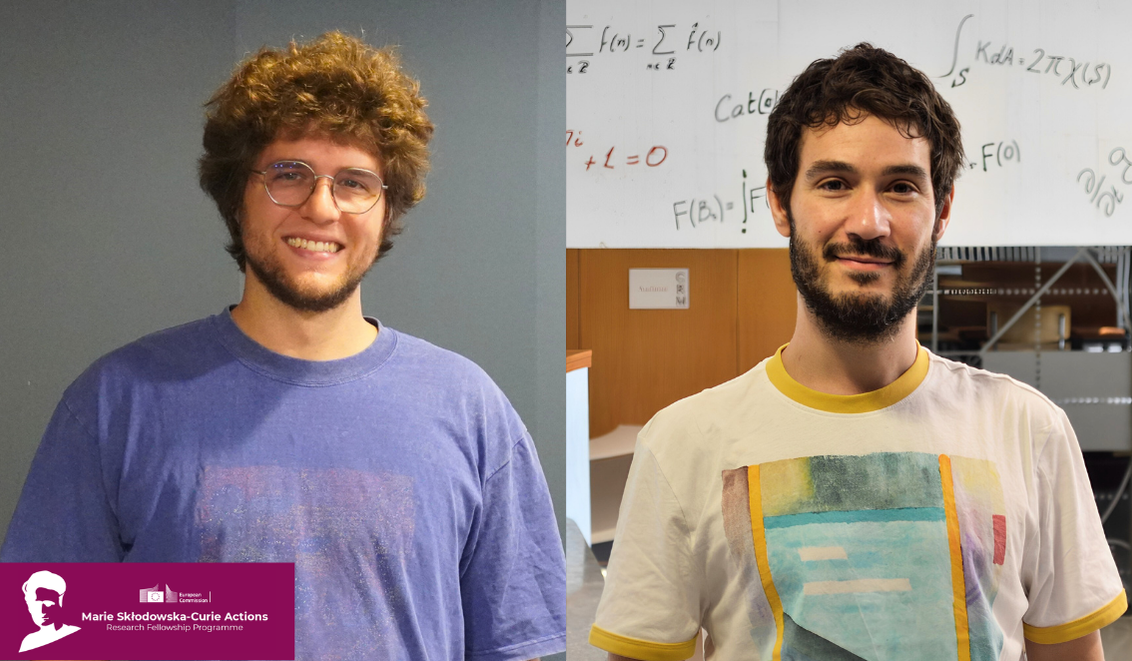
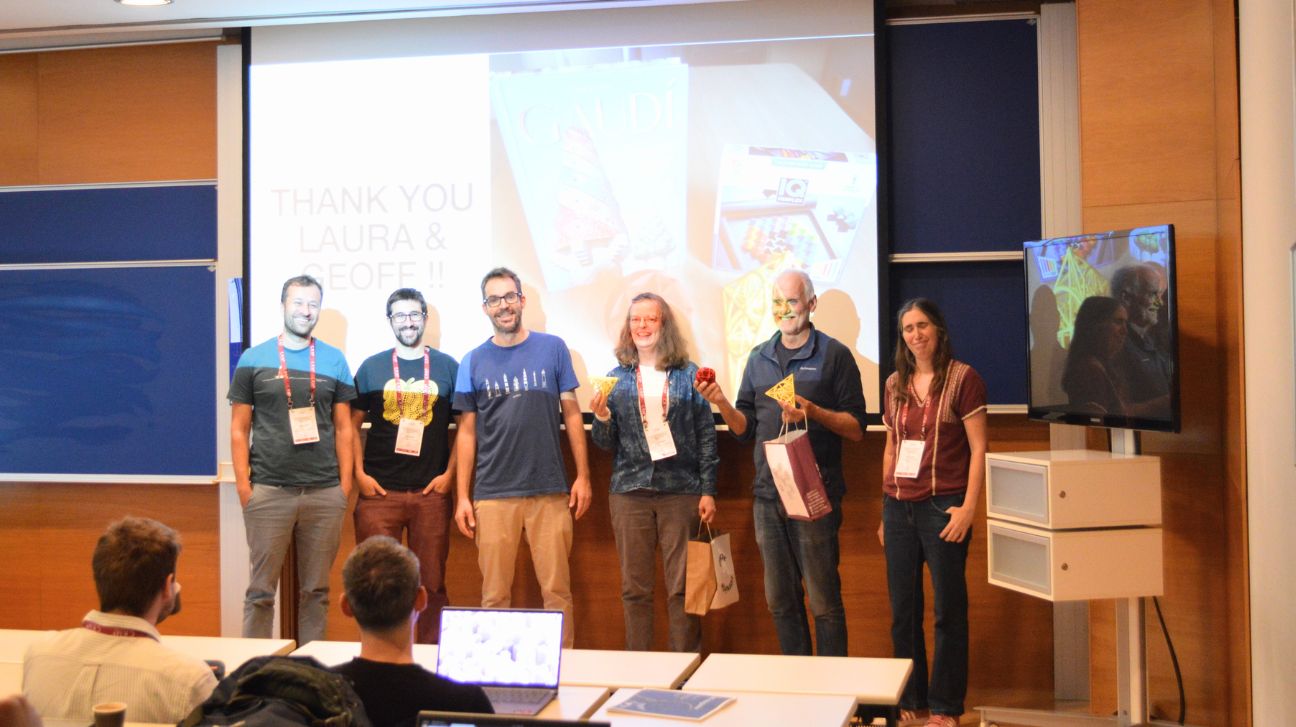
Josefine Meyer studies attention-like processes in Drosophila (fruit flies) at the Institute of Science and Technology Austria (ISTA). Cate MacColl investigates decision-making and metacognition in children at the University of Queensland. Their research subjects and methods differ, yet both faced similar computational challenges: how to model behavior when data is limited or unconventional. In October 2025, both researchers spent a month at the Centre de Recerca Matemàtica in Barcelona, working with Klaus Wimmer and Alexandre Hyafil from the Computational and Mathematical Neuroscience group. They first met at BAMB! (Barcelona Summer School for Advanced Modeling of Behavior) in July, where Wimmer and Hyafil serve as course directors.
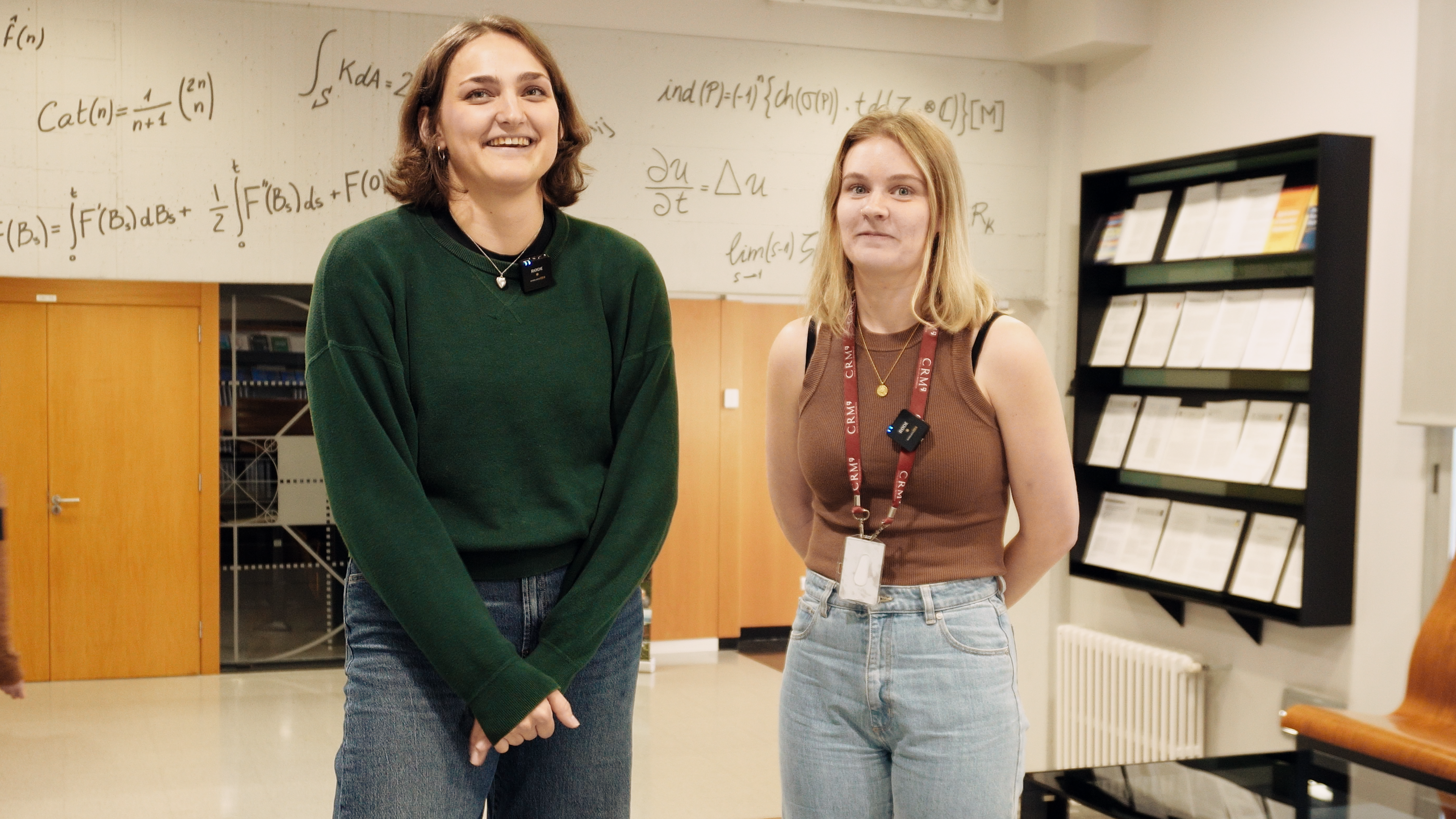
Josefine’s PhD project focuses on tracking behaviors in fruit flies. “I’m looking at object-oriented tracking in Drosophila and how it works behaviorally, but also later in the brain,” she explains. Specifically, she investigates how male flies track females during courtship and what internal states drive this behavior. Cate’s work examines how children make decisions and reflect on those choices. The challenges are particular to developmental research. “There are a lot of constraints on the data that we have. It’s really difficult to get a kid to sit through a couple of trials,” she explains. Traditional computational approaches common in neuroscience labs often do not transfer easily to this context.
The month-long visit at the Centre de Recerca Matemàtica transformed initial summer school discussions into sustained work. “During my stay at the CRM, Alex, Klaus, and I were only working on purely behavioral data,” Josefine explains. “We were looking at how the male fly tracks the female fly, and we were trying to infer internal states of the male during this tracking behavior.” Cate divided her time between adjusting behavioral models to fit her existing data and theoretical discussions for future projects. As a late-stage PhD student, she also explored postdoctoral options, visiting labs in Paris and continuing conversations with senior researchers she met at BAMB!.
BAMB!’s Approach to Behavioral Modeling
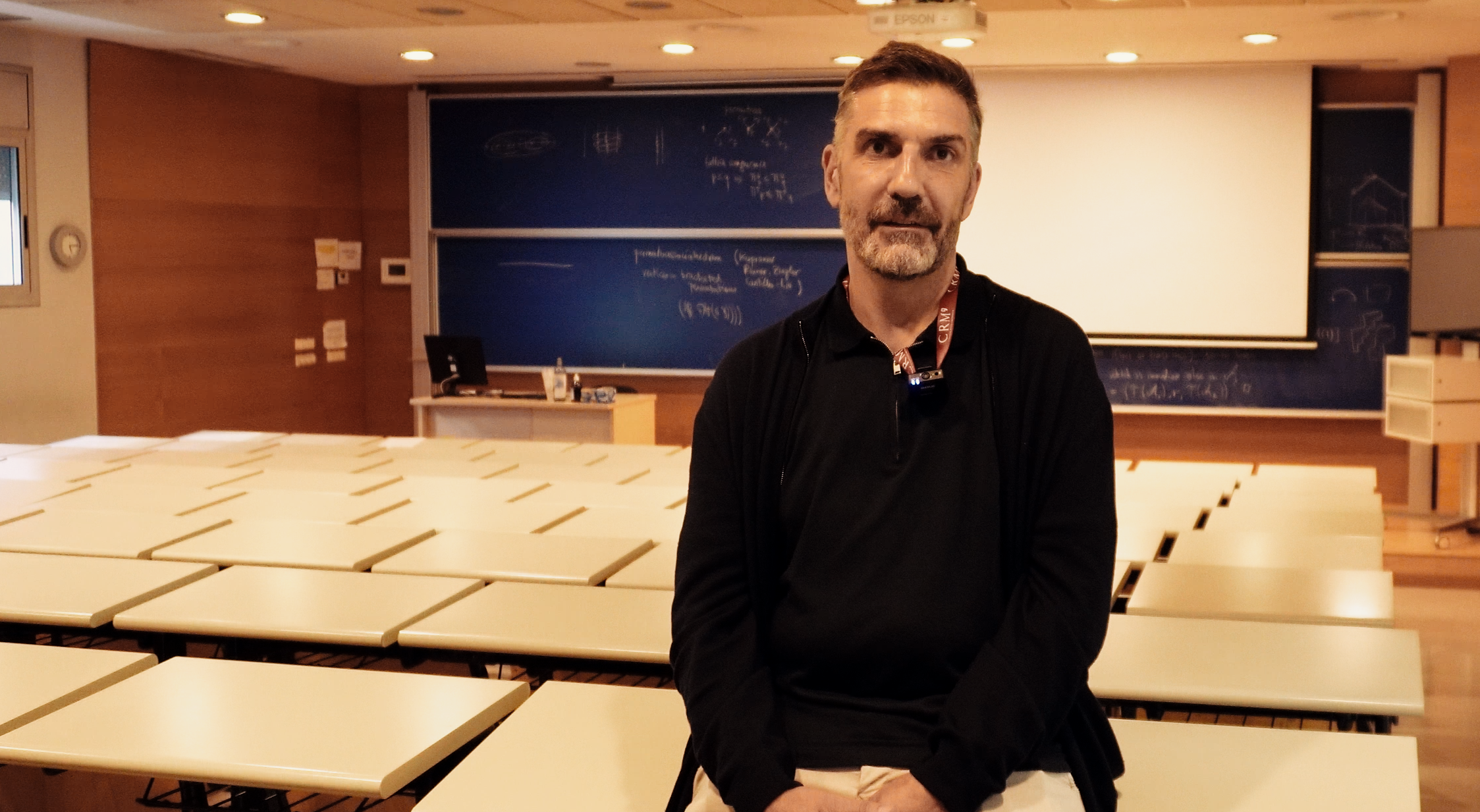
BAMB! teaches advanced techniques in model-based analysis of behavior to PhD and early-career researchers. “Our main objective is to bring quantitative and mathematical analysis to the analysis of behavior,” Hyafil explains. “This behavior encompasses a very broad field from animal behavior, human behavior, and classical psychophysical tasks.”
“It was cool to see that people from different backgrounds are still interested in the same bigger questions across different model organisms.”
Josefine Meyer
(ISTA Austria)
The program addresses the fact that many participants lack formal mathematical training by emphasizing conceptual understanding. “You don’t need to be a brilliant mathematician to do it, but you need to understand the concepts,” Hyafil says. “And that’s what we teach them with the idea that then they can be autonomous when they go back to the lab.”
Both researchers value the diversity of the cohort. “It was cool to see that people from different backgrounds are interested in the same bigger questions or broader questions across different model organisms,” Josefine reflects. Cate found she could develop her abilities by approaching problems from a theoretical perspective: “Getting to work with and learn from people across a really broad range of applications was really interesting and useful. Even if we couldn’t understand the specifics of it, we could bounce off each other and talk about things from an overarching theoretical perspective.”
The Value of Extended Research Visits
For Josefine, the visit was an opportunity to understand lab cultures and workflows in computational fields. For Cate, the geographic dimension was significant. “Coming from Australia, we can be quite a geographically isolated research community,” she explains. She notes that the benefits operate on multiple levels: learning who you are as a researcher outside your own lab and integrating different approaches into how questions are formulated.
“It’s both on the personal level, where you learn what kind of researcher you are outside of your lab, but also from a research perspective, to be able to work across different areas.”
Cate MacColl
(University of Queensland)
Klaus Wimmer and Alexandre Hyafil found the residency equally valuable for the Centre de Recerca Matemàtica. “Having the opportunity to bring two participants from the summer school for a longer stay here was really fantastic because we learned a lot about what they do with their research, which is so different from what we do,” Hyafil reflects. Wimmer emphasizes that the timeframe allowed them to build deeper connections: “It’s not just a few days that people can work on this project; a longer time allows us to dig deeper and do more evolved analysis. It’s not like a one-way that we are teaching, but it’s really an enrichment for everyone.”
Community Building
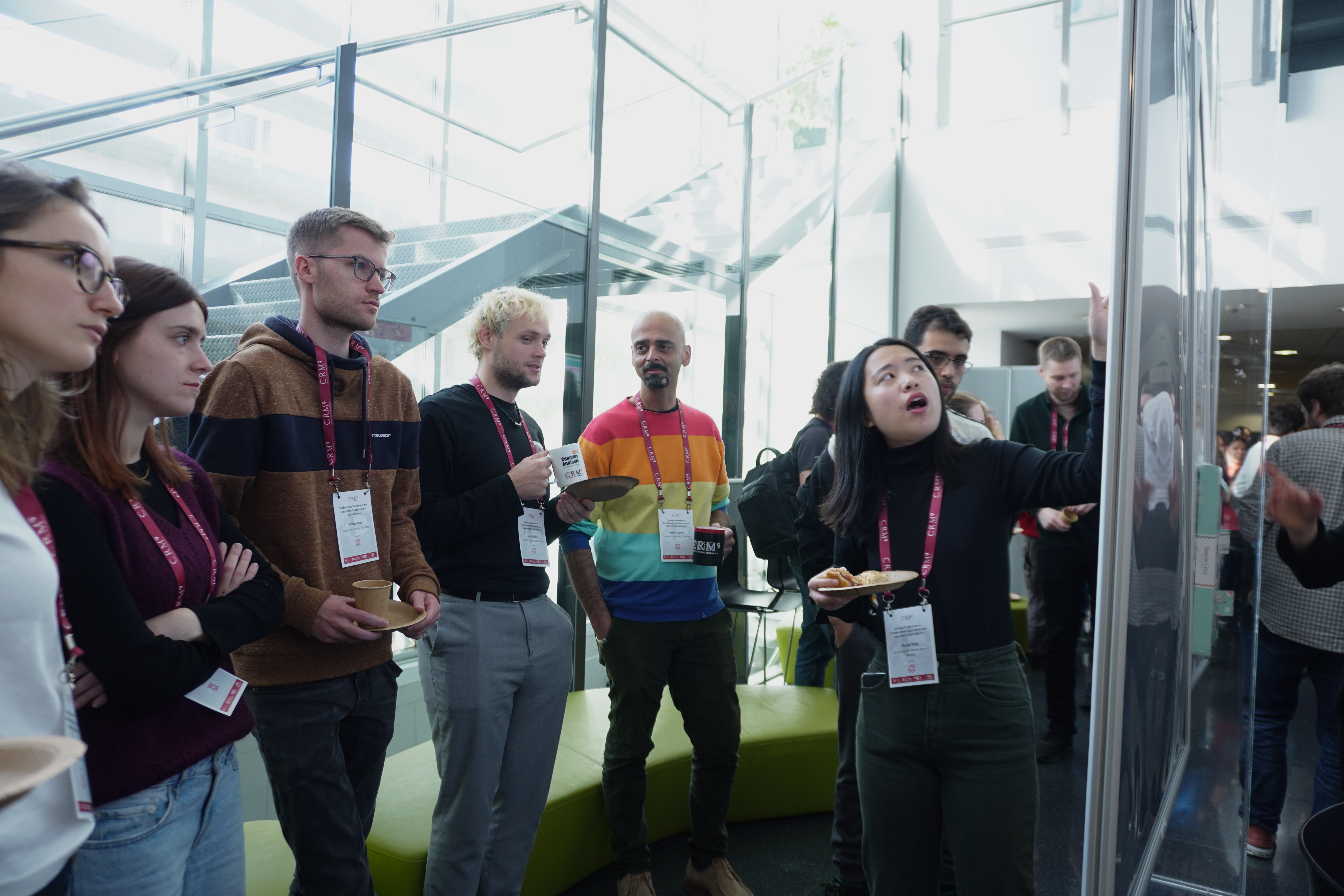
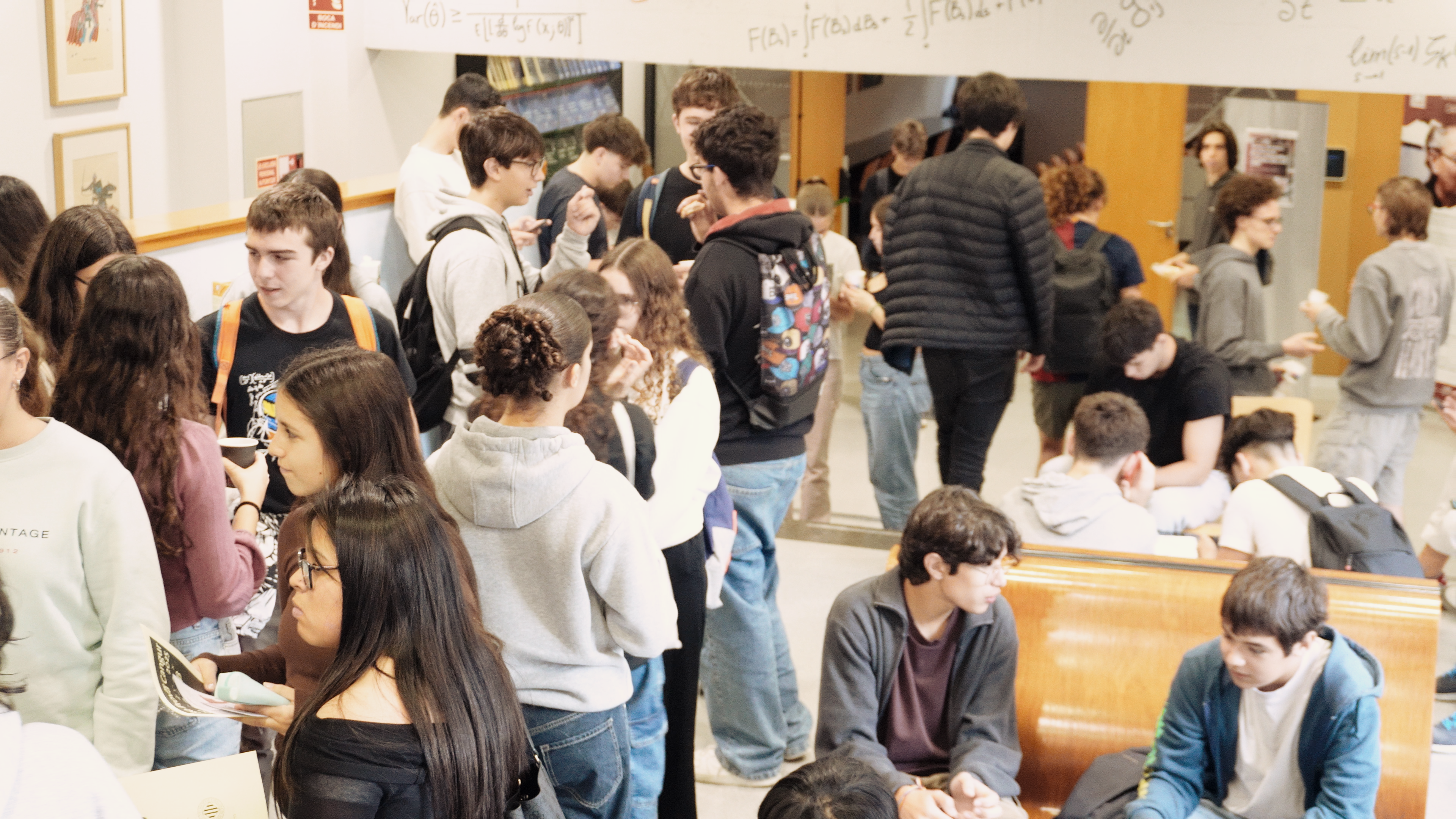
BAMB! has evolved from its first edition, which Hyafil recalls as “improvising all the time”, into an international effort. “After the fifth edition, we really have an international team of organizers and teaching assistants that together design the course program,” Wimmer notes. The program prioritizes building a global community. “We’ve had people from Nepal, from India, from a lot of other countries,” Hyafil says. “It’s been beautiful to see that they somehow can feel isolated at their home lab, but then they arrive, and they meet people from all over the world. And they feel that they can belong to this community.”
The BAMB! Summer School is organized by the Centre de Recerca Matemàtica. The 2026 edition will take place in July. More information is available at www.bambschool.org.
You can watch the full interview with Josefine Meyer, Cate MacColl, Alexandre Hyafil, and Klaus Wimmer on the Centre de Recerca Matemàtica YouTube channel.