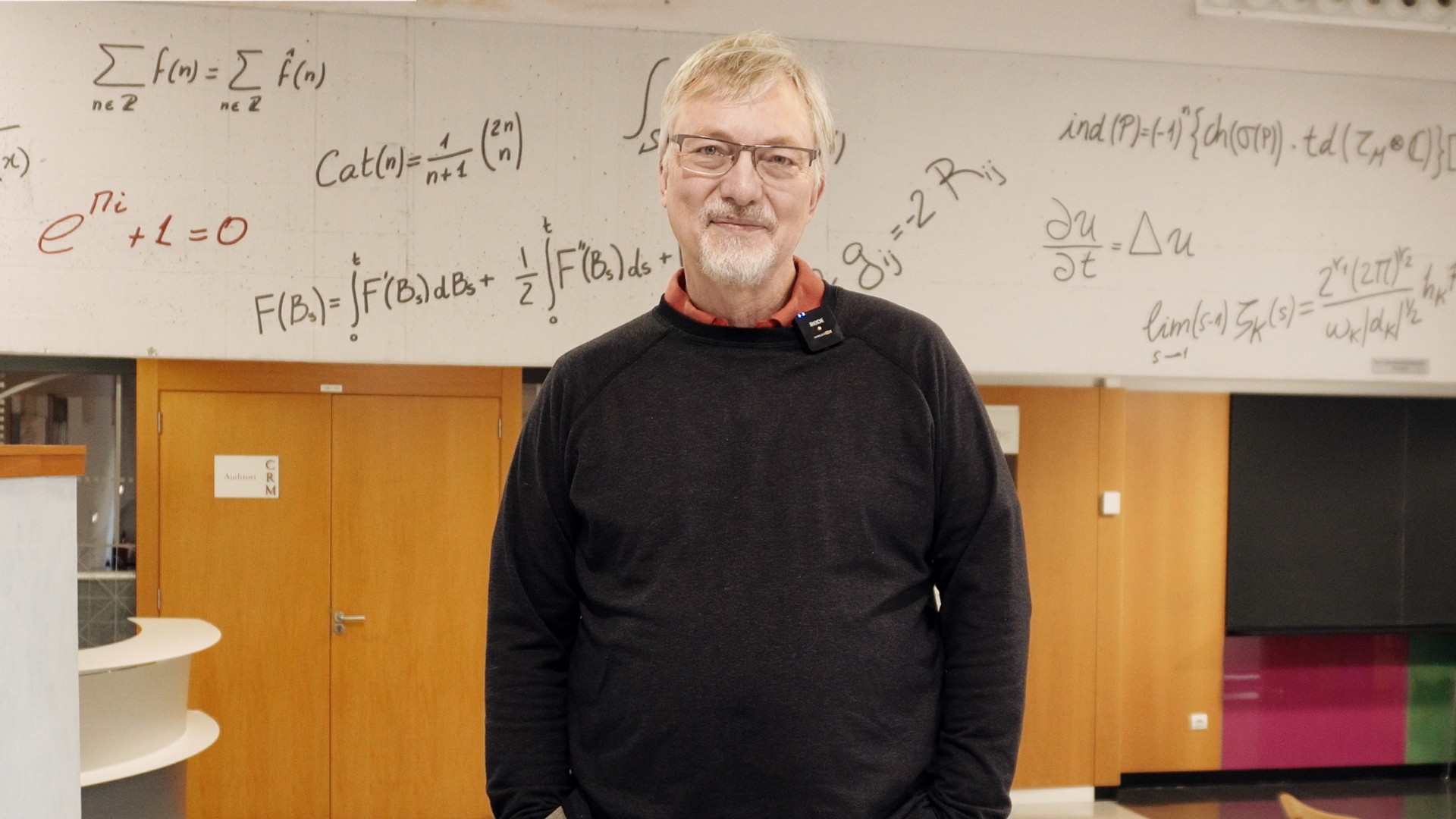
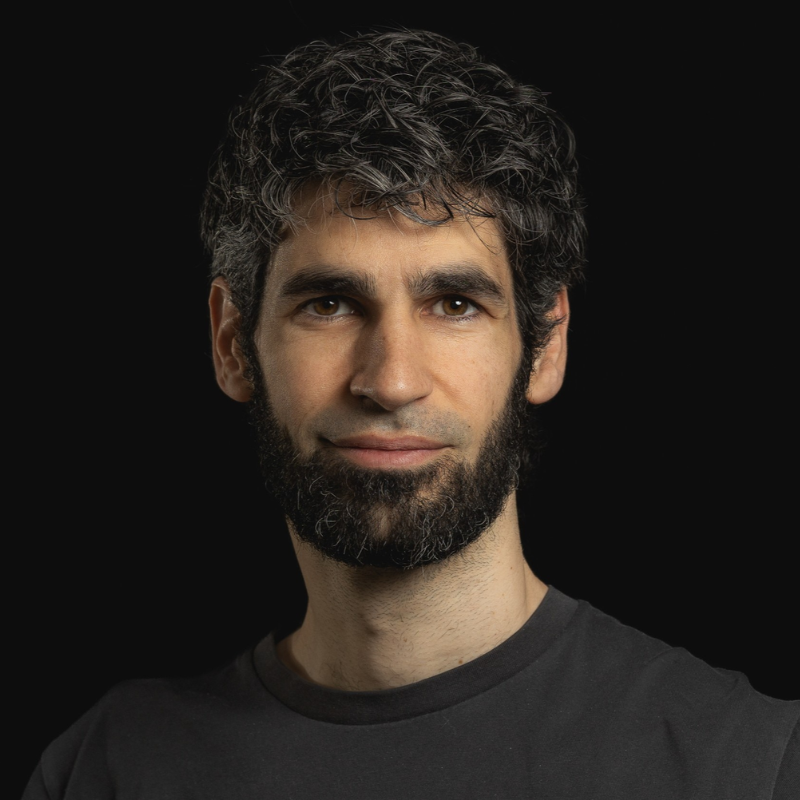
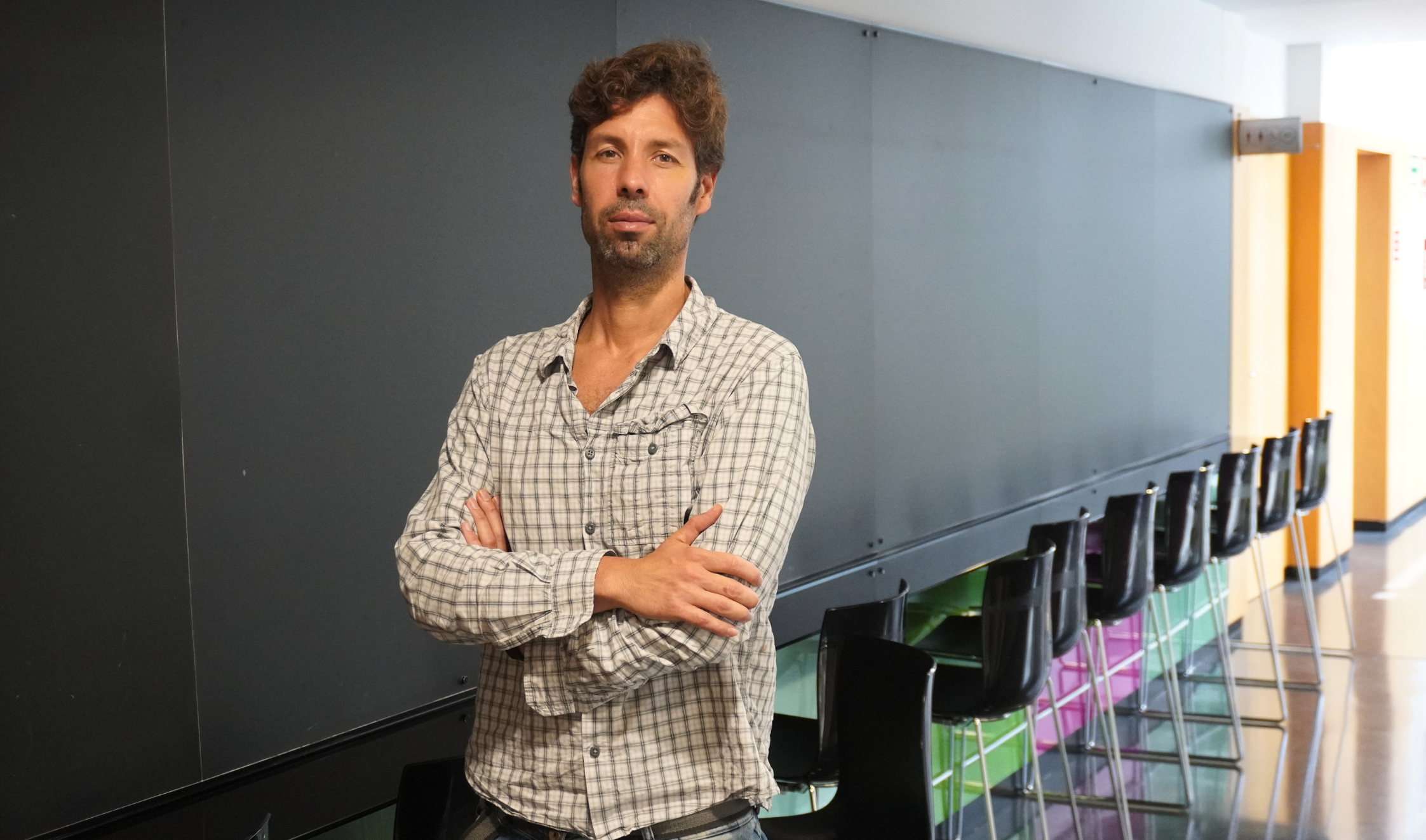
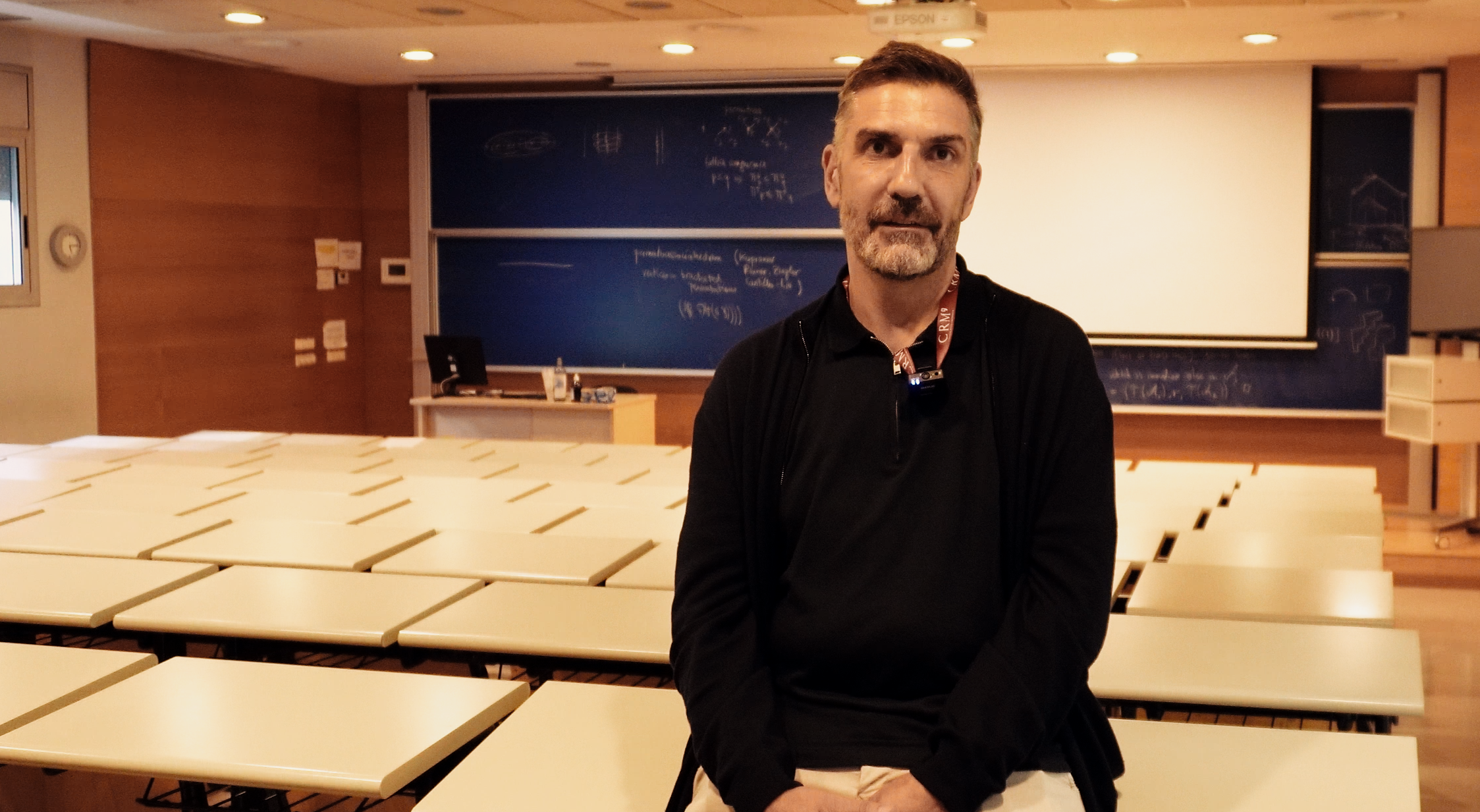
Last October, Brian Wetton, from the University of British Columbia in Canada, came to the Centre de Recerca Matemàtica to work with Tim Myers on big filtration systems. The partnership is in line with the path Wetton’s career has taken: working on real problems with real devices and using maths and engineering to solve them. But things weren’t always this way.
Wetton has been visiting CRM for a long time. He says his first visit was “20 or 25 years ago” and this is the third or fourth time he’s been here. The partnership with Myers has lasted for decades, and his last visit was seven years ago. “I started out as a numerical analyst,” Wetton says. He came from a world of proving theorems and looking at numerical methods for fluid flow with the same level of rigour as pure maths. It was intellectually satisfying work. Until it wasn’t.
Tenure marked a pivotal moment in his career. “There was a realisation for me that I could continue doing the work that I was doing, but I would be analysing schemes that no one would ever use,” he says. “It would have been mathematically interesting but not actually interesting in the bigger context.” This epiphany created a new opportunity. A project with a local fuel cell company appeared, supported by a newly formed industrial mathematics network in Canada. Wetton was elected to lead the group at a meeting he didn’t even attend. It took him a couple of years to warm up, but once he committed, something shifted.
“That was one of the most exciting things in my career: to be able to predict behaviour with mathematics and computational methods and then see that the device really did behave that way.”
“That was one of the most exciting things in my career,” he says, “to be able to predict behaviour with mathematics and computational methods and then see that the device really did behave that way.” It’s a thrill that stays with you. From fuel cells, his work spread to other electrochemical systems like lithium-ion batteries and dialysis, alongside continuing work on geometric motion and phase field models in materials science. The problems range from pore structures in fuel cell membranes to sea ice formation. But the thread is clear: partial differential equations, computational expertise, and systems that actually exist in the world.
His current work with Tim Myers focuses on large-scale cylindrical filters used to remove contaminants from drinking water or other fluids. Myers handles much of the modeling and maintains connections with experimental colleagues and industry partners. Wetton brings the computational machinery. “I’m sheltered from all of that,” Wetton admits with a smile. “I get to work with him a little bit on the modeling, but it’s the computational side that I’ve done.”
The result is a simulator, a tool where you can input any mix of contaminants, specify their reactive properties with the filter material, “and just turn it on and see what comes up.” It sounds simple, but underneath lies the accumulated weight of decades spent learning how to make mathematics behave like the physical world.
Research centres as meeting spaces
Ask Wetton about the importance of research centres like CRM, and he doesn’t hesitate. “There’s this age of electronic communication, and you think, ‘Oh, well, we could just Zoom,’ but it’s just not the same as sitting there in front of a blackboard scratching your head and writing stuff down and having ideas go back and forth in person.”
What makes his collaboration with Myers work across decades? “Honestly, one of the things about a collaboration that keeps it going is just that you enjoy working with the other person,” he says. On the technical side, successful collaboration involves having some overlap in skills and ideas, but not complete overlap. “You are close enough that you’re not just staring at each other strangely, not understanding anything that the other person is saying, but appreciating what the other person can bring, the depth of skill that you maybe only kind of have.”
He’s collaborated at institutes around the world: week-long gatherings where everyone arrives as a guest, works intensely in groups of 40 or fewer, then disperses. CRM is different. “I think what makes CRM a bit different is that there are permanent people here,” he notes. The stability of having researchers rooted in place, combined with the flow of visiting collaborators, creates a particular kind of intellectual ecosystem. Ideas can simmer. Conversations pick up where they left off months ago.
This kind of environment allows mathematicians from different continents to spend weeks working through the physics of contaminants moving through large-scale water filters, building computational tools that translate industrial problems into solvable equations. The motivation is the problem itself: the mathematics is challenging, and industry needs better ways to predict what happens inside a filter column.
A final piece of advice
Wetton’s website contains something unusual: advice for students that begins with “Remember to sleep”. The list was originally aimed at undergraduates, written after an exam where a student approached him shaking. She hadn’t slept all night and hadn’t eaten for two days, too anxious to function properly. “I just thought that can’t be the right way to succeed in an exam format or whatever you’re trying to do,” Wetton says.
The advice stuck around, and its wisdom extends beyond undergraduates. “Looking after yourself mentally and physically is one of the best ways to be more productive,” he says. It’s advice from someone who spent years proving theorems about numerical convergence before discovering that what he really wanted was to see mathematics work in the world. Batteries that charge, filters that clean, fuel cells that power. All of it requiring collaboration, different skill sets and the occasional good night’s sleep.