Researchers at the Centre de Recerca Matemàtica, in collaboration with IIT Kharagpur and UPC, have developed a mathematical model that accurately predicts the performance of fluoride-removal water filters made of mineral-rich carbon (MRC) and…
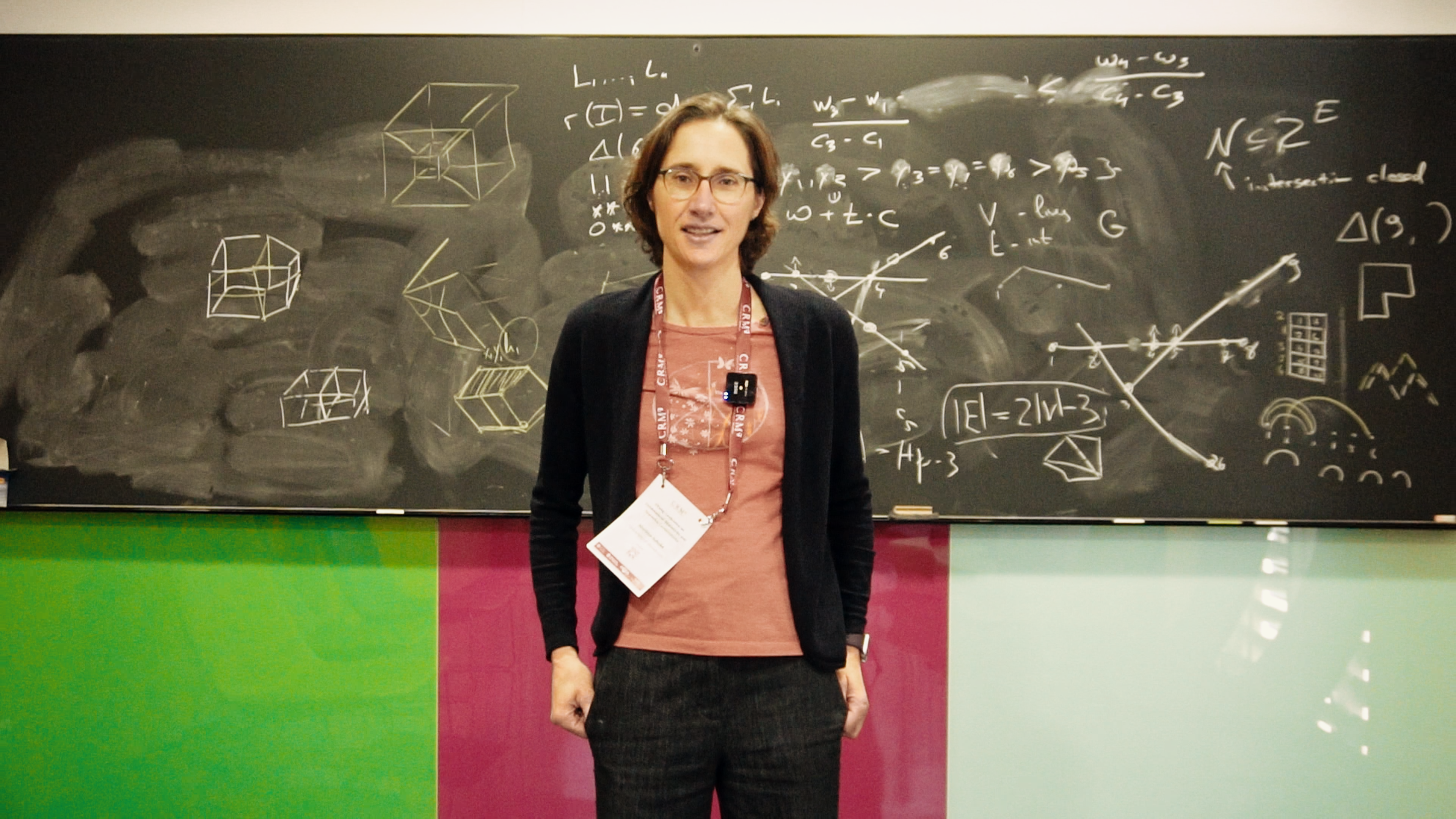
The Centre de Recerca Matemàtica recently hosted a research programme on Combinatorial Geometries and Geometric Combinatorics, focusing on the overlap between polytopes and matroids. Martina Juhnke, a member of the scientific committee, reflects on how this programme prioritized collaboration, allowing postdocs and students to build the professional networks and broad expertise required in a rapidly moving field.
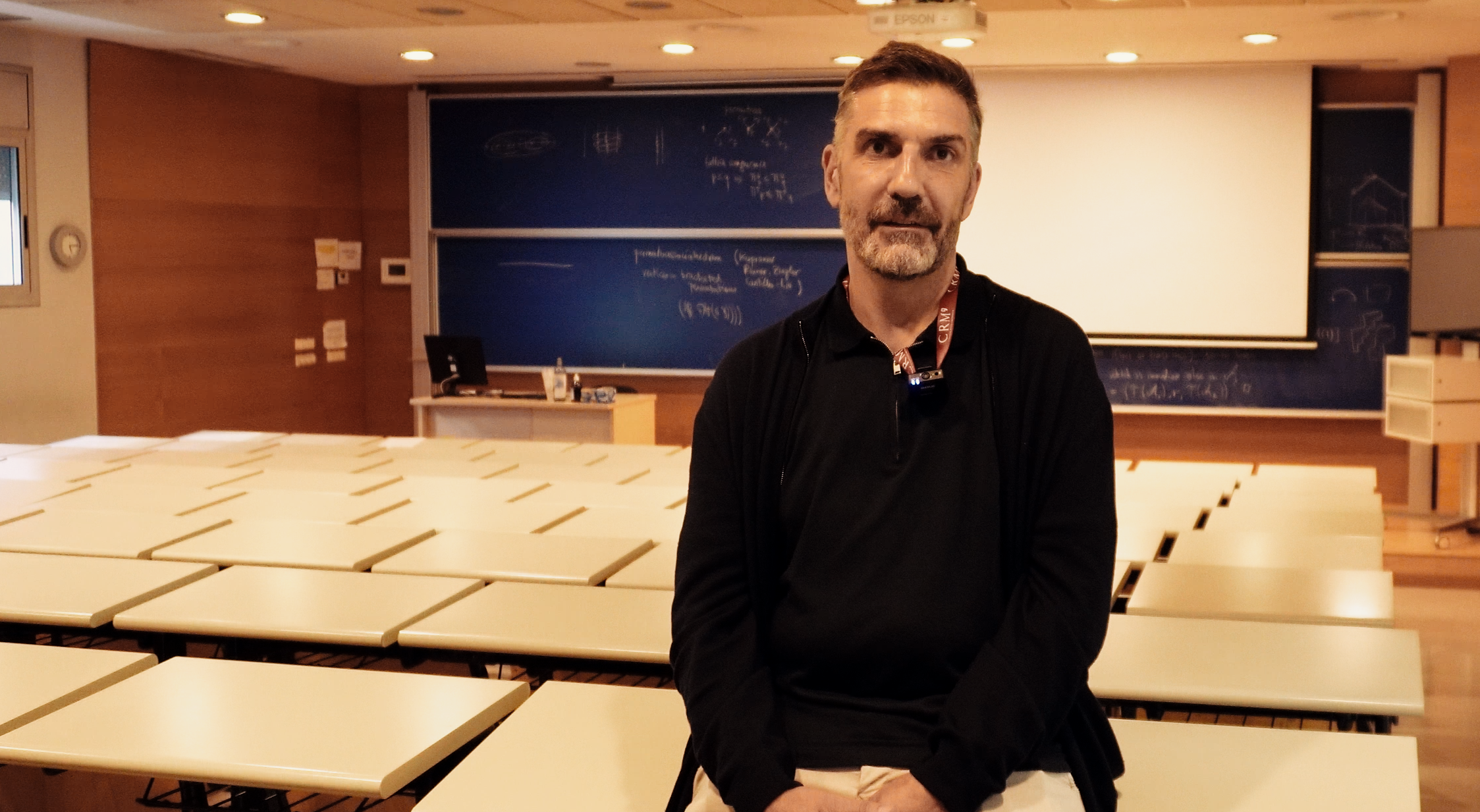
Martina Juhnke still has friends from her first summer school. She meets them at conferences, years later, and the connection holds. It is a detail that anchors her view of this autumn at the Centre de Recerca Matemàtica (CRM); two months of research, collaboration, and the social architecture of mathematics.
From October through November, the CRM hosted an intensive research programme on Combinatorial Geometries and Geometric Combinatorics. Juhnke, a professor of discrete mathematics at the University of Osnabrück and member of the scientific committee, came to Barcelona for the closing conference. What she saw confirmed a long-held belief: research centres are not just venues for solving problems. They are where young mathematicians learn to work together, take on responsibility, and build the relationships that shape careers.
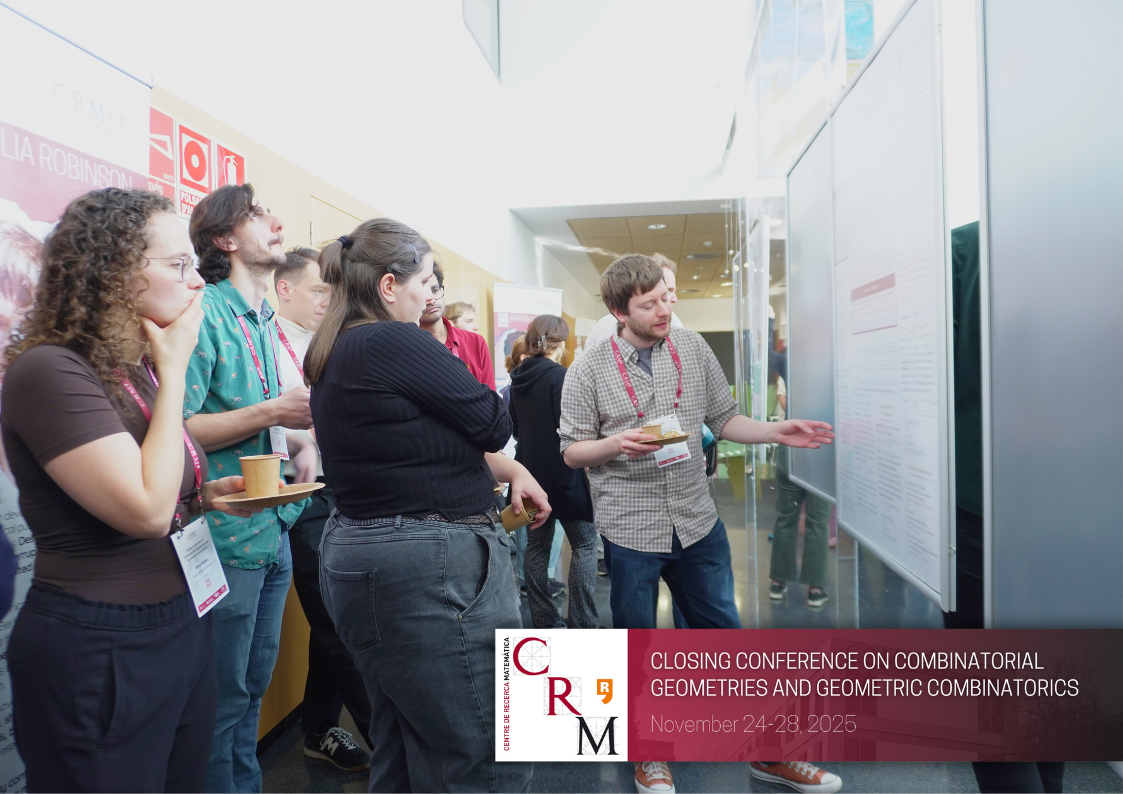
“The goal was to bring them together,” Juhnke says, describing the design. “To have time, to do research together, to have collaboration time, to get to know new projects, to have contact with senior researchers, and also just have a great time.” The structure was deliberate. After preliminary sessions on polytopes and oriented matroids, a two-week research school introduced the field’s core topics through advanced courses. Then came five weeks of collaborative research projects and seminars. The programme closed with a conference where participants presented their progress.
For the postdocs who led research groups, it was a chance to take responsibility for a team, a factor when applying for faculty positions. For PhD and master’s students, it was an immersion in how mathematics actually gets done: not alone in an office, but in conversation, at a blackboard, or over coffee.
“If someone comes who just wants to work alone, then maybe he’s at the wrong place.”
Juhnke is frank about the selection criteria. Scientific qualification mattered, but so did a willingness to collaborate. “If someone comes who just wants to work alone, then maybe they’re at the wrong place.” Gender balance and diversity were considered throughout for participants, visitors, and speakers. The mathematical focus reflected a shift Juhnke sees across combinatorics. The programme’s two branches, geometric combinatorics, where polytopes play a central role, and combinatorial geometries, which deal with matroids, used to feel more distinct.
“Basically, a matroid is a polytope with some specific properties.” The boundaries have blurred. Polytopes appear in optimization, algebra, statistics, theoretical physics, and topology. Juhnke notes a saying often attributed to the field: “Polytopes want to be everywhere.” Matroids generate combinatorial objects and give rise to geometry. “I don’t think that one can separate polytopes and matroids anymore,” Juhnke says. “Synergies just arise naturally.”
This naturalness showed up in the research projects. Topics had to be accessible but also current. The result was a programme responsive to where the field is moving. And the field is moving fast. Juhnke describes it as “a quickly emerging field,” which she sees as an opportunity for young mathematicians. There are plenty of open problems, and as they are solved, new directions open. But this requires a shift in how researchers prepare.
“It’s not enough to be a specialist in just one area,” she says. “It’s not enough to just know something about polytopes. You should also know a lot about matroids.” She cites work in theoretical physics where solving problems requires knowledge across multiple areas. “The younger generation really have to become broad and have broad knowledge.” This is where research centres like the Centre de Recerca Matemàtica become necessary. These spaces provide time to focus without teaching obligations and offer a community to researchers from smaller universities who might otherwise work in isolation.
Before the interview ended, Juhnke added: “I would like to congratulate the organizers, and also all the participants in this programme, for the huge success of this programme, because I think they really achieved a lot. I think everybody can just be proud of themselves.”
It loops back to the friends from that first summer school. The theorems and proofs matter, but so does the structure that supports them: the postdocs learning to lead and the students finding collaborators. If polytopes want to be everywhere, it seems mathematicians do too; at least the ones who have learned that the work goes better when you are not doing it alone.
|
|
CRM CommPau Varela
|
Researchers at the Centre de Recerca Matemàtica, in collaboration with IIT Kharagpur and UPC, have developed a mathematical model that accurately predicts the performance of fluoride-removal water filters made of mineral-rich carbon (MRC) and…
The Centre de Recerca Matemàtica recently hosted a research programme on Combinatorial Geometries and Geometric Combinatorics, focusing on the overlap between polytopes and matroids. Martina Juhnke, a member of the scientific committee, reflects on how this programme…
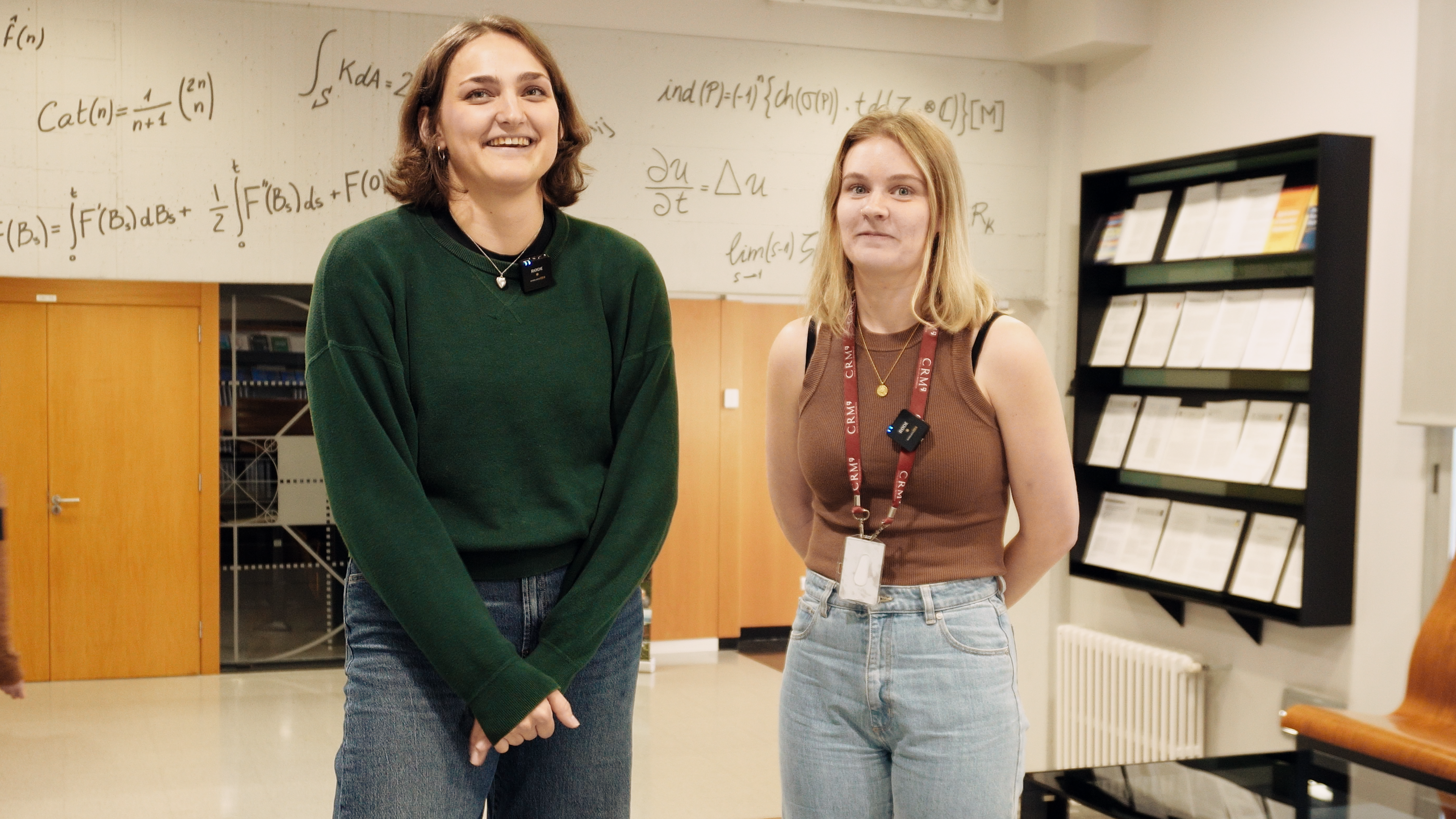
In October 2025, the Centre de Recerca Matemàtica hosted Josefine Meyer (ISTA) and Cate MacColl (University of Queensland) for a month-long research stay following their participation in the BAMB! Summer School. Despite studying vastly different subjects, from…
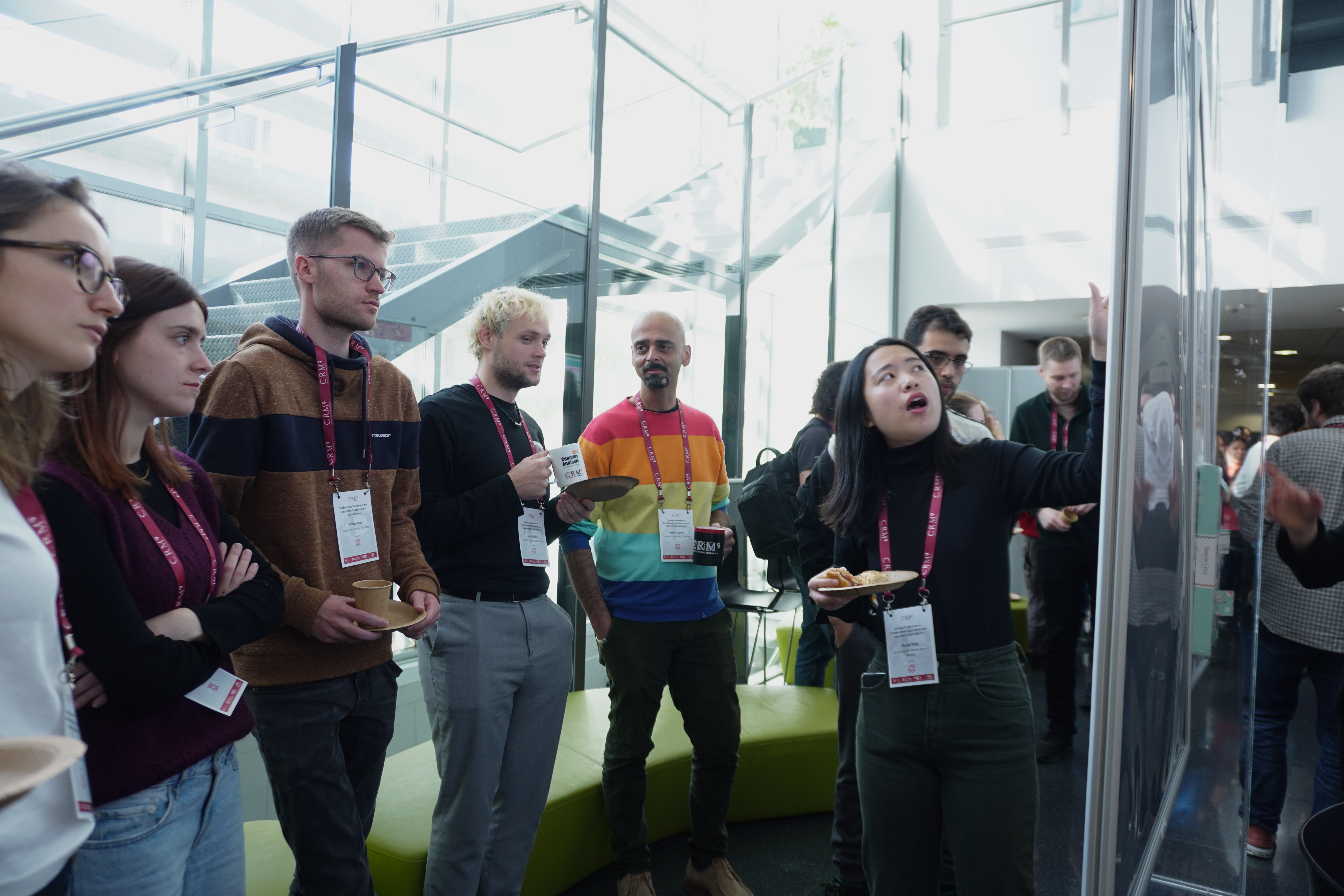
During five days, the CRM hosted the Closing Conference of the MDM Focused Research Programme on Combinatorial Geometries & Geometric Combinatorics. The event featured plenary talks, contributed sessions, and posters on topics from matroids and polytopes to…
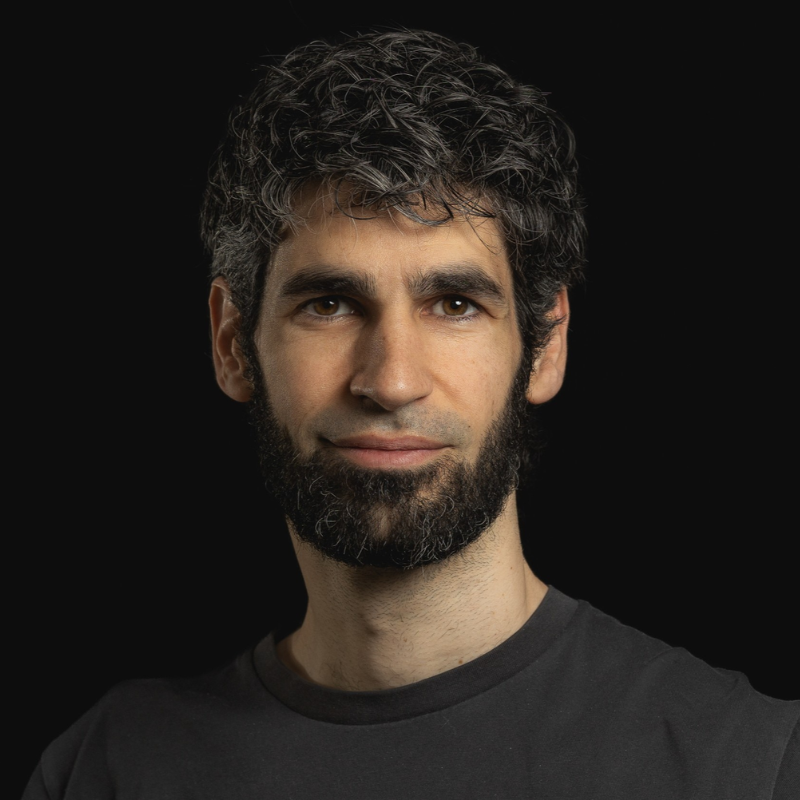
ICREA professor at the Universitat de Barcelona and CRM affiliated researcher Xavier Ros-Oton appears on Clarivate’s Highly Cited Researchers 2025 list, which this year reinstates the mathematics category after two years of exclusion.Citations are a strange way to…
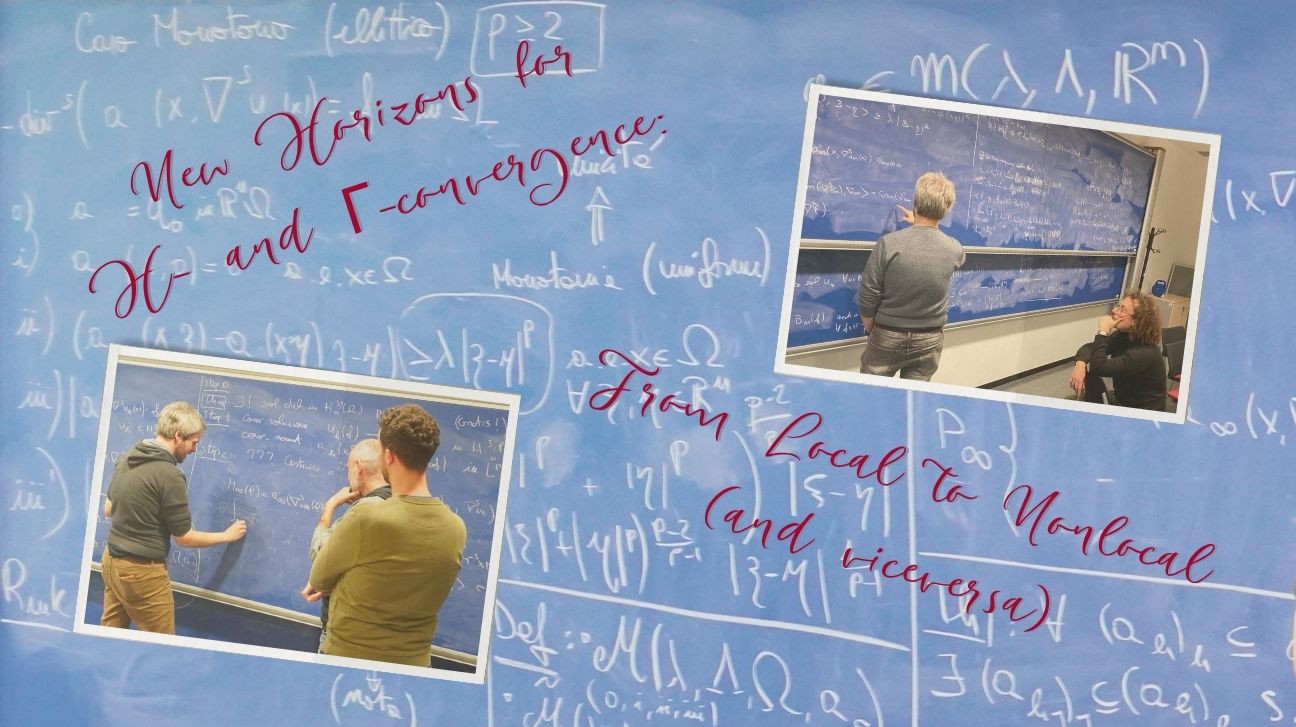
The researchers Maicol Caponi, Alessandro Carbotti, and Alberto Maione extended the H- and Γ-convergence theories to the setting of nonlocal linear operators and their corresponding energies. The authors were able to overcome the limitations of classical localization…
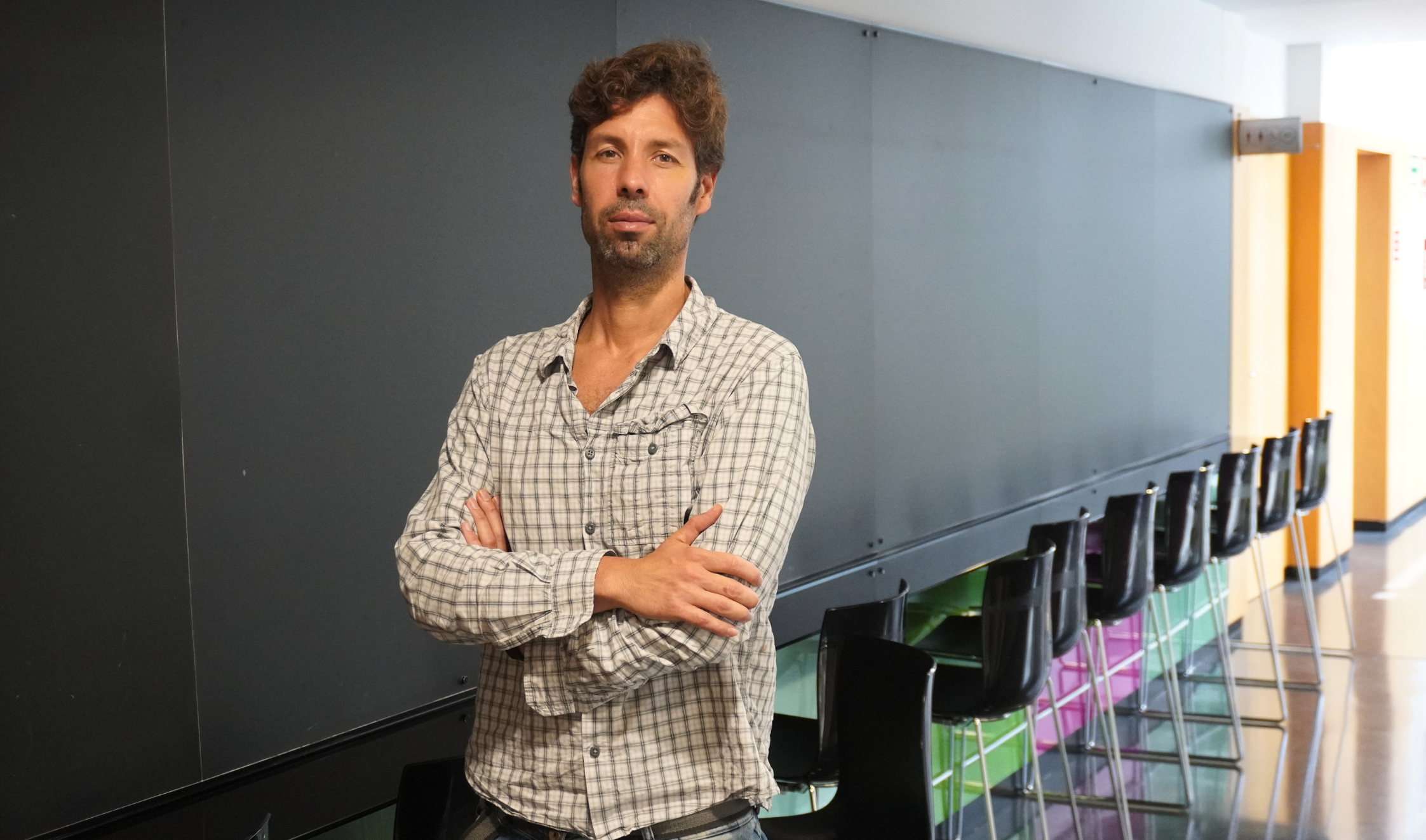
Diego Vidaurre has joined the Centre de Recerca Matemàtica through the ATRAE programme, bringing his expertise in modelling spontaneous brain activity across multiple data modalities. His work focuses on understanding how the brain’s intrinsic dynamics shape…
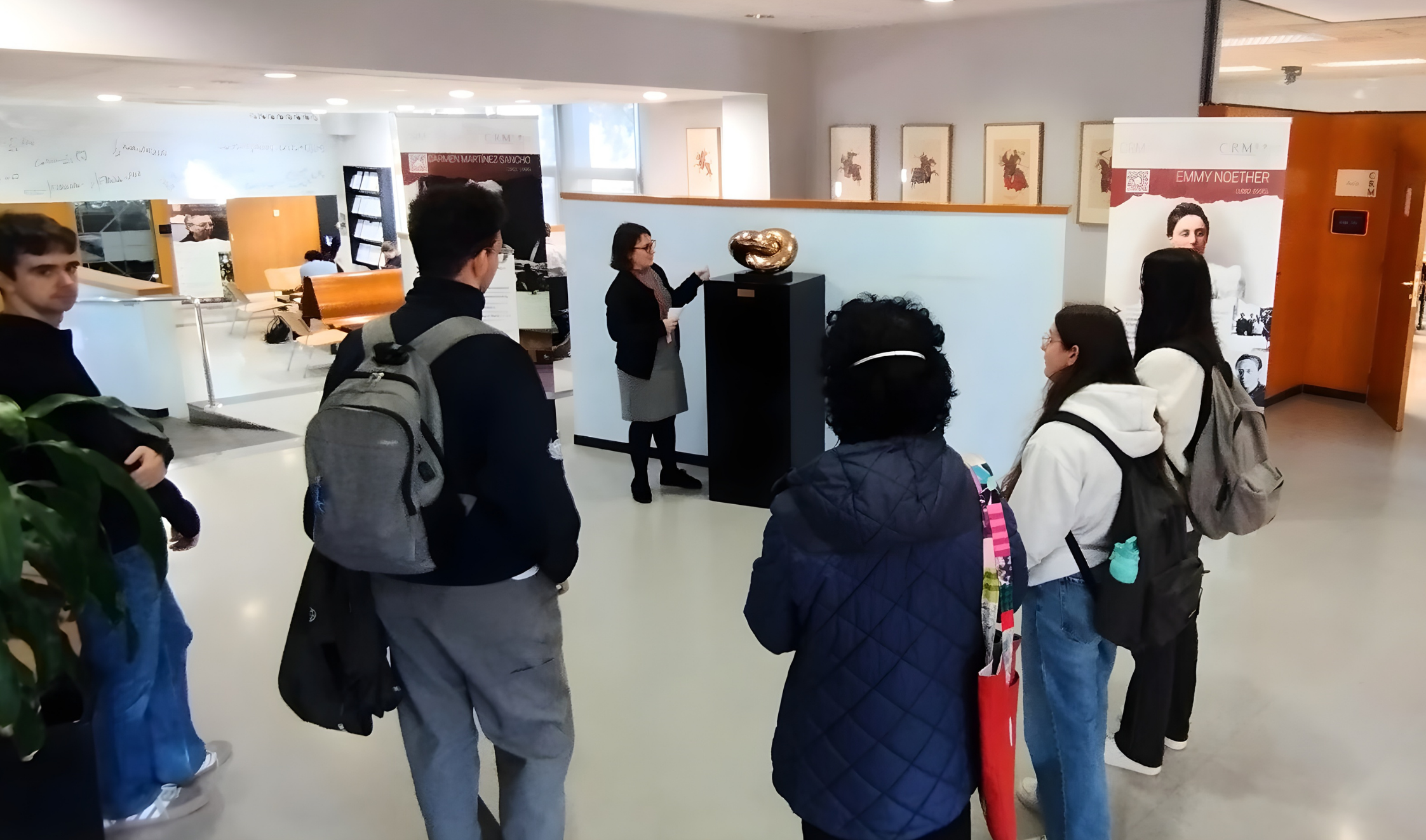
El CRM va participar en la 30a edició de la Setmana de la Ciència amb una ruta guiada que va combinar les biografies de dones matemàtiques amb obres d’art del centre, connectant ciència, història i creació artística.El 12 de novembre, el Centre de Recerca Matemàtica…
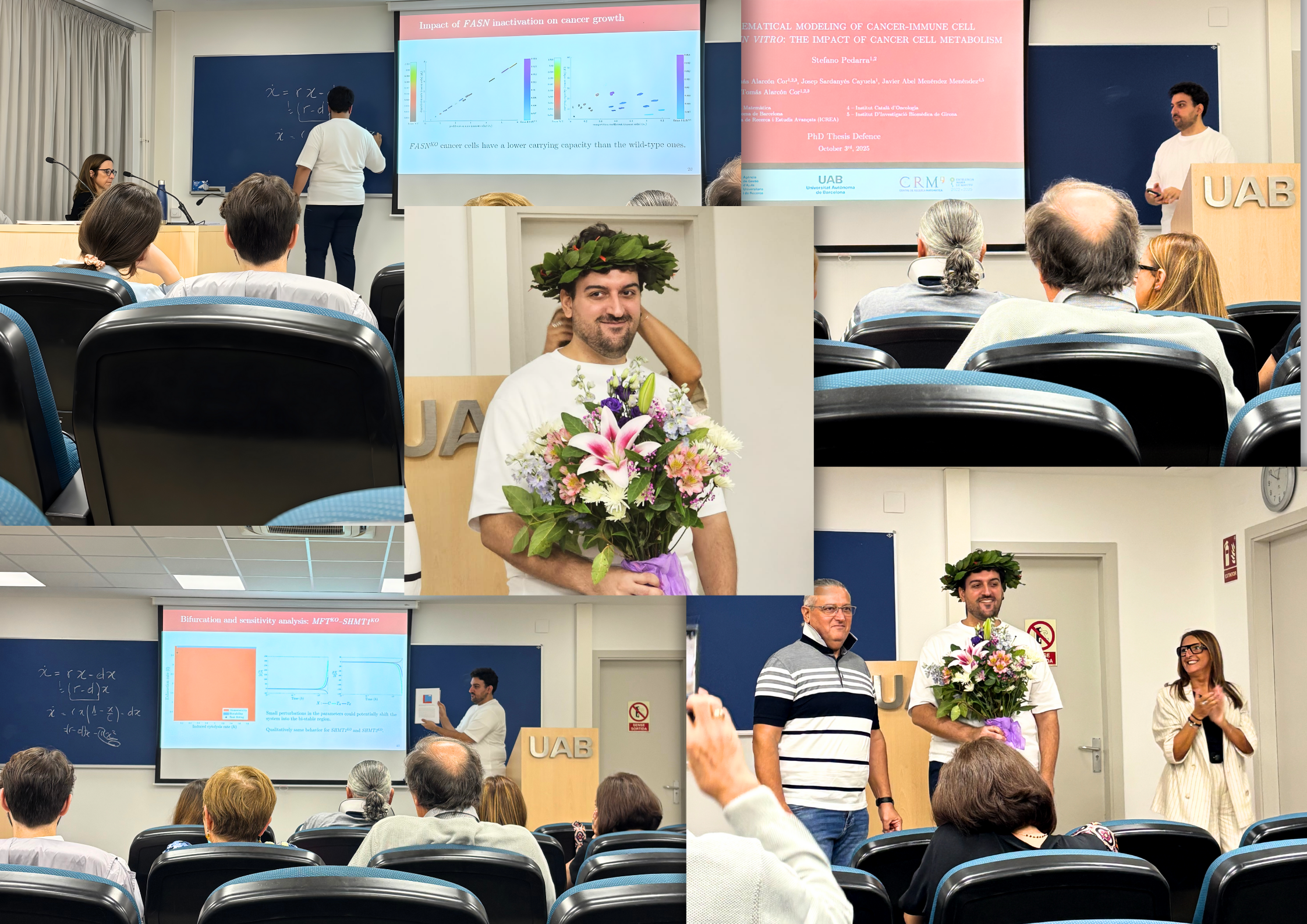
Stefano Pedarra has completed his PhD at the Centre de Recerca Matemàtica with a thesis exploring how tumour-cell metabolism shapes the immune system’s ability to fight cancer. His work brought mathematics and biology into direct conversation, from building models to…
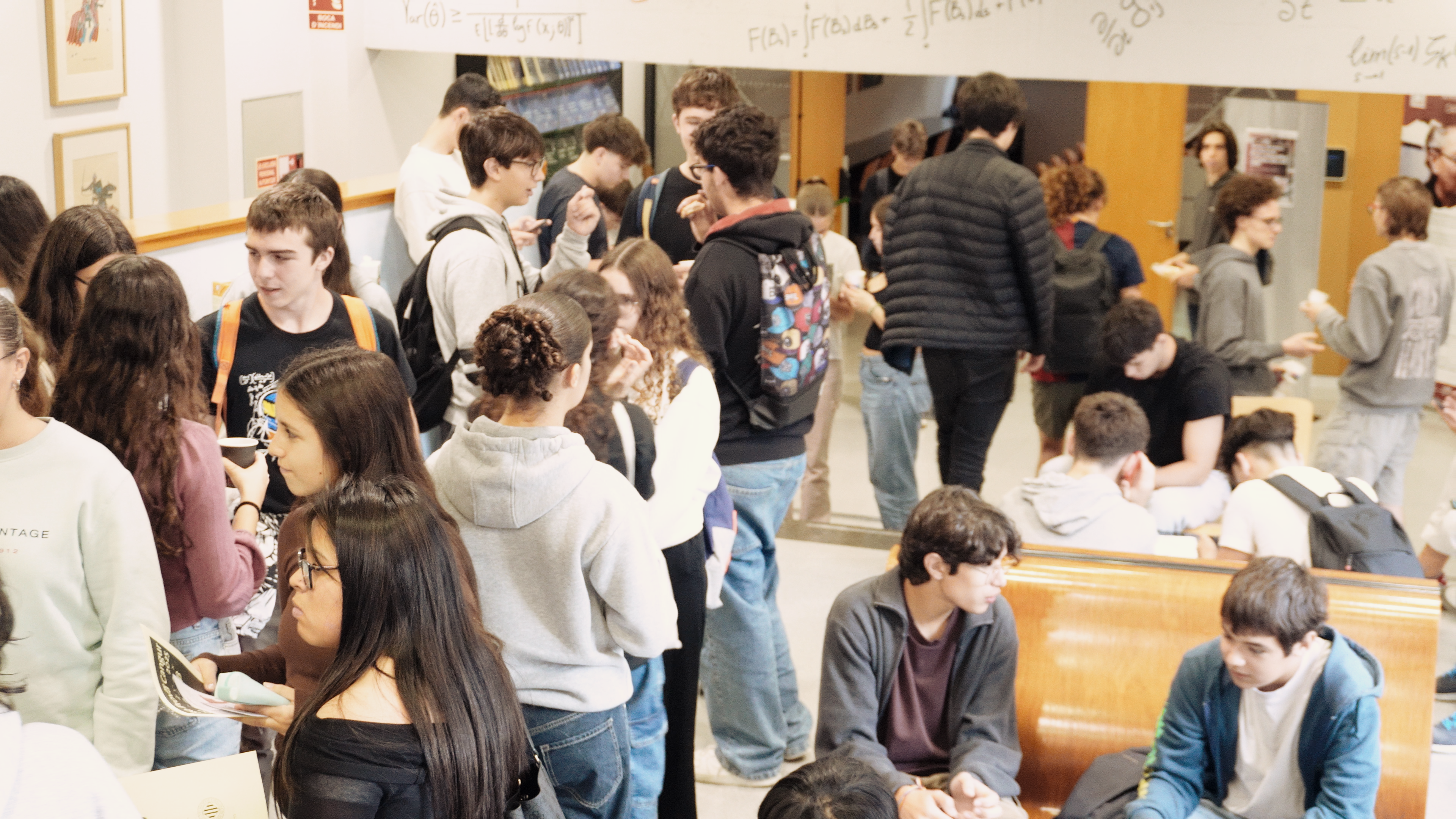
La prova de preselecció de Bojos per les Matemàtiques va reunir estudiants de tot Catalunya a la UAB i al CRM, amb presentacions a càrrec de Montse Alsina, presidenta de la Societat Catalana de Matemàtiques, Núria Fagella, degana de la Facultat de Matemàtiques i…
The XIII GEFENOL-DIFENSC Summer School gathered over thirty researchers from across Europe to explore how statistical physics helps explain complex phenomena in biology, ecology, networks, and social systems. In his closing lecture, Jordi Mompart (UAB) examined how…
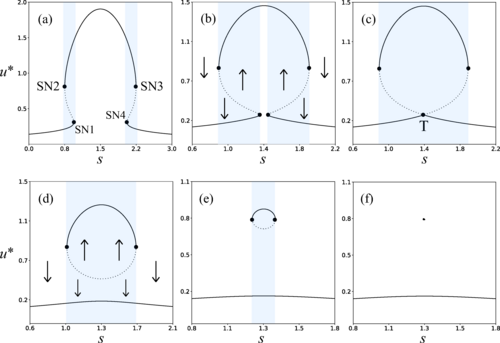
An international collaboration including researchers from the Centre de Recerca Matemàtica (CRM) has shown that when several bifurcations occur close to one another, their interaction can dramatically amplify critical slowing down effect – the progressive slowdown of…
The post Polytopes, Matroids, and the Friends You Make: Martina Juhnke on Two Months at the CRM first appeared on Centre de Recerca Matemàtica.