Kasner eons in Lovelock black holes
Bueno P.; Cano P.A.; Hennigar R.A.; Li M.-D.
Physical Review D, Vol. 110, Num. 124015 (2024)
Article

Con el regreso a la Luna en el horizonte de muchas misiones espaciales, uno de los grandes desafíos a los que se enfrenta la exploración es el polvo lunar. Estas diminutas partículas, cargadas eléctricamente, suponen un riesgo tanto para la salud humana como para el funcionamiento de los equipos e instrumentos desplegados en la superficie.
En este contexto se enmarca la misión DUSTER, siglas de Dust Study, Transport, and Electrostatic Removal for Exploration Missions, un proyecto europeo en el que participa personal científico y de ingeniería del Instituto de Astrofísica de Andalucía (IAA-CSIC), y cuyo objetivo es comprender mejor el comportamiento del polvo cargado y desarrollar herramientas para su control.
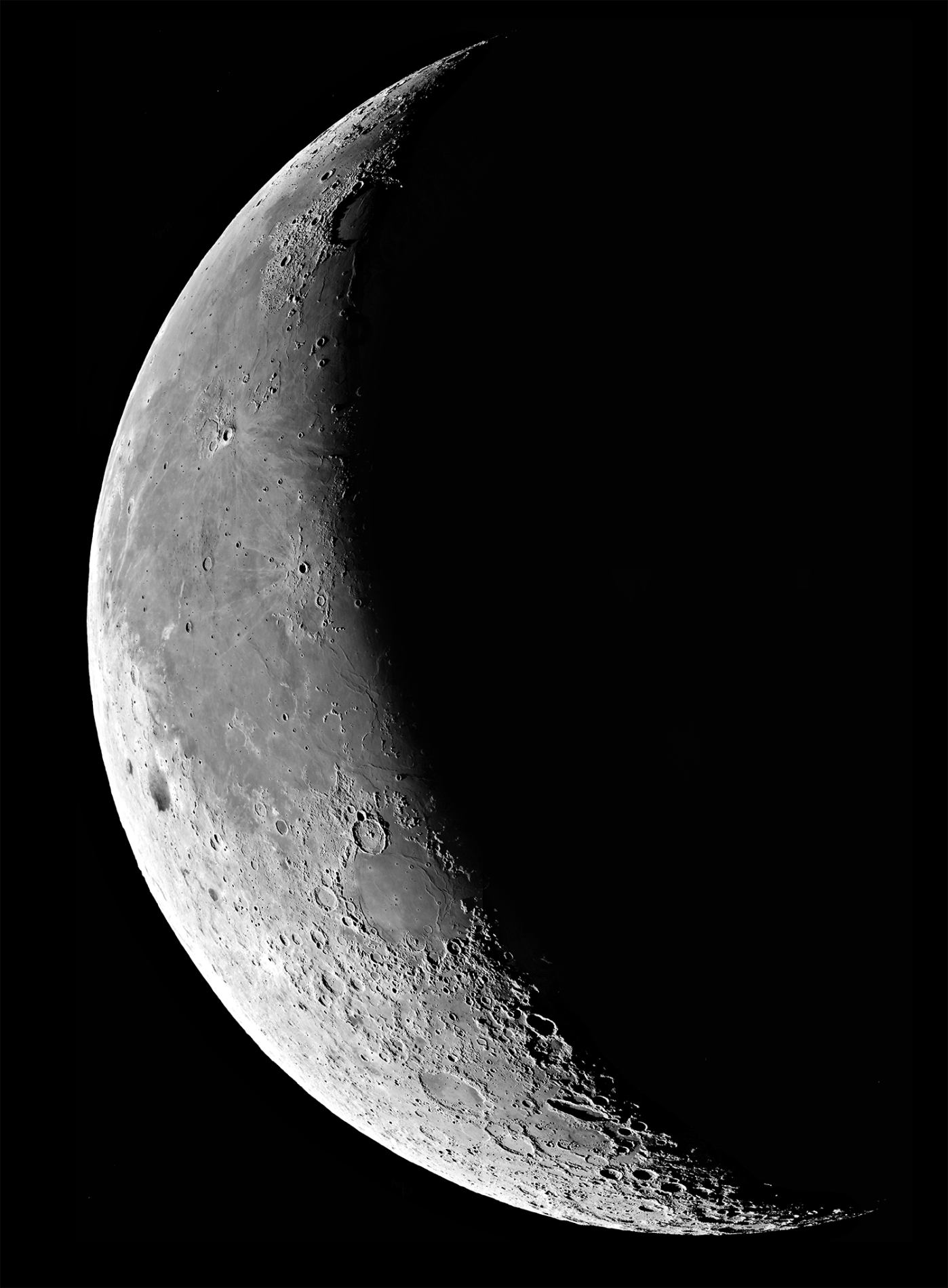
Luna menguante. Crédito: ESO/D. Baade
En junio, el proyecto ha afrontado con éxito su revisión final, un proceso llevado a cabo por expertos y asesores de la Comisión Europea, que han valorado positivamente los avances logrados y han ofrecido las últimas directrices para completar su desarrollo. “Como conclusión, se puede afirmar que al cierre del proyecto se prevé alcanzar todos los objetivos e hitos planteados”, señala Carmen Pastor, ingeniera de la Unidad de Desarrollo Tecnológico e Instrumentación (UDIT) del IAA-CSIC. “Además, se ha logrado alcanzar el Nivel 4 de Madurez Tecnológica (TRL 4, donde el nivel 9 se consigue cuando se ha completado satisfactoriamente la misión espacial) en todos los componentes del sistema, tal y como estaba previsto en la planificación inicial”.
EL RETO DE CONTROLAR LAS PARTÍCULAS DE POLVO CARGADAS
El polvo estudiado en DUSTER es extremadamente fino, con partículas de apenas unas milésimas de milímetro, y presenta una carga eléctrica que hace que se adhiera con fuerza a cualquier superficie. Para lograr mover estas partículas de forma controlada, el proyecto genera campos eléctricos que desplazan el polvo en distintas direcciones, mientras se mide la corriente eléctrica producida por su movimiento mediante electrodos especializados.
El comportamiento del polvo varía según el entorno espacial. “En la Luna, por ejemplo, el polvo del lado iluminado por el Sol se carga positivamente, mientras que en el lado en sombra adquiere carga negativa. Además, la gravedad local —que es muy distinta en la Luna, Marte o los asteroides— también influye en esta carga”, explica Rosario Sanz, ingeniera de proyecto en el IAA-CSIC.
Estos experimentos permiten obtener datos clave sobre la carga eléctrica, la temperatura y el campo eléctrico en la superficie donde se deposita el polvo, mediante instrumentos como sondas Langmuir––capaz de medir parámetros del plasma––, sondas de campo eléctrico y electrodos diseñados para mover y detectar el movimiento de las partículas cargadas.
INSTRUMENTO CLAVE PARA ESTUDIAR EL POLVO LUNAR
El consorcio DUSTER reúne al Instituto Real Belga de Aeronomía Espacial (BIRA), el Instituto de Astrofísica de Andalucía (IAA-CSIC), la Oficina Nacional de Estudios e Investigaciones Aeroespaciales (ONERA) de Francia y la empresa Thales Alenia Space España (TAS-E).
En menos de dos años, el equipo internacional ha desarrollado y validado un instrumento capaz de estudiar el polvo lunar en una cámara de vacío que reproduce las condiciones de la superficie lunar, utilizando polvo que simula el regolito —la capa polvorienta que cubre la Luna formada por fragmentos de roca y restos de impactos— vacío e irradiación, generada por lámparas ultravioleta que simulan el sol.
El IAA-CSIC ha desempeñado un papel fundamental en el diseño y construcción del sistema electrónico y de control del instrumento. Entre sus contribuciones destacan el desarrollo de la unidad central de procesamiento—encargada del funcionamiento general del sistema y de la adquisición de los datos científicos—, así como el de la fuente de alimentación de baja tensión, el arnés de cables y el diseño mecánico y térmico de la caja que alberga la electrónica.
Además, el centro ha desarrollado el software, tanto de abordo como de comunicación con el instrumento, y ha llevado a cabo su integración y pruebas en sus propias instalaciones. “La integración del instrumento se completó en tiempo récord para cumplir con los plazos del proyecto, superando un gran reto gracias al trabajo conjunto de todo el consorcio”, explica Carmen Pastor (UDIT/IAA-CSIC).
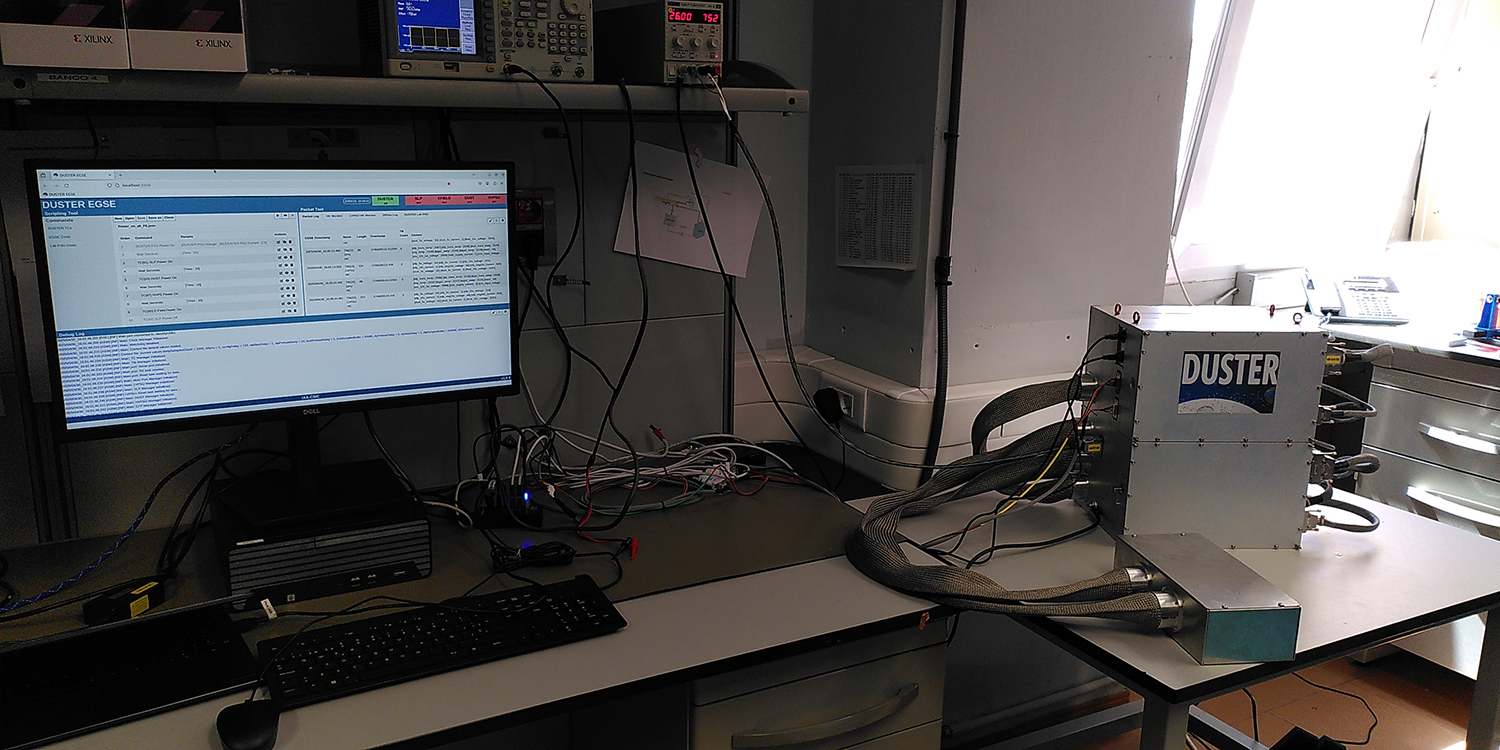
Integración de DUSTER en el IAA-CSIC. Crédito: Carmen Pastor (IAA-CSIC)
Por su parte, el instituto belga BIRA ha diseñado parte de la electrónica (las tarjetas de adquisición y control de las 3 sondas además de la fuente de alta tensión), las sondas de medición del campo eléctrico y las tipo Langmuir y ONERA ha liderado las pruebas en cámara de vacío y desarrollado sondas para el movimiento y su medición de las partículas de polvo.
“Los experimentos han permitido comprender mejor cómo se carga eléctricamente el polvo lunar y cómo controlarlo mediante campos eléctricos”, explica Remi Pacaud, científico de ONERA. Gracias a la irradiación con luz ultravioleta, el equipo pudo cargar las partículas positiva o negativamente y medir la carga eléctrica de partículas individuales, estableciendo un protocolo experimental para caracterizar el polvo en condiciones lunares.
Estos resultados abren el camino al desarrollo de tecnologías que permitan mitigar el impacto del polvo lunar en futuras misiones, protegiendo tanto los equipos como la salud de los astronautas.
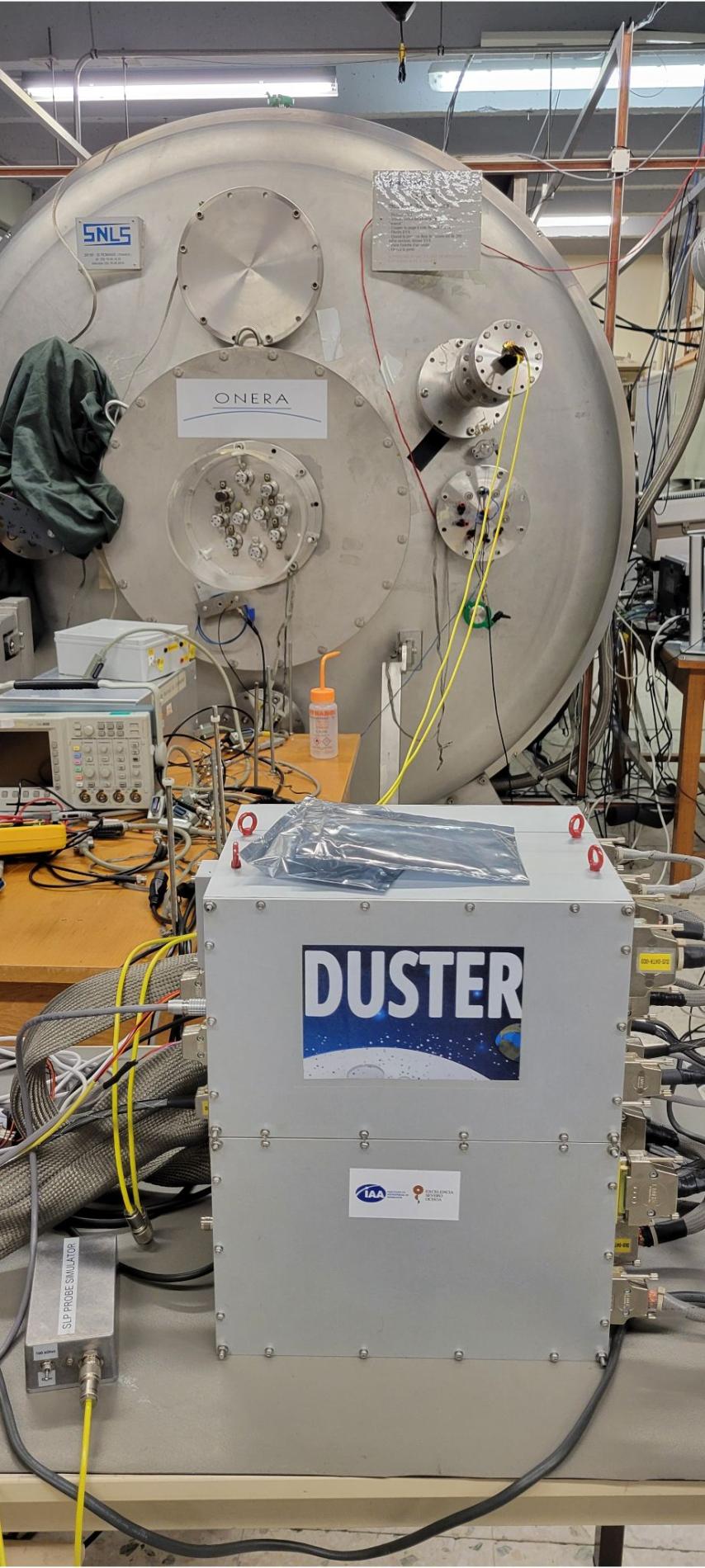
DUSTER con las sondas dentro de la cámara de vacío JONAS. Crédito: ONERA
LOS SIGUIENTES PASOS
Con la revisión final superada, el proyecto se encuentra en una etapa crucial para dar el siguiente paso. “El primer objetivo era poner encima de la mesa un instrumento completo para poder medir in situ las propiedades del polvo. De esta forma, en una futura misión espacial, partiremos de una posición muy ventajosa por la viabilidad y madurez demostrada”, detalla Julio Rodríguez, investigador del IAA-CSIC que coordina la participación del centro en el proyecto.
Entre los planes más inmediatos está la exploración de pruebas en condiciones de microgravedad, mediante vuelos parabólicos, para validar el instrumento fuera de la Tierra. Además, se están estudiando futuras misiones espaciales para continuar perfeccionando el diseño, con especial atención a reducir su tamaño y peso, facilitando así su integración en vehículos y bases lunares.
Este progreso abre un abanico de aplicaciones para entornos variados como la Luna, Marte, asteroides y cometas, impulsando el desarrollo de soluciones para un desafío fundamental en la exploración espacial: el control eficiente del polvo cargado.
“Asimismo, se están buscando futuras misiones de exploración espacial en las que instalar una versión mejorada de DUSTER adaptada a las condiciones de la misión, bien sea controlado por astronautas, bien sea que funcione de forma autónoma, optimizando su diseño con una reduciendo de consumo, tamaño y peso.”, concluye Julio Rodríguez (IAA-CSIC).

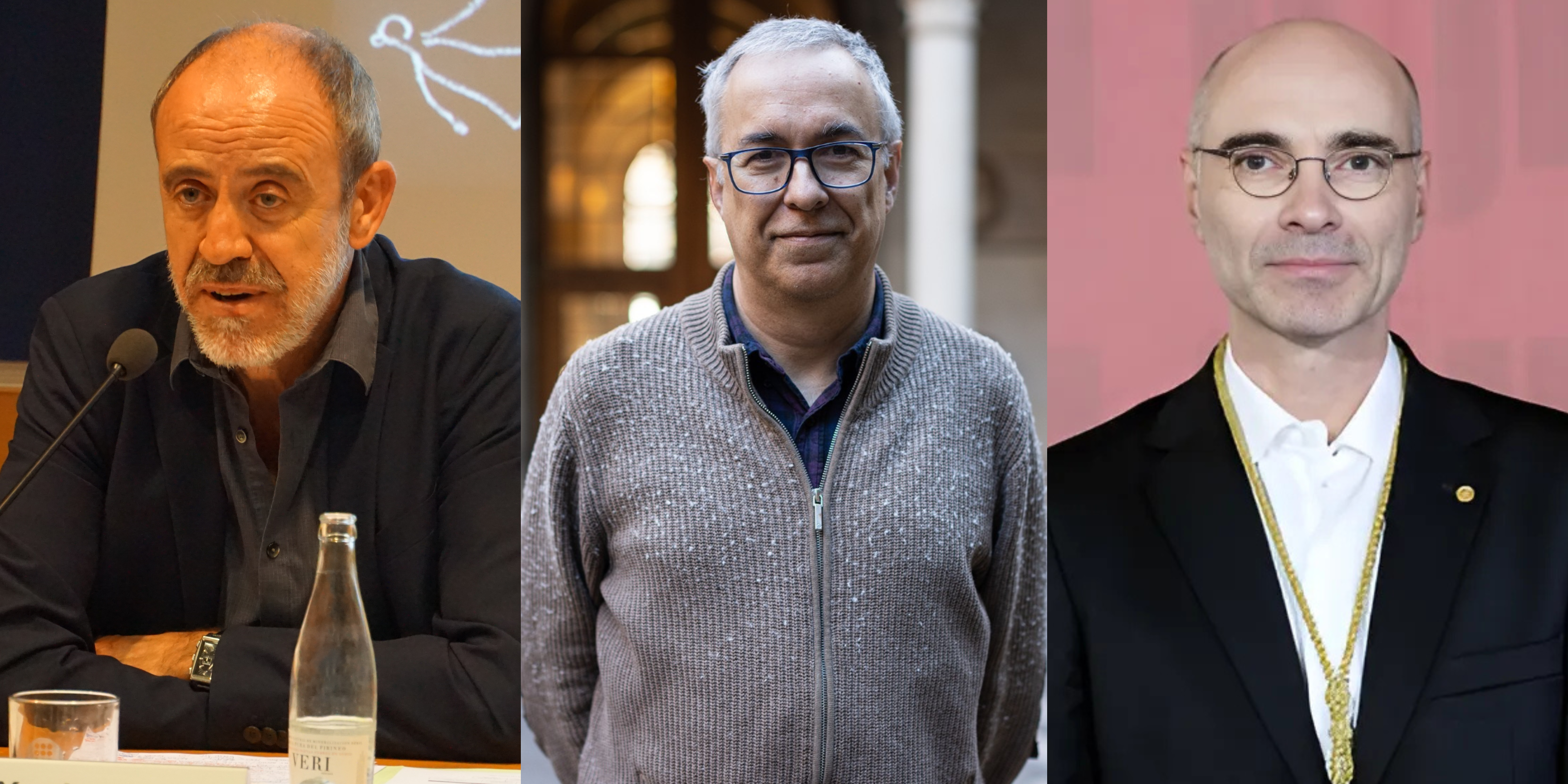
From left to right: Xavier Cabré, Joaquim Ortega (photo by Xènia Fuentes, UB), and Xavier Tolsa.
The International Congress of Mathematicians (ICM), to be held in Philadelphia in 2026, is the most prestigious event in the mathematical sciences. Being invited to speak at the ICM is one of the highest distinctions in the field. In this edition, three researchers affiliated with the Centre de Recerca Matemàtica (CRM) have been selected as invited speakers: Xavier Cabré, Joaquim Ortega-Cerdà, and Xavier Tolsa.
Xavier Cabré, Professor at the Universitat Politècnica de Catalunya and ICREA researcher affiliated with the CRM, will deliver a talk in the Partial Differential Equations section. His work in nonlinear PDEs has earned international recognition, particularly his contribution to solving a long-standing open problem posed by Haim Brezis.
“It’s an honour, of course,” Cabré explains. “Beyond my past contributions to PDEs, this invitation is especially meaningful to me, as I believe it’s connected to a paper I published in 2020 in Acta Mathematica, where I solved a problem posed by Haim Brezis that I had been working on since 1996, making progress through partial results until the final resolution in 2020.”
Reflecting on the broader impact, he adds: “This recognition highlights the progress made by the Catalan mathematical community in recent decades, especially since several Catalan researchers were invited to the ICM 2026. It also serves as motivation for young mathematicians here, who are already showing, as hoped and expected, a much higher level than my own generation.”
“This edition features more Catalan speakers than ever before. I believe it reflects the level of research we’ve reached as a community”
Joaquim Ortega-Cerdà, Professor at the University of Barcelona and member of the CRM, will speak in the Analysis section. His research in potential theory, function spaces, and interpolation problems has established deep connections between harmonic analysis, complex geometry, and spectral theory.
“It’s a great honour, and I feel truly flattered,” says Ortega. “I’ve never participated in an International Congress of Mathematicians, and I’m excited about this opportunity. Mathematics also has a strong social component; beyond the private joy of solving a problem, it’s always gratifying to receive recognition from your peers. I’m also looking forward to sharing some of the problems I’ve been working on recently and gaining a broad overview of the latest developments and trends in modern mathematics.”
On the presence of Catalan researchers at the event, he notes: “This edition features more Catalan speakers than ever before. I believe it reflects the level of research we’ve reached as a community and the international visibility that our predecessors worked so hard to build.”
Xavier Tolsa, Professor at the Universitat Autònoma de Barcelona and affiliated researcher at the CRM, will speak in the Geometry and Analysis section. A recipient of the Rei Jaume I Prize and the Catalan National Research Award, Tolsa is widely recognised for his groundbreaking work in geometric measure theory and classical problems in analysis.
The participation of these three researchers highlights the strength and international standing of mathematical research carried out in Catalonia.
The full list of invited speakers is available at the following link: ICM 2026 Speakers.
|
|
CRM CommPau Varela
|
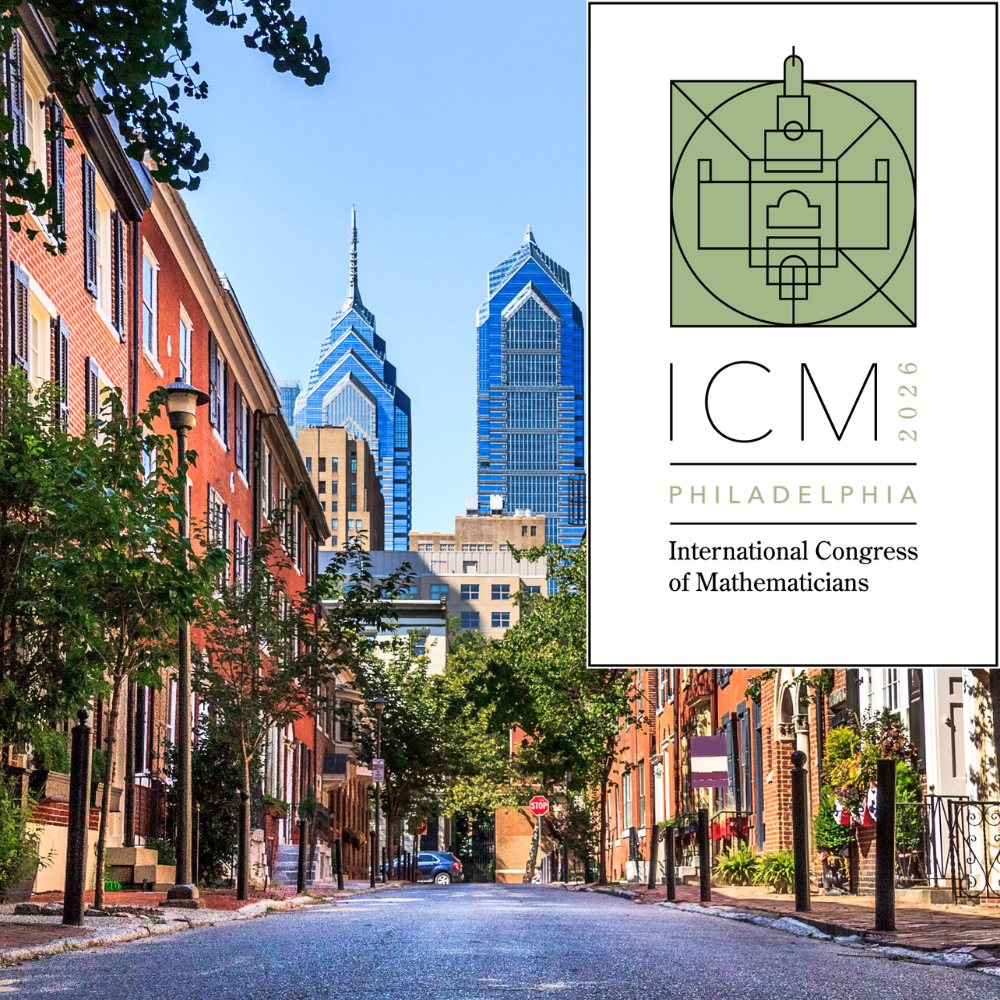
From left to right: Xavier Cabré, Joaquim Ortega (photo by Xènia Fuentes, UB), and Xavier Tolsa. Three researchers affiliated with the Centre de Recerca Matemàtica (CRM), Xavier Cabré, Joaquim Ortega-Cerdà and Xavier Tolsa, have been invited to…
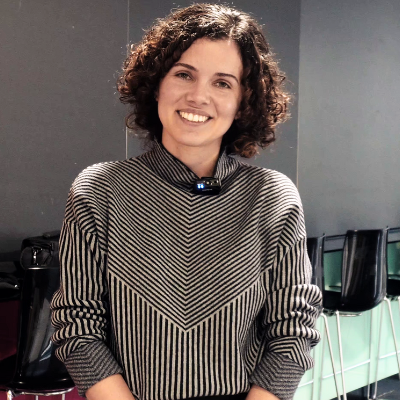
L’investigadora Gissell Estrada Rodríguez, professora a la UPC i adscrita al CRM, ha rebut una Beca Leonardo 2025 per desenvolupar un projecte que combina matemàtiques i robòtica per estudiar la migració col·lectiva en sistemes vius i artificials….
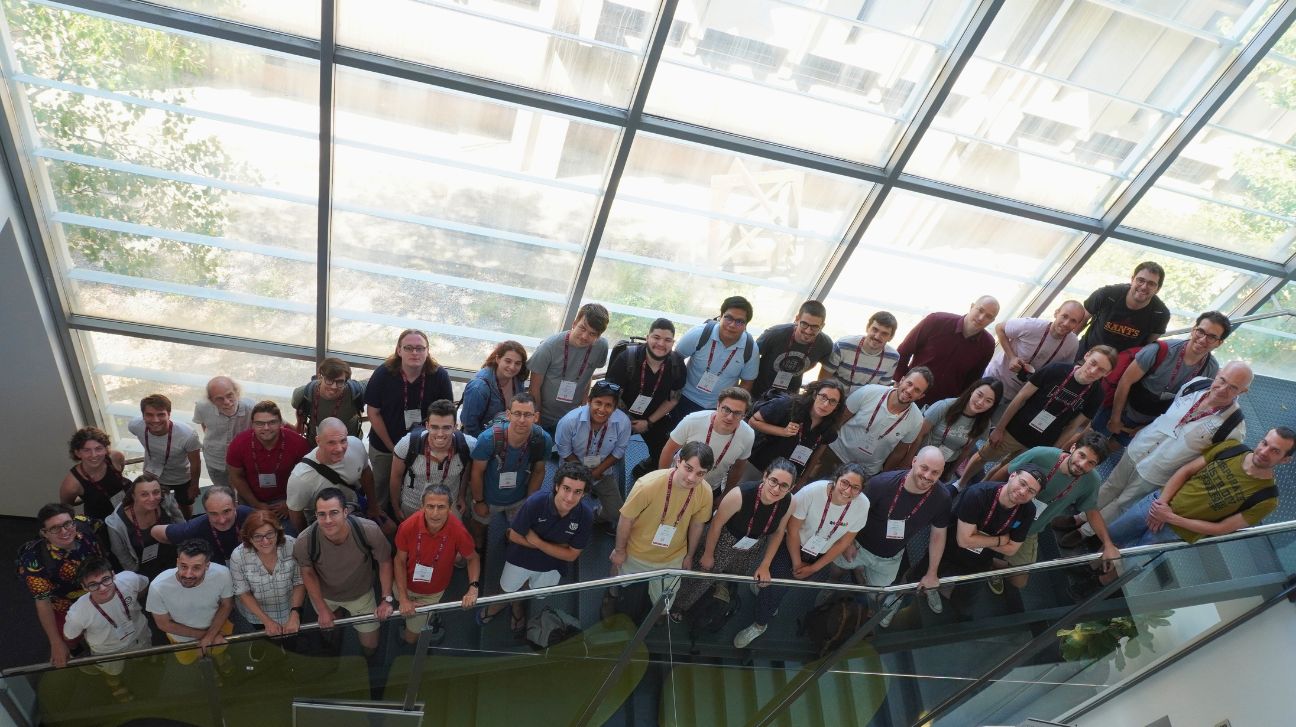
JISD 2025, held at the Centre de Recerca Matemàtica (CRM) from June 30 to July 4, 2025, featured four advanced minicourses delivered by Dmitry Dolgopyat (on averaging and Fermi acceleration in dynamical systems), Serena Dipierro (on the theory of nonlocal minimal…
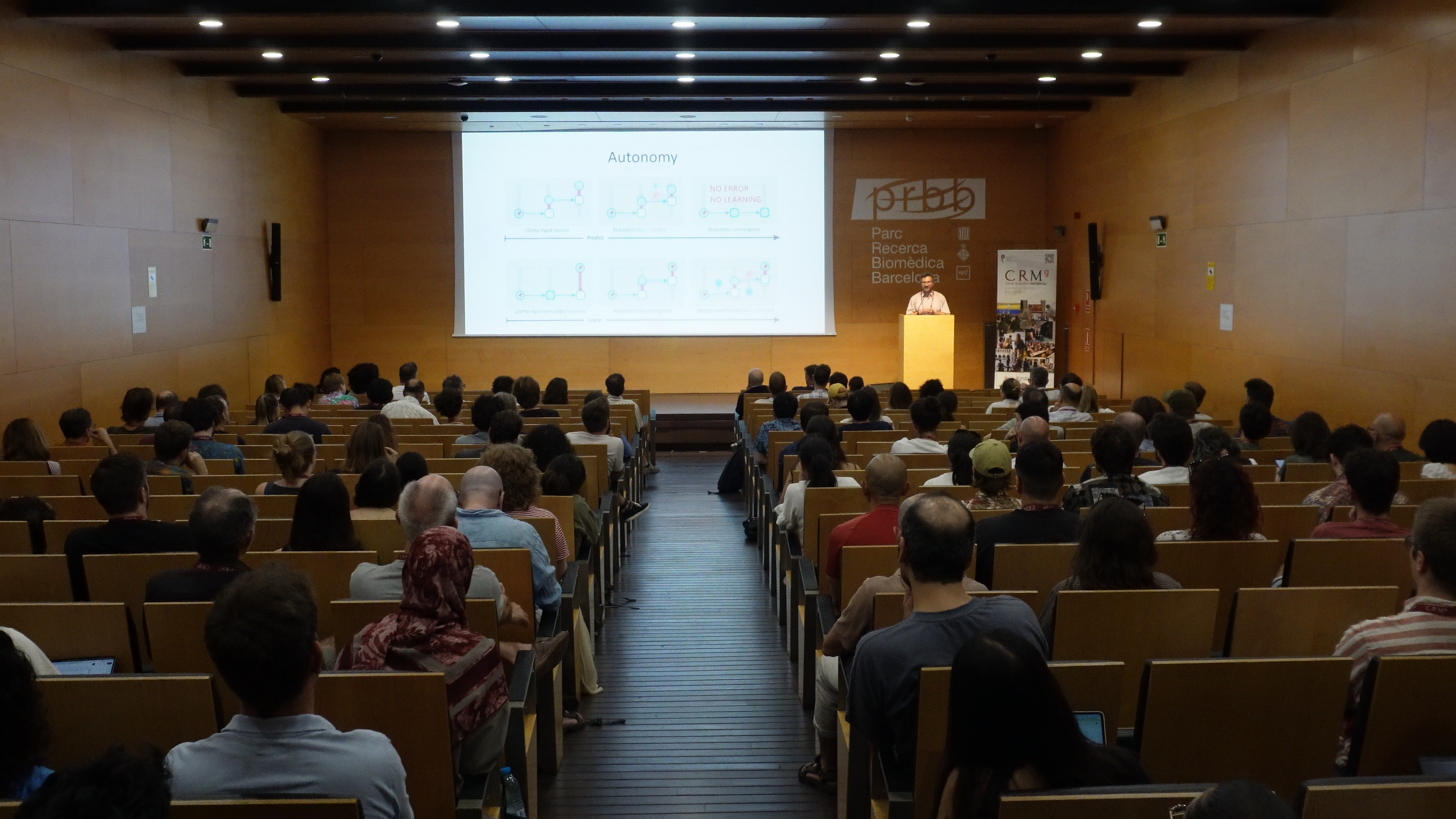
The 10th edition of the International Conference on Mathematical Neuroscience (ICMNS 2025) gathered more than 150 researchers from over 25 countries at the PRBB in Barcelona. Organised by the CRM and UPC, with the support of UPF, the event…
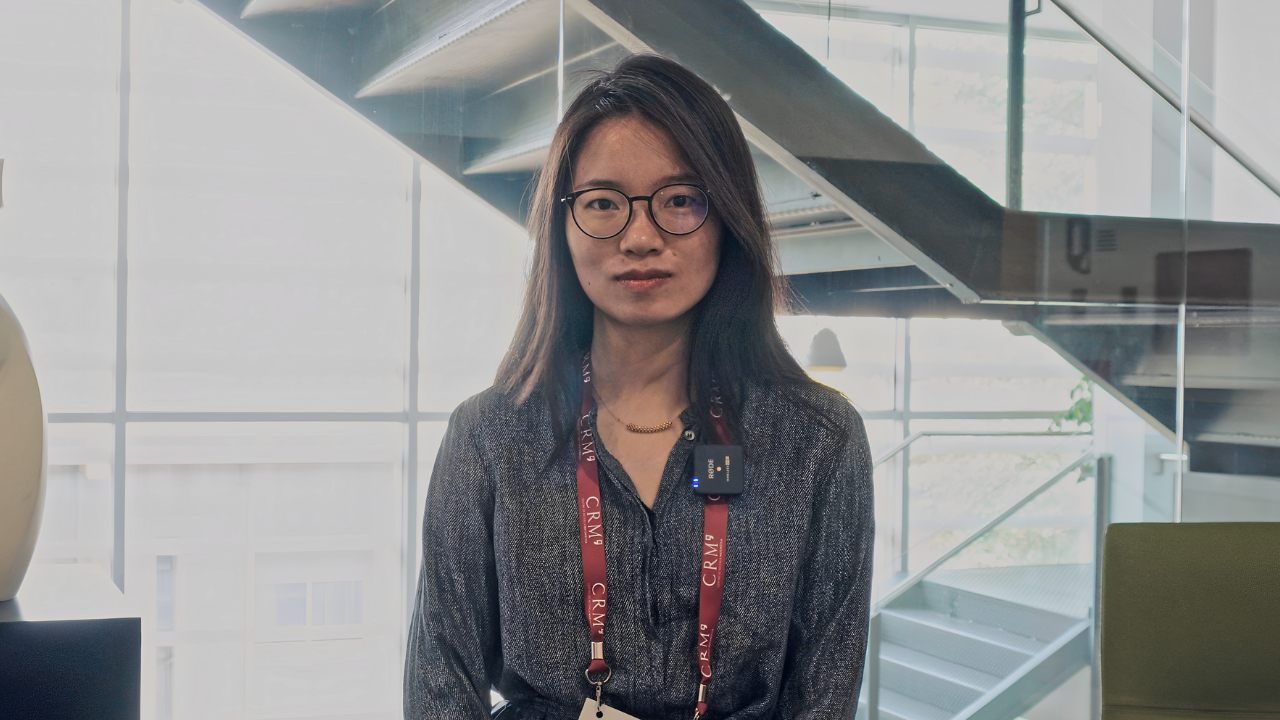
At the Modern Trends in Fourier Analysis conference held at the Centre de Recerca Matemàtica, mathematician Hong Wang (NYU Courant) presented a new approach to the Stein restriction conjecture, connecting it with geometric incidence problems…
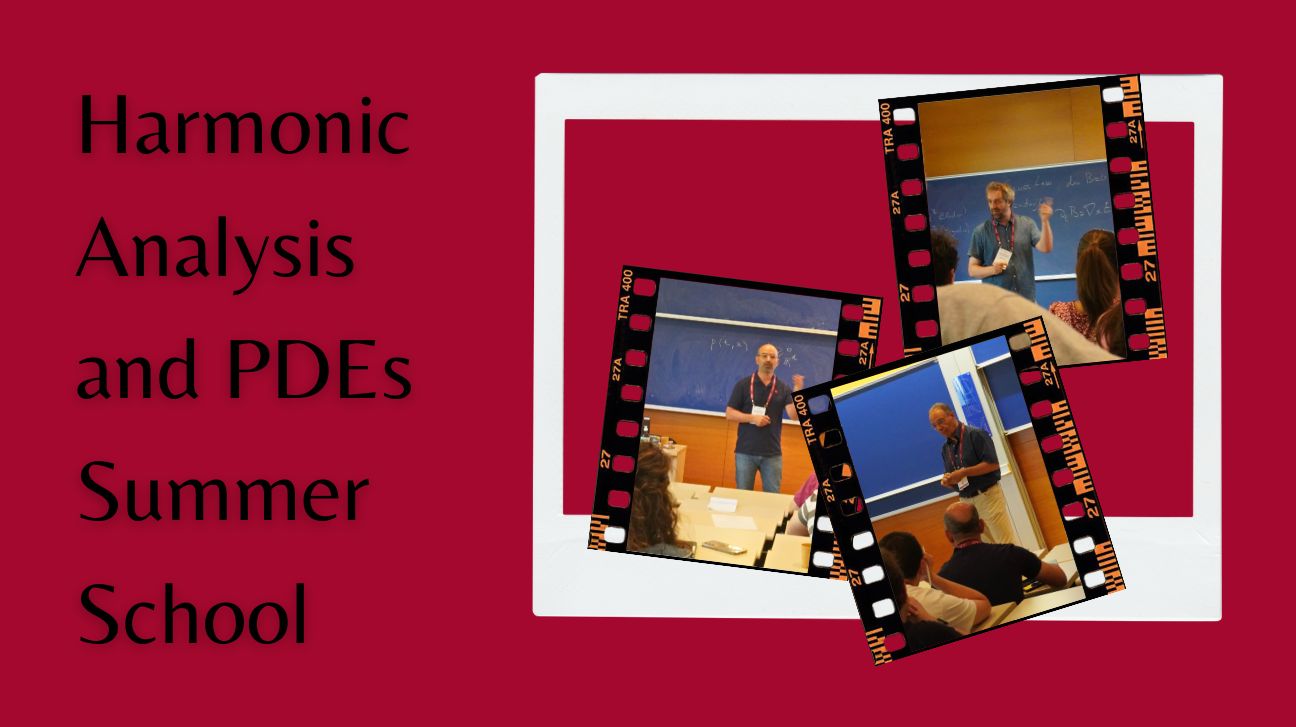
From June 25 to 27, 2025, the Summer School on Harmonic Analysis and PDEs brought together researchers and students for three days of advanced courses and discussion. With lectures by Taoufik Hmidi, Daniel Faraco, and Joan Verdera, the program covered topics like…
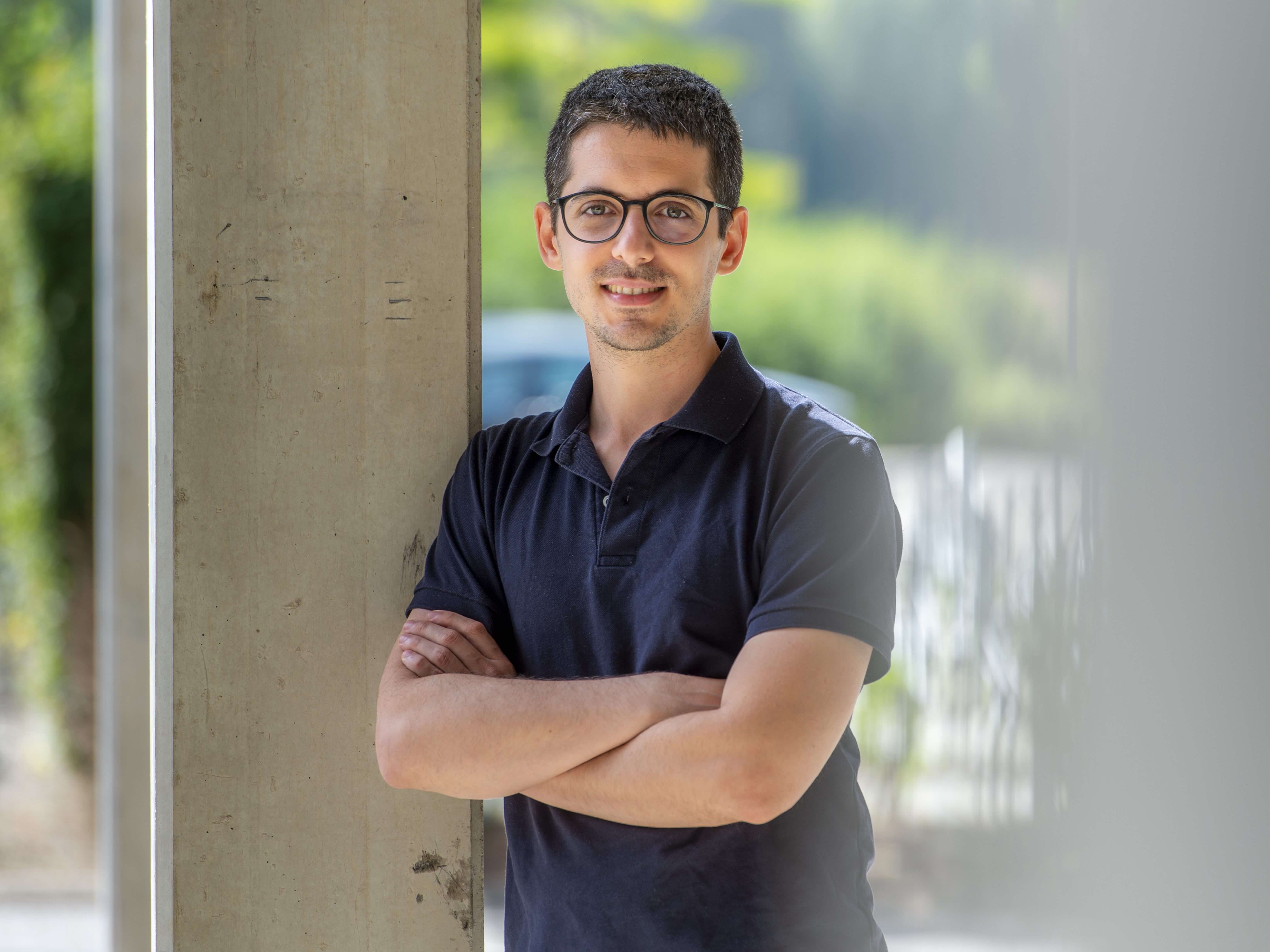
Guillem Blanco, professor de la UPC i investigador adscrit al CRM, ha estat guardonat amb el Premi José Luis Rubio de Francia 2024 per les seves contribucions a la teoria de les singularitats i els D-mòduls. El jurat ha destacat, entre altres…
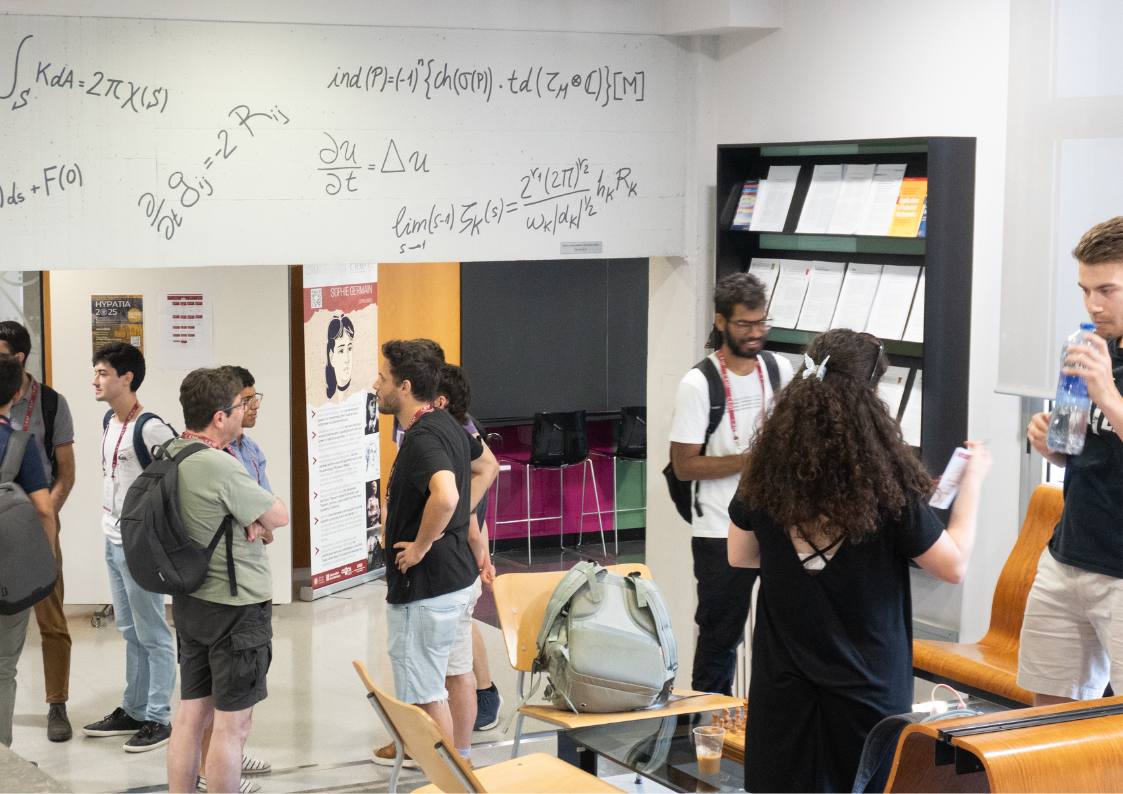
The fourth edition of the Hypatia Graduate Summer School took place from 16 to 19 June 2025 in Barcelona. Addressed to PhD students, the school combined two advanced courses in number theory with a public colloquium, a film screening, and…
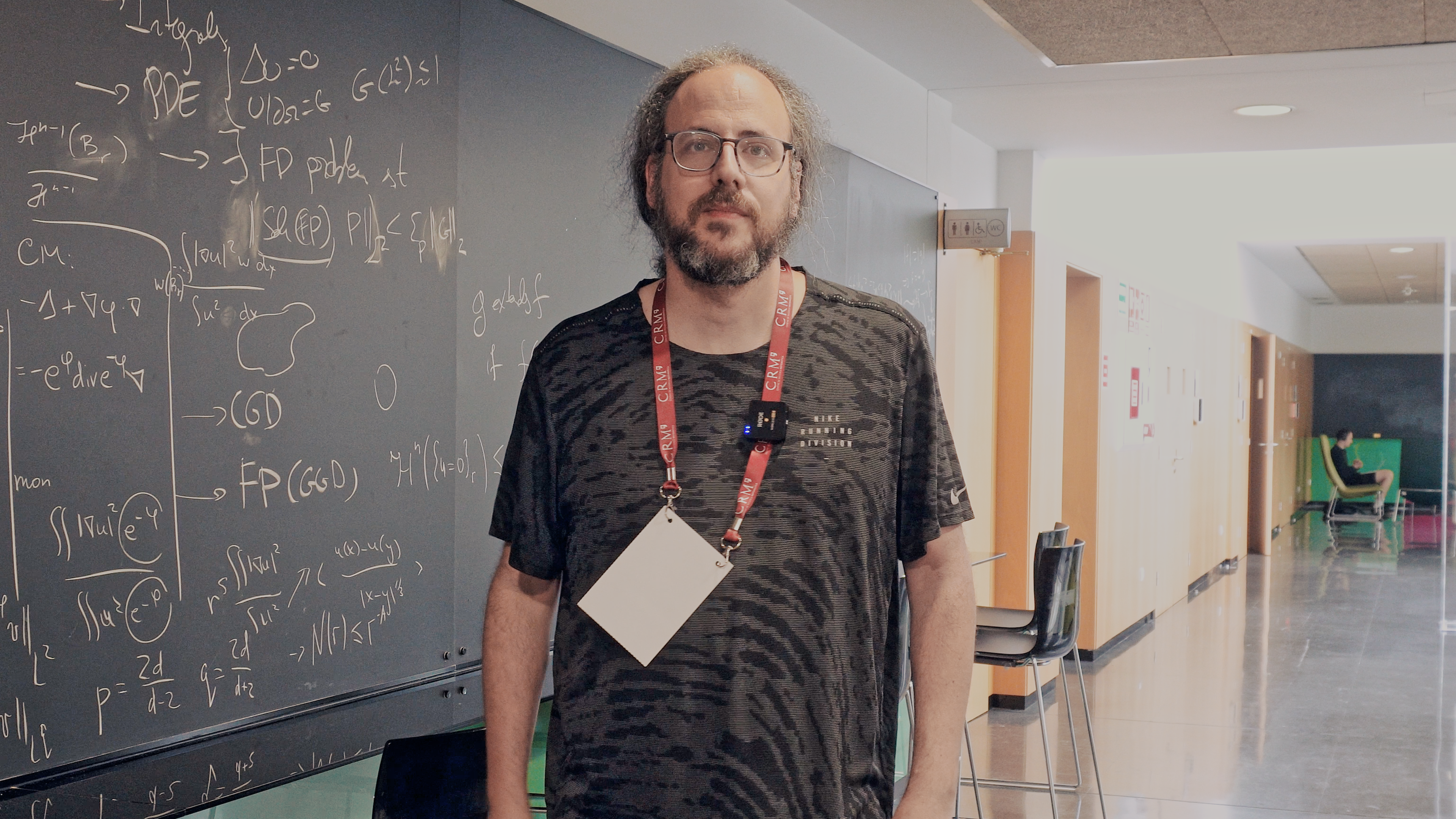
Javier Gómez Serrano, former CRM member and professor at Brown University, is working with Terence Tao and DeepMind on AlphaEvolve, an AI tool that uses code evolution to solve complex math problems. For him, it signals a shift in how research is…
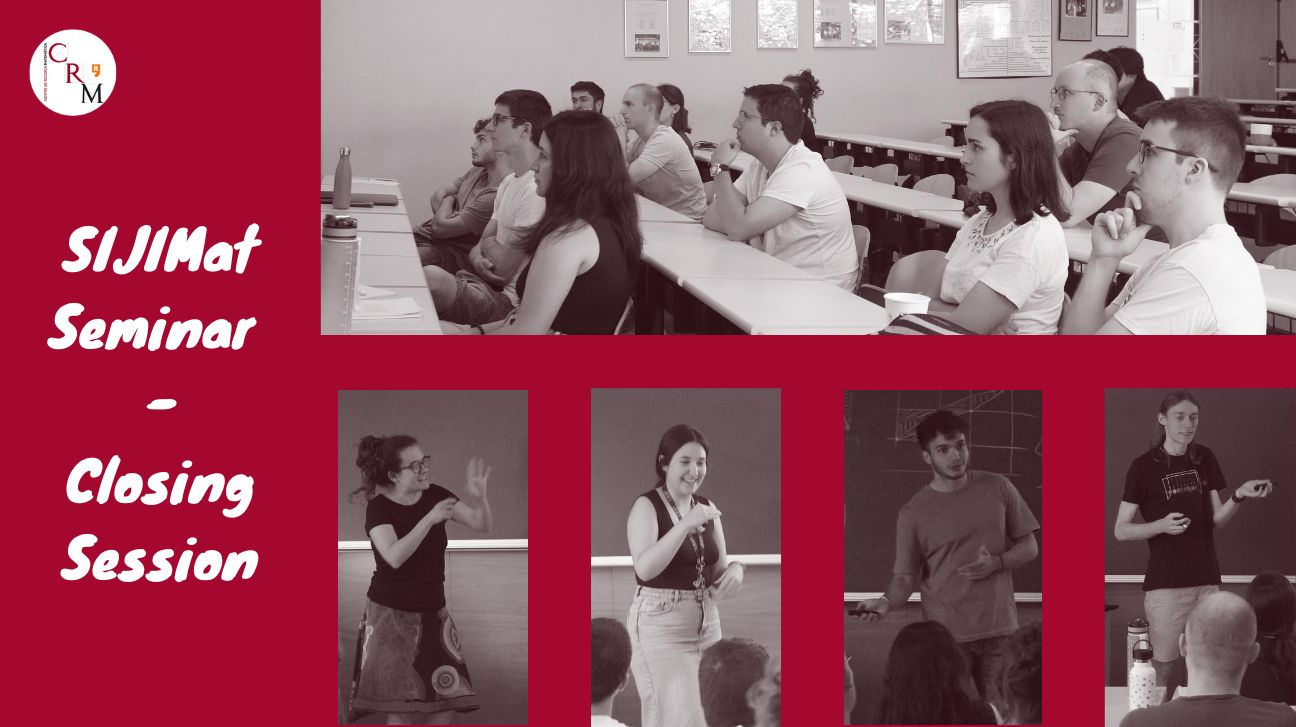
Four young researchers (S. Dhyr, A. Garcia, L. Unamuno and R.Homs) at CRM present their work in geometry, neuroscience, environmental statistics, and algebraic methods in the final SIJIMat session of the academic year.On June 12, the Centre de Recerca Matemàtica (CRM)…
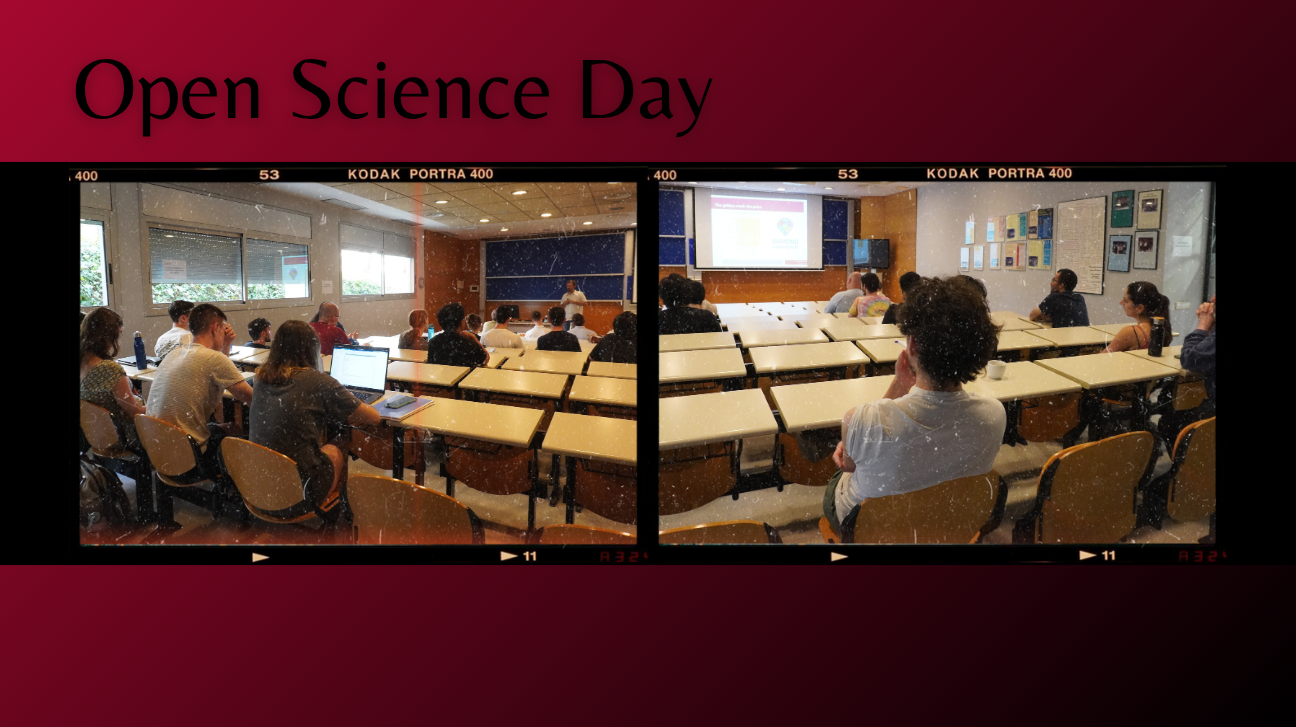
On June 11, the Centre de Recerca Matemàtica (CRM) hosted the Open Science Day, bringing together researchers to explore the principles, challenges, and transformative potential of open science. With a central talk by Ignasi Labastida and a roundtable featuring…
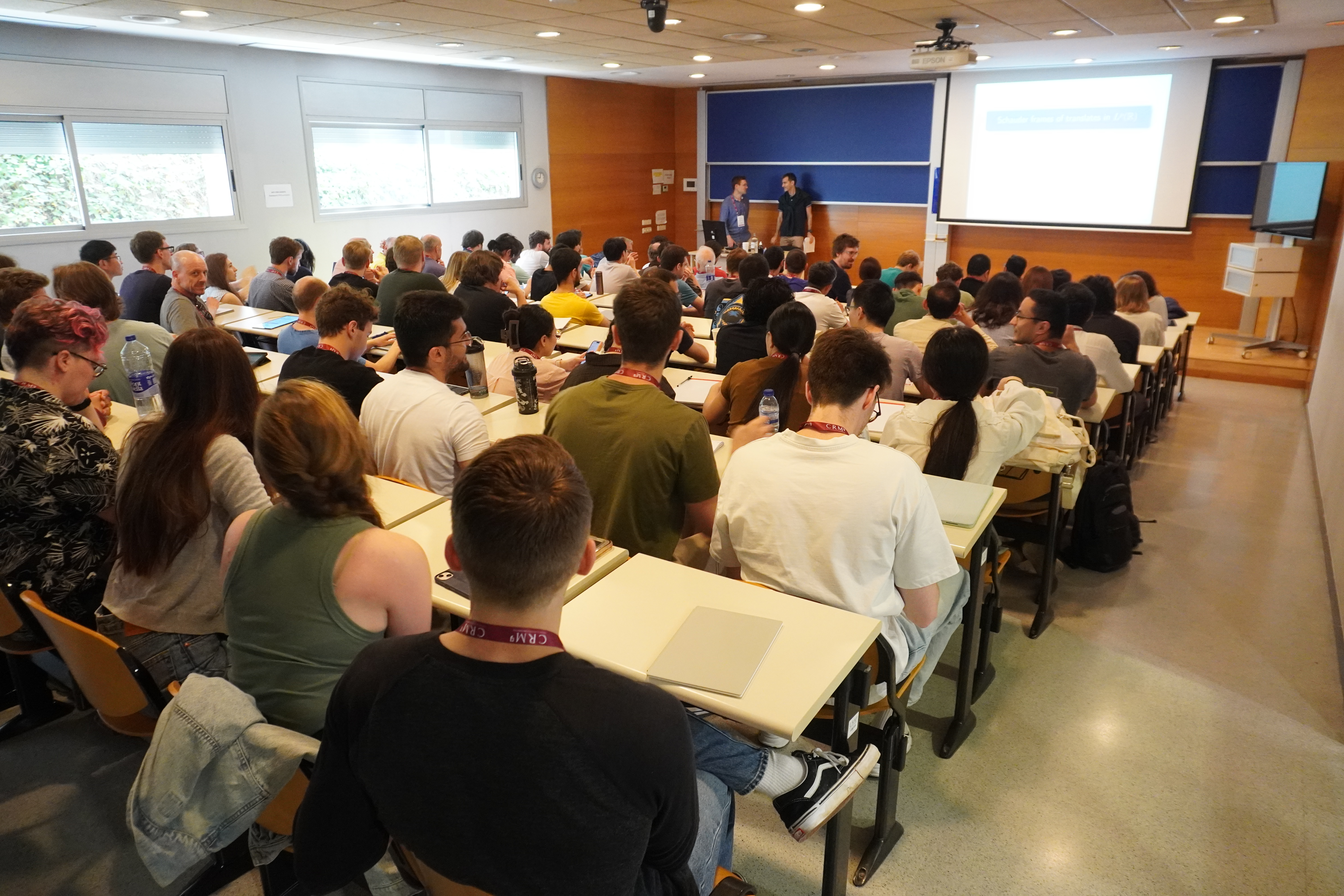
For one intense week, the CRM auditorium became a meeting point for some of the most active researchers in modern Fourier analysis. From June 2 to June 6, 2025, the Conference on Modern Trends in Fourier Analysis brought together senior experts,…
The post Three CRM Researchers Invited to Speak at the 2026 International Congress of Mathematicians first appeared on Centre de Recerca Matemàtica.

ICTA-UAB has been accredited, for the third time, as a “María de Maeztu” Unit of Excellence by the Spanish Ministry of Economy and Competitiveness through the State Research Agency (AEI). This distinction is the highest awarded at the national level to research centres in Spain, and is awarded in recognition for their scientific leadership, research quality, and international impact.
Santiago Morandi, a PhD student who is under Prof. Núria López’ supervision, has successfully defended his PhD thesis entitled “Digital Solutions for Modeling Heterogeneous Catalysis” publicly on Monday, 7 July.
The members of the evaluation committee were Prof. Thomas Bligaard (Technical University of Denmark (DTU)), Dr. Javier Heras (Universitat de Barcelona) and Prof. Sofia Haussener (EPFL Lausanne).
Santiago Morandi is from Novara, a charming Italian city located between Torino and Milano. He studied Chemical Engineering at Politecnico di Milano before moving to Tarragona, Spain, to join his partner. Initially planning to work in industry, the COVID-19 pandemic in 2020 made job opportunities scarce. After several months, he came across the opportunity to pursue a PhD in the group of Prof. Núria López and decided to take the leap — a decision he considers well worth it after more than four years.
His PhD has been funded by NCCR Catalysis, a Swiss consortium focused on catalysis, in which ICIQ participated as an external member.

Why did you become a scientist?
I have always found science subjects easier to grasp than humanities, even though I was more attracted by the latter. During high school my writing and communication skills were quite limited, while fields like chemistry and mathematics felt more intuitive.
What do you want to achieve as a scientist?
At least in the field of computational chemistry, I would like to demonstrate with my research that content is more important than form, aspect usually twisted in the academic world.
What is your thesis about?
My thesis is about the application of automation and machine learning techniques in the field of computational heterogeneous catalysis. The goal has been to develop new strategies able to facilitate the job of the computational chemist of the future, while at the same time promoting atomistic simulations to a guiding role in catalyst development.
What triggered your interest for the subject of your thesis?
The fact that the study of catalysis at the atomistic scale was completely new to me. As chemical process engineer, my university studies were focused on the industrial application of catalysis.
What applications can your thesis have in the future?
The products of my research can facilitate and accelerate the typical workflow of any computational chemist involved in catalysis. I hope these tools will catalyze the creation of better methodologies able to link atomistic simulations to macroscale catalyst properties.
The thing that I like most about my thesis is….
The potential impact that it could have in the future. I had the opportunity to work with exceptionally creative colleagues with whom it was easy to turn ideas into outcomes.
From the lessons learnt (or skills developed) at ICIQ, which one do you value the most?
Clear and direct communication is crucial for advancing and making real progress in scientific projects. Never be afraid to communicate your point of view, even if it differs from others’.
What will you miss the most from ICIQ?
What I’ll miss the most from ICIQ are the friends I made during my PhD, many of whom have now moved on from ICIQ.
What advice do you have for someone who’s starting their PhD now?
Always be friendly with your colleagues. And try to keep a proper work-life balance, you can be ambitious and achieve personal success even without working on weekends (quality is better than quantity).
Where are you going next? What will you do there?
I will be continuing in the Núria López group as a postdoc trying to close some of those never-ending projects.
What is your favourite molecule?
Theobromine (I do not even know the structure, just know is contained in chocolate)
If you were a piece of lab equipment, what would you be?
The pile of books/articles/notes that I kept accumulating during the last 4 years on my desk.
Tell us something about you that people might not know
I spend most of my spare time playing beach volley in the playas of Tarragona.
La entrada Congratulazioni, Dr. Morandi! se publicó primero en ICIQ.

La investigadora Gissell Estrada, professora a la Universitat Politècnica de Catalunya i adscrita al Centre de Recerca Matemàtica, ha estat seleccionada com una de les 60 beneficiàries de la Beca Leonardo 2025 de la Fundación BBVA. El projecte becat, titulat Collective migration across scales: From PDEs to physical swarms, explora com les interaccions a escala microscòpica entre individus donen lloc a patrons col·lectius a escala macroscòpica, com el moviment de bandades d’ocells, eixams de drons o colònies cel·lulars.
Segons Estrada, es tracta d’ “un marc interdisciplinari que utilitza eixams robòtics programables per validar models basats en equacions en derivades parcials (PDEs) del moviment col·lectiu cel·lular i per posar a prova hipòtesis de desplaçament en condicions de soroll natural i comportaments inesperats”.
Amb una trajectòria internacional que inclou estades a centres com el BCAM, el Mathematical Institute d’Oxford o la Sorbonne Université, la seva recerca se situa a l’encreuament entre les equacions en derivades parcials, els sistemes de partícules interactuants i les aplicacions en biologia i robòtica.
“El modelatge matemàtic funciona com un laboratori d’idees.”
Rebre aquest suport suposa un punt d’inflexió. “Com a investigadora en una etapa inicial treballant en PDEs aplicades, aquesta beca em proporciona una oportunitat única per consolidar la meva línia de recerca independent. A més, permetrà finançar components experimentals, com plataformes robòtiques o la recollida de dades, que normalment no estan coberts per les ajudes estàndard en matemàtiques”, assenyala. El projecte s’emmarca dins del seu objectiu a llarg termini: crear un grup de recerca centrat en l’estudi i aplicació de les PDEs a fenòmens reals.
Més enllà del cas concret d’aquest projecte, Estrada reivindica el paper fonamental de les matemàtiques en les ciències aplicades. “Les matemàtiques són una eina molt potent, no només en biologia o física, sinó també en les ciències socials. Permeten afinar models, validar hipòtesis i reduir la necessitat d’experiments costosos o lents. El modelatge matemàtic funciona com un laboratori d’idees”, conclou.
Amb el suport de la beca Leonardo, la seva recerca rep un nou impuls per continuar obrint camins entre la teoria matemàtica i els sistemes complexos que habiten el nostre món, des del microcosmos cel·lular fins a la robòtica del futur.
|
|
CRM CommPau Varela
|
L’investigadora Gissell Estrada Rodríguez, professora a la UPC i adscrita al CRM, ha rebut una Beca Leonardo 2025 per desenvolupar un projecte que combina matemàtiques i robòtica per estudiar la migració col·lectiva en sistemes vius i artificials….
JISD 2025, held at the Centre de Recerca Matemàtica (CRM) from June 30 to July 4, 2025, featured four advanced minicourses delivered by Dmitry Dolgopyat (on averaging and Fermi acceleration in dynamical systems), Serena Dipierro (on the theory of nonlocal minimal…
The 10th edition of the International Conference on Mathematical Neuroscience (ICMNS 2025) gathered more than 150 researchers from over 25 countries at the PRBB in Barcelona. Organised by the CRM and UPC, with the support of UPF, the event…
At the Modern Trends in Fourier Analysis conference held at the Centre de Recerca Matemàtica, mathematician Hong Wang (NYU Courant) presented a new approach to the Stein restriction conjecture, connecting it with geometric incidence problems…
From June 25 to 27, 2025, the Summer School on Harmonic Analysis and PDEs brought together researchers and students for three days of advanced courses and discussion. With lectures by Taoufik Hmidi, Daniel Faraco, and Joan Verdera, the program covered topics like…
Guillem Blanco, professor de la UPC i investigador adscrit al CRM, ha estat guardonat amb el Premi José Luis Rubio de Francia 2024 per les seves contribucions a la teoria de les singularitats i els D-mòduls. El jurat ha destacat, entre altres…
The fourth edition of the Hypatia Graduate Summer School took place from 16 to 19 June 2025 in Barcelona. Addressed to PhD students, the school combined two advanced courses in number theory with a public colloquium, a film screening, and…
Javier Gómez Serrano, former CRM member and professor at Brown University, is working with Terence Tao and DeepMind on AlphaEvolve, an AI tool that uses code evolution to solve complex math problems. For him, it signals a shift in how research is…
Four young researchers (S. Dhyr, A. Garcia, L. Unamuno and R.Homs) at CRM present their work in geometry, neuroscience, environmental statistics, and algebraic methods in the final SIJIMat session of the academic year.On June 12, the Centre de Recerca Matemàtica (CRM)…
On June 11, the Centre de Recerca Matemàtica (CRM) hosted the Open Science Day, bringing together researchers to explore the principles, challenges, and transformative potential of open science. With a central talk by Ignasi Labastida and a roundtable featuring…
For one intense week, the CRM auditorium became a meeting point for some of the most active researchers in modern Fourier analysis. From June 2 to June 6, 2025, the Conference on Modern Trends in Fourier Analysis brought together senior experts,…
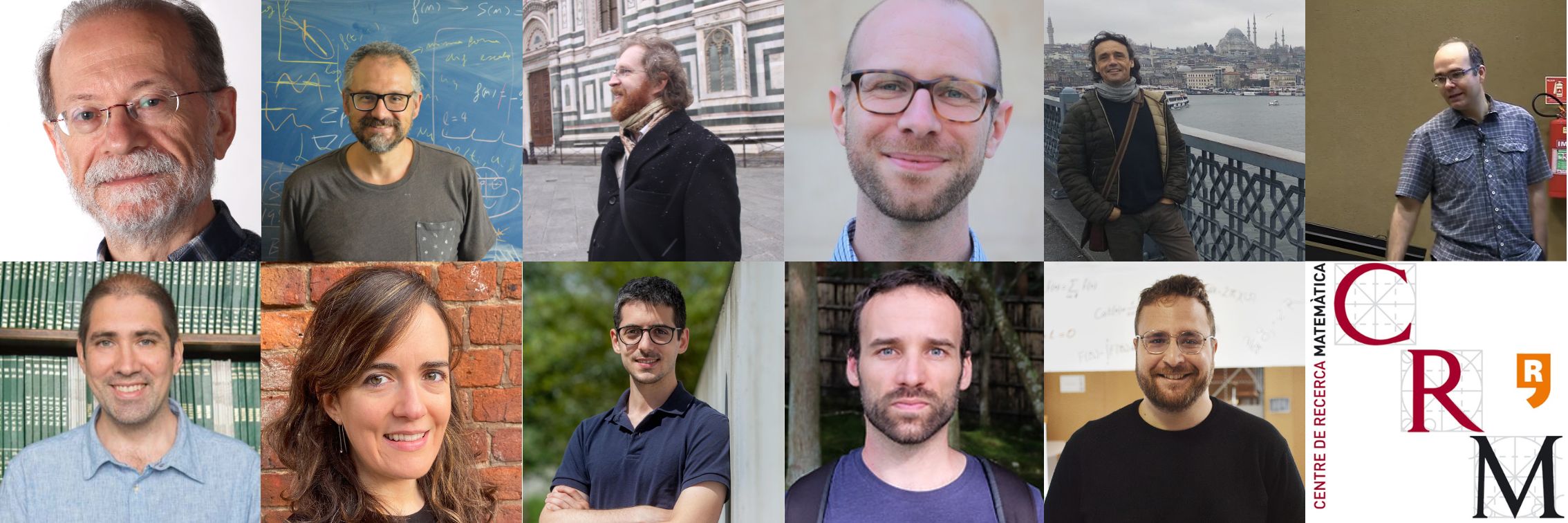
From left to right, top to bottom: Carles Broto (UAB-CRM), Álvaro Corral (UAB-CRM), Wolfgang Pitsch (UAB-CRM), Richard Lang (UPC – CRM), Simeon Ball (UPC – CRM), Lluís Vena (UPC – CRM), Jorge Antezana (UB-CRM), Leticia Pardo (UB-CRM), Guillem Blanco (UPC – CRM),…
The post Gissell Estrada, beca Leonardo 2025 per explorar la migració col·lectiva amb matemàtiques i robots first appeared on Centre de Recerca Matemàtica.