In the second half of 2025, Eva Miranda (UPC and CRM) delivered a plenary lecture at the International Congress of Basic Science in Beijing, participated as a panellist at the World Artificial Intelligence Conference in Shanghai, and taught a Nachdiplom Lecture course on singular symplectic manifolds at ETH Zürich. In this article, Miranda reflects on how sustained physical presence at international forums and research stays exposes mathematicians to unfamiliar questions and ways of thinking that routine at home cannot provide.
It was supposed to be half an hour. A brief, almost protocolary meeting at ETH with Stephen Wolfram, the physicist and computer scientist behind Mathematica and a long-standing advocate for the idea that computation underlies physical reality, who was passing through Zürich. Eva Miranda, Full Professor at the Universitat Politècnica de Catalunya (UPC) and affiliated researcher at the Centre de Recerca Matemàtica (CRM), had been invited to say hello. Thirty minutes, perhaps a handshake, perhaps a few words about computation and geometry.
They talked for six and a half hours straight.
“He asked very direct questions, almost Socratic,” Miranda recalls. “‘How do you want to attack this?’ That method, seemingly simple but relentless, triggered a completely new impulse.” The conversation dragged her back into a problem she had been circling for years: the undecidability of the three-body problem. She had been thinking about it before, starting from the Sitnikov problem and possible couplings, but routine had absorbed her attention. Wolfram’s visit broke that gravitational pull.
The encounter happened during Miranda’s three-month appointment as Nachdiplom Lecturer at ETH Zürich, one leg of a 2025 that also took her to Beijing, Shanghai, and Göttingen. For a mathematician whose research connects symplectic geometry with fluid dynamics and theoretical computer science, each destination brought different collisions. But the pattern underneath was always the same, sometimes the work that changes you happens when you leave home.
From Beijing to Shanghai, through a different scientific culture
In July, Miranda delivered a lecture at the International Congress of Basic Science (ICBS) in Beijing, the annual gathering initiated by Fields Medallist Shing-Tung Yau. The 2025 edition brought nearly a thousand scholars to the Beijing Institute of Mathematical Sciences and Applications, among them over 400 leading scientists, four Fields medallists, three Nobel laureates, and two Turing Award winners.
Her talk, Chaos by Nature: Trajectories of the Undecidable, traced a line from Hilbert’s early twentieth-century dream of a mathematics where every problem could be solved, through Gödel and Turing’s discovery that some questions resist computation altogether, to the more recent confrontation with classical chaos and its sensitivity to initial conditions. Then it went further. In 2021, Miranda and her collaborators Robert Cardona, Daniel Peralta-Salas, and Francisco Presas proved that fluids governed by Euler’s equations can be used to compute, and that this creates trajectories whose behaviour cannot be predicted by any algorithm. The construction relied on contact geometry, a natural framework for encoding complex dynamics.
The lecture also presented more recent work showing that the Navier-Stokes equations can be Turing complete, a result that answers the original question posed by Fields Medallist Terence Tao that started this whole line of research. The paper has been accepted for publication in PNAS Nexus. From there the lecture moved into newer territory: Topological Kleene Field Theory, a computational model that fuses topology, geometry, and logic, and that unveils structural barriers to prediction not only in fluid dynamics but also in celestial mechanics. The question Miranda left the audience with was pointed: is the universe not merely unpredictable, but, at its core, incomputable?
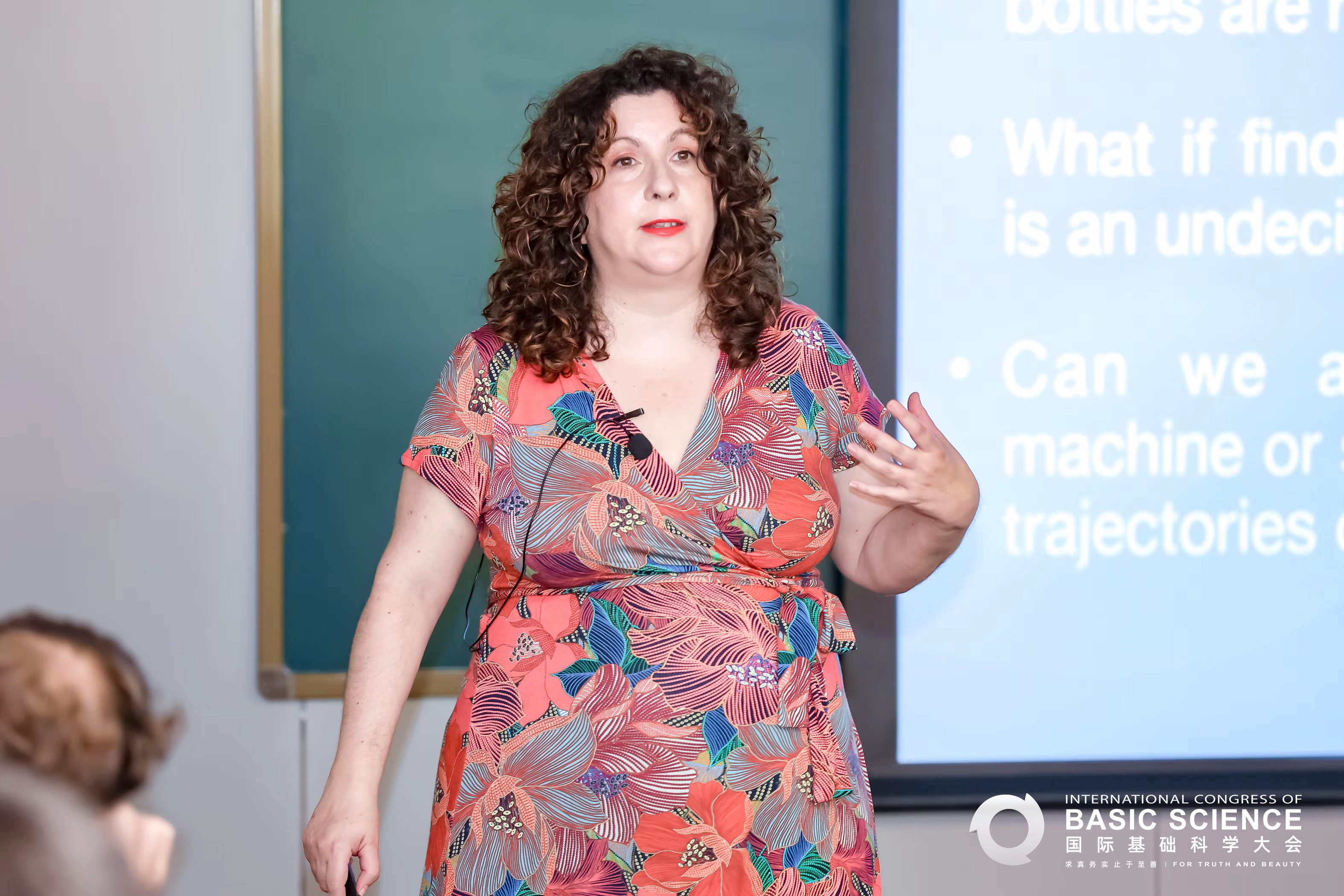
Eva Miranda at the Smale Institute for Mathematics and Computation, co-organiser of the WAIC 2025 forum on Mathematical Frontiers and Foundational Reconstruction of AI.
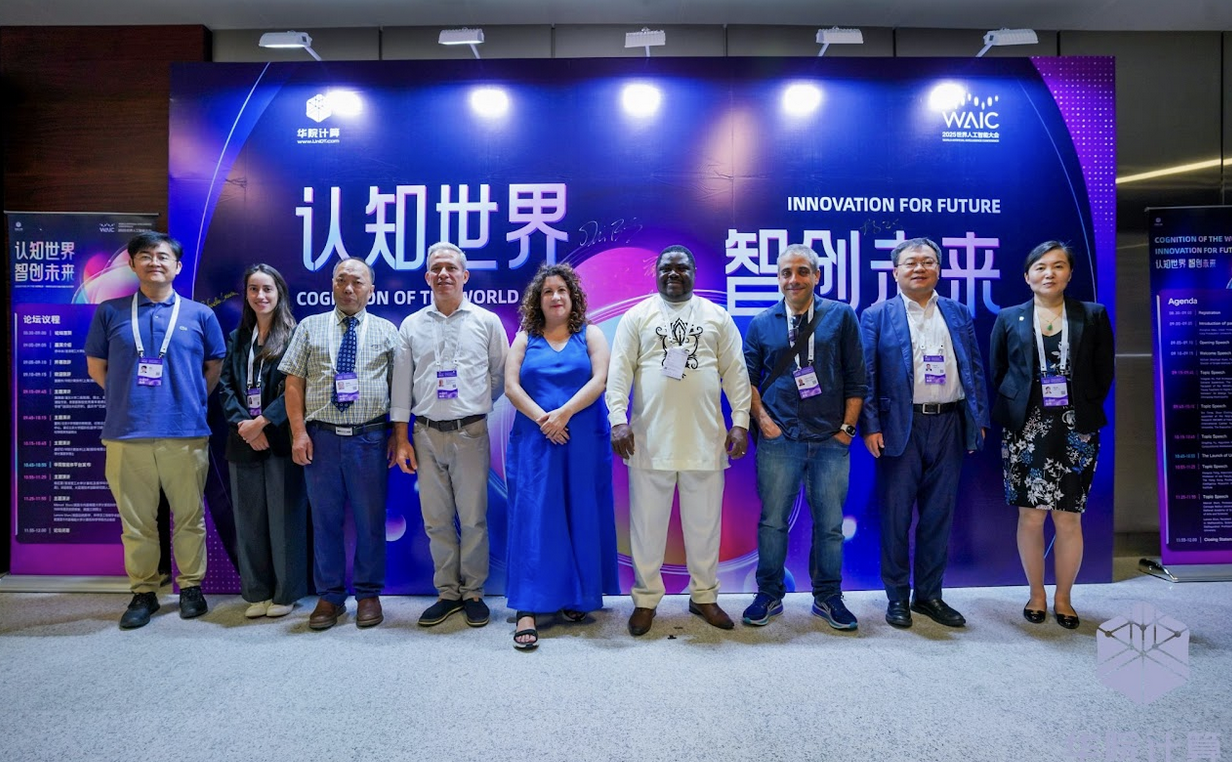
Days later, she was in Shanghai for the World Artificial Intelligence Conference (WAIC), where she participated as a panellist in the forum on Mathematical Frontiers and Foundational Reconstruction of AI, co-organised by the UNIDT and Smale Institute for Mathematics and Computation. The meeting brought mathematicians, computer scientists, and engineers into conversation about large-scale language model optimisation, adversarial modelling, and the still-uncharted relationship between mathematical foundations and artificial intelligence.
“Changing your environment puts you in front of questions you would never have asked on your own, takes you out of comfort and confronts you with other ways of thinking. And sometimes, as happened to me here, it returns you to fundamental problems with a completely renewed energy.”
“The congresses in China were fascinating,” she says. “What surprised me most was the extraordinary care for the guests and the attention to detail in the organisation, which created a very strong sense of hospitality.” She also noticed a strategic intent. “There was a clear ambition to situate research within a global framework, with a very ambitious discourse oriented toward the future. Compared to Europe or the United States, the tone was perhaps more institutional and projective, but at the same time very dynamic, with an energy and a scale that were truly impressive.”
Asked whether forums like ICBS and WAIC succeed in breaking disciplinary boundaries, Miranda is enthusiastic. “I found it very interesting to observe how these congresses foster a real blend of disciplines, creating spaces where it’s natural for mathematicians, physicists, computer scientists and engineers to talk to each other.” The compartments still exist, she adds. Different languages, different organisational structures. “But precisely for that reason, these forums are so important, they act as catalysts that can trigger unexpected connections.”
A semester in Zürich
The Nachdiplom Lectures at ETH are among the more rarefied invitations in mathematics. Hosted by the Forschungsinstitut für Mathematik (FIM), founded by Beno Eckmann in 1964, the series brings two to four mathematicians each semester to deliver a full graduate-level course. A selection committee drawn from ETH’s Department of Mathematics, the FIM, and the Zurich Graduate School of Mathematics chooses lecturers whose work defines the frontier of their field. The archive reads accordingly: Alessio Figalli, Claire Voisin, Wendelin Werner, Stanislav Smirnov, Gigliola Staffilani. Many of the courses have become monographs in the EMS book series Zurich Lectures in Advanced Mathematics.
Miranda taught her course, Singular Symplectic Manifolds, from September to December. The subject is one she has shaped over more than a decade, beginning with her collaboration with Victor Guillemin at MIT. The course explored b-symplectic manifolds, structures that are symplectic everywhere except along a critical hypersurface where the geometry degenerates in a controlled way. These structures show up naturally in celestial mechanics, particularly in the restricted three-body problem, and in the geometry of geodesics on the Lorenz plane.
One of the course’s central threads was the technique of desingularisation, a procedure that associates to a singular symplectic structure a family of smooth ones (in the even-exponent case) or folded symplectic structures (in the odd-exponent case). The procedure unifies several apparently distinct geometries under a single framework. The course also pushed toward the frontier of current research, discussing potential approaches to defining Floer homology for b-symplectic manifolds, a new direction at the interface between symplectic topology and Poisson geometry.
The semester produced tangible research progress. “During these three months we made a decisive advance in understanding the relationship between the Morse theory viewpoint and how to arrive at a Floer homology using spectral geometry,” Miranda says. “This conceptual step, seeing how an analytical structure transforms into a global invariant, is not trivial. It required time, insistence, and many good questions.” The students, she adds, were central to that process: “When you have to explain a complex idea to an attentive group, you have to understand it for real. If it doesn’t survive that filter, it’s no good.”
Ask Miranda what mattered most about the semester, and her answer comes without hesitation.
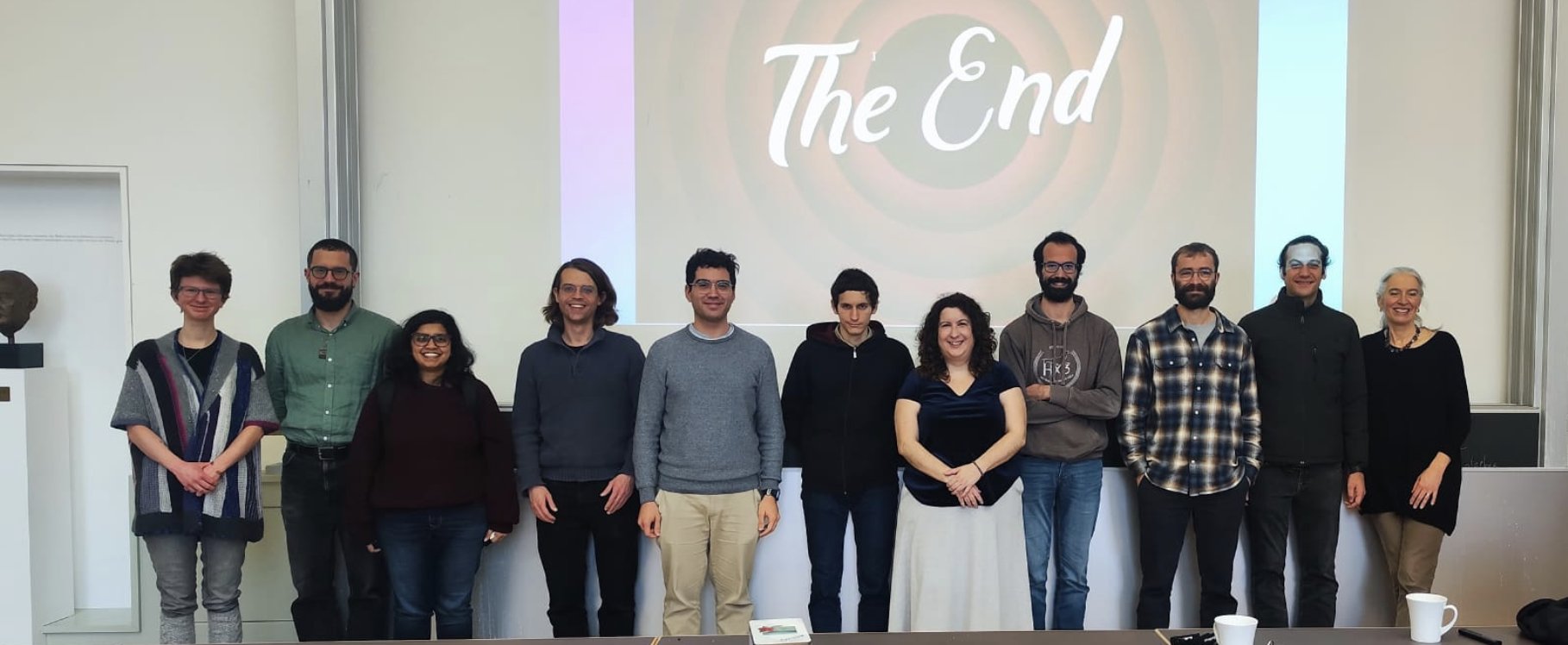
Eva Miranda at ETH Zürich, where she delivered the Nachdiplom Lecture course “Singular Symplectic Manifolds” from September to December 2025.
“The first and most important thing are the students. A large group, extraordinarily motivated, with a real desire to understand. And this is key, because to learn, and to do research, you need to know how to listen, not start from the assumption that you already know everything.” The group she found in Zürich listened, questioned, insisted. “This changes the way you think.”
The classes grew beyond what had been planned. Problem sessions that were not in the original schedule emerged organically. “They became real discussion spaces, where often a well-formulated question would change the course of an entire session.” During the semester, Miranda proposed open research problems. A couple of articles came out of this work; one is already on the arXiv, co-authored with a student to whom she also supervised a semester paper on billiards. “And that is perhaps the most beautiful thing, the work continues.” As a direct consequence of the course and the seminars she gave in Zürich, two ETH master’s students will come to Barcelona to begin doctoral work under her direction.
The stay consolidated other collaborations too. With Adrien Dawid, she is writing a paper on Hofer metrics on singular manifolds, a line of work that gained momentum from their discussions in Zürich. With Joseph Teichmann from the applied mathematics group, she began exploring how her recently developed Topological Kleene Field Theories might relate to reservoir computing. And with the late Dietmar Salamon, who died suddenly in November 2025, she had discussed ideas connecting Floer homology and Poisson geometry.
On being somewhere else
“A long stay lets you build a real intellectual community,” Miranda says. “It’s not just transmitting content, it’s sharing the process: making mistakes, going back, reformulating. Watching how an idea matures with time. This kind of work, slower but much deeper, is impossible from a distance.”
She puts it more personally, too. “Travelling frees and relaxes me. I think that’s when the best facets of myself emerge. Maybe that’s why I’m always going from one place to another. Changing your environment puts you in front of questions you would never have asked on your own, takes you out of comfort and confronts you with other ways of thinking.”
As happens often in research, the body pays for the journey. Her menisci suffered from all the uphill and downhill walking in Zürich. “But the mind advances, goes back, rereads the path, and insists. And it is in this constant movement, demanding but profoundly human, where the ideas that are truly worth it are born.”
From the China conferences in summer to the Nachdiplom through autumn and winter, Miranda kept moving between unfamiliar rooms and unfamiliar questions. That accumulation of contact is the thing. “Sharing spaces, coffees, and informal discussions with people of very different profiles makes disciplinary boundaries dissolve,” Miranda says. “A dynamic that rarely happens without sustained physical presence.”
Two master’s students from Zürich will arrive in Barcelona soon to start their theses. A paper on Hofer metrics is being written. The three-body problem has a new angle of attack. Somewhere in Miranda’s notes, there are questions from ETH students that she has not finished answering yet. None of this would have happened from her office in Barcelona.
______________________________________________________
Miranda’s 2025 also included a Gauss Professorship at the University of Göttingen, one of the highest honours bestowed by the Göttingen Academy of Sciences. In an interview recorded in the library of the Mathematics Department, she speaks about research, legacy, the challenges of building a career in mathematics.Watch the full interview.
During her stay in Göttingen, she was also interviewed for Mathematical Culture. Read the interview.
Newsletter
Get the latest CRM news and activities delivered to your inbox
Subscribe now
Recent newsletters →
A Semester of Mathematics across Two Continents: Eva Miranda at ETH Zürich, ICBS Beijing, and WAIC Shanghai
In the second half of 2025, Eva Miranda (UPC and CRM) delivered a plenary lecture at the International Congress of Basic Science in Beijing, participated as a panellist at the World Artificial Intelligence Conference in Shanghai, and taught a Nachdiplom Lecture course…
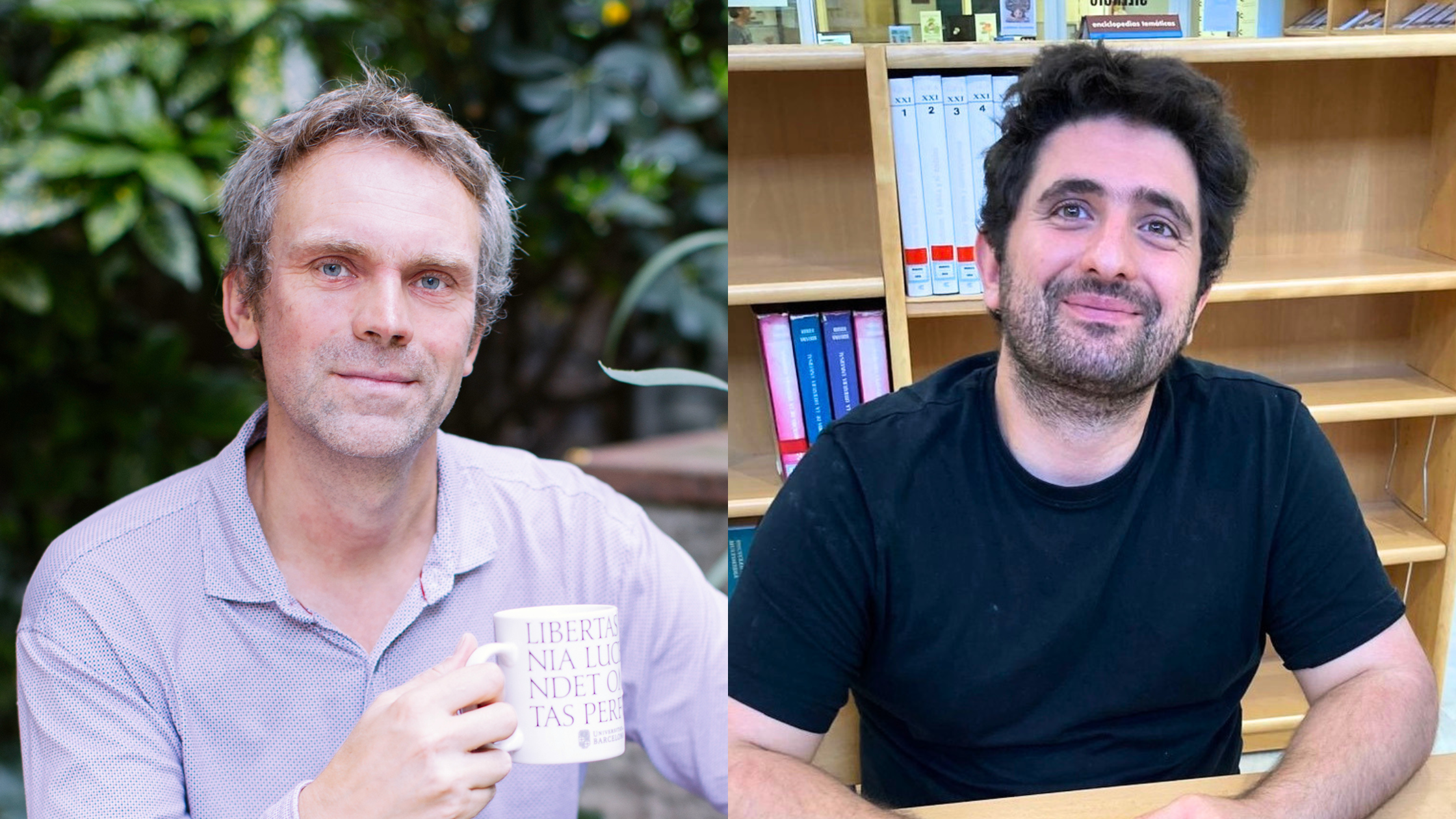
CRM welcomes Joost J. Joosten and Domènec Ruiz-Balet as affiliated researchers
Joost J. Joosten and Domènec Ruiz-Balet, both from the Universitat de Barcelona, joined the CRM as affiliated researchers in January 2026. Joosten joins the group in Combinatorics and Mathematics of Computer Science, and Ruiz-Balet the group in Partial Differential…
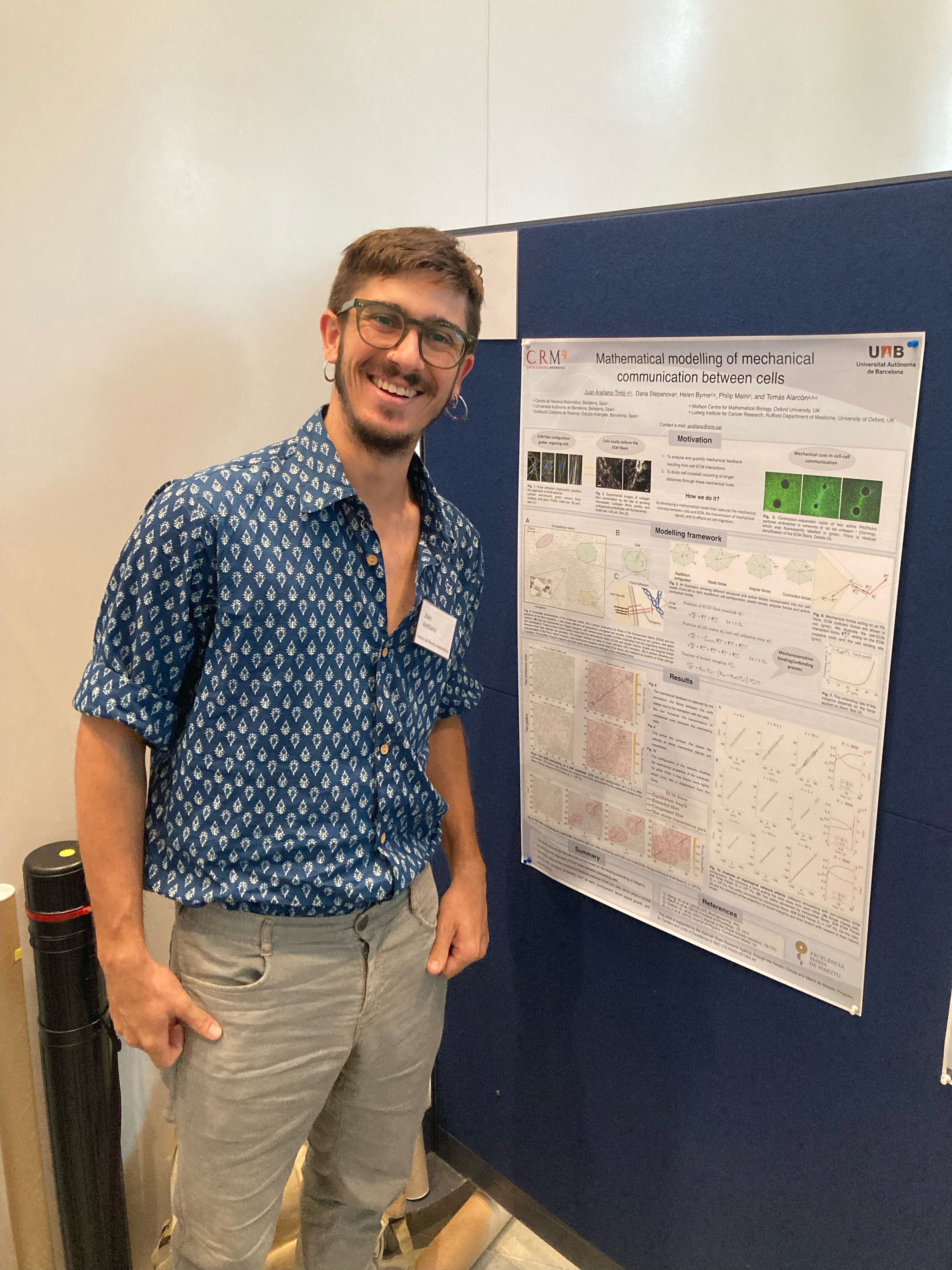
Diario de doctorado | Del modelo matemático al paper publicado: la primera vez de todo se aprende
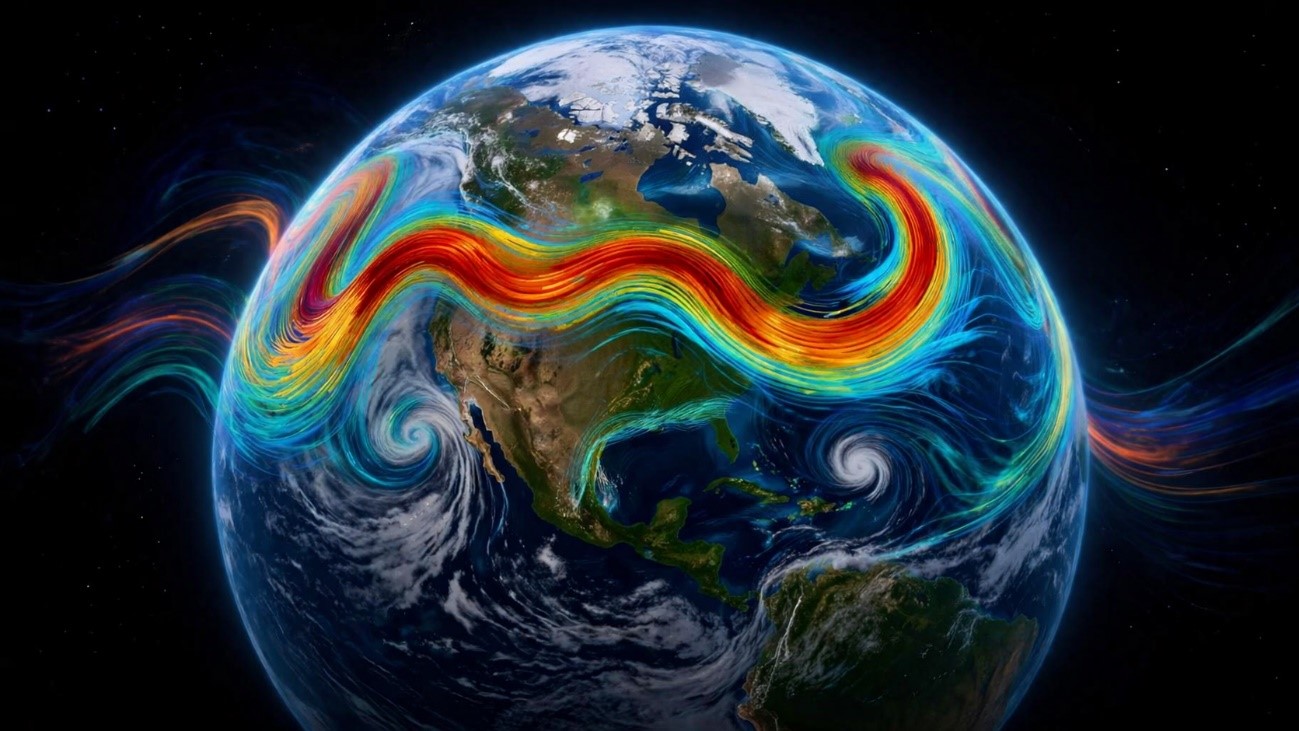
Tracking Jet Streams as Coherent Structures: A New Mathematical Approach
A new method redefines how scientists can track jet streams, the high-altitude currents that shape weather patterns worldwide. Called JetLag, the algorithm treats jets as coherent structures in the flow of air rather than simply fast winds, recovering 85 years of…
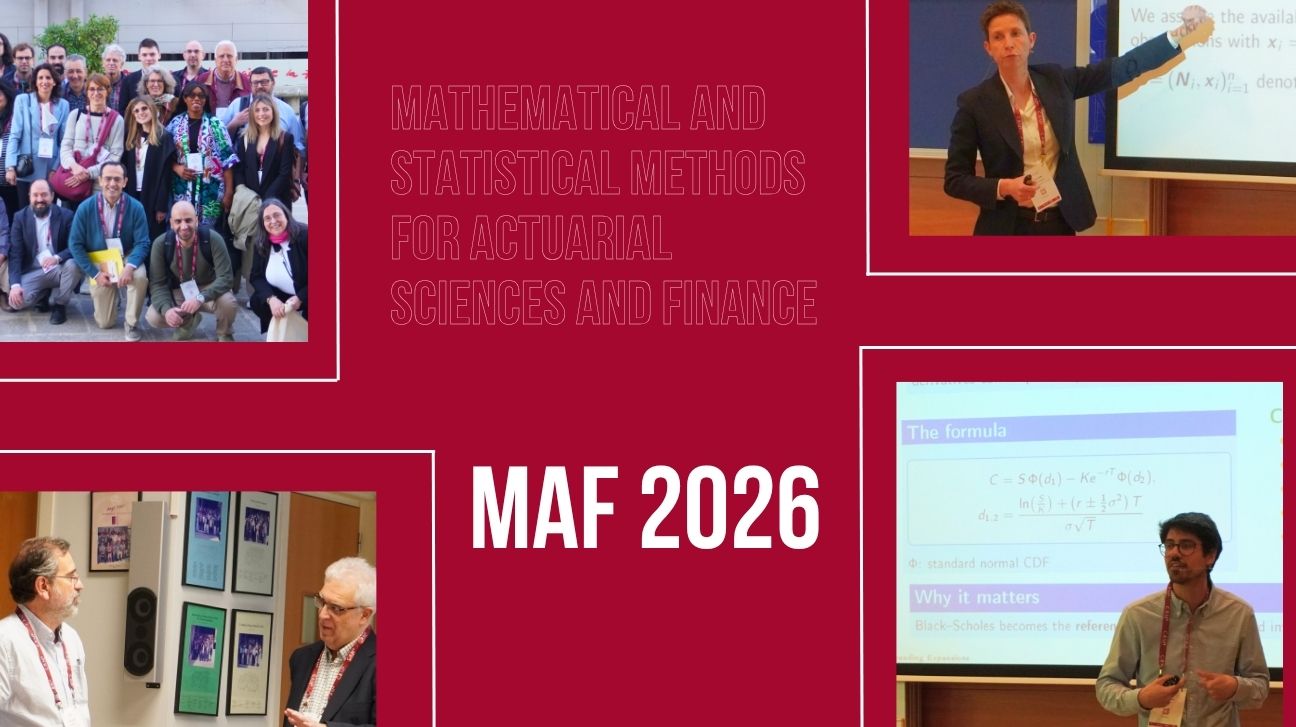
MAF 2026: Mathematics and Statistics at the Service of Actuarial Sciences and Finance
From 8 to 10 April 2026, the Centre de Recerca Matemàtica (CRM) hosted the Conference on Mathematical and Statistical Methods for Actuarial Sciences and Finance (MAF 2026). The conference is an international meeting that brings together mathematicians and…
Tots els camins porten a l’1
Yves Chevallard (1946–2026)
Yves Chevallard passed away on 16 March 2026. He was 79 years old. Born in Tunis, he trained at the École normale supérieure in Paris, where he earned an agrégation de mathématiques. He went on to become a professor at Aix-Marseille Université, and it was there, over…
The CRM participates in a European project studying decision-making and risk perception in mountain environments
The NeuroMunt project (POCTEFA, coordinated by the Université de Perpignan Via Domitia) studies how people make decisions under risk conditions in mountain environments, bringing together researchers from France and Spain across disciplines ranging from complex…
One Day, One Family, One Place: Poisson Geometry at CRM
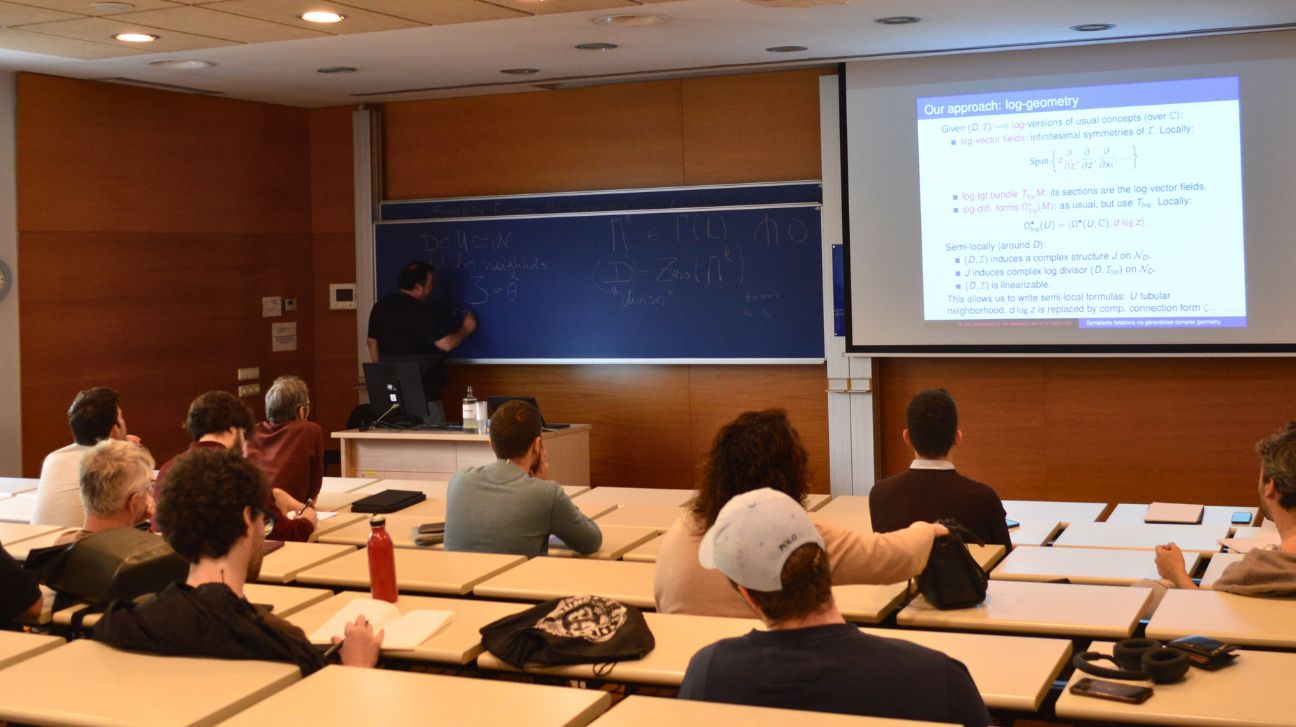
On March 23rd, 2026, the Centre de Recerca Matemàtica hosted the thematic day “Poisson Geometry and Its Relatives”, a full‑day event that brought together researchers exploring Poisson geometry and several of its neighbouring areas. The programme combined classical…
Life After the PhD: Three Roads Forward
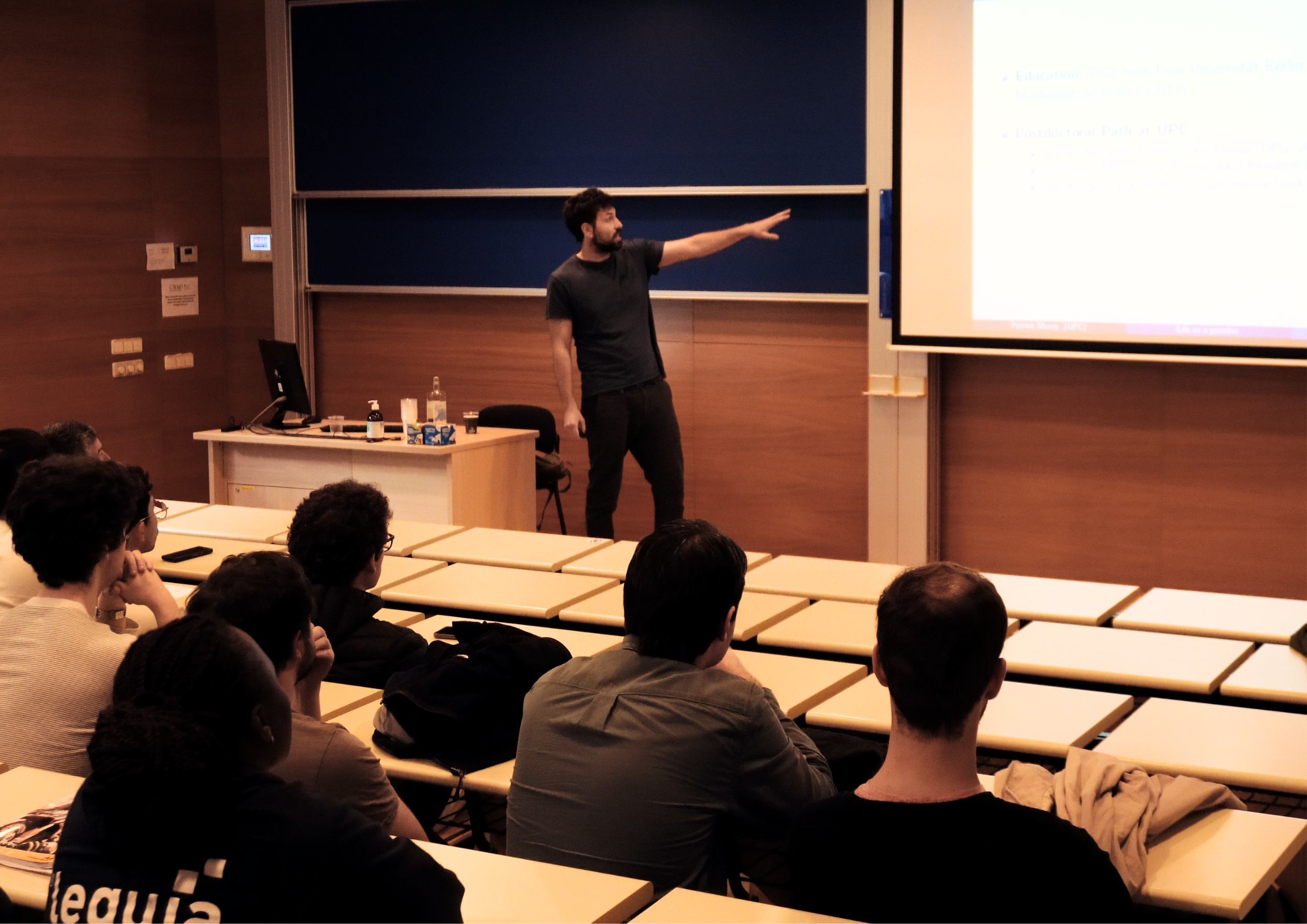
On March 18, the BGSMath held its first session on careers after a PhD in mathematics, bringing together three speakers with different professional trajectories and 46 early-career researchers from nine institutions.On March 18, the Barcelona Graduate School of Math…
CRM participates in the 2026 ERCOM annual meeting in Belgrade
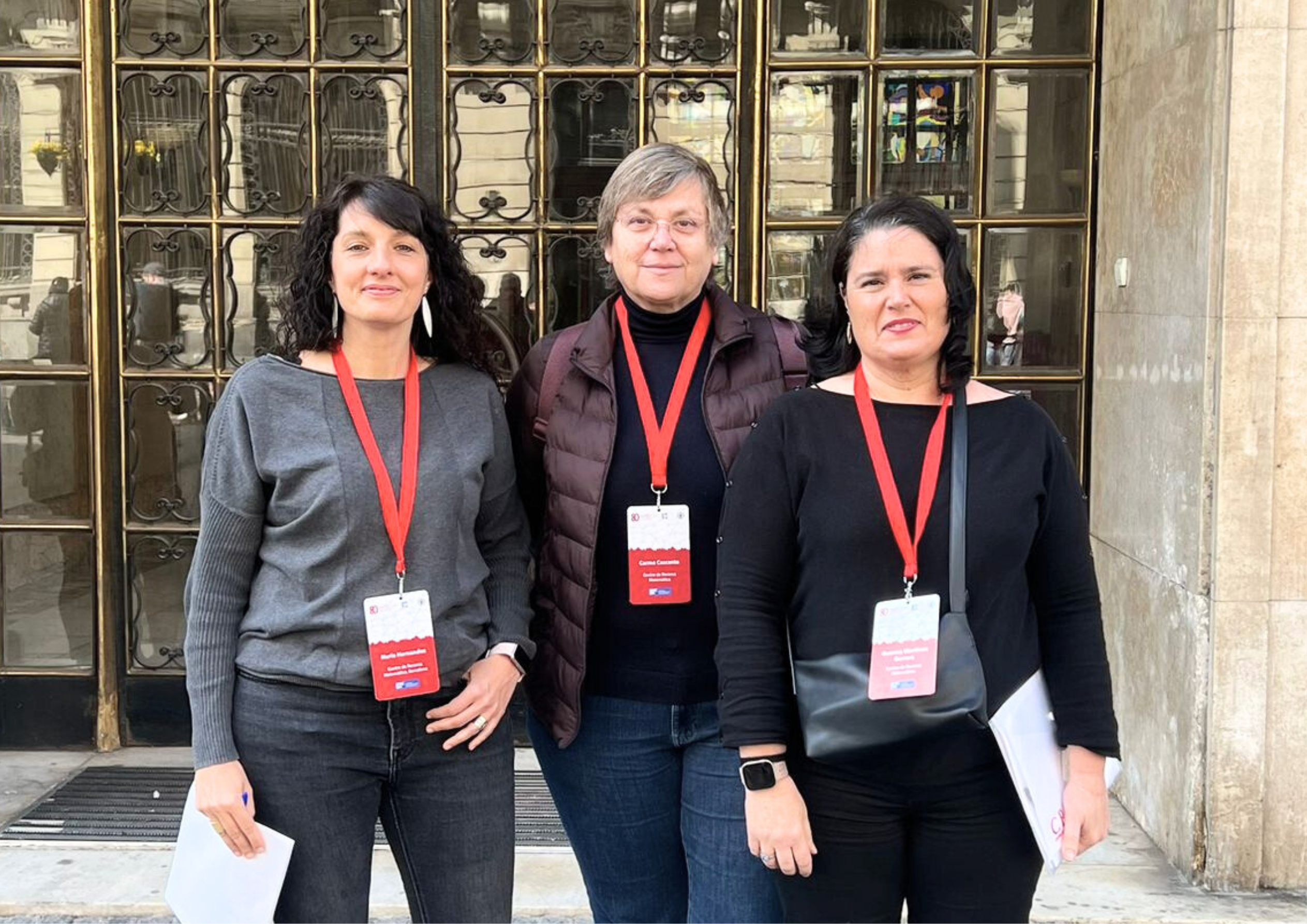
The CRM participated in the 2026 ERCOM annual meeting in Belgrade (20–21 March), represented by Director Carme Cascante, Manager Gemma Martínez, and Scientific Activities Manager Núria Hernández. The programme focused on multidisciplinarity, mathematics and the arts,…
5 Talks, 1 Topic: A Day of Combinatorics
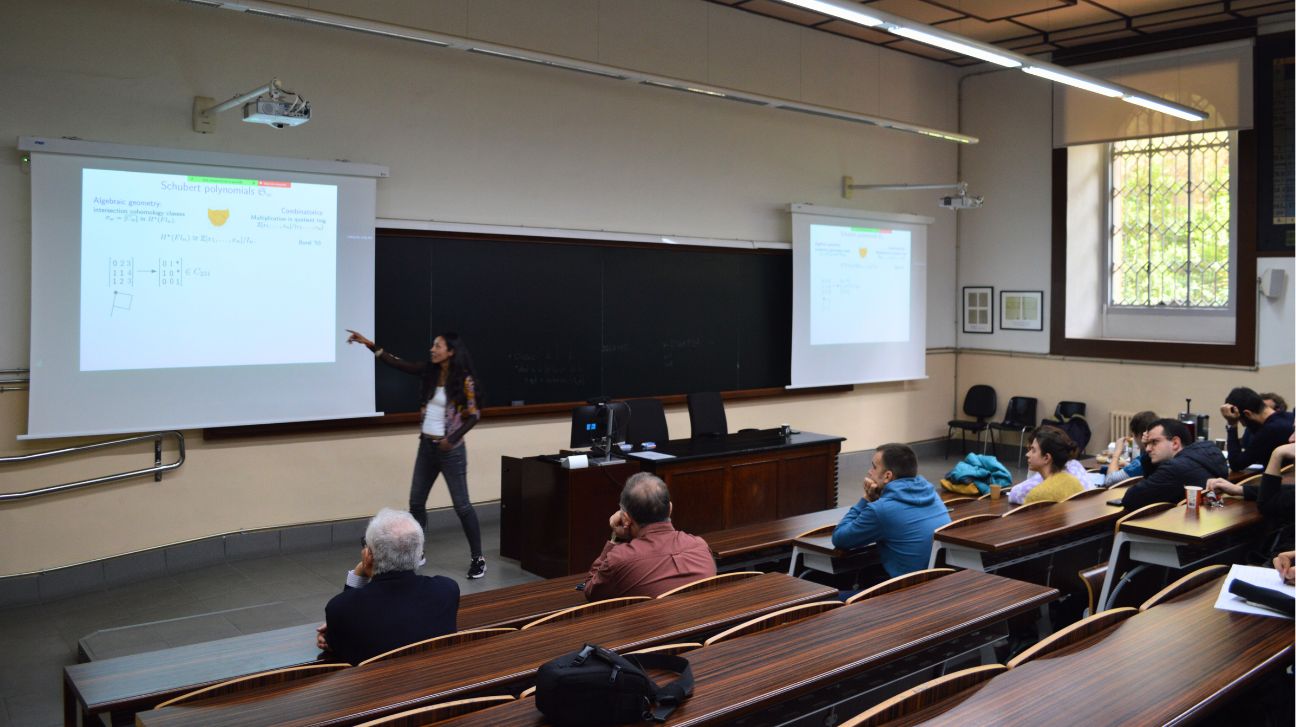
On March 18th, 2026, the 5 Talks in Combinatorics thematic day took place in the Joan Maragall Room at the Faculty of Philology and Communication of the University of Barcelona, in the historic building. The event focused on modern combinatorics and its connections…
|
|
CRM CommPau Varela
|
The post A Semester of Mathematics across Two Continents: Eva Miranda at ETH Zürich, ICBS Beijing, and WAIC Shanghai first appeared on Centre de Recerca Matemàtica.
.png?h=eb96aa7f&itok=eBK6b0TV "CIMCYC Talks:")

.png?itok=p1AxCaoi)