Author Archive

ICN2 Renews its Human Resources Excellence in Research Award until 2028

This recognition is granted by the European Commission to institutions that consistently implement the Human Resources Strategy for Researchers, aligned with the European Charter for Researchers and the Code of Conduct for the Recruitment of Researchers. 

Go to Source

Circle day

Go to Source

Study reveals that the body uses different sensors to detect cold in the skin and in internal organs

  • The study, led by the IN CSIC-UMH and published in Acta Physiologica, shows that the molecular mechanisms involved in cold detection are not uniform throughout the body.
  • The skin mainly relies on the TRPM8 sensor, whereas internal organs primarily depend on the TRPA1 sensor, explaining differences in the perception of external and internal cold.

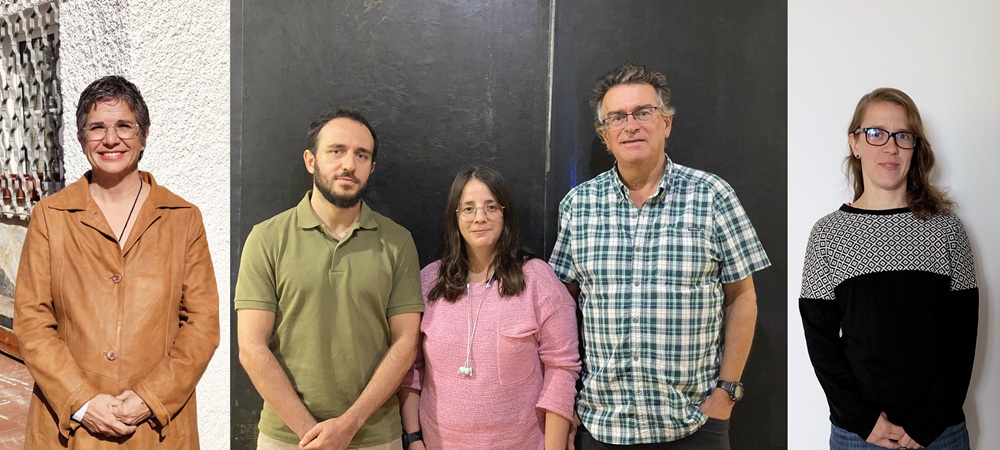
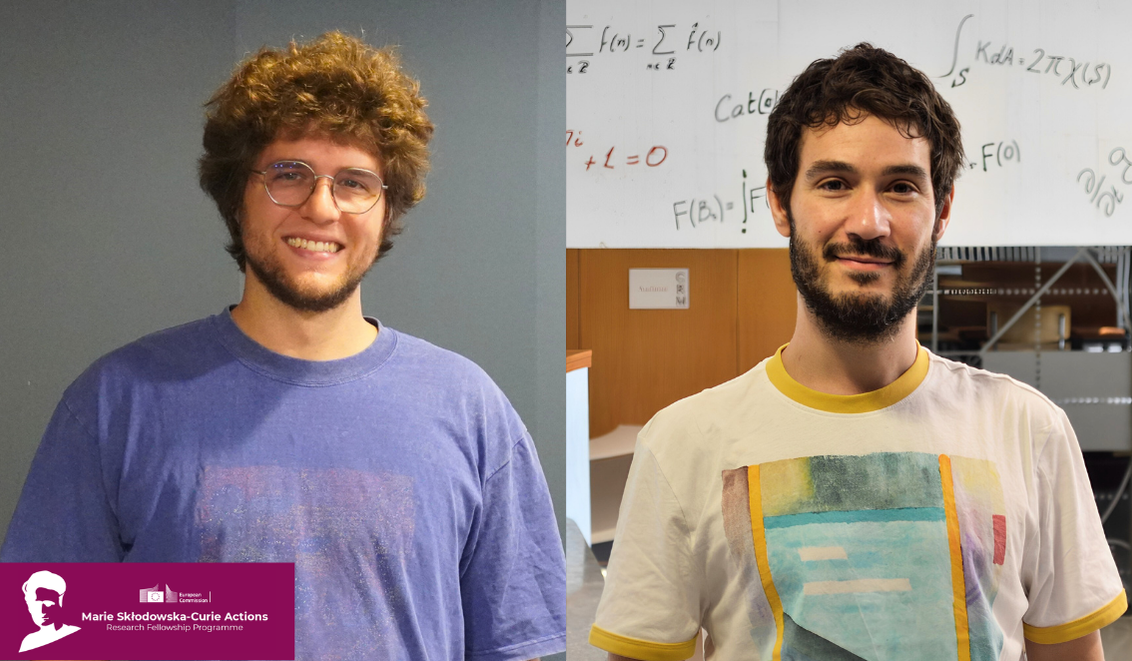
Photo: IN CSIC-UMH researchers Eva Quintero, Pablo Hernández-Ortego, Ana Gómez del Campo, Félix Viana, and Katharina Gers-Barlag

A research team led by Félix Viana, co-director of the Sensory Transduction and Nociception laboratory at the Institute for Neurosciences (IN), a joint research centre of the Spanish National Research Council (CSIC) and Miguel Hernández University of Elche (UMH), has demonstrated that the body uses different molecular mechanisms to detect cold in the skin and in internal organs. These findings represent a significant advance in understanding thermal homeostasis and certain pathologies associated with cold sensitivity.

The study, recently published in the journal Acta Physiologica, shows that cold perception is not a homogeneous process throughout the organism. In the skin, cold is mainly detected through the ion channel TRPM8, which is specialised in sensing low temperatures and cooling sensations from the environment. In contrast, internal organs such as the lungs or the stomach primarily rely on a different sensor, known as TRPA1, to perceive temperature decreases.

This difference in molecular mechanisms explains why the sensation of cold on the body surface can be very different from that experienced when breathing cold air or ingesting very cold food or drinks, as each type of tissue activates and uses distinct pathways to detect thermal changes. “The skin is equipped with specific sensors that allow us to detect environmental cold and adapt defensive behaviours”, explains Félix Viana, principal investigator of the study. He adds: “In contrast, cold detection inside the body appears to depend on different sensory circuits and molecular receptors, reflecting its deeper physiological role in internal regulation and responses to environmental stimuli”.

The study was carried out using animal models that allowed direct analysis of the activity of sensory neurons involved in cold detection. Specifically, the team compared neurons from the trigeminal nerve, which transmits information from the skin and the surface of the head, with neurons from the vagus nerve, the main sensory pathway connecting the brain with internal organs such as the lungs and the digestive tract.

To examine how these neurons respond to temperature changes, the researchers used calcium imaging techniques and electrophysiological recordings, allowing real-time monitoring of neuronal activation. These approaches were combined with the use of specific pharmacological agents capable of blocking particular molecular sensors, helping to identify which ion channels are involved in cold detection in each type of neuron.

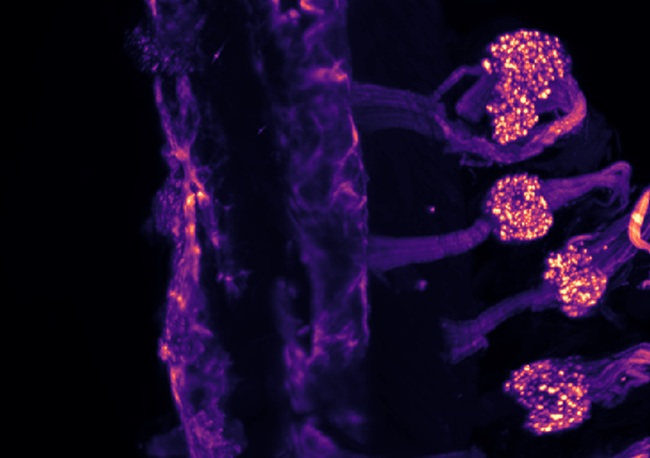
Light-sheet microscopy image showing the expression of the ion channel TRPM8 in the sensory ganglia of a mouse during embryonic development, following tissue clearing using the iDISCO technique. Author: Pablo Hernández-Ortego.

In addition, the team used genetically modified mice lacking the TRPM8 or TRPA1 sensors, together with gene expression analyses, to confirm the differential role of these channels in cold perception. This multidisciplinary approach demonstrated that cold detection is finely tuned to the physiological functions of each tissue and that internal organs employ molecular mechanisms distinct from those used by the skin.

“Our findings reveal a more complex and nuanced view of how sensory systems in different tissues encode thermal information. This opens new avenues to study how these signals are integrated and how they may be altered in pathological conditions, such as certain neuropathies in which cold sensitivity is disrupted,” highlights Katharina Gers-Barlag, first author of the article.

This study was made possible thanks to funding from the Spanish National Plan for Scientific and Technical Research and Innovation; the Spanish State Research Agency–Ministry of Science, Innovation and Universities, through the Severo Ochoa Programme for Centres of Excellence; and the Valencian Regional Government (Generalitat Valenciana). The work is part of an international project funded by the Human Frontier Science Program (HFSP) and coordinated by Viana at the Institute for Neurosciences, aimed at studying the molecular bases of cold perception in different species adapted to extreme thermal environments.

Source: Institute for Neurosciences CSIC-UMH (in.comunicacion@umh.es)

La entrada Study reveals that the body uses different sensors to detect cold in the skin and in internal organs se publicó primero en Instituto de Neurociencias de Alicante.

Go to Source

Bolivia at a crossroads: scientists warn of a possible environmental setback

Bolivia, one of the most biodiverse countries on the planet, stands at a critical juncture.

Go to Source

BAMB! 2025: Participants Return to the CRM for Research Stays

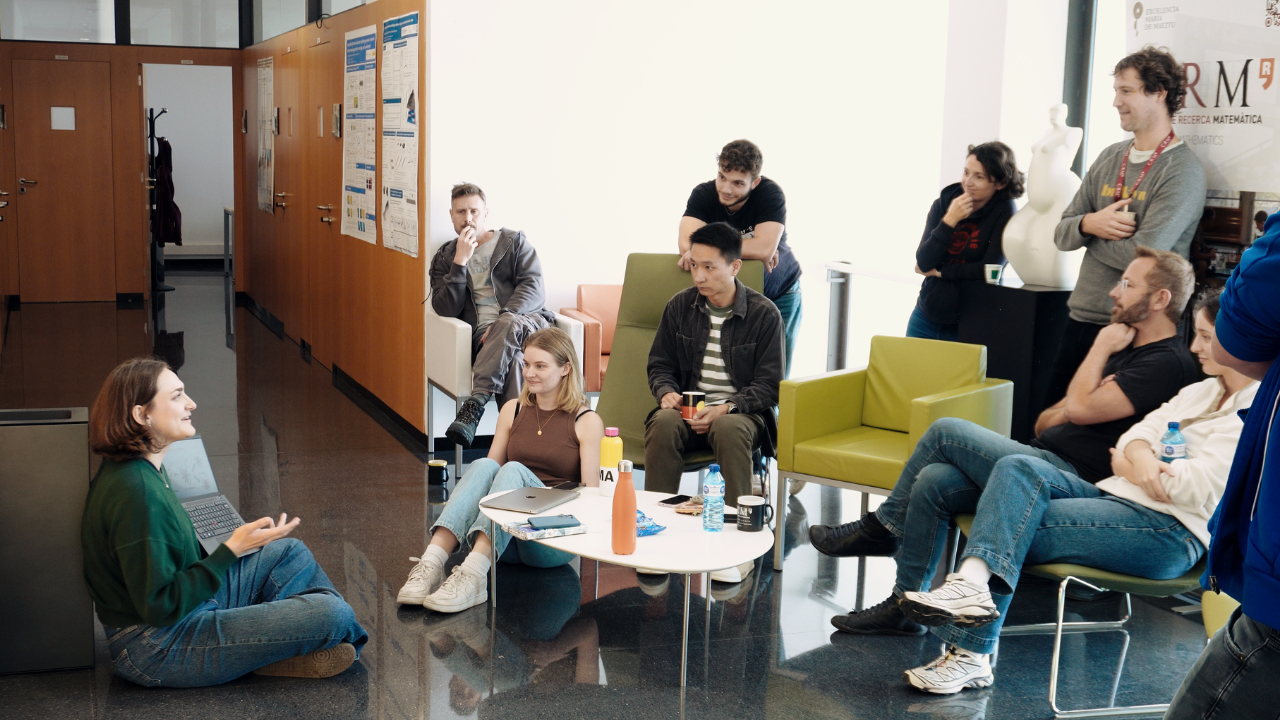
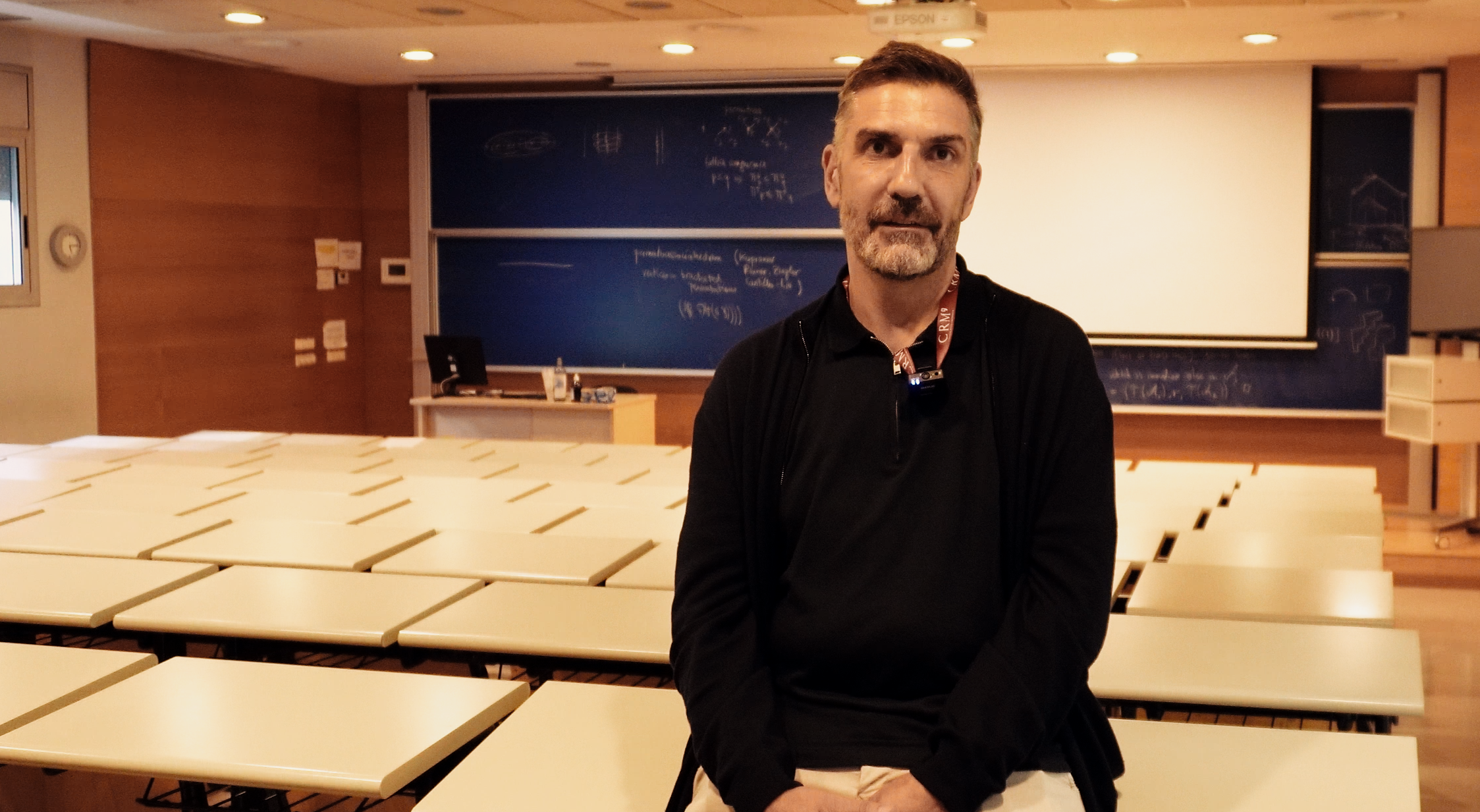
In October 2025, the Centre de Recerca Matemàtica hosted Josefine Meyer (ISTA) and Cate MacColl (University of Queensland) for a month-long research stay following their participation in the BAMB! Summer School. Despite studying vastly different subjects, from courtship behavior in fruit flies to decision-making in children, both researchers collaborated with the CRM’s Computational and Mathematical Neuroscience group to apply advanced mathematical modeling to their specific datasets.

Josefine Meyer studies attention-like processes in Drosophila (fruit flies) at the Institute of Science and Technology Austria (ISTA). Cate MacColl investigates decision-making and metacognition in children at the University of Queensland. Their research subjects and methods differ, yet both faced similar computational challenges: how to model behavior when data is limited or unconventional. In October 2025, both researchers spent a month at the Centre de Recerca Matemàtica in Barcelona, working with Klaus Wimmer and Alexandre Hyafil from the Computational and Mathematical Neuroscience group. They first met at BAMB! (Barcelona Summer School for Advanced Modeling of Behavior) in July, where Wimmer and Hyafil serve as course directors.
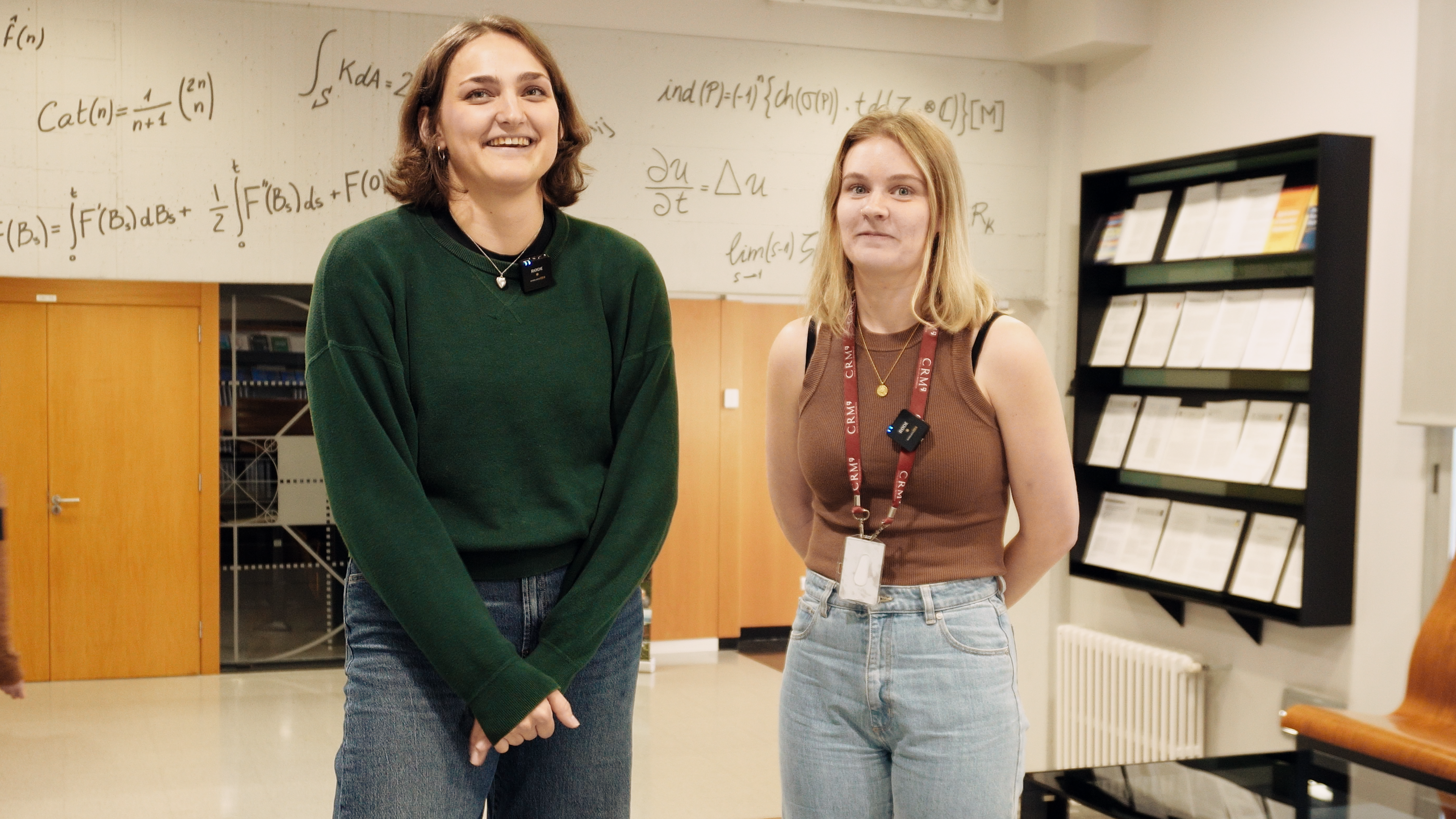
Josefine’s PhD project focuses on tracking behaviors in fruit flies. “I’m looking at object-oriented tracking in Drosophila and how it works behaviorally, but also later in the brain,” she explains. Specifically, she investigates how male flies track females during courtship and what internal states drive this behavior. Cate’s work examines how children make decisions and reflect on those choices. The challenges are particular to developmental research. “There are a lot of constraints on the data that we have. It’s really difficult to get a kid to sit through a couple of trials,” she explains. Traditional computational approaches common in neuroscience labs often do not transfer easily to this context.

The month-long visit at the Centre de Recerca Matemàtica transformed initial summer school discussions into sustained work. “During my stay at the CRM, Alex, Klaus, and I were only working on purely behavioral data,” Josefine explains. “We were looking at how the male fly tracks the female fly, and we were trying to infer internal states of the male during this tracking behavior.” Cate divided her time between adjusting behavioral models to fit her existing data and theoretical discussions for future projects. As a late-stage PhD student, she also explored postdoctoral options, visiting labs in Paris and continuing conversations with senior researchers she met at BAMB!.


BAMB!’s Approach to Behavioral Modeling

BAMB! teaches advanced techniques in model-based analysis of behavior to PhD and early-career researchers. “Our main objective is to bring quantitative and mathematical analysis to the analysis of behavior,” Hyafil explains. “This behavior encompasses a very broad field from animal behavior, human behavior, and classical psychophysical tasks.”

“It was cool to see that people from different backgrounds are still interested in the same bigger questions across different model organisms.”

Josefine Meyer

(ISTA Austria)

The program addresses the fact that many participants lack formal mathematical training by emphasizing conceptual understanding. “You don’t need to be a brilliant mathematician to do it, but you need to understand the concepts,” Hyafil says. “And that’s what we teach them with the idea that then they can be autonomous when they go back to the lab.”

Both researchers value the diversity of the cohort. “It was cool to see that people from different backgrounds are interested in the same bigger questions or broader questions across different model organisms,” Josefine reflects. Cate found she could develop her abilities by approaching problems from a theoretical perspective: “Getting to work with and learn from people across a really broad range of applications was really interesting and useful. Even if we couldn’t understand the specifics of it, we could bounce off each other and talk about things from an overarching theoretical perspective.”


The Value of Extended Research Visits

For Josefine, the visit was an opportunity to understand lab cultures and workflows in computational fields. For Cate, the geographic dimension was significant. “Coming from Australia, we can be quite a geographically isolated research community,” she explains. She notes that the benefits operate on multiple levels: learning who you are as a researcher outside your own lab and integrating different approaches into how questions are formulated.

“It’s both on the personal level, where you learn what kind of researcher you are outside of your lab, but also from a research perspective, to be able to work across different areas.”

Cate MacColl

(University of Queensland)

Klaus Wimmer and Alexandre Hyafil found the residency equally valuable for the Centre de Recerca Matemàtica. “Having the opportunity to bring two participants from the summer school for a longer stay here was really fantastic because we learned a lot about what they do with their research, which is so different from what we do,” Hyafil reflects. Wimmer emphasizes that the timeframe allowed them to build deeper connections: “It’s not just a few days that people can work on this project; a longer time allows us to dig deeper and do more evolved analysis. It’s not like a one-way that we are teaching, but it’s really an enrichment for everyone.”


Community Building

BAMB! has evolved from its first edition, which Hyafil recalls as “improvising all the time”, into an international effort. “After the fifth edition, we really have an international team of organizers and teaching assistants that together design the course program,” Wimmer notes. The program prioritizes building a global community. “We’ve had people from Nepal, from India, from a lot of other countries,” Hyafil says. “It’s been beautiful to see that they somehow can feel isolated at their home lab, but then they arrive, and they meet people from all over the world. And they feel that they can belong to this community.”

The BAMB! Summer School is organized by the Centre de Recerca Matemàtica. The 2026 edition will take place in July. More information is available at www.bambschool.org.

You can watch the full interview with Josefine Meyer, Cate MacColl, Alexandre Hyafil, and Klaus Wimmer on the Centre de Recerca Matemàtica YouTube channel.

Alexandre Hyafil is a cognitive neuroscientist dedicated to understanding the fundamental computations that shape perception, decision-making, and cognitive control in humans and other mammals. By combining theoretical approaches, psychophysics, and collaborations with rodent and primate labs, he seeks to understand how sensory information is transformed into meaningful perceptions that guide behavior. Additionally, he develops advanced statistical and machine-learning tools to analyze complex behavioral and neural data. Hyafil is also a co-founder and co-organizer of the Barcelona Summer School for Advanced Modelling of Behavior (BAMB!).

Personal website

Klaus Wimmer is a principal investigator in the computational neuroscience group at the Centre de Recerca Matemàtica in Barcelona. He obtained his PhD in Computational Neuroscience from Technische Universität Berlin and completed postdoctoral training at IDIBAPS Barcelona, the University of Rochester, and Universitat Pompeu Fabra. His research focuses on developing computational models of cortical circuits to understand the neural network dynamics underlying cognitive functions such as working memory and perceptual decision-making. He combines theoretical modeling with analysis of neural population recordings and neuroimaging data using statistical and machine learning tools.

Personal website

Subscribe for more CRM News

Stay updated to our mailing list to get the lastest information about CRM activities.

CRM Comm

Pau Varela

CRMComm@crm.cat


BAMB! 2025: Participants Return to the CRM for Research Stays

BAMB! 2025: Participants Return to the CRM for Research Stays

In October 2025, the Centre de Recerca Matemàtica hosted Josefine Meyer (ISTA) and Cate MacColl (University of Queensland) for a month-long research stay following their participation in the BAMB! Summer School. Despite studying vastly different subjects, from…

The post BAMB! 2025: Participants Return to the CRM for Research Stays first appeared on Centre de Recerca Matemàtica.

Go to Source

Two ICIQ projects awarded funding in the 2025 AEI “Proyectos de Prueba de Concepto” call

The Spanish State Research Agency (AEI) has awarded funding to two ICIQ initiatives under the 2025 Proyectos de Prueba de Concepto call, a programme aimed at accelerating the transfer of knowledge and research results toward market-oriented applications and generating tangible value for society.  

The selected projects are HYAVOP, managed by Prof. José Ramón Galán-Mascarós, and MAC-EDIT, led by Prof. Rubén Martín. Both initiatives will run for two years beginning in February 2026 and build on research results previously generated through “Generación de Conocimiento” projects, with the aim of advancing them toward greater technological maturity and potential industrial deployment. 


HYAVOP: Full-cell Electrolysers for green HYdrogen generation with Added-Value Oxidation Products (Ref. PDC2025-164909-I00) 

The transition to green hydrogen produced from renewable energy is essential to meeting Europe’s decarbonisation goals. However, its generation through water electrolyser technology remains costly, limiting large-scale deployment. 

HYAVOP proposes an innovative solution: replacing the oxygen evolution reaction (OER) at the anode with selective electrocatalytic oxidation processes that will produce added-value chemicals, instead of valueless oxygen. This dual-output approach improves the overall techno-economic viability of electrolytic hydrogen, helping to reduce the cost of green hydrogen and accelerating its market adoption.

Building on the NEWBOUND project, ICIQ researchers have developed low-cost electrocatalysts capable of selectively performing strategic anodic reactions. The project will scale the preparation of these catalysts and integrate them into membrane-based full electrochemical cells, with the goal of validating the technology at TRL4. Demonstrating these dual-output electrolysers will support the definition of an initial business case and advance the concept toward industrial deployment.


MAC-EDIT: Photoinduced Macrocyclic Skeletal Editing (Ref. PDC2025-164904-I00) 

Macrocycles are increasingly valuable in drug discovery thanks to their exceptional molecular recognition with improved pharmacokinetic properties, target affinity, potency and selectivity when compared to small molecules. Yet their widespread use remains limited: existing synthetic routes for preparing macrocycles are lengthy, complex and resource-intensive, limiting their potential. 

MAC-EDIT introduces an unconventional, photoinduced catalytic strategy that enables direct skeletal editing of macrolactones through an atom- and step-economical transformation in which CO₂ is the only by-product. This method allows the incorporation of multiple  substitutents into the macrolactone skeleton in a single operation, achieving excellent site-selectivity even at late stages and in complex intermediates. The approach simplifies operations and opens access to architectures that are difficult or impossible to obtain using conventional methods. 

The initiative establishes a modular, flexible platform for the tailored design of macrolides, substantially expanding the available chemical space for medicinal chemistry. By streamlining the preparation of intricate macrocycles, the project has the potential to accelerate drug discovery campaigns and facilitate the development of next-generation therapeutic agents. 


Through these two Proof-of-Concept projects, ICIQ strengthens its commitment to bridging research with real-world applications while promoting sustainable innovation. 

Projects PDC2025-164909-I00 and PDC2025-164904-I00 funded by MCIU/AEI/10.13039/501100011033

La entrada Two ICIQ projects awarded funding in the 2025 AEI “Proyectos de Prueba de Concepto” call se publicó primero en ICIQ.

Go to Source

IMDEA Energía reúne al consorcio del proyecto SOLENER CM para analizar próximos hitos en el sector solar-eólico

La entrada IMDEA Energía reúne al consorcio del proyecto SOLENER CM para analizar próximos hitos en el sector solar-eólico se publicó primero en IMDEA ENERGÍA.

Go to Source

El proyecto PREDFLEX-CM celebra su reunión de primer año en IMDEA Energía

La entrada El proyecto PREDFLEX-CM celebra su reunión de primer año en IMDEA Energía se publicó primero en IMDEA ENERGÍA.

Go to Source

Two-loop running in the SMEFT at dimension-six

Image
Two-loop running in the SMEFT at dimension-six
Seminar

Two-loop running in the SMEFT at dimension-six

Date
Place
Pere Pascual V5.07 Room

Abstract: The Standard Model Effective Field Theory (SMEFT) provides a powerful framework for parameterizing potential new physics in a model-independent way. To analyze data from experiments across different energy scales and to reliably extrapolate ultraviolet (UV) physics effects, it is crucial to know the renormalization group evolution (RGE) of SMEFT operators.

In this talk, I will present the complete set of two-loop SMEFT $beta$-functions up to dimension-six in the baryon number-conserving sector, calculated with an anti-commuting $gamma_5$, and discuss the methods used to compute them as well as the challenges encountered in this process. In particular, $gamma_5$-odd traces involving six or more ordinary $gamma$-matrices require special care, since cyclicity is lost. This subtlety can lead to potentially inconsistent results, which I will discuss in detail.

Go to Source

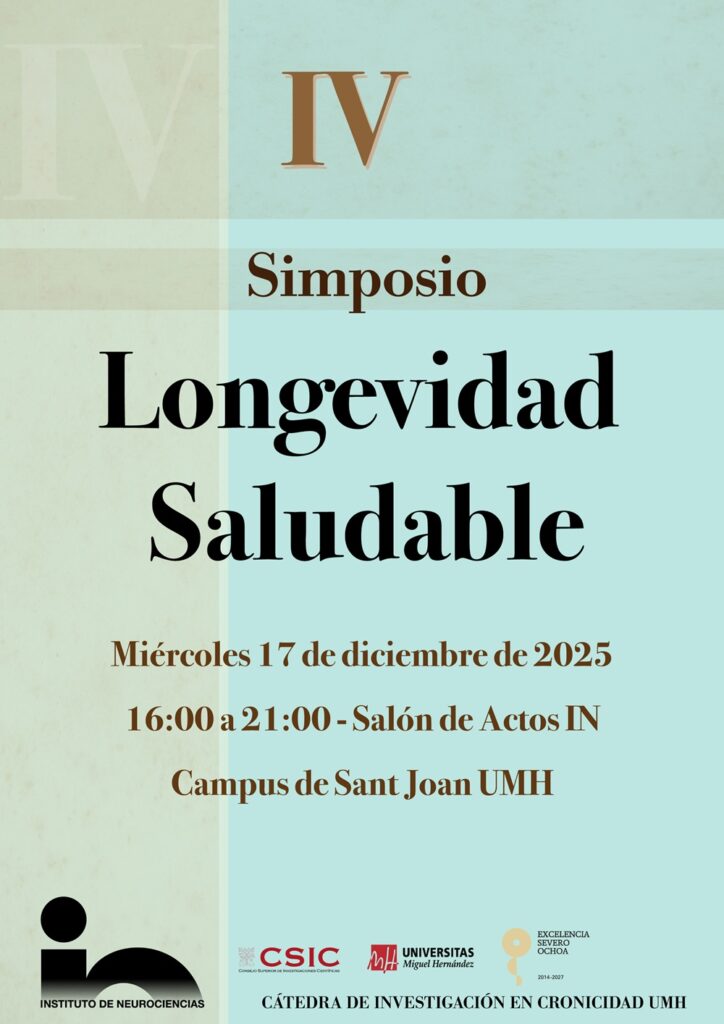
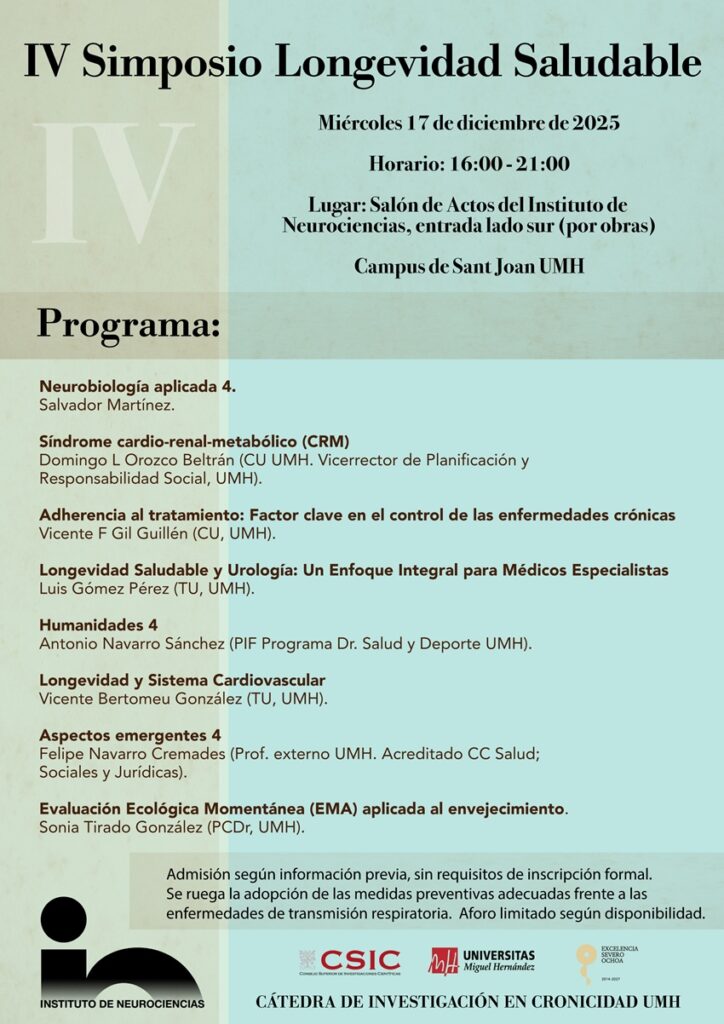
IV Simposio Longevidad Saludable, 17 dic 2025

La entrada IV Simposio Longevidad Saludable, 17 dic 2025 se publicó primero en Instituto de Neurociencias de Alicante.

Go to Source

Roger Castells: «Me emociona pensar en todo lo que queda por descubrir»

Roger Castells: «Me emociona pensar en todo lo que queda por descubrir»

Roger Castells-Graells se incorporó en 2025 al Centro Nacional de Investigaciones Oncológicas (CNIO) para fundar y dirigir el Grupo de Diseño Biomolecular y Nanomedicina Estructural, dedicado a crear nanopartículas de proteínas para detectar el cáncer y acelerar el desarrollo de mejores fármacos. Tras años en algunos de los mejores centros de investigación del mundo, el programa Construyendo la Generación IA (dentro de la iniciativa Generación D, impulsada por Red.es) le permitió volver a España. Reproducimos aquí su relato, narrado por él mismo a la revista Nature Cancer.

«Mi pasión por la ciencia comenzó en la infancia, con mi amor por las plantas, y se profundizó en la adolescencia, cuando entré por primera vez en un laboratorio de biología molecular. Recuerdo que pensé: «Vaya, esto es genial, quiero estar aquí haciendo experimentos». Desde entonces, mi trayectoria me ha llevado de la bioquímica vegetal a la virología y, ahora, al diseño de proteínas y la investigación del cáncer.

«Tras años viviendo en cinco países diferentes, concretamente España, Suiza, Alemania, el Reino Unido y Estados Unidos, en 2025 he puesto en marcha mi propio laboratorio, un sueño hecho realidad tras mucho esfuerzo y perseverancia. La creación del Grupo de Diseño Biomolecular y Nanomedicina Estructural en el Centro Nacional de Investigaciones Oncológicas (CNIO) ha sido emocionante, pero me ha obligado a aprender mucho en muy poco tiempo.

«Montar un laboratorio vacío exige solicitar financiación, lidiar con la burocracia y establecer protocolos requiere paciencia y resiliencia. Sin embargo, es muy gratificante formar a nuevos miembros del laboratorio con talento y ver cómo desarrollan sus habilidades, obtienen resultados y exploran nuevas preguntas científicas.

«En el CNIO combinamos el diseño de proteínas, la inteligencia artificial y la biología estructural para diseñar nanomáquinas para aplicaciones terapéuticas en cáncer. Me emociona pensar en todo lo que queda por descubrir.

«Como me enseñó un mentor, apunto en un cuaderno ideas, preguntas y experimentos, un hábito sencillo que me ayuda a añadir orden a mi entusiasmo. Crear un nuevo laboratorio conlleva muchos retos, y pedir ayuda y consejo ha sido esencial. Estoy profundamente agradecido al apoyo de mis maestros, colegas, amigos, familia y jefes de grupo de mi centro de investigación.

«Compartir experiencias con compañeros y compañeras ha sido muy valioso y también ha dado lugar a nuevas colaboraciones. Una buena gestión es igualmente importante: invertir tiempo en crear un equipo cohesionado que comparta la visión del laboratorio, fomentar una cultura saludable y promover el espíritu de equipo son aspectos cruciales. Siempre recuerdo una lección que aprendí en el laboratorio de Sophien Kamoun: «TEAM» equivale a «together everyone achieves more» (En equipo llegamos más lejos).

«Ahora que nuestro laboratorio está en marcha, con nuevos miembros incorporándose, los experimentos avanzando y nuestras primeras subvenciones aseguradas, este año es a la vez un comienzo y una plataforma de lanzamiento. Estoy emocionado y convencido de que nuestro laboratorio hará descubrimientos que beneficiarán a los pacientes y, al mismo tiempo, formará a la próxima generación de científicos».

Una oportunidad para la Generación D

El programa Construyendo la Generación IA, que ha hecho posible el regreso a España de Castell-Graells, se enmarca en la iniciativa Generación D, impulsada por Red.es, entidad adscrita al Ministerio para la Transformación Digital y de la Función Pública a través de la Secretaría de Estado de Digitalización e Inteligencia Artificial.

Con un presupuesto de 120 millones de euros, el programa Construyendo la Generación IA ha propiciado 374 contratos con personal investigador en inteligencia artificial y transformación digital en todos los ámbitos científicos y de investigación. Las actuaciones están financiadas por el Plan de Recuperación, Transformación y Resiliencia a través de los fondos Next Generation de la Unión Europea, en el marco de la inversión 4 del Componente 19, Plan Nacional de Competencias Digitales.

La entrada Roger Castells: «Me emociona pensar en todo lo que queda por descubrir» se publicó primero en CNIO.

Go to Source

The interaction between the jet of a young star and its environment, reconstructed in unprecedented detail thanks to the ALMA telescope

A team from the Institute of Astrophysics of Andalusia (IAA-CSIC) has obtained images with unprecedented detail that show “slices” of the jet of a young star, revealing its internal structure and how it interacts with the environment. The discovery, published in Nature Astronomy, confirms for the first time a theoretical model proposed three decades ago about the dynamics of stellar jets.

Go to Source

Sidebar