The institute had a strong presence at the event through plenary sessions, workshops, and innovation forums. The I2DM Summit is widely recognised as one of the leading international conferences in the field of advanced materials and 2D materials research.
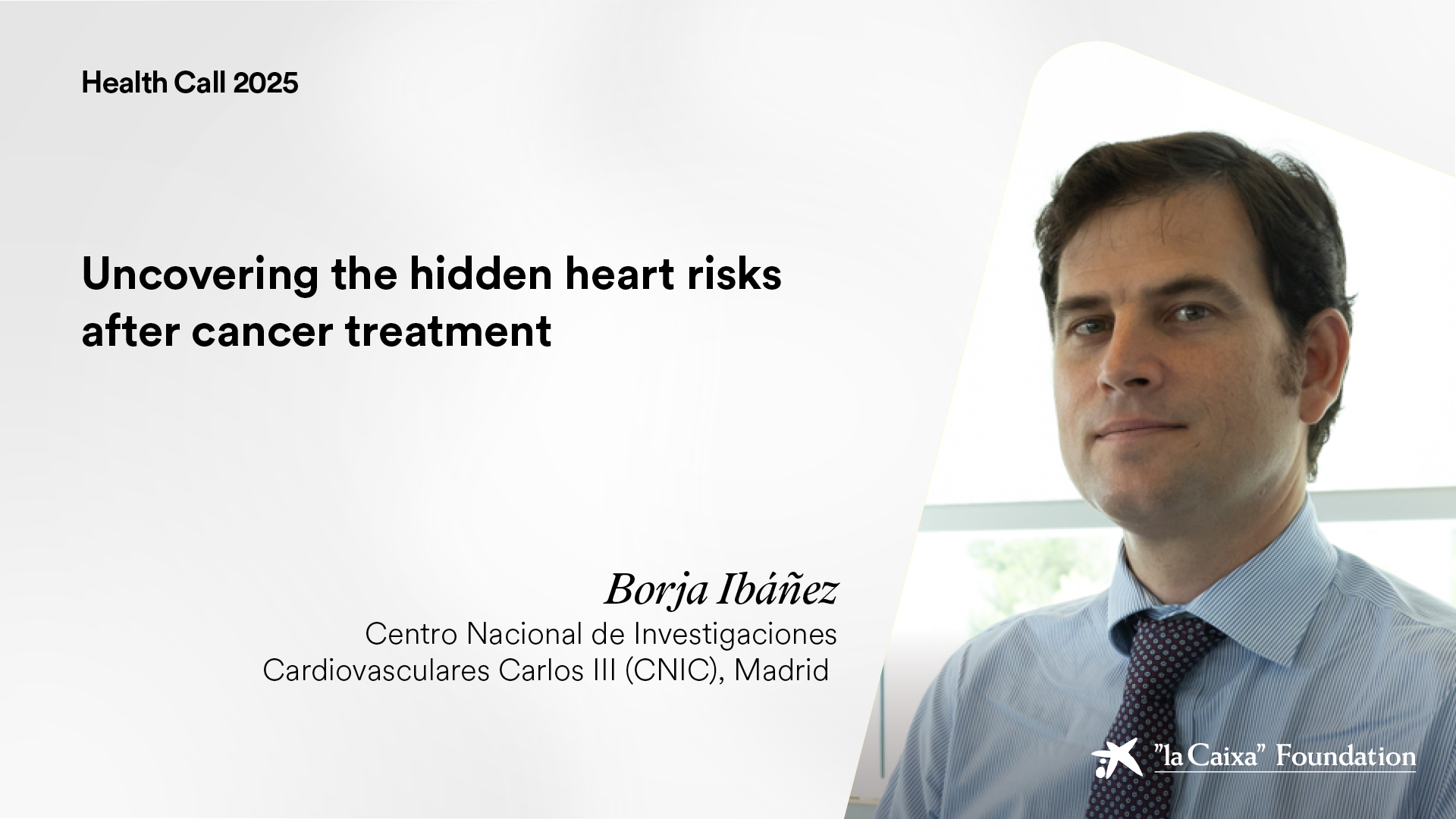
Anthracycline Legacy in Bone Marrow and Long-Term Cardiovascular Risks in Cancer Survivors, led by Dr. Borja Ibáñez.
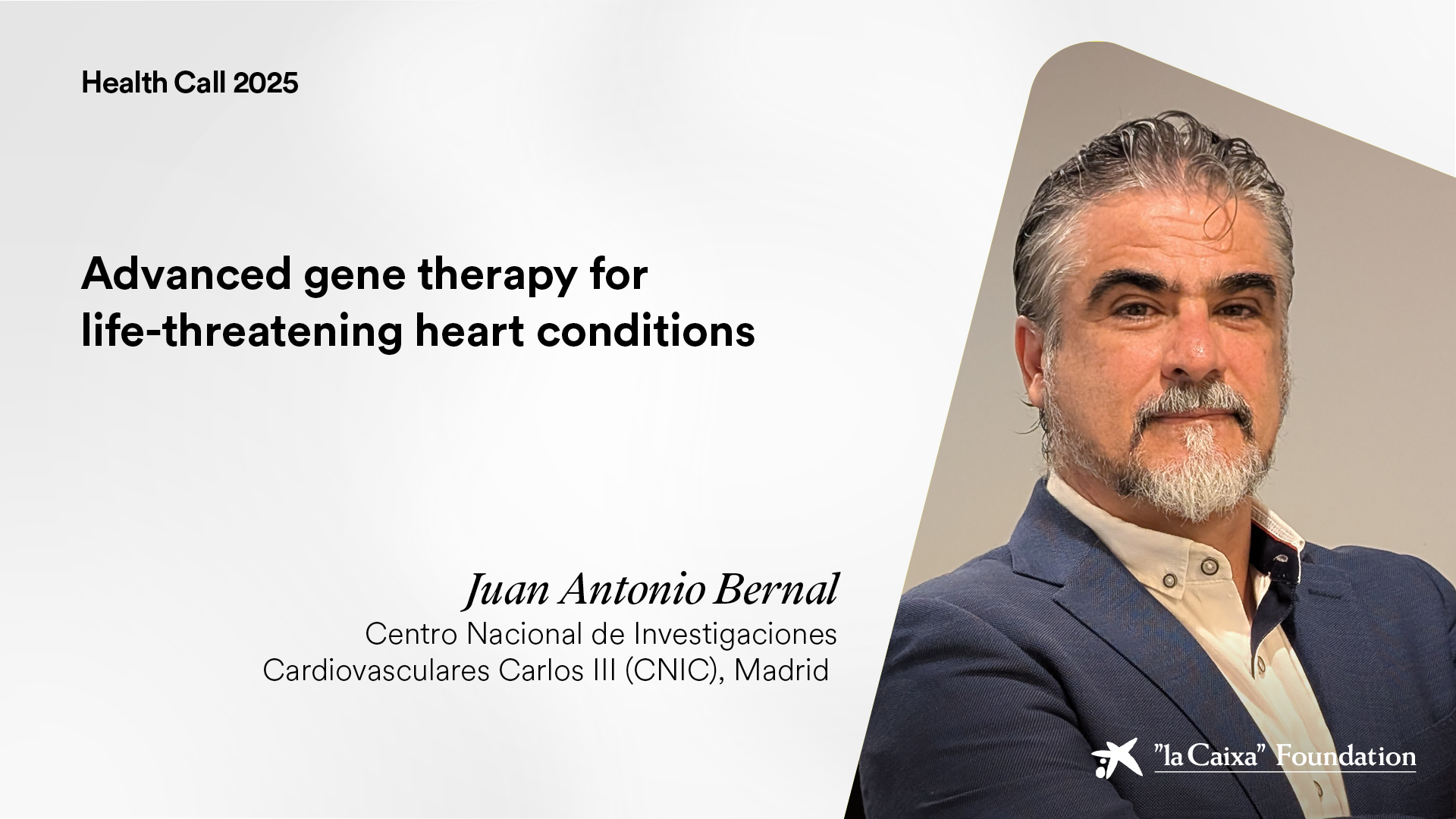
Improving Gene Therapy for Life-Threatening Heart Conditions, led by Dr. Juan Bernal.
In this year’s edition, the Health Research Call of the la Caixa Foundation selected 34 pioneering biomedical research projects, each awarded up to €1 million. The projects are led by 25 Spanish research centers, universities, and hospitals, and 9 Portuguese institutions.
A total of 714 proposals were submitted to this eighth edition of the call, which focuses on several major health challenges: neuroscience, cardiovascular and metabolic diseases, oncology, infectious diseases, and enabling technologies applicable to these areas.
Àngel Font, Deputy General Director of Research and Fellowships at the la Caixa Foundation, remarked: “Biomedical research is one of the most powerful ways to improve people’s lives. The 34 funded projects address highly diverse challenges from different perspectives, yet they all share three essential foundations needed to achieve a more hopeful future for patients and their families: collaboration, talent, and innovation.”
Anthracycline Legacy in Bone Marrow and Long-Term Cardiovascular Risks in Cancer Survivors
Leader: Borja Ibáñez, Centro Nacional de Investigaciones Cardiovasculares Carlos III (F.S.P.), Spain
Thanks to major advances in cancer treatment, more people are surviving the disease than ever before. However, many survivors face a higher long-term risk of cardiovascular problems—especially if their treatment included a widely used class of chemotherapy drugs called anthracyclines. While the short-term cardiac effects of these drugs are well known, the long-term damage they cause—often silent for decades—remain poorly understood.
This project aims to uncover how anthracyclines leave a hidden “legacy” in the body that can lead to heart failure years after treatment. According to Dr. Ibáñez, researchers believe that anthracyclines induce persistent changes in the heart and bone marrow that remain latent until another stressor, such as aging or high blood pressure, activates them. “Using advanced imaging, genetic analysis, and animal models, we will study how these changes develop over time.”
A key focus is the bone marrow, which produces immune cells that influence cardiovascular health. “We will investigate how anthracyclines may reprogram these cells in ways that increase long-term cardiovascular risk, and whether specific genetic mutations make some people more vulnerable to these effects,” explains Dr. Ibáñez.
By combining experimental research with studies in cancer survivors, the project aims to identify early markers of risk and develop personalized strategies to prevent heart problems before they arise. “This could lead to improved screening tools, new treatments, and a better quality of life for millions of cancer survivors,” concludes Dr. Ibáñez.
Improving Gene Therapy for Life-Threatening Heart Conditions
Leader: Juan Antonio Bernal, Centro Nacional de Investigaciones Cardiovasculares Carlos III (F.S.P.)
Budget: €498,352
Arrhythmogenic cardiomyopathy (ACM) is a rare inherited heart disease characterized by a high risk of ventricular arrhythmias. Despite its low prevalence in the general population, it is the second most common cause of sudden cardiac death in young people and athletes.
Although the principal gene involved is known, more than 1,000 different mutations have been identified, posing a major challenge for developing effective therapies. Current treatments help control symptoms but do not halt disease progression, underscoring the urgent need for innovative therapeutic approaches.
The Improving Gene Therapy for Life-Threatening Heart Conditions project aims to design new gene therapies that overcome the limitations of conventional strategies, which focus solely on adding a functional gene copy. As project leader Dr. Bernal explains, the proposed advanced therapies are aimed at “addressing complex mutations more precisely and effectively.”
The team is developing the first experimental model of ACM. “This model will allow us to study the disease in much greater detail and evaluate potential treatments, assessing their ability to reduce symptoms and slow progression,” says Dr. Bernal.
These advances, he adds, “could transform treatment options for patients with ACM and set an important precedent for precision therapies targeting other inherited cardiac diseases.”
By overcoming the inherent limitations of current gene therapy approaches, “the project seeks to offer more effective alternatives for high-risk patients, advance the field of cardiovascular gene therapy, and open new horizons of hope for patients and their families.
About 125 participants met at the Institute of Chemical Research of Catalonia (ICIQ) from 17 to 19 November 2025 for the first edition of the Spain–Netherlands Organic Chemistry Symposium (SNOCS), marking a significant step in strengthening collaboration between Spanish and Dutch organic chemists.
Prof. Mónica H. Pérez-Temprano, group leader at ICIQ and member of the organising committee, said, “By launching SNOCS, we sought to establish a dynamic forum for researchers from Spain and the Netherlands to connect, exchange ideas and push the boundaries of organic chemistry.”
Prof. Arjan W. Kleij, also group leader at ICIQ and member of the organising committee, added, “This first edition of SNOCS represents a dedicated effort to build cross-border collaborations — our hope is that the relationships formed here will lead to joint projects and long-term partnerships.”
The symposium featured ten plenary lectures, delivered by leading scientists from both countries. The plenary speakers were Prof. Kim M. Bonger (Leiden University, Netherlands), Prof. Pieter Bruijnincx (University of Utrecht, Netherlands), Prof. Miquel Costas Salgueiro (Universitat de Girona, Spain), Prof. Elena Fernández (Universitat Rovira i Virgili, Spain), Prof. Syuzanna R. Harutyunyan (University of Groningen, Netherlands), Prof. Eva Hevia (Bern University, Switzerland), Prof. José María Lassaletta (Instituto de Investigaciones Químicas CSIC–US, Spain), Prof. José Luis Mascareñas (CIQUS / Universidad de Santiago de Compostela, Spain), Prof. Timothy Noël (University of Amsterdam, Netherlands) and Prof. Floris Rutjes (Institute for Molecules and Materials, Netherlands). The plenary speakers gave seminars on a wide range of topics including photocatalysis, chemoenzymatic strategies, oscillating chemistry and transition metal catalysis in living cells.
Alongside the plenary programme, SNOCS also included 12 invited talks covering various topics being central in modern organic chemistry. The main programme was accompanied by 22 flash and 43 poster presentations, providing thus a unique opportunity for early-career researchers and established scientists to exchange results and discuss ongoing projects.
The symposium concluded with the presentation of three awards, selected by the organising committee and sponsored by Thieme. The Best Poster awards went to Deeksha Setia (Radboud University) and Anne Olarte Loyo (University of the Basque Country, UPV/EHU). The best Flash Presentation Award was handed out to Jelena Stanić (University of Amsterdam).
The organising committee consisted of Prof. Arjan W. Kleij (ICIQ), Prof. Mónica H. Pérez-Temprano (ICIQ) and Prof. M. Ángeles (“Tati”) Fernández-Ibáñez (University of Amsterdam) complemented by Judit Martínez Martínez (ICIQ), Alejandro Delgado Montiel (ICIQ) and Ricardo Hortigón Ortega (ICIQ).
El cáncer de páncreas es uno de los principales retos para la oncología. Está en aumento, posiblemente también en jóvenes, y su índice de supervivencia sigue siendo muy bajo –menos del 5% de los pacientes llegan a vivir cinco años tras el diagnóstico–. Suele detectarse en fase avanzada, cuando el tumor ya no es operable. Se sigue tratando con los mismos fármacos –poco eficaces– de hace décadas.
Pero la investigación sí ha avanzado: “En los últimos 20 años el progreso en investigación en cáncer de páncreas ha sido impresionante”, afirma Francisco X. Real, investigador del Centro Nacional de Investigaciones Oncológicas (CNIO). Como resultado “es uno de los tumores mejor conocidos a nivel molecular”, afirman sus colegas Carmen Guerra y Mariano Barbacid, investigadora y jefe del grupo de Oncología Experimental del CNIO respectivamente.
Con ocasión del Día Mundial de Cáncer de Páncreas exponemos los principales resultados del CNIO en este tumor.
Prevención: ¿una ‘app’ que estime riesgo personal?
Es un área hasta hace poco considerada “un sueño imposible”, porque el cáncer de páncreas no se asocia a un hábito determinante –como el tabaco en cáncer de pulmón–, ni a alteraciones genéticas que aumenten mucho el riesgo. Este cáncer es el efecto conjunto de numerosos factores, algunos aún desconocidos.
La herramienta considerará si se tiene obesidad, diabetes o pancreatitis, si se es fumador o se consume alcohol, e integrará la información “con biomarcadores de variación genética que, aunque aumentan poco el riesgo, están ahí; también utilizamos marcadores de metilación, microbioma, metaboloma… Estamos en ello”.
Un resultado reciente del grupo liderado por Francisco X. Real puede contribuir: explica cómo una variante genética en un determinado gen, el CTRB2, aumenta el riesgo de desarrollar el tumor. La variante está en el 17% de la población; el aumento de riesgo que confiere por sí misma no es alto, pero “cuando aparece junto con otros factores, como diabetes o pancreatitis, el riesgo sí podría aumentar”, explica Real.
Investigadores del CNIO co-autores de un estudio en cáncer de pancreas. Desde la izda., Núria Malats, Evangelina López de Maturana, Sagrario Ortega, Cristina Bodas, Irene Felipe, Ana Cayuela, Jaime Martínez y Francisco X. Real. / Pilar Gil. CNIO
Diagnóstico precoz: hacia una biopsia líquida
Hoy día no hay técnicas para detectar el cáncer de páncreas antes de que sea letal; desarrollarlas es uno de los objetivos más urgentes. Malats y su colega Héctor Peinado lideran la participación del CNIO en PANCAID, acrónimo en inglés de Detección Inicial de Cáncer de Páncreas mediante biopsia líquida, un consorcio internacional de ocho países. Buscan desarrollar un análisis de sangre que detecte el tumor en sus fases incipientes.
PANCAID acabará en 2027. Tras analizar muestras de sangre de pacientes y de personas en riesgo, determinará con inteligencia artificial los mejores marcadores y sus combinaciones. Después, ensayarán la eficacia de esta prueba.
¿Es operable? Evitando cirugías perjudiciales
Un 20% de pacientes pueden ser intervenidos quirúrgicamente para curar la enfermedad. Pero en la gran mayoría el cáncer se detecta ya extendido a otros órganos –cuando ha hecho metástasis–, y entonces la cirugía no está indicada. El problema es que en cáncer de páncreas determinar si hay metástasis puede ser difícil; de hecho, una parte importante de pacientes sufre una intervención que no les beneficia, porque la metástasis no fue detectada a tiempo.
El grupo de Malats ha desarrollado un algoritmo que predice la existencia de metástasis a partir de imágenes del tumor primario. El sistema, que usa inteligencia artificial, podría “ayudar a los cirujanos y médicos en la detección de metástasis”, e incidir así directamente en la calidad de vida de los pacientes.
Tratamiento: primeros avances, por fin
En cáncer de páncreas aún no se han aprobado terapias personalizadas o de inmunoterapia. Pero, después de medio siglo sin nuevas estrategias terapéuticas, el panorama empieza a cambiar. Han empezado a ensayarse los primeros fármacos dirigidos contra el oncogén KRAS, mutado en el 90% de los pacientes con el cáncer de páncreas más común. Su eficacia es modesta, pero abren una valiosa vía de avance.
El grupo de Oncología Experimental del CNIO investiga principalmente “dianas específicas de los tumores de páncreas que sean eficaces y que no presenten toxicidad”, explica Carmen Guerra. “Los inhibidores de KRAS están dando mejores resultados que la quimioterapia, pero al final se desarrollan resistencias. Por eso nosotros investigamos el mecanismo molecular de estas resistencias, para aprender a vencerlas”.
Su grupo ha tenido un papel clave en el desarrollo de modelos animales para cáncer de páncreas, esenciales para el despegue de la investigación en esta área.
Alejo Efeyan. /CNIO
Abriendo nuevas vías: cortar la conversación con el tumor
En el CNIO, el Grupo de Metabolismo y Señalización Celular que dirige Alejo Efeyan busca cortocircuitar la comunicación entre el tumor y el tejido a su alrededor, para bloquear el apoyo que recibe el cáncer: “Las células del cáncer de páncreas están rodeadas por múltiples células no cancerosas: células de apoyo, vasos sanguíneos, nervios, células inmunitarias…”, explica. “Para debilitar el cáncer de páncreas, necesitamos descifrar los mensajes entre todas estas células, e interceptar el apoyo que recibe la célula cancerosa. Y luego, golpear con fuerza con una eficacia terapéutica mejorada”.
Efeyan investiga la relación entre obesidad y el cáncer de páncreas: “Esta asociación implica una comunicación anómala entre las células inmunitarias llamadas macrófagos y las células cancerosas; estamos cerca de descifrar, y luego cortar, las rutas químicas de comunicación”. Es una de las vías en exploración consideradas más prometedoras.
• Del desánimo a la revitalización: vuelve la investigación joven
Durante décadas, la falta de avances clínicos que ofrecer a los pacientes hizo que pocos jóvenes escogieran el cáncer de páncreas como área de investigación (“Se veía como un reto inabordable, demasiado difícil’, dice un investigador). Eso también está cambiando.
Las mejoras en los modelos animales de cáncer de páncreas, entre otros avances, han atraído al campo a “una generación de jóvenes muy especialmente en España, brillantes y con toda la disposición a conjuntar la investigación básica con la traslacional, para el beneficio de los pacientes”, afirma Real, presidente de la alianza ALIPANC de investigadores en cáncer de páncreas, nacida en el CNIO y que cuenta con unos 60 grupos en toda España.
Es importante porque, como reitera la comunidad investigadora al completo, “la única manera de avanzar en uno de los retos más complejos de la medicina actual es seguir investigando”.
Sobre el Centro Nacional de Investigaciones Oncológicas (CNIO)
El Centro Nacional de Investigaciones Oncológicas (CNIO) es un centro público de investigación dependiente del Ministerio de Ciencia, Innovación y Universidades. Es el mayor centro de investigación en cáncer en España y uno de los más importantes en Europa. Integra a medio millar de científicos y científicas, más el personal de apoyo, que trabajan para mejorar la prevención, el diagnóstico y el tratamiento del cáncer.
The Institute of Astrophysics of Andalusia (IAA-CSIC) is promoting a tender, published by the Center for Technological Development and Innovation (CDTI), to develop advanced SPAD detectors for astronomical observation. The deadline to submit offers ends on December 9, 2025 at 11:00 a.m.
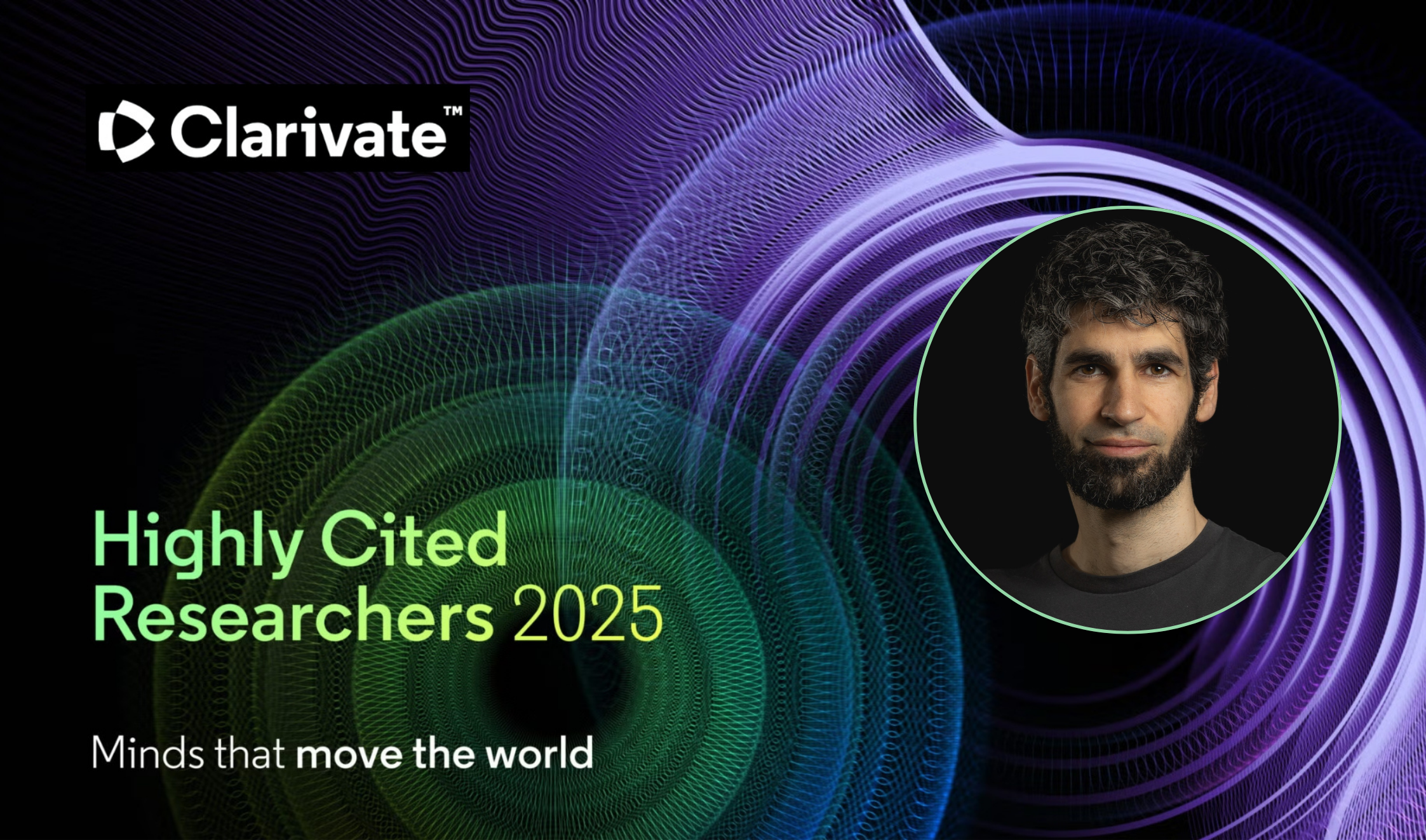
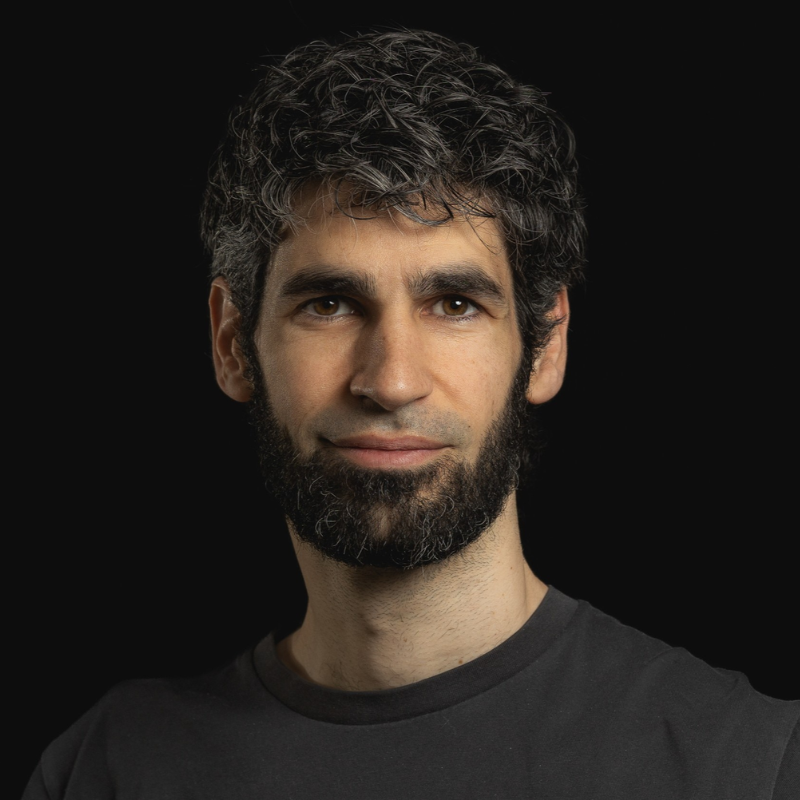
ICREA professor at the Universitat de Barcelona and CRM affiliated researcher Xavier Ros-Oton appears on Clarivate’s Highly Cited Researchers 2025 list, which this year reinstates the mathematics category after two years of exclusion.
Citations are a strange way to measure influence. They don’t count the theorems you prove, but the conversations you generate: who responds to your arguments, who extends your proofs, who finds in your results a starting point to explore territories you hadn’t envisioned. In this sense, Xavier Ros-Oton maintains many conversations at once. The Barcelona-born mathematician, an ICREA professor at the Universitat de Barcelona and an affiliated researcher at CRM, has been recognised as one of the 65 most influential mathematicians in the world, according to Clarivate’s Highly Cited Researchers 2025 list, published on November 12. The list identifies researchers whose articles rank in the top 1% most cited in their respective fields over the past eleven years. Among more than 6,800 researchers from all scientific and social disciplines, only 65 are mathematicians.
That mathematics returns to the Clarivate list this year is news in itself. The scientific intelligence company eliminated the category in 2023 after detecting anomalous patterns indicating that some researchers were “gaming” the system. For two years, mathematics disappeared from the list while Clarivate worked to develop more sophisticated filters. In 2025, the discipline has returned with reinforced integrity criteria. The company consulted with Domingo Docampo, a mathematician at the University of Vigo, who developed an independent algorithm to evaluate citation quality based on who cites and in what context. The 65 who now appear represent, according to Clarivate, greater diversity and include mathematicians and statisticians who have received significant recognition from their peers, many of whom have been awarded top-tier international prizes.
Conversations across disciplines
“For me, it’s a satisfaction to know that some of my articles, to which we’ve dedicated many hours of work with my collaborators, have an impact on the work of other researchers,” Ros-Oton explains. But what excites him most isn’t necessarily the volume of citations, but the type of conversations they generate. “I especially like it when ideas or results from my articles are used in very different areas, for example, in geometry or probability.”
“I especially like it when ideas or results from my articles are used in very different areas, for example in geometry or probability.”
A recent example: a result on minimal surfaces published in Quanta Magazine uses techniques developed by Ros-Oton in the context of free boundary problems. That a result on regularity in PDEs ends up helping understand singularities in geometry is exactly the type of influence that citations try to capture, but which is often difficult to quantify.
Ros-Oton is aware of the limitations of metrics. “Citations don’t reflect all the work behind them; they often don’t even reflect the quality of an article,” he notes. “The ones I consider my best articles aren’t necessarily the most cited, and the number of citations depends on many different factors.” Clarivate’s recognition, then, isn’t an assessment of which works are most important, but of which have generated the most dialogue.
Looking ahead
Beyond consolidating results on classical problems, Ros-Oton is already exploring new territories. “Recently, I started to work on the Boltzmann equation, which is fundamental in statistical mechanics, and there are many mathematical questions we still don’t know how to solve,” he explains. The Boltzmann equation describes how gases evolve at the molecular level, and despite its physical importance, many of its mathematical properties remain a mystery.
But there’s another direction Ros-Oton considers especially promising: the mathematical foundations of machine learning algorithms. “I think it’s a point where researchers from different areas could meet, and there are questions from theoretical computer science, probability, PDEs, analysis, and dynamical systems. In fact, CRM will host a workshop on this topic from January 7-9, organised by Ros-Oton together with Joan Bruna (NYU) and Domènec Ruiz-Balet (UB). “I would encourage all those potentially interested to participate,” he adds.
There are ways to influence that don’t appear in any database: conversations in conference hallways, questions you ask in a seminar that change the direction of a proof, the student you train who ends up opening a new line of research. But in a field as vast and globalised as mathematics, citations are a way to see who’s talking to whom, and what ideas are moving through the world.
That Xavier Ros-Oton ranks among the sixty-five most cited mathematicians on the planet tells you that the tools he has built and the results he has shaped are helping others push further.
Xavier is an ICREA Research Professor since 2020. He is a mathematician who works on PDE. He has been the PI of an ERC Starting Grant (2019-2024) and an ERC Consolidator Grant (2024-2029), and has received several awards for young mathematicians in Spain, including the ‘Premio Nacional de Investigación’ for researchers under 40 in Mathematics and Computer Science. He also received the Scientific Research Award from the Fundación Princesa de Girona in 2019, as well as the Stampacchia Gold Medal in 2021, an international prize awarded every three years in recognition of outstanding contributions to the Calculus of Variations. In 2022, he was elected member of the Spanish Royal Academy of Sciences. In 2025, he received the ‘Premi Nacional de Recerca al Talent Jove’ from the Generalitat de Catalunya.
ICREA professor at the Universitat de Barcelona and CRM affiliated researcher Xavier Ros-Oton appears on Clarivate’s Highly Cited Researchers 2025 list, which this year reinstates the mathematics category after two years of exclusion.Citations are a strange way to…
The researchers Maicol Caponi, Alessandro Carbotti, and Alberto Maione extended the H- and Γ-convergence theories to the setting of nonlocal linear operators and their corresponding energies. The authors were able to overcome the limitations of classical localization…
Diego Vidaurre has joined the Centre de Recerca Matemàtica through the ATRAE programme, bringing his expertise in modelling spontaneous brain activity across multiple data modalities. His work focuses on understanding how the brain’s intrinsic dynamics shape…
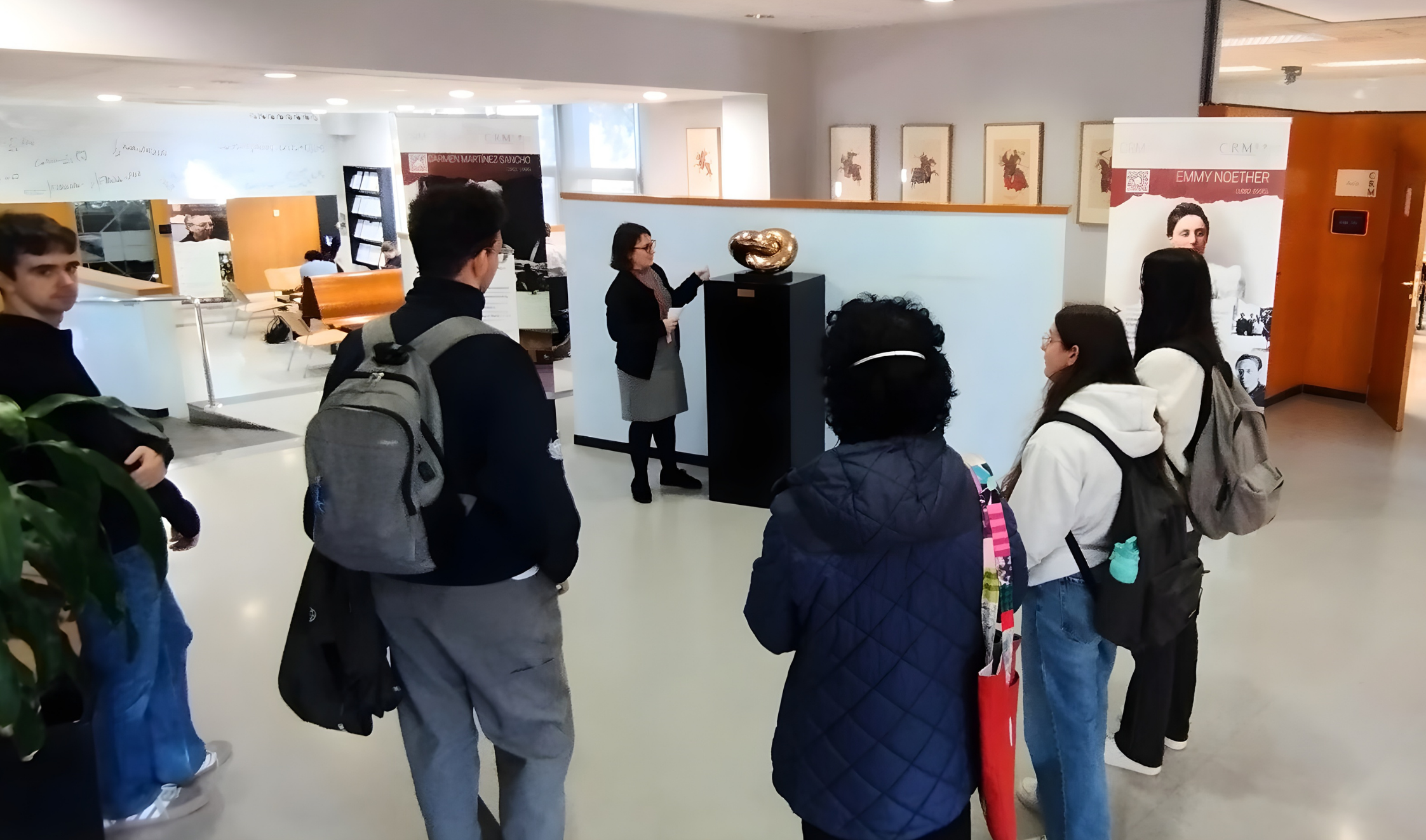
El CRM va participar en la 30a edició de la Setmana de la Ciència amb una ruta guiada que va combinar les biografies de dones matemàtiques amb obres d’art del centre, connectant ciència, història i creació artística.El 12 de novembre, el Centre de Recerca Matemàtica…
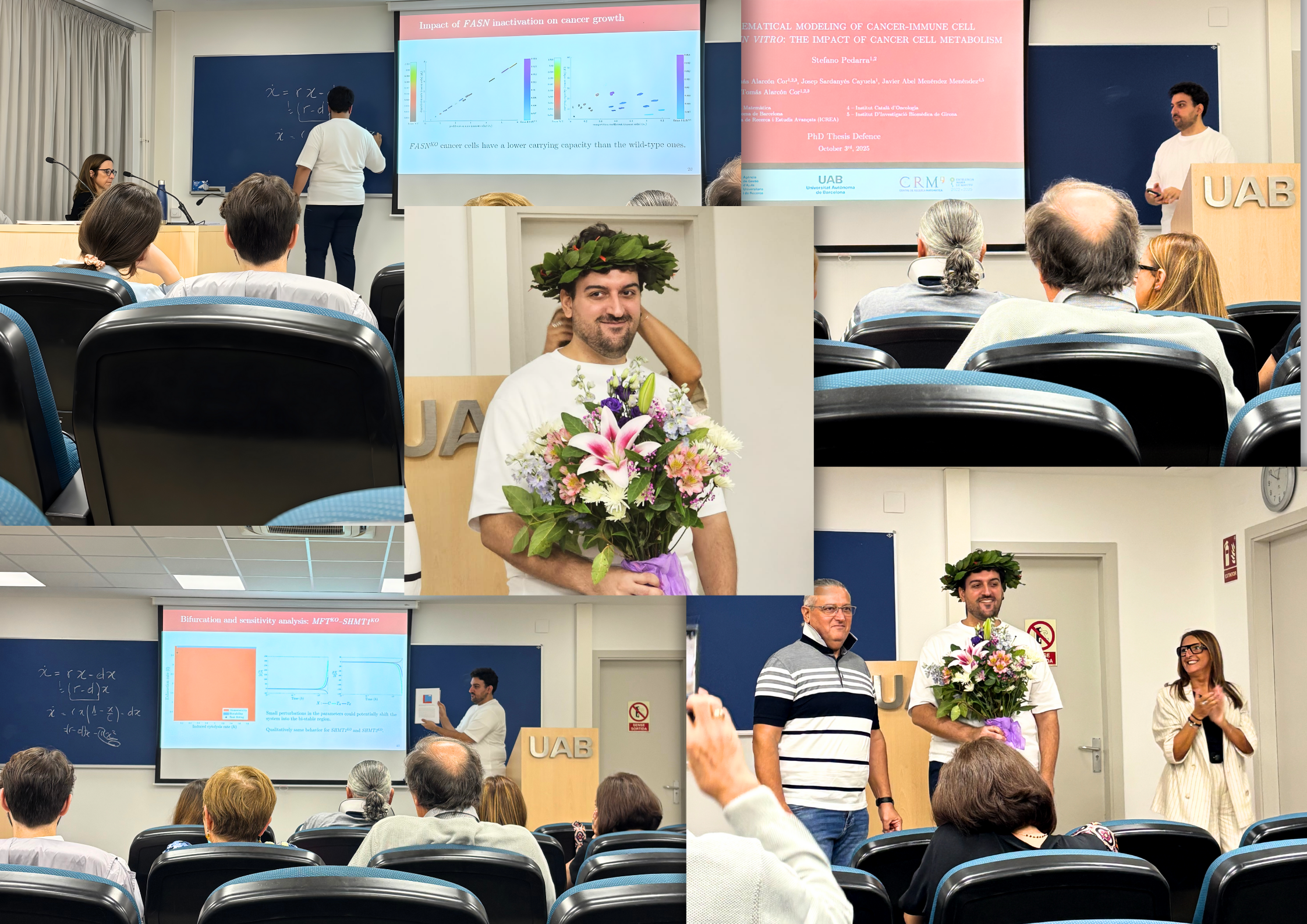
Stefano Pedarra has completed his PhD at the Centre de Recerca Matemàtica with a thesis exploring how tumour-cell metabolism shapes the immune system’s ability to fight cancer. His work brought mathematics and biology into direct conversation, from building models to…
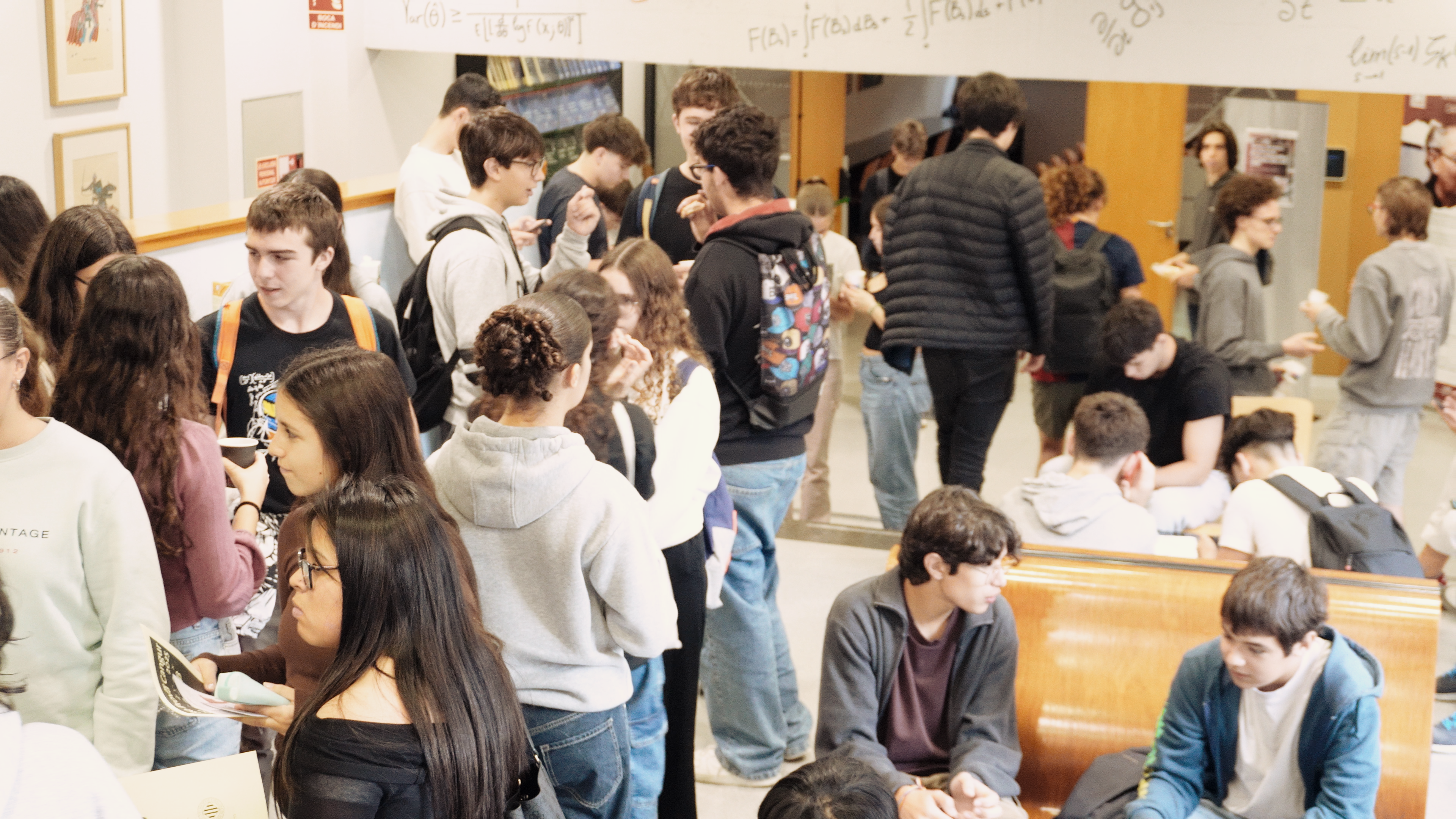
La prova de preselecció de Bojos per les Matemàtiques va reunir estudiants de tot Catalunya a la UAB i al CRM, amb presentacions a càrrec de Montse Alsina, presidenta de la Societat Catalana de Matemàtiques, Núria Fagella, degana de la Facultat de Matemàtiques i…
The XIII GEFENOL-DIFENSC Summer School gathered over thirty researchers from across Europe to explore how statistical physics helps explain complex phenomena in biology, ecology, networks, and social systems. In his closing lecture, Jordi Mompart (UAB) examined how…
An international collaboration including researchers from the Centre de Recerca Matemàtica (CRM) has shown that when several bifurcations occur close to one another, their interaction can dramatically amplify critical slowing down effect – the progressive slowdown of…
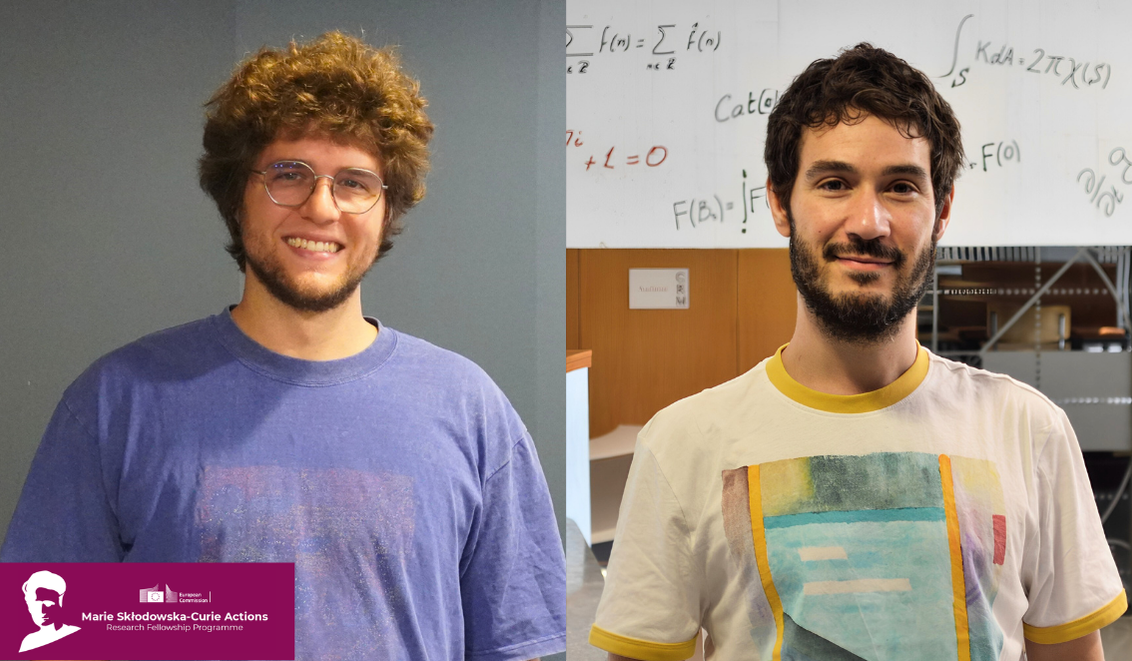
Gustavo Ferreira and Tássio Naia, CRM postdoctoral researchers and new Marie Skłodowska-Curie fellows. Gustavo Ferreira and Tássio Naia, who joined the CRM in 2023 through the María de Maeztu programme, have started their Marie Skłodowska-Curie postdoctoral…
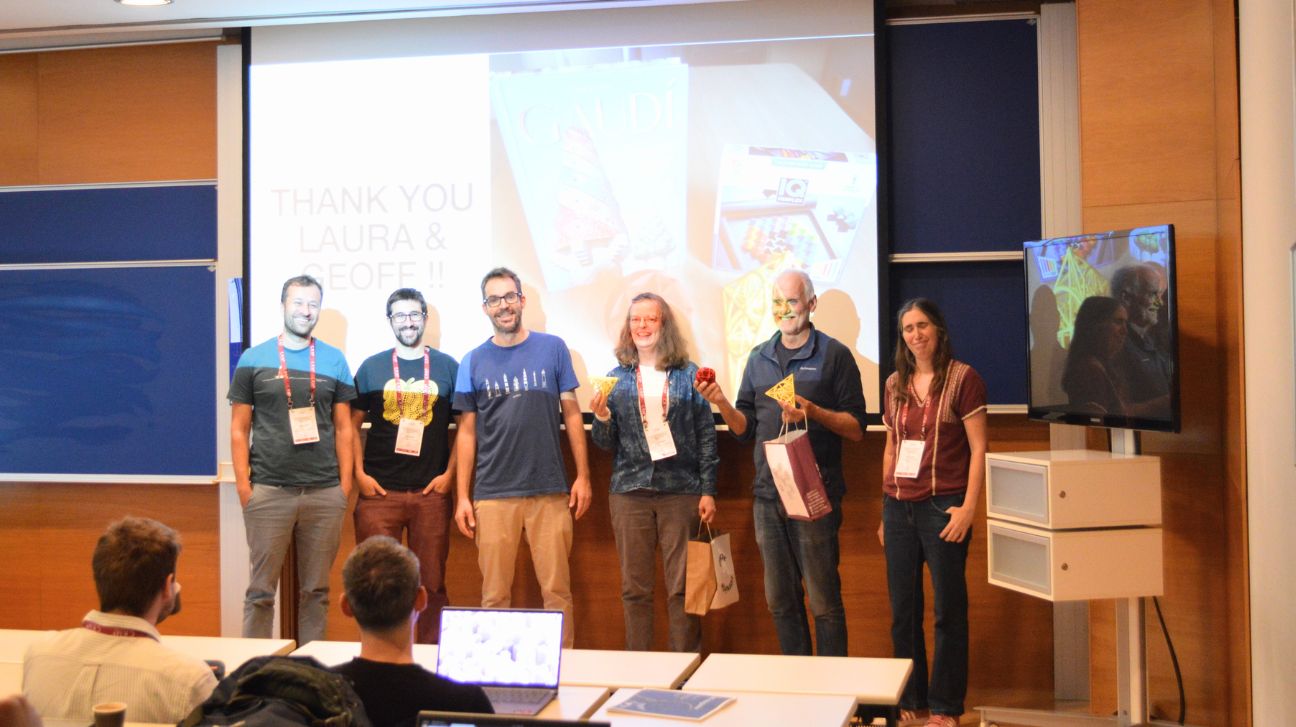
From October 13 to 17, 2025, the CRM hosted Matroid Week, a research school on combinatorial geometries and matroid theory. Courses by Laura Anderson and Geoff Whittle explored intersection properties and structural emergence in matroids. The event fostered deep…
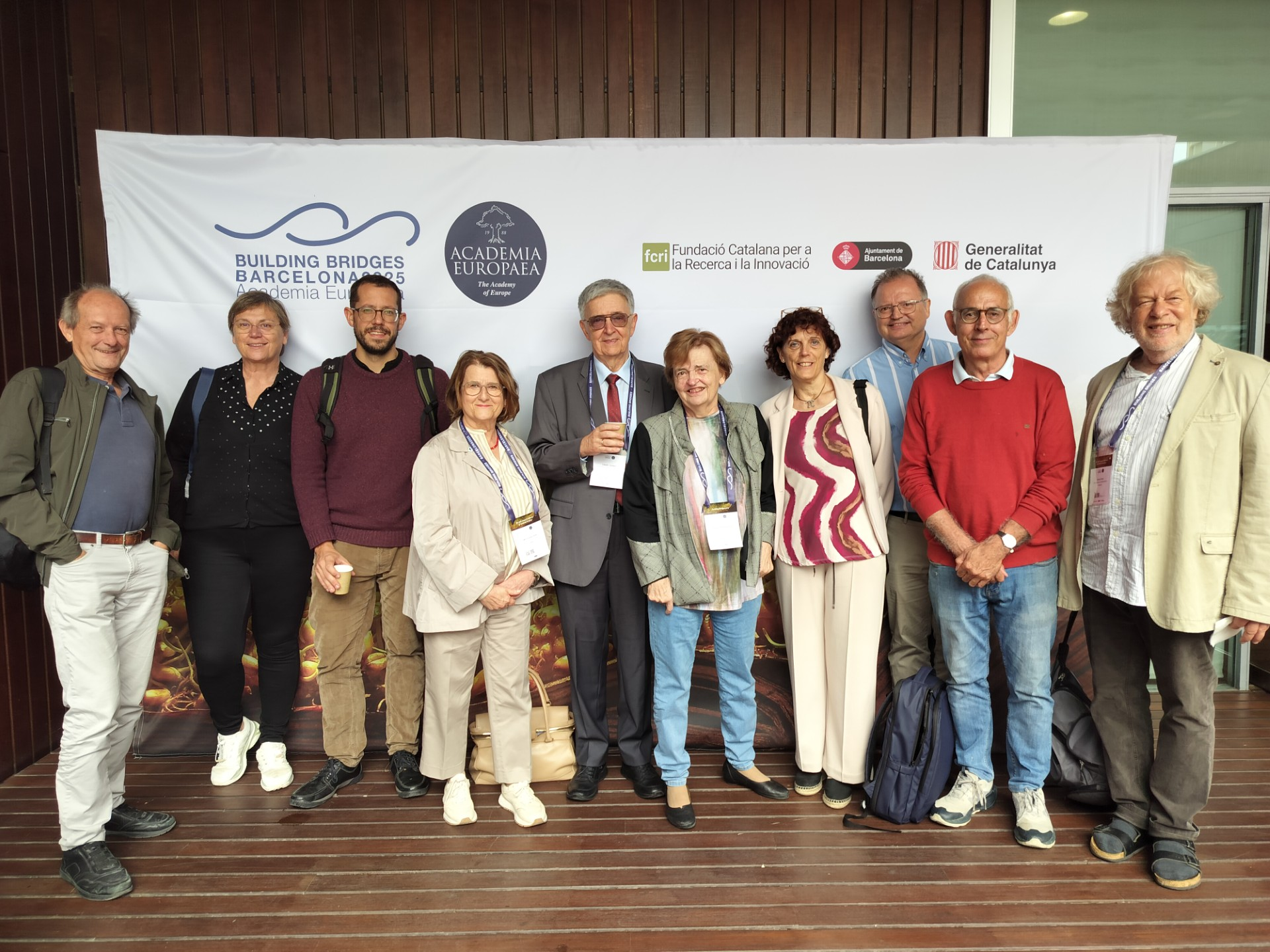
Mathematician László Lovász received the 2025 Erasmus Medal from the Academia Europaea yesterday at the PRBB in Barcelona, where he delivered the lecture “The Beauty of Mathematics”. Renowned for his work in graph theory and discrete mathematics, Lovász has shaped…
For one week in early October, the Centre de Recerca Matemàtica became a meeting ground for the world of combinatorial geometry. The Polytope Week research school gathered more than fifty participants from three continents to study the interplay…
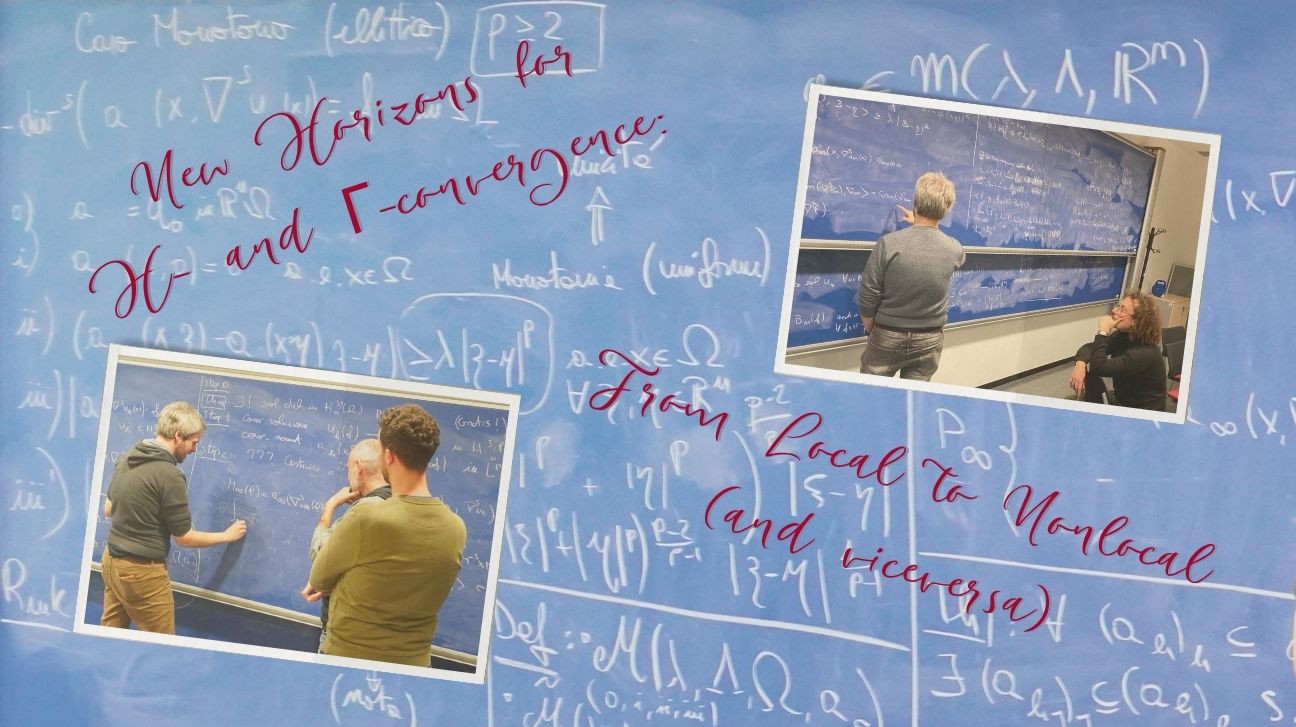
The researchers Maicol Caponi, Alessandro Carbotti, and Alberto Maione extended the H- and Γ-convergence theories to the setting of nonlocal linear operators and their corresponding energies. The authors were able to overcome the limitations of classical localization techniques. If symmetry is also assumed, their results preserve key equivalences between the convergences. The work has been published in Calculus of Variations and Partial Differential Equations.
“The IP4RG program was crucial. It gave us the chance to spend two intense weeks working side by side on the project, which really accelerated our progress. Just as important were the informal discussions with other participants—those conversations often led to fresh insights and even helped us solve lingering issues, such as the uniqueness of the H-limit.”
— Maicol Caponi (Università degli Studi dell’Aquila), Alessandro Carbotti (Università del Salento) and Alberto Maione (Centre de Recerca Matemàtica)
The researchers Maicol Caponi (Università degli Studi dell’Aquila), Alessandro Carbotti (Università del Salento), and Alberto Maione (Centre de Recerca Matemàtica) have extended the classical theories of H- and Γ-convergence to a nonlocal setting—an investigation supported by the Centre de Recerca Matemàtica of Barcelona (CRM), under the International Programme for Research in Groups (IP4RG). Their work focuses on linear operators in fractional divergence form. To tackle the analytical challenges, they introduce new ideas that bypass the failure of traditional localization techniques in this (nonlocal) context. After proving the H-compactness for such a class of operators, involving general (possibly non-symmetric) matrices, in the second part of the work they focus on the symmetric case. They obtain in this scenario the equivalence between H-convergence of the operators and Γ-convergence of the corresponding nonlocal energies. As a consequence, they provide an alternative (variational) proof of the H-compactness theorem through Γ-convergence. The article has been published in Calculus of Variations and Partial Differential Equations.
Understanding H- and Γ-convergence: A Glimpse into the Mathematical Approximation
Imagine trying to understand the behavior of a complex material—say, a sponge with tiny holes—without knowing every detail of its internal structure. Instead of describing each part, you look for a simpler model that captures its overall behavior. This is the essence of the mathematical theory of homogenization, which emerged in the 1970s, driven by the need to understand how complex materials—like composites (structures made by layering sheets of different substances) or homogeneous materials with holes filled by another material —respond to external forces. It was done without modeling every microscopic detail, but with equations that capture the macroscopic behavior.
Mathematically, these systems are represented by partial differential equations with rapidly oscillating coefficients, such as:
where the matrix A(x) encodes the material properties at each point —acting like a parameter that varies across different materials.
To understand how solutions behave when these coefficients oscillate rapidly, researchers developed key notions of convergence:
G-convergence was the starting point. Introduced by Spagnolo in the 1970s, it studies how sequences of differential operators behave in the limit. It’s useful for modeling materials with varying properties, but it has limitations—especially when dealing with non-symmetric matrices, which appear in many real-world applications.
H-convergence was developed by Tartar and Murat to overcome the limitations of G-convergence. It refines the theory for non-symmetric cases, ensuring the uniqueness of the representation limit operator even when the matrices are not symmetric. In other words, it provides a robust framework for studying how sequences of differential operators behave in heterogeneous or irregular media.
Γ-convergencetakes a complementary (indirect) approach. Instead of focusing on operators, it deals with energy functionals—mathematical expressions that quantify the “cost” or “effort” of a system’s configuration. Γ-convergence ensures that the minimizers (optimal configurations) of approximating problems converge to the minimizer of the limit problem.
These concepts are not just abstract tools—they underpin models in electrostatics, magnetostatics, heat transfer, and elasticity, where might represent potential, temperature, or displacement, and encodes physical properties like conductivity or elasticity. Building on this foundational understanding, the researchers present a significant extension of these classical tools to a nonlocal setting.
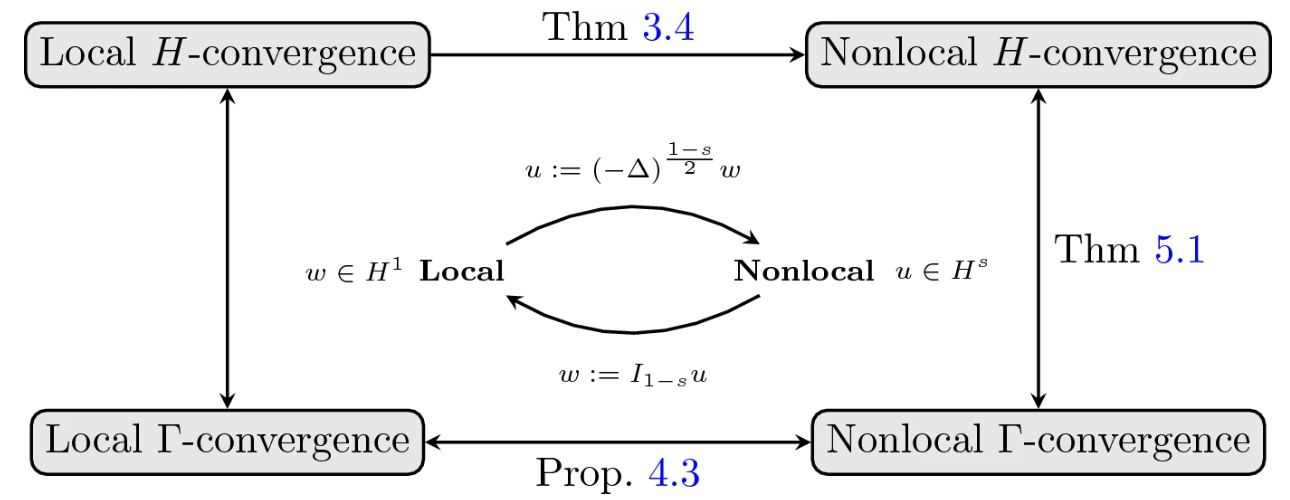
“A very helpful idea, which goes back to a paper by C. Kreisbeck and H. Schönberger, is that fractional gradient and divergence can be expressed in terms of the classical (local) ones, applied to suitably transformed functions. This creates a bridge between the fractional and the local frameworks, allowing us to pass from one setting to the other.”
— Maicol Caponi (Università degli Studi dell’Aquila), Alessandro Carbotti (Università del Salento) and Alberto Maione (Centre de Recerca Matemàtica)
Returning to the sponge analogy
G-convergence tells you how the equations describing the sponge change as its internal structure varies.
H-convergence ensures that even if the internal forces are asymmetric, the model still behaves predictably.
Γ-convergence focuses on the energy needed to deform the sponge, ensuring that the most efficient way to press it remains consistent as the structure changes.
What’s New? Key Innovations in Nonlocal Theory
Caponi, Carbotti and Maione present a significant extension of classical mathematical tools—H-convergence and Γ-convergence—to a nonlocal setting, which is increasingly relevant in modern applications such as fluid mechanics, image processing or anomalous diffusion. This shift is significant because traditional localization techniques fail in nonlocal contexts, where interactions are not confined to infinitesimal neighborhoods.
“The initial motivation came from a paper by a group of researchers (Fernández Bonder, J.; Ritorto, A.; Salort, A.M.) who had been exploring related ideas in a different framework. A key turning point came during a meeting in August in Perugia (Italy), when we suddenly realized that the question of uniqueness in the nonlocal setting was far from being trivial.”
— Maicol Caponi (Università degli Studi dell’Aquila), Alessandro Carbotti (Università del Salento) and Alberto Maione (Centre de Recerca Matemàtica)
In particular, they study the H-convergence of nonlocal linear operators in fractional divergence form, where the oscillations of the matrices are prescribed outside the reference domain. This setup reflects realistic scenarios in which the material properties vary globally, not just locally, and introduces significant analytical challenges.
The first central result of the paper is the H-compactness of a class on linear nonlocal operators. The authors overcome the limitations of traditional (local) techniques, by taking advantatge of the classical (local) theory to prove the existence of a H-limit in the nonlocal scenario. They build the limit operator as a reasonable extention of the local one, and finally show that this is the only possible (unique) representation of the limit. This is crucial for studying heterogeneous materials with complex internal structures.
“Actually, we don’t introduce a new compactness argument. What we do prove is a consistency result between the local and the nonlocal settings. In simple terms, we show that if a local H-limit exists, then there’s a corresponding nonlocal H-limit described by the same operator. So, by relying on the well-known compactness of local H-convergence, we automatically obtain compactness in the nonlocal case as well.”
— Maicol Caponi (Università degli Studi dell’Aquila), Alessandro Carbotti (Università del Salento) and Alberto Maione (Centre de Recerca Matemàtica)
A key innovation is the use of fractional gradient and divergence operators, which allow researchers to define a nonlocal H-convergence using differential operators — even in the presence of matrix-valued coefficients, essential for modeling anisotropic heterogeneous materials (direction-dependent materials).
The second central result of the paper is that, under symmetry assumptions, the classical equivalence betweenH-convergence (which describes how differential operators behave) and Γ-convergence (which describes how energies behave) still holds in this nonlocal framework. This means that the mathematical structure remains consistent even when moving from local to nonlocal models.
“Unlike the local case, fractional operators do not allow for standard localization techniques. This makes many classical arguments no longer applicable. One of the hardest parts was proving the uniqueness of the H-limit and of the integral representation of the Γ-limit. Without the latter, the connection between H-convergence and Γ-convergence would have remained incomplete. The uniqueness was proved in our second meeting in person that happened at CRM last March, almost six months after the first preprint version of our paper.”
— Maicol Caponi (Università degli Studi dell’Aquila), Alessandro Carbotti (Università del Salento) and Alberto Maione (Centre de Recerca Matemàtica)
In short, the article provides new tools to study complex systems where long-range interactions matter, and it opens the door to applying these ideas in fields like physics, engineering, and data science.
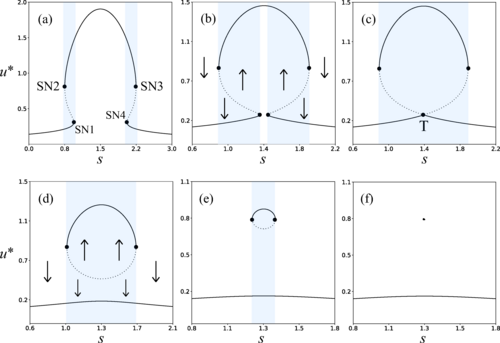
The diagram illustrates the current state of the art and the main contribution of the article. While the first vertical arrow on the left was already known in the literature since the 1980s, all other arrows completing the square represent new results established in this work. Figure taken from the original publication.
What’s Next? Open Challenges and Promising Paths in Nonlocal Analysis
“In the local setting, it is known that, under a suitable construction of associated energies, the equivalence between H-convergence and Γ-convergence still holds even without symmetry. We believe that this construction could be adapted to the nonlocal case, although the local proofs are already quite technical, so extending it will not be easy.”
— Maicol Caponi (Università degli Studi dell’Aquila), Alessandro Carbotti (Università del Salento) and Alberto Maione (Centre de Recerca Matemàtica)
This work opens several avenues for further research:
Theoretical Challenges
Beyond symmetry: The equivalence between H- and Γ-convergence is proven under symmetry assumptions. Extending this result to non-symmetric matrices remains an open and challenging question, especially in the fractional nonlocal setting where no natural energy is associated a priori.
Extension to nonlinear operators: The current results focus on quadratic energies. In a forthcoming paper the authors and collaborators (Giuseppe Cosma Brusca and Fabio Paronetto) will address the nonlinear case of monotone operators with p-growth, aiming to generalize classical results to the fractional nonlinear nonlocal setting. This new research started during the IP4RG programme hosted at CRM last March.
Connections to Other Mathematical Frameworks
Dirichlet forms and probabilistic interpretations: The connection with Dirichlet forms is not fully understood in the fractional setting. Exploring whether fractional quadratic forms define Dirichlet structures could link this theory to stochastic processes.
Sub-Riemannian geometries: The notion of H-convergence has recently been extended to sub-Riemannian structures. Investigating compactness properties of fractional-order operators in settings such as Carnot groups could provide a structured framework for nonlocal analysis in geometric contexts.
Alternative frameworks: compare the notion of nonlocal H-convergence introduced in this work with alternative definitions based on functional analytic approaches.
Applications and Computational Aspects
Parabolic nonlocal operators: Once H-convergence is fully understood for elliptic operators, it is natural to study the asymptotic behavior of sequences of parabolic nonlocal operators. Preliminary results suggest that, in case of time-independent coefficients, the parabolic H-limit coincides with the elliptic one. Extending this to the nonlocal case is a promising direction.
Applications in data science and imaging: Nonlocal models are increasingly used in image processing and machine learning. Exploring whether these convergence theories can offer new insights or guarantees in these fields remains an exciting possibility.
These open questions highlight the richness of nonlocal analysis and its potential to unify diverse mathematical frameworks.
This article lays the foundation for a unified theory of convergences in nonlocal models, bridging operator and variational perspectives, and opening the door to applications across mathematics, physics, and engineering.
“Two directions excite us the most. One is extending these results to nonlinear nonlocal operators, which would open up many new questions. The other is bringing the theory to non-Euclidean spaces.”
— Maicol Caponi (Università degli Studi dell’Aquila), Alessandro Carbotti (Università del Salento) and Alberto Maione (Centre de Recerca Matemàtica)
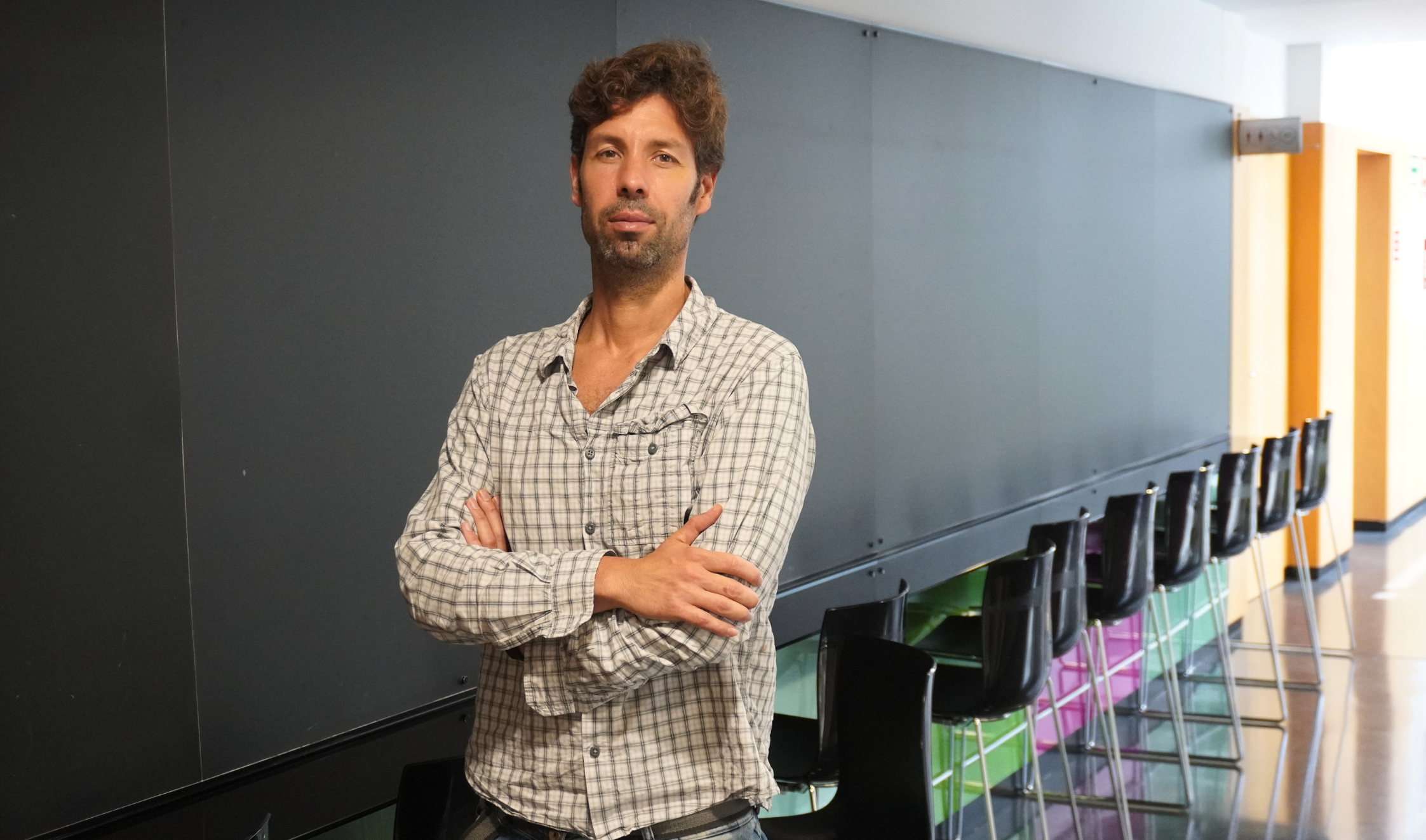
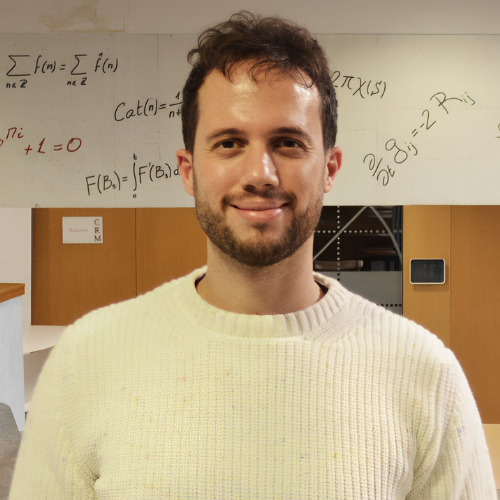
Alberto Maione, postdoctoral researcher at the Centre de Recerca Matemàtica (CRM) in Barcelona under the supervision of Xavier Cabré. From 2021 to 2023, he held a junior postdoctoral position at the University of Freiburg working with Patrick Dondl.
He earned his PhD in Mathematics from the University of Trento in 2020, with a thesis on variational convergences for functionals and differential operators depending on vector fields. His academic background also includes a Master’s and Bachelor’s degree in Mathematics from the University of Perugia.
Maione’s research focuses on Mathematical Analysis, particularly Calculus of Variations, Partial Differential Equations, Γ-convergence, H-convergence, Homogenization, and Sub-Riemannian Geometry. He has co-organized several scientific events, including the 2025 conference New Frontiers in Homogenization and Fractional Calculus at the CRM.
He currently leads an International Programme for Research in Groups (IP4RG) entitled “A Mathematical Approach to the Homogenization of Nonlocal Composite Materials: H-convergence, G-convergence, and Γ-convergence.”
ICREA professor at the Universitat de Barcelona and CRM affiliated researcher Xavier Ros-Oton appears on Clarivate’s Highly Cited Researchers 2025 list, which this year reinstates the mathematics category after two years of exclusion.Citations are a strange way to…
The researchers Maicol Caponi, Alessandro Carbotti, and Alberto Maione extended the H- and Γ-convergence theories to the setting of nonlocal linear operators and their corresponding energies. The authors were able to overcome the limitations of classical localization…
Diego Vidaurre has joined the Centre de Recerca Matemàtica through the ATRAE programme, bringing his expertise in modelling spontaneous brain activity across multiple data modalities. His work focuses on understanding how the brain’s intrinsic dynamics shape…
El CRM va participar en la 30a edició de la Setmana de la Ciència amb una ruta guiada que va combinar les biografies de dones matemàtiques amb obres d’art del centre, connectant ciència, història i creació artística.El 12 de novembre, el Centre de Recerca Matemàtica…
Stefano Pedarra has completed his PhD at the Centre de Recerca Matemàtica with a thesis exploring how tumour-cell metabolism shapes the immune system’s ability to fight cancer. His work brought mathematics and biology into direct conversation, from building models to…
La prova de preselecció de Bojos per les Matemàtiques va reunir estudiants de tot Catalunya a la UAB i al CRM, amb presentacions a càrrec de Montse Alsina, presidenta de la Societat Catalana de Matemàtiques, Núria Fagella, degana de la Facultat de Matemàtiques i…
The XIII GEFENOL-DIFENSC Summer School gathered over thirty researchers from across Europe to explore how statistical physics helps explain complex phenomena in biology, ecology, networks, and social systems. In his closing lecture, Jordi Mompart (UAB) examined how…
An international collaboration including researchers from the Centre de Recerca Matemàtica (CRM) has shown that when several bifurcations occur close to one another, their interaction can dramatically amplify critical slowing down effect – the progressive slowdown of…
Gustavo Ferreira and Tássio Naia, CRM postdoctoral researchers and new Marie Skłodowska-Curie fellows. Gustavo Ferreira and Tássio Naia, who joined the CRM in 2023 through the María de Maeztu programme, have started their Marie Skłodowska-Curie postdoctoral…
From October 13 to 17, 2025, the CRM hosted Matroid Week, a research school on combinatorial geometries and matroid theory. Courses by Laura Anderson and Geoff Whittle explored intersection properties and structural emergence in matroids. The event fostered deep…
Mathematician László Lovász received the 2025 Erasmus Medal from the Academia Europaea yesterday at the PRBB in Barcelona, where he delivered the lecture “The Beauty of Mathematics”. Renowned for his work in graph theory and discrete mathematics, Lovász has shaped…
For one week in early October, the Centre de Recerca Matemàtica became a meeting ground for the world of combinatorial geometry. The Polytope Week research school gathered more than fifty participants from three continents to study the interplay…
Fractional divergence form refers to operators that account for long-range interactions, rather than just local derivatives.
The event took place at the Plaça de Catalunya station of the Ferrocarrils and was attended by the president of FGC, Carles Ruiz Novella; the director of the ICD, Alba García Sánchez; the general secretary of the IEC, Àngel Messeguer i Peypoch; the vice-rector for Equality, Inclusion and Gender of the UB, Montserrat Puig Llobet; the vice-rector for Culture, Memory and Heritage of the UB, Agustí Alcoberro Pericay; the president of the Science and Technology Section of the IEC, Alícia Casals Gelpí; researchers from the Institute of Cosmos Sciences of the UB and the Faculty of Physics of the UB, and relatives of Assumpció Català.
The event was attended by the vice-rectors of the UB Montserrat Puig and Agustí Alcoberro. Credits: FGC.
The christening of the train marks the final stretch of the commemorative events for the centenary of the birth of Assumpció Català i Poch, which began in February with an event in the University’s Historical Building, where Català was a professor of Mathematics and Astronomy. On July 14, coinciding with the exact date of her birth, the central event was held at the Montsec Astronomical Park, where the largest telescope has been named after Català since 2016. The Astronomical Park, managed by FGC, has also dedicated this year’s Astronomy Festival to the figure of the astronomer.
During today’s christening ceremony, the travelling exhibition on the figure of Català i Poch, which has been prepared by the ICD, was also visited on the platform of via 5 in Plaça de Catalunya. The exhibition will be moved from tomorrow to the Espai Provença of FGC (Provença station: access via Carrer de Rosselló, 219, on the corner with Balmes), where it can be visited until December 19, from Monday to Friday, from 9:00 to 19:00.
ICCUB-IEEC resercher Francesca Figueras, one of the curators of the exhibition, presenting it to the attendants. Credits: FGC.
In addition, on November 27, three exhibitions related to the figure of Assumpció Català will be inaugurated at the Faculty of Physics of the University of Barcelona: a virtual one, entitled “Assumpció Català and the University of Barcelona. A pioneering trajectory in the university and scientific world“; one from the M. Asunción Català Poch Collection of the CRAI Library of Physics and Chemistry, and another on historical astronomy instruments. On the other hand, the biographical comic book Assumpció Català, la dona que estimava les estrelles (Edicions UB) will be published shortly, with illustrations by Pilarín Bayés and texts by Ramon Dilla, professor of Art History at the UB.
The centenary of the Catalan Assumption is part of the Government’s commemorations for 2025, which annually decides on the events and personalities to be commemorated by the Generalitat de Catalunya. The aim is to highlight, recover and disseminate the memory of these events and personalities that have left their mark on the collective heritage.
Assumpció Català i Poch (Barcelona, 14 July 1925 – 3 July 2009) was the first woman to obtain a doctorate in Mathematics from the University of Barcelona. She did so in 1970, and ended up becoming a professor of Mathematics and Astronomy at the same University. She also carried out systematic observations of sunspots for over thirty years and represented Spain in the International Astronomical Union.
Dinámica de dos superfluidos acoplados en el interior de estrellas de neutrones
Date
Place
Aula Eduard Fontseré, Physics Faculty
Abstract: Neutron stars are extreme astrophysical objects in which matter ranges from iron-like densities at the surface to several times nuclear saturation in the core. Their layered structure—outer crust, inner crust, and core—is governed by the nuclear matter equation of state (EoS), while superfluidity arising from neutron and proton pairing affects cooling, rotational stability, and sudden spin-up events (glitches). This thesis investigates the superfluid dynamics of the outer core, composed of a neutronic superfluid and a protonic superconductor in beta equilibrium with an electron gas, using a hydrodynamic model in which the two fluids are coupled through both dynamic entrainment and the Skyrme SLy4 effective N–N interaction. Analysis of the resulting equations of motion reveals dynamical instabilities, with results potentially linked to observable astrophysical phenomena. Also, the effects of single proton vortices on the neutron superfluid under realistic rotation and magnetic field conditions are examined.
Tribunal:
President: Dr. José Antonio Pons Botella
Secretary: Dr. Maria Moreno Cardoner
Vocal: Dr. Jordi José Pont
Suplents:
Dr. Clara Dehman
Dr. Arnau Ríos Huguet
Directors: Dr. Francisco Javier Viñas Gausí and Dr. Mario Centelles Aixalà
An international study of the Institut de Biologie Structurale (IBS) from Grenoble and the CBGP, a joint center of the UPM and INIA-CSIC, reveals a dynamic molecular rearrangement crucial to biological nitrogen fixation. This discovery paves the way for the development of sustainable crops capable of fixing their own nitrogen.
The LIGO–Virgo–KAGRA (LVK) Collaboration has announced the completion of O4, the most productive gravitational-wave observation run so far, yielding an unprecedented number of candidate events and high-quality data for the scientific community.







.jpeg)

