Author Archive

PhD Fellowship (Pre-Selection) in Gravitational-wave physics

PhD Fellowship (Pre-Selection) in Gravitational-wave physics secretaria Mon, 13/10/2025 – 15:52
Deadline

The Institute of Cosmos Sciences of the University of Barcelona (ICCUB), recognized as a Unit of Excellence under the Severo Ochoa and María de Maeztu program, the highest distinction awarded to research institutes or centers in Spain, is launching a pre-selection call for  at least six PhD fellowships as part of its María de Maeztu Strategic Program. This initiative reflects ICCUB’s strong commitment to scientific excellence and the advancement of emerging research talent.

This pre-selection aims to identify highly motivated national and international candidates interested in pursuing a PhD in one of ICCUB’s core research areas: cosmology, astrophysics, gravitational waves, quantum technologies, and particle physics. Selected candidates will be invited to participate in the official selection process conducted by the University of Barcelona, which is required for formal admission and hiring.

ICCUB offers a dynamic, interdisciplinary research environment that fosters international collaboration and innovation, supported by cutting-edge infrastructure and a vibrant academic community. Located in Barcelona, a global hub for science and technology, the institute provides an ideal setting for early-stage researchers to launch their scientific careers while enjoying a rich and multicultural lifestyle.

The institute is actively involved in several major international collaborations, including LHCb, DESI, and Euclid, and plays a leading role in gravitational wave experiments such as the Virgo Collaboration, the Einstein Telescope Collaboration, and the LISA Consortium. ICCUB also contributes to large-scale astronomical surveys like ESA-Gaia, Weave, and SDSS-IV, as well as electromagnetic follow-up missions across various wavelengths, including BlackGEM, MAGIC, and LST.

About this project:

The successful applicant will conduct original research focusing on gravitational wave physics, including gravitational wave data analysis and parameter estimation, breaking degeneracies in GW parameters, observations and modelling of GW progenitors, detector characterization, and novel developments for next-generation detectors.

They will be integrated in the gravitational waves group and work closely with colleagues in the ICCUB.


Opportunities at ICCUB:

The PhD fellows at ICCUB will benefit from a comprehensive and enriching training program designed to prepare them for successful careers in academia, industry, or scientific outreach. Each doctoral project is embedded within one of ICCUB’s strategic research challenges. Supervision is provided by experienced ICCUB researchers, often involving co-supervision to foster interdisciplinary perspectives and collaborative mentorship.

In addition to research, students will engage in a tailored training program that includes both technical and transferable skills: scientific seminars, ICCUB Colloquia, advanced instrumentation workshops, data science, research ethics, science communication, project management, and career development. ICCUB also encourages international mobility through short-term research stays at leading institutions worldwide, enhancing global scientific exchange and visibility.

Available positions:

Detailed descriptions of the research projects and host groups can be found in the links

Fellowship terms:

  • The fellowship includes funds for a predoctoral training contract for up to four years. The annual salary will be split into 12 monthly payments and distributed as follows:
    • The first year of PhD: 18.269,56 €/year
    • The second and third year of PhD: 22.032,36 € /year 
    • The fourth year of PhD: 24.468,15€/year
    • Predoctoral contracts are renewed annually for up to 4 years. Renewal is subject to satisfactory performance in the PhD studies and related research activities. If the doctoral degree is obtained before the predoctoral fellowship ends, a Postdoctoral Orientation Period (POP) can be funded from the time the doctoral degree is obtained until the end of the predoctoral fellowship, with a maximum duration of 12 months (i.e. predoc contract + POP = max. 4 years in total).
    • The fellowship includes full social security coverage through the Spanish Social Security system, providing access to the Spanish public health care system and pension and unemployment benefits.
  • Up to 7.000€ to cover the enrolment fees for the UB’s Physics doctoral program (for a maximum of 4 years) and carry out short stays in other institutions, companies or universities abroad. The research stays must have a minimum duration of one month and must be authorized by the doctoral supervisor/s.

Eligibility criteria:

The fellowships are addressed to graduate students of any nationality who fulfil the following eligibility criteria:

  • Applicants must hold a Bachelor’s and a Master’s Degree in Physics, Mathematics, Astronomy, Particle Physics, Cosmology, Electronics, Semiconductor Technology, Photonics, Quantum Technologies, Computer Science or a related discipline by September 2026
  • Be eligible for full-time enrollment in the UB Physics doctoral program for the 2026-2027 academic year by the time the fellowship starts, between September 2026 and January 2027.
  • Applicants must not hold a doctoral degree. Moreover, applicants are not eligible if they have benefited from a predoctoral training fellowship under the ‘Plan Estatal de Investigación, Desarrollo e Innovación Tecnológica’ or any of the previous Spanish National Plans by MICIU/AEI.
  • Applicants must have a thesis supervisor affiliated with the Institute of Cosmos Sciences.

Preferred skills:

  • An interest in computational modeling.
  • Working knowledge of the Linux operating systems.
  • The ability to collaborate and communicate well in English.
  • Good knowledge of the Python programming language, the knowledge of C will be considered an asset.
  • A solid background in general relativity, nuclear physics, and astrophysics is a plus.

Selection criteria:

A score of up to 100 points will be awarded, on the bases of the following criteria:

  1. Candidate’s academic and/or scientific-technical experience, up to 50 points
    1. Scientific and technical contributions, up to 45 points The academic record and other curricular merits of the candidate will be assessed, as well as their suitability for the tasks to be carried out based on training and professional experience.
    2. Mobility and internationalization, up to 5 points Short-term research stays in national and international institutions, universities, and industry will be assessed, considering the prestige of the entity hosting the stay and the activity carried out therein, as well as the impact of the research stays on the research career path of the candidate.
  2. Suitability of the candidate for the research activities to be carried out in the funded project, up to 50 points

The candidate’s suitability for the program, project, and planned research activities will be evaluated based on their prior training and experience. In this context, consideration will be given to the added value that undertaking the project would bring to their research career, as well as the value the candidate would contribute to the host institution and research groups.

If two or more applications receive the same final score, preference will be given to the candidate with the highest score for criterion 1. If the candidates remain tied, a draw will be made to select the winning candidate.

Application Process:

The entire application process will be completed online. To apply, please complete the application form and provide contact details for two referees. After submission, you will receive instructions on how to upload the following documents:

  • Curriculum Vitae, we welcome to use of the AEI template but this is not mandatory, in Spanish or English, which must list the merits the candidate wishes to be considered. The curriculum vitae template can be found here.
  • Official transcripts of BSc and MSc studies in PDF format, showing grades obtained. If the academic transcripts are not in Catalan, Spanish or English, applicants should also attach a translation in one of the above-mentioned languages, and the grading system should be explained.
  • Motivation letter with statement of research expertise and interests  and justificationof  their fit to the  project (max 3 pages).
  • The contact of two Reference Letter writers (referees will be contacted directly)

Reference letters must be sent directly by the referees through the on-line application system (the system will contact these scientists you named, asking them to submit their letters of reference after a few working days). Applications will only be considered once at least one reference letter has been received.

Please note:

  • In case of multiple applications to this call, the applicant should clearly indicate in their statement all the applications submitted or planned and indicate their prioritization in the motivation letter.
  • For any questions regarding the application process, please contact secretaria@icc.ub.edu.
  • Candidates must ensure that all information is included before the deadline. Incomplete applications will not be considered.

Important: Candidates who are shortlisted through the ICCUB pre-selection process will be invited to apply to the University of Barcelona’s call.

Key dates:

Application deadline: Until filled. Review of the applications will start on December 1st, 2025

Final resolution: February 2026

Pre-selection process:

The evaluation and pre-selection of the candidates will be conducted by the ICCUB María de Maeztu Committee for Predoctoral Training, following the guidelines set by the 2024 ‘Centros de Excelencia «Severo Ochoa» y Unidades «María de Maeztu»’ call for proposals, following the procedure below:

  • The selection will be based on the evaluation criteria described before.
  • At the late stages of the pre-selection process, short-listed candidates will be contacted for a personal interview.
  • All applicants will be informed of the final pre-selection decision by February 2026.

ICCUB follows in its selection processes a gender equality opportunity policy and a non-discrimination policy based on age, ethnic or social origin, religion or belief, sexual orientation, language and disability.

Funding:

These positions are financed by the State Agency for Research of the Spanish Ministry of Science, Innovation and Universities through the “Unit of Excellence María de Maeztu 04/2019-03/2031” awarded to the Institute of Cosmos Sciences, grant CEX2024-001451-M funded by MICIU/AEI/10.13039/501100011033.

The Unit of Excellence Maria de Maeztu recognition has been awarded by the Spanish Government in 2025 for the third time to the ICCUB, as a center with a highly competitive strategic research programmes in the frontiers of knowledge.

Logo MdM

Go to Source

PhD Fellowship (Pre-Selection) in Fundamental Physics and Technology: From Gravitational Waves to Quantum Detectors

PhD Fellowship (Pre-Selection) in Fundamental Physics and Technology: From Gravitational Waves to Quantum Detectors secretaria Mon, 13/10/2025 – 15:48
Deadline

The Institute of Cosmos Sciences of the University of Barcelona (ICCUB), recognized as a Unit of Excellence under the Severo Ochoa and María de Maeztu program, the highest distinction awarded to research institutes or centers in Spain, is launching a pre-selection call for  at least six PhD fellowships as part of its María de Maeztu Strategic Program. This initiative reflects ICCUB’s strong commitment to scientific excellence and the advancement of emerging research talent.

This pre-selection aims to identify highly motivated national and international candidates interested in pursuing a PhD in one of ICCUB’s core research areas: cosmology, astrophysics, gravitational waves, quantum technologies, and particle physics. Selected candidates will be invited to participate in the official selection process conducted by the University of Barcelona, which is required for formal admission and hiring.

ICCUB offers a dynamic, interdisciplinary research environment that fosters international collaboration and innovation, supported by cutting-edge infrastructure and a vibrant academic community. Located in Barcelona, a global hub for science and technology, the institute provides an ideal setting for early-stage researchers to launch their scientific careers while enjoying a rich and multicultural lifestyle.

The institute is actively involved in several major international collaborations, including LHCb, DESI, and Euclid, and plays a leading role in gravitational wave experiments such as the Virgo Collaboration, the Einstein Telescope Collaboration, and the LISA Consortium. ICCUB also contributes to large-scale astronomical surveys like ESA-Gaia, Weave, and SDSS-IV, as well as electromagnetic follow-up missions across various wavelengths, including BlackGEM, MAGIC, and LST.

Research project:

The successful applicants will conduct original research addressing one of the main challenges of the program:

  • Physics Beyond the Two Standard Models: including the standard cosmological model (ΛCDM) and the standard model of particle physics.
  • Gravitational Wave Physics: encompassing gravitational wave data analysis and novel developments for next-generation detectors.
  • Quantum Resources for Science and Technology: with a focus on quantum light emitters and detectors for quantum technology applications.

The research will be carried out in collaboration between at least one the groups working on the aforementioned challenges and the ICCUB technological unit. It will integrate both scientific and experimental approaches, with particular emphasis on the development of new instrumentation, detector technologies, and data processing techniques.

They will be integrated in the relevant ICCUB research groups and the ICCUB technological unit,   and work closely with colleagues in the ICCUB. 

Opportunities at ICCUB:

The PhD fellows at ICCUB will benefit from a comprehensive and enriching training program designed to prepare them for successful careers in academia, industry, or scientific outreach. Each doctoral project is embedded within one of ICCUB’s strategic research challenges. Supervision is provided by experienced ICCUB researchers, often involving co-supervision to foster interdisciplinary perspectives and collaborative mentorship.

In addition to research, students will engage in a tailored training program that includes both technical and transferable skills: scientific seminars, ICCUB Colloquia, advanced instrumentation workshops, data science, research ethics, science communication, project management, and career development. ICCUB also encourages international mobility through short-term research stays at leading institutions worldwide, enhancing global scientific exchange and visibility.

Available positions:

Detailed descriptions of the research projects and host groups can be found in the links

Fellowship terms:

  • The fellowship includes funds for a predoctoral training contract for up to four years. The annual salary will be split into 12 monthly payments and distributed as follows:
    • The first year of PhD: 18.269,56 €/year
    • The second and third year of PhD: 22.032,36 € /year 
    • The fourth year of PhD: 24.468,15€/year
    • Predoctoral contracts are renewed annually for up to 4 years. Renewal is subject to satisfactory performance in the PhD studies and related research activities. If the doctoral degree is obtained before the predoctoral fellowship ends, a Postdoctoral Orientation Period (POP) can be funded from the time the doctoral degree is obtained until the end of the predoctoral fellowship, with a maximum duration of 12 months (i.e. predoc contract + POP = max. 4 years in total).
    • The fellowship includes full social security coverage through the Spanish Social Security system, providing access to the Spanish public health care system and pension and unemployment benefits.
  • Up to 7.000€ to cover the enrolment fees for the UB’s Physics doctoral program (for a maximum of 4 years) and carry out short stays in other institutions, companies or universities abroad. The research stays must have a minimum duration of one month and must be authorized by the doctoral supervisor/s.

Eligibility criteria:

The fellowships are addressed to graduate students of any nationality who fulfil the following eligibility criteria:

  • Applicants must hold a Bachelor’s and a Master’s Degree in Physics, Mathematics, Astronomy, Particle Physics, Cosmology, Electronics, Semiconductor Technology, Photonics, Quantum Technologies, Computer Science or a related discipline by September 2026
  • Be eligible for full-time enrollment in the UB Physics doctoral program for the 2026-2027 academic year by the time the fellowship starts, between September 2026 and January 2027.
  • Applicants must not hold a doctoral degree. Moreover, applicants are not eligible if they have benefited from a predoctoral training fellowship under the ‘Plan Estatal de Investigación, Desarrollo e Innovación Tecnológica’ or any of the previous Spanish National Plans by MICIU/AEI.
  • Applicants must have a thesis supervisor affiliated with the Institute of Cosmos Sciences.

Preferred skills:

  • A good understanding of at least one the following domains will be a plus:
    • Scientific instrumentation and detector technology
    • Electronics and microelectronics
    • Photonics
    • Quantum technologies
    • Computational science, statistics and data analysis.
  • Good knowledge of the Python programming language; the knowledge of C/C++ will be considered an asset.
  • Working knowledge of the Linux, Windows and Mac operating systems.
  • The ability to collaborate and communicate well in English.
  • Willingness to collaborate across traditionally-separated research perspectives and approaches.
  • An interest in producing high quality high impact science and  writing high quality scientific papers.

Selection criteria:

A score of up to 100 points will be awarded, on the bases of the following criteria:

  1. Candidate’s academic and/or scientific-technical experience, up to 50 points
    1. Scientific and technical contributions, up to 45 points The academic record and other curricular merits of the candidate will be assessed, as well as their suitability for the tasks to be carried out based on training and professional experience.
    2. Mobility and internationalization, up to 5 points Short-term research stays in national and international institutions, universities, and industry will be assessed, considering the prestige of the entity hosting the stay and the activity carried out therein, as well as the impact of the research stays on the research career path of the candidate.
  2. Suitability of the candidate for the research activities to be carried out in the funded project, up to 50 points

The candidate’s suitability for the program, project, and planned research activities will be evaluated based on their prior training and experience. In this context, consideration will be given to the added value that undertaking the project would bring to their research career, as well as the value the candidate would contribute to the host institution and research groups.

If two or more applications receive the same final score, preference will be given to the candidate with the highest score for criterion 1. If the candidates remain tied, a draw will be made to select the winning candidate.

Application Process:

The entire application process will be completed online. To apply, please complete the application form and provide contact details for two referees. After submission, you will receive instructions on how to upload the following documents:

  • Curriculum Vitae, we welcome to use of the AEI template but this is not mandatory, in Spanish or English, which must list the merits the candidate wishes to be considered. The curriculum vitae template can be found here.
  • Official transcripts of BSc and MSc studies in PDF format, showing grades obtained. If the academic transcripts are not in Catalan, Spanish or English, applicants should also attach a translation in one of the above-mentioned languages, and the grading system should be explained.
  • Motivation letter with statement of research expertise and interests  and justificationof  their fit to the  project (max 3 pages).
  • The contact of two Reference Letter writers (referees will be contacted directly)

Reference letters must be sent directly by the referees through the on-line application system (the system will contact these scientists you named, asking them to submit their letters of reference after a few working days). Applications will only be considered once at least one reference letter has been received.

Please note:

  • In case of multiple applications to this call, the applicant should clearly indicate in their statement all the applications submitted or planned and indicate their prioritization in the motivation letter.
  • For any questions regarding the application process, please contact secretaria@icc.ub.edu.
  • Candidates must ensure that all information is included before the deadline. Incomplete applications will not be considered.

Important: Candidates who are shortlisted through the ICCUB pre-selection process will be invited to apply to the University of Barcelona’s call.

Key dates:

Application deadline: Until filled. Review of the applications will start on December 1st, 2025

Final resolution: February 2026

Pre-selection process:

The evaluation and pre-selection of the candidates will be conducted by the ICCUB María de Maeztu Committee for Predoctoral Training, following the guidelines set by the 2024 ‘Centros de Excelencia «Severo Ochoa» y Unidades «María de Maeztu»’ call for proposals, following the procedure below:

  • The selection will be based on the evaluation criteria described before.
  • At the late stages of the pre-selection process, short-listed candidates will be contacted for a personal interview.
  • All applicants will be informed of the final pre-selection decision by February 2026.

ICCUB follows in its selection processes a gender equality opportunity policy and a non-discrimination policy based on age, ethnic or social origin, religion or belief, sexual orientation, language and disability.

Funding:

These positions are financed by the State Agency for Research of the Spanish Ministry of Science, Innovation and Universities through the “Unit of Excellence María de Maeztu 04/2019-03/2031” awarded to the Institute of Cosmos Sciences, grant CEX2024-001451-M funded by MICIU/AEI/10.13039/501100011033.

The Unit of Excellence Maria de Maeztu recognition has been awarded by the Spanish Government in 2025 for the third time to the ICCUB, as a center with a highly competitive strategic research programmes in the frontiers of knowledge.

logo MdM

Go to Source

PhD Fellowship in Building interacting quantum systems one atom at a time

PhD Fellowship in Building interacting quantum systems one atom at a time secretaria Mon, 13/10/2025 – 15:47
Deadline

The Institute of Cosmos Sciences of the University of Barcelona (ICCUB), recognized as a Unit of Excellence under the Severo Ochoa and María de Maeztu program, the highest distinction awarded to research institutes or centers in Spain, is launching a pre-selection call for  at least six PhD fellowships as part of its María de Maeztu Strategic Program. This initiative reflects ICCUB’s strong commitment to scientific excellence and the advancement of emerging research talent.

This pre-selection aims to identify highly motivated national and international candidates interested in pursuing a PhD in one of ICCUB’s core research areas: cosmology, astrophysics, gravitational waves, quantum technologies, and particle physics. Selected candidates will be invited to participate in the official selection process conducted by the University of Barcelona, which is required for formal admission and hiring.

ICCUB offers a dynamic, interdisciplinary research environment that fosters international collaboration and innovation, supported by cutting-edge infrastructure and a vibrant academic community. Located in Barcelona, a global hub for science and technology, the institute provides an ideal setting for early-stage researchers to launch their scientific careers while enjoying a rich and multicultural lifestyle.

The institute is actively involved in several major international collaborations, including LHCb, DESI, and Euclid, and plays a leading role in gravitational wave experiments such as the Virgo Collaboration, the Einstein Telescope Collaboration, and the LISA Consortium. ICCUB also contributes to large-scale astronomical surveys like ESA-Gaia, Weave, and SDSS-IV, as well as electromagnetic follow-up missions across various wavelengths, including BlackGEM, MAGIC, and LST.

Research project:

The fields of quantum science and technology have experienced remarkable recent progress, largely fueled by the development of quantum platforms that offer high-fidelity control over individual quantum degrees of freedom. Laser-cooled neutral atoms, in particular, have become a successful and versatile platform for applications like quantum simulation, quantum metrology, and digital quantum computing. Prime examples of this advancement include quantum-gas microscopes utilizing atoms in optical lattices, and Rydberg atomic arrays based on optical-tweezer traps.

Our experimental project aims to construct a novel ultracold-atom experiment designed to exploit the high programmability of individual optical tweezers for preparing low-entropy quantum many-body systems. This new experimental apparatus, to be built in the Physics Faculty of the Universitat de Barcelona (UB), will combine the best features of optical tweezers and optical lattices to create a versatile machine for quantum simulation and quantum optics studies. Specifically, we will follow a bottom-up approach: atoms will first be trapped, detected, and cooled close to their motional ground state before being precisely combined into interacting many-atom systems.

A primary goal for this new machine will be to delve into the study of interacting many-body quantum walks. This research direction could be used to efficiently sample certain quantum states, a problem with high computational complexity currently discussed in the context of probing quantum advantage. In a different direction, our system might provide an alternative route towards the preparation of ground states in systems of ultracold atoms, over conventional evaporative cooling techniques. Finally, our platform will also offer a way of probing cooperative light-matter phenomena in well-defined atomic ensembles.

Tasks to be performed by the PhD student:

The successful candidate will play a key role in the design, construction and demonstration of a novel quantum platform based on laser-cooled atoms. As a whole, this PhD project will take place at the intersection of atomic physics, quantum science and hands-on experimental engineering. Many fundamental techniques of cold-atom physics techniques will be mastered during the project, such as magneto-optical trapping, Raman sideband cooling and single-atom trapping and detection. On the technical side, the project will involve tasks requiring ultra-high vacuum systems, the assembly of photonic laser systems as well as the use of control electronics.

The PhD student will work in a small team of experimentalists, with a total of 3-4 members, led by Dr. Antonio Rubio-Abadal. To fulfill the goals of the project, the team will also stay in close contact with theory collaborators within the department (ManboQu), as well with the other quantum labs at UB (QComms). Additionally, the team will also benefit from working within the vibrant network of quantum research in the area of Barcelona.

Opportunities at ICCUB:

The PhD fellows at ICCUB will benefit from a comprehensive and enriching training program designed to prepare them for successful careers in academia, industry, or scientific outreach. Each doctoral project is embedded within one of ICCUB’s strategic research challenges. Supervision is provided by experienced ICCUB researchers, often involving co-supervision to foster interdisciplinary perspectives and collaborative mentorship.

In addition to research, students will engage in a tailored training program that includes both technical and transferable skills: scientific seminars, ICCUB Colloquia, advanced instrumentation workshops, data science, research ethics, science communication, project management, and career development. ICCUB also encourages international mobility through short-term research stays at leading institutions worldwide, enhancing global scientific exchange and visibility.

Available positions:

Detailed descriptions of the research projects and host groups can be found in the links

Fellowship terms:

  • The fellowship includes funds for a predoctoral training contract for up to four years. The annual salary will be split into 12 monthly payments and distributed as follows:
    • The first year of PhD: 18.269,56 €/year
    • The second and third year of PhD: 22.032,36 € /year 
    • The fourth year of PhD: 24.468,15€/year
    • Predoctoral contracts are renewed annually for up to 4 years. Renewal is subject to satisfactory performance in the PhD studies and related research activities. If the doctoral degree is obtained before the predoctoral fellowship ends, a Postdoctoral Orientation Period (POP) can be funded from the time the doctoral degree is obtained until the end of the predoctoral fellowship, with a maximum duration of 12 months (i.e. predoc contract + POP = max. 4 years in total).
    • The fellowship includes full social security coverage through the Spanish Social Security system, providing access to the Spanish public health care system and pension and unemployment benefits.
  • Up to 7.000€ to cover the enrolment fees for the UB’s Physics doctoral program (for a maximum of 4 years) and carry out short stays in other institutions, companies or universities abroad. The research stays must have a minimum duration of one month and must be authorized by the doctoral supervisor/s.

Eligibility criteria:

The fellowships are addressed to graduate students of any nationality who fulfil the following eligibility criteria:

  • Applicants must hold a Bachelor’s and a Master’s Degree in Physics, Mathematics, Astronomy, Particle Physics, Cosmology, Electronics, Semiconductor Technology, Photonics, Quantum Technologies, Computer Science or a related discipline by September 2026
  • Be eligible for full-time enrollment in the UB Physics doctoral program for the 2026-2027 academic year by the time the fellowship starts, between September 2026 and January 2027.
  • Applicants must not hold a doctoral degree. Moreover, applicants are not eligible if they have benefited from a predoctoral training fellowship under the ‘Plan Estatal de Investigación, Desarrollo e Innovación Tecnológica’ or any of the previous Spanish National Plans by MICIU/AEI.
  • Applicants must have a thesis supervisor affiliated with the Institute of Cosmos Sciences.
  • The thesis supervisor is Antonio Rubio Abadal, Antonio.rubio@fqa.ub.edu. More information: https://manboqu.fqa.ub.edu/home

Preferred skills:

  • Experience with optical lasers systems
  • Knowledge of quantum physics and laser-cooling techniques
  • Experience with control electronics
  • Experience with vacuum systems

Selection criteria:

A score of up to 100 points will be awarded, on the bases of the following criteria:

  1. Candidate’s academic and/or scientific-technical experience, up to 50 points
    1. Scientific and technical contributions, up to 45 points The academic record and other curricular merits of the candidate will be assessed, as well as their suitability for the tasks to be carried out based on training and professional experience.
    2. Mobility and internationalization, up to 5 points Short-term research stays in national and international institutions, universities, and industry will be assessed, considering the prestige of the entity hosting the stay and the activity carried out therein, as well as the impact of the research stays on the research career path of the candidate.
  2. Suitability of the candidate for the research activities to be carried out in the funded project, up to 50 points

The candidate’s suitability for the program, project, and planned research activities will be evaluated based on their prior training and experience. In this context, consideration will be given to the added value that undertaking the project would bring to their research career, as well as the value the candidate would contribute to the host institution and research groups.

If two or more applications receive the same final score, preference will be given to the candidate with the highest score for criterion 1. If the candidates remain tied, a draw will be made to select the winning candidate.

Application Process:

The entire application process will be completed online. To apply, please complete the application form and provide contact details for two referees. After submission, you will receive instructions on how to upload the following documents:

  • Curriculum Vitae, we welcome to use of the AEI template but this is not mandatory, in Spanish or English, which must list the merits the candidate wishes to be considered. The curriculum vitae template can be found here.
  • Official transcripts of BSc and MSc studies in PDF format, showing grades obtained. If the academic transcripts are not in Catalan, Spanish or English, applicants should also attach a translation in one of the above-mentioned languages, and the grading system should be explained.
  • Motivation letter with statement of research expertise and interests  and justificationof  their fit to the  project (max 3 pages).
  • The contact of two Reference Letter writers (referees will be contacted directly)

Reference letters must be sent directly by the referees through the on-line application system (the system will contact these scientists you named, asking them to submit their letters of reference after a few working days). Applications will only be considered once at least one reference letter has been received.

Please note:

  • In case of multiple applications to this call, the applicant should clearly indicate in their statement all the applications submitted or planned and indicate their prioritization in the motivation letter.
  • For any questions regarding the application process, please contact secretaria@icc.ub.edu.
  • Candidates must ensure that all information is included before the deadline. Incomplete applications will not be considered.

Important: Candidates who are shortlisted through the ICCUB pre-selection process will be invited to apply to the University of Barcelona’s call.

Key dates:

Application deadline: Until filled. Review of the applications will start on December 1st, 2025

Final resolution: February 2026

Pre-selection process:

The evaluation and pre-selection of the candidates will be conducted by the ICCUB María de Maeztu Committee for Predoctoral Training, following the guidelines set by the 2024 ‘Centros de Excelencia «Severo Ochoa» y Unidades «María de Maeztu»’ call for proposals, following the procedure below:

  • The selection will be based on the evaluation criteria described before.
  • At the late stages of the pre-selection process, short-listed candidates will be contacted for a personal interview.
  • All applicants will be informed of the final pre-selection decision by February 2026.

ICCUB follows in its selection processes a gender equality opportunity policy and a non-discrimination policy based on age, ethnic or social origin, religion or belief, sexual orientation, language and disability.

Funding:

These positions are financed by the State Agency for Research of the Spanish Ministry of Science, Innovation and Universities through the “Unit of Excellence María de Maeztu 04/2019-03/2031” awarded to the Institute of Cosmos Sciences, grant CEX2024-001451-M funded by MICIU/AEI/10.13039/501100011033.

The Unit of Excellence Maria de Maeztu recognition has been awarded by the Spanish Government in 2025 for the third time to the ICCUB, as a center with a highly competitive strategic research programmes in the frontiers of knowledge.

logo MdM

Go to Source

PhD Fellowships (Pre-selection Call) in Physics Beyond the standard cosmological model and the standard model of particle physics

PhD Fellowships (Pre-selection Call) in Physics Beyond the standard cosmological model and the standard model of particle physics secretaria Mon, 13/10/2025 – 15:44
Deadline

The Institute of Cosmos Sciences of the University of Barcelona (ICCUB), recognized as a Unit of Excellence under the Severo Ochoa and María de Maeztu program, the highest distinction awarded to research institutes or centers in Spain, is launching a pre-selection call for  at least six PhD fellowships as part of its María de Maeztu Strategic Program. This initiative reflects ICCUB’s strong commitment to scientific excellence and the advancement of emerging research talent.

This pre-selection aims to identify highly motivated national and international candidates interested in pursuing a PhD in one of ICCUB’s core research areas: cosmology, astrophysics, gravitational waves, quantum technologies, and particle physics. Selected candidates will be invited to participate in the official selection process conducted by the University of Barcelona, which is required for formal admission and hiring.

ICCUB offers a dynamic, interdisciplinary research environment that fosters international collaboration and innovation, supported by cutting-edge infrastructure and a vibrant academic community. Located in Barcelona, a global hub for science and technology, the institute provides an ideal setting for early-stage researchers to launch their scientific careers while enjoying a rich and multicultural lifestyle.

The institute is actively involved in several major international collaborations, including LHCb, DESI, and Euclid, and plays a leading role in gravitational wave experiments such as the Virgo Collaboration, the Einstein Telescope Collaboration, and the LISA Consortium. ICCUB also contributes to large-scale astronomical surveys like ESA-Gaia, Weave, and SDSS-IV, as well as electromagnetic follow-up missions across various wavelengths, including BlackGEM, MAGIC, and LST.

About this project:

The successful applicants will conduct original research focusing on topics in and related to: precision measurements in experimental particle physics, robust inference from state-of-the-art cosmological surveys,  neutrino properties at the intersection of particle physics and cosmology, dark matter distribution, clustering and detection from cosmic scales down to Earth and synergetic aspects of these topics.  Work will be embedded in the Institute priority research line “Physics Beyond the two standard models: the standard cosmological model, LCDM, and the standard model of particle physics”  and will be connected to the activities of the ICCUB technological unit.

Opportunities at ICCUB:

The PhD fellows at ICCUB will benefit from a comprehensive and enriching training program designed to prepare them for successful careers in academia, industry, or scientific outreach. Each doctoral project is embedded within one of ICCUB’s strategic research challenges. Supervision is provided by experienced ICCUB researchers, often involving co-supervision to foster interdisciplinary perspectives and collaborative mentorship.

In addition to research, students will engage in a tailored training program that includes both technical and transferable skills: scientific seminars, ICCUB Colloquia, advanced instrumentation workshops, data science, research ethics, science communication, project management, and career development. ICCUB also encourages international mobility through short-term research stays at leading institutions worldwide, enhancing global scientific exchange and visibility.

Available positions:

Detailed descriptions of the research projects and host groups can be found in the links

Fellowship terms:

  • The fellowship includes funds for a predoctoral training contract for up to four years. The annual salary will be split into 12 monthly payments and distributed as follows:
    • The first year of PhD: 18.269,56 €/year
    • The second and third year of PhD: 22.032,36 € /year 
    • The fourth year of PhD: 24.468,15€/year
    • Predoctoral contracts are renewed annually for up to 4 years. Renewal is subject to satisfactory performance in the PhD studies and related research activities. If the doctoral degree is obtained before the predoctoral fellowship ends, a Postdoctoral Orientation Period (POP) can be funded from the time the doctoral degree is obtained until the end of the predoctoral fellowship, with a maximum duration of 12 months (i.e. predoc contract + POP = max. 4 years in total).
    • The fellowship includes full social security coverage through the Spanish Social Security system, providing access to the Spanish public health care system and pension and unemployment benefits.
  • Up to 7.000€ to cover the enrolment fees for the UB’s Physics doctoral program (for a maximum of 4 years) and carry out short stays in other institutions, companies or universities abroad. The research stays must have a minimum duration of one month and must be authorized by the doctoral supervisor/s.

Eligibility criteria:

The fellowships are addressed to graduate students of any nationality who fulfil the following eligibility criteria:

  • Applicants must hold a Bachelor’s and a Master’s Degree in Physics, Mathematics, Astronomy, Particle Physics, Cosmology, Electronics, Semiconductor Technology, Photonics, Quantum Technologies, Computer Science or a related discipline by September 2026
  • Be eligible for full-time enrollment in the UB Physics doctoral program for the 2026-2027 academic year by the time the fellowship starts, between September 2026 and January 2027.
  • Applicants must not hold a doctoral degree. Moreover, applicants are not eligible if they have benefited from a predoctoral training fellowship under the ‘Plan Estatal de Investigación, Desarrollo e Innovación Tecnológica’ or any of the previous Spanish National Plans by MICIU/AEI.
  • Applicants must have a thesis supervisor affiliated with the Institute of Cosmos Sciences.


Selection criteria:

A score of up to 100 points will be awarded, on the bases of the following criteria:

  1. Candidate’s academic and/or scientific-technical experience, up to 50 points
    1. Scientific and technical contributions, up to 45 points The academic record and other curricular merits of the candidate will be assessed, as well as their suitability for the tasks to be carried out based on training and professional experience.
    2. Mobility and internationalization, up to 5 points Short-term research stays in national and international institutions, universities, and industry will be assessed, considering the prestige of the entity hosting the stay and the activity carried out therein, as well as the impact of the research stays on the research career path of the candidate.
  2. Suitability of the candidate for the research activities to be carried out in the funded project, up to 50 points

The candidate’s suitability for the program, project, and planned research activities will be evaluated based on their prior training and experience. In this context, consideration will be given to the added value that undertaking the project would bring to their research career, as well as the value the candidate would contribute to the host institution and research groups.

If two or more applications receive the same final score, preference will be given to the candidate with the highest score for criterion 1. If the candidates remain tied, a draw will be made to select the winning candidate.

Application Process:

The entire application process will be completed online. To apply, please complete the application form and provide contact details for two referees. After submission, you will receive instructions on how to upload the following documents:

  • Curriculum Vitae, we welcome to use of the AEI template but this is not mandatory, in Spanish or English, which must list the merits the candidate wishes to be considered. The curriculum vitae template can be found here.
  • Official transcripts of BSc and MSc studies in PDF format, showing grades obtained. If the academic transcripts are not in Catalan, Spanish or English, applicants should also attach a translation in one of the above-mentioned languages, and the grading system should be explained.
  • Motivation letter with statement of research expertise and interests  and justificationof  their fit to the  project (max 3 pages).
  • The contact of two Reference Letter writers (referees will be contacted directly)

Reference letters must be sent directly by the referees through the on-line application system (the system will contact these scientists you named, asking them to submit their letters of reference after a few working days). Applications will only be considered once at least one reference letter has been received.

Please note:

  • In case of multiple applications to this call, the applicant should clearly indicate in their statement all the applications submitted or planned and indicate their prioritization in the motivation letter.
  • For any questions regarding the application process, please contact secretaria@icc.ub.edu.
  • Candidates must ensure that all information is included before the deadline. Incomplete applications will not be considered.

Important: Candidates who are shortlisted through the ICCUB pre-selection process will be invited to apply to the University of Barcelona’s call.

Key dates:

Application deadline: Until filled. Review of the applications will start on December 1st, 2025

Final resolution: February 2026

Pre-selection process:

The evaluation and pre-selection of the candidates will be conducted by the ICCUB María de Maeztu Committee for Predoctoral Training, following the guidelines set by the 2024 ‘Centros de Excelencia «Severo Ochoa» y Unidades «María de Maeztu»’ call for proposals, following the procedure below:

  • The selection will be based on the evaluation criteria described before.
  • At the late stages of the pre-selection process, short-listed candidates will be contacted for a personal interview.
  • All applicants will be informed of the final pre-selection decision by February 2026.

ICCUB follows in its selection processes a gender equality opportunity policy and a non-discrimination policy based on age, ethnic or social origin, religion or belief, sexual orientation, language and disability.

Funding:

These positions are financed by the State Agency for Research of the Spanish Ministry of Science, Innovation and Universities through the “Unit of Excellence María de Maeztu 04/2019-03/2031” awarded to the Institute of Cosmos Sciences, grant CEX2024-001451-M funded by MICIU/AEI/10.13039/501100011033.

The Unit of Excellence Maria de Maeztu recognition has been awarded by the Spanish Government in 2025 for the third time to the ICCUB, as a center with a highly competitive strategic research programmes in the frontiers of knowledge.

logo MdM

Go to Source

ICCUB María de Maeztu Unit of Excellence PhD Fellowships (Pre-selection Call)

ICCUB María de Maeztu Unit of Excellence PhD Fellowships (Pre-selection Call) secretaria Mon, 13/10/2025 – 15:05
Deadline

The Institute of Cosmos Sciences of the University of Barcelona (ICCUB), recognized as a Unit of Excellence under the Severo Ochoa and María de Maeztu program, the highest distinction awarded to research institutes or centers in Spain, is launching a pre-selection call for  at least six PhD fellowships as part of its María de Maeztu Strategic Program. This initiative reflects ICCUB’s strong commitment to scientific excellence and the advancement of emerging research talent.

This pre-selection aims to identify highly motivated national and international candidates interested in pursuing a PhD in one of ICCUB’s core research areas: cosmology, astrophysics, gravitational waves, quantum technologies, and particle physics. Selected candidates will be invited to participate in the official selection process conducted by the University of Barcelona, which is required for formal admission and hiring.

ICCUB offers a dynamic, interdisciplinary research environment that fosters international collaboration and innovation, supported by cutting-edge infrastructure and a vibrant academic community. Located in Barcelona, a global hub for science and technology, the institute provides an ideal setting for early-stage researchers to launch their scientific careers while enjoying a rich and multicultural lifestyle.

The institute is actively involved in several major international collaborations, including LHCb, DESI, and Euclid, and plays a leading role in gravitational wave experiments such as the Virgo Collaboration, the Einstein Telescope Collaboration, and the LISA Consortium. ICCUB also contributes to large-scale astronomical surveys like ESA-Gaia, Weave, and SDSS-IV, as well as electromagnetic follow-up missions across various wavelengths, including BlackGEM, MAGIC, and LST.

Opportunities at ICCUB:

The PhD fellows at ICCUB will benefit from a comprehensive and enriching training program designed to prepare them for successful careers in academia, industry, or scientific outreach. Each doctoral project is embedded within one of ICCUB’s strategic research challenges. Supervision is provided by experienced ICCUB researchers, often involving co-supervision to foster interdisciplinary perspectives and collaborative mentorship.

In addition to research, students will engage in a tailored training program that includes both technical and transferable skills: scientific seminars, ICCUB Colloquia, advanced instrumentation workshops, data science, research ethics, science communication, project management, and career development. ICCUB also encourages international mobility through short-term research stays at leading institutions worldwide, enhancing global scientific exchange and visibility.

Available positions:

Detailed descriptions of the research projects and host groups can be found in the links

Fellowship terms:

  • The fellowship includes funds for a predoctoral training contract for up to four years. The annual salary will be split into 12 monthly payments and distributed as follows:
    • The first year of PhD: 18.269,56 €/year
    • The second and third year of PhD: 22.032,36 € /year 
    • The fourth year of PhD: 24.468,15€/year
    • Predoctoral contracts are renewed annually for up to 4 years. Renewal is subject to satisfactory performance in the PhD studies and related research activities. If the doctoral degree is obtained before the predoctoral fellowship ends, a Postdoctoral Orientation Period (POP) can be funded from the time the doctoral degree is obtained until the end of the predoctoral fellowship, with a maximum duration of 12 months (i.e. predoc contract + POP = max. 4 years in total).
    • The fellowship includes full social security coverage through the Spanish Social Security system, providing access to the Spanish public health care system and pension and unemployment benefits.
  • Up to 7.000€ to cover the enrolment fees for the UB’s Physics doctoral program (for a maximum of 4 years) and carry out short stays in other institutions, companies or universities abroad. The research stays must have a minimum duration of one month and must be authorized by the doctoral supervisor/s.

Eligibility criteria:

The fellowships are addressed to graduate students of any nationality who fulfil the following eligibility criteria:

  • Applicants must hold a Bachelor’s and a Master’s Degree in Physics, Mathematics, Astronomy, Particle Physics, Cosmology, Electronics, Semiconductor Technology, Photonics, Quantum Technologies, Computer Science or a related discipline by September 2026
  • Be eligible for full-time enrollment in the UB Physics doctoral program for the 2026-2027 academic year by the time the fellowship starts, between September 2026 and January 2027.
  • Applicants must not hold a doctoral degree. Moreover, applicants are not eligible if they have benefited from a predoctoral training fellowship under the ‘Plan Estatal de Investigación, Desarrollo e Innovación Tecnológica’ or any of the previous Spanish National Plans by MICIU/AEI.
  • Applicants must have a thesis supervisor affiliated with the Institute of Cosmos Sciences.

Selection criteria:

A score of up to 100 points will be awarded, on the bases of the following criteria:

  1. Candidate’s academic and/or scientific-technical experience, up to 50 points
    1. Scientific and technical contributions, up to 45 points The academic record and other curricular merits of the candidate will be assessed, as well as their suitability for the tasks to be carried out based on training and professional experience.
    2. Mobility and internationalization, up to 5 points Short-term research stays in national and international institutions, universities, and industry will be assessed, considering the prestige of the entity hosting the stay and the activity carried out therein, as well as the impact of the research stays on the research career path of the candidate.
  2. Suitability of the candidate for the research activities to be carried out in the funded project, up to 50 points

The candidate’s suitability for the program, project, and planned research activities will be evaluated based on their prior training and experience. In this context, consideration will be given to the added value that undertaking the project would bring to their research career, as well as the value the candidate would contribute to the host institution and research groups.

If two or more applications receive the same final score, preference will be given to the candidate with the highest score for criterion 1. If the candidates remain tied, a draw will be made to select the winning candidate.

Application Process:

The entire application process will be completed online. To apply, please complete the application form and provide contact details for two referees. After submission, you will receive instructions on how to upload the following documents:

  • Curriculum Vitae, we welcome to use of the AEI template but this is not mandatory, in Spanish or English, which must list the merits the candidate wishes to be considered. The curriculum vitae template can be found here.
  • Official transcripts of BSc and MSc studies in PDF format, showing grades obtained. If the academic transcripts are not in Catalan, Spanish or English, applicants should also attach a translation in one of the above-mentioned languages, and the grading system should be explained.
  • Motivation letter with statement of research expertise and interests  and justificationof  their fit to the  project (max 3 pages).
  • The contact of two Reference Letter writers (referees will be contacted directly)

Reference letters must be sent directly by the referees through the on-line application system (the system will contact these scientists you named, asking them to submit their letters of reference after a few working days). Applications will only be considered once at least one reference letter has been received.

Please note:

  • In case of multiple applications to this call, the applicant should clearly indicate in their statement all the applications submitted or planned and indicate their prioritization in the motivation letter.
  • For any questions regarding the application process, please contact secretaria@icc.ub.edu.
  • Candidates must ensure that all information is included before the deadline. Incomplete applications will not be considered.

Important: Candidates who are shortlisted through the ICCUB pre-selection process will be invited to apply to the University of Barcelona’s call.

Key dates:

Application deadline: Until filled. Review of the applications will start on December 1st, 2025

Final resolution: February 2026

Pre-selection process:

The evaluation and pre-selection of the candidates will be conducted by the ICCUB María de Maeztu Committee for Predoctoral Training, following the guidelines set by the 2024 ‘Centros de Excelencia «Severo Ochoa» y Unidades «María de Maeztu»’ call for proposals, following the procedure below:

  • The selection will be based on the evaluation criteria described before.
  • At the late stages of the pre-selection process, short-listed candidates will be contacted for a personal interview.
  • All applicants will be informed of the final pre-selection decision by February 2026.

ICCUB follows in its selection processes a gender equality opportunity policy and a non-discrimination policy based on age, ethnic or social origin, religion or belief, sexual orientation, language and disability.

Funding:

These positions are financed by the State Agency for Research of the Spanish Ministry of Science, Innovation and Universities through the “Unit of Excellence María de Maeztu 04/2019-03/2031” awarded to the Institute of Cosmos Sciences, grant CEX2024-001451-M funded by MICIU/AEI/10.13039/501100011033.

The Unit of Excellence Maria de Maeztu recognition has been awarded by the Spanish Government in 2025 for the third time to the ICCUB, as a center with a highly competitive strategic research programmes in the frontiers of knowledge.

Logo MAria de MAeztu

Go to Source

Leading figures of science and philosophy debate the “Origin of Life” at the San Telmo Museum

The Donostia, Zientzia Hiria programme returns with a talk by Nobel Prize laureate Jack Szostak and a round table discussion that will provide insights into the search for life in space, the chemical and physical processes that led to the emergence of life on Earth, and the open debate on what we understand by life

Go to Source

Centuries of Mining Turn the Mar Menor into a Reservoir of Toxic Metals 

According to a study by the Department of Physics and the ICTA-UAB, the Mar Menor saltwater lagoon in Murcia, Spain, the largest in Europe, contains sediments with levels of lead, arsenic, zinc, mercury, copper, and silver that exceed toxicity thresholds and values reported for similar coastal ecosystems worldwide.  

Go to Source

NanoBalkan 2025: ICN2 Fosters Advances in Nanoscience in the Balkans

The conference brought together leading figures and experts to showcase cutting-edge research and support the vision of a regional Centre of Excellence in nanotechnology.

Go to Source

INTERCAMBIO ESPAÑA–CHINA: Conectando Talento, Impulsando la Excelencia e Investigación Científica de Vanguardia

El próximo 14 de octubre de 2025, de 15:00 a 17:45 (hora de Pekín) / 09:00 a 11:45 (hora de Madrid), en el Auditorio del Instituto Cervantes (A1 Gongti Nanlu, Pekín) se celebrará el evento organizado por la Embajada de España, a través de la Oficina Española de Ciencia y Tecnología (CDTI-SOST China, Ministerio de Ciencia, Innovación y Universidades). Cuenta además con la colaboración de SOMMa (Alianza de Centros de Excelencia Severo Ochoa y Unidades de Excelencia María de Maeztu), la FECYT (Fundación Española para la Ciencia y la Tecnología), el CSIC (Consejo Superior de Investigaciones Científicas), el Instituto Cervantes de Pekín e instituciones chinas como el Consejo Nacional de Becas (CSC), la Academia China de las Ciencias (CAS) y la Fundación Nacional de Ciencias Naturales de China (NSFC).

Detalles del evento
📅 Fecha: 14 de octubre de 2025
🕕 Hora: 15:00 – 17:45 (CST) / 09:00 – 11:45 (CET)
📍 Lugar: Auditorio del Instituto Cervantes (A1 Gongti Nanlu, Pekín)
🌐 Formato híbrido | Interpretación simultánea ES ⇔ CN / segunda parte en inglés
🔗 Inscripción: https://www.wjx.cn/vm/YTQhDop.aspx#

Esta sesión conjunta pondrá el foco en la excelencia investigadora y la ciencia de impacto, tanto en España como en China, y ofrecerá una plataforma eficaz para identificar y construir nuevas alianzas científicas internacionales, así como para intercambiar oportunidades de movilidad y circulación de talento.

Se presentará el Programa Nacional de Centros de Excelencia – Severo Ochoa y María de Maeztu, así como laAlianza SOMMa, la red de centros y unidades de excelencia en España que reúne bajo un mismo marco a los principales centros de excelencia españoles de todas las disciplinas, promoviendo su proyección internacional. Por su parte, la Academia China de las Ciencias (CAS) expondrá su red de centros de investigación e instrumentos para la cooperación internacional.

Asimismo, directores o científicos de referencia de cuatro centros de excelencia españoles y cuatro chinos en áreas como salud (medicina de precisión), matemáticas, cambio climático y ciencias marinas, y agricultura sostenible, presentarán sus principales líneas de investigación, capacidades competitivas y experiencias de cooperación, o en su caso,  propondrán áreas concretas para nuevos intercambios o colaboraciones.

El encuentro aspira a fortalecer el conocimiento mutuo sobre las capacidades y complementariedades científicas entre España y China, de forma dirigida y efectiva, implicando a centros de excelencia de ambos países, ministerios competentes, principales agencias de financiación de la cooperación en I+D y movilidad, así como investigadores interesados en realizar estancias o estudios en España y/o China.

Está previsto la inauguración del evento cuente con la participación en línea del Dr. Juan Cruz Cigudosa, Secretario de Estado de Ciencia, Innovación y Universidades (MICIU, España), y del Dr. CHEN Jiachan, Viceministro de Ciencia y Tecnología (MOST, China).

La sesión concluirá con una mesa redonda que lleva por título “Conexión de Talento e Instrumentos de Financiación para Movilidad y Cooperación Científica, que contará con la participación de representantes del Consejo de Becas de China (CSC), la Fundación Nacional de Ciencias Naturales de China (NSFC)SOMMa, la FECYT (España/Euraxess España) y el CSIC. 

El acto finalizará con una recepción café-té de networking ofrecida por la Oficina Española de Ciencia y Tecnología de la Embajada de España en Pekín.

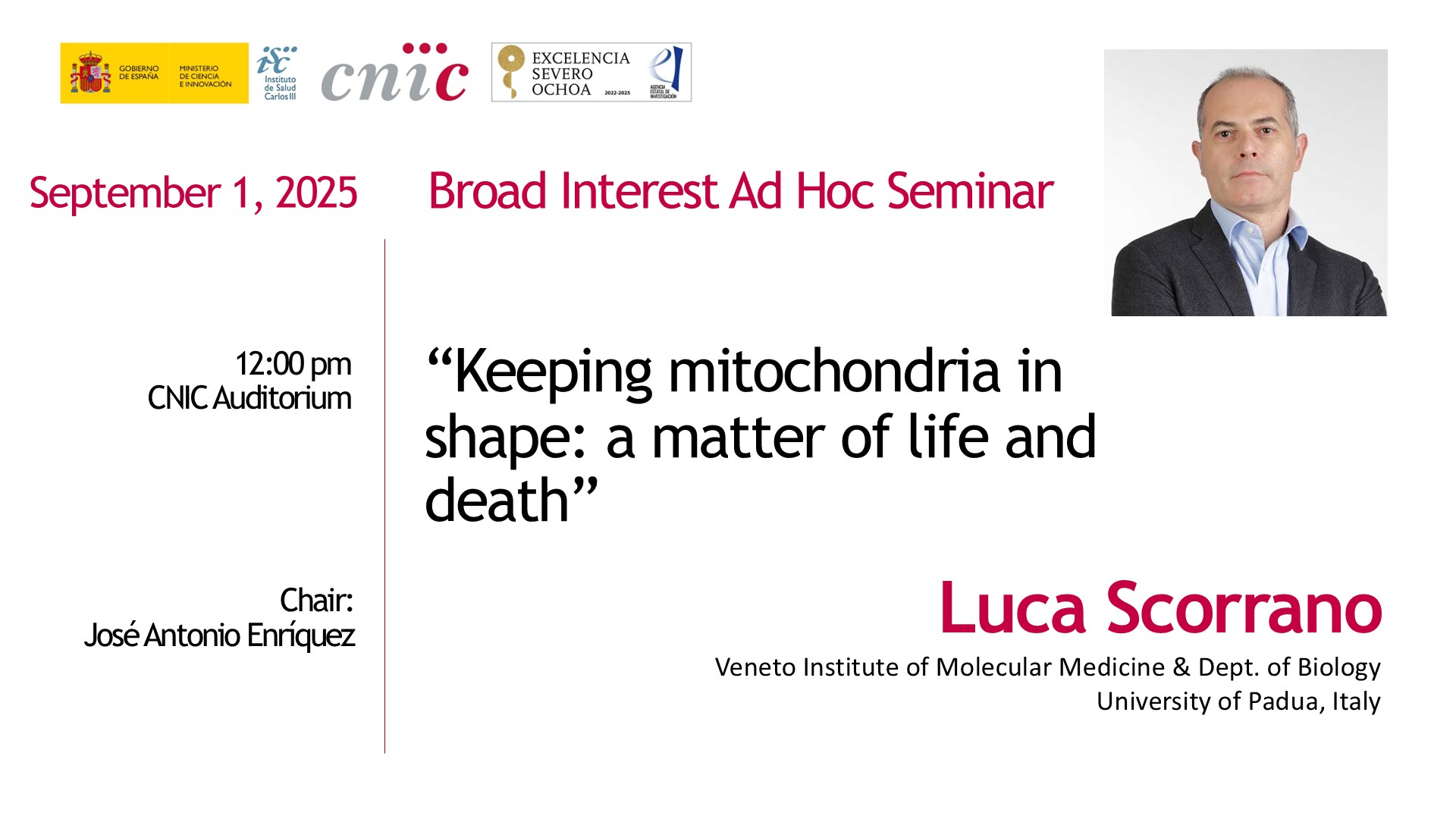
Luca Scorrano: “My fascination with mitochondria has been like a first love”

Luca Scorrano, M.D., Ph.D., is a Professor of Biochemistry at Padova University Medical School (Italy) whose work explores how mitochondrial structure dictates cellular function. His laboratory pioneered the discovery of cristae remodeling and mitochondrial dynamics, identified the MFN2/Ermit tether between ER and mitochondria, and revealed how mitochondrial shape controls processes from apoptosis and stem cell differentiation to heart development, progesterone synthesis, and defense against infection. Scorrano’s research has uncovered mechanisms behind optic atrophy, angiogenesis, adipocyte browning, and mitochondrial disorders, and his findings have led to potential targeted therapies. He has authored 231 papers, is a Clarivate Highly Cited Researcher (2021, 2022, 2024), EMBO member (2012), and Academia Europea member (2019).

  • You trained as an MD. Have you ever practiced clinically?

I completed all the clinical requirements, and I’m still registered as an MD in Italy, so technically I could practice. But it’s better for patients that I don’t.

  • So, you didn’t enjoy practicing medicine?

Not exactly. That’s why I love mitochondria. I found basic science far more intellectually stimulating. At the University of Padua, where I did my MD, there’s a long tradition in mitochondrial research, so joining a mitochondrial lab felt natural.

  • How did you start working with mitochondria?

I initially started in a molecular oncology lab, but I didn’t find it very interesting. While still a medical student, I began visiting Paolo Bernardi’s lab, who later became my PhD mentor. After completing my MD and clinical rotations, I joined the PhD program under his supervision in the Department of Biomedical Sciences. That’s when I started doing hardcore basic science—bioenergetics, studying how mitochondria convert energy from food and regulate ion fluxes across the inner mitochondrial membrane.

  • What fascinated you most about mitochondria?

During my PhD, I became fascinated by the role of mitochondria in programmed cell death—a field that was very prominent in the late 1990s. It was astonishing to see that this tiny cellular organelle, essential for converting food into usable energy, is also central to apoptosis, or cellular suicide. In other words, mitochondria are a double-edged sword: indispensable for life, yet equally essential for death.

In 1996, Xiaodong Wang made a remarkable discovery: a component of the same machinery used for ATP production—oxidative phosphorylation—also initiates apoptosis. This was a striking example of how nature repurposes the same system for multiple functions. Inspired by this, I went to Harvard Medical School to join Stan Korsmeyer’s lab, where I studied how mitochondria change shape during these processes. Korsmeyer, a founding father of apoptosis research, had discovered most of the genetic regulators of cell death.

  • How has your understanding of mitochondria evolved over the years?

Over the years, I’ve seen mitochondria evolve in our understanding—from “ATP factories” to central regulators of inflammation, cellular recycling, stem cell maintenance, metabolism, and many other cellular processes. The cardiovascular system is no exception: mitochondria are critical not only for producing the ATP needed for heart contraction, but also for vascular regulation, smooth muscle contraction, stem cell differentiation into cardiomyocytes, and angiogenesis. In my view, changes in mitochondrial shape are just as important as their bioenergetic functions.

My fascination with mitochondria has been like a “first love”—initially sparked by their role in energy metabolism, then deepened by their central role in regulating fundamental cellular processes. Over time, my research has expanded to include communication between mitochondria and other organelles. But, as with a first love, you never forget it—and I haven’t.

  • How do mitochondria evolve and maintain these functions?

This is a fascinating concept. Evolutionary, mitochondria are descendants of archaeobacteria that invaded primordial cells. It’s a bit more complicated than that, but essentially, this parasitic relationship became mutually beneficial. Mitochondria could harness metabolites from the host cell, and their ATP production was far more efficient than glycolysis alone.

However, there was a challenge: these bacteria had their own replication machinery, which involved both fusion and division. Over evolutionary time, the host cell gained control by losing the bacterial genes responsible for division and instead using proteins—already employed to regulate other membrane systems—to control mitochondrial shape and behavior. This makes perfect evolutionary sense: the invading organelle provided a benefit but also posed a threat, which the host mitigated by integrating mitochondrial regulation into existing cellular signaling pathways.

This control is precise: the cell can direct mitochondria to specific locations, coordinate their division with the cell cycle, and manage asymmetric partitioning during division. But mitochondria are not passive—they can “take revenge.” If the cell damages their membranes, mitochondria release proteins that trigger cell death. If both inner and outer membranes are compromised, they release mitochondrial DNA, which the cell interprets as a viral infection, triggering inflammation.

Thus, control comes with a price. The organelle contains “venoms” that can harm the cell or organism if mismanaged. It’s a truly stimulating example of symbiosis: mitochondria are domesticated yet retain the capacity to defend themselves. During intracellular infections, mitochondria dynamically change shape to control invaders, serving as the first line of defense, while pathogens can manipulate them to escape at the right moment.

Studying mitochondrial morphology reveals the heart of this evolutionary battle between host and parasite. Perhaps the host has “won,” but only partially—evolution is never final. There is no ultimate victory, only ongoing adaptation.

  • You mentioned that mitochondrial shape and dynamics are involved not only in the cardiovascular system but also in cancer, infection, and pregnancy.

Yes, it’s a complex topic. For example, during pregnancy, one critical moment occurs around the third month, when the site of hormone production needs to shift. Remarkably, all cholesterol-derived hormones—testosterone, progesterone, and estrogen—pass through intermediates produced in mitochondria. This means mitochondria are essential for sexual reproduction: without the right mitochondrial enzymes or the proper cholesterol supply at the correct time, sex hormone production would fail.

In mammals and birds, mitochondrial regulation of hormone synthesis is crucial for species conservation. At the level of the placenta’s syncytiotrophoblast, changes in mitochondrial shape ensure cholesterol delivery is precise, supporting progesterone production and maintaining pregnancy. Human pregnancy is intrinsically inefficient: only about 30% of unprotected intercourse at peak fertility results in a child, and most miscarriages occur around this critical third-month switch—exactly when mitochondrial shape changes are most important.

Problems with mitochondrial dynamics have also been linked to preeclampsia and eclampsia, which are major causes of maternal morbidity and mortality. While the exact mechanisms are not fully understood, these examples highlight how central mitochondria are across multiple biological processes.

Unfortunately, research into mitochondrial roles in pregnancy has lagged behind cardiovascular research, partly because it has been historically considered a “women’s issue.” Cardiovascular diseases, which primarily affect men in later life, have been studied more extensively. Nevertheless, we now know that mitochondrial shape and dynamics are critical for cardioprotection, determining the extent of damage during ischemia-reperfusion, remodeling the heart in cardiomyopathy, and supporting angiogenesis.

  • How does this knowledge help in understanding mitochondrial diseases?

Mitochondrial diseases are among the most prevalent genetic disorders. Although they have diverse genetic causes, they often affect the same cellular pathways—similar to how different types of cancer impact common mechanisms yet have unique features. We are only now beginning to understand in depth how mitochondria function and what goes wrong with these disorders.

Research is challenging because there are relatively few patients, making clinical trials difficult, and funding is limited, so most work falls on academic laboratories. Despite these obstacles, we have a responsibility to improve patients’ lives. Currently, treatment is mostly supportive, which is frustrating, but I believe that in the next 10–15 years, breakthroughs will provide therapies that substantially improve quality of life.

Much like cancer, each mitochondrial disorder may require tailored therapies. To achieve this, we must first understand the fundamental principles of mitochondrial function and dysfunction. Our goal is not only to extend life but also to ensure patients can live with dignity. I remain closely connected with many mitochondrial disease patients and the associations that support them, which continually reinforces the urgency and importance of this work.

Go to Source

El máster que ha impulsado la bioinformática en España se enfoca en la medicina personalizada

Unidad de Bioinformática del Centro Nacional de Investigaciones Oncológicas (CNIO). /Laura M. Lombardía. CNIO

Todos los avances médicos y de investigación de las últimas décadas se sustentan sobre una capacidad humana recientemente adquirida: extraer información valiosa de cantidades ingentes de datos. Es lo que hace la bioinformática, en sí misma un área de investigación cada vez más importante y que en los últimos años crece además de forma sinérgica con la inteligencia artificial. La unidad de Bioinformática del Centro Nacional de Investigaciones Oncológicas (CNIO) es uno de los focos de esta disciplina en España y además ha creado escuela, en sentido muy literal.

El máster en bioinformática que hace más de 20 años puso en marcha el grupo pionero del CNIO es el semillero de la actual generación de personas expertas en bionformática en España: más de 400 jóvenes, muchos de los cuales impulsan hoy la investigación internacional.

En su configuración actual -desde 2017-, es el Máster de Bioinformática y Ciencia de Datos en Medicina Personalizada de Precisión y Salud, organizado conjuntamente por el Instituto de Salud Carlos III (ISCIII), el CNIO, el Barcelona Supercomputing Center-Centro Nacional de Supercomputación (BSC-CNS) y la Sociedad Española de Biotecnología (SEBiot). Se dirige a quienes tengan interés en la bioinformática aplicada al escenario clínico. Es uno de los pocos másters a escala internacional con la certificación de calidad docente en bioinformática otorgada por la International Society for Computational Biology (ISCB)

Su objetivo es formar especialistas en analizar resultados relevantes para el diagnóstico, pronóstico y tratamiento de las enfermedades, y para ello recurre a una treintena de profesores líderes en áreas muy diversas, dado que la bioinformática impacta en multitud de disciplinas.

Desarrollo y aplicación de algoritmos de IA y machine learning para análisis de imagen de pruebas clínicas; análisis y gestión de bigdata derivado de historias clínicas electrónicas; y generación e interpretación de datos fruto de tecnologías de secuenciación masiva en medicina de precisión, son algunas de las aplicaciones de bioinformática aplicada a la biomedicina.

Como explica Fátima Al-Shahrour, co-directora del Máster y jefa de la unidad de Bioinformática del CNIO, los graduados se familiarizan con herramientas con que «analizar y gestionar una gran cantidad de datos biomédicos, interpretar resultados en contextos clínicos y colaborar en equipos multidisciplinares junto a profesionales sanitarios, investigadores y técnicos”. Aplicarán también técnicas avanzadas de inteligencia artificial y aprendizaje automático, para resolver problemas concretos en investigación biomédica, diagnóstico clínico o desarrollo de terapias personalizadas.

Daniel Cerdán, investigador en la Unidad de Bioinformática del CNIO. /Laura M. Lombardía. CNIO

Para Alfonso Valencia, co-director del Máster, profesor de Investigación ICREA y director del Departamento de Ciencias de la Vida del Barcelona Supercomputing Center – Centro Nacional de Supercomputación (BSC-CNS), «este máster no solo enseña a analizar datos sino a cambiar vidas. Cada algoritmo que desarrollan nuestros alumnos se traduce en diagnósticos más rápidos, tratamientos más efectivos y un sistema sanitario más sostenible».

Valencia, que dirigió la unidad de Bioinformática del CNIO hasta 2016, fundó el Máster hace mas de 20 años siendo un investigador del Centro Nacional de Biotecnología (CNB), en colaboración con los profesores de la Universidad Complutense de Madrid Federico Morán y Luis Vázquez.

Becas de la Fundación Instituto Roche

La Fundación Instituto Roche ofrece 4 becas de formación para cursar el Máster de Bioinformática y Ciencia de Datos en Medicina Personalizada de Precisión y Salud. 
Cada beca cubre el 80% del coste de la matrícula.

Para Valencia, esta colaboración «representa un reconocimiento a la importancia de la Bioinformática y Biología Computacional para el desarrollo de la biomedicina. Un hecho que es especialmente importante viniendo de la Fundación Instituto Roche, dada su destacada posición como observador y promotor del desarrollo de la Medicina Personalizada de Precisión en nuestro país”.

Consuelo Martín de Dios, directora gerente de la Fundación Instituto Roche, manifiesta que “este Máster representa una gran oportunidad para aquellos profesionales que deseen adquirir los conocimientos necesarios para desarrollar su profesión en uno de los campos biomédicos con mayor aplicación en el futuro. La ciencia de datos aplicada a la salud es ya una de las áreas más demandadas en el ámbito biomédico, por lo que tener formación especializada les ayudará a contribuir a la transformación del sistema sanitario”.

Los ganadores de las cuatro becas de la Fundación Instituto Roche este año son David Dueñas, Jorge Santos, Mario López y Sofía Trigo.

Unidad de Bioinformática del CNIO. /CNIO.

La entrada El máster que ha impulsado la bioinformática en España se enfoca en la medicina personalizada se publicó primero en CNIO.

Go to Source

Los materiales que cambiarán el futuro, el trabajo de IMDEA Energía con las redes metal-orgánicas del Nobel de Química

El reciente Premio Nobel de Química ha sido otorgado a los Profesores Kitagawa, Robson y Yaghi por el desarrollo de redes metal-orgánicas, conocidos como MOFs por sus siglas en inglés. […]

La entrada Los materiales que cambiarán el futuro, el trabajo de IMDEA Energía con las redes metal-orgánicas del Nobel de Química se publicó primero en IMDEA ENERGÍA.

Go to Source

Sidebar