Author Archive

Dark solitons in spin-orbit-coupled Fermi gases

Image
Dark solitons in spin-orbit-coupled Fermi gases
Seminar

Dark solitons in spin-orbit-coupled Fermi gases

Date
Place
Pere Pascual V5.07 Room and via Zoom

Abstract: In the presence of spin-orbit coupling and a linear Zeeman field, an interacting Fermi gas exhibits a topological phase transition from a regular superfluid phase to a topological superfluid phase, where the latter phase supports Majorana zero modes. These modes are long sought objects by solid state experiments, since they can show a non-Abelian exchange  statistics with promising potential for applications. Such a motivation has also triggered the search for Majorana zero modes in ultra-cold Fermi gases. They can be found when the fermionic pairing vanishes locally, and thus they are associated either with the system boundary, as edge states, or with internal defects that locally destroy superfluidity, as pinned modes. 

A particularly interesting example of the latter phenomenon in quasi one dimensional gases is the dark soliton, which was theoretically shown to exhibit novel dynamics in the topological phase, qualitatively distinct from the regular behavior of solitons. We have studied this topological excitation and found that there is not only one, but two types of dark solitons in spin-orbit-coupled Fermi gases. The existence of two Fermi surfaces, with different characteristic energy and length scales that feature distinct condensation peaks of fermionic pairs, allows for the emergence of two different types of dark solitons in the regular superfluid phase, while only one type has continuation into the topological phase, where it hosts Majorana zero modes at the core. The detection and identification of the two types of solitons in ultracold-gas experiments requires probing both the fermionic density and the order parameter. 


 Acknowledgements

This event is part of the grant CEX2019-000918-M funded by MCIN/AEI/10.13039/501100011033.

MCIN AEI

Go to Source

Duality and dual models: past, present and future

Image
Duality and dual models: past, present and future
Seminar

Duality and dual models: past, present and future

Date
Place
Pere Pascual V5.07 Room and via Zoom

Abstract: Before the advent of duality (late 60s) two disconnected phenomena were studied in the dynamics of strong interactions: low-energy resonances and high-energy smooth asymptotic behavior. With the discovery of duality and its realization by the Veneziano model that unified the low- and high-energy regions the situation changed drastically. Various versions of dual models and their practical applications were proposed and applied to describe physical reactions. An important virtue of dual models is the possibility of their multiparticle generalizations. Duality also stimulated the birth of new ideas, including supersymmetry.


On the other hand, progress in further development and practical applications of dual models was limited by problems with unitarity, partially resolved by a group of theorists at the Bogolubov Institute for Theoretical Physics (Kiev, Ukraine), in the so-called Dual Amplitude with Mandelstam Analyticity (DAMA) by use of non-linear, complex Regge trajectories. A further development was related to off-mass-shell modifications of DAMA, known as MDAMA (V. Magas et al.). Recently we are witnessing a revival of the ideas of duality, partly in formal mathematical constructions such as q-deformed dual amplitude. 


The basic idea and goal remain topical and timely: understanding and unified description of various elastic and inelastic reactions in a wide range of kinematical variables. 


Acknowledgements

This event is part of the grant CEX2019-000918-M funded by MCIN/AEI/10.13039/501100011033.


MCIN AEI

Go to Source

IMDEA Energía celebra la Noche Europea de los Investigadores con Renovaland, un viaje interactivo por las energías limpias.

La entrada IMDEA Energía celebra la Noche Europea de los Investigadores con Renovaland, un viaje interactivo por las energías limpias. se publicó primero en IMDEA ENERGÍA.

Go to Source

Not-quite-primordial black holes

Image
Not-quite-primordial black holes
Seminar

Not-quite-primordial black holes

Date
Place
Pere Pascual V5.07 Room

Abstract: In this talk, I will discuss a new mechanism for the formation of seeds of supermassive black holes at early cosmic epochs. Enhanced density fluctuations with amplitudes that are not large enough to form primordial black holes post-inflation can still lead to collapsed dark matter halos at very early times. For halos forming prior to 1+z ~ 200, the Cosmic Microwave Background (CMB) is energetic enough to suppress the formation of molecular hydrogen, hence preventing cooling and fragmentation, as a consequence of which baryons falling into the potential well of the halo may undergo “direct collapse” into a black hole. I will show using a few illustrative models how this mechanism may account for the abundance of high-redshift black holes inferred from observations by the James Webb Space Telescope while remaining consistent with current limits from CMB spectral distortions. Limits on the primordial power spectrum are also derived by requiring that the universe not reionize too early.

Go to Source

The co-formation and evolution of star clusters and their host galaxies

Image
The co-formation and evolution of star clusters and their host galaxies
Seminar

The co-formation and evolution of star clusters and their host galaxies

Date
Place
DAM 7.24 Seminar Room

Abstract: Stellar clusters are critical constituents within galaxies. Widely studied in the Local Universe (albeit not understood), stunning observations by the James Webb Space Telescope are revealing the presence of massive star clusters in a variety of galactic environments across cosmic time. These observations raise questions about the formation, interaction and eventual fate of star clusters within galaxies: Does the process of star formation change over cosmic history? How will the energy released by massive stars in the massive star clusters affect the evolution of the galaxy? Can those clusters survive to the present day or will they disrupt into the stellar body of the galaxy? And are bright star clusters good tracers of their environment?

In the first part of my talk I will review current numerical approaches to model the intertwined evolution of star clusters and galaxies, and I will discuss their perks and caveats. I will also present SCALES, a novel method to model clusters built via gas accretion and hierarchical merging with sub-clusters implemented within the hydrodynamical code GIZMO, and I will discuss what physics are required to reproduce the formation of star cluster populations. For the second part of my talk, I will present current and upcoming efforts of expanding our knowledge of star cluster populations in galaxy clusters to earlier cosmic times using JWST/NIRCam imaging, and how can these datasets be used to map the mass distribution in these environments.

Go to Source

Structure and dynamics of the local group galaxies

Image
Structure and dynamics of the local group galaxies
Seminar

Structure and dynamics of the local group galaxies

Date
Place
DAM 7.24 Seminar Room

Abstract: As the expansion of the universe continues to accelerate, the internal secular evolution of galaxies becomes more important as the distance between galaxies generally increases. The largest galaxies in the local group provide an ideal laboratory due to their proximity to study the secular evolution processes driven by internal dynamical structures, such as a bar and spiral arms. I will review the key dynamical properties of local group galaxies, how they are distributed along the Hubble sequence, the signatures for ongoing secular evolution, and in turn how we may infer the dynamical properties of a central bar from such signatures.  Recent attempts in dynamical modelling of barred galaxies based on stellar and gaseous kinematics are also discussed.

Go to Source

Genetic mechanisms revealed that allow poplars to survive severe droughts

It was known that trees could survive extreme water shortages thanks to their ability to produce more numerous and smaller vessels, but the molecular mechanisms underlying this response were unknown. Now, a study led by CBGP researcher Daniel Conde reveals the key genes and pathways that control this plasticity, which could provide new tools for protecting forests and crops.

Go to Source

A new genetic mechanism has been discovered that acts as a clock in plant roots

An international team led by the CBM in collaboration with CBGP has discovered that plant roots have an “internal clock” that governs when and how cells divide. This discovery explains how plants coordinate their growth and could be used to develop crops with more resilient and efficient roots.

Go to Source

El CRM porta les matemàtiques a la Nit Europea de la Recerca: de l’asfalt als fractals i al futbol

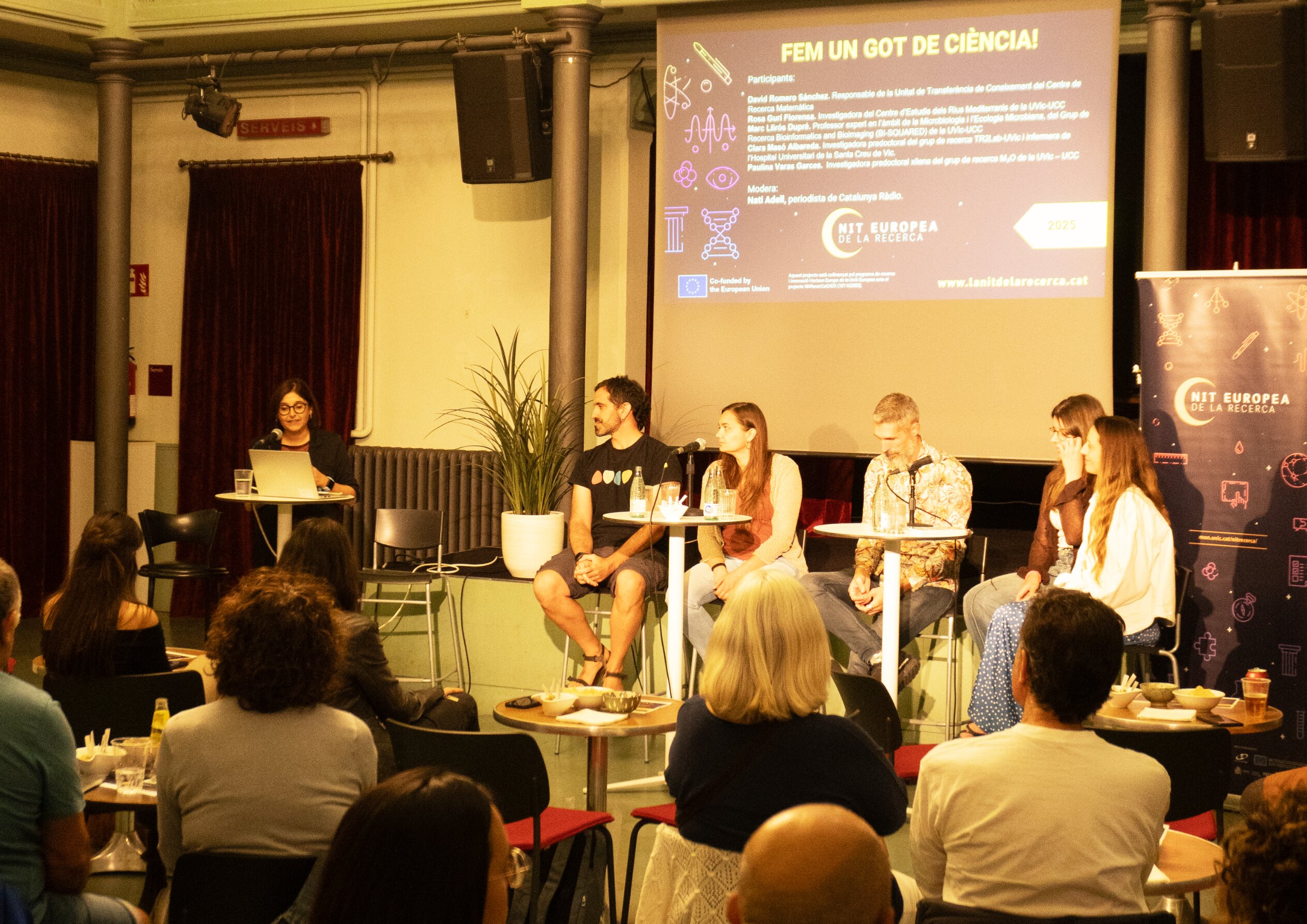
La Nit Europea de la Recerca va portar a Barcelona, l’Hospitalet i Vic tres investigadors del CRM que van mostrar la diversitat i la vitalitat de la recerca matemàtica. A la Casa Golferichs, Leticia Pardo (UB-CRM) va introduir el públic en el món dels fractals, patrons que es repeteixen a la natura i que les matemàtiques descriuen amb precisió i bellesa. A l’Auditori Barradas, Marc Calvo (UPC-CRM) va sorprendre amb exemples inesperats de la presència de les matemàtiques en la vida quotidiana, des de la dinàmica de fluids fins a l’estratègia d’un equip de futbol sud-africà. I a Vic, David Romero (CRM) va presentar el projecte europeu Enhance Europe, que explora com aprofitar la calor de l’asfalt per generar energia i avançar cap a ciutats més sostenibles.

La Nit Europea de la Recerca és una celebració científica que omple ciutats d’arreu del continent amb tallers, experiments i xerrades obertes a tothom. A Catalunya, l’edició d’enguany va comptar amb la participació del Centre de Recerca Matemàtica (CRM), que va ser present a Barcelona, l’Hospitalet i Vic amb tres investigadors disposats a demostrar que les matemàtiques no només són útils, sinó també fascinants i sorprenentment properes al nostre dia a dia.

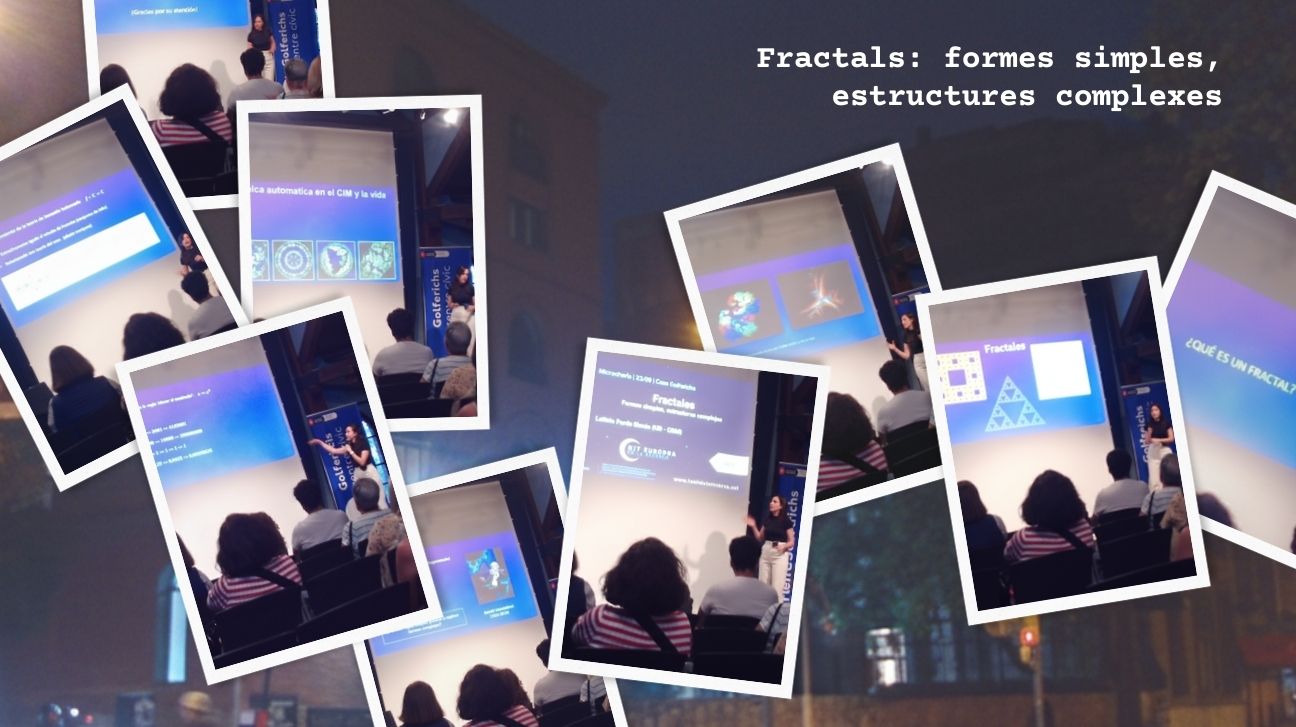
Amb una combinació de claredat i passió, Leticia Pardo va introduir el públic en el fascinant món dels fractals, en la xerrada celebrada a la Casa Golferichs el passat 23 de setembre, al cor de l’Eixample Esquerre de Barcelona. La investigadora va començar la seva intervenció amb una idea clau: els fractals són patrons que es repeteixen a diferents escales, i que trobem en nombrosos llocs de la natura. Ens envolten constantment, encara que potser no en som conscients: a caparassons d’animals, en la forma dels llamps, en el creixement de tumors o en l’estructura interna d’òrgans.

Leticia Pardo Simón (UB-CRM) durant la seva microxerradas a la Casa Golferichs.

Tot i que aquestes formes existeixen en el món natural, són les matemàtiques les que han creat el concepte de fractal i han desenvolupat el mecanisme per descriure aquestes estructures complexes amb precisió i elegància. “Els fractals combinen simplicitat i complexitat: regles molt simples generen formes riques i auto-semejants. Modelar-los ens ajuda a descriure la natura, optimitzar recursos i millorar simulacions en camps com l’ecologia o la biomedicina.”

“Compartir la recerca en format divulgatiu m’obliga a destil·lar idees complexes, a simplificar sense perdre rigor, i a transmetre tant la significança com la bellesa de les matemàtiques.”

A través d’exemples visuals i explicacions accessibles, Leticia va mostrar com regles matemàtiques molt simples poden generar estructures sorprenentment riques i belles. Per exemple, va utilitzar la funció x^{2} per il·lustrar com, si agafem un valor de x i l’elevem al quadrat successivament, obtenim un augment exponencial que conserva l’essència inicial d’x. Aquesta idea de “multiplicar i ampliar” és clau per entendre la auto-semblaça dels fractals.

Pardo també va posar en valor la participació en esdeveniments com la Nit de la Recerca, que connecten el món científic amb la societat: “Obre les portes del nostre centre a la ciutadania. Acosta les matemàtiques a persones de totes les edats i fomenta vocacions. És una oportunitat per entendre com percep la societat les matemàtiques i per explicar per què la investigació pública importa.”

Finalment, va expressar el seu desig que el públic s’endugués una sorpresa: “Que els fractals, a més d’atraure per la seva bellesa visual, permeten analitzar i replicar estructures presents en el món natural; que petites regles aparentment simples poden crear estructures inesperadament riques i complexes; i que, en definitiva, les matemàtiques poden ser simultàniament boniques i útils.”

Amb aquesta intervenció, Pardo va oferir una mirada captivadora sobre com les matemàtiques poden ajudar-nos a entendre millor el món que ens envolta, tot revelant la complexitat amagada darrere de formes que, a primera vista, semblen simples.

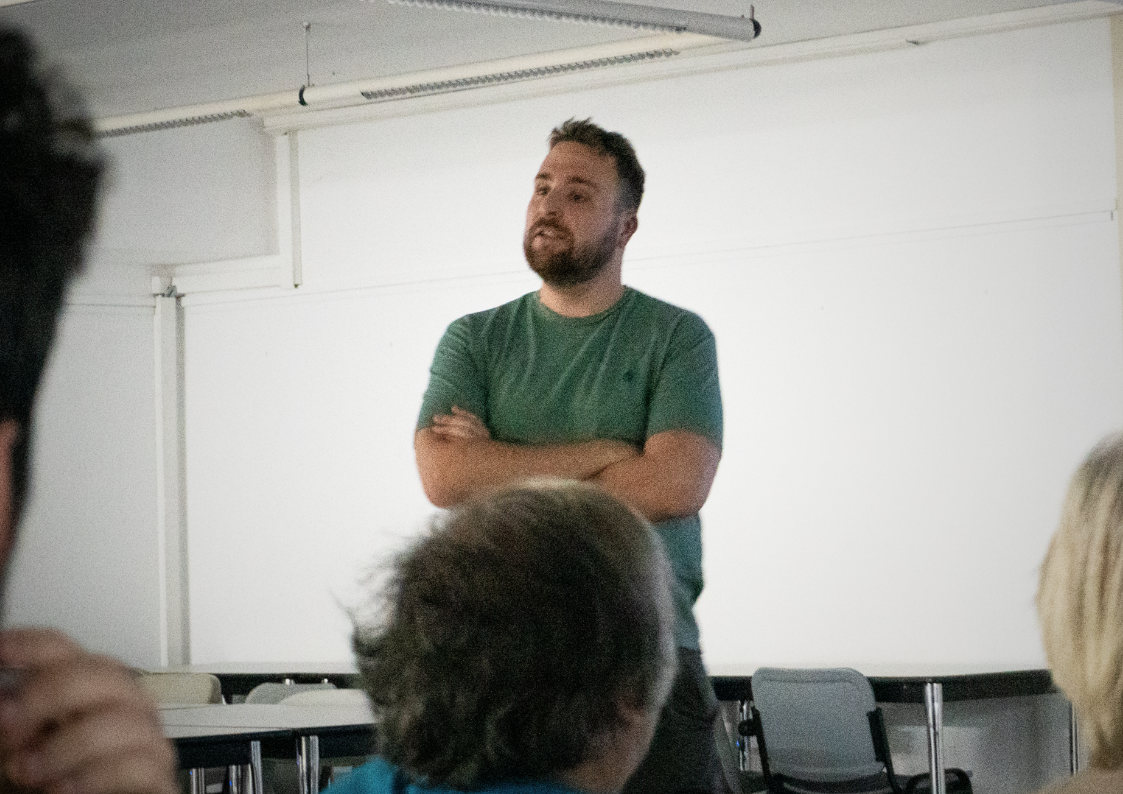
“Marc Calvo, lector de la UPC i investigador adscrit al CRM, durant la seva xerrada Les matemàtiques al món real a l’Auditori Barradas de l’Hospitalet.”

El mateix dia, a l’Auditori Barradas de l’Hospitalet, Marc Calvo, lector de la Universitat Politècnica de Catalunya i investigador adscrit al CRM, convidava a viatjar per la història de les matemàtiques amb la xerrada Les matemàtiques al món real. La dinàmica de fluids, l’arquitectura i l’art van servir per mostrar exemples sorprenents per demostrar que les matemàtiques poden trobar-se en llocs insospitats.

Per Marc Calvo, el repte més gran al fer xerrades de divulgació com les de la Nit de la recerca “és sempre no perdre l’atenció del públic. Com a matemàtics, estem habituats a parlar amb uns formalismes i unes expressions als quals el públic general no està acostumat. Òbviament, passa de forma molt semblant en altres àrees del coneixement, però en el cas de les matemàtiques em sembla molt més important, ja que sovint sembla que és una ciència menyspreada per molta gent, segurament per males experiències en el passat.”

“Organitzar aquest tipus d’esdeveniments no només em sembla útil, perquè és una forma d’apropar la recerca al públic més general, sinó que em sembla molt necessari. És una mostra que al nostre país també es fa recerca de qualitat.”

Un dels moments que més va enganxar el públic va ser quan va explicar la història d’un equip de futbol sud-africà. Incapaços de guanyar partits, van recórrer a un grup de matemàtics. Els investigadors van analitzar el reglament i van descobrir que, com a locals, podien triar la pilota oficial dins dels marges que permetia la federació. Com que l’estadi es trobava a molta més alçada que els dels rivals, van aprofitar l’efecte de la pilota per sorprendre els contraris. El resultat: van acabar guanyant tots els partits que quedaven a casa. “M’agrada aquest exemple perquè ningú s’espera que les matemàtiques puguin tenir impacte en un camp de futbol. Però quan ho expliques, connecta de seguida perquè és un terreny molt proper a la societat, l’esport.”

Per a ell, la Nit de la Recerca no és només una oportunitat, sinó una necessitat: “Organitzar aquest tipus d’esdeveniments no només em sembla útil, perquè és una forma d’apropar la recerca al públic més general, sinó que em sembla molt necessari. És una mostra que al nostre país també es fa recerca de qualitat. I en el cas de les matemàtiques, que sovint són una ciència més silenciosa, és encara més important per ajudar, sobretot al públic més jove, a no perdre la il·lusió en les primeres etapes de la seva educació.”

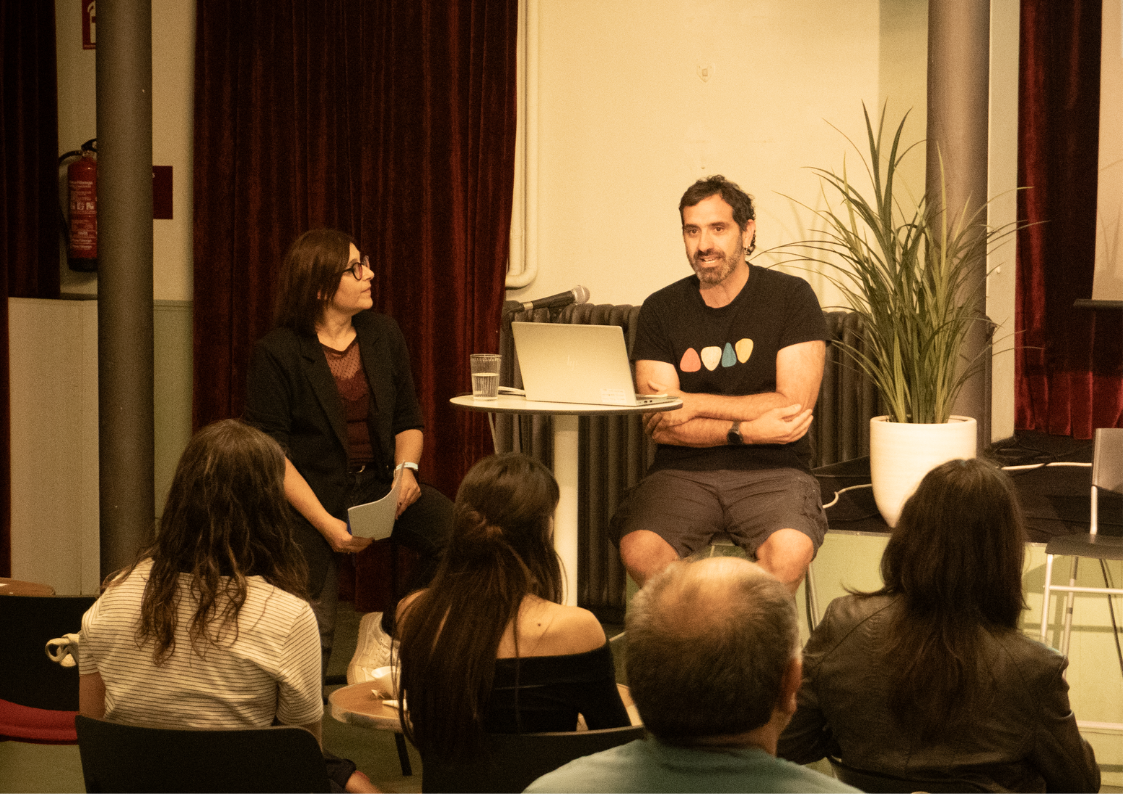
“David Romero, director de la Unitat de Transferència de Coneixement del CRM, en la seva xerrada Recuperar calor de l’asfalt per fer ciutats més sostenibles a la Sala Modernista del Casino de Vic.”

Finalment, dimecres 24 de setembre, a la Sala Modernista del Casino de Vic, David Romero, director de la Unitat de Transferència de Coneixement del CRM, va presentar la xerrada Transformem l’asfalt en energia! El públic va descobrir el projecte europeu Enhance Europe, que explora com aprofitar la calor acumulada al paviment per generar energia renovable. Gràcies a col·lectors integrats directament a les carreteres, és possible subministrar electricitat a edificis propers i, alhora, reduir el consum energètic i l’impacte de l’efecte illa de calor.

Per a Romero, el repte principal de divulgar matemàtiques és “simplificar-les perquè s’entenguin, però sense amagar-ne la dificultat. És com traduir una novel·la complexa: cal adaptar el llenguatge, però mantenir-ne la riquesa i la profunditat. Així trenquem el tòpic que les matemàtiques són fredes o inútils, i mostrem que poden tenir un impacte real en la vida de les persones.”

“La recerca només té sentit si la ciutadania la coneix i se la pot fer seva.”

Durant la seva intervenció, Romero també va subratllar la importància de no perdre mai de vista l’impacte social de la recerca. Cada vegada és més importar trobar formes per traduir la recerca en millores concretes per a la vida de les persones. Projectes com Enhance Europe exemplifiquen aquesta vocació: combinen el rigor matemàtic i tecnològic amb una mirada pràctica que busca respostes útils, des de reduir l’efecte de l’illa de calor fins a optimitzar el consum energètic urbà.

Sobre la importància de participar en esdeveniments com la Nit de la Recerca, afegeix: “És una oportunitat per compartir la recerca com a persones, no només com a científics. Explicar la nostra feina a la ciutadania ens permet escoltar preguntes, compartir entusiasme i fer visible que la ciència i els científics formen part de la societat, com qualsevol altra professió.”

I sobre el projecte Enhance Europe, encara en curs: “És important que la gent entengui la recerca com un procés viu: parteix d’una pregunta, es desenvolupa i sovint obre noves preguntes. Presentar-lo ara significa transparència i confiança, i implica la societat des del principi. En definitiva, la recerca i la innovació només tenen sentit si la ciutadania les coneix i se les pot fer seves.”


Leticia Pardo Simón és investigadora afiliada al Centre de Recerca Matemàtica (CRM) i lectora a la Universitat de Barcelona. Va obtenir el doctorat en matemàtiques a la Universitat de Liverpool l’any 2019, i ha desenvolupat la seva trajectòria postdoctoral en institucions de prestigi com la Universitat de Manchester, el Mathematical Sciences Research Institute (MSRI) a Berkeley, i l’Institut de Matemàtiques de l’Acadèmia Polonesa de Ciències (IM PAN).

Els seus interessos de recerca se centren en la dinàmica holomòrfica, l’anàlisi complexa i la geometria fractal, àmbits en què explora com les funcions complexes poden generar comportaments dinàmics rics i estructures geomètriques intricades.

Marc Calvo Schwarzwälder va completar els seus estudis doctorals al Centre de Recerca Matemàtica i va obtenir el doctorat en Matemàtiques Aplicades per la Universitat Politècnica de Catalunya (UPC), on també havia cursat els estudis de grau i màster. Després d’un breu període en el sector de la consultoria, es va traslladar als Emirats Àrabs Units, on va exercir de professor ajudant. Durant aquest temps, Marc va continuar la seva col·laboració amb investigadors del CRM i, en tornar a Barcelona, va assumir una posició de recerca a temps complet al centre. Posteriorment, es va incorporar al Departament de Matemàtiques de la UPC com a professor lector. La seva recerca se centra principalment en la modelització matemàtica de processos físics i químics, amb especial èmfasi en les aplicacions ambientals.

David Romero i Sánchez és doctor en Matemàtiques Aplicades i forma part del Centre de Recerca Matemàtica (CRM) des del 2017. Actualment és director de la Unitat de Transferència de Coneixement i editor en cap de les publicacions del CRM. La seva experiència abasta la modelització matemàtica, l’anàlisi numèrica, l’optimització i la intel·ligència artificial, camps que ha aplicat tant en projectes privats com en iniciatives finançades amb fons públics. Entre aquestes aplicacions hi ha treballs en mobilitat, logística, farmacologia, genòmica i compressió de dades. Les seves línies de recerca se centren en l’optimització numèrica, els mètodes d’intel·ligència artificial i l’aplicació de sistemes dinàmics discrets a escenaris complexos i reals.

CRM Comm

Pau Varela & Natalia Vallina

CRMComm@crm.cat


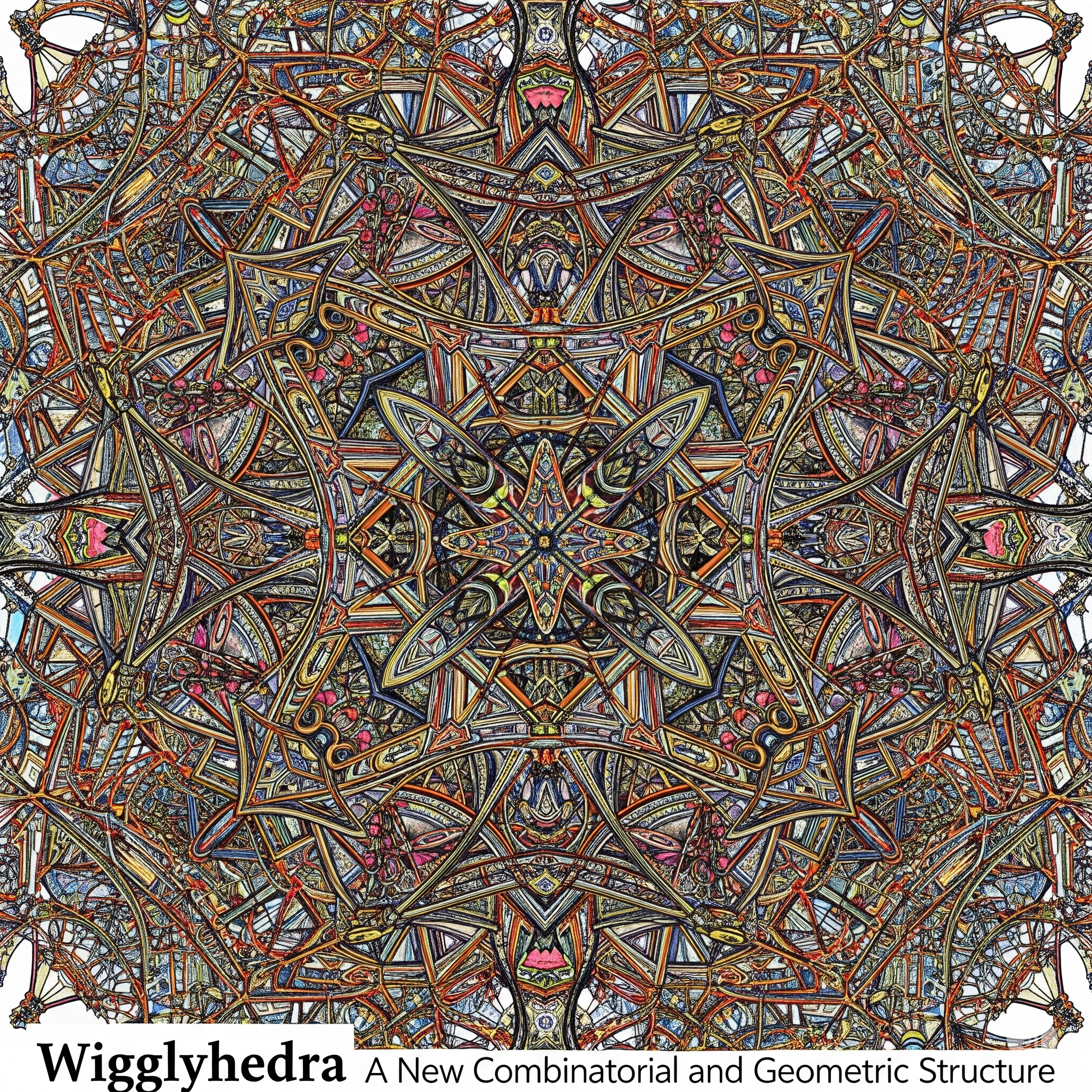
Wigglyhedra: A New Combinatorial and Geometric Structure

Wigglyhedra: A New Combinatorial and Geometric Structure

In the article “Wigglyhedra”, researchers Asilata Bapat (Australian National University) and Vincent Pilaud (Universitat de Barcelona – Centre de Recerca Matemàtica) introduce the wiggly complex, a novel combinatorial and geometric structure, along with its associated…

CRM at the Bilbao–Barcelona Analysis and PDE Meeting

CRM at the Bilbao–Barcelona Analysis and PDE Meeting

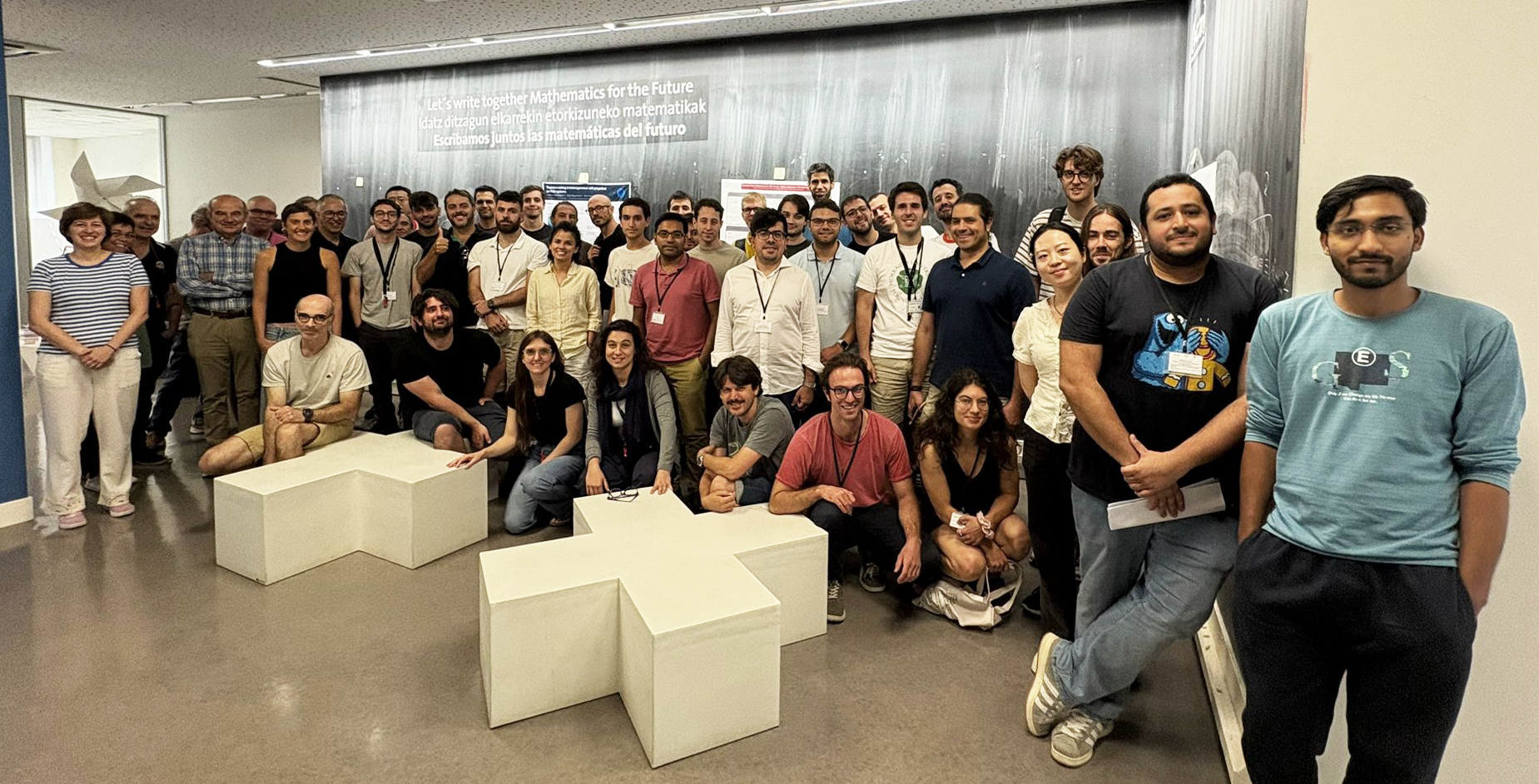
From September 3 to 5, 2025, the Basque Center for Applied Mathematics (BCAM) hosted the Bilbao–Barcelona Analysis and PDE Meeting. For three days, researchers from both cities met face to face, joined by colleagues from other institutions, to…

Javier Gómez-Serrano receives the  2025 R. E. Moore Prize

Javier Gómez-Serrano receives the 2025 R. E. Moore Prize

Javier Gómez-Serrano, professor at Brown University, has received the 2025 R. E. Moore Prize for Applications of Interval Analysis together with Tristan Buckmaster and Gonzalo Cao-Labora. The award honours their article Smooth imploding solutions…

ESGI 2025: Mathematics Meets Industry at the CRM

Over the course of five days, ESGI 2025 turned the CRM into a collaborative lab where mathematics tackled questions raised by industry. From safer autonomous driving systems to smart water resource allocation and the financial uncertainties of wind…

The post El CRM porta les matemàtiques a la Nit Europea de la Recerca: de l’asfalt als fractals i al futbol first appeared on Centre de Recerca Matemàtica.

Go to Source

Llevamos a niños y niñas con cáncer del Hospital La Paz los robots de juguete que construimos para ellos

Desde la izda: Irene Felipe, Ana Cuadrado, Marisol Soengas (investigadoras del CNIO) y Andoni Serrano (The Pink Force). / CNIO

En el Centro Nacional de Investigaciones Oncológicas (CNIO) trabajamos día a día para mejorar la prevención, el diagnóstico y el tratamiento del cáncer. También, en última instancia, para mejorar la vida de las personas con cáncer. En eso coincidimos con Fundación The Pink Force, cuyo objetivo es llevar un poco de alegría a los pacientes infantiles.

Para ello, proporcionan a instituciones y grupos de personas materiales e instrucciones para construir pequeños robots de juguete, que después entregan a unidades pediátricas de hospitales. The Pink Force llama así la atención de la sociedad sobre las necesidades y la realidad de los niños y niñas con cáncer.

¡Manos a la obra!

Antes del verano, Andoni Serrano, presidente de The Pink Force en España, nos contactó. Como resultado, un muy nutrido grupo de voluntarios y voluntarias dedicaron una feliz tarde a ensamblar juntos dos droides R2-KT: son versiones en color rosa del célebre R2D2 de la Guerra de las Galaxias, que –controladas por un mando a distancia– avanzan, giran la cabeza y sobre sí mismas, y emiten sonidos.

Hace unos días, los pequeños droides llegaron a las manos que los harán cantar y moverse: en nombre de todo el equipo voluntario, investigadoras del CNIO entregaron en el Hospital Universitario La Paz dos de los droides nacidos en el CNIO, y además otro ensamblado por jóvenes bajo el auspicio de la Fundación Princesa de Girona.

La entrega se realizó en una de las Aulas Hospitalarias de La Paz, en la que los niños y niñas ingresados pueden seguir con su formación; concretamente en el aula para pacientes oncológicos, de trasplantes y de nefrología. Os aseguramos que pacientes, profesores y familiares se llevaron … sí… ¡una bonita sorpresa!

Andoni llevaba además otro robot de mayor tamaño con el que el grupo visitó pacientes que no habían podido desplazarse hasta el Aula. Guiados por Antonio Pérez, jefe de Unidad Mixta de Investigación Clínica de Oncohematología Pediátrica IdiPAZ-CNIO, y Jefe de Servicio de Hemato-Oncología Pediátrica en el Hospital Universitario La Paz, visitaron esta unidad, así como el Hospital de Día de Oncología Pediátrica.

Gracias a Andoni por traernos esta preciosa iniciativa, y brindarnos la posibilidad de

dar visibilidad al cáncer infantil, con características muy distintas al de los adultos y con necesidad de nuevas vías de investigación.

La entrada Llevamos a niños y niñas con cáncer del Hospital La Paz los robots de juguete que construimos para ellos se publicó primero en CNIO.

Go to Source

CBGP joins the ‘One Health Strategy’ innovation day between China and Spain

The CBGP has presented its Centre of Excellence in Plant-Environment Interactions (CEPEI) collaboration project with two Chinese research institutes, highlighting the importance of cooperation in addressing the complex global challenges of more sustainable agricultural production.

Go to Source

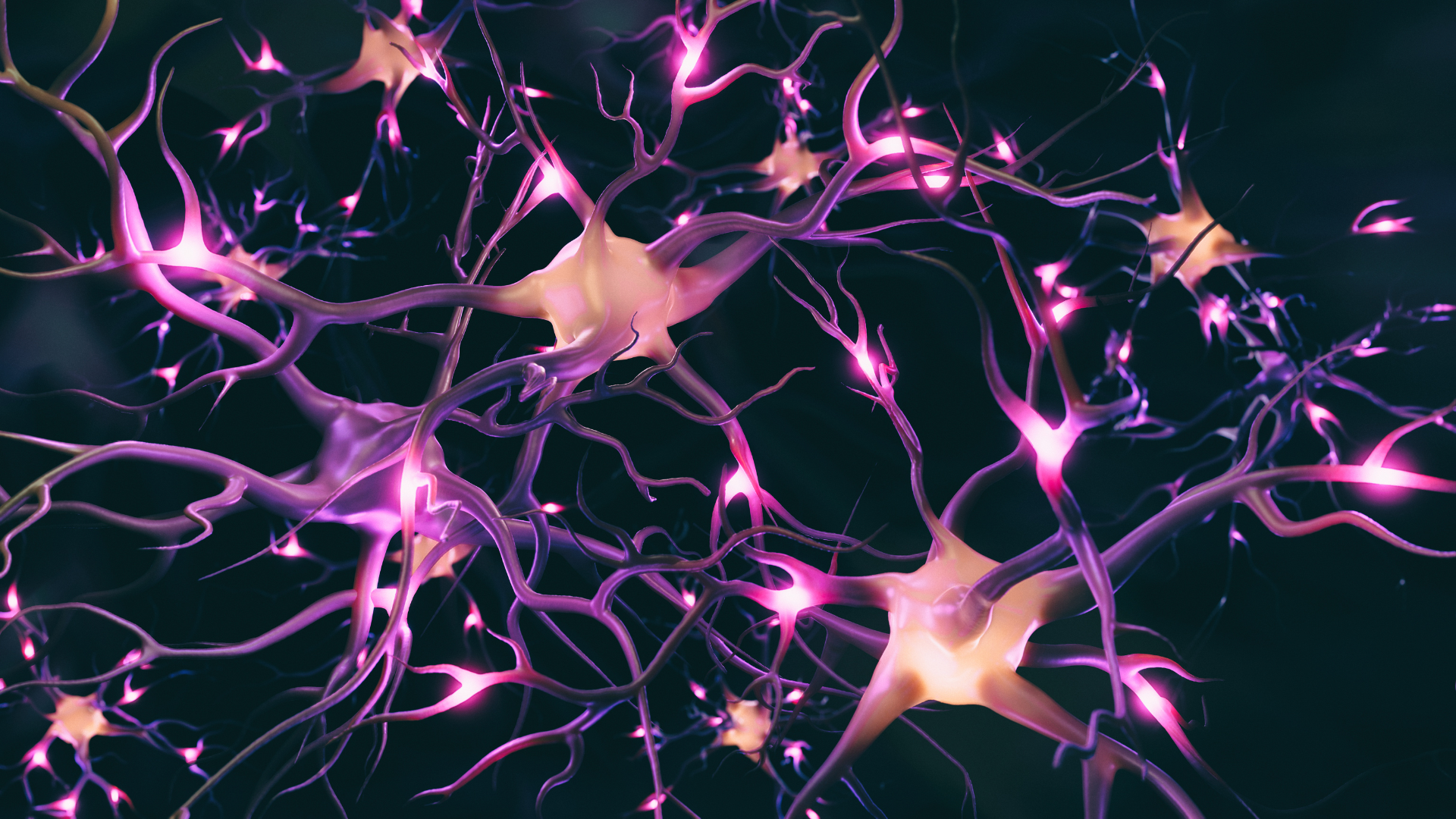
Why Your Brain Is Never Still: Representational Drift and Statistical Learning

A paper recently published in Current Opinion in Neurobiology by Jens-Bastian Eppler, Matthias Kaschube, and Simon Rumpel demonstrates that, although memories appear fixed, the brain’s activity patterns are continually changing, a process known as representational drift. Stability emerges not from static circuits but from the brain’s ability to preserve relationships between patterns even as the underlying neural activity changes. This constant drift explains forgetting, novelty-seeking, and why math is needed to map the chaos.

Imagine you hear a song you loved years ago. The same rush of feeling returns, as if no time had passed since the first time those notes hit you. It’s tempting to believe that this reaction is etched into the brain, as unchanging as stone. For decades, that was the reassuring story of neuroscience: once learned, a memory was thought to sit neatly in place, locked into a fixed neural circuit; a tidy library of patterns, silent until summoned.

The truth, though, is much less tidy.

In Current Opinion in Neurobiology, a review titled Statistical learning and representational drift: A dynamic substrate for memories challenges that long-standing belief. Written by Jens-Bastian Eppler (Centre de Recerca Matemàtica), Matthias Kaschube (Goethe University Frankfurt), and Simon Rumpel (University Medical Center Mainz), the paper confronts a paradox at the heart of brain science: if neurons and synapses are in constant flux, how is it that perception and memory feel so stable?

That mismatch is what scientists call representational drift. To us, “memories feel stable,” Eppler says, “and in our behaviour they are. If you learn something as a child, you will often remember it for the rest of your life. But we have no idea how this stability emerges.” For a long time, the dominant view was that the brain stored memories in circuits that stayed put, changing only when something new was learned. “Researchers have now found that if you see the same thing on different days, the activity in your brain is different,” Eppler explains. “You look at the red traffic light; you still know what it is, but in your brain, different sets of neurons are active.”

Hints of this phenomenon first appeared in the 2000s, as methods weren’t strong enough to prove it before that. Scientists could only record activity for a single day in an animal before the experiment ended. “Now,” Eppler notes, “we can follow brain activity over longer periods, and everywhere people have looked, there is this representational drift.” The term itself only gained traction in recent years.

“The brain is so unstable, and at the same time, the behaviour is stable. For me, there’s a huge paradox.”

So, what explains the paradox: neurons changing, memories stable? Eppler points to synaptic plasticity, the way connections between neurons constantly shift. “Hebbian plasticity is often described as ‘neurons that fire together, wire together.’ That means that if two neurons are active together, they will form a stronger connection between them. And this is happening all the time in our brain.” Each new sound, image, or movement leaves its trace, altering the network. In the review’s terms, stability reflects a balance between Hebbian learning and stochastic synaptic ‘temperature,’ which sets how much the network wanders.

Over time, some neurons fire for multiple experiences, overlapping patterns reshape the synapses, and the whole system drifts. “If you see something often, then the connections are strengthened a lot,” Eppler says. This is what neuroscientists call statistical learning: the brain quietly tracking how often things occur together, an idea first developed to explain how infants learn language by hearing sounds again and again.

Here lies the key: what remains stable is not the individual activity patterns, but their similarities. As Eppler puts it, “People discovered everything is changing. And then they looked for similarity maps.” He gives the example of colours: “red and orange may activate completely different neurons from one day to the next, but across days, orange is always closer to red than to blue. The similarities are stable, not the activities themselves.”
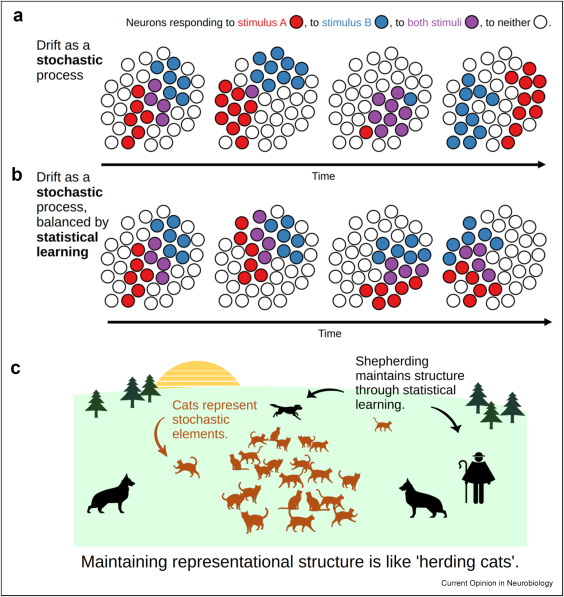
To explain how order emerges amid chaos, the research team used a very original image: herding cats: “In this metaphor, the cats are the stochastic changes; there’s always something changing randomly. The shepherds that are herding the cats would be the statistical learning. They will never achieve a 100% perfect job; the activities are still changing, but they manage to do well enough. The overall structure of the herd is maintained.” Tellingly, the overall map can re-form after disruptions; even when specific neurons are ablated, the relational structure recovers within days.

Even emotions like boredom fit into the picture. “Boredom is a very strong negative emotion; if we are bored, we don’t get enough input. And this makes our brain’s memories unstable. The idea is boredom makes us seek new experiences, and then just by the statistics of these experiences, our activity is kept together.” In other words, boredom pushes us back into situations where the shepherd can herd the cats again.

The same framework changes how we think about forgetting. Instead of a flaw, it may be the natural result of drift: random changes slowly erode some traces, while new Hebbian learning overwrites others. “It allows the system to clear out information that’s no longer relevant,” Eppler says.

All of this requires mathematics to make sense. “Some years ago, people could only measure single cells, and then you didn’t need a lot of maths; you could say it’s on, it’s off, you give a firing rate. But now you have these massive recordings of thousands of neurons, you need some clear way to describe them,” Eppler says. “The underlying thing that is generating them is a network. Not every possibility is achievable; it is highly constrained by the network. And here, I think, there’s a huge contribution mathematical concepts can make.”

That contribution is not just technical. It reshapes how we picture memory itself. Not a fixed photograph tucked away, but something more like a melody played by an orchestra in constant flux, with musicians changing seats and instruments but the tune persisting.

“Memories feel stable to us,” Eppler reflects. “But that stability is not because the brain is static. It’s because it keeps learning, all the time, even when nothing new seems to happen.”

Citation:

Eppler, J.-B., Kaschube, M., & Rumpel, S. (2025). Statistical learning and representational drift: A dynamic substrate for memories. Current Opinion in Neurobiology, 87, 102022. https://doi.org/10.1016/j.conb.2025.102022


crm researchers

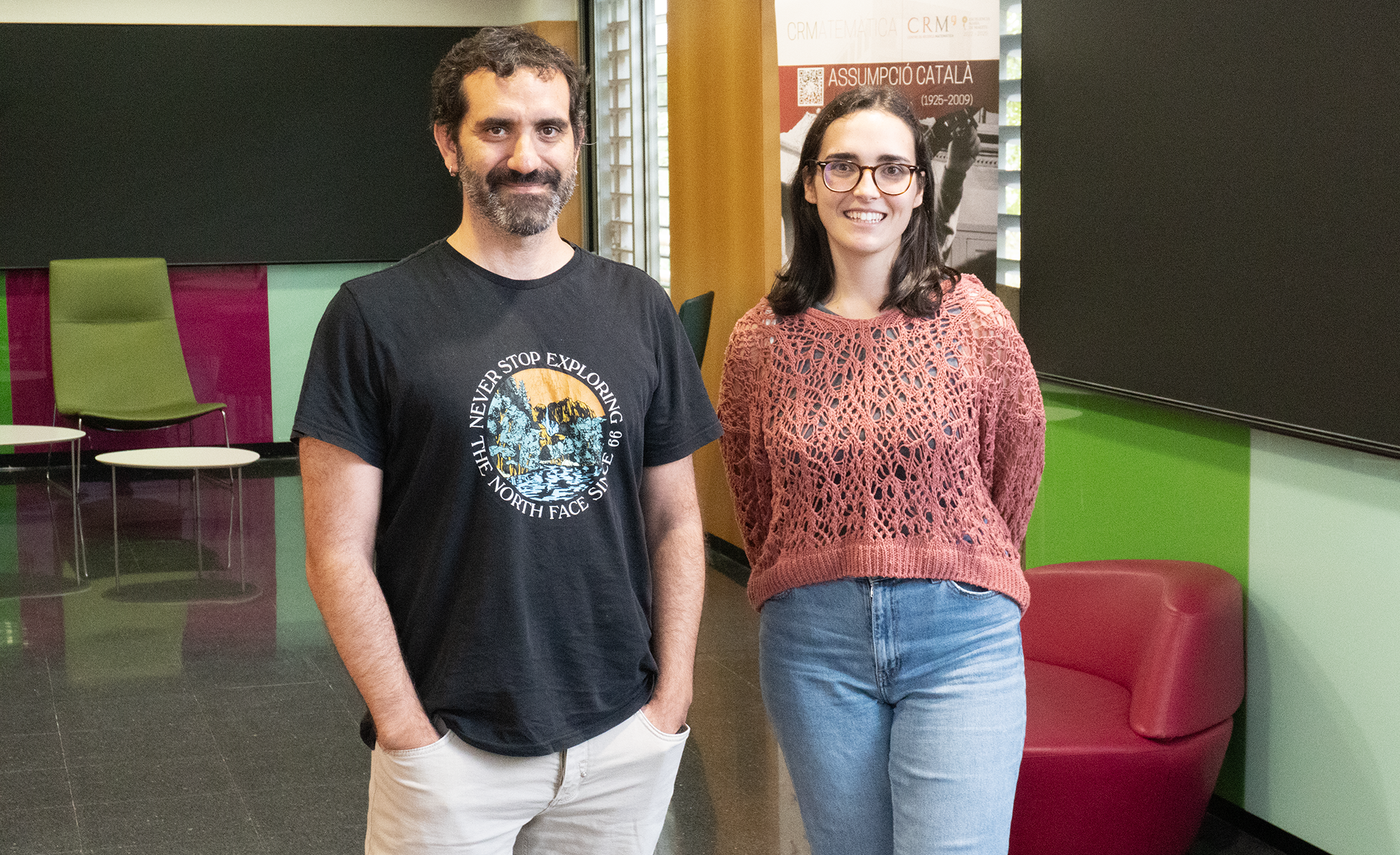
Jens-Bastian Eppler completed his BSc and MSc in Physics at Goethe University Frankfurt, including a year abroad at Copenhagen University. He received his PhD in Physics from Goethe University in 2022, affiliated with the Frankfurt Institute for Advanced Studies, where he specialized in theoretical and computational neuroscience. After his doctorate, he remained in Frankfurt as a postdoctoral researcher until 2024, spending two months at the Institut de la Vision in Paris in 2023. Since 2024, he has been a postdoctoral researcher in Alex Roxin’s lab at the Centre de Recerca Matemàtica (CRM).

Subscribe for more CRM News

Stay updated to our mailing list to get the lastest information about CRM activities.

CRM Comm

Pau Varela

CRMComm@crm.cat


Wigglyhedra: A New Combinatorial and Geometric Structure

Wigglyhedra: A New Combinatorial and Geometric Structure

In the article “Wigglyhedra”, researchers Asilata Bapat (Australian National University) and Vincent Pilaud (Universitat de Barcelona – Centre de Recerca Matemàtica) introduce the wiggly complex, a novel combinatorial and geometric structure, along with its associated…

CRM at the Bilbao–Barcelona Analysis and PDE Meeting

CRM at the Bilbao–Barcelona Analysis and PDE Meeting

From September 3 to 5, 2025, the Basque Center for Applied Mathematics (BCAM) hosted the Bilbao–Barcelona Analysis and PDE Meeting. For three days, researchers from both cities met face to face, joined by colleagues from other institutions, to…

Javier Gómez-Serrano receives the  2025 R. E. Moore Prize

Javier Gómez-Serrano receives the 2025 R. E. Moore Prize

Javier Gómez-Serrano, professor at Brown University, has received the 2025 R. E. Moore Prize for Applications of Interval Analysis together with Tristan Buckmaster and Gonzalo Cao-Labora. The award honours their article Smooth imploding solutions…

ESGI 2025: Mathematics Meets Industry at the CRM

Over the course of five days, ESGI 2025 turned the CRM into a collaborative lab where mathematics tackled questions raised by industry. From safer autonomous driving systems to smart water resource allocation and the financial uncertainties of wind…

The post Why Your Brain Is Never Still: Representational Drift and Statistical Learning first appeared on Centre de Recerca Matemàtica.

Go to Source

Sidebar