Author Archive

La revolución de la bioinformática: descifrar el código de la vida para hacer realidad la medicina personalizada

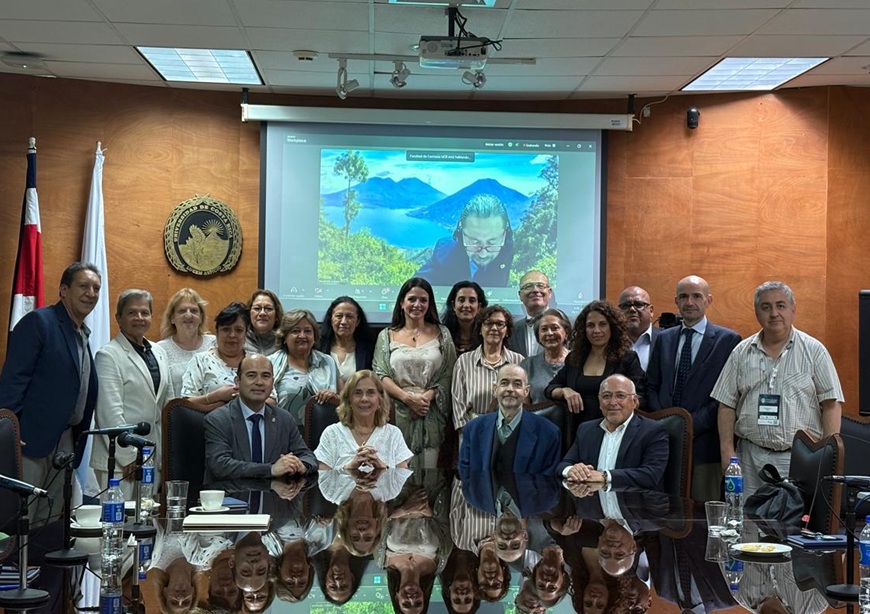
Miembros del CNIO en las XV Jornadas de Bioinformática. / CNIO

En biología, descubrir ya no es lo que era. La investigación húmeda, de microscopio y pipeta, ya casi no existe sin la de silicio: programas informáticos que extraen la información oculta en un mar de datos. Esta disciplina en auge, la bioinformática, es la que ayuda a entender qué hace cada variante genética, cada proteína: ¿aumenta esa mutación el riesgo de cáncer? ¿interfiere en la eficacia del tratamiento?

La bioinformática trae la medicina personalizada. Y en su avance también se acerca hacia el objetivo –más fundamental aún– de descifrar el código de los sistemas vivos, y hacer realidad el sueño de convertir la biología en una ciencia capaz de predecir el desarrollo de un organismo a partir de las instrucciones genéticas inscritas en su ADN.

“Estamos en un momento fascinante”

Para Raúl Rabadán, director del Programa de Genómica Matemática y catedrático en los Departamentos de Biológica de Sistemas e Informática Biomédica en la Universidad de Columbia (Nueva York, EE. UU.), “la biología siempre ha sido una ciencia descriptiva; pero estamos en un momento fascinante, empezamos a estudiar el lenguaje [de la biología] y encontramos algo que empieza a funcionar. Estamos en medio de una revolución, tenemos que avanzar tanto como podamos y ver qué podemos encontrar”.

Rabadán, físico de formación, intervino en las recientes Jornadas de Bioinformática, coorganizadas por el CNIO, el Instituto Nacional de Bioinformática (INB/ELIXIR-ES), el Centro Nacional de Biotecnología (CNB-CSIC) y BioData.pt (ELIXIR-PT).

Celebradas cada dos años, en esta XV edición las Jornadas de Bioinformática han reunido en Madrid a más de 300 especialistas de España, Portugal y otros países del área mediterránea. El suyo es un perfil cada vez más abundante en los centros de investigación: llegan de las matemáticas, física e ingenierías fascinados por problemas biológicos que sólo ellos y ellas pueden resolver, porque implican buscar patrones ocultos en masas de datos. 

“Ya no hay resultados sin análisis bioinformático”

“Ahora, en biología ya no hay apenas resultados que no hayan pasado por un análisis bioinformático”, dice Fátima Al-Shahrour, jefa de la Unidad de Bioinformática del CNIO y coorganizadora de las Jornadas.

La genómica y la proteómica, que en los últimos años han aprendido a analizar con rapidez el ADN y los miles de proteínas en los organismos vivos, generan cantidades ingentes de datos. La bioinformática encontrará en ellos información útil.

“Partes, por ejemplo, de los datos de secuenciación de un genoma, y quieres detectar alteraciones moleculares asociadas a una determinada enfermedad”, explica Al-Shahrour; “desarrollas un método informático que te permite convertir esos datos en un resultado”. En bioinformática se usan la algoritmia, la informática y la estadística para identificar patrones en los datos y se crean programas específicos para bucear en terabytes de datos.

Bioinformática para decidir el mejor tratamiento

Al-Shahrour estudia en su grupo, en concreto, el problema de cómo las diferencias en las células de un mismo tumor inciden en la eficacia del tratamiento. La investigadora de su equipo en el CNIO María González expuso sus resultados al respecto en las jornadas.

“Ahora se da un tratamiento según el tipo de tumor, y se tiene en cuenta alguna mutación”, explica Al-Shahrour. “Pero sabemos que no todas las células tienen esa mutación, porque los tumores, cada tumor, son muy heterogéneos; y puede que las células que no tengan la mutación no respondan al tratamiento. Este es el primer estudio que tiene en cuenta cómo de heterogéneos son los tumores a nivel de célula única en sus diferentes capas: genética, transcriptómica y de su microambiente, y cómo eso afectaría a la propuesta terapéutica”.

Otros investigadores del CNIO expusieron su trabajo. Tomás Di Domenico investiga la aparición de resistencias a terapia en mieloma múltiple; sus resultados muestran el potencial de la secuenciación avanzada para diseñar terapias más personalizadas en este tumor. José Córdoba estudia las firmas mutacionales, patrones de mutaciones que reflejan procesos tumorales, y que a menudo se pueden asociar a factores específicos como el tabaco. Pablo Villoslada busca nuevos marcadores diagnósticos en el microbioma de pacientes con cáncer de páncreas.

Raúl Rabadán, en el escenario, presentado por Alfonso Valencia (INB/ELIXIR-ES). / CNIO

La gramática del lenguaje biológico

Rabadán presentó un modelo que utiliza inteligencia artificial para resolver un problema clásico en biología: predecir de qué tipo es una célula a partir de su ADN. Aunque el genoma sea el mismo en todas las células de un organismo, no todas las células son iguales –las de piel son distintas de las de músculo, de las sanguíneas, de las neuronas…–; la razón es que en cada tipo de célula se expresan –están activos– genes diferentes. A día de hoy, teniendo únicamente el ADN de una célula no es posible saber con certeza de qué tipo de célula se trata.

El modelo de Rabadán, publicado este año en Nature, se considera un avance significativo. Su grupo creó un modelo de aprendizaje automático y lo entrenó con datos de expresión génica de millones de células, obtenidas de tejidos humanos normales. Identificó después las reglas subyacentes, la gramática del lenguaje genético, y aplicó estas reglas inferidas a nuevas situaciones.

La ‘materia oscura’ del genoma

“Aprendemos la gramática en muchos estados celulares diferentes y después pasamos a una condición concreta, que puede ser un tipo de célula enferma o normal, y tratamos de predecir patrones a partir de esta información”, explica Rabadán.

Su grupo está usando este modelo para estudiar la llamada “materia oscura” del genoma, que es realmente la mayor parte del mismo. Las mutaciones que codifican proteínas representan solo el 1% de todas las encontradas en pacientes con cáncer; el 99 % restante son mutaciones en regiones que no ordenan la producción de proteínas.

“La gran mayoría de las mutaciones que se encuentran en los pacientes con cáncer se encuentran en las llamadas regiones oscuras del genoma. Estas mutaciones no afectan a la función de una proteína y en su mayoría siguen sin estar exploradas”, afirma Rabadán. “La idea es utilizar estos modelos para iluminar esa parte del genoma”.

Equilibrio de género

Las XV Jornadas de Bioinformática han incluido innovaciones en aplicaciones traslacionales en la salud humana, las ciencias ambientales y la biología de sistemas. Se han presentado estudios españoles y portugueses, pero también de grupos Francia, Alemania, India, Marruecos, Chile, Suecia, Turquía, Túnez y el Reino Unido.

Los organizadores destacan el equilibrio de género entre los participantes, un aspecto importante en un área de la ciencia –informática– aun predominantemente masculina. “La diversidad de orígenes y géneros es esencial para la creatividad, y creemos que esto tiene un impacto real en la ciencia de la bioinformática”, destaca Al-Shahrour, que recuerda ser casi la única mujer cuando empezó su carrera.

Sobre el Centro Nacional de Investigaciones Oncológicas (CNIO)

El Centro Nacional de Investigaciones Oncológicas (CNIO) es un centro público de investigación dependiente del Ministerio de Ciencia, Innovación y Universidades. Es el mayor centro de investigación en cáncer en España y uno de los más importantes en Europa. Integra a medio millar de científicos y científicas, más el personal de apoyo, que trabajan para mejorar la prevención, el diagnóstico y el tratamiento del cáncer.

La entrada La revolución de la bioinformática: descifrar el código de la vida para hacer realidad la medicina personalizada se publicó primero en CNIO.

Go to Source

LIGO, Virgo and KAGRA observed ‘second generation’ black holes for the first time

LVK announced the detection of two gravitational-wave signals — designated GW241011 and GW241110 — that indicate the merger of binary black holes exhibiting unusual mass ratios and spin orientations.

Go to Source

El CIMCYC acoge un simposio internacional para presentar un proyecto sobre Alzheimer y trisomía 21

Cimcyc
El CIMCYC acogerá un simposio dedicado al lanzamiento de un proyecto internacional centrado en la enfermedad de Alzheimer asociada al síndrome de Down.
Seguir leyendo

Go to Source

The CIMCYC Hosts an International Symposium for the Launch of a Study of Alzheimer’s in Trisomy 21

Alzheimer Trisomy 21
The CIMCYC will host a symposium dedicated to the launch of an international study focused on Alzheimer’s disease associated with Down Syndrome (DSAD).
Seguir leyendo

Go to Source

Dr. Álvaro Fernández-Llamazares appointed as Lead Author of the Second IPBES Global Assessment

Dr. Álvaro Fernández-Llamazares, environmental scientist and senior researcher at the ICTA-UAB and the Department of Animal Biology, Plant Biology and Ecology (BABVE), has been selected as a Lead Author of the Second Global Assessment on Biodiversity and Ecosystem Services of the Intergovernmental Science-Policy Platform on Biodiversity and Ecosystem Services (IPBES).

Go to Source

International research team decode the pangenome and origin of oats

Oats are considered particularly healthy. They provide fibre, lower cholesterol levels and are gluten-free. However, the genetic makeup of oats has been difficult to understand until now, mainly because it is particularly large and complex. An international research team led by the IPK Leibniz Institute with the participation of CBGP group ‘Genomic assisted breeding’ has succeeded in creating a pangenome of oats and has also investigated when and where the genes are active in different parts of the plant. In a further study, another research team investigated the origin of oats. Today, the results were published in the journals Nature and Nature Communications.

Go to Source

恭喜, Dr. Gao!

Fengyun Gao, a PhD student who is under Prof. Arjan W. Kleij supervision, has successfully defended her PhD thesis entitled “Metal and Dual Metal/Photo Catalyzed Stereoselective Coupling of Vinyl Carbonates” publicly Wednesday, 29 October.

The members of the evaluation committee were  Prof. Òscar Pàmies (Universitat Rovira i Virgili (URV), Spain), Dr. Matteo Lanzi (Università’ degli Studi di Parma, Italy) and Dr. Sara Cembellín Santos (Universidad Complutense de Madrid, Spain).

Her PhD studies are supported by the China Scholarship Council (CSC).


What do you want to achieve as a scientist?

If I can call myself a scientist one day, I hope to create chemistry that is both useful and sustainable. I want to develop catalytic methods that make synthesis more efficient and environmentally friendly — and, at the same time, inspire others to see how beautiful and creative chemistry can be.

What is your thesis about?

My thesis focuses on metal- and dual metal/photocatalyzed stereoselective coupling of vinyl carbonates (VCCs). In this work, I explored palladium- and cobalt-catalyzed allylic coupling reactions, as well as combined metal/photoredox systems, to achieve highly selective C–C bond formation under mild and sustainable conditions.

What triggered your interest for the subject of your thesis?

I became interested in this field because transition-metal catalysis combines both creativity and sustainability. In particular, I was intrigued by how palladium has been widely used in classic allylic substitution reactions, while cobalt, as a first-row metal, offers new opportunities for radical-based and photochemical pathways. This contrast motivated me to study how these two metals—and their cooperation with photocatalysts—can open up new reactivity patterns.

What applications can your thesis have in the future?

The methodologies developed in my thesis could be applied to the synthesis of complex molecules, such as pharmaceuticals and fine chemicals, where stereoselectivity is essential. In addition, since the reactions use sustainable metals and mild conditions, they can contribute to greener and more efficient industrial processes.

From the lessons learnt at ICIQ, which one do you value the most?

The most important thing I’ve learned at ICIQ is the value of collaboration. Working with people from different backgrounds taught me how teamwork can make science more creative and enjoyable. Many of my best ideas came from discussions with colleagues.

What ICIQ moment you´ll never forget? 

The moment I’ll never forget at ICIQ is when the institute organized different social activities, especially during local festivals. For example, we once had a traditional Catalan event where we grilled “calçots” together — it was so much fun and a great way to experience the local culture with my colleagues.

What will you miss the most from ICIQ?

I’ll definitely miss the people the most — my colleagues, my friends, and all the moments we shared inside and outside the lab. There were also some tough times, of course, but they helped me grow and made the happy moments even more special. ICIQ really became like a second home to me.

What do you wish you had known at the beginning of your PhD?

I wish I had known that progress in research often comes slowly and unpredictably—and that patience and persistence are just as important as technical skills. Once I learned to embrace that, I began to enjoy the process much more.

Have you ever been emotional over an experiment/simulation? Why?

Yes, definitely! I still remember when a reaction I’d been struggling with for weeks finally worked — the feeling was pure joy. You spend so much time and energy on it that the result really hits you emotionally.

Who has been your biggest influence?

My supervisor, Prof. Arjan Kleij, has been a big inspiration. His scientific vision and patience taught me a lot. I’m also motivated by my labmates — their enthusiasm and teamwork kept me going during tough times.

Where are you going next? What will you do there?

After my PhD, I’m going to join a company, where I’ll work on more application-oriented projects. I’m really looking forward to seeing how the chemistry I’ve learned can be used in real products and processes.

What is your favourite molecule? 

Probably vinyl cyclic carbonate — it’s simple but incredibly versatile! It’s been at the heart of my PhD, and I love how such a small molecule can open so many synthetic possibilities.

If you were a piece of lab equipment, what would you be?

I think I’d be a fume hood — it just stays there quietly every day, doing its job without moving much. I feel we share the same energy during my PhD years!

Tell us something about you that people might not know…

Something people might not know about me is that my biggest dream is to be a koala — just eating, sleeping, and relaxing all day. After a PhD, that lifestyle sounds perfect!

La entrada 恭喜, Dr. Gao! se publicó primero en ICIQ.

Go to Source

The CIMCYC Hosts Delegation from Granada’s Social Policy, Family, Disability and Seniors Department

La Concejalía de Política Social, Familia, Discapacidad y Mayores de Granada visita el CIMCYC
The Mind Brain and Behavior Research Center (CIMCYC) at the University of Granada (UGR) recently hosted a visit from the Granada City Council’s Department of Social Policy, Family, Disability, and Seniors.
Seguir leyendo

Go to Source

La Concejalía de Política Social, Familia, Discapacidad y Mayores de Granada visita el CIMCYC

La Concejalía de Política Social, Familia, Discapacidad y Mayores de Granada visita el CIMCYC
El Centro de Investigación Mente, Cerebro y Comportamiento (CIMCYC) de la Universidad de Granada (UGR) recibió la visita de la Concejalía de Política Social, Familia, Discapacidad y Mayores del Ayuntamiento de Granada.
Seguir leyendo

Go to Source

A new method of reconstructing images of gamma-ray telescopes applied to the LST-1 of CTAO

A new method of reconstructing images of gamma-ray telescopes applied to the LST-1 of CTAO

Abe K.; Abe S.; Abhishek A.; Acero F.; Aguasca-Cabot A.; Agudo I.; Alispach C.; Crespo N.A.; Ambrosino D.; Antonelli L.A.; Aramo C.; Arbet-Engels A.; Arcaro C.; Asano K.; Aubert P.; Baktash A.; Balbo M.; Bamba A.; Larriva A.B.; Barres de Almeida U.; Barrio J.A.; Jiménez L.B.; Batkovic I.; Baxter J.; González J.B.; Bernardini E.; Medrano J.B.; Berti A.; Bezshyiko I.; Bhattacharjee P.; Bigongiari C.; Bissaldi E.; Blanch O.; Bonnoli G.; Bordas P.; Borkowski G.; Brunelli G.; Bulgarelli A.; Burelli I
Astronomy and Astrophysics, Vol. 691, Num. A328 (2024)
Article

Go to Source

Measurement of (Formula presented), (Formula presented), and (Formula presented) Decay Parameters Using (Formula presented) Decays

Measurement of (Formula presented), (Formula presented), and (Formula presented) Decay Parameters Using (Formula presented) Decays

Dekkers S.; Egede U.; Fujii Y.; Hadavizadeh T.; Henderson R.D.L.; Lane J.J.; Liu F.L.; Monk M.; Song R.; Walton E.J.; Ward J.A.; Bediaga I.B.; Camargo Magalhaes P.; Cruz Torres M.; De Freitas Carneiro Da Graca U.; De Miranda J.M.; dos Reis A.C.; Falcao L.N.; Gomes A.; Massafferri A.; Santoro L.; Sundfeld D.; Torres Machado D.; Amato S.; De Paula L.; Ferreira Rodrigues F.; Gandelman M.; Hicheur A.; Lopes J.H.; Nasteva I.; Nogarolli P.; Otalora Goicochea J.M.; Polycarpo E.; Rangel M.S.; Souza De P
Physical Review Letters, Vol. 133, Num. 261804 (2024)
Article

Go to Source

New constraints on gauged U1Lμ−Lτ models via Z − Z′ mixing

New constraints on gauged U1Lμ−Lτ models via Z − Z′ mixing

Asai K.; Miyao C.; Okawa S.; Tsumura K.
Journal of High Energy Physics, Vol. 2024, Num. 18 (2024)
Article

Go to Source

Sidebar