This year, the meeting will take place on February 2nd-3rd 2026. As you know, the idea of this meeting is to gather in person as many people from the ICCUB as possible, and give the opportunity to young researchers working in the research areas of our Institute (Astrophysics, Particle Physics, Cosmology, Gravitation and Nuclear Physics) to provide to a broad audience didactic and entertaining reviews of the fields in which their research is embedded. There will be also interesting talks on the status of the technological part of the institute. PhDs, postdocs and some seniors, all ICCUB members and collaborators, will be invited to give a talk on their topics of interest. The meeting will also offer an opportunity to the participants with different interests to meet and discuss their research activities with other scientists working outside their specialty, but within the broad scope of ICCUB study areas.
The workshop will be held at the Facultat de Física in the Universitat de Barcelona. The format will consist of 6 talks in the morning and 6 in the afternoon during the two days. Each talk will
last 25 minutes, and there will be programmed coffee breaks in between to foster interaction. Speakers are strongly encouraged to give their talks at a Physics graduate student level, and with a strong outreach tone, to make the talks easy to follow for ICCUB members working in very different fields.
Everybody is invited to participate in this event.
REPISALUD es el repositorio institucional del Instituto de Salud Carlos III (ISCIII) y de sus fundaciones, el Centro Nacional de Investigaciones Oncológicas (CNIO) y el Centro Nacional de Investigaciones Cardiovasculares (CNIC). Su misión es recoger y difundir en acceso abierto la producción científica, académica e institucional de los tres organismos.
La Fundación Española para la Ciencia y la Tecnología (FECYT) acaba de conceder su distintivo de calidad a este gran repositorio, que contribuye a aumentar la difusión y el impacto global de la ciencia generada en el ámbito del ISCIII.
La evaluación de repositorios es una iniciativa de FECYT pionera en España. El Distintivo de Calidad FECYT para Repositorios de Acceso Abierto acredita la adhesión a las buenas prácticas en ciencia abierta y, en su caso, la Mención de Buenas Prácticas en Gestión de Datos de Investigación. Estas distinciones tienen una vigencia de dos años, renovables.
De los 39 repositorios evaluados en esta primera edición, 31 han obtenido el Distintivo de Calidad de Repositorios de Acceso Abierto, y de ellos diez, como REPISALUD, han recibido también la Mención de Buenas Prácticas en Gestión de Datos de Investigación. La web de RECOLECTA, recolector de ciencia abierta de FECYT, incluye información sobre el proceso de evaluación.
Más de 10.500 artículos de investigación en 7 años
Desde 2019 aloja datos de investigación y planes de gestión de datos, y se ofrece soporte orientado a su Gestión de Datos FAIR. De este modo el personal investigador financiado con fondos públicos cuenta con una infraestructura digital que permite cumplir con los mandatos de los organismos financiadores y con el artículo 37 de Ley de la Ciencia, permitiéndoles depositar los documentos sujetos a dicha obligación.
En el repositorio se relacionan las publicaciones, datos subyacentes, PGD u otro tipo de resultado de investigación, y los registros se enriquecen con metadatos relativos a la fuente de financiación e identificación del proyecto entre otros.
La Biblioteca Nacional de Ciencias de la Salud del ISCIII ofrece al personal investigador servicios para promover un uso eficiente del repositorio: consultas y apoyo técnico sobre el funcionamiento, asesoramiento en cuestiones de derechos de autor y convocatorias de evaluación y acreditación del mérito investigador, gestión de los datos de investigación generados a través de los principios FAIR, integración del repositorio en el ecosistema nacional e internacional de infraestructuras digitales de acceso abierto, entre otros.
Constraining Muon decay parameters from CEvNS measurements at Spallation Sources
Date
Place
3.20 Floor Seminar Room, 3rd floor
Abstract: The talk will present a study of the sensitivity of COHERENT-like experiments to non-standard neutrino interactions within the vWEFT framework, i.e. low-energy EFT with additional right-handed Dirac neutrinos. Our analysis incorporates, for the first time, flavor-general New Physics effects in neutrino production (from pion and muon decays) and neutrino detection, through Coherent Elastic Neutrino-Nucleus Scattering (CEvNS). As a special case, we will highlight how CEvNS data provide an alternative probe for muon decay parameters, for neutrino experiments where muon decay is a source of neutrinos. We will further illustrate how the results can be conveniently formulated in compact form and the ease with which they can be implemented in existing or future analyses using effective nuclear charges. Finally, We will discuss numerical results based on current COHERENT data, and also present estimates for the sensitivity of future measurements.
The new temporary exhibition at the Museum of Artistic Reproductions in Bilbao, which will remain open until 24 May 2026, is a bridge between mythology, art, science and inclusion
The discovery, the result of observations from the James Webb telescope, has allowed the research team to test theories about the formation of massive stars. The jet has been detected in Sharpless 284, a star-forming region where metallicity is significantly lower than in other areas of our galaxy.
Researchers at ICN2 have developed an innovative, AI-based methodology that can transform atomic resolution (S)TEM microscopy images into realistic 3D models in just minutes allowing for theoretical simulations. This breakthrough could pave the way for significant progress in areas such as energyand quantum technologies.
Scientists fromICN2, the Massachusetts Institute of Technology (MIT) and the KTH Royal Institute of Technology have analysed how the electrolyte—long considered a secondary player in electrochemical reactions—plays a decisive role in processes such as green hydrogen production and the transformation of CO₂ into useful products.The studypaves the way for more efficient production of renewable fuels and green chemicals to drive the energy transition.
Wangyu Shi, a PhD student who is under Prof. Arjan W. Kleij supervision, has successfully defended his PhD thesis entitled “Catalytic Synthesis of Functionalized Six-, Seven- and Eight-Membered Heterocycles from Carbon Dioxide” publicly Thursday, 23 October.
The members of the evaluation committee were Prof. Timo Repo (University of Helsinki, Finland), Prof. Marta E. G. Mosquera (Instituto de Investigación Química Andrés M. Del Río (IQAR), Spain) and Prof. Giulia Fiorani (Ca’Foscari University of Venice, Italy).
Wangyu Shi is from China and studied at China Agricultural University in Beijing, where he earned both his Bachelor’s and Master’s degrees in Applied Chemistry. In his spare time, he enjoys playing Ping-Pong and basketball and is glad to have found like-minded partners at ICIQ. His PhD studies are supported by the China Scholarship Council (CSC).
What do you want to achieve as a scientist?
To create something interesting and useful.
What triggered your interest for the subject of your thesis?
CO2 is a major greenhouse gas, which causes lots of environmental problems, but it is also an ideal raw material (abundant, cheap, good carbon source) from the perspective of organic chemistry. Collecting, storing, and converting it into functional molecules and materials not only helps relieve the greenhouse effect but also produces organic compounds in an economical, sustainable strategy.
What applications can your thesis have in the future?
Hopefully, it can help open novel ideas in CO2 utilization and carbonate transformation. Also, I hope these molecules I synthesized could be used in the preparation of useful materials in daily life.
The thing that I like most about my thesis is….
It illustrates the production of elusive compounds from simple CO2. Using other strategies cannot achieve them.
What ICIQ moment you´ll never forget?
Those activities organized by ICIQ to celebrate local festivals, which help our foreigners to better experience the local culture.
What will you miss the most from ICIQ?
Reasonable management mode, friendly and enthusiastic staff, and modern equipment conditions
What advice do you have for someone who’s starting their PhD now?
Enjoy and cherish your time working in ICIQ, it will be memorable.
What is your favourite molecule?
The 7-membered carbonates I prepared. They have too many applications, which I didn’t expect.
If you were a piece of lab equipment, what would you be?
The high-pressure reactor. Without this, I cannot finish my work. In addition, it’s the hardest container in the lab, and it looks so safe.
The study, led by the IN UMH-CSIC, demonstrates that optopharmacology can modulate corneal nerve hyperactivity without suppressing its protective function.
The findings, published in the journal British Journal of Pharmacology, open the door to localized and reversible treatments to relieve ocular discomfort.
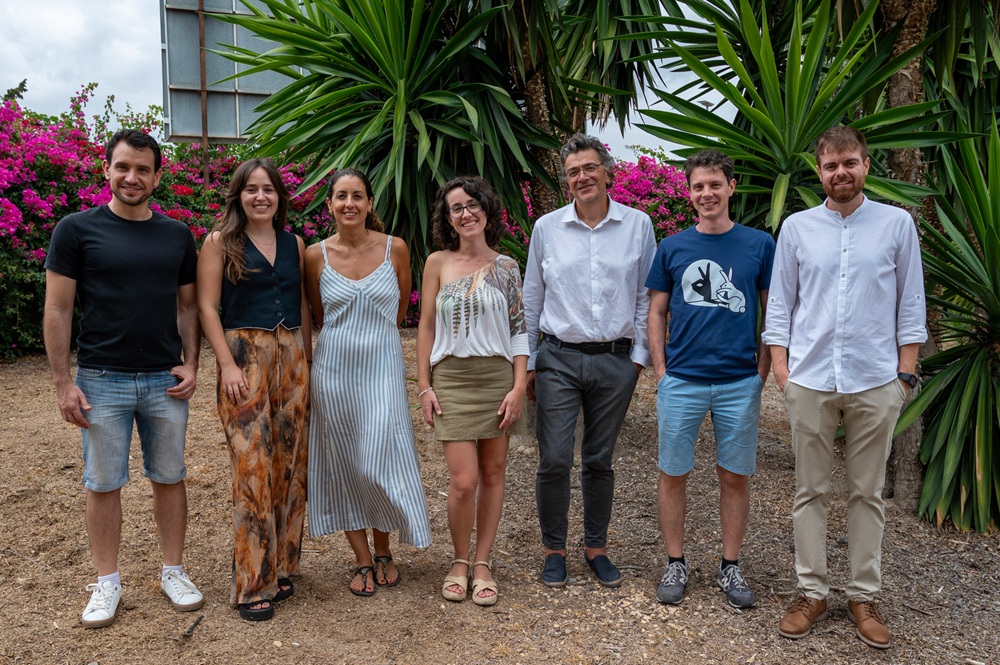
Photo: The team from the Ocular Neurobiology Laboratory who participated in the study: Fernando Aleixandre, Ariadna Díaz, Almudena Íñigo, David Ares, Víctor Meseguer, Juana Gallar, Susana Quirce, and M. Carmen Acosta. Source: IN UMH-CSIC
The electrical activity of the nerve endings that detect cold in the cornea is essential for maintaining the health of the ocular surface, as it regulates blinking and tear production. However, when this activity becomes excessive, as occurs in dry eye syndrome, it can lead to persistent discomfort. A new study led by researcher Víctor Meseguer, co-head of the Ocular Neurobiology Laboratory at the Institute for Neurosciences (IN), a joint center of the Miguel Hernández University (UMH) of Elche and the Spanish National Research Council (CSIC), demonstrates that a light-sensitive molecule called DENAQ can modulate this nerve hyperactivity when exposed to blue light, reducing abnormal signals without eliminating normal cold sensitivity.
“The most interesting thing is that light doesn’t block the function of these nerves; it restores it to normal. Under dry eye conditions, the nerve endings are firing excessively, and in the presence of the optopharmaceutical and light, we manage to bring their activity back to healthy levels”, explains Meseguer. The study, published in the British Journal of Pharmacology, shows that DENAQ acts as a chemical switch: by changing its conformation under blue light, it modulates ion channels in corneal neurons and reduces their excitability. Experiments carried out in guinea pig and rat models confirmed that this effect persists even in corneas with induced dryness, without altering the normal response to cold stimuli.
Ares-Suárez, D., Iñigo-Portugués, A., Velasco, E., Quirce, S., Aleixandre-Carrera, F., Díaz-Tahoces, A., Acosta, M. C., Lin, W.-C., Kramer, R. H., Belmonte, C., Gallar, J., & Meseguer, V. (2025). “Optochemical modulation of corneal cold nerve terminal impulse activity with a photochromic ion channel blocker.” British Journal of Pharmacology, 1-15.
Using DENAQ allows for precise control of peripheral nerve activity through light stimulation. This ability to fine-tune nerve excitability provides an unprecedented level of control in sensory structures like the cornea, where maintaining protective function is essential while avoiding overstimulation that causes pain or irritation. Acting only on the affected area and in a reversible way makes this approach a promising alternative to conventional pharmacological treatments, which often cause side effects or loss of sensitivity.
Furthermore, the study offers new insight into the molecular mechanisms of corneal receptors. The researchers found that the molecule enters the nerve endings through P2X3 channels, structures not previously described as playing this role in the cornea. This finding paves the way for designing more specific photosensitive drugs in the future.
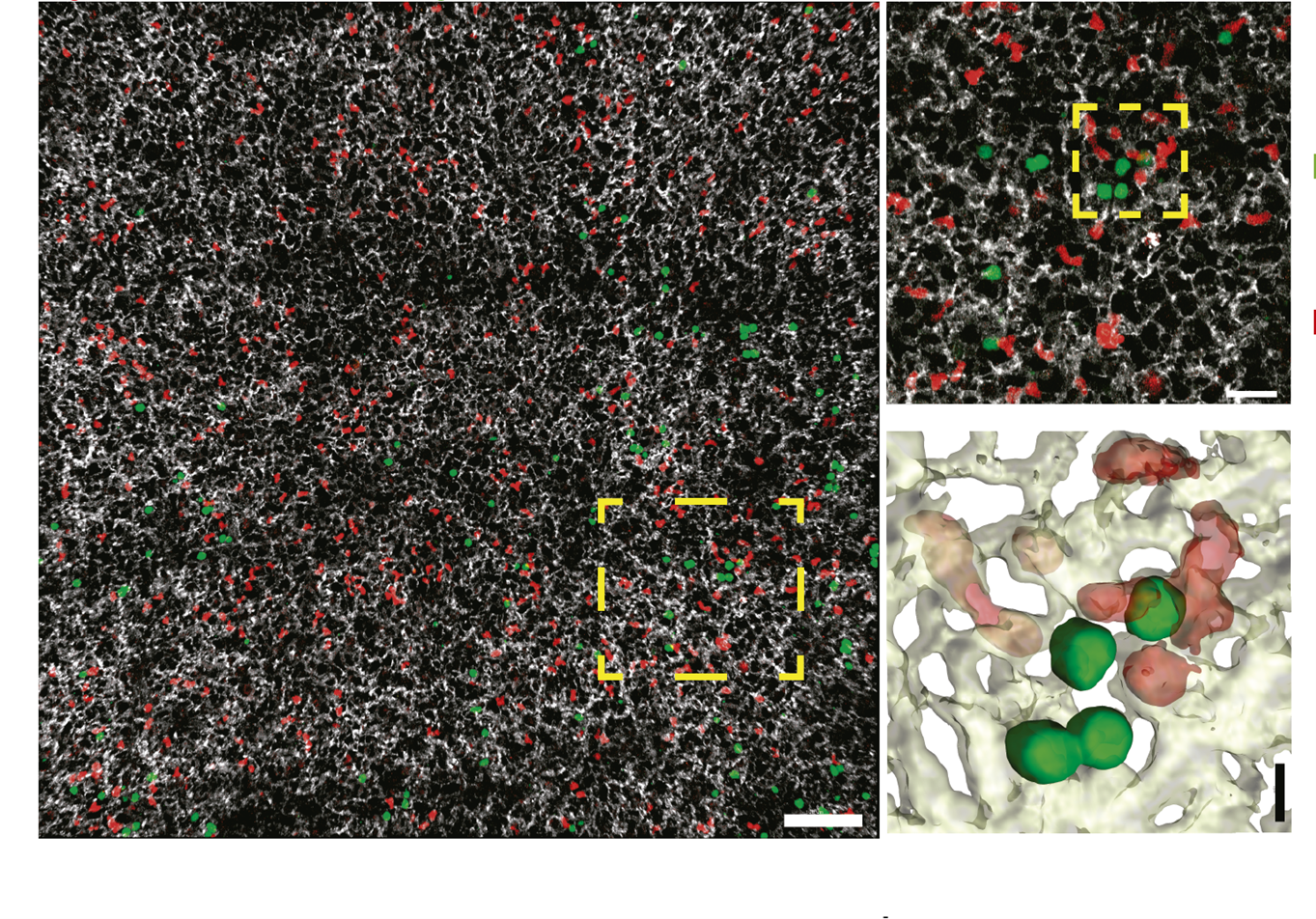
The DENAQ molecule enters guinea pig corneal nerve endings through P2X3 channels, enabling photomodulation of nerve activity in a dry eye model. Source: IN UMH-CSIC.
This approach falls within the emerging field of optopharmacology, which modulates nervous system activity using light without requiring genetic manipulation, unlike optogenetics. “This is the first time a photosensitive molecule has been shown to control corneal nerve activity with light. It provides strong proof of concept for developing therapeutic strategies based on optopharmaceuticals”, notes David Ares, first author of the article.
“These results reinforce the idea that we can control peripheral nerve activity in a localized, precise, and reversible manner using light-sensitive drugs. In the future, this could help alleviate dry eye symptoms or other peripheral neuropathies”, adds Meseguer.
The DENAQ molecule was synthesized in collaboration with the group led by Professor Richard H. Kramer at the University of California, Berkeley, a global reference in the development of photosensitive compounds. Kramer’s team characterized the molecule’s photodynamic properties and its activity in retinal ganglion cells.
This research was funded by the Spanish State Research Agency – Ministry of Science, Innovation and Universities, the NextGenerationEU Program, and the Regional Ministry of Education, Culture, Universities and Employment of the Generalitat Valenciana.
Nadie quiere tener un tumor. Una vez extirpado, querríamos destruirlo y borrarlo cuanto antes. Pero eso sería desperdiciar oportunidades únicas para la ciencia y para pacientes en el futuro. Cualquier tumor es único y por eso puede donarse a la investigación. Los biobancos son las entidades que recogen, gestionan y custodian las muestras de tumores y, en general, de todo fragmento de organismo que pueda servir como objeto de estudio: tejidos, sangre, heces, etcétera.
Los biobancos constituyen así un puente entre la ciudadanía y la investigación. Se ocupan de la recogida, traslado y conservación de las muestras. También garantizan el anonimato de sus donantes, que se cumplen todos los requisitos técnico-legales y que la comunidad científica puede, efectivamente, acceder a un recurso considerado una mina de oro para la investigación.
Pilar Caro (Biobanco) trabaja con las muestra preparadas, clasificadas y conservadas en el Biobanco del CNIO. Laura M. Lombardía / CNIO.
Una gran infraestructura científica europea gracias a donaciones de pacientes
El mayor catálogo de muestras biológicas del mundo está actualmente en Europa. La Infraestructura Paneuropea de Investigación en Biobancos y Recursos Biomoleculares (BBMRI-ERIC) integra a más de 700 biobancos en 23 países, y es una de las plataformas de investigación más relevantes de la Unión Europea.
España se ha convertido recientemente en miembro de pleno derecho de esta red europea de biobancos, un cambio respecto a su anterior situación de país observador, considerado muy relevante.
Para María Jesús Artiga, directora científica en funciones del Biobanco del Centro Nacional de Investigaciones Oncológicas (CNIO), la plena entrada de España en la red europea “se traduce en más oportunidades de colaboración para el ecosistema biomédico español en general, además de facilitar la integración de grandes volúmenes de datos clínicos y biomoleculares, que son una herramienta clave para acelerar descubrimientos en investigación biomédica y facilitar el desarrollo de la medicina personalizada”.
Ser miembro de pleno derecho permite a España defender sus prioridades en investigación biomédica, y alinear las estrategias europeas con las necesidades específicas de España. También facilita el acceso a financiación competitiva, señala Artiga.
Biobanco del CNIO: más de 55.500 muestras de 9.400 donantes
“Los biobancos han pasado de ser simples depósitos de muestras biológicas a unidades complejas y dinámicas que requieren del trabajo en grandes redes como la Infraestructura Paneuropea. Solo así podemos facilitar las mejoras en el diagnóstico, el tratamiento, e incluso en la prevención de las enfermedades”, añade la responsable del Biobanco del CNIO.
El Biobanco del CNIO almacena más de 55.500 muestras de más de 9.400 donantes. Entre ellas se encuentran las más de 8.500 muestras de linfomas, neoplasias ginecológicas y digestivas, carcinomas mamarios, casos no neoplásicos y cultivos primarios de piel.
Cecilia Sobrino extrae algunas de las muestras en la sala de crioconservación. A su izquierda: los tripulantes David J. Quesada y Virginia López del Alcázar, y María Jesús Artiga, directora del Biobanco. / Laura M. Lombardía. CNIO.
De la primera red española a una plataforma que incluye réplicas en miniatura de órganos humanos
El Biobanco del CNIO ha jugado un papel clave en la integración de España en la red europea. En la década de los 2000 impulsó la creación de la Red Nacional de Biobancos española, que coordinó hasta 2018. Fue un paso determinante, puesto que las colecciones de los biobancos solo pueden crecer gracias a la interacción entre hospitales, centros de investigación, pacientes, industria, organismos reguladores, expertos en aspectos técnico-legales… y los propios biobancos entre sí.
De esta primera red española nació la Plataforma de Biobancos y Biomodelos del Instituto de Salud Carlos III (PISCIII-BB), que hoy reúne a 56 biobancos de centros de investigación y hospitales de toda España (desde 2021 la Plataforma incluye además, modelos animales, tejidos impresos en 3D y organoides –réplicas en miniatura de órganos humanos derivadas de células madre)–. A través de esta plataforma se produjo hace cuatro años el ingreso de España a la infraestructura europea BBMRI-ERIC como país observador.
En esta gran red europea el Biobanco del CNIO participa ya en numerosos grupos de trabajo y proyectos. Entre ellos están los que buscan garantizar que la investigación y los avances en cáncer se desarrollen en sintonía con la innovación tecnológica —como la Inteligencia Artificial (IA) o el Espacio Europeo de Datos Sanitarios (EHDS)—, y que los avances se apliquen de manera ética, equitativa y transparente. Además, el Biobanco del CNIO colabora para fomentar la formación del personal de biobancos y de la investigación biomédica en general.
Sobre el Centro Nacional de Investigaciones Oncológicas (CNIO)
El Centro Nacional de Investigaciones Oncológicas (CNIO) es un centro público de investigación dependiente del Ministerio de Ciencia, Innovación y Universidades. Es el mayor centro de investigación en cáncer en España y uno de los más importantes en Europa. Integra a medio millar de científicos y científicas, más el personal de apoyo, que trabajan para mejorar la prevención, el diagnóstico y el tratamiento del cáncer.