Kasner eons in Lovelock black holes
Bueno P.; Cano P.A.; Hennigar R.A.; Li M.-D.
Physical Review D, Vol. 110, Num. 124015 (2024)
Article


El Centro Nacional de Investigaciones Oncológicas (CNIO), gracias a su iniciativa filantrópica Amigos/as del CNIO, abre una nueva convocatoria para financiar cuatro contratos postdoctorales. Cada uno de estos Contratos Amigos/as del CNIO tendrá una duración de tres años y estará abierto a todas las áreas de investigación en cáncer.
Está dirigido a investigadores e investigadoras de cualquier nacionalidad que hayan recibido su doctorado en una fecha posterior a enero de 2017 y que deseen desarrollar un proyecto de investigación de excelencia en el CNIO.
El impreso de solicitud se puede cumplimentar en el siguiente enlace.
La fecha límite de presentación de solicitudes es el 28 de septiembre de 2025. Más información, en las bases de la convocatoria.
La entrada Nueva convocatoria del Programa de Contratos “Amigos/as del CNIO” se publicó primero en CNIO.
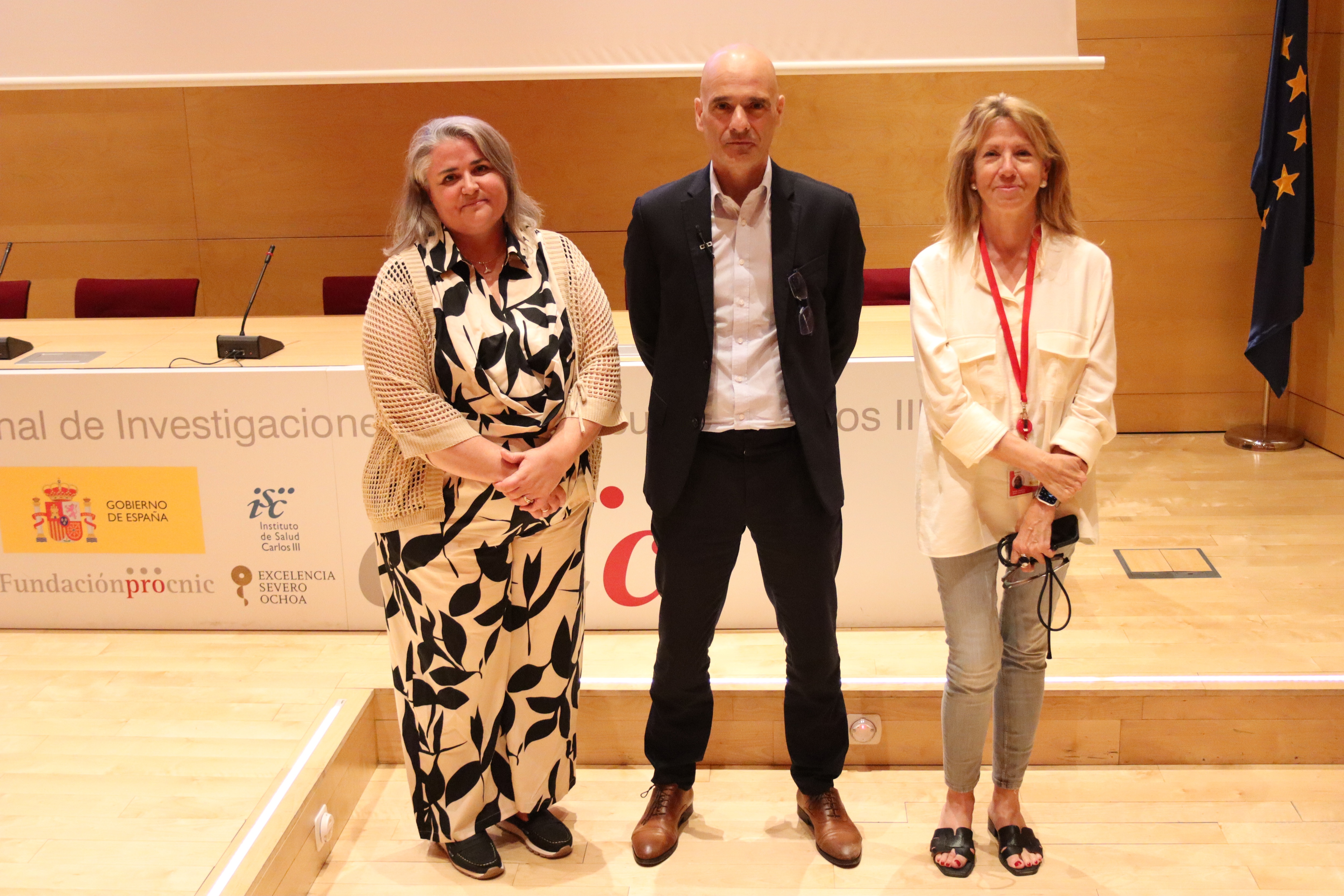
Dr Pascual Sánchez-Juan is Scientific Director of the CIEN Foundation (Centre for Research on Neurological Diseases) dependent on the Carlos III Health Institute (ISCIII) Dr Sánchez-Juan is an expert in dementia research and has headed the Cognitive Deterioration Unit of Santander’s Marqués de Valdecilla University Hospital, the institution where he is also scientific director of the Valdecilla Biobank.
At the CIEN Foundation we’re researching biomarkers in neurodegenerative diseases, a field that is currently abuzz with activity, particularly regarding markers in blood. Until now, good markers for Alzheimer’s came from analysing cerebrospinal fluid or PET scans, which are both costly and invasive. The latest major development is that we can use a blood test to detect the disease with similar levels of sensitivity and specificity to those of traditional methods, which is a complete game changer for diagnostic scalability.
Exactly. What’s more, for the first time in over two decades, treatments that modify disease progression rather than just relieving symptoms are on the horizon. For more than two decades there was no new treatment for Alzheimer’s disease. What we had were symptomatic drugs, which relieved the effects but did not modify the course of the disease. Now, for the first time, treatments are starting to arrive that promise to act on the biology of Alzheimer’s. Specifically, on one of the proteins that accumulate in the brain: amyloid protein. These new drugs can reduce their accumulation, which in turn delays the progression of symptoms. However, in order to administer these treatments effectively, a precise diagnosis is essential. That’s why we need reliable biomarkers and the possibility of studying a broader population. In addition, all indications are that the sooner treatment begins, the better the prognosis. So we are at a key moment in our discipline: new, modifying treatments are starting to arrive at the same time as we have increasingly effective diagnostic tools. Even so, there are still many unknowns. There are gaps in knowledge that we need to overcome if we want to optimise the use of these treatments, not only current ones but also those in development which act on other targets that may be more efficient. What we are seeing now is only the tip of the iceberg.
One of our main lines is identifying individuals at a pre-clinical stage; that means they have the condition but aren’t showing any symptoms yet. With studies like the Vallecas cohort, which began in 2011, we’ve been following cognitively healthy people over the age of 70 for years. Even back then we observed that some people presented the condition in blood, and now we are following their 5 and 10-year progressions in terms of cognitive symptoms, cerebral atrophy, and other markers. That gives us very valuable information.
We are using artificial intelligence, genetics, and digital markers such as spontaneous language analysis to detect risk even before the onset of symptoms. For instance, we train algorithms with people who we know to have markers, and that way we can fine tune predictive capacity. We want to reach determinism: to be able to say who will, in all likelihood, develop the disease and to be able to treat it in time.
We use a blood marker called phosphorylated tau 217, which is a type of circulating tau protein. It comes from the brain and is very specific to that organ, although it can be detected in blood. Phosphorylated tau 217 levels have an almost linear association with neurodegeneration, which is why it’s considered a very useful marker.
We have data from the Vallecas Project, where we observe that this marker has a very good association with cognitive deterioration. That is to say, we see progressive atrophy in the brains of people who have higher levels of phosphorylated tau 217 in particular in the hippocampus, which is the area associated with memory. We also observe how other markers of neurodegeneration or inflammation, measured sequentially, increase over time.
We are specifically interested in a marker that comes from astrocytes, the cells that support the brain. This marker appears expressed in astrocytes when they are activated or “angry” so to speak, for instance, in response to some type of brain damage.
When this happens, astrocytes activate, get bigger and begin to express a protein called GFAP (glial fibrillary acidic protein). At that moment, the function changes: it can absorb cells or act more aggressively towards the damage it has detected.
The interesting thing is that in Alzheimer’s disease this protein -expressed by the reactive astrocyte cell- appears at high levels in plasma although, curiously, the change is not so evident in cerebrospinal fluid. This finding has led us to interpret GFAP in plasma as a possible marker of astrocyte reactivity, which is associated with a worse prognosis.
We have observed that people with high levels of this marker tend to have greater cognitive decline and more cerebral atrophy over time. Indeed, GFAP has been included in new proposals for Alzheimer’s disease diagnostic criteria, although it is not yet clear what role it plays or how we should use it in clinical practice. In our case, what we have done with this marker is analyse it in a project called VARS (Vallecas Alzheimer Center Reina Sofia). This has enabled us to show for the first time in humans, based on postmortem measurements taken from patients brains, that high levels of GFAP in blood are related with astrocyte activation.
Immense. It means we can compare clinical samples taken in life with the postmortem neuropathology within an unbeatable time period (around 140 days). This offers us a unique window to validate biomarkers and better understand the mechanisms of the disease.
We are also studying how co-pathologies affect different biomarkers, how we can detect some of these pathologies using new biomarkers and how we can detect some of these diseases using new biomarkers. For instance, we are attempting to detect the protein TDP-43. When it is analysed in blood, it is not a good marker. But we are looking for it in extracellular vesicles, which seems to be a more promising approach
This isn’t a new strategy; it has already been used in other contexts. What is interesting is that we have seen how, in diseases like ALS or frontotemporal dementia, the TDP-43 encapsulated in vesicles is more sensitive as a marker than its free form in plasma.
We are applying the same approach for Alzheimer’s patients, and we have already seen some quite promising preliminary results.
In short, our approach is to study biomarkers in the context of the co-pathologies presenting in the brains of our patients to better understand the complexity of the disease and move towards a more precise and personalised characterisation.
Completely. We should think of it more as Alzheimer’s syndrome, where multiple vectors come together: amyloid, tau, vascular, synuclein, TDP-43, and so on. Today we don’t have accessible biomarkers for many of these proteins, but when we do have them, we will be able to be much more precise in both diagnosis and treatment.
Alzheimer’s is also a complex, multifactorial disease. Let’s say there are two routes. One is to act as early as possible, during the initial stages, on the first thing that appears, which is amyloid protein. We already have drugs for that, which show good clinical results, at least in part. But it is clear that when symptoms already exist, we are probably going to need other targets, like inflammation or the tau protein, which are also involved in Alzheimer’s. And, in addition, we have to consider co-pathologies: many patients present more than one neurological disorder, and that might require specific treatments, which are also in development, when they become available.
This is much more complex than the idea of a “magic bullet” to cure Alzheimer’s. Like what happened with cancer, we are faced with an enormous biomedical challenge. And the brain is much more complex than any other peripheral organ.
Even so, I am optimistic. Major steps have been made. Genetics is helping give us a better understanding of the causes. Every day we are making more precise diagnoses earlier, and the first treatments are arriving.
As a clinician, it frustrates me that we don’t see clear benefits for the patient, but it’s only a matter of time. The first antiamyloid drugs have already been approved by the European Medical Agency and will soon be available.
Exactly, there is a social need: this is like when the first stroke units were created. In the early days, treatments were limited and not risk-free, so it was done in a controlled way. But just having the patient in a specialist unit improved prognosis because everything was done better. And then came more effective treatments, like embolectomy.
Scientists at the Centro Nacional de Investigaciones Cardiovasculares (CNIC) have shown that 18FDG-PET, an imaging technique widely used to study other conditions, can also be used to monitor atherosclerosis by measuring cellular metabolism within arterial plaques. The findings, published in Science Translational Medicine, could improve the clinical management of this disease and accelerate the development of new treatments.
Atherosclerosis—the underlying cause of most heart attacks and strokes—is a silent disease that progresses over many years without symptoms. The disease is characterized by the accumulation of fatty deposits, cells, and other materials in the walls of arteries, where they reduce blood flow and can eventually rupture, triggering serious cardiovascular events. While treatments are available to slow disease progression, it is still difficult to determine if a treatment is working in individual patients.
18FDG-PET (fluorodeoxyglucose positron emission tomography) is a nuclear imaging technique that uses a radioactively labeled glucose analog to detect tissue metabolic activity.
The new study demonstrates that the 18FDG-PET signal reflects the metabolic activity of atherosclerotic plaques, rather than merely indicating inflammation, as was previously believed.
To reach this conclusion, the research team developed an experimental model of advanced atherosclerosis in genetically modified animals and was able to partially reverse disease progression using a diet and drug-based intervention similar to strategies used in clinical care.

As the disease regressed, the 18FDG-PET signal declined in parallel with the reduced expression of genes linked to glucose metabolism in various plaque cell types, including macrophages, lymphocytes, and smooth muscle cells.
“The 18FDG-PET signal reflects the activity level of the cells within atherosclerotic lesions and can therefore serve as a sensitive tool for evaluating treatment efficacy and disease progression risk,” explains CNIC researcher Paula Nogales, lead author of the study together with Jacob Bentzon, of Aarhus University (Denmark) and head of the Experimental Pathology of Atherosclerosis group at the CNIC.
This discovery opens the door to using a widely available hospital imaging technique to improve clinical monitoring of atherosclerosis and speed the development of new therapies for this silent but potentially deadly disease.
The study received funding from the European Research Council (ERC) under the European Union’s Horizon 2020 research and innovation programme; the Spanish Ministry of Economy, Industry, and Competitiveness (MEIC), with co-funding from the European Regional Development Fund (FEDER); the Instituto de Salud Carlos III, with FEDER/EU co-funding; the Madrid regional government; and the “la Caixa” Foundation (AtheroConvergence).
Un equipo de investigación del Centro de Biología Molecular Severo Ochoa (CBM, CSIC-UAM), liderado por la Dra. Encarna Martínez-Salas, ha identificado un nuevo mecanismo por el cual la proteína Gemin5 regula la producción de proteínas en las células en respuesta a situaciones de “estrés”, como una infección viral.
El trabajo, publicado en la revista científica RNA Biology, muestra que Gemin5 puede detectar la presencia de RNA de doble cadena —una señal típica de virus— y, en respuesta, sufre modificaciones químicas (llamadas fosforilaciones) que cambian su forma y función. Estos cambios le permiten unirse con más eficacia tanto al RNA como a los ribosomas, que son las “fábricas” donde se producen las proteínas.
Si esta activación no ocurre correctamente, Gemin5 pierde estabilidad y su capacidad de controlar la producción de proteínas se ve comprometida, algo que podría tener consecuencias importantes en enfermedades como el cáncer, donde estos procesos suelen estar alterados.
“Lo fascinante de Gemin5 es que actúa como un sensor molecular. Es capaz de adaptarse a señales de estrés y decidir si se produce más o menos proteína en función del entorno celular”, explica la Dra. Encarna Martínez-Salas, investigadora del CBM y líder del estudio.
Este descubrimiento contribuye a entender mejor cómo las células gestionan su maquinaria de producción en situaciones críticas, y abre nuevas vías para investigar posibles alteraciones en procesos como el crecimiento celular descontrolado.
Abellán S, Escos A, Francisco-Velilla R, Martínez-Salas E. Impact of Gemin5 in protein synthesis: phosphoresidues of the dimerization domain regulate ribosome binding. RNA Biology. Publicado online el 3 de agosto de 2025. DOI: 10.1080/15476286.2025.2540654
La entrada Descubren cómo una proteína clave responde al “estrés celular” y ayuda a controlar la producción de proteínas se publicó primero en Centro de Biología Molecular Severo Ochoa.