Author Archive

Measurement of (Formula presented), (Formula presented), and (Formula presented) Decay Parameters Using (Formula presented) Decays

Measurement of (Formula presented), (Formula presented), and (Formula presented) Decay Parameters Using (Formula presented) Decays

Dekkers S.; Egede U.; Fujii Y.; Hadavizadeh T.; Henderson R.D.L.; Lane J.J.; Liu F.L.; Monk M.; Song R.; Walton E.J.; Ward J.A.; Bediaga I.B.; Camargo Magalhaes P.; Cruz Torres M.; De Freitas Carneiro Da Graca U.; De Miranda J.M.; dos Reis A.C.; Falcao L.N.; Gomes A.; Massafferri A.; Santoro L.; Sundfeld D.; Torres Machado D.; Amato S.; De Paula L.; Ferreira Rodrigues F.; Gandelman M.; Hicheur A.; Lopes J.H.; Nasteva I.; Nogarolli P.; Otalora Goicochea J.M.; Polycarpo E.; Rangel M.S.; Souza De P
Physical Review Letters, Vol. 133, Num. 261804 (2024)
Article

Go to Source

Square Day

Go to Source

Antonio Molina, presidente de SOMMa, nuevo académico de la Real Academia de Ingeniería de España

El catedrático de la UPM e investigador del Centro de Biotecnología y Genómica de Plantas (CBGP), Centro de Excelencia Severo Ochoa, ha sido elegido académico con la medalla XLV.

Antonio Molina, presidente de la Alianza SOMMa y catedrático de Bioquímica y Biología Molecular en la Universidad Politécnica de Madrid (UPM), ha sido elegido nuevo académico de la Real Academia de Ingeniería de España en el pleno celebrado en noviembre de 2025.

Molina es investigador del Centro de Biotecnología y Genómica de Plantas (CBGP), centro mixto UPM–INIA/CSIC, acreditado en dos ocasiones como Centro de Excelencia Severo Ochoa (2017–2021 y 2022–2026). Fue director del CBGP entre 2016 y 2024 y director científico de ambos programas Severo Ochoa del centro, consolidando su posicionamiento como referente internacional en biotecnología vegetal.

Su investigación se centra en el estudio de las bases genéticas y moleculares de la inmunidad vegetal y en el desarrollo de tecnologías sostenibles de protección de cultivos frente a enfermedades y plagas. Su grupo ha contribuido de manera significativa a la caracterización de nuevos mecanismos de inmunidad vegetal y a la identificación de componentes moleculares clave en la resistencia de las plantas a patógenos. Ha publicado más de 90 artículos científicos en revistas internacionales de alto impacto y ha dirigido 14 tesis doctorales y actualmente codirige 4.

Además de su actividad científica, Molina ha desarrollado una intensa labor en innovación y transferencia tecnológica en colaboración con empresas nacionales e internacionales. Es co-inventor de cinco patentes y dos know-hows licenciados, y cofundador de varias empresas basadas en el conocimiento surgidas del CBGP, contribuyendo a la aplicación práctica de los avances en biotecnología vegetal.

A lo largo de su trayectoria ha desempeñado también un papel destacado en la gestión de la I+D+i y en el impulso de modelos de excelencia científica. Como representante del CBGP en la Alianza SOMMa, ocupó distintos cargos en su Comité Ejecutivo antes de asumir la presidencia, desde donde trabaja por reforzar la coordinación, visibilidad e impacto de los Centros Severo Ochoa y Unidades María de Maeztu en el sistema español de ciencia e innovación.

La toma de posesión como académico de la Real Academia de Ingeniería de España tendrá lugar el 22 de septiembre de 2026. En el acto pronunciará su discurso de ingreso, al que responderá la académica Pilar Carbonero Zalduegui, catedrática de la UPM, primera ingeniera en ingresar en la Real Academia de Ingeniería de España y pionera de la biotecnología vegetal en España.

Con este nombramiento, la Real Academia de Ingeniería reconoce la trayectoria científica, innovadora y de liderazgo institucional de Antonio Molina, así como su contribución al fortalecimiento de la excelencia investigadora en España.

¡Enhorabuena!

Dr. Joleah Lamb joins ICTA-UAB to tackle ocean pathogens 

Researcher Joleah Lamb will join ICTA-UAB in the coming months through the ATRAE programme of the Spanish Ministry of Science, Innovation and Universities (MICIU), a national initiative designed to attract internationally recognised research talent to Spanish universities and research centres. Her arrival will strengthen the institute’s international leadership in environmental health and marine ecosystem research. 

Go to Source

Trivial matemàtiques 11F-2026

Go to Source

AI in the catalysis labs of the future

In the early days of applying artificial intelligence (AI) for science, catalysis researchers used AI to simulate reactions, analyze microscopy images, and scour the literature for new results. Across these independent efforts, there was no consensus view in the field.

John Kitchin, Núria López, Neil Schweitzer, and Hongliang Xin wanted to share learning within their research community and offer a vision for the future. “If we want to translate these isolated proofs-of-concept into societal impact, then we need to align investments and standards from academia, national labs, industry, and funding agencies,” says Xin, professor of chemical engineering at Virginia Tech.

In Nature Catalysis, Xin, Kitchin, López, Schweitzer, and their co-authors propose a roadmap for integrating AI into catalysis in order to accelerate the design, discovery and optimization of new catalytic materials and processes.

“AI is the next logical step in the evolution of science,” says Kitchin, professor of chemical engineering at Carnegie Mellon. Take the last several decades. Computers enabled us to do things that we couldn’t do with paper and pencil or even with calculators. Machine learning was a step up in building more flexible and data-driven models to make predictions and identify patterns that we weren’t able to see before.

With AI, we now have large language models with which we can use natural language, instead of only numbers and equations. “This continuous evolution brings us to the newest capability, an iterative loop in which AI is able to do things with machine learning, see what happens, and then do new things,” says Kitchin.

The path outlined by Kitchin, López, Schweitzer, Xin, and their co-authors points toward AI-empowered human-machine collaboration in the field of catalysis. “AI can scale, automate, and optimize experiments, in silico or physical, while humans provide constraints, judgement, and scientific direction,” says Xin.

Researchers see the potential for AI to help meet the urgent need for new catalytic materials in the chemical, energy, and environmental industries. Energy demands and waste streams are surging globally. New catalysts are a key to sustainable manufacturing, renewable energy solutions, and climate resilience.

“Applying AI to create more sustainable industrial processes requires complex chemistry, physics, and engineering. Heterogeneous catalysis encompasses multiscale and multiphysics phenomena, and so AI needs datasets that capture that complexity across scales,” says López, group leader at the Institute of Chemical Research of Catalonia.

López and co-authors call for standardizing catalysis data with shared frameworks and a common vocabulary for humans and machines. This requires combining experimental and computational data. Digital infrastructure and cloud platforms offer the means to automate data capture and to integrate data storage, access, and AI workflows.

The field of heterogeneous catalysis currently lacks enough data to meet the demands of AI. “It’s been more than 100 years since there was a massive centralized effort to generate data on catalysts,” says López. That resulted in the Haber-Bosch process, used for the industrial production of ammonia. “Since then, industrial developments have been scattered in academia or protected by companies. We need a robust data ecosystem to steer the integration of AI in catalytic process development.”

López, Kitchin, Schweitzer, Xin, and their co-authors also advocate the simultaneous development of multimodal foundation models. These models combine information from different data types: structures, spectra, images, and text. General-purpose models trained on domain knowledge can be fine-tuned for specific tasks.

Multimodal foundation models are needed in the agentic labs that the co-authors envision for the future. In these labs, AI doesn’t replace scientists; it empowers them.

When routine work, such as writing code, running instruments, and analyzing data, is offloaded to AI, scientists will be free to focus on critical thinking. In an agentic future lab, an AI agent will propose what to do, direct robotic systems to execute and analyze experiments, and iterate based on the results. A human scientist can integrate themself at any point in the loop, to approve or change the proposed actions.

This vision is within reach. “The field is advancing so quickly. What ‘agentic catalysis’ meant in 2024 and what it means today are quite different,” says Kitchin. “In 2024, we could use ChatGPT or Copilot to generate answers. Those tools can now interact with laboratory instruments and with your computer in a continuous loop. The ability to couple a large language model with an actual physical device creates an auditable, verifiable system.”

Kitchin and co-authors propose an open and remotely-accessible network of agentic future labs. To prepare, the catalysis field will need new approaches to training scientists, building infrastructure, and coordinating across institutions, disciplines, and industrial sectors.

“Imagine AI scientists that can perceive inputs, reason, plan, and take actions,” says Xin. “Working alongside them, it will be possible to make scientific discoveries beyond our human capabilities.”


Reference publication

Roadmap for transforming heterogeneous catalysis with artificial intelligence
Xin, H.; Kitchin, J. R.; López, N.; Schweitzer, N. M.; Artrith, N.; Che, F.; Grabow, L. C.; Gunasooriya, G. T. K. K.; Kulik, H. J.; Laino, T.; Li, H.; Linic, S.; Medford, A. J.; Meyer, R. J.; Peng, J.; Phillips, C.; Qian, J.; Qi, L.; Shaw, W. J.; Ulissi, Z. W.; Wang, S.; Wang, X.
Nat Catal 2026
DOI: 10.1038/s41929-026-01479-x

La entrada AI in the catalysis labs of the future se publicó primero en ICIQ.

Go to Source

Rescuing Data from the Pandemic: A Method to Correct Healthcare Shocks

When COVID-19 lockdowns disrupted healthcare in 2020, insurance companies discarded their data; claims had dropped 15%, and patterns made no sense. A new paper in Insurance: Mathematics and Economics shows how to rescue that information by measuring the pandemic’s distortion precisely enough to subtract it.

In early 2020, when COVID-19 lockdowns emptied hospital waiting rooms and cancelled preventive care appointments across Spain, insurance companies faced an unexpected problem. Their actuarial models, built on decades of stable health data, had stopped working. Claims dropped 15% almost overnight. General practitioner visits barely fell. Osteopathy appointments crashed by 26%. The patterns made no sense in light of historical trends.

So, insurers did what seemed reasonable; they threw the data away.

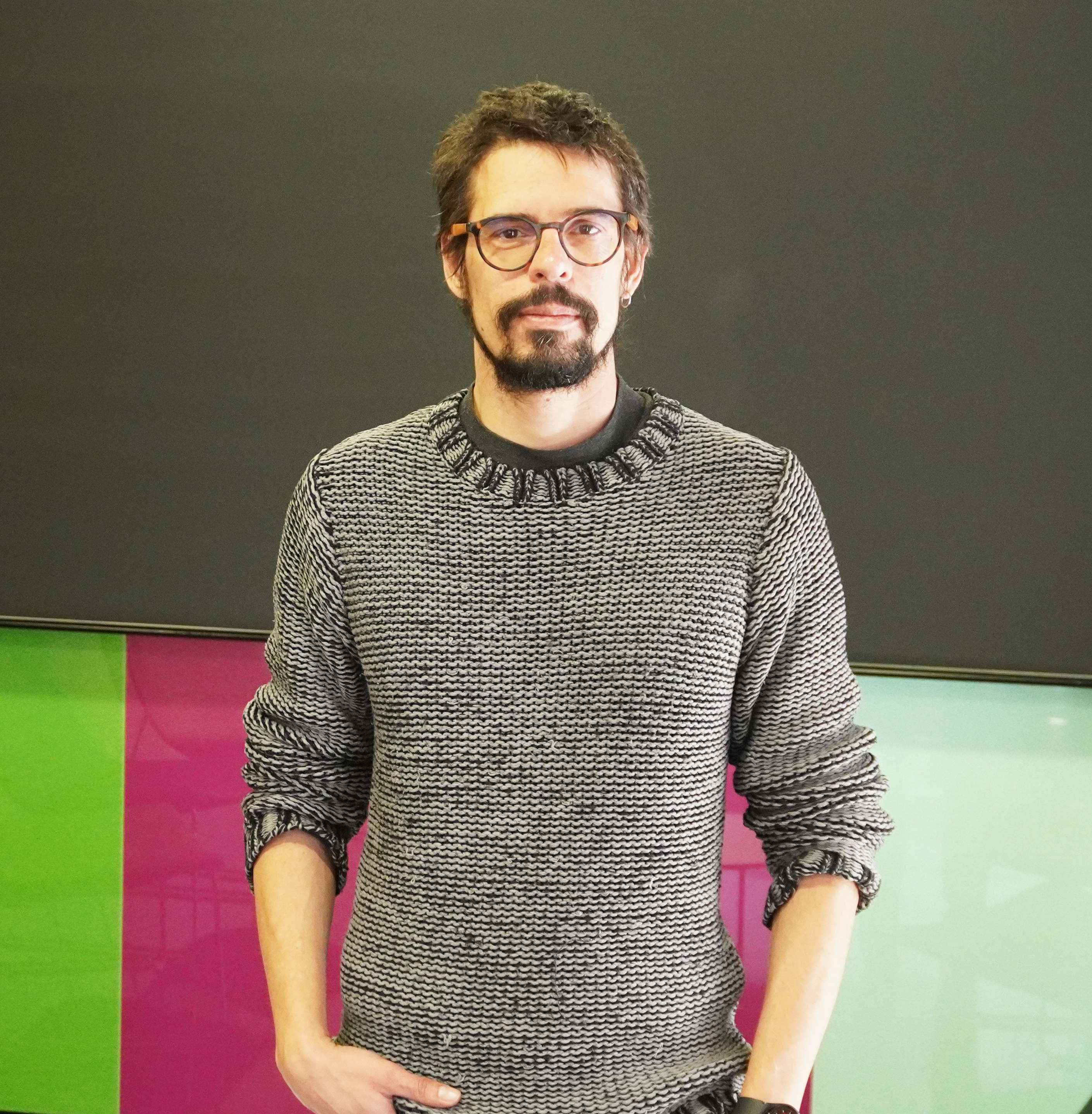
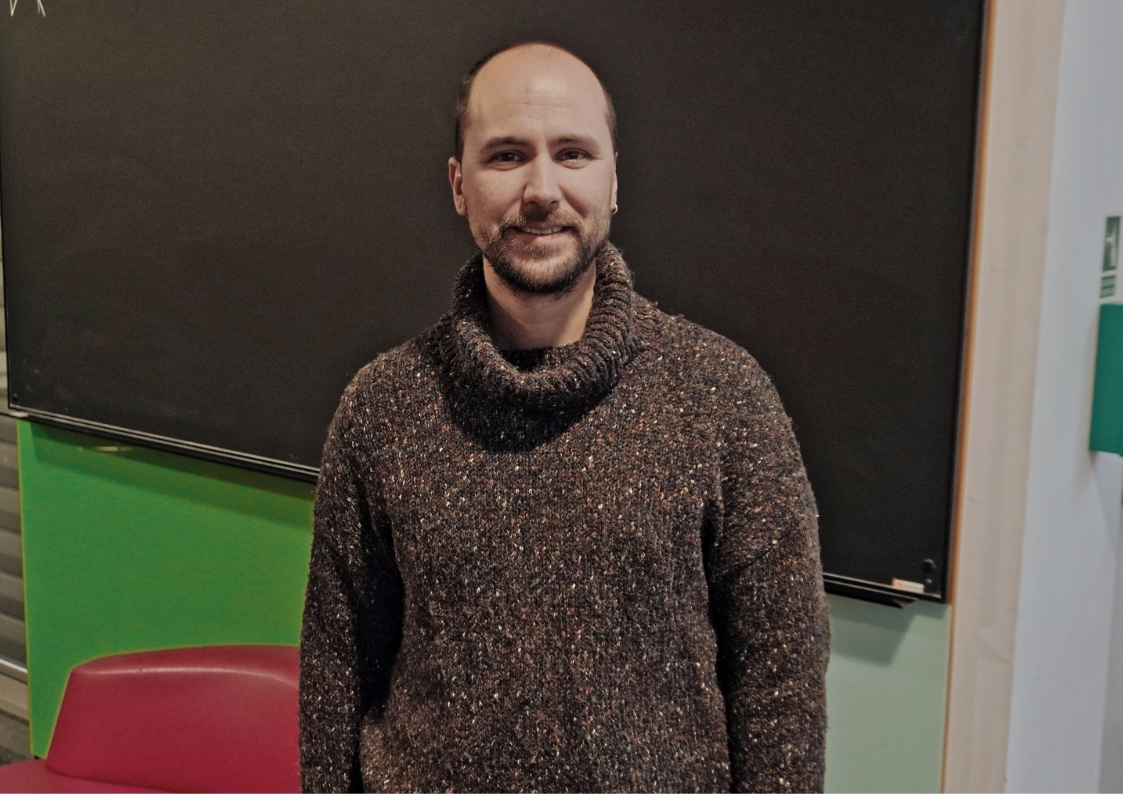
“What surprised me most was the solution insurance companies had found,” says David Moriña, a mathematician at the Universitat Autònoma de Barcelona and affiliated researcher at the Centre de Recerca Matemàtica. “They were discarding 2020 data completely. Just jumping from 2019 forward.”

The move wasn’t irrational. Premium calculations depend on predictable patterns of healthcare usage, and 2020 bore no resemblance to normal years. But it left companies navigating blind through 2021 and 2022, unsure whether post-pandemic behaviour had stabilised. Were the numbers from those years trustworthy, either? Where did the disruption begin and end?

In a paper published in Insurance: Mathematics and Economics, Moriña and his collaborators, Amanda Fernández-Fontelo, also at Universitat Autònoma de Barcelona, and Montserrat Guillén at Universitat de Barcelona, saw a different possibility. What if you could measure the pandemic’s distortion precisely enough to subtract it? The data wouldn’t need to be discarded. It could be corrected.

The work fits into a broader research line Moriña has been developing for some time: methodological proposals for evaluating interventions. “In this case, it’s in the context of health insurance,” he says, “but it’s more general than that.”


The Counterfactual Problem

The mathematical challenge was one of counterfactuals, estimating what would have happened if the pandemic had never occurred. This meant building a model that could predict healthcare usage patterns week by week, trained on pre-pandemic behaviour, then comparing those predictions against what happened.

The gap between prediction and reality quantifies the shock.

“What we expect from data is that it reflects reality in some way. Then, through our methodological proposal, we recover that reality a bit.”

The research team used Bayesian structural time series models, a framework that treats observed data as emerging from hidden states evolving. Think of it as separating signal from noise in a rigorous way. The model captures seasonal patterns, holiday effects, and underlying trends, then forecasts what the “normal” trajectory would have been.

For one of Spain’s largest private insurers, the numbers told a stark story. Median claims rates in 2020 sat 15% below 2019 levels. Then they rebounded: 11% above baseline in 2021, 8% higher in 2022. But those aggregate figures masked profound variation.

People over 60 showed the sharpest initial drop, down 22% in 2020. But unlike younger patients, their usage never recovered. By 2022, it remained 3% below pre-pandemic levels, though the effect wasn’t statistically significant. The data had photographed a grim reality: COVID-19 killed disproportionately among older adults with existing health conditions. Those who survived were, on average, healthier than the 2019 population of over-60 policyholders had been.

A mortality effect, captured as data.


One Model to Fit Many Stories

The methodology treats all healthcare services identically, applying the same mathematical framework to cardiology, oncology, general medicine, and osteopathy. Yet each speciality told a different story.

General medicine barely dipped in 2020, just 1.2% down, because COVID-19 testing ran through those clinics. By 2022, visits were 21% above baseline. Osteopathy, considered less urgent, collapsed by 26% before rebounding to 24% above pre-pandemic levels. Cardiology fell 13% and recovered to 12% above baseline. Oncology held steadier, reflecting that cancer treatments were delayed as little as possible despite hospital strain.

Geography mattered too. Madrid saw a 19% drop in 2020 but only modest increases afterwards: 2.5% above baseline in 2021, 3.2% in 2022. Barcelona and Valencia experienced smaller initial drops (both 12%) but stronger rebounds: Barcelona reached 18% above baseline in 2021, Valencia 21%.

“We propose going in a somewhat finer way, looking at specialities, different cities, different patient subgroups,” Moriña says. “But there’s also a more generic proposal for a general correction.” The choice depends on what data are available and whether the patterns vary enough to justify separate adjustments.

“You have values that allow you to correct this pandemic period in general, without looking at speciality or age or anything,” he explains. “But if you have this information available, then it’s also interesting to look at it because there can be nuances and different behaviours.”

The framework is flexible by design. One correction factor for the whole portfolio, or dozens tailored to age groups, locations, and medical services.


Making the Unusable, Usable

The practical application is straightforward. Insurance analysts typically model expected claims using a Poisson regression, where the number of claims depends on patient characteristics and exposure time (how long a policy was active during the year).

The paper’s correction works through that exposure term. If the pandemic reduced healthcare usage by 15% in 2020, you can think of policyholders as having been exposed to only 85% of a normal year’s worth of healthcare opportunities, even if their policy was active all twelve months. Adjust the exposure accordingly before running the regression, and the model estimates what claims frequency would have been absent the shock.

The team demonstrated this on cardiology data stratified by age and sex. Models fit to 2019 alone, 2020 alone, or all years without correction produced meaningfully different risk estimates. But a model incorporating the shock correction across 2019-2022 synthesised the full dataset into coherent parameters. Older adults showed 1.91 times higher cardiology claim rates than those aged 30-60, net of pandemic effects.

This matters for premium calculations. Using the corrected data, the model estimated what total cardiology costs would have been from 2019-2022 without COVID-19. Against actual costs of roughly €13 million, the counterfactual scenarios suggested the pandemic created between €150,000 and €400,000 in excess costs, depending on the correction’s granularity.

The methodology doesn’t just identify a problem. It provides a usable tool. “Usually what happens is that the methodological proposal we end up developing is applicable beyond the particular problem we wanted to address,” Moriña says. “But I think that’s not necessarily what we’re looking for. I like to start from a specific problem, find a methodology that solves that specific problem, and if it can be generalised, which usually happens, then fantastic.” In this case, generalisation was part of the goal: a method insurance companies could use to incorporate pandemic data into their calculations for risk assessment and premium pricing.


From Mental Health to Gender Violence Reporting

The work is detective work, essentially. You start with hypotheses, follow the clues in the data, and construct a narrative from what the model reveals about reality. “What we expect from data is that it reflects reality in some way,” Moriña says. “Then, through our methodological proposal, we recover that reality a bit.”

That approach defines Moriña’s research more broadly. It requires access to messy, real-world data and understanding what problems researchers are facing. “We work a lot in public health,” he explains, “so we’re interested in knowing what problems they’re finding difficult to approach with classical methodologies, whether because there’s an intervention, or an unexpected shock like the pandemic, and they need innovation or some new method to address these problems that matter to them.”

The collaboration works both ways. “What we bring to researchers, especially in the health field, is this perspective of being able to make a mathematically robust methodological proposal that adapts and allows a response to the question and the problem they’re already addressing,” he says. Researchers come with a problem they need to solve, unconvinced that traditional approaches will give them the answer they need.

“Sometimes we don’t even need to develop a new methodological proposal. With our expertise, we can suggest the best existing way to approach a problem. And when necessary, we develop something new. It’s really the engine that drives the work,” he says. “Starting from a specific problem, and from there finding the methodological proposal that allows us to address it.”

The pandemic shock method, for instance, isn’t limited to health insurance. Any time series disrupted by a sudden external event could, in principle, be corrected the same way. Different fields have different needs and interests, different questions requiring different approaches. But there’s a common thread. “For example, in the field of gender-based violence, it’s not the main focus, but there’s also an underlying line of analysing an intervention”, in that case, training for primary care professionals to help detect cases. The same thread runs through work on vaccine impact and training programs. A current project with Barcelona’s Public Health Agency evaluates the effect of training some primary care teams on paediatric vaccines, while others received no training.

“This line of evaluating interventions is ultimately where this article fits,” Moriña says. “It’s not an intervention, it’s the pandemic, but it’s something that happens and alters the behaviour of a dynamic system or a time series.” Beyond the particular case of insurance data, he sees this rigorous evaluation of interventions as essential. “I think it’s important to scrutinise public policies a bit, and the money invested in these policies, to try to ensure that the interventions being made are efficient and effective.”

Looking forward, his attention remains on public health questions with social translation. Gender-based violence, he notes, is heavily underreported, and primary care clinics could become a key detection point. Mathematical methods that account for hidden cases and assess interventions rigorously might help.

But the insurance paper, published late last year, already suggests one clear implication: that the pandemic’s effects on healthcare data haven’t fully faded. Which raises a question insurers likely haven’t stopped asking: when, exactly, does “normal” return?
about david moriña

David Moriña is associate professor (professor agregat) at the Department of Mathematics of the Universitat Autònoma de Barcelona and affiliated researcher at the Centre de Recerca Matemàtica. Previously he was lecturer at the Department of Statistics of the Universitat de Barcelona (until September 2024), and had postdoctoral stays at research centers as the Center for Research in Environmental Epidemiology and the Catalan Institute of Oncology. His research interests lie in mathematical modeling for epidemiology and public health, with particular focus on health economics. He has led research projects funded by Spanish Ministry of Science and Innovation, the Spanish Ministry of Health and private institutions.

reference

Moriña, D., Fernández-Fontelo, A., & Guillén, M. (2025). Back to normal? A method to test and correct a shock impact on healthcare usage frequency data. Insurance: Mathematics and Economics, 126, 103175. https://doi.org/10.1016/j.insmatheco.2025.103175

Subscribe for more CRM News

Stay updated to our mailing list to get the lastest information about CRM activities.

CRM Comm

Pau Varela

CRMComm@crm.cat


Axel Masó Returns to CRM as a Postdoctoral Researcher

Axel Masó Returns to CRM as a Postdoctoral Researcher

Axel Masó returns to CRM as a postdoctoral researcher after a two-year stint at the Knowledge Transfer Unit. He joins the Mathematical Biology research group and KTU to work on the Neuromunt project, an interdisciplinary initiative that studies…

read more
Barcelona + didactics + CRM = CITAD 8

Barcelona + didactics + CRM = CITAD 8

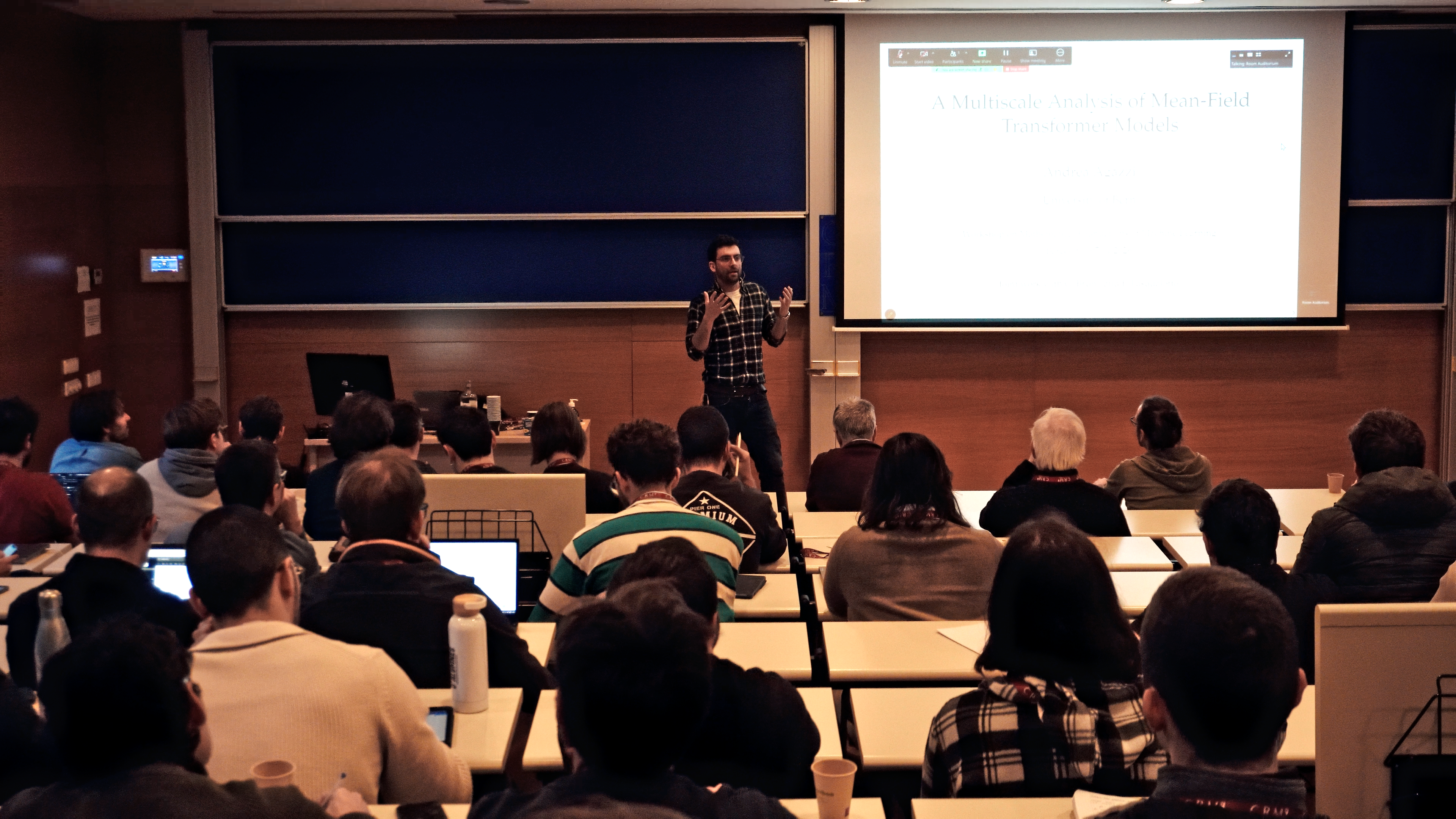
From 19 to 23 January 2026, the CRM hosted the 8th International Conference on the Anthropological Theory of the Didactic (CITAD 8), a leading international event in the field of didactics research that brought together researchers from different countries in…

read more

The post Rescuing Data from the Pandemic: A Method to Correct Healthcare Shocks first appeared on Centre de Recerca Matemàtica.

Go to Source

El virus del herpes labial puede activar alteraciones propias de la enfermedad de Alzheimer en neuronas humanas

Investigadores del Centro de Biología Molecular Severo Ochoa (CBM), centro mixto del Consejo Superior de Investigaciones Científicas y de la Universidad Autónoma de Madrid (CSIC-UAM), y del Centro de Investigación Biomédica en Red de Enfermedades Neurodegenerativas (CIBERNED), han demostrado que la infección por el virus del herpes simple tipo 1, conocido popularmente por causar el herpes labial, provoca en neuronas humanas alteraciones celulares características de la enfermedad de Alzheimer.

La enfermedad de Alzheimer es uno de los mayores retos sanitarios y sociales en la actualidad. Sus señales biológicas más conocidas son la acumulación anormal de una proteína llamada beta-amiloide y las alteraciones químicas de otra proteína imprescindible para el funcionamiento de las neuronas, llamada tau. Sin embargo, las causas que ponen en marcha estos procesos siguen sin comprenderse por completo.

En los últimos años, estudios en población humana y en tejido cerebral han sugerido que ciertas infecciones persistentes podrían influir en el desarrollo de la enfermedad. Entre los posibles implicados se encuentra el virus del herpes simple tipo 1, que infecta a la mayoría de las personas durante la infancia y permanece en el organismo de forma latente durante toda la vida, con reactivaciones periódicas. Aunque se asocia principalmente a las lesiones en los labios conocidas como “calenturas”, también puede afectar al sistema nervioso y llegar al cerebro.


Neuronas humanas cultivadas en dos y tres dimensiones

Para llevar a cabo la investigación y estudiar su impacto directo sobre las neuronas humanas, el equipo utilizó una línea de células humanas capaces de transformarse de manera rápida y uniforme en neuronas funcionales en el laboratorio. Estas neuronas se cultivaron tanto en superficies planas tradicionales (2D) como en estructuras tridimensionales (3D).

Según explica Jesús Aldudo, autor del trabajo e investigador en el CBM, “estos modelos tridimensionales permiten que las células crezcan formando agregados que imitan mejor la organización del tejido nervioso humano, reproduciendo de forma más realista las interacciones y el entorno que existen en el cerebro”.


Qué ocurre en las neuronas tras la infección

Los resultados muestran que la infección viral provoca una acumulación dentro de las neuronas de beta-amiloide, una proteína que en exceso resulta tóxica para las células nerviosas. Además, se observó un aumento significativo de modificaciones anómalas en la proteína tau, que cuando se altera, pierde su función normal y contribuye al deterioro de las neuronas.

El estudio también muestra que el virus interfiere en un sistema fundamental de limpieza celular encargado de degradar y reciclar proteínas dañadas o innecesarias. Cuando este mecanismo falla, las proteínas alteradas se acumulan, lo que puede favorecer procesos de neurodegeneración.

Un descubrimiento sumamente relevante es que estos efectos no solo se detectaron en cultivos celulares simples, sino también en los modelos tridimensionales, donde el virus fue capaz de penetrar en toda la estructura neuronal y provocar las mismas alteraciones moleculares relacionadas con el Alzheimer. Esto refuerza la solidez de los resultados y la utilidad de estos modelos para estudiar la enfermedad. Tal y como señala Maria Jesús Bullido, investigadora del CBM y también autora del estudio, “nuestros resultados muestran que un virus muy común puede activar en neuronas humanas procesos moleculares que se consideran característicos del Alzheimer. Esto refuerza la idea de que, además de los factores genéticos, ciertos factores ambientales podrían influir en la enfermedad”.


Aportaciones del estudio a la investigación del Alzheimer

Los investigadores destacan que el trabajo, publicado en la revista International Journal of Molecular Sciences, reproduce una infección aguda en condiciones de laboratorio y no refleja la evolución del virus en las personas a lo largo del tiempo. Sin embargo, este modelo proporciona una herramienta experimental muy valiosa para analizar, en condiciones controladas, cómo una infección viral frecuente puede afectar a los mecanismos celulares implicados en la enfermedad de Alzheimer y abrir nuevas vías para el diseño de estrategias de prevención o tratamiento.


Referencia

Martín-Rico M, Salgado B, Beamonte I, Sastre I, Bullido MJ, Aldudo J. Impact of HSV-1 Infection on Alzheimer’s Disease Neurodegeneration Markers: Insights from LUHMES 2D and 3D Neuronal Models. Int J Mol Sci. 2026 Jan 8;27(2):642. doi: 10.3390/ijms27020642. PMID: 41596294; PMCID: PMC12841366.


La entrada El virus del herpes labial puede activar alteraciones propias de la enfermedad de Alzheimer en neuronas humanas se publicó primero en Centro de Biología Molecular Severo Ochoa.

Go to Source

New Thermal Properties Discovered in 2D Materials Pave the Way for Future Advances in Electronics

A study published in Nature Communications, involving researchers from ICN2, reveals how heat generated by ultrafast laser light pulses can modify the electronic properties of MXenes, a class of two-dimensional (2D) materials.

Go to Source

Quants cables necessita un pensament per circular?

Go to Source

Amparo López, nueva secretaria del Comité Ejecutivo de SOMMa

El Comité Ejecutivo de la Alianza de Centros Severo Ochoa y Unidades María de Maeztu (SOMMa) nombró el pasado 21 de enero de 2026 a Amparo López como nueva secretaria del órgano.

Amparo López es directora del Instituto de Agroquímica y Tecnología de Alimentos (IATA-CSIC) y una investigadora de reconocido prestigio internacional. Con este nombramiento, el Comité Ejecutivo refuerza su estructura organizativa y de coordinación, incorporando a López a las tareas de apoyo y seguimiento de la actividad del órgano, así como a la gestión de sus acuerdos y procesos internos.

Trayectoria de Amparo López

Amparo López es una investigadora de gran prestigio y directora del IATA, perteneciente al Consejo Superior de Investigaciones Científicas (CSIC). Su carrera destaca por la excelencia académica, la innovación y la transferencia tecnológica. Es doctora en Ciencia y Tecnología de Alimentos por la Universidad Politécnica de Valencia (UPV), donde recibió el Premio Extraordinario de Tesis Doctoral.

Ha realizado estancias pre- y postdoctorales en instituciones de renombre internacional como KTH (Suecia), ANSTO (Australia), Hasylab (Alemania) y ANL (EE. UU.), donde profundizó en técnicas avanzadas de caracterización de materiales. Actualmente, lidera líneas pioneras de investigación en nanotecnología, estructura de alimentos y materiales sostenibles para envasado alimentario.

Con más de 200 publicaciones científicas en revistas de alto impacto (90 % en Q1 y 60 % en D1 entre 2019 y 2023), más de 10.000 citas, nueve patentes (tres en explotación) y la cofundación de dos empresas de base tecnológica (Aerofybers Technologies S.L. y Biodriven Technologies S.L.), Amparo ha contribuido significativamente a conectar la ciencia con la industria.

Desde SOMMa damos una calurosa enhorabuena a Amparo López por su nombramiento como secretaria del Comité Ejecutivo. Estamos convencidos de que su experiencia y liderazgo contribuirán a fortalecer los objetivos de la alianza, y continuará además su labor como delegada del Working Group de Transferencia del Conocimiento e Innovación (KTI).

“It’s just a photo”: Evaluation and psychosocial impact of myths about cyber-sexual violence

ciberviolencia sexual contra las mujeres.
Personal investigador del Centro de Investigación Mente, Cerebro y Comportamiento (CIMCYC) de la Universidad de Granada ha llevado a cabo un estudio centrado en el análisis de los mitos sobre la ciberviolencia sexual contra las mujeres y su impacto a nivel psicosocial. La investigación fue realizada por Rocío Vizcaíno-Cuenca, Mónica Romero-Sánchez y Hugo Carretero-Dios, integrantes del laboratorio de Sexismo, Mitos y Violencia de Género (SEMIVIO lab), y se enmarca en el trabajo desarrollado en el ámbito de la ciberviolencia sexual contra las mujeres.
Seguir leyendo

Go to Source

Sidebar