The largest liquid-argon neutrino detector in the world has just recorded its first particle tracks, signaling the start of a new chapter in the story of the international Deep Underground Neutrino Experiment (DUNE).

Author Archive
The First Telescope on a Cherenkov Telescope Array Site Makes its Debut
On Wednesday, 10 October 2018, more than 200 guests from around the world gathered on the northern array site of the Cherenkov Telescope Array (CTA) to celebrate the inauguration of the first prototype Large-Sized Telescope (LST).
First light for the PAU camera, designed to study the dark energy in the Universe.
The camera for the PAU (Physics of the Accelerating Universe) project has been successfully installed on the William Herschel telescope at the Roque de los Muchachos Observatory on the island of La Palma during the day of June 3rd, has seen its first light that same night and has finished its commissioning today.
Breakthrough Prize for Fundamental Physics for the T2K collaboration and other neutrino experiments
The T2K collaboration has been awarded the prestigious Breakthrough Prize for Fundamental Physics, for their role in the discovery and study of neutrino oscillation.
Very high-energy gamma rays from the Universe’s middle age: the first detection of the distant galaxy PKS 1441+25
In a paper to be published in the Astrophysical Journal Letters, an international team of researchers reports the first detection of very high-energy gamma-ray emission from thedistant active galaxy PKS 1441+25. The discovery was made by the MAGIC telescopes
Euclid dark Universe mission ready to take shape
Euclid, ESA’s dark Universe mission, has passed its preliminary design review. IFAE participates in the NISP Filter Wheel Assembly, in simulation and science performance studies.
The PAU camera is now fully commissioned and ready to be offered as a visitor instrument
The PAU Camera saw first light in June 2015 and has successfully completed two observation periods in November 2015 and April 2016, starting its Science Survey programme.
ML
ML
adminacc
Fri, 11/12/2021 – 10:38
In the machine learning research line we deal with data problems coming from different scenarios: industry, biosciences, health, economy, etc. We pursue the developments of new machine learning algorithms that can efficiently tackle these problems. Particularly, we consider problems that account for a variety of data types: from time series, to steaming data or images and speech, and a wide range of modelization techniques and mathematical formalisms such as: probabilistic graphical models, Bayesian approaches, deep learning, etc.
Our goal is to develop novel and efficient machine learning algorithms able to deal with new data-related practical problems. We also pursue the mathematical modeling of these algorithms in order to provide theoretical guarantees of their performance.
Machine Learning DS 003
The research carried out in the machine learning line is inspired in problems that appear in other scientific, technological or economical disciplines. We develop new machine learning methods and algorithms related with the main data analysis activities such as clustering, supervised classification, feature subset selection, etc. to solve this kind of problems. Based on the specific characteristics of the problem at hand, we design tailored but general algorithms that extract as much information as possible from the available data providing efficient machine learning models that solve the problem.
In addition to that, we also develop mathematical tools able to model the behavior and performance of the algorithms: studying their convergence, the estimation of the performance, the behavior of the algorithms in terms of computational time and memory requirements, etc.
During the last years the machine learning line has worked with different machine learning problems and algorithms. Particularly, we can emphasize the work done in the area of time series mining and data streaming, the adaptation of classical clustering algorithms such as k-means or k-medoids to massive data environments, the probabilistic modeling of permutations and ranked data or the developments in anomaly detection, and the analysis of crowd learning environments.
In terms of formalisms, we strongly rely on probabilistic modeling, using different tools and techniques such as probabilistic graphical models and Gaussian process to name, which in most cases are learned under a Bayesian perspective. We also pursue the use of deep learning when we consider it the most appropriate technique for the problem at hand.
Second node
Second node
Anonymous
Mon, 09/04/2023 – 13:00
Have another try. This text can be translated as well.
First node
First node
Anonymous
Mon, 09/04/2023 – 13:00
This text can be translated with TMGMT. Use the “translate” Tab and choose “Request Translation” to get started.
TMGMT Demo
TMGMT Demo
Anonymous
Mon, 09/04/2023 – 13:00
Welcome to the Translation Management Tool Demo module!
The Translation Management Tool (TMGMT) demo module provides the configuration needed for translating predefined content types – translatable nodes.
It enables three languages. Besides English, it supports German and French.
Content translation is enabled by default. This allows users to translate the content on their own. Also, Export / Import File translator enables exporting source data into a file and import the translated in return.
- To get started with the translation, two translatable nodes are created. The steps for translation are the following:
- On the node detail view use the “translate” Tab, choose a language and click “Request Translation” to get started.
- After submitting the job, the status is changed to “In progress”. In case of a machine translator, the translation is immediately returned. The status is then “Needs review”.
- “In progress” is the state where we are awaiting the translations from the translator.
- Once the translations are provided by the translator, we can review the job items (and correct) the translated content. Some translators support feedback cycles. We can send an item that needs a better translation back to the translator with some comments. If the translation is fine, we can accept the job items (or the job). This is when the source items are updated/the translation is created.
- The job is finally in the state of being published
- In the TMGMT demo module the File translator is enabled by default. It allows users to export and import texts via xliff and HTML. The workflow is the following:
- Submit a job to the File translator. The job is in “active” state.
- Export it as HTML/XLIFF format.
- Translate the content by editing the XLIFF files in plaintext or with a proper CAT tool.
- Import it back on the site.
- Review the job items/data items. XLIFF does not support a feedback loop or commenting an item. Improvements/fixings can only be done by the reviewer (or by reimporting the improved XLIFF).
- Press save as completed to accept the translation and finish the process.
- In the TMGMT demo module the Drupal user provider is also enabled by default. It allows to assign translation tasks to the users of the site that have the abilities to translate it (The demo adds all the abilities to all the users). The workflow is the following:
- Submit a job to the Drupal user provider and select translator for the job. The job is in “active” state.
- The user will translate the task. Also the task items can be reviewed.
- When the translation is done, the user will set the task as completed.
- Review the job items. This translator does not support a feedback loop or commenting an item. Improvements/fixings can only be done by the reviewer.
- Press save as completed to accept the translation and finish the process.
TMGMT demo also supports translation of paragraphs. To do this, you first need to enable paragraphs_demo and tmgmt_demo after that.
- External translation services can be used for creating a foreign language version of the source text. These are the recommended translators:
CAS
CAS
adminacc
Fri, 11/12/2021 – 10:34
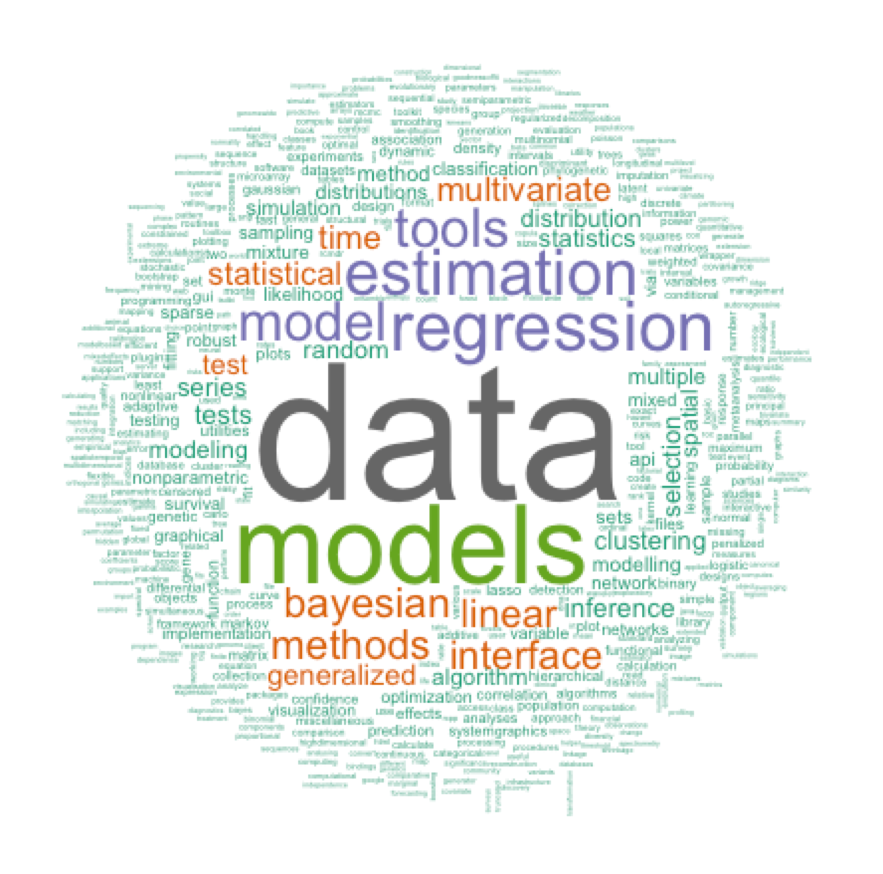
The aim of the research in Applied Statistics is to consolidate BCAM as a reference in areas such as biostatistics, demography, environmental modeling, medical statistics, epidemiology, business analytics, and biomedical research applications involving data-driven mathematical and statistical tools. We aim to capture opportunities and challenges empowering collaboration with other research areas and groups (other BERC centers, business collaborators, Public Health institutions, government organizations, and Universities) in accessing, managing, integrating, analyzing and modeling datasets of diverse nature and complexity.
The aim of the research line in Applied Statistics is to create innovative statistical models, inference methods, computational algorithms and visualization tools for analyzing complex data sets from different and diverse sources.
Computational and Applied Statistics DS 002The Applied Statistics Research line at BCAM will contribute to create synergies between researchers from national and international institutions from different fields that require the use of statistical techniques for data modeling.
Our research is related to semi-parametric regression, multidimensional smoothing, (Bayesian) hierarchical models, random-effects models, longitudinal data, spatial and spatio-temporal modeling, functional data analysis, computational statistics, and data visualization tools and methods.
In particular, in the biomedical area, “Biostatistics” uses data to measure, understand and ultimately solve medical problems, by the use of statistical models and theory. Biostatistics is an exciting and versatile discipline contributing to all fields of medical research, evidence-based health care and decision-making. The increasing need of biostatistical support for the Basque Public Health Institutions, demands researchers in Biostatistics that not only support other researchers in biomedical and related sciences through statistical analyses and scientific support, but specially to contribute to high-impact research, excellence, innovation and training in statistical modeling.
The research line contributes with the Spanish National Network of Biostatistics (BIOSTATNET), a pioneer network led by applied statisticians from different institutions with own research projects and teaching experience in Biostatistics, working closely with biomedical researchers. We also actively collaborate with the Biostatistics group at University of the Basque Country (UPV/EHU) and other national and international institutions in order to address issues of mathematical and statistical theory and methodology to improve decision-making process. We aim to highlight and increase the role of Statistics and foster collaboration with our partners and promote professional development and training in the area of Applied Statistics.
The statistical modeling methodology developed by the group deals with those aspects of the analysis of data that are not highly specific to particular fields of study. Therefore, our research provides concepts and methods that will, with suitable modification, be applicable in many fields (e.g. Economics, Business, Engineering, Demography etc.) which demand a wide variety of data modeling and computational tools for the analysis of complex problems, particularly where a huge amount of data is collected.
npROCRegression: Kernel-Based Nonparametric ROC Regression Modelling
Implements several nonparametric regression approaches for the inclusion of covariate information on the receiver operating characteristic (ROC) framework.
Download from:
https://CRAN.R-project.org/package=npROCRegression
PROreg: Patient Reported Outcomes Regression Analysis
Offers a variety of tools, such as specific plots and regression model approaches, for analyzing different patient reported questionnaires. Especially, mixed-effects models based on the beta-binomial distribution are implemented to deal with binomial data with over-dispersion (see Najera-Zuloaga J., Lee D.-J. and Arostegui I. (2017).
Download from:
https://cran.r-project.org/package=PROreg
SpATS: Spatial Analysis of Field Trials with Splines
Allows for the use of two-dimensional (2D) penalised splines (P-splines) in the context of agricultural field trials. Traditionally, the modelling of the spatial or environmental effect in the expression of phenotypes has been done assuming correlated random noise (Gilmour et al, 1997). We, however, propose to model the spatial variation explicitly using 2D P-splines (Rodriguez-Alvarez et al., 2016; arXiv:1607.08255). Besides the existence of fast and stable algorithms for estimation (Rodriguez-Alvarez et al., 2015; Lee et al., 2013), the direct and nice interpretation of the spatial trend that this approach provides makes it attractive for the analysis of field experiments.
Download from: