First node
Anonymous
Mon, 09/04/2023 – 13:00
This text can be translated with TMGMT. Use the “translate” Tab and choose “Request Translation” to get started.

This text can be translated with TMGMT. Use the “translate” Tab and choose “Request Translation” to get started.
Welcome to the Translation Management Tool Demo module!
The Translation Management Tool (TMGMT) demo module provides the configuration needed for translating predefined content types – translatable nodes.
It enables three languages. Besides English, it supports German and French.
Content translation is enabled by default. This allows users to translate the content on their own. Also, Export / Import File translator enables exporting source data into a file and import the translated in return.
TMGMT demo also supports translation of paragraphs. To do this, you first need to enable paragraphs_demo and tmgmt_demo after that.
The aim of the research in Applied Statistics is to consolidate BCAM as a reference in areas such as biostatistics, demography, environmental modeling, medical statistics, epidemiology, business analytics, and biomedical research applications involving data-driven mathematical and statistical tools. We aim to capture opportunities and challenges empowering collaboration with other research areas and groups (other BERC centers, business collaborators, Public Health institutions, government organizations, and Universities) in accessing, managing, integrating, analyzing and modeling datasets of diverse nature and complexity.
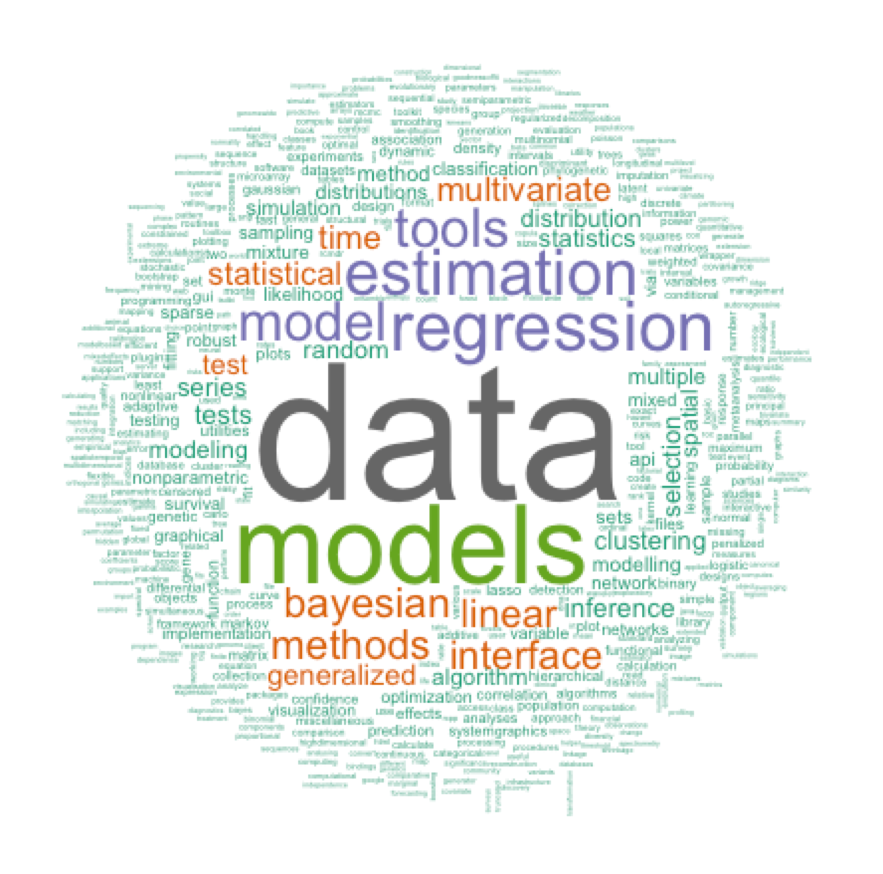
The aim of the research line in Applied Statistics is to create innovative statistical models, inference methods, computational algorithms and visualization tools for analyzing complex data sets from different and diverse sources.
Computational and Applied Statistics DS 002The Applied Statistics Research line at BCAM will contribute to create synergies between researchers from national and international institutions from different fields that require the use of statistical techniques for data modeling.
Our research is related to semi-parametric regression, multidimensional smoothing, (Bayesian) hierarchical models, random-effects models, longitudinal data, spatial and spatio-temporal modeling, functional data analysis, computational statistics, and data visualization tools and methods.
In particular, in the biomedical area, “Biostatistics” uses data to measure, understand and ultimately solve medical problems, by the use of statistical models and theory. Biostatistics is an exciting and versatile discipline contributing to all fields of medical research, evidence-based health care and decision-making. The increasing need of biostatistical support for the Basque Public Health Institutions, demands researchers in Biostatistics that not only support other researchers in biomedical and related sciences through statistical analyses and scientific support, but specially to contribute to high-impact research, excellence, innovation and training in statistical modeling.
The research line contributes with the Spanish National Network of Biostatistics (BIOSTATNET), a pioneer network led by applied statisticians from different institutions with own research projects and teaching experience in Biostatistics, working closely with biomedical researchers. We also actively collaborate with the Biostatistics group at University of the Basque Country (UPV/EHU) and other national and international institutions in order to address issues of mathematical and statistical theory and methodology to improve decision-making process. We aim to highlight and increase the role of Statistics and foster collaboration with our partners and promote professional development and training in the area of Applied Statistics.
The statistical modeling methodology developed by the group deals with those aspects of the analysis of data that are not highly specific to particular fields of study. Therefore, our research provides concepts and methods that will, with suitable modification, be applicable in many fields (e.g. Economics, Business, Engineering, Demography etc.) which demand a wide variety of data modeling and computational tools for the analysis of complex problems, particularly where a huge amount of data is collected.
Implements several nonparametric regression approaches for the inclusion of covariate information on the receiver operating characteristic (ROC) framework.
Download from:
https://CRAN.R-project.org/package=npROCRegression
Offers a variety of tools, such as specific plots and regression model approaches, for analyzing different patient reported questionnaires. Especially, mixed-effects models based on the beta-binomial distribution are implemented to deal with binomial data with over-dispersion (see Najera-Zuloaga J., Lee D.-J. and Arostegui I. (2017).
Download from:
https://cran.r-project.org/package=PROreg
Allows for the use of two-dimensional (2D) penalised splines (P-splines) in the context of agricultural field trials. Traditionally, the modelling of the spatial or environmental effect in the expression of phenotypes has been done assuming correlated random noise (Gilmour et al, 1997). We, however, propose to model the spatial variation explicitly using 2D P-splines (Rodriguez-Alvarez et al., 2016; arXiv:1607.08255). Besides the existence of fast and stable algorithms for estimation (Rodriguez-Alvarez et al., 2015; Lee et al., 2013), the direct and nice interpretation of the spatial trend that this approach provides makes it attractive for the analysis of field experiments.
Download from:
Modern harmonic analysis is a very active field of research which has reached a state of maturity that places itself in a central position within the mathematical sciences. Although the origin of harmonic analysis goes back to the study of the heat equation (through Fourier theory), harmonic analysis today has many interconnections with many areas of mathematics like PDEs, operator theory or complex analysis. Often, harmonic analysis plays an important role when the scenarios are not very friendly as those where there is a lack of smoothness. Some of these problems lead, for instance, to obtain the boundedness of certain singular integral operators in various spaces or the study of variants of Poincaré-Sobolev inequalities in rough contexts.
The main goal in inverse problems is to model some remote sensing strategies, non-destructive testing, or medical imaging techniques, to contribute in their developments, and propose possible improvements. Roughly speaking, one wants to determine the physical properties of a medium by non-invasive measurements. In mathematical terms the aim is to determine the coefficients of the equations describing a specific phenomenon, given some admissible knowledge of their solutions. Typically, the coefficients represent the medium and the information of the solutions is only accessible through non-invasive measurements.
This research line consists of two teams working on the field of harmonic analysis and the resolution of inverse problems arising in partial differential equations (PDEs).
Harmonic Analysis APDE 002We consider different aspects of the so called Calderón-Zygmund theory. We study qualitative and quantitative properties of some of the most central operators in harmonic analysis such as singular integrals, commutators of these operators, square or maximal functions. In particular, we study the special relationship between the operator norm of these operators and the growth of the A_p constants or their variants in different natural spaces involving weights. We consider connection with extrapolation theory, reverse Hölder and other properties of the Muckenhoupt A_p class of weights. Applications in connection with the theory of degenerate Poincaré-Sobolev inequalities related to the regularity theory of (degenerate) elliptic PDE play a central role. The ambient of study is the Euclidean case, but also other settings like metric spaces or locally compact groups are considered. We mainly focus in the most classical linear theory where we address some striking questions and open problems but we also consider multilinear aspects of the theory due to the potential applications to PDEs.
In a different direction we also tackle several aspects related to elliptic and parabolic equations of local and nonlocal nature, from an analytic point of view. In such a way, we study trace Hardy and Hardy-type inequalities, their relation to solutions of the extension problem and the connection with eigenfunctions of Laplace-Beltrami operators. These investigations are accomplished in the Euclidean case and in more abstract settings like the Heisenberg group.
Issues related to discrete harmonic analysis and its applications to discrete PDEs are also developed, in particular the study of the connection between the discrete and continuum settings.
We mainly study inverse scattering problems and inverse boundary value problems. The basic difference between these problems consists of the nature of the available data. In the inverse scattering theory the data is a measure of how an inhomogeneous medium scatters certain incoming waves or particles. In the case of inverse boundary value problems the data is a measure of the boundary values of the corresponding solutions. One of the main theoretical question on inverse problems is to state the assumptions that make it possible to determine the coefficients from the available data. These assumptions usually refer to the nature of the coefficients (scalar, vector or tensor functions) and their regularity (continuity, differentiability, integrability). Our goal is to apply and develop a set of tools and techniques that allows to solve inverse problems under weak assumptions on the coefficients.
Current research is concerned with the analytical study of physically motivated systems of partial differential equations. So far it has concentrated on several major directions:
The Applied Analysis line focuses on physically motivated models, aiming to provide new understanding and insight into the predictions of central physical models, by using rigorous analysis techniques, complemented as needed by numerical simulations.
Applied Analysis APDE 003
The Q-tensor theory and the Smoluchowski-Doi models are relatively new theories, from both a physical and a mathematical point of view. They were proposed in the 70s (the Q-tensor theory), respectively in the 80s (the Smoluchowski-Doi models). They are very popular in the physics community, and in particular Pierre Gilles de Gennes, who proposed the Q-tensor theory got awarded a Nobel Prizes in Physics in 1991 for his work on liquid crystals. Nevertheless they have relatively little mathematical history behind them, most mathematical progress being done in the last decade. On the other hand the nonlinear Schroedinger equation is a firmly established theory with a rich and solid mathematical and physical history.
An equally rich and profound research theme concerns analytical questions related to classical Newtonian fluids. The research so far in this direction has been concerned with wave aspects of ideal flows, respectively computationally relevant analytical questions.
A recent interest is in the Mathematical Design of New Materials theme, which has been the focus of an event co-organised and attended by members of the group at the Isaac Newton Institute, in Cambridge, United Kingdom ( see https://www.newton.ac.uk/event/dnm ).
Another recent interest concerns the applications of machine learning techniques, in particular neural networks to the simulation of solutions of partial differential equations.
Former members of the Applied Analysis team include:
Giacomo Canevari (2017-2019)-currently at University of Verona, Italy.
Arnab Roy (2021-2022)-currently at Technical University of Darmstadt, Germany.
Panayotis Smyrnelis (2019-2022)-currently at University of Athens, Greece.
Stefano Scrobogna (2017-2019)-currently at University of Trieste, Italy.
Jamie Taylor (2018-2022)-currently at CUNEF University, Spain.
 with defect patterns in nematic liquid crystal sample.png)
An experiment of Oleg D. Lavrentovich (Kent State University) with defect patterns in nematic liquid crystal sample
Singularities arise naturally in a huge number of different areas of mathematics and science. As a consequence Singularity Theory lies at the crossroads of the paths connecting applications of mathematics with its most abstract parts. For example, it connects the investigation of optical caustics with simple Lie algebras and regular polyhedra theory, while also relating hyperbolic PDE wavefronts to knot theory and the theory of the shape of solids to commutative algebra.
The main goal in most problems of singularity theory is to understand the dependence of some objects of analysis and geometry, or physics, or from some other science on parameters. For generic points in the parameter space their exact values influence only the quantitative aspects of the phenomena, their qualitative, topological features remaining stable under small changes of parameter values.
However, for certain exceptional values of the parameters these qualitative features may suddenly change under a small variation of the parameter. This change is called a perestroika, bifurcation or catastrophe in different branches of the sciences. A typical example is that of Morse surgery, describing the perestroika of the level variety of a function as the function crosses through a critical value. (This has an important complex counterpart – the Picard-Lefschetz theory concerning the branching of integrals.) Other familiar examples include caustics and outlines or profiles of surfaces obtained from viewing or projecting from a point, or in a given direction.
Algebraic geometry classically studies solutions of systems of polynomial equations in several variables multivariate polynomials. It is even more important to understand the intrinsic and geometric properties of the totality of solutions of a system of equations, than to find a specific solution.
It is is based on the use and the combinations of abstract algebraic techniques, mainly from commutative algebra, and analytic techniques, mainly from complex variables theory and complex differential geometry. Recently deep interactions with gauge theory are also at the core of current research.
The fundamental objects of study in algebraic geometry are algebraic varieties. Basic questions involve the study of geometry and topology, both globally and locally near the points of special interest like the singular points, the inflection points…
Algebraic geometry has deep connections with other parts of pure mathematics, like topology, number theory or differential geometry. Despite being a part of pure mathematics it has found important applications in criptography, coding theory and physics (it is at the core of string theory, for example).
Our research: We focus mainly in Singularities appearing in Algebraic Geometry developing the theoretical core of Singularity Theory and its interactions and applications to Complex and Algebraic Geometry, Differential/symplectic/Contact Topology, and Hodge Theory.

Milnor fibration for the cuspidal surve singularity.
The author of the video is Miguel Marco Buzunariz
Develop new methods in Singularity Theory designed in order to approach the solution of several classical conjectures that have resisted current methods in singularity theory, and explore new interactions of singularities with the latest developments in nearby areas.
Singularity Theory and Algebraic Geometry MP 003Siingularity theory has exchanged methods with Hodge theory, D-modules, and perverse sheaves, algebraic and geometric topology or algebra. Important classical questions remain unresolved and resist current methods. New trends and techniques in singularity theory have been incorporated recently. Part of them arose from new major developments in geometry in the last years, that are bringing new methods, ideas and questions, and ultimately reshaping singularity theory: non-arquimedean methods, symplectic topology, gauge theories, the Minimal Model Program, mirror symmetry and new developments around the decomposition theorem are important examples. But also the study of singularities from the Lipschitz geometry view point (a development that is taking place mainly within singularity theory) is one of the most flourishing trends, which probably will transcend the borders of the singularity theory and influence other areas in the future.
The topics described above indicate our sources of inspiration when we approach research, but obviously we do not pursue actively such a width of topics. At the present moment, together with several sets of cooperators, we are carrying active projects and thinking in the following lines (some of them are reflected by our preprints in the arXiv):

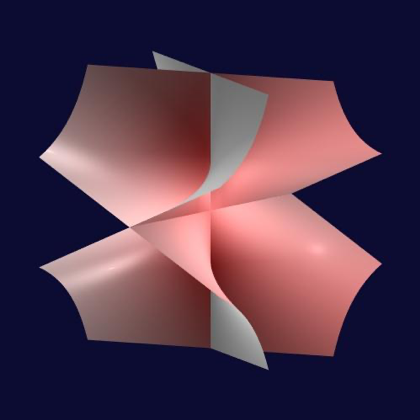
x³+y²z³+yz⁴=0 x²-y²z²=0
Figures above are some Algebraic Surface examples
The author of the images is Herwing Hauser
Since the advent of modern Single Particle Tracking (SPT) techniques, a large amount of data with great temporal and spatial accuracy has been produced. The emergence of anomalous diffusion has been confirmed by SPT statistics in many biological systems, with sub-diffusive behavior often associated to crowding, confinement phenomena, and strong heterogeneity of the environment. Recent experiments on molecular diffusion within the cell environment permit to distinguish the anomalous behavior caused by active mechanisms, from the one caused by crowding and confinement in the same system. The research of the group aims to develop novel approaches to generate anomalous diffusive behavior by considering the role of heterogeneity.
News frequently report devastations caused by wildfires and at any time they are labelled as the greater since ever. Climate change has an important role in increasing the frequency of record-breaking fire seasons and, in this sense, there is no need to prove the emergencies generated by wildfires and then their timely understanding and managing. Fire may be an essential element of the ecosystem, or an unnatural element to be avoided. In any case, there is no “blame game” to be played because fire is part of the Earth system, and human dimensions of fire regimes are embedded in complex ecological, economic, political, technological and social relationships. Hence, the comprehension of fire requires to consider it a step in the long-term joint-evolution of the humankind and nature, and do not restrict its study to the description of the present conditions. Finally, the importance of fire in nature and the impacts of our decisions on the related issues call for an overcoming of disciplinary and conceptual boundaries that impede our understanding of the complexities of human-fire relationships. The research of the group aims to introduce proper modelling of random phenomena in the propagation of wildfires, as those due to turbulence or fire-spotting, that are implementable in operational wildfire simulators.
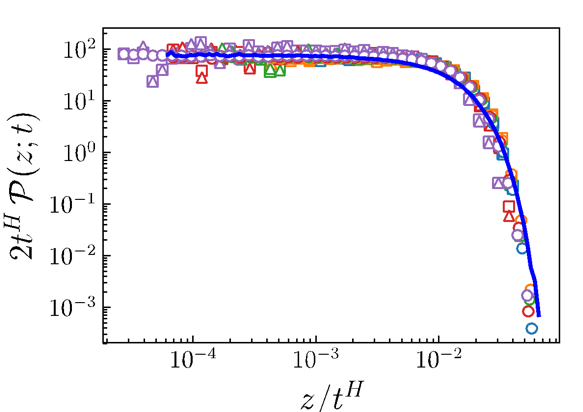
Equivalence in distribution of three Centre-of-mass like models for fractional diffusion [from D’Ovidio M., Vitali S., Sposini V., Sliusarenko O., Paradisi P., Castellani G., Pagnini G., Fract. Calc. Appl. Anal. 21, 1420–1435 (2018)]
Prueba de texto para las líneas de investigación con enlace
The research of the group falls into the topic of diffusion mainly through the development of stochastic processes in the framework of Fractional Calculus with application to anomalous diffusion and wildfire propagation.
Statistical Physics MP 002
Research on anomalous/fractional diffusion is focused on a critical analysis of the generative mechanisms and the development of the corresponding stochastic processes. For example, power-laws mark distributions that do not belong to the domain of attraction of the Gauss law but to the general domain of the stable law or, alternatively, they reveal a compound probability distribution of Gaussian densities with power-law mixing distribution. These two statistical understandings reflect indeed a dualism in the generative mechanism. During the years, an approach for heterogeneous ensembles of particles – and based on the Langevin equation – was formulated to generate fractional diffusion.
Research on random front propagation is focused on modelling wildfire propagation in particular is focused on the role and the physical parametrization of turbulence and fire-spotting. A ready-to-use software code was developed which is implementable into operational simulators.
The MCEN research group develops innovative research at the interface between Mathematical, Computational and Experimental Neuroscience. This involves developing novel theoretical and algorithmic tools, multiscale parsimonious models (biophysical and data-driven), neuroscientific experiments and data analytical tools to extract of invariant patterns from experimental and clinical observations.
The research goals are threefold: 1. To mathematically explain neurophysiological mechanisms that underlie the electro-chemical activity observed in experimental and clinical studies. This includes studying the neural code and explaining pathological electro-chemical brains states. 2. To develop novel drugs via state-of-the-art Artificial Intelligence methods in closed-loop with experiments (e.g. mini-brains) to treat neuro-degenerative diseases. 3. To develop novel tools based on mathematical control theory to track stability boundaries and unstable states directly from noisy data measured in closed-loop experiments. This will lead for example to alternative clinical therapies (via intelligent deep-brain stimulators) to treat epileptic patients that are not responsive to anti-epileptic drugs. Moreover, such technology will enable the development of machine-brain interfaces that are capable of efficiently communicating with the neural tissue. The hope is that some of these technologies will be commercially exploited by targeting specific industries.
Explain how the brain processes and stores information, how these are disrupted under pathological conditions and develop novel technologies to treat neurodegenerative diseases.
Mathematical, Computational and Experimental Neuroscience M3A 003
Multiscale Mathematical Modelling:
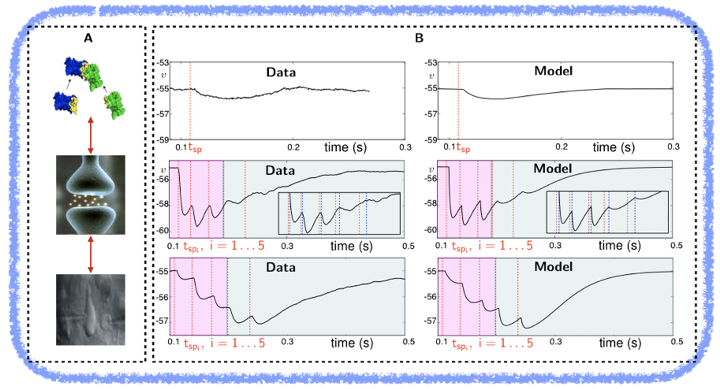
Example 1: Multiscale synaptic model that bridges the gap between protein-protein interaction (the SNARE-SM complex) and neuronal electrical activity measured by dual-whole cell recordings. The model explains how synaptic molecular machinery finely tunes the timing of neurotransmitter release via different modes (synchronous, delayed and spontaneous) and short-term plasticity (as experimentally characterized by 2013 Nobel Prize winner Prof. Thomas Südhof).
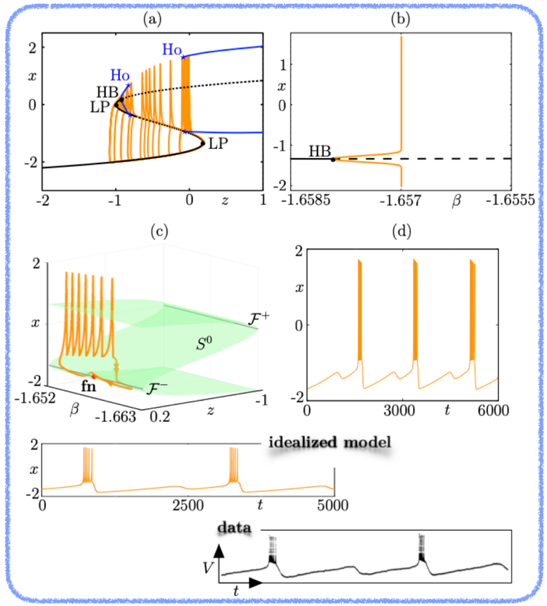
Example 2: A new theoretical framework for modelling complex multi-scale neuronal oscillations, with both non-trivial slow and fast components. This approach extends previous bursting oscillations classification schemes. This framework canonically explains complex electrophysiological data that escaped previous state-of-the-art bursting oscillations classification schemes. An example of such data is shown at the bottom panel (extracted from Roy et al., J. Neuro Physiol., 1984).
Drug Discovery for Neurodegenerative Diseases:
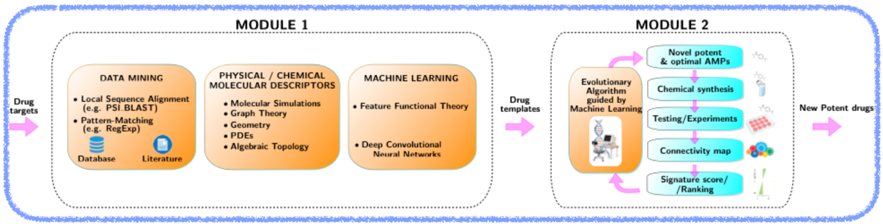
We are currently developing a new closed-loop computational-experimental pipeline for drug discovery for neurodegenerative diseases (in particular Alzheimer’s disease). This platform will involve the use of several state-of-the-art machine-learning techniques, which will result in an improved protocol to design new drugs.
Data-driven computational methods:
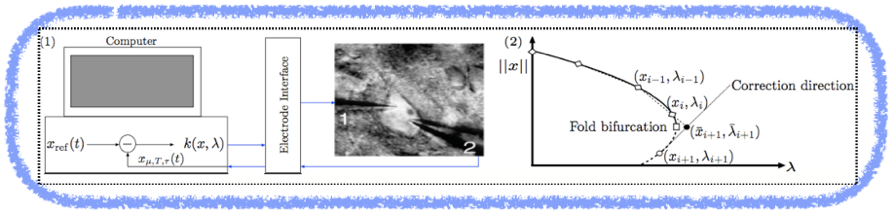
Example 1: We are developing a novel theoretical framework (CBCE method) that combines three well established theories, namely: Bifurcation Theory for dynamical systems, Pseudo-Arclength Numerical Continuation methods for tracking stability boundaries and Feedback Control Theory. These combined theories enable the implementation of a robust method that allows for direct tracking of nonlinear oscillations and stability boundaries directly from noisy experimental data (i.e. model-free) measured in closed-loop experiments such as dynamic-clamp. This has the potential to track stability boundaries between normal and pathological brain states (e.g. Epilepsy).
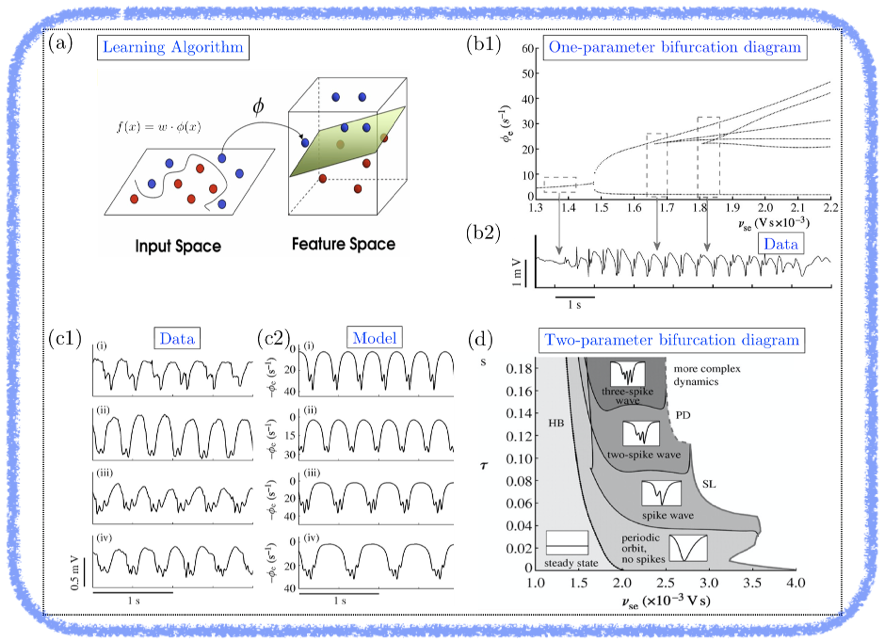
Example 2: Machine Learning (ML) has been successfully applied towards numerous applications, from engineering to biomedical data. Specifically, in ML with application to biomedical data, a typical problem is that of identifying classifiers amongst large data sets, for example, distinguishing from epileptic data, which patients are treatable by anti-epileptic drugs (AED) and those insensitive to AED. Techniques such as kernel methods and support vector machines lift (via an operator φ) the data to a higher dimensional space (i.e. feature space), where therein classification is made possible (see panel (a)). However, these techniques are unable to extract dynamical modes since they assume a static structure (i.e. atemporal) in the data (parameterised by fixed parameter ω). Therefore, typical ML methods have difficulty in dealing with data emerging from multi-scale spatio-temporal systems where complex oscillations vary across different epochs of data, e.g. observed in 3Hz EEG (poly)spike-wave data in absence seizure (see panel (b2)). To circumvent this we are interested in investigating the idea of endowing ML with knowledge about multi-scale models. To illustrate the point, we have developed a mean-field model that replicates 3Hz EEG (poly)spike-wave data (see panel (c1-c2)) and successfully relates changes in specific model parameters in a consistent manner to clinical recordings (see panel (b1-b2 and d)). Interestingly, fitting the model to epochs of data allows us to trace a pathway in a two-parameter bifurcation diagram (see panel (d)) that is consistent across different seizure episodes of the same patient. Moreover, the pathway (with some variability) dictates whether or not the patient is responsive to AED. This insight reveals that multi-scale spatio-temporal models with slowly-varying quantities (parameters) provide a robust technique for classifying dynamic varying complex data and is complementary to purely data-based approaches. The hope is that these techniques could be robust to be employed at a clinical setting.
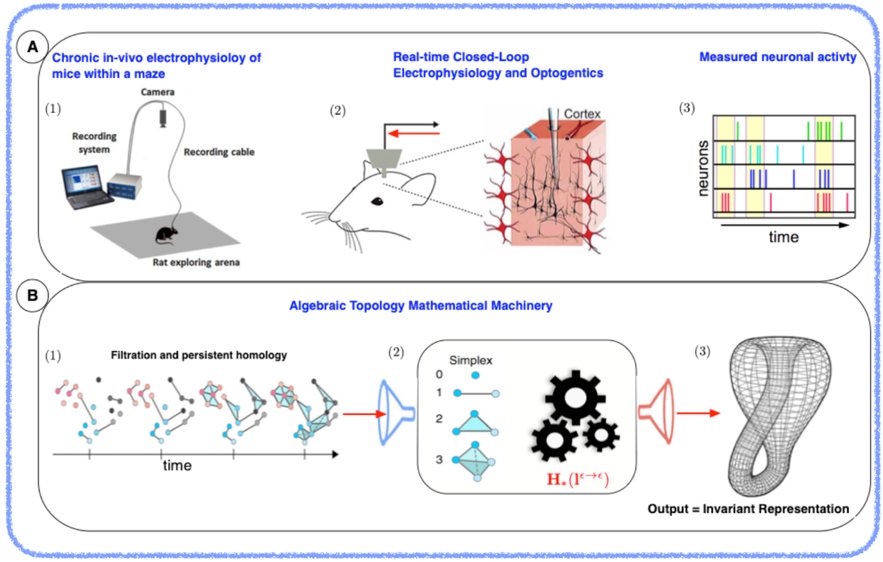
Example 3: We are currently data analytic methods to determine topological invariants from neuronal data, which could unravel the neural code. A: Mouse freely moving in a maze and chronically implanted e-cube system will measure the electrical activity of the entorhinal cortex. B: The Algebraic Topology machinery will algorithmically determine an invariant representation, that will allow us to decode the spatial navigation of the mouse. C: Simultaneously, in a closed-loop fashion we will control the relevant neurons via our CBCE method (mediated by optogenetics) to further understand the robustness of the invariant representation made by the mouse.

Together with two research institutes of the Chinese Academy of Sciences, the CBGP will promote the development of the Centre of Excellence for Plant-Environment Interactions (CEPEI).

CBGP Director Isabel Allona Alberich attended the SOMMa Madrid Alliance meeting, which was also attended by the Minister of Education, Science, and Universities of the Community of Madrid, Emilio Viciana.

The EU-funded project, which will involve CBGP researchers and partners from across Europe and Brazil, aims to develop innovative and sustainable solutions to prevent the arrival and spread of devastating citrus diseases.

Our colleague, professor and researcher Isabel Díaz Rodríguez, is retiring at the end of July. From the Center for Plant Biotechnology and Genomics (CBGP), a joint center of the Polytechnic University of Madrid (UPM) and the National Institute of Statistics and CSIC (INIA-CSIC), her colleagues wanted to express their sincere gratitude for her commitment, excellence, and dedication over all these years with a surprise party.