Author Archive

Barcelona Metropolitan Area loses over 70% of agricultural land in recent decades

ICTA-UAB researchers warn that peri-urban agriculture is key to urban resilience and call for an urgent shift in planning policies.

Go to Source

ICIQ leads the first Dow PPA 2026

ICIQ was the protagonist of the first meeting of the year of Dow Tarragona’s Public Advisory Panel (PPA), held this Wednesday, March 25, at the facilities of the southern industrial complex. The director of the institute, Prof. Emilio Palomares, was the first guest in this 2026 series of meetings.

During the session, Palomares presented to the panel members the mission and activities of ICIQ as an international reference research center. He highlighted the work of the more than 300 professionals who work at the institute and, in particular, emphasized the center’s role as a key actor in finding scientific solutions to global challenges such as climate change and industrial decarbonization. The professor also stressed that the science‑industry partnership is essential to guarantee Europe’s strategic sovereignty.

Debate on the innovation model

The meeting also served to generate dialogue on the current innovation model and the competitiveness of the chemical industry, both in Catalonia and in Europe, as well as on the impact and consequences of the current geopolitical context. Prof. Palomares underlined the importance of collaboration between top‑tier research centers and the industrial fabric in order to maintain the sector’s leadership.

This participation reaffirms ICIQ’s commitment to the social and industrial environment of Tarragona, sharing knowledge and debating the future of chemistry with the community.

La entrada ICIQ leads the first Dow PPA 2026 se publicó primero en ICIQ.

Go to Source

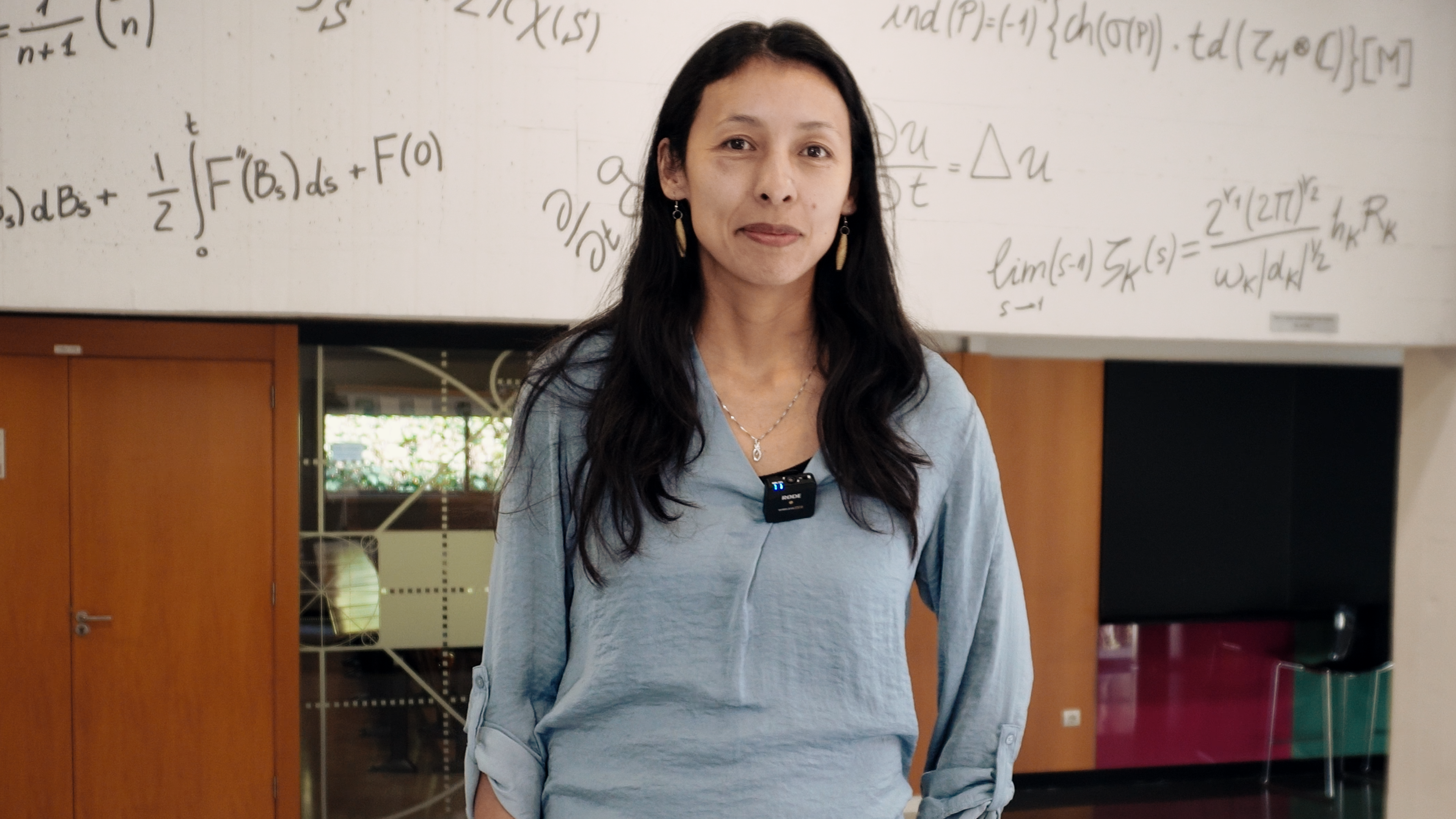
Yves Chevallard (1946–2026)

Yves Chevallard passed away on 16 March 2026. He was 79 years old. Born in Tunis, he trained at the École normale supérieure in Paris, where he earned an agrégation de mathématiques. He went on to become a professor at Aix-Marseille Université, and it was there, over several decades, that he built one of the most ambitious research programmes in the didactics of mathematics. A 1976 encounter with Guy Brousseau at the IREM in Bordeaux defined his path.

His first major contribution was the theory of didactic transposition, developed through the 1980s and crystallised in La Transposition didactique: du savoir savant au savoir enseigné (1985). The question at its core was deceptively simple: what happens to knowledge when it moves from the research context where it was created into the classroom where it is taught? The answer, Chevallard argued, was that it is transformed far more deeply than anyone usually admits. From that insight, he went on to develop the Anthropological Theory of the Didactic (ATD), a framework that pushed the study of teaching and learning into the territory of culture, institutions, and the social life of knowledge. The International Commission on Mathematical Instruction awarded him the Hans Freudenthal Medal for that work in 2009.

His connection with the CRM was long. He first came in January 1991 for a research stay, returned in December 1994 for a seminar alongside Miguel de Guzmán, Guy Brousseau, and Paolo Boero, and went on to participate in the 3rd International Congress on the ATD (January 2010), an Intensive Research Programme (June–July 2019), and the 7th and 8th CITAD (June 2022 and January 2026). The last of those was held here just two months ago.

He left behind a body of work that asks hard questions about what school mathematics is actually for. In a 2017 article for the Gaceta de la RSME, he argued that mathematics is taught as a treasure to be visited, not used, and that most students sense, correctly, that it was never really meant for them. He spent his life trying to fix that.

Our deepest condolences go to his family, his colleagues, and the community of researchers who carried his work forward alongside him.

Newsletter

Get the latest CRM news and activities delivered to your inbox

Subscribe now

Recent newsletters →

CRM Comm

Pau Varela

CRMComm@crm.cat


Yves Chevallard (1946–2026)

Yves Chevallard (1946–2026)

Yves Chevallard passed away on 16 March 2026. He was 79 years old. Born in Tunis, he trained at the École normale supérieure in Paris, where he earned an agrégation de mathématiques. He went on to become a professor at Aix-Marseille Université, and it was there, over…

One Day, One Family, One Place: Poisson Geometry at CRM

One Day, One Family, One Place: Poisson Geometry at CRM

On March 23rd, 2026, the Centre de Recerca Matemàtica hosted the thematic day “Poisson Geometry and Its Relatives”, a full‑day event that brought together researchers exploring Poisson geometry and several of its neighbouring areas. The programme combined classical…

Life After the PhD: Three Roads Forward

Life After the PhD: Three Roads Forward

On March 18, the BGSMath held its first session on careers after a PhD in mathematics, bringing together three speakers with different professional trajectories and 46 early-career researchers from nine institutions.On March 18, the Barcelona Graduate School of Math…

CRM participates in the 2026 ERCOM annual meeting in Belgrade

CRM participates in the 2026 ERCOM annual meeting in Belgrade

The CRM participated in the 2026 ERCOM annual meeting in Belgrade (20–21 March), represented by Director Carme Cascante, Manager Gemma Martínez, and Scientific Activities Manager Núria Hernández. The programme focused on multidisciplinarity, mathematics and the arts,…

5 Talks, 1 Topic: A Day of Combinatorics

5 Talks, 1 Topic: A Day of Combinatorics

On March 18th, 2026, the 5 Talks in Combinatorics thematic day took place in the Joan Maragall Room at the Faculty of Philology and Communication of the University of Barcelona, in the historic building. The event focused on modern combinatorics and its connections…

The post Yves Chevallard (1946–2026) first appeared on Centre de Recerca Matemàtica.

Go to Source

Una variante reciente del virus mpox es más virulenta que la del brote global de 2022

El virus mpox —antes conocido como viruela del mono— es un virus que normalmente se transmite de animales a humanos. A este tipo de enfermedades se les llama zoonosis. Durante décadas, los casos en humanos fueron esporádicos y limitados, pero en los últimos años el virus ha cambiado su comportamiento y ha empezado a transmitirse de forma más eficiente entre personas.

Esto ha permitido la aparición de distintos “linajes” o variantes del virus. Cada linaje acumula pequeñas mutaciones en su material genético que pueden afectar a cómo se transmite o a la gravedad de la enfermedad que provoca.

El estudio, liderado por Bruno Hernáez y Antonio Alcamí desde el Centro de Biología Molecular Severo Ochoa (CBM, CSIC-UAM), se centra en comparar dos de estos linajes: el linaje B.1 del clado IIb, que fue el responsable del brote global de 2022, y el clado Ib, identificado en 2024 en África Central y posteriormente detectado en otros continentes.

Ambos pertenecen al mismo virus, pero presentan diferencias importantes en su comportamiento. El brote de 2022, aunque se extendió internacionalmente y llevó a declarar una emergencia sanitaria mundial, se caracterizó por producir una enfermedad relativamente leve en la mayoría de los casos.

Sin embargo, el clado Ib ha generado preocupación porque podría causar cuadros más graves.


Cómo se mide la gravedad de un virus

Para comparar la peligrosidad de distintos virus o variantes, los investigadores utilizan modelos experimentales. En este caso, emplearon ratones de laboratorio (modelo murino CAST/EiJ), que permiten observar cómo evoluciona la infección y comparar la gravedad entre variantes.

No significa que los resultados sean exactamente iguales en humanos, pero sí permiten identificar diferencias claras en la capacidad del virus para causar enfermedad.

Los resultados del estudio son claros: los ratones infectados con el virus del brote de 2022 apenas mostraron síntomas, incluso cuando recibieron dosis altas. En cambio, el clado Ib provocó pérdida de peso significativa, afectación pulmonar severa y alta mortalidad.

En términos sencillos: el nuevo linaje es más “agresivo” en este modelo experimental.


Por qué este virus es más peligroso

El estudio muestra que el clado Ib se propaga mejor en cultivos celulares y puede expandirse más rápidamente dentro del organismo, alcanzar distintos órganos y producir síntomas más graves. Esto es lo que los investigadores observan con el clado Ib.

Un aspecto clave del estudio es que el clado Ib mantiene un patrón de mutaciones similar al del clado IIb, asociado a su transmisión entre humanos.

A pesar de que ambos virus muestran un patrón de mutaciones muy semejantes tras haberse adaptado a circular entre humanos, hay una diferencia muy importante en términos de virulencia, es decir, en su capacidad de causar daño.

Esto sugiere que un virus puede adaptarse a los humanos sin necesariamente volverse menos peligroso.

“Nuestros datos en ratón muestran que el clado Ib no está tan atenuado como el virus anterior de 2022. Esto subraya la necesidad urgente de mantener una vigilancia genómica y funcional activa sobre los nuevos linajes de mpox”, explica Bruno Hernáez, autor del estudio e investigador del CBM.

La vigilancia genómica consiste en analizar el material genético de los virus para detectar cambios (mutaciones) que puedan influir en su comportamiento. Entender estas diferencias es clave para anticipar riesgos y diseñar estrategias de preparación sanitaria.


Un aviso importante para la salud pública

Aunque el modelo utilizado no reproduce exactamente lo que ocurre en humanos, sí permite comparar con precisión la gravedad relativa entre variantes.

El mensaje del estudio es claro: algunos virus pueden evolucionar hacia formas más adaptadas a la transmisión entre personas sin perder su capacidad de causar enfermedad grave.

Esto refuerza la importancia de vigilar de cerca cómo evolucionan los virus para poder reaccionar a tiempo ante posibles amenazas.


Referencia

Unanue, A.R., Martín, R., Sánchez, C. et al. Enhanced virulence of mpox virus clade Ib over clade IIb in the CAST/EiJ mouse model. Commun Biol 9, 406 (2026). https://doi.org/10.1038/s42003-026-09701-z

La entrada Una variante reciente del virus mpox es más virulenta que la del brote global de 2022 se publicó primero en Centro de Biología Molecular Severo Ochoa.

Go to Source

A Step Closer to 6G? Graphene Drives the Future of Wireless Communications

An international study involving ICN2 researchers has unveiled a new graphene-based wireless receiver capable of transmitting data at ultra-high speeds, reaching several gigabits per second. These findings could open the door to faster, more efficient wireless communication technologies in the coming years.

Go to Source

ICIQ researchers contribute to the discovery of a new catalytic architecture for green methanol production

Researchers from the group of Prof. Núria López have collaborated in the discovery of a new catalytic architecture for green methanol synthesis, based on single‑atom catalysis and a more efficient active site.

ETH Zurich recently published a feature on this scientific article developed by three NCCR Catalysis groups in collaboration with researchers from ICIQ and Empa, a Research Institute of the ETH Domain. The National Centres of Competence in Research (NCCRs) are a funding scheme of the Swiss National Science Foundation.

At ICIQ, we share the contributions in this feature of Milica Ritopecki, an INPhINIT doctoral fellow in the group of Prof. Núria López, who participated as an author in this research.

Can you please tell us about yourselves and your role within this project?
I am a second-year PhD student at ICIQ, in the group of Prof. Núria López. My research focuses on atomistic modelling of heterogeneous catalysts. In this project, I was responsible for the theoretical work, developing realistic models of atomically dispersed indium sites and using simulations to understand their structure and catalytic behaviour.

Which was the main challenge? How did you address it?
The main computational challenge came from the large configurational space of indium single atoms on monoclinic supports. The flexible coordination of indium and the monoclinic surface create many possible structures, oxygen-vacancy arrangements, and surface hydroxylation states. To tackle this, we used a systematic modeling strategy combining density functional theory with ab initio thermodynamics to identify the most relevant configurations under reaction conditions. Continuous feedback from experiments guided the models, allowing meaningful comparisons between simulations and observed catalytic behaviour.

As junior researchers, what did you learn from this collaboration?
I gained a deeper understanding of experimental techniques and the insights they provide, which helped me design and interpret computational models more realistically. It was also my first time working in a large multidisciplinary team, where I learned to communicate across expertise areas and integrate complementary results into a coherent story. Developing resilience was another key learning. There were moments when results were inconclusive, or hypotheses did not hold. Learning to adapt strategies and keep moving forward despite uncertainty was one of the most valuable outcomes of this project.

Read the full feature here.


Reference publication

Single atoms of indium on hafnia enable superior CO2-based methanol synthesis
Chiang, Y.-T.; Ritopecki, M.; Willi, P. O.; Raue, K.; Morales-Vidal, J.; Zou, T.; Agrachev, M.; Eliasson, H.; Wang, J.; Erni, R.; Stark, W. J.; Jeschke, G.; Grass, R. N.; López, N.; Mitchell, S.; Pérez-Ramírez, J.
Nat. Nanotechnol. 2026
DOI: 10.1038/s41565-026-02135-y

La entrada ICIQ researchers contribute to the discovery of a new catalytic architecture for green methanol production se publicó primero en ICIQ.

Go to Source

New members in administration

Welcome Doae, Shahed and Triana

Go to Source

Synthetic proteins mimic key steps of photosynthesis

Researchers at the Institute of Chemical Research of Catalonia (ICIQ), led by Dr Elisabet Romero, have demonstrated what could be a significant step towards replicating natural photosynthesis using synthetic, de novo designed proteins. The study, published in ACS Physical Chemistry Au, shows how engineered protein scaffolds can bind chlorophyll‑like molecules to reproduce key light‑harvesting mechanisms, revealing why they may become powerful tools for future bioinspired energy and photonic technologies.

The team’s main finding is that synthetic proteins can be designed to emulate crucial processes found in natural pigment–protein complexes. By studying dimers of a chlorophyll a analogue (Zn‑pheophorbide a) embedded within 4‑α‑helix bundles, the researchers observed that dimerisation increases the charge‑transfer character of the excited state and introduces additional relaxation pathways not present in monomeric systems. These features, including the formation of transient species and enhanced exciton–charge‑transfer mixing, closely mirror the ultrafast charge‑separation mechanisms that make natural photosynthesis remarkably efficient.

This discovery is relevant because photosynthesis in nature achieves near‑unity quantum efficiency in the initial light-harvesting and charge separation steps, thanks to the highly organised structures that finely tune pigment interactions to capture and convert sunlight. Replicating such performance synthetically is a long‑standing challenge with vast implications: from sustainable energy production using photonic or photovoltaic devices to biomedical applications such as photodynamic therapy. De novo designed proteins offer a simplified yet highly tunable platform, providing direct control over structure–function relationships while avoiding the complexity of natural photosystems.

Reflecting on the implications of the study, Dr Luis Duarte, first author of the article, noted that “our findings highlight the tunability of synthetic protein scaffolds to optimise cofactor interactions and control their electronic properties, paving the way for advanced applications in bioinspired energy systems and photonic devices.” As synthetic scaffolds continue to advance, they could support the development of sustainable materials for applications ranging from next‑generation photovoltaic technologies to photodynamic therapies.


Reference Publication

Unraveling Charge-Transfer States and Their Ultrafast Dynamics in Artificial Light-Harvesting Complexes
Duarte, L.G.T.A.; Lamas, I.; Bauerle, D.; Shareef, S.; Cunha, R.D.; Curutchet, C.; Curti, M.; Romero, E.
ACS Phys. Chem. Au 2026
DOI: 10.1021/acsphyschemau.5c00098

La entrada Synthetic proteins mimic key steps of photosynthesis se publicó primero en ICIQ.

Go to Source

The CRM participates in a European project studying decision-making and risk perception in mountain environments

The NeuroMunt project (POCTEFA, coordinated by the Université de Perpignan Via Domitia) studies how people make decisions under risk conditions in mountain environments, bringing together researchers from France and Spain across disciplines ranging from complex systems, sports psychology, nonlinear dynamics, to mountain sleep medicine and physiology. The CRM’s role is specific: developing mathematical tools to analyse brain signals recorded outdoors, on moving subjects, in conditions far removed from any laboratory.

Somewhere in the eastern Pyrenees, a mountain guide has six clients behind her, and the weather is turning. It was fine two hours ago, which counts for nothing now. Low cloud, wet snow on the ridge. She needs to decide whether to keep going or turn back, and soon, because the group is getting cold and one of them keeps asking about the summit. She trained for this kind of moment. But she is also running on less oxygen than she would at sea level, and her brain, the organ actually making the call, is doing something with risk assessment that neuroscience can describe in broad strokes but not yet predict. Whatever process leads to her decision will fire and resolve in milliseconds. It will leave faint electrical traces in the cortex. Nobody outside a research lab would normally think to measure those traces, and even inside a lab, they are hard to read.

NeuroMunt wants to try reading them anyway, outdoors, on the mountain.

The project, funded by the European programme POCTEFA and coordinated by the Université de Perpignan Via Domitia, brings together sports psychologists, sleep researchers, mountain rescue workers, physiologists, mathematicians and training centres from both sides of the Pyrenees. The CRM contributes a specific component to this consortium: the mathematical and computational analysis of field-recorded brain signals.

“A very concrete task the CRM has is to generate a toolkit, like a toolbox, to analyse electroencephalographic (EEG) signals,” says Axel Masó, a postdoctoral researcher at the CRM hired for the project. “Our toolkit will incorporate nonlinear systems metrics, complexity metrics, such as entropy or other concepts from complex systems and statistics.”

EEG data from a laboratory is already complex. EEG data from someone moving through a mountain environment is something else. The standard processing tools were built for controlled settings where you can repeat an experiment if the recording is poor, the subject holds still, and the room is quiet. None of that applies here. You get one shot at each recording, the subject is climbing or skiing, and the electrodes pick up every twitch and gust of wind. The team has learned this the hard way, working with preliminary recordings, and it has shaped the entire approach: before you can analyse anything, you must figure out which parts of the signal are worth analysing at all.

The Mathematical and Computational Biology Group, co-led by researcher Josep Sardanyés, works on this kind of problem in biological systems. “Understanding how the brain works is extraordinarily complicated,” Sardanyés says. “We are probably talking about one of the most complex of complex systems, with processes operating at different scales: the single neuron, groups of neurons, brain regions, the whole brain.” EEG captures macroscopic cortical activity, the large-scale electrical behaviour of the brain. The CRM’s job is to develop the mathematics to read that signal properly.

In concrete terms, the team is building software to quantify the complexity of EEG recordings and compare them across different situations. Entropy measures, autocorrelation, synchronisation patterns, techniques for characterising chaos: the tools come from dynamical systems theory and are designed to detect structure that standard clinical analysis would miss. These techniques are not commonly used in the EEG community. “Seeing how these measures behave across different scenarios could be very important for understanding large-scale brain dynamics in complex mountain environments and under risk conditions,” says Sardanyés. A central question is whether the EEG time series looks different when a person is approaching a decision. If they do, the mathematics should be able to show how.

One concept from the CRM’s approach is particularly suggestive. In fields like ecology and medicine, researchers have developed methods for detecting what are known as early warning signals: measurable changes in a time series that indicate the system is approaching a critical transition, a tipping point. The mathematical framework is well established for ecosystems on the verge of collapse or patients approaching a clinical crisis. Sardanyés and the team want to apply the same logic to brain signals recorded near a decision point. The idea is that a decision, choosing between two options under pressure, may behave mathematically like a bifurcation.

“These early warning signals can be measured directly from time series. They tell us how close the system is to a transition or bifurcation; in this case, a decision between two options.”

Josep Sardanyés, CRM

If the analogy holds, the EEG signal should show detectable changes as the moment of decision approaches. Whether it does is one of the things the project will test.

“From a fundamental perspective, the EEG signal has characteristics that are specific to complex systems,” Masó explains. “This allows them to be analysed with tools that are not standard within the community of EEG analysis experts. The CRM brings this more fundamental perspective, to know whether these tools will be the ones that allow us to determine if a person enters a state of panic before a risk.”

The toolkit is being developed now, in the early phase of the project, using preliminary data from an unexpected source. Before NeuroMunt began, the ultra-trail runner Kilian Jornet recorded EEG activity during mountain expeditions as part of his Alpine Connections project, in which he traversed the entire Alpine range and linked all peaks above 4,000 metres in 19 days without motorised transport: 1,207 kilometres and over 75,000 metres of accumulated elevation gain, by running, climbing, and cycling. During the expedition, Jornet wore EEG equipment and recorded brain activity under different conditions: at rest, while walking, and while climbing. Those recordings, collected under real conditions with all the mess that entails, have become the testing ground for the CRM’s methods. “We have to discard a large portion of the data,” Masó says. “This reduces the predictive capacity of the analysis enormously. The first result of all this is knowing where to place the magnifying glass within the data. Knowing exactly what to look at and where to look, that is already a result in itself.”

The early analysis has yielded something worth noting. “The first results suggest that we do observe differences in the complexity of the signal across different activities and different risk environments,” Sardanyés says. The team is working to consolidate these findings with additional data and with the mathematical models of decision-making from the UPC side of the collaboration. It is still preliminary, but the signal, so to speak, appears to be there.

David Romero, head of the Knowledge Transfer Unit at the CRM, frames the challenge differently. For him, the work sits at the far end of a long chain of translations. And the chain runs in both directions. “We will be doing pen-and-paper things, so to speak, to solve a real problem that exists in the social environment of the mountain.”

The CRM’s closest collaborators on the project are at the Universitat Politècnica de Catalunya BarcelonaTech (UPC). Professors Toni Guillamon and Tomás Lázaro, both also affiliated researchers at the CRM, will build mathematical models of decision-making, drawing on dynamical systems theory from computational neuroscience and game theory. The CRM team, for its part, analyses the raw signals. Romero describes how the pieces connect: “We will be talking a lot with the UPC to feed their models with data, to calibrate them or to support certain decisions. But at the same time, there is another layer of interaction with the people in France, who will give more psychological meaning to the metrics we extract.”

In practice, Lázaro and Guillamon have been analysing data from elite trail runners and paragliders, athletes whose decisions under pressure are already being closely monitored. There are, Lázaro explains, two kinds of decision-makers: the econs, who are perfectly rational and always optimise, and the humans, who are not and do not. The mountain is where that distinction stops being theoretical.

“There is a scientific vision of a behaviour that is very human. And that is a challenge in itself.”

Tomás Lázaro, UPC / CRM

A mountain science festival in Les Angles, in the French Pyrenees, will present partial and final results to the public, and an international scientific congress is also planned. Romero sees these as the other end of the chain. “The goal is also to give tools to mountain trainers,” he says, “and that completes the whole round trip in this problem, impacting something that is very far from basic research but hyper-applied and very specific to the natural environment.”

“It is a project that covers very broad knowledge,” explains Guillamon, talking about the internal workings of the consortium, “and it is impossible for us as mathematicians to find a direct common point with mountain guides right away. But the project has enough specialists in all areas so that there is a continuity of knowledge.” He credits Élodie Varraine, the coordinator from Perpignan, with assembling the team that way. Sardanyés puts it in more operational terms: the project has elite athletes, mountain guides, sleep experts and neuroscientists who will collect the field data and help interpret what it means. “This is a project where multidisciplinarity is key,” he says, “and one that can produce results of real scientific and applied interest.” The mathematicians cannot do the fieldwork, and the mountain professionals cannot build the analytical tools. The project only works because both sides are in the room.

It helps that everyone involved lives close by. “All the partners are very close,” emphasises Masó. “Despite being a European project with a European perspective, it also has this local component that makes interaction with partners much easier.”

The field experiments designed specifically for NeuroMunt haven’t started yet. The protocols are still being written. Whether the early patterns in the Jornet data hold up when tested against larger, more controlled datasets, nobody knows. Romero comes back to the same phrase: “We have to know where to put the magnifying glass.” And that magnifying glass is, at bottom, mathematical. Projects like NeuroMunt need people who know the mountains, and people who know the brain, but they also need people who can look at a noisy time series and find the geometry hiding inside it.

The NeuroMunt project (EFA 161/05) is co-funded by the European Union through the Interreg VI-A Spain-France-Andorra programme (POCTEFA 2021-2027). CRM researchers involved include Josep Sardanyés, David Romero, Axel Masó (CRM), and Toni Guillamon and Tomás Lázaro (UPC, affiliated with CRM).

Newsletter

Get the latest CRM news and activities delivered to your inbox

Subscribe now

Recent newsletters →

CRM Comm

Pau Varela

CRMComm@crm.cat


One Day, One Family, One Place: Poisson Geometry at CRM

One Day, One Family, One Place: Poisson Geometry at CRM

On March 23rd, 2026, the Centre de Recerca Matemàtica hosted the thematic day “Poisson Geometry and Its Relatives”, a full‑day event that brought together researchers exploring Poisson geometry and several of its neighbouring areas. The programme combined classical…

Life After the PhD: Three Roads Forward

Life After the PhD: Three Roads Forward

On March 18, the BGSMath held its first session on careers after a PhD in mathematics, bringing together three speakers with different professional trajectories and 46 early-career researchers from nine institutions.On March 18, the Barcelona Graduate School of Math…

CRM participates in the 2026 ERCOM annual meeting in Belgrade

CRM participates in the 2026 ERCOM annual meeting in Belgrade

The CRM participated in the 2026 ERCOM annual meeting in Belgrade (20–21 March), represented by Director Carme Cascante, Manager Gemma Martínez, and Scientific Activities Manager Núria Hernández. The programme focused on multidisciplinarity, mathematics and the arts,…

5 Talks, 1 Topic: A Day of Combinatorics

5 Talks, 1 Topic: A Day of Combinatorics

On March 18th, 2026, the 5 Talks in Combinatorics thematic day took place in the Joan Maragall Room at the Faculty of Philology and Communication of the University of Barcelona, in the historic building. The event focused on modern combinatorics and its connections…

The post The CRM participates in a European project studying decision-making and risk perception in mountain environments first appeared on Centre de Recerca Matemàtica.

Go to Source

Un nuevo hallazgo contra la metástasis cerebral muestra cómo el tumor secuestra células defensivas para usarlas en su favor

Left: Manuel Valiente, head of the CNIO Brain Metastasis group. /Laura M. Lombardía. CNIO. Right: CNIO researcher Laura Álvaro-Espinosa. / Christian Esposito. MadMoviex. CNIO

En casi la tercera parte de los pacientes de cáncer el tumor alcanza el cerebro y hace metástasis. Ese proceso se ha considerado tradicionalmente la etapa final y sin opciones de un cáncer agresivo, hasta el punto de que quienes llegaban a ella eran excluidos de los ensayos clínicos por su mal pronóstico. En los últimos años, grupos como el de Metástasis Cerebral del Centro Nacional de Investigaciones Oncológicas (CNIO) han empezado a abrir nuevas vías para tratar la metástasis cerebral.

El equipo del CNIO, dirigido por Manuel Valiente, ha ampliado el foco de la investigación a lo que ocurre en el entorno de la metástasis cerebral. Los resultados de este laboratorio a lo largo de la última década permiten concluir que la metástasis se desarrolla cuando las células tumorales crean un entorno a su gusto, y para ello “deben alterar el cerebro ellas mismas”, explica Valiente.

Cuando las células del tumor llegan al cerebro la mayoría son eliminadas, pues no tienen apenas herramientas para crecer en este órgano; solo unas pocas cuentan con las aptitudes necesarias para reformar el cerebro y adaptarlo a su gusto. Las células tumorales empiezan a cambiar el tejido, a activar vías moleculares que debían estar apagadas y, en definitiva, a crear un ambiente que sólo a ellas les resulta acogedor. Esto les permite proliferar sin control y reproducir el tumor.

El grupo de Valiente ha desvelado ya cómo se producen varios de estos cambios moleculares, y ensaya fármacos para bloquearlos e impedir así esta reforma ilegal en el cerebro.

Ahora han descubierto otro mecanismo que podría tener valor en metástasis cerebral de varios tipos de tumores, y también en otras patologías que afectan al cerebro, sin ser tumorales. Se trata, además, de un mecanismo para el que existe un fármaco que penetra bien en el cerebro y es bien tolerado, pues está aprobado como tratamiento del asma en otros países.

El hallazgo se publica hoy en la revista Cancer Research, con Laura Álvaro-Espinosa como primera autora. Valiente aspira a iniciar un ensayo clínico a medio plazo.

Microglía/macrófagos CD74⁺ que rodean e infiltran una metástasis cerebral. Imagen de inmunofluorescencia de una metástasis cerebral derivada de la línea celular de adenocarcinoma de pulmón humano H2030-BrM tras la inyección intracardíaca en ratones. Las células tumorales están marcadas con GFP (verde), la microglía/los macrófagos con Iba1 (azul) y la expresión de CD74 se muestra en rojo. /CNIO

Células defensivas secuestradas por el cáncer

La nueva diana es una proteína llamada MIF, producida por las células tumorales en el cerebro. El nuevo estudio muestra que MIF se une a una estructura molecular llamada CD74 que se encuentra en la superficie de macrófagos y microglía, un tipo de células cuya función habitual es avisar al sistema inmunitario.

En condiciones normales estas células con CD74 combatirían la metástasis, puesto que forman parte del sistema inmunitario; pero cuando se les une MIF, las células metastáticas las hacen trabajar a favor del cáncer. Es decir, MIF reprograma los macrófagos/microglía que tienen CD74, para impulsar el crecimiento del tumor.

Buscando cómo evitar que MIF transforme a los macrófagos CD74, el grupo del CNIO encontró el fármaco ibudilast, que se sabe que actúa bloqueando la unión de MIF con CD74. Sus resultados muestran que ibudilast frena la metástasis, tanto en modelos animales como en muestras frescas de pacientes derivadas de tumores primarios diferentes.

“Demostramos que la microglía y los macrófagos CD74+ son reprogramados, y pasan de tener una naturaleza potencialmente antitumoral a pro-metastásica en el cerebro”, escriben los investigadores en Cancer Research.

También en Alzheimer y esclerosis múltiple

Los autores subrayan además otra observación de su estudio: el cambio de función de las células CD74 por la acción de MIF también se detecta en enfermedades neurodegenerativas y neuroinflamatorias, como Alzheimer y esclerosis múltiple. El nuevo resultado podría ser relevante también para estas enfermedades, como ha sido observado recientemente en tumores primarios de cerebro, como el glioblastoma.

Para Valiente, “la reprogramación por parte de MIF puede ser una vulnerabilidad común en diversas enfermedades cerebrales, un mecanismo compartido que puede ser redirigido terapéuticamente”.

El hallazgo del Grupo de Metástasis Cerebral de CNIO indica que los cambios que ocurren en este órgano nos pueden dar pistas no sólo acerca de la metástasis, sino también sobre otras enfermedades degenerativas y neuroinflamatorias.

El valor del primer banco de muestras vivas de metástasis cerebral

Este hallazgo es una prueba más del valor de dos grandes logros del grupo del CNIO: la creación del primer banco mundial de muestras vivas de metástasis cerebral, RENACER; y la plataforma para ensayar fármacos que estas muestras han permitido desarrollar, METPlatform.

Ambos recursos, repositorio y plataforma, son herramientas de investigación innovadoras celebradas por la comunidad internacional de neuro-oncología, y que han dado lugar ya a varios ensayos clínicos actualmente en marcha.

Una necesidad clínica que urge atender

Valiente recuerda que encontrar terapias específicas para la metástasis cerebral es urgente, puesto que se trata de “una necesidad clínica no cubierta”. Hasta un 30% de los pacientes de cáncer desarrollan metástasis cerebral, sobre todo de tumores de mama, pulmón, piel y colon/recto. Pero no hay en este momento un tratamiento específico para estas personas, más allá de la cirugía y radioterapia.

La entrada Un nuevo hallazgo contra la metástasis cerebral muestra cómo el tumor secuestra células defensivas para usarlas en su favor se publicó primero en CNIO.

Go to Source

FOODTRACK Project: Can Nanotechnology Help Improve Food Safety?

This initiative, involving ICN2, the UAB, and the company ColorSensing, is developing smart labelling systems based on thermochromic materials. Its technology will enable precise monitoring of food temperature throughout the entire supply chain.

Go to Source

La ciudadanía rechaza más la desigualdad cuando afecta las oportunidades y los derechos

desigualdad salud educacion
¿Por qué algunas personas aceptan la desigualdad económica mientras que otras consideran urgente reducirla? Aunque solemos pensar que las diferencias de ingresos generan gran preocupación en la mayoría de las personas, esto no siempre ocurre. De hecho, las actitudes hacia la desigualdad económica suelen provocar una marcada polarización política entre distintos sectores de la sociedad. Sin embargo, cuando esas diferencias económicas se traducen en desigualdades en otros ámbitos, como la salud o la educación, la motivación para reducirla cambia notablemente
Seguir leyendo

Go to Source

Sidebar