Author Archive

Ensemble Averages of Fuzzballs

Image
Ensemble Averages of Fuzzballs
Seminar

Ensemble Averages of Fuzzballs

Date
Place
Pere Pascual V5.07 Room

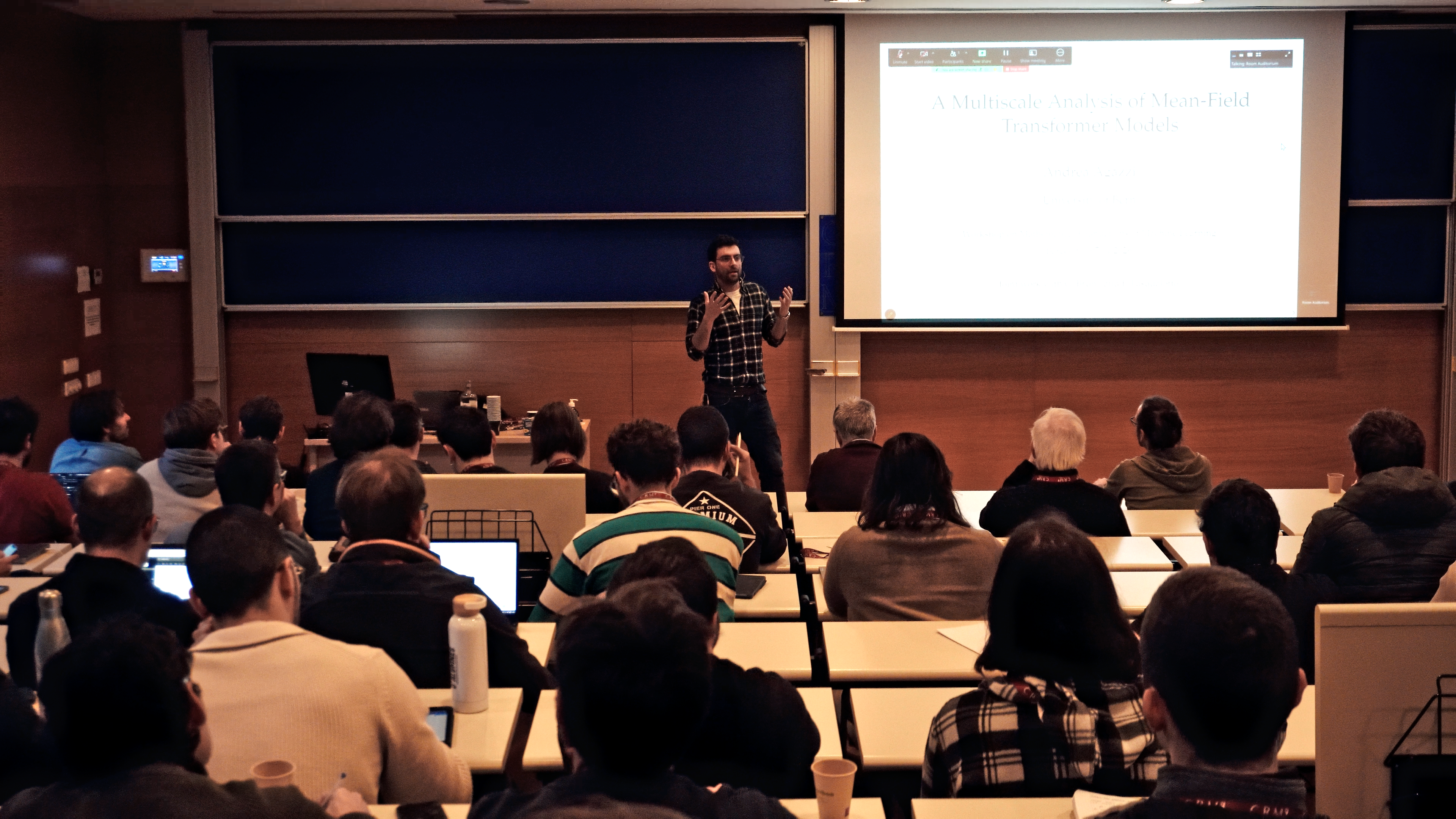
Abstract: I will discuss the problem of the black hole singularity and its possible solutions. I will argue that a “fuzzball picture” for two-charge, 1/4-BPS states supplants the singular black hole solution for typical states, employing an effective action approach and performing an ensemble average over solutions. For three-charge 1/8-BPS states, I will present new results for an ensemble-averaged solution in which a long nearly-AdS2 throat rolls over to a “star” region, where an infalling observer encounters a horizon-free and non-singular sphere of string theoretic matter.

Go to Source

Researchers at the Institute for Neurosciences UMH–CSIC identify key genetic alterations in the brains of people with alcoholism

  • The study, published in the journal Addiction, reveals how decades of alcohol consumption alter the activity of key genes in brain regions involved in addiction.
  • The findings help explain vulnerability to relapse and open new avenues for the development of more targeted treatments for alcoholism.

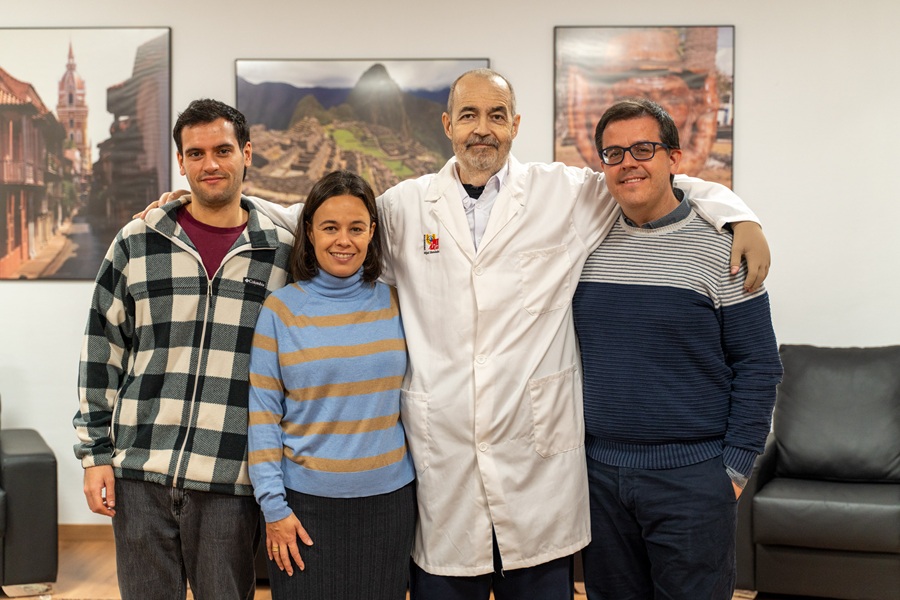
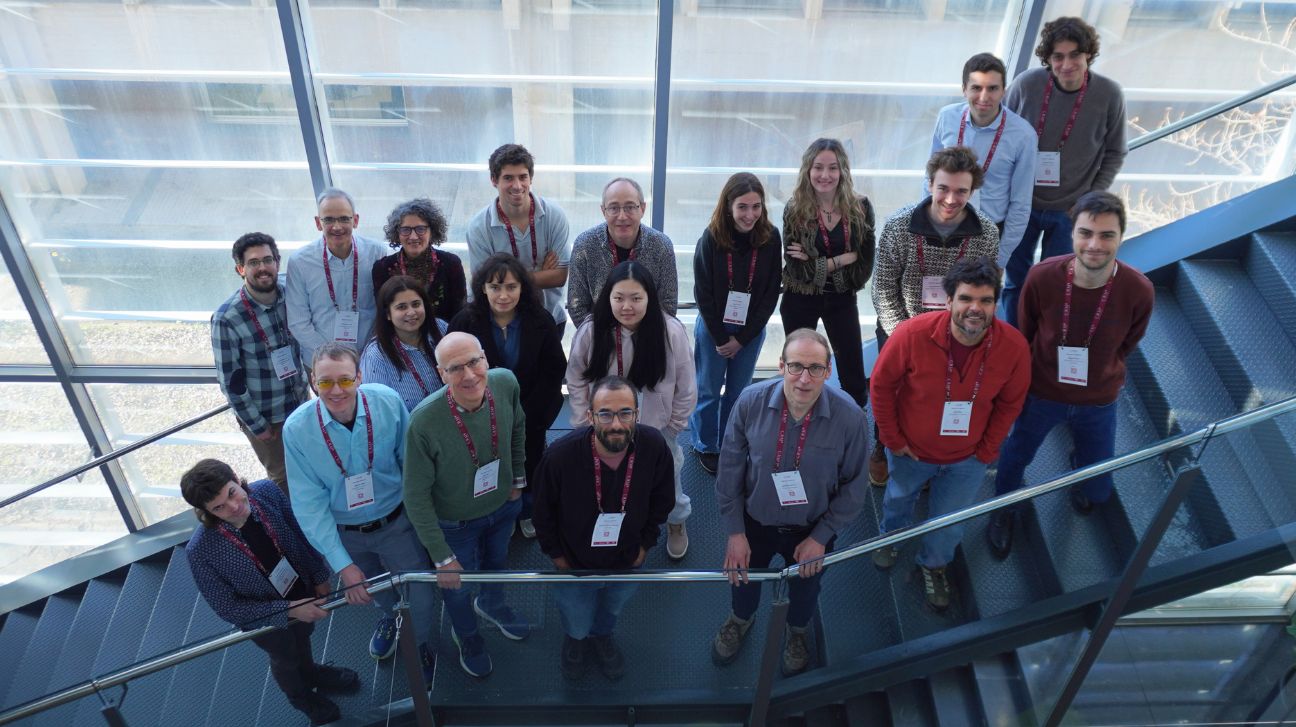
(Photo: IN UMH-CSIC researchers Abraham Torregrosa, María Salud García Gutiérrez, Jorge Manzanares, and Francisco Navarrete.)

Chronic alcohol consumption profoundly alters the expression of genes in the endocannabinoid system in key brain regions, according to a study led by the Institute of Neurosciences (IN), a joint research centre of Miguel Hernández University of Elche (UMH) and the Spanish National Research Council (CSIC). The work, published in the journal Addiction, shows how these changes affect areas involved in reward, impulse control, and decision-making, and opens new paths to better understand the biology of addiction and improve its treatment.

“Alcoholism is one of the leading causes of disease and death worldwide, yet despite its social and health impact, available therapeutic options remain limited”, explains Jorge Manzanares, lead author of the study and head of the Translational Neuropsychopharmacology of Neurological and Psychiatric Diseases laboratory. “That is why understanding what changes in the brain after decades of consumption is key to developing more effective therapies”, he adds.

In this context, the study focused on analysing the neurobiological mechanisms associated with alcohol use disorder by examining post-mortem brain tissue from individuals who had consumed alcohol chronically for an average of 35 years. Specifically, the researchers investigated changes in the endocannabinoid system, which is closely linked to reward and addiction mechanisms.

The endocannabinoid system is a chemical communication network that regulates essential functions such as pleasure, memory, mood, and stress response. It is composed of receptors such as CB1 and CB2, their natural ligands, and enzymes responsible for their degradation, including FAAH and MGLL. “This system acts as a fine modulator of brain function and plays a central role in reward and motivation processes”, explains Manzanares.

Although it was already known that alcohol interacts with this system, there was little evidence based on studies of the human brain. The new work provides a detailed view of how chronic alcohol consumption alters the expression of key genes of the endocannabinoid system in brain regions involved in addiction.

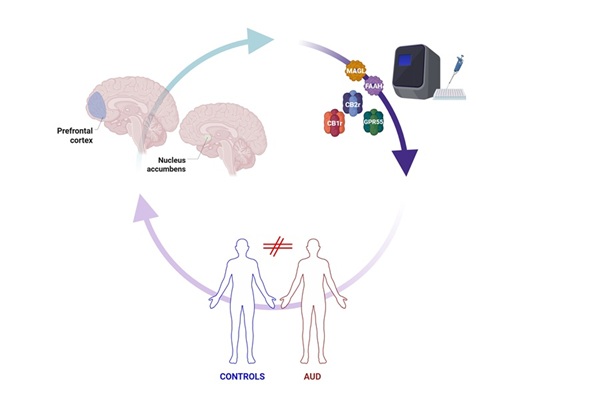
The researchers analysed two core areas of the mesocorticolimbic system: the prefrontal cortex, which is associated with judgement, planning, and decision-making, and the nucleus accumbens, considered the central hub of reward and habit formation.

By comparing samples from individuals with alcohol use disorder with those from non-addicted individuals, the team observed a marked imbalance in the expression of several endocannabinoid system genes. In particular, they detected a strong increase in the CB1 receptor: expression of the gene encoding this receptor rose by 125% in the prefrontal cortex and by 78% in the nucleus accumbens. “This receptor is closely involved in the reinforcement of addictive behaviours and the risk of relapse”, notes researcher María Salud García Gutiérrez, first author of the study.

In contrast, expression of the CB2 receptor gene was reduced by approximately 50% in both regions. “Since the CB2 receptor plays neuroprotective and anti-inflammatory roles, its reduction suggests an impairment of the brain’s defence mechanisms against alcohol-induced damage”, explains the researcher.

Another striking finding was the alteration of the GPR55 receptor, known as an ‘orphan’ receptor because for years its natural ligand was unknown. The researchers found higher levels of GPR55 in the prefrontal cortex, with a 19% increase, but significantly lower levels in the nucleus accumbens, with a 51% reduction. This study is the first to document changes in this gene in humans with alcohol use disorder.

Chronic alcohol consumption alters gene expression of the endocannabinoid system in brain regions involved in reward and behavioral control. Source: IN UMH-CSIC.

In addition, the team observed changes in the enzyme FAAH, which is responsible for degrading anandamide, an endocannabinoid produced by the nervous system that influences anxiety and pleasure. In individuals with alcoholism, FAAH gene expression was lower in the prefrontal cortex but 24% higher in the nucleus accumbens, potentially altering the availability of these regulatory substances.

One of the strengths of the study is the use of brain tissue samples from the New South Wales Tissue Resource Centre in Sydney (Australia). These samples came from individuals with chronic alcoholism who did not consume other illicit drugs, making it possible to isolate the specific effects of alcohol on the human brain without the usual interference of polysubstance use. “This approach provides a clearer picture of how alcohol alone reshapes gene expression in brain regions that are key to addiction”, says García Gutiérrez.

According to the authors, these findings help to better understand why the brains of people with alcohol use disorder show increased vulnerability to relapse and reduced executive control. Identifying which components of the endocannabinoid system are altered, and in which brain regions, opens the door to new, more specific and personalised therapeutic targets.

The authors of the study are also members of the Primary Care Addiction Research Network of the Instituto de Salud Carlos III, as well as the Alicante Institute for Health and Biomedical Research (ISABIAL). The work also involved the participation of researcher Gabriel Rubio from the Hospital 12 de Octubre Health Research Institute (i+12).

This research was funded by the Carlos III Health Institute, the Spanish Ministry of Science, Innovation and Universities, and the Spanish Ministry of Health, within the framework of national research networks on addictions and health, with the support of ISABIAL. The Institute for Neurosciences is accredited as a Severo Ochoa Centre of Excellence.

Source: UMH Communications Service (comunicacion@umh.es) / Institute for Neurosciences UMH-CSIC (in.comunicacion@umh.es)

La entrada Researchers at the Institute for Neurosciences UMH–CSIC identify key genetic alterations in the brains of people with alcoholism se publicó primero en Instituto de Neurociencias de Alicante.

Go to Source

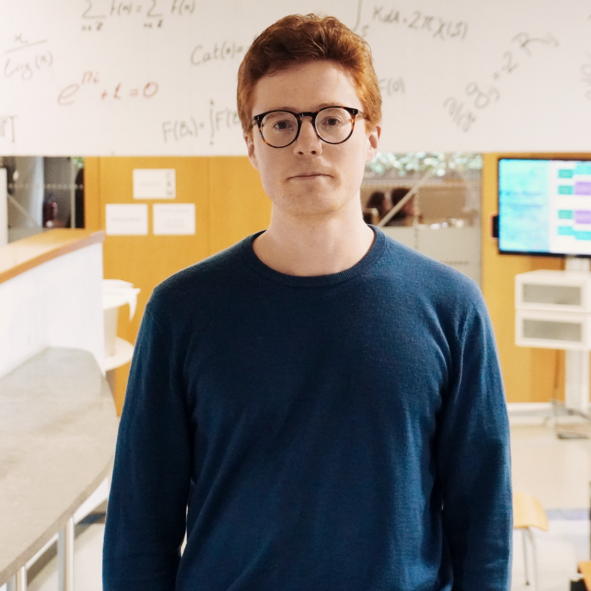
Axel Masó Returns to CRM as a Postdoctoral Researcher

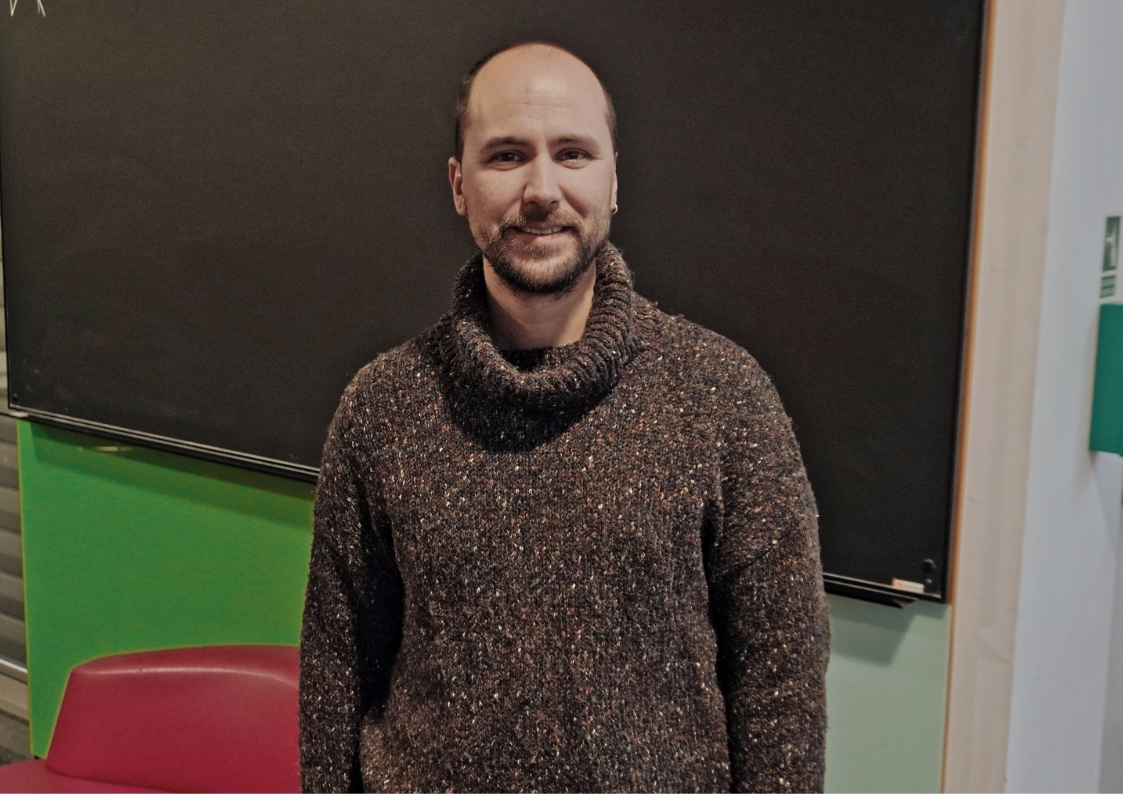
Axel Masó returns to CRM as a postdoctoral researcher after a two-year stint at the Knowledge Transfer Unit. He joins the Mathematical Biology research group and KTU to work on the Neuromunt project, an interdisciplinary initiative that studies physiological responses to mountain risks.

Axel Masó completed his PhD in physics at the Universitat Autònoma de Barcelona, studying stochastic processes with resets, mathematical models that describe random movements that repeatedly return to a starting point. “The inspiration was the movement of birds around a nest,” he explains, “a stochastic movement around a point, but with a return always to the same point.”

The week he defended his dissertation, he started working at the CRM Knowledge Transfer Unit. “I went from being in one very specific project for four years to being in three or four projects over two years, very diverse ones within the transfer unit,” Axel recalls. The shift was drastic: from the extended timeline of doctoral work to shorter research cycles, from a single theoretical question to multiple problems requiring tailored mathematical solutions.

“Looking back now, those two years feel like an entire training period,” he reflects. Even in his final months, starting yet another new project, the learning curve remained steep. The work fulfilled something his doctoral research hadn’t. “I had the birds in mind, but I was making my models thinking someone else would use them,” he says. “In contrast, at the KTU, I felt there was much more accountability; we were making models that were already grounded in very concrete situations. That gave me a lot of enthusiasm and really motivated me to work on something like that.”

“I don’t just need to do research, I need the research to matter. Doing research is a way to impact things I care about.”

The position required expanding his mathematical toolkit and working with diverse collaborators. Each project demanded not only different mathematical approaches but also different ways of communicating them, from private investors without scientific training to research centres requiring statistical or mathematical tools for specific projects. The challenge wasn’t merely technical; it was about translation. “Mathematics is probably the most rigorous thing humans have created,” Axel observes. “So, stepping outside that rigour to explain something, it’s an exercise.”

He describes a tension familiar to many researchers: mathematical work values complexity and precision, but external partners need clarity and utility. “When you’re doing it for yourself, you appreciate the difficulty, you explore all the complexity it has,” he explains. “But when you have to explain it to the people who will use it, you have to bring it down without it losing its value.”

After two years, he left CRM. Took a gap year. During that pause, something crystallised. “I’ve always had a very academic profile,” he says, “and I feel there’s a kind of wave or narrative around academic profiles that you’re wasting your time if you stay in academia because companies value you much more, you’ll have a much more stable, much calmer life, and here things go from two years to two years.” The thinking was compelling, and he considered opportunities outside academia. But after the break, “I feel I want to do what I want to do, which is research on something that motivates me.”


Return to CRM: The Neuromunt Project

Now he’s back at CRM as a postdoctoral researcher on the Neuromunt project, joining the Mathematical Biology research group in a shared position with the Knowledge Transfer Unit. Neuromunt is a three-year interdisciplinary initiative studying physiological responses to mountain risks. The project brings together mountain guides, rescue teams, university researchers, and sports science specialists. Partners include the Institut Nacional d’Educació Física de Catalunya, universities in Perpignan and Toulouse, the Universitat Politècnica de Catalunya, and CRM.

Field expeditions will collect electroencephalogram and electrocardiogram data from subjects facing winter mountain conditions. Axel’s work, working with the rest of the research team, centres on analysing these physiological signals. “We’ll try to study these electroencephalograms, for example, to see if there are signals of the risks that occur in the mountains in the reaction or activation of the brain,” he explains. The research connects directly to the mountain guides and rescue teams who will be among the study subjects. “The research results will have almost immediate impact because they themselves will be the subjects.”

The project also includes training programs for mountain guides, professional athletes, and rescue teams like GRAE (Grup d’Actuacions Especials dels Bombers), with mountain safety as a central focus. “It’s a very good project because of the diversity of people involved, from the most scientific part of research to people who are really in the mountains every day earning their living or facing these risks,” Axel says.

The move to Neuromunt represents a shift in research timeline and focus. “I don’t think I just need to do research, I need the research to have meaning,” Axel says. “I feel that doing research is a way to impact things that matter to me.” His time at the Knowledge Transfer Unit shaped this perspective. Working with different types of stakeholders reinforced that impact matters as much as methodology. “What I needed now was for the impact to interest me, not just that the research generates impact, but that I care about the impact.”

After experiencing different research contexts, from theoretical physics to applied mathematics with external partners, Axel has chosen to focus on a single project. “One thing that working at the transfer unit and all that diversity of projects made me realise is that I needed to return to a single project that really motivated me,” he says. “More than several projects that motivate me quite a bit.” When the Neuromunt position appeared, “I felt there would be nothing that would motivate me more than this right now.”

Like the stochastic processes he studied during his PhD, Axel has returned to his starting point. But the path matters. The bird doesn’t circle back to the nest unchanged. The detour through diverse projects, external partners, and that deliberate pause reshaped what he was looking for in research. He’s back at CRM, but with a clearer sense of what makes the work meaningful: not just the mathematics, but the impact it creates and whether that impact matters to him.

Sometimes you need to leave to understand why you came back.

Subscribe for more CRM News

Stay updated to our mailing list to get the lastest information about CRM activities.

CRM Comm

Pau Varela

CRMComm@crm.cat


Axel Masó Returns to CRM as a Postdoctoral Researcher

Axel Masó Returns to CRM as a Postdoctoral Researcher

Axel Masó returns to CRM as a postdoctoral researcher after a two-year stint at the Knowledge Transfer Unit. He joins the Mathematical Biology research group and KTU to work on the Neuromunt project, an interdisciplinary initiative that studies…

read more
Barcelona + didactics + CRM = CITAD 8

Barcelona + didactics + CRM = CITAD 8

From 19 to 23 January 2026, the CRM hosted the 8th International Conference on the Anthropological Theory of the Didactic (CITAD 8), a leading international event in the field of didactics research that brought together researchers from different countries in…

read more

The post Axel Masó Returns to CRM as a Postdoctoral Researcher first appeared on Centre de Recerca Matemàtica.

Go to Source

Flow Geometry Microstates: Towards a Microscopic Description of de Sitter Entropy

Image
Flow Geometry Microstates: Towards a Microscopic Description of de Sitter Entropy
Seminar

Flow Geometry Microstates: Towards a Microscopic Description of de Sitter Entropy

Date
Place
Pere Pascual V5.07 Room

Abstract: The origin of de Sitter entropy is more enigmatic than that of black holes, presenting a fundamental challenge to quantum gravity. While the Gibbons-Hawking formula suggests a statistical interpretation, a concrete construction of the accessible microstates for a static patch observer is still lacking. In this talk, I present a systematic approach to this problem by constructing microstates in “centaur” geometries —solutions that flow from an asymptotic AdS₂ boundary to a dS₂ static patch in the interior. Employing techniques from wormhole statistics and the gravitational path integral, we recover the expected area law for the entropy. Furthermore, we extend this microstate-counting method to the case of a finite-length Einstein–Rosen bridge. This reveals that the Hilbert space of the flow geometry horizon can be spanned by states with a purely dS bridge, with no AdS portion. Our work thus provides a controlled holographic framework for realizing de Sitter microstates. Time permitting, I will also describe ongoing research into the information content of Hawking pairs in cosmology using the algebraic framework.

Go to Source

Neural quantum states for strongly correlated fermions

Image
Neural quantum states for strongly correlated fermions
Seminar

Neural quantum states for strongly correlated fermions

Date
Place
Pere Pascual V5.07 Room and via Zoom

Abstract: Strongly correlated quantum systems pose a central challenge across nuclear, atomic, and condensed-matter physics: their collective behavior emerges from interactions that are too strong and complex for mean-field or perturbative approaches, and their many-body wave functions live in exponentially large spaces. In this talk, I will introduce neural quantum states (NQS) as a flexible variational framework for representing and optimizing many-body wave functions in fermionic systems with both continuous and discrete degrees of freedom. After briefly reviewing the variational Monte Carlo method, I will show how modern neural-network architectures can encode high-dimensional correlations, fermionic antisymmetry, and physical symmetries directly into the wave function ansatz. I will then highlight recent applications of NQS to strongly correlated systems, including ultracold Fermi gases, neutron-star matter, and atomic nuclei. These examples illustrate how a common computational framework can describe pairing, clustering, and long-range correlations across traditionally separate subfields.

Go to Source

The IAA-CSIC presents a mathematical solution to a problem that has been open for decades in the study of exoplanets

For more than 30 years, the scientific community only had simplified approximations, as the full problem was considered too complex to be solved exactly. The work, developed by IAA-CSIC researcher Leonardos Gkouvelis, provides a much more realistic theoretical basis for analyzing current data from the James Webb Space Telescope.

Go to Source

Could a Mussel-Inspired Adhesive Patch Help Treat Brain Tumours?

A team of researchers from ICN2, the UAB and Bellvitge University Hospital has developed an adhesive membrane capable of killing up to 90% of cancer cells in laboratory models of glioblastoma, a particularly aggressive type of brain tumour. These findings pave the way for future studies in patients to assess its potential use in clinical practice.

Go to Source

EHJP: Beta-blockers provide no benefit after myocardial infarction, either in the acute or chronic phase

For more than four decades, beta-blockers have been a cornerstone of treatment after myocardial infarction. While early clinical trials demonstrated substantial benefits, those studies were conducted in an era before widespread reperfusion, modern antithrombotic therapy, and high-intensity lipid lowering. Recent contemporary randomized trials and meta-analyses have shown that, in patients who experience a myocardial infarction with preserved left ventricular ejection fraction, beta-blockers do not provide clinical benefit when initiated after the acute event.

However, a key unresolved question has remained: whether beta-blockers might still be beneficial in the large population of patients who are long-term survivors of myocardial infarction and who transition from the acute coronary syndrome phase to what is now termed chronic coronary syndrome.

To address this gap, investigators from the Centro Nacional de Investigaciones Cardiovasculares (CNIC) have conducted a prespecified landmark analysis of the REBOOT clinical trial, the largest randomized trial ever performed on beta-blocker use after myocardial infarction. REBOOT enrolled more than 8,500 patients in Spain and Italy and evaluated outcomes according to time since infarction, separating the first 12 months after the event (acute coronary syndrome phase) from the period beyond 12 months (chronic coronary syndrome phase).

The results, published in European Heart Journal Cardiovascular Pharmacotherapy, show that beta-blocker therapy was not associated with a reduction in death, recurrent myocardial infarction, or heart failure hospitalization in either phase. Importantly, no benefit was observed during the first year after infarction or during long-term follow-up beyond one year in patients without reduced ejection fraction.

“These findings provide definitive evidence that beta-blockers do not improve outcomes in patients with preserved left ventricular ejection fraction, regardless of whether they are in the acute or chronic phase after myocardial infarction,” says Dr. Borja Ibáñez, Scientific Director of the CNIC, cardiologist at Hospital Universitario Fundación Jiménez Díaz, group leader at CIBERCV, and the Principal Investigator of this study. “This has enormous clinical relevance, because millions of patients worldwide remain on beta-blockers for years after an infarction without clear evidence of benefit.”

Dr. Xavier Rosselló, first author of the study, CNIC researcher and cardiologist at Hospital Universitari Son Espases, explains: “By separating the acute and chronic phases, we were able to rigorously test whether timing mattered. The answer is clear: beta-blockers do not confer protection in either setting for patients with preserved ejection fraction.”

The study also highlights that patients in the chronic coronary syndrome phase receiving higher doses of beta-blockers tended to have worse outcomes, reinforcing the need to individualize therapy and reconsider long-term prescriptions initiated years earlier.

According to Dr. Valentín Fuster, General Director of the CNIC and co-investigator of the study, “this work completes the evidence generated by REBOOT and related trials. Together, these findings challenge long-standing dogma. Simplifying treatment when there is no proven benefit is just as important as introducing new therapies.”

Every year, millions of patients survive myocardial infarction and enter long-term follow-up. The results of this study suggest that many of them may be candidates for beta-blocker deprescription, provided there is no other clinical indication for their use.

Go to Source

Una nueva estrategia experimental recurre a la edición génica para combatir tumores con demasiados oncogenes

Desde la izda: Raúl Torres, Alejandro Nieto y Sandra Rodríguez-Perales. / Christian Esposito. Madmoviex. CNIO

La aparición y agresividad del cáncer está relacionada con el comportamiento anómalo de ciertos genes, que se conocen como oncogenes. La alteración más conocida es la mutación, pero no es la única. A veces, dentro de una célula aparece un número muy elevado de copias del oncogén–decenas e incluso centenares–. Esta amplificación de oncogenes ocurre en una proporción relevante de tumores sólidos y puede hacer que el tumor sea más agresivo y difícil de detectar para las defensas del organismo, y contribuya a la aparición de resistencias a los tratamientos.

Un estudio dirigido por Sandra Rodríguez-Perales, líder de la Unidad de Citogenética Molecular y Edición Genómica del Cáncer del Centro Nacional de Investigaciones Oncológicas (CNIO), y por Raúl Torres, de la Unidad de Terapias Innovadoras del CIEMAT,  usa la amplificación de los oncogenes como vulnerabilidad para combatir el tumor.

Publicado en Molecular Cancer, el estudio constituye una prueba de concepto en modelos celulares y animales para destruir mediante edición génica las células tumorales que contienen oncogenes amplificados. De esta manera, el exceso de copias del oncogén pasa a ser un talón de Aquiles del tumor.

Cortar la raíz del problema: el oncogén

“Utilizamos la herramienta de edición génica CRISPR-Cas9 para hacer un corte en el oncogén amplificado. Normalmente, cuando una célula detecta un daño en su ADN, lo repara; pero si el gen está amplificado y existe en múltiples copias, el corte se produce en todas ellas y se acumula un nivel elevado de daño genético. Al no tener capacidad para repararlo por completo, la célula activa la maquinaria de muerte celular”, explica Rodríguez.

El mecanismo de edición génica también puede afectar a las células sanas, pero, como estas no tienen el gen amplificado, pueden reparar los cortes inducidos.

“Abordamos así un de los grandes cuellos de botella de las terapias de edición génica: lograr que el corte sea selectivo, de modo que ataque a las células tumorales [en este caso, las que tienen el oncogén amplificado] sin dañar a las células sanas”, declaran los autores.

La nueva estrategia se ha probado en modelos celulares y animales de neuroblastoma, cáncer de pulmón de células pequeñas y cáncer colorrectal. En estos experimentos, se observó una reducción del crecimiento tumoral, un aumento de la supervivencia de los animales y cambios que pueden indicar una respuesta inmune antitumoral.

Enseñar al sistema inmunitario

La muerte celular se induciría por el elevado daño en el ADN. La hipótesis del equipo es que este tipo de muerte podría alertar a las células inmunitarias y favorecer que se active una respuesta antitumoral. En sus experimentos ya han detectado reacciones iniciales de dicha activación, por lo que profundizarán en esta línea de investigación en futuros trabajos. 

“La edición génica de la amplificación en tumores puede ser una base para desarrollar terapias génicas de precisión para cánceres resistentes”, dicen los autores.

También han empezado a explorar la combinación con terapias ya existentes, siempre en modelos celulares y animales. Al combinar la edición génica y uno de los fármacos habituales en quimioterapia para neuroblastoma, observaron que moría un número de células superior a la suma de las provocadas por los dos tratamientos por separado. Alejandro Nieto y Marta Martínez-Lage, co-primeros autores del trabajo, afirman que “el estudio demuestra una estrategia novedosa basada en CRISPR que convierte la amplificación de oncogenes en una vulnerabilidad, desencadenando la muerte únicamente de las células tumorales, lo que podría abrir una vía hacia terapias de precisión para tumores difíciles de tratar”.

Financiación

Este estudio ha recibido fondos públicos del Plan Nacional de Investigación e Innovación, Instituto de Salud Carlos III y fondos FEDER, y privados de la Asociación Española Contra el Cáncer (AECC).

Sobre el Centro Nacional de Investigaciones Oncológicas (CNIO)

El Centro Nacional de Investigaciones Oncológicas (CNIO) es un centro público de investigación dependiente del Ministerio de Ciencia, Innovación y Universidades. Es el mayor centro de investigación en cáncer en España y uno de los más importantes en Europa. Integra a medio millar de científicos y científicas, más el personal de apoyo, que trabajan para mejorar la prevención, el diagnóstico y el tratamiento del cáncer.

La entrada Una nueva estrategia experimental recurre a la edición génica para combatir tumores con demasiados oncogenes se publicó primero en CNIO.

Go to Source

Dr. Jesús San José Orduna joins ICIQ as a Junior Leader “La Caixa”

The Institute of Chemical Research of Catalonia (ICIQ) is pleased to announce the incorporation of Dr. Jesús San José Orduna as a Junior Leader “La Caixa”. His international trajectory and extensive experience in organometallic chemistry, catalysis, microfluidics and automation will bring strategic scientific value to the institute.


About Dr. Jesús San José Orduna

Jesús (Granollers, Barcelona) completed his BSc and MSc studies at the University of Barcelona with Profs. Vilarrasa and Costa before joining ICIQ for his PhD under the guidance of Prof. Pérez‑Temprano. After completing his PhD, he carried out a short postdoctoral stay in the group of Prof. Martin (ICIQ) before moving to the University of Amsterdam as a Marie Skłodowska‑Curie Postdoctoral Fellow in the group of Prof. Noël. He later continued his postdoctoral career at Imperial College London, working with Prof. Hii and contributing to the spin‑out company Solve Chemistry.

In his return to ICIQ as Junior Leader, Jesús aims to integrate a multidisciplinary research approach that brings together organometallics, microfluidics, machine learning and robotics. His work will focus on automating the discovery of sustainable chemical transformations, with particular interest in the scalable recycling of harmful pollutants into useful chemical products.

When did you decide to become a scientist and why?

During my PhD, I experienced first-hand how profoundly a good mentor can shape someone’s career path. That impact made me want to stay in science, not only to pursue interesting scientific ideas, but to someday offer others the same support I was given.

Advice to young researchers:

Being a scientist means much more than “just” doing scientific experiments: the hands-on problem-solving and the colleagues, mentors and students around you shape your development just as much as the science itself.

Why do you choose ICIQ for your next step?

Choosing ICIQ feels like coming home. I’m grateful to return to a place where I’ve grown as a person and a scientist, surrounded by mentors, colleagues, and friends who have believed in me. It’s a chance to give back to the community that shaped me.

What impact would you like your research to have?

My main goal is to be part of the shift toward automating chemical processes, so researchers can spend more time thinking and less time on repetitive steps.

If there were a motto hanging at your lab’s door, what would it be?

If a robot can run it, we shouldn’t.


Grant description

The Incoming modality of the Junior Leader Fellowships offered by “la Caixa” Foundation aims to hire excellent researchers to carry out their projects at accredited centres with the Severo Ochoa or María de Maeztu excellence award, Institutos de Salud Carlos III and R&D units classified as Excellent by the Fundação para a Ciência e a Tecnologia of Portugal.

The recipients of the Junior Leader Fellowships are experienced researchers whose performance is outstanding in terms of the originality and significance of their contributions in their scientific discipline. They also have the leadership potential to head their own research group.

By offering a complementary training programme, these fellowships are intended to establish comprehensive training encompassing scientific, technical, and complementary skills that will help them to tap into their potential as independent researchers in the new generation of science leaders.

The project that gave rise to these results received the support of a fellowship from “la Caixa” Foundation (ID 100010434). The fellowship code is LCF/BQ/PI25/12100037.

La entrada Dr. Jesús San José Orduna joins ICIQ as a Junior Leader “La Caixa” se publicó primero en ICIQ.

Go to Source

El CIMCYC celebra el Día de la Mujer y la Niña en la Ciencia con diversas actividades divulgativas

El CIMCYC celebra el Día de la Mujer y la Niña en la Ciencia con diversas actividades
Cada 11 de febrero, la comunidad científica internacional conmemora el Día Internacional de la Mujer y la Niña en la Ciencia. Esta efeméride subraya la necesidad de eliminar las brechas de género y poner en valor las aportaciones (históricas y actuales) de las mujeres a la generación de conocimiento. El Centro de Investigación Mente, Cerebro y Comportamiento (CIMCYC) se suma a esta celebración con diversas actividades que buscan visibilizar el liderazgo femenino en la investigación, inspirar vocaciones científicas y destacar la importancia de la inclusión de perspectiva de género en la investigación. 
Seguir leyendo

Go to Source

Los últimos descubrimientos de la investigación más joven del CNIO

Natalia Martínez, Gema López y Laura de la Puente. Christian Esposito/Madmoviex/CNIO

Para conmemorar el Día Mundial del Cáncer, una fecha que busca fomentar la prevención, la detección precoz y los avances en el tratamiento, destacamos el trabajo de la investigación más joven del Centro Nacional de Investigaciones Oncológicas (CNIO).

Tres de las doctoras más recientes del centro nos hablan en respectivos vídeos de los descubrimientos a los que han dedicado años y qué les ha supuesto la experiencia de realizar una tesis. Natalia Martínez, del Grupo de Cáncer Endocrino Hereditario, Gema López, del Grupo de Inestabilidad Genómica, y Laura de la Puente, del Grupo de Oncología Experimental, lanzan además sus mensajes personales respecto a la investigación contra el cáncer.

Los vídeos se publican en las redes sociales y el canal de Youtube del CNIO los días 4, 5 y 6 de febrero.

La entrada Los últimos descubrimientos de la investigación más joven del CNIO se publicó primero en CNIO.

Go to Source

Sidebar