Author Archive

Patient Enrolment for First-in-Human Trial of ICN2-developed Graphene Electrodes is Completed

The study is evaluating graphene-based brain–computer interfaces (BCIs) in human patients, marking the world’s first clinical study to assess a graphene device in direct contact with the human nervous system. This technology, developed at ICN2, has already shown promising initial results in both safety and its ability to detect and stimulate neuronal activity.

Go to Source

A menagerie of Euclidean constructions for 3D holographic cosmologies

Image
A menagerie of Euclidean constructions for 3D holographic cosmologies
Seminar

A menagerie of Euclidean constructions for 3D holographic cosmologies

Date
Place
Pere Pascual V5.07 Room

Abstract: In this talk, I will introduce a large family of solutions of Euclidean three-dimensional gravity coupled to heavy matter particles that, upon continuation to Lorentzian signature, contain a closed big-bang / big-crunch cosmology entangled with additional asymptotically AdS regions. The construction generalizes the one introduced by Antonini-Sasieta-Swingle (AS^2), but the extra analytic control available in three dimensions makes it possible to embed more general cosmologies (e.g., approximately homogeneous and isotropic ones) in a relatively conventional AdS/CFT setup. I will then discuss to what extent these saddles containing a closed universe can dominate the path integral, introducing possible competing geometries, and comment on a general necessary condition for the dominance of the cosmological saddle points.

Go to Source

Combining white roofs, parks, and agriculture reduces urban heat by more than 1.2 °C

Mitigating heat waves and pollution in urban areas does not depend on applying a single green solution. Instead, it is necessary to strategically combine infrastructures such as urban parks and peri-urban agriculture with construction measures like white roofs, according to a research conducted by ICTA-UAB.

Go to Source

The director of the ICIQ defends the fundamental role of research and industrial decarbonisation in Parliament

Professor Emilio Palomares, director of the ICIQ, appeared today before the Energy Transition Committee of the Parliament of Catalonia as part of the proposed law on urgent measures to protect climate security. During his speech, Palomares defended that research is one of the fundamental tools to offer real solutions to the challenges of the climate emergency, while placing industrial decarbonization as a priority axis for the Catalan economy. “If in the end people lose their jobs, we will not only have a climate crisis, but it will be a social crisis,” he warned.

The director of the ICIQ highlighted the strategic role of Tarragona, which is home to the largest chemical hub in southern Europe, as the ideal place to lead the energy transition and “the great industrial revolution in Europe“. Palomares stressed that the chemical industry is not the problem, but an “indispensable part of the solution” to achieve climate neutrality.

In this regard, the institute’s leading projects stand out, such as the design and construction of pilot plants for industrial decarbonisation. This project, endowed with 22 million euros of ERDF funds, acts as a bridge between the laboratory and industry to validate technologies for capturing and using CO2 in semi-industrial environments.

Situation of the chemical sector

Despite the technological potential, Palomares has issued a warning about the  situation of basic chemistry in Europe. He cited data that indicate a real risk of divestment and job losses due to the high cost of energy and competition from markets such as the United States and China.

The question is whether we want to decarbonise with industry here or with delocalized industry and imported emissions,” questioned the director of the ICIQ. In this sense, Palomares has proposed to the parliamentary groups a series of measures that could facilitate the energy transition for the industrial fabric, such as the use of the responsible declaration, competitive energy prices or zero-consumption tariffs. Palomares also called for Catalonia to bet on biogas.

Watch the full intervention here.

La entrada The director of the ICIQ defends the fundamental role of research and industrial decarbonisation in Parliament se publicó primero en ICIQ.

Go to Source

CNIC scientists identify a biomarker that improves risk prediction in a severe form of heart failure

The study shows that disease severity and poor prognosis in ATTR-CM are associated with elevated levels of mid-regional pro-adrenomedullin (MR-proADM), a biomarker associated with disease severity across a broad range of conditions, including sepsis. This finding could help identify high-risk patients more precisely. The study was led by Dr. Pablo García-Pavía, leader of the Hereditary Cardiomyopathies group at the CNIC, a cardiologist at Hospital Puerta de Hierro, and a member of the Spanish cardiovascular research network (CIBERCV).

ATTR-CM is a progressive disease in which a substance called amyloid protein accumulates in the heart. Amyloid deposits cause the walls of the heart to thicken and become more rigid, and the disease is often referred to as stiff heart syndrome. Disease symptoms include fluid retention, fatigue, and arrhythmias. If untreated, these symptoms progress to heart failure, and eventually to death. ATTR-CM can arise from a hereditary genetic mutation or be age-related. Disease prognosis is poor, with a mean survival without treatment of just three years. Despite the introduction of new treatments in recent years, accurately predicting disease progression in individual patients remains a major challenge.

“One of the biggest challenges with this disease is knowing which patients are at the greatest risk of worsening disease,” explains Pablo García-Pavía. “Our results indicate that MR-proADM can help identify those patients who are at a greater risk of heart failure events and death.”

ATTR-CM is a progressive disease in which a substance called amyloid protein accumulates in the heart 

The study included patients diagnosed with ATTR-CM at Hospital Universitario Puerta de Hierro and Hospital Universitari Germans Trias i Pujol. The results were validated in two independent external cohorts: a cohort of 210 patients at centers in the United States and another cohort of 416 patients enrolled in the ATTR-ACT clinical trial.

The study shows that MR-proADM provides information not provided by conventional clinical markers, extending the ability to predict possible disease complications.

“Having access to tools that can fine-tune prognosis is essential for tailoring follow-up and treatment to each patient,” adds study first author Dr. Belén Peiró.

In Dr. García-Pavía’s view, this type of advance “takes us a step closer to a more personalized treatment for heart failure.”

By improving identification of patients at high risk, the incorporation of MR-proADM into patient assessment could have a direct impact on clinical practice, enabling closer follow-up and supporting more precise treatment decisions.

The study, concludes Dr. García-Pavía, supports the use of emerging biomarkers to improve the clinical management of complex cardiovascular diseases and to help move treatment toward more personalized strategies.

Go to Source

A UMH delegation attends the official inauguration of the new NeurotechEU alliance space at the University of Cluj-Napoca

The Iuliu Hațieganu University of Medicine and Pharmacy in Cluj-Napoca (UMF), a member of the European University of Brain and Technology – NeurotechEU, has inaugurated the Translational Neuroscience Centre, which will serve as the Alliance’s dedicated space at UMF. The inauguration, held on 20 April, was attended by a delegation from the Miguel Hernández University of Elche (UMH) consisting of Juana Gallar, NeurotechEU academic leader at UMH and Director of the Institute for Neurosciences (IN), a joint centre of UMH and the Spanish National Research Council (CSIC); Ángel Pérez Sempere, Secretary of the UMH Department of Clinical Medicine and Associate Professor of Neurology; and Paul Verschure, Distinguished Professor from the UMH Department of Health Psychology.
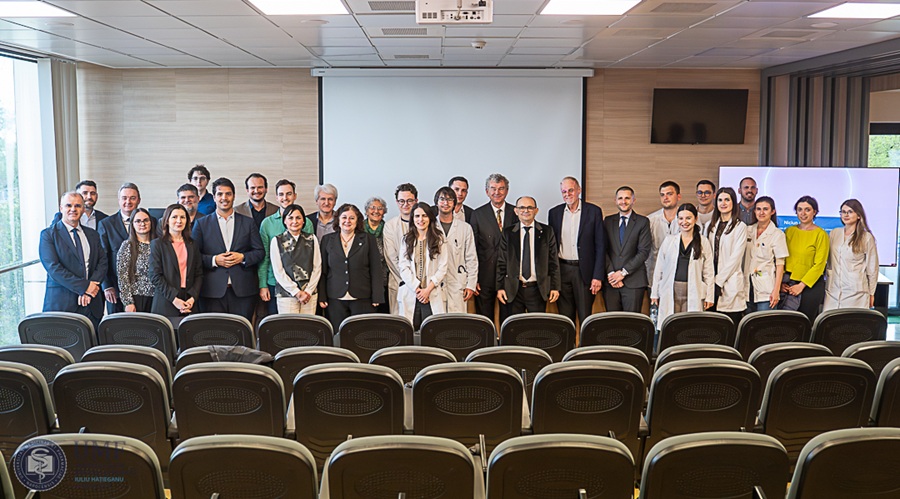
Group photo of attendees at the inauguration of the Translational Neuroscience Center at the University of Medicine and Pharmacy of Cluj-Napoca (UMF). Source: NeurotechEU

This meeting symbolises the strengthening of ties between both academic institutions, as well as the tangible outcomes of being part of the NeurotechEU European university. As Gallar noted: “It is truly inspiring to see how the alliance is yielding such concrete results for the universities within the consortium”.

Furthermore, the opening day featured various presentations within the NeurotechEU framework. Attendees, including representatives from NeurotechEU member universities and other European projects, were provided with a forum to present and share best practices currently being implemented across the different universities under the NeurotechEU umbrella.
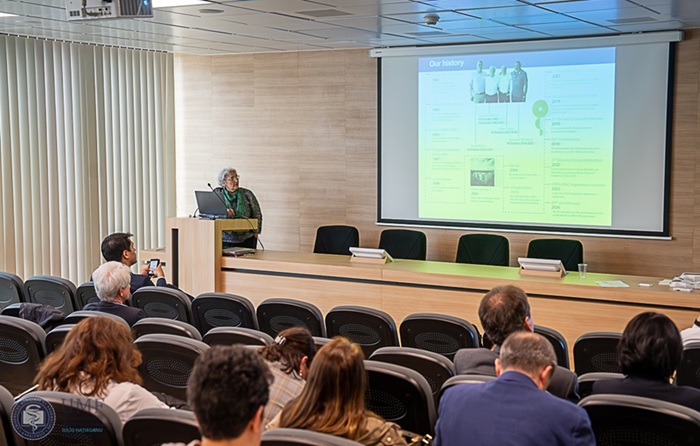
The director of the Institute for Neurosciences UMH-CSIC and academic leader of NeurotechEU at UMH, Juana Gallar, during her presentation at the event. Source: NeurotechEU.

The European University of Brain and Technology is an alliance of nine European universities, funded by the European Commission, aiming to create a higher education space focused on neurotechnology. Alongside UMH and the University of Medicine and Pharmacy in Cluj-Napoca, the consortium also includes: Radboud University (Netherlands), Karolinska Institutet (Sweden), the University of Bonn (Germany), Boğaziçi University (Turkey), the University of Lille (France), Reykjavik University (Iceland), and the Medical University of Innsbruck (Austria).

Source:  The European University of Brain and Technology (NeurotechEU) – UMH (jsantacreu@umh.es) / Institute for Neurosciences UMH-CSIC (in.comunicacion@umh.es)

The original press release is available in the attached file.

La entrada A UMH delegation attends the official inauguration of the new NeurotechEU alliance space at the University of Cluj-Napoca se publicó primero en Instituto de Neurociencias de Alicante.

Go to Source

Challenging Lepton Flavour Universality with rare b-baryon decays at LHCb

Image
Challenging Lepton Flavour Universality with rare b-baryon decays at LHCb
Thesis Defence

Challenging Lepton Flavour Universality with rare b-baryon decays at LHCb

Date
Place
Aula Eduard Fontseré, Physics Faculty

Abstract: The Standard Model is the most successful theory for describing the fundamental laws of nature. Despite its outstanding success, it is known that it is not a complete theory. Consequently, the search of new physics beyond the Standard Model stands as one of the main goals of the particle physics community. An experiment that contributes to this effort is LHCb, one of the four major detectors located at the LHC particle accelerator operated by CERN. Its research focuses on high-precision measurements of particles involving heavy b and c quarks.

Rare b—>sll transitions are strongly suppressed in the Standard Model (SM), making them sensitive to physics beyond the SM. Leptons from the different families have the same coupling to electroweak bosons in the SM, symmetry that is known as Lepton Flavour Universality (LFU). Precise measurements of LFU ratios in b—>sll decays provide, then, a very powerful null test of the SM, since a significant deviation from unity would clearly imply the existence of new physics. This thesis aims to update the LFU test performed with Lb—>pKll using Run 1 and 2016 data, which was the first LFU test involving b-baryons published by LHCb. This analysis includes the full Run 1 and Run 2 dataset (adds 2017-18 data), a full re-optimisation of the selection after the observation of the electronic decay, with particular focus on the MVA and particle identification requirements. Additionally, the measurement splitted in low and central q2 regions will be provided. The preliminary results show a clear improvement of the statistical uncertainty (16% to 9.5%) with a better control of the backgrounds.

In Run 3 the LHCb experiment underwent a major upgrade to operate at higher instantaneous luminosity. In the first years of Run 3 data taking a task-force was carried out to understand and validate the data recorded by the new detector. The first analysis of a decay with electrons in the final state using LHCb Run 3 data is also reported in this thesis.


Tribunal:

President: Dr. Lluís Garrido Beltran

Secretary: Dr. Maria Vieites Diaz

Vocal: Dr. Lesya Shchutska


Suplents:

Dr. Míriam Calvo Gómez

Dr. Martino Borsato


Directors:

Dr. Eugeni Graugés Pous

Dr. Carla Marin Benito

Tutor: Dr. Joan Soto Riera

Go to Source

DESI Completes Planned 3D Map of the Universe and Continues Exploring

Image
Star trails over the Mayall Telescope that houses DESI. Circles of light on the night sky. A telescope dome atop a mountain is below the center of the circle
Credits
Luke Tyas/Berkeley Lab and KPNO/NOIRLab/NSF/AURA
English

Last night, the 5,000 fiber-optic eyes of the Dark Energy Spectroscopic Instrument (DESI) swiveled onto a patch of sky near the Little Dipper. Roughly every 20 minutes, they locked on to distant pinpricks of light, gathering photons that had traveled toward Earth for billions of years. When the sun rose, collaborators marked completion of a major milestone: successfully surveying all of the area in DESI’s originally planned map of the universe.

The five-year survey, finished ahead of schedule and with vastly more data than expected, has produced the largest high-resolution 3D map of the universe ever made. Researchers use that map to explore dark energy, the fundamental ingredient that makes up about 70% of our universe and is driving its accelerating expansion.

By comparing how galaxies clustered in the past with their distribution today, researchers have traced dark energy’s influence over 11 billion years of cosmic history. Surprising results using DESI’s first three years of data hinted that dark energy, once thought to be a “cosmological constant,” might be evolving over time. With the full set of five years of data, researchers will have significantly more information to test whether that hint disappears or grows. If confirmed, it would mark a major shift in how we think about our universe and its potential fate, which hinges on the balance between matter and dark energy.

“We are very eager to obtain the analysis of these five years of data and what they tell us about the nature of dark energy,” says Adriana Nadal-Matosas, a PhD student at the ICCUB who studies the non-Gaussian signal of DESI galaxies. “In a few months we will be able to learn a bit more about whether DESI data are statistically consistent with measurements of the cosmic microwave background within the cosmological constant framework,” Nadal-Matosas adds, referring to the potential discrepancy between these two experiments.

DESI’s quest to understand dark energy is a global endeavor. The international experiment brings together the expertise of more than 900 researchers (including 300 PhD students) from over 70 institutions. The project is managed by the Department of Energy’s Lawrence Berkeley National Laboratory (Berkeley Lab), and the instrument was constructed and is operated with funding from the DOE Office of Science. DESI is mounted on the U.S. National Science Foundation’s Nicholas U. Mayall 4-meter Telescope at Kitt Peak National Observatory (a program of NSF NOIRLab) in Arizona.

“DESI’s five-year survey has been spectacularly successful,” said Michael Levi, DESI director and a scientist at Berkeley Lab. “The instrument performed better than anticipated. The results have been incredibly exciting. And the size and scope of the map and how quickly we’ve been able to execute is phenomenal. We’re going to celebrate completion of the original survey and then get started on the work of churning through the data, because we’re all curious about what new surprises are waiting for us.”


This visualization shows how DESI’s map of the universe accumulated over five years. It begins with DESI’s tiles on the night sky and transitions to the 3D map. Earth is at the center of the wedges, and every dot is a galaxy. Credit: DESI Collaboration and DESI Member Institutions/DOE/KPNO/NOIRLab/NSF/AURA/R. Proctor


DESI has now measured cosmological data for six times as many galaxies and quasars as all previous measurements combined. The collaboration will immediately begin processing the completed dataset, with the first dark energy results from DESI’s full five-year survey expected in 2027. In the meantime, DESI scientists continue to analyze the survey’s first three years of data, refining dark energy measurements and producing additional results on the structure and evolution of the universe, with several papers planned later this year.

“The Dark Energy Spectroscopic Instrument has truly exceeded all expectations, delivering an unprecedented 3D map of the universe that will revolutionize our understanding of dark energy,” said Kathy Turner, Program Manager for the Cosmic Frontier in the Office of High Energy Physics at the Department of Energy. “From its inception, we envisioned a project that would push the boundaries of cosmology, and to see it come to such a spectacularly successful completion for its initial survey, ahead of schedule and with such rich data, is incredibly rewarding. The dedication and ingenuity of the entire DESI collaboration have made this world-leading science a reality, and I am immensely proud of the groundbreaking results we are already seeing and the discoveries yet to come as we continue to explore the mysteries of our cosmos.”

An observing machine

DESI began collecting data in May 2021. Since then, the instrument has far surpassed the collaboration’s original goals. The plan was to capture light from 34 million galaxies and quasars (extremely distant yet bright objects with black holes at their cores) over the five-year sky survey. DESI instead observed more than 47 million galaxies and quasars and 20 million stars.


These accelerated time-lapses show how the machinery holding DESI moves the instrument into position. Credit: Marilyn Sargent/Berkeley Lab


The project’s success is even more impressive in light of several challenges. DESI is a complicated machine with thousands of parts to maintain. In 2020, final tests of the instrument were interrupted by the COVID-19 pandemic. In 2022, the Contreras Fire swept over Kitt Peak but, through the efforts of firefighters and staff, did not damage the telescope. Recovery efforts were slowed by monsoons and mudslides.

“DESI is a complicated but wonderfully robust system, and it’s been a huge amount of fun to see it come together and work so well for such a long time,” said Connie Rockosi, co-instrument scientist for DESI and a professor at UC Santa Cruz and UC Observatories. “We’ve learned about the instrument over five years, and we know its personality and behavior pretty well. That’s important because having the instrument be so efficient is why we’re here at the end of DESI’s original survey with such great data and so much science coming out.”

To map objects, researchers use specially-designed software to optimize DESI observations and decide where to point the telescope. Robotic positioners precisely line up optical fibers that are accurate to within 10 microns, or less than the width of a hair. Ten spectrographs then measure and split the light into its separate colors to determine each object’s position, velocity, and chemical composition. Each night, roughly 80 gigabytes of data streams through ESnet, DOE’s high-speed science network, to supercomputers at Berkeley Lab’s National Energy Research Scientific Computing Center (NERSC). Initial processing lets researchers do quality assurance and make any adjustments needed for the next night of observations.

Collaborators across the project found ways to make DESI more efficient. Efforts spanned telescope operations, tweaks to the instrument hardware, updates to software, observing protocols, methods to reduce the data, and more.

“There’s been constant monitoring and intervention to make the whole thing tick,” said Adam Myers, co-manager for DESI’s survey operations and professor at the University of Wyoming. “And the DESI team is remarkable. This huge group of people have all been working on whether they could save one or two or three percent in their particular area, and when you add it all up, it results in these amazing gains in efficiency.”

DESI is designed to make several overlapping passes of the sky to observe its full footprint (and sometimes make repeated observations of faint objects). The survey was so efficient, the team completed an entire additional pass over the sky for the “Bright-Time Survey,” which is carried out when reflected light from the moon hinders observations of faint and distant objects. All told, DESI made five passes during the Bright-Time Survey and seven during the Dark-Time Survey, covering about two-thirds of the northern night sky.
 

The sky’s the limit

DESI will continue observations through 2028 and grow its map by about 20%, from 14,000 square degrees to 17,000 square degrees. (For comparison, the moon covers approximately 0.2 square degrees, and the full sky has over 41,000 square degrees). The extended map will cover parts of the sky that are more challenging to observe: areas that are closer to the plane of the Milky Way, where bright nearby stars can make it harder to see more distant objects, or further to the south, where the telescope must account for peering through more of Earth’s atmosphere.

The experiment will also revisit the existing area of the map to collect data from a new set of galaxies: more distant and faint “luminous red galaxies.” These will provide an even denser and more detailed map in the regions DESI has already covered, giving researchers a clearer picture of the universe’s history.

Researchers will also study nearby dwarf galaxies and stellar streams, bands of stars torn from smaller galaxies by the Milky Way’s gravity. The hope is to better understand dark matter, the invisible form of matter that accounts for most of the mass in the universe but has never been directly detected.

The extended map is already underway. When it became clear that DESI would operate beyond its original survey plan, researchers began interleaving the new observations with the ongoing DESI survey to optimize the use of telescope time and keep the instrument from sitting idle.

“We’ve built a remarkable piece of equipment that met all our expectations and then some,” Levi said. “Now we’re pushing beyond our original plan. We don’t know what we’ll find, but we think it’ll be pretty exciting.”

DESI is supported by the DOE Office of Science and by the National Energy Research Scientific Computing Center, a DOE Office of Science national user facility. Additional support for DESI is provided by the U.S. National Science Foundation; the Science and Technology Facilities Council of the United Kingdom; the Gordon and Betty Moore Foundation; the Heising-Simons Foundation; the French Alternative Energies and Atomic Energy Commission (CEA); the Secretariat of Science, Humanities, Technology and Innovation (SECIHTI) of Mexico; the Ministry of Science and Innovation of Spain; and by the DESI member institutions.

The DESI collaboration is honored to be permitted to conduct scientific research on I’oligam Du’ag (Kitt Peak), a mountain with particular significance to the Tohono O’odham Nation.


News Type
Date
SEO Title
DESI Completes Planned 3D Map of the Universe and Continues Exploring

Go to Source

Prof. Daniel Maspoch and Prof. María Escudero-Escribano Honoured with the 2026 Awards from the Spanish Royal Society of Chemistry (RSEQ)

Both ICN2 Group Leaders have been recognised by the Society, with Prof. Maspoch receiving the RSEQ Medal and Prof. Escudero-Escribano the Excellence in Research Award. These distinctions are among the most prestigious in chemistry at the national level.

Go to Source

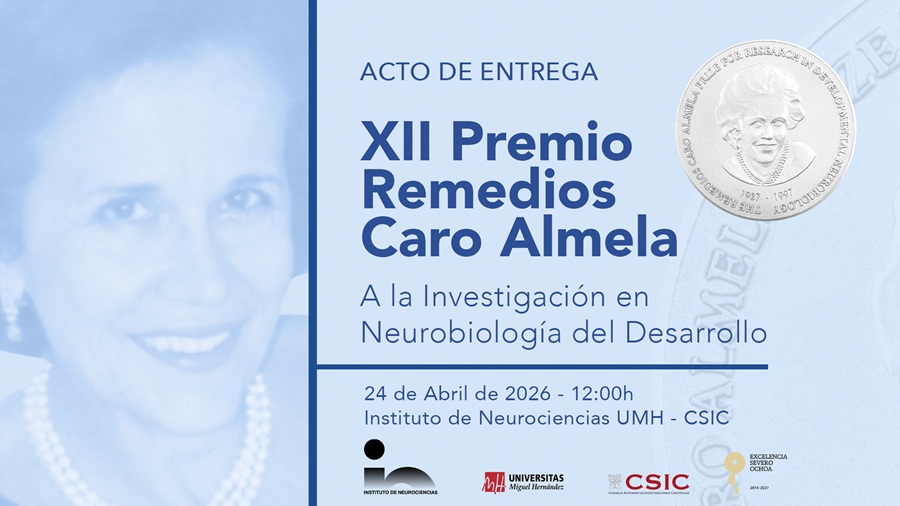
Ceremony for the 12th Remedios Caro Almela Award, April 24 2026

The Institute for Neurosciences, a joint center of the Miguel Hernández University of Elche (UMH) and the Spanish National Research Council (CSIC), together with the Remedios Caro Almela Chair of Neurobiology, are pleased to invite you to the award ceremony of the XII Remedios Caro Almela Prize in Developmental Neurobiology, which will take place on April 24th in the Assembly Hall of the Neurosciences Institute.

This year, the researcher selected by the scientific committee is Professor Sonia Garel (Institut de Biologie de l’École Normale Supérieure de Paris and Collège de France), in recognition of her innovative discoveries on the molecular mechanisms underlying nervous system development. Her work has significantly advanced our understanding of how interactions between cells shape neuronal circuits in the cerebral cortex.

Among her most notable discoveries, the laboratory led by Professor Sonia Garel revealed that transient interactions between neurons with no functional relationship are crucial for the formation of neuronal circuits. In this context, her identification of the so-called ‘corridor’, cells—embryonic neurons essential for thalamocortical projections, highlighted the importance of neuronal migration and transient cellular interactions in the development of the nervous system.

Professor Sonia Garel has also been a pioneer in the study of neuroimmune interactions, focusing on microglia and demonstrating that these cells play an active role in the wiring of cortical circuits, while also being modulated by factors such as the gut microbiota in a sex-specific manner, with important clinical implications. These advances have opened new avenues for understanding the origins of neurodevelopmental disorders such as autism and schizophrenia, and further underscore the relevance of her work in the study of the developing brain.

The event will consist of two parts:

Remedios Caro Almela Lecture 2026

10:30. XII Remedios Caro Almela Lecture delivered by the awardee: ‘Microglia in the early choreography of brain construction’.

11:30. coffee break.

Award Ceremony of the XII Remedios Caro Almela Prize

12:00. Institutional ceremony for the presentation of the XII Remedios Caro Almela Prize

La entrada Ceremony for the 12th Remedios Caro Almela Award, April 24 2026 se publicó primero en Instituto de Neurociencias de Alicante.

Go to Source

Measurement of (Formula presented), (Formula presented), and (Formula presented) Decay Parameters Using (Formula presented) Decays

Measurement of (Formula presented), (Formula presented), and (Formula presented) Decay Parameters Using (Formula presented) Decays

Dekkers S.; Egede U.; Fujii Y.; Hadavizadeh T.; Henderson R.D.L.; Lane J.J.; Liu F.L.; Monk M.; Song R.; Walton E.J.; Ward J.A.; Bediaga I.B.; Camargo Magalhaes P.; Cruz Torres M.; De Freitas Carneiro Da Graca U.; De Miranda J.M.; dos Reis A.C.; Falcao L.N.; Gomes A.; Massafferri A.; Santoro L.; Sundfeld D.; Torres Machado D.; Amato S.; De Paula L.; Ferreira Rodrigues F.; Gandelman M.; Hicheur A.; Lopes J.H.; Nasteva I.; Nogarolli P.; Otalora Goicochea J.M.; Polycarpo E.; Rangel M.S.; Souza De P
Physical Review Letters, Vol. 133, Num. 261804 (2024)
Article

Go to Source

Dynamical time and Ashtekar variables for the Husain-Kuchař model

Dynamical time and Ashtekar variables for the Husain-Kuchař model

Barbero G J.F.; Margalef-Bentabol J.; Vicente-Cano A.; Villasenor E.J.S.
Physical Review D, Vol. 110, Num. 124072 (2024)
Article

Go to Source

Sidebar