Author Archive

Measurement of the D* longitudinal polarization in B0 →d*-τ+ντ decays

Measurement of the D* longitudinal polarization in B0 →d*-τ+ντ decays

Beteta A.; Aaij R.; Abdelmotteleb A.S.W.; Abellan Beteta C.; Abudinén F.; Ackernley T.; Adeva B.; Adinolfi M.; Adlarson P.; Afsharnia H.; Agapopoulou C.; Aidala C.A.; Ajaltouni Z.; Akar S.; Akiba K.; Albicocco P.; Albrecht J.; Alessio F.; Alexander M.; Alfonso Albero A.; Aliouche Z.; Alvarez Cartelle P.; Amalric R.; Amato S.; Amey J.L.; Amhis Y.; An L.; Anderlini L.; Andersson M.; Andreianov A.; Andreola P.; Andreotti M.; Andreou D.; Ao D.; Archilli F.; Arguedas Cuendis S.; Artamonov A.; Artuso
Physical Review D, Vol. 110, Num. 092007 (2024)
Article

Go to Source

Nature: NeuMap, a pioneering map of neutrophils that redefines their role in health, infection, and inflammation

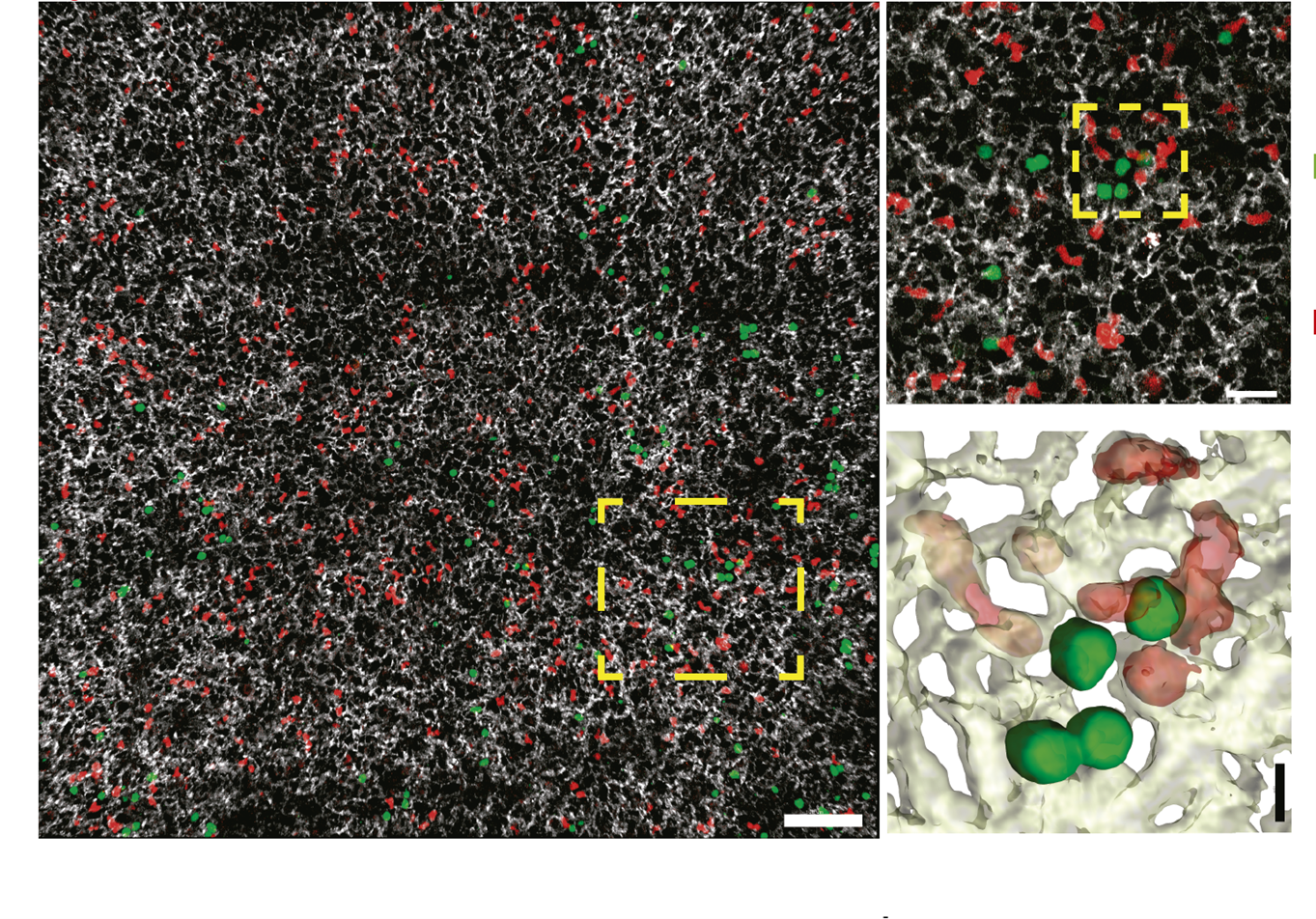
Neutrophils are the most abundant immune cells in the body and the first to respond to infection or tissue damage. Yet despite their importance, until now very little was known about how they truly function, how they change depending on the tissue they inhabit, or how they contribute not only to host defense but also to inflammatory, cardiovascular, or cancer-related diseases. Their diverse actions enable them to save lives during infection but can also worsen inflammation, as seen in conditions such as COVID-19.

To unravel this complexity, an international consortium led by scientists at the Centro Nacional de Investigaciones Cardiovasculares (CNIC), Universidad Carlos III de Madrid (UC3M), Yale University, and Westlake University (China) has developed NeuMap, the first comprehensive map describing how neutrophils are organized across tissues, life stages, and disease states. With NeuMap, scientists have, for the first time, a clear guide to navigate the immense heterogeneity of these cells, opening a new era in the understanding and control of the immune system.

The study, published in Nature, analyzed more than one million cells using next-generation sequencing technologies.

“What is most surprising,” explains Dr. Iván Ballesteros, professor in the Departament of Neuroscience and Biomedical Sciences and in the Faculty of Health Sciences  at UC3M and researcher at the CNIC – is “is that individual neutrophils live only a few hours, yet this cell population maintains a stable architecture throughout life. It is a pattern that emerges from chaos. Understanding this logic opens new avenues to guide immunity toward healing.”

Neutrophils in the lung

The work also shows that, until now, the lack of a reliable benchmark limited our ability to interpret the true role of these cells.

Yale-CNIC scientist Andrés Hidalgo notes that previous studies were largely focused on specific diseases, such as cancer or infection. “Here, we brought together an enormous variety of conditions—from pregnancy and fetal development to infections, cancer, myocardial infarction, and aging.”

By integrating all these data,” adds co–first author Daniela Cerezo-Wallis (Yale University), “we were able to observe how neutrophils follow common patterns despite their apparent diversity.”

Cross-species analyses, explains co–first author Andrea Rubio-Ponce (CNIC), showed that many of these cell programs are unexpectedly conserved between mice and humans. “This greatly facilitates translation to clinical studies and accelerates the development of biomarkers and new therapies,” adds Laiguan Ng of Westlake University.

In addition to bringing order to a traditionally fragmented field, NeuMap provides a practical tool that will allow researchers to identify which neutrophil types are present in a disease and what function they may perform.

The authors emphasize that the atlas will be freely available to the scientific community worldwide.

The research received funding from the Cancer Research Institute; Ministerio de Ciencia, Innovación y Universidades/ Agencia Estatal de Investigación (AEI); Fundación BBVA; WorldwideCancer Research; NIH; Deutsche Forschungsgemeinschaft; Fundación Leducq; IZKF/IMF Münster, BachynskiFamilyFoundation; CanadaFoundation for Innovation; National Medical Research Council y Skin Research Institute of Singapore; National Natural Science Foundationof China; European Union “NextGenerationEU/PRTR, y European Regional Development Fund.

Go to Source

¡Muchas felicidades, Dr. Israel Macho Ávila!

Israel Macho Ávila a PhD student under Prof. Pau Ballester and Dr. Gabriel González Ferrer supervision has successfully defended his thesis entitled: “DOSY NMR Experiments at Variable Temperature. A Thorough Analysis of Optimal Conditions for Reliable Results” publicly on Wednesday, 3 December 2025.

The members of the evaluation committee were Prof. Montserrat Gómez Simón (Université de Toulouse, France),  Dr. Guzman Gil-Ramírez (University of Lincoln, United Kingdom) and Prof. Montserrat Ferrer García (Universitat de Barcelona, Spain).

Why did you become a scientist?

I’ve being in touch with research for many years now, but my experience has always been more involved in the application of skilled practical work, what is quite different from leading a project. But hey, achieving a PhD implies researching! So, I guess I may have become a little bit of a scientist in the process, right?

Regarding my relationship with science itself, as a child I was always ready to learn the meaning of new concepts and words. My parents encouraged me to look for them in the house encyclopedia, and it turns out that instead of getting sick of it I became a curious person, in many different areas.

Since the major part had to do with life sciences when I was in my pre-university years, I opted for this branch of knowledge. The rest is history… and Chemistry.

What do you want to achieve as a scientist?

In this new stage, I would like to merge my scientific and technical aptitudes in a synergic way. As a PhD candidate I have sharpen some skills in my specialized field, also I have achieved deeper and new knowledge that I can apply on my day-to-day job. Moreover, I have had the opportunity to approach my researcher colleagues in a different and closer way, sharing some difficulties of the thesis process with them. That human part has nothing to do with the usual interaction researcher-technician. So, to sum up, I think I will become a better specialist, but also my communication skills and empathy will improve thanks to this common experience.

What applications can your thesis have in the future?

The new methodology, resulting from the aforementioned study, should help researchers and NMR technicians in achieving reliable results in a simple way, provided the guidelines of our protocol for VT DOSY NMR experiments are followed.

The thing that I like most about my thesis is…. 

At a personal level what I like the most is that the main part of this work has been carried out with my boss and coworker of 15 years. We’ve passed through a lot in this time. So, the result has the smell of a familiar recipe cooked at home between good friends.

Also, I love that the results of this work have practical application in any NMR lab with no need for further investment or elaborated procedures.

From the lessons learnt (or skills developed) at ICIQ, which one do you value the most?

Over these years I’ve been very fortunate to learn many things from different situations and colleagues. To cite one particularly relevant lesson, I would highlight the importance of distinguishing between important, urgent, and priority.

What ICIQ moment you´ll never forget? 

This is an old one, so sorry for going back to before my PhD thesis years, but I really love this memory: The Nights of Thrones.

Ten years ago, a group of dear friends met to have dinner and enjoy every next chapter of the well-kwon TV series ‘Game of Thrones’. There was daily work, but also communal excitement, secret jokes in the corridors and by e-mail between those that had already read or where in the reading of the novels…So funny!

What advice do you have for someone who’s starting their PhD now?

Organize your schedule, work hard, endure the difficulties and maintain your balance: There’s something called ‘buffer time’, but chocolate works as well.

Who has been your biggest influence?

My family, friends and some inspirational readings.

Chemistry/Science is fun because…

Every single day it surprises us with unexpected plot twists. In a way, Chemistry can be considered the ultimate thriller writer.

Tell us something about you that people might not know… 

I’m universal recipient, just in case.

La entrada ¡Muchas felicidades, Dr. Israel Macho Ávila! se publicó primero en ICIQ.

Go to Source

Green Light for MAIAMI, an AI Platform to Accelerate the Development of Advanced Materials

With €1.4 million in funding, MAIAMI marks a strategic collaboration between ICN2 and IREC to boost key energy technologies such as sustainable batteries and electrocatalysts for green fuel production. This innovative tool will combine advanced simulations with robotic experimental systems. 

Go to Source

Ciencia, industria y transporte se dan cita en IMDEA Energía para abordar el futuro del hidrógeno renovable en el marco del proyecto GreenH2-CM

La entrada Ciencia, industria y transporte se dan cita en IMDEA Energía para abordar el futuro del hidrógeno renovable en el marco del proyecto GreenH2-CM se publicó primero en IMDEA ENERGÍA.

Go to Source

Researchers at the Institute for Neurosciences identify the molecular mechanisms linking early-life environments with memory

  • The study, published in Nature Communications, reveals that the transcription factor AP-1 acts as a molecular ‘switch’ that converts early-life experiences into lasting cognitive improvements or impairments.
  • Researchers found that blocking the Fos gene prevents mice from benefiting from an enriched environment, highlighting the essential role of AP-1 in neuronal plasticity.

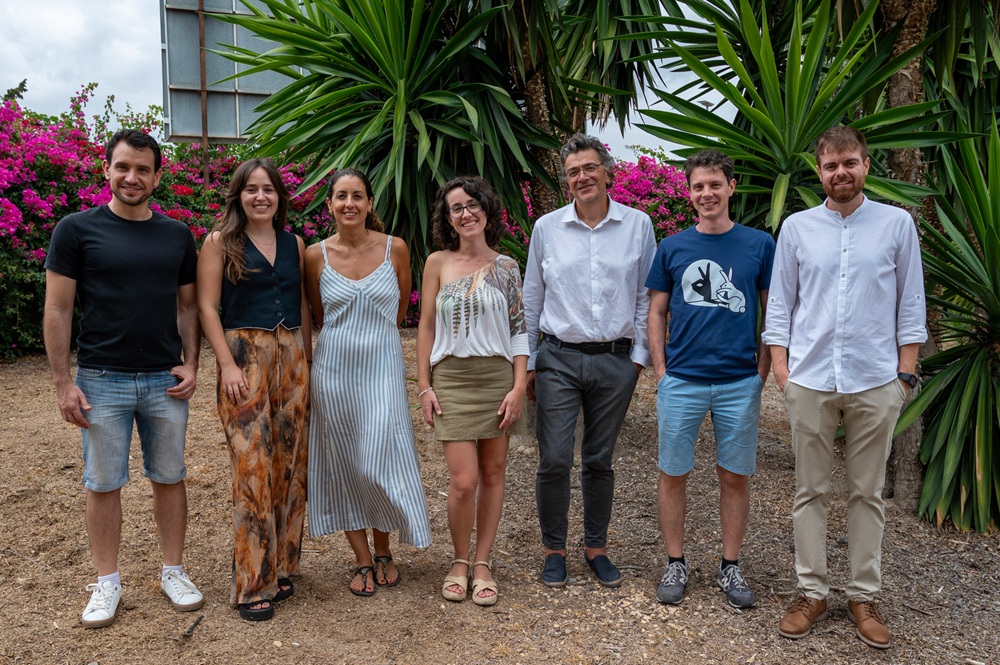
Photo: IN CSIC-UMH researchers Sergio Niñerola, Isabel Bustos, Beatriz del Blanco, Marta Alaiz-Noya, Ángel Barco, Federico Miozzo & Miguel Fuentes. Source: IN CSIC-UMH

A team from the Institute for Neurosciences (IN), a joint research center of the Spanish National Research Council (CSIC) and Miguel Hernández University of Elche (UMH), led by researcher Ángel Barco, has identified a molecular mechanism that helps explain why growing up in a stimulating environment enhances memory. In contrast, a lack of stimulation can impair it. The study, conducted in mice and published in Nature Communications, demonstrates that the environment during childhood and adolescence has a lasting impact on the brain by activating or repressing a single transcription factor, AP-1, which regulates the expression of genes involved in neuronal plasticity and learning. This finding identifies a molecular mediator that can translate life experiences into persistent changes in cognitive function.

To carry out the research, the team from the IN’s Transcriptional and Epigenetic Mechanisms of Neuronal Plasticity laboratory raised young mice in three different conditions: an enriched environment with toys, exercise wheels, and social interaction; a standard environment; and an impoverished environment characterized by isolation and a lack of stimulation. After several weeks, animals raised in enriched environments showed superior performance in learning and memory tasks, whereas those reared in impoverished environments scored lower on cognitive tests.

Using advanced genomic and epigenetic techniques to analyse the brain, the researchers observed that early-life experiences produce long-lasting modulation of AP-1 activity: its activation boosts gene networks that strengthen neuronal connections, while reduced activity weakens those same processes. To functionally validate this finding, the team experimentally blocked the Fos gene, one of the essential subunits of the AP-1 complex. Under these conditions, mice did not benefit from the enriched environment. They showed no cognitive improvement—demonstrating that AP-1 is not only correlated with environmentally induced changes in the brain but is also required for them to occur.

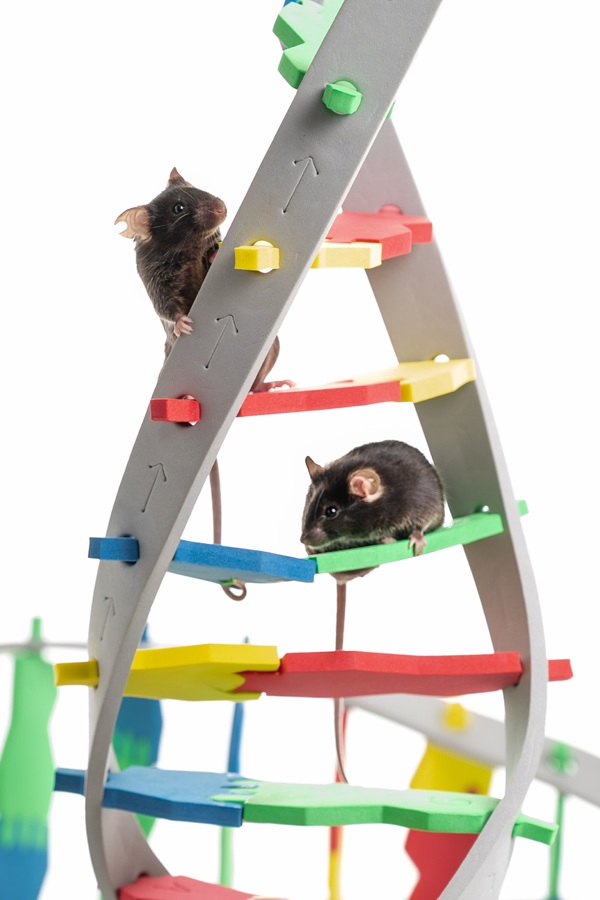
Mice raised in enriched environments show improved learning and memory driven by sustained activation of the transcription factor AP-1, the molecular ‘switch’ that converts early-life experiences into lasting changes in the brain. Source: IN CSIC-UMH.

“We have known for decades that the early-life environment influences learning capacity, but we lacked a clear mechanism to explain how this happens. We have now identified a molecular switch that translates those early experiences into long-lasting changes in the brain”, explains Barco. “What is striking is that a single transcription factor acts as a convergence point for such diverse experiences as sensory stimulation, exercise, or social interaction. It is a key piece in understanding how the environment shapes memory”, notes the study leader.

The study also reveals that environmental impact varies among neuronal populations. By analysing specific types of neurons, the scientists found that AP-1 responds differently in CA1 pyramidal neurons and in dentate gyrus granule cells, two key populations involved in spatial learning and memory formation. According to Marta Alaiz-Noya, co-first author of the study together with Federico Miozzo and Miguel Fuentes Ramos, “the robust activation of AP-1 in enriched environments triggers gene programmes that allow the brain to enter ‘learning mode’, reinforcing neuronal connections during particularly sensitive developmental stages”.

“Taken together, these findings reinforce the idea that environmental stimulation and social interaction during childhood and adolescence not only enrich life experience but also leave a tangible biological trace in the brain. Moreover, they open the door to future therapeutic strategies that mimic the effects of enriched environments in neurodevelopmental disorders or in conditions involving cognitive decline”, adds Federico Miozzo.

“Neuronal type-specific modulation of cognition and AP-1 signaling by early-life rearing conditions.” Alaiz-Noya M, Miozzo F, Fuentes-Ramos M, Machnicka MA, Kurowska M, Herrera ML, Del Blanco B, Ninerola S, Bustos-Martínez I, Wilczynski B and Barco A. Nature Communications (2025) 16, 9710.

DOI https://doi.org/10.1038/s41467-025-65343-5

The article also involved researchers from the Faculty of Mathematics, Informatics, and Mechanics at the University of Warsaw (Poland), who contributed to the bioinformatic analysis of DNA methylation data across the three environments. The work was made possible thanks to funding from the “la Caixa” Foundation, the Spanish State Research Agency – Ministry of Science, Innovation and Universities, the Carlos III Health Institute, the European Regional Development Fund (ERDF) of the European Union, and the Generalitat Valenciana.

Source: Institute for Neurosciences CSIC-UMH (in.comunicacion@umh.es)

La entrada Researchers at the Institute for Neurosciences identify the molecular mechanisms linking early-life environments with memory se publicó primero en Instituto de Neurociencias de Alicante.

Go to Source

IFAE at the UAB Innovation Fair 2025

The fair is part of the UAB Innovation Week, aimed at promoting knowledge transfer and collaboration between researchers

Go to Source

IFAE appoints Jordi Núñez Freixa as the institute’s new General Manager

The Governing Board of the Institute for High Energy Physics (IFAE), after a selection process, has appointed Jordi Núñez Freixa as its new General Manager. Núñez will take up the position on 1 December 2025.

Go to Source

Colorimetric Sensors for Smart Temperature Monitoring

The ICN2 Nanostructured Functional Materials Group (Nanosfun) is making significant progress in the development of innovative sensing technologies that enable simple and precise temperature monitoring across a wide range of applications. Their projects span from smart food-labelling solutions to emerging biomedical uses.

Go to Source

Researcher Felix Leroy, from the Institute for Neurosciences CSIC-UMH, receives the Sant Joan Humà Award for Science with Values

  • The award recognises the work of the Cognition and Social Interactions laboratory and its contribution to the study of mutations associated with ASD, as well as its commitment to socially engaged science.

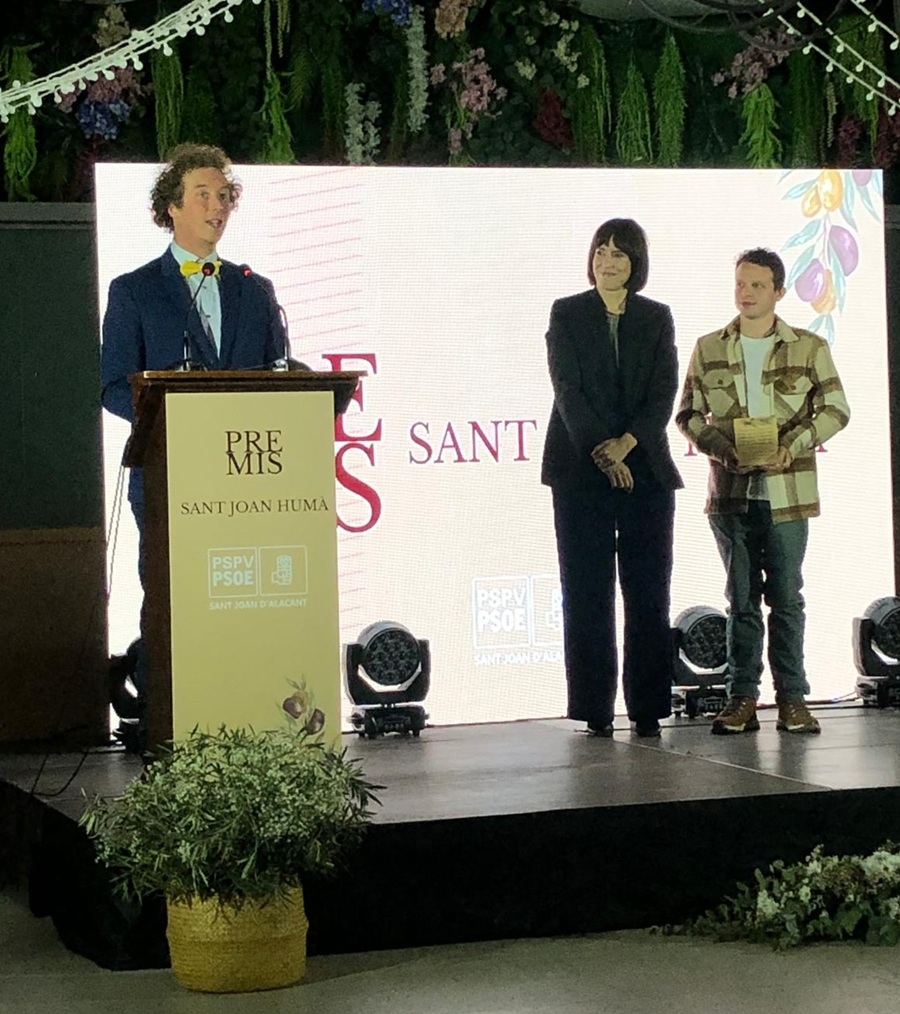
Félix Leroy, Diana Morant, and Guillaume Bouisset during the thank-you speech at the gala held at the restaurant El Patio. Source: IN CSIC-UM.

The Cognition and Social Interactions Group at the Institute for Neurosciences (IN), a joint centre of the Spanish National Research Council (CSIC) and Miguel Hernández University (UMH) of Elche, has been honoured with the Sant Joan Humà Award for Science with Values, granted by the PSPV-PSOE of Sant Joan d’Alacant. This recognition highlights the scientific work and social commitment of a team dedicated to studying the neuronal bases of social behaviour through animal models and basic neurobiology approaches.

The award was accepted by Félix Leroy, the researcher who leads the laboratory, accompanied by researcher Guillaume Bouisset, during a ceremony that brought together more than 170 attendees at Restaurante El Patio. The prize was presented by the Minister of Science, Innovation and Universities, Diana Morant, who emphasised the importance of recognising those who “place scientific knowledge at the service of collective well-being and a more humane society”.

Research to understand the brain mechanisms of sociability

Leroy’s group focuses on uncovering how different brain circuits and neuromodulators regulate social interactions. Their research has provided key advances in the study of vasopressin and the lateral septum, as well as in understanding how specific genetic alterations, such as Shank3b mutations, can lead to sociability deficits in animal models.

These findings have led to relevant publications and recognitions, such as the XX Alberto Sols Award for Best Scientific Work, as well as to translational initiatives, including the recent ERC Proof of Concept grant awarded to Félix Leroy to develop new tools aimed at addressing alterations in social anxiety and social cognition.

During the acceptance of the award, Leroy dedicated the recognition to his entire team, emphasising that science is a collective effort: “This award reflects the work, rigour and dedication of everyone who is part of the laboratory. Exploring how the brain generates and modulates sociability helps us better understand our own nature and opens pathways towards future applications that may benefit society,” the researcher noted.

Group photo of all the awardees at the first edition of the Sant Joan Humà Awards of the PSPV-PSOE of Sant Joan. Source: PSPV-PSOE of Sant Joan.

The Sant Joan Humà Award for Science with Values is one of seven honours presented in this inaugural edition, created to recognize individuals and organizations that contribute to a more inclusive, diverse, and equal society. Eva Delgado, Secretary General of the PSPV-PSOE of Sant Joan, recalled that these awards “were created to recognise the quiet work that transforms realities and builds coexistence.”

The ceremony also recognised the work of other social leaders in the municipality, highlighting the diversity of fields that contribute to collective well-being. Awards were presented to CEAR Sant Joan d’Alacant (Coexistence), Projecte Nos Movemos (Inclusion), the Junta de Penyes de Sant Joan d’Alacant (Solidarity), the Associació Colors de l’Horta (Diversity), Guillermina Revuelta Fernández (Equality), and the Fundació Secretariado Gitano, on the occasion of the 600th anniversary of the Roma community’s arrival in Spain.

Source: Institute for Neurosciences CSIC-UMH (in.comunicacion@umh.es)


La entrada Researcher Felix Leroy, from the Institute for Neurosciences CSIC-UMH, receives the Sant Joan Humà Award for Science with Values se publicó primero en Instituto de Neurociencias de Alicante.

Go to Source

Scientists call for urgent measures to protect underwater forests in a new global Marine Animal Forests Manifesto

Scientists from around the world are calling for urgent action to protect, restore, and sustainably manage one of the ocean’s least known yet most important ecosystems: the Marine Animal Forests.

Go to Source

Results Announcement V SciencePhoto_IN 2025

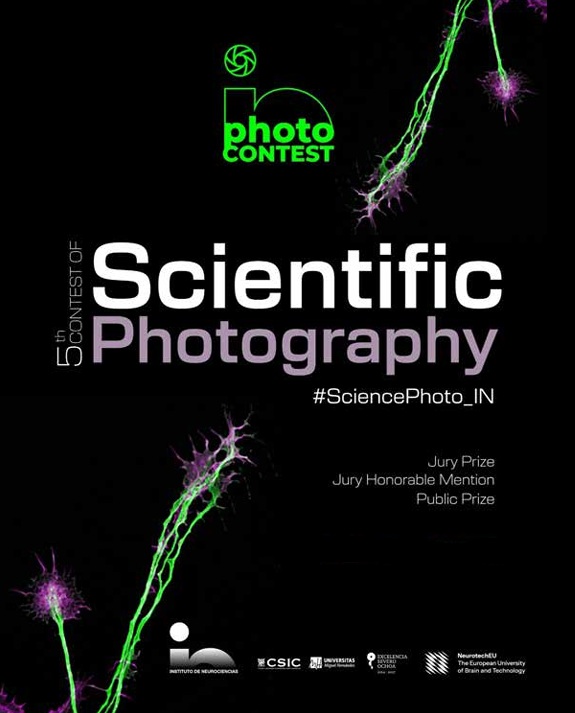
From the #SciencePhoto_IN team, we are happy to announce the winners of the 5th IN Science Photo Contest. We would like to thank all the participants for your work, highlighting the high quality of the images and videos that have been sent for this edition. We appreciate your participation in this type of event as it highlights a very important part of your work and also allows us to bring the science generated at the IN closer to the general public. As last year, the IN 2026 Calendar has been prepared with the 12 selected photographs, combining the Jury and Social Networks modalities. A copy will be given to each of the 12 selected authors on December 19th at the end of the Christmas Meeting!

Please find attached a pdf file with the winners of both categories and the 3 prizes as well as the 12 images selected for the IN 2026 Calendar:

  • Jury’s Prize: a selection based on the opinion of a committee composed of 10 IN research, management and technical staff.
  • Jury’s Honorable Mention: the second best image as voted by the Jury members.
  • Social Media’s Prize: a selection based on the public impact of the images disseminated through the IN’s social networks (considering the sum of the number of interactions on Twitter, Bluesky, Instagram and Facebook).

Congratulations to the winners! 
We look forward to seeing you in the next edition!

Organizing Comittee:
Verónica Murcia Belmonte
Augusto Escalante

La entrada Results Announcement V SciencePhoto_IN 2025 se publicó primero en Instituto de Neurociencias de Alicante.

Go to Source

Sidebar