Author Archive

Sustainability research overlooks key actors and actions in the face of the environmental crisis

Efforts to advance towards a more sustainable world focus heavily on a limited set of actions and actors while overlooking key strategies and sectors needed to address the climate crisis and biodiversity loss, according to a new study published today in Nature Sustainability. Conducted by the ICTA-UAB, and based on the analysis of 4 million scholarly documents, the study reveals major blind spots in global sustainable research and highlights the urgent need for a more inclusive and coordinated approach to address the environmental crisis.

Go to Source

A clinical study led by the Institute for Neurosciences reveals that aniridia causes a progressive loss of corneal sensitivity

  • The study, published in the journal Cornea, shows that this rare disease not only alters the structure of the cornea but also affects the function of the sensory nerves that protect and maintain it.
  • Through a clinical study conducted in children and adults with aniridia, the researchers found that the loss of sensitivity is not static, but rather progresses with age.

Photo: Researchers Mª Carmen Acosta and Juana Gallar, who lead the Ocular Neurobiology laboratory at IN UMH-CSIC

Congenital aniridia is a rare disease caused, in most cases, by mutations in the PAX6 gene, which is essential for the development of ocular structures. Although the most visible feature is the total or partial absence of the iris, its effects go far beyond this, as those affected often experience focusing problems, photophobia, and various complications that may worsen over time. Now, a clinical study led by the Ocular Neurobiology Group at the Institute for Neurosciences (IN), a joint center of Miguel Hernández University of Elche (UMH) and the Spanish National Research Council (CSIC), and published in the journal youtubeLink YouTube: https://youtu.be/uM8NerQd7tY

Until now, previous studies have shown that nerve density in the corneas of adult patients with aniridia is reduced. However, no one had analyzed whether these nerves were fully functional: “We knew there were fewer nerves, but we still needed to understand whether the remaining ones were working properly and what consequences this had for the eye”, explains Professor Mª Carmen Acosta, who led the study. To carry out this research, the team evaluated a group of patients with aniridia, including both children and adults, and compared them with individuals without the ocular condition.

Since aniridia is a rare disease, assembling a clinical cohort that included different age groups posed a significant challenge. The study was made possible thanks to collaboration with ophthalmologist Nora Szentmáry, a specialist at Semmelweis University (Hungary), whose research background and clinical expertise in aniridia make her an international reference in this field. Her unit facilitated patient recruitment and evaluation, a key factor in enabling the analysis of how nerve function evolves from childhood to adulthood.

The researchers measured corneal sensitivity to very mild mechanical stimuli applied through controlled air pulses, as well as sensitivity to cold. They also analyzed tear production under basal conditions and after activating the lacrimal reflex through CO₂ microstimulation using the i-Onion device, developed from a patent held by the research group itself.

The results showed a clear pattern: in childhood, corneal sensitivity is very similar to that of healthy individuals. However, in adulthood, a significant decrease appears, and patients require stronger stimuli to perceive contact, showing difficulty distinguishing stimulus intensity. “The most relevant finding is that the deterioration is not static, but progressive. Children still retain a function quite close to normal, but in adults, we observe a clear loss of sensitivity”, Acosta notes.

Current Eye Research, 2024. doi: 10.1080/02713683.2024.2320779

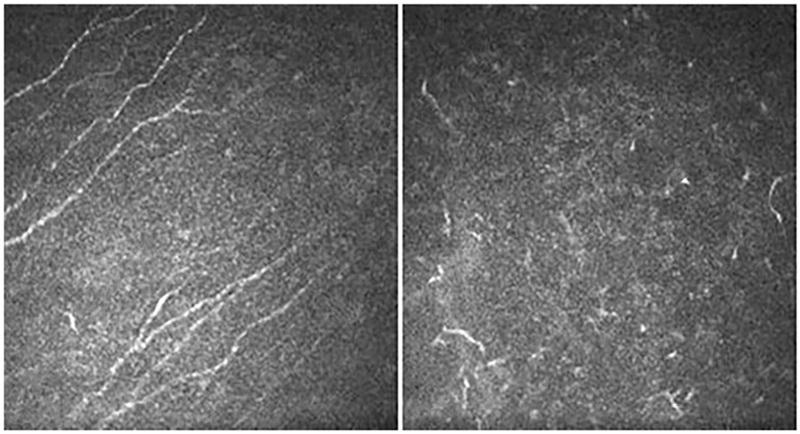
Cornea of a healthy eye (left) and of a patient with aniridia (right), showing changes in the tissue’s defensive cells that reflect corneal alteration. Source: Csorba et al., Current Eye Research, 2024.

The study also reveals alterations in the tear response. Although basal tear production is comparable to that of people without aniridia, the ability to increase secretion in response to a protective stimulus is reduced, limiting one of the eye’s main defense mechanisms. “Sensory information not only allows us to detect contact or cold. It is what activates protective mechanisms such as blinking and tear production. If the nerve signal weakens, the eye’s defense system also weakens”, explains Professor Juana Gallar, head of the Ocular Neurobiology Group.

The cornea loses its ability to regenerate

Another relevant aspect of the study is that the team focused on the trophic function of sensory nerves. Beyond their role in the perception of sensations, these nerves actively contribute to maintaining and regenerating tissue. When innervation decreases or deteriorates, the cornea loses its ability to repair itself, which promotes the appearance of small lesions, loss of transparency, and persistent pain. “Nerves are essential for keeping the cornea healthy. If their function becomes altered over time, the tissue no longer regenerates properly, and complications arise that affect both vision and quality of life”, adds Gallar.

This work is part of a broader project in which the team studies aniridia, both in patients and experimental models. In the next phase, the researchers will further analyze nerve function in a mouse model carrying a mutation in the PAX6 gene, which will allow them to study in greater detail the cellular mechanisms involved in the progressive degeneration of corneal innervation. Understanding these processes at a basic level is essential for designing more precise therapeutic strategies in the future to help slow deterioration and improve patients’ quality of life.

This research was possible thanks to funding from the Spanish State Research Agency – Spanish Ministry of Science, Innovation and Universities, the European Regional Development Fund (ERDF/European Union) “A Way of Making Europe”, and the Generalitat Valenciana. It also received support from the Dr. Rolf M. Schwiete Foundation, the Hungarian Academy of Sciences, and the National Research, Development and Innovation Office of Hungary.

Age Impairs Corneal Sensitivity and Reflex Tearing in Congenital Aniridia. Acosta MC, Náray A, Csidey M, Maka E, Nagy ZZ, Jávorszky E, Zobor D, Tory K, Cortón M, Kovács I, Gallar J & Szentmáry N. Cornea (2026)

DOI https://doi.org/10.1097/ico.0000000000004117

Source: Institute for Neurosciences UMH-CSIC (in.comunicacion@umh.es)

La entrada A clinical study led by the Institute for Neurosciences reveals that aniridia causes a progressive loss of corneal sensitivity se publicó primero en Instituto de Neurociencias de Alicante.

Go to Source

New evidence that smaller galaxies also practice cosmic “cannibalism”

The study, led by the Institute of Astrophysics of Andalusia (IAA-CSIC), provides a new way to understand the nature of dark matter. The work offers for the first time an estimate of the frequency with which dwarf galaxies exhibit stellar streams.

Go to Source

Cooling Chip Components with Ultrathin Materials

Researchers at ICN2 have explored the use of 2D materials, in particular hexagonal boron nitride, to help reduce excess heat in electronic and photonic chip components. Their results could play an important role in the development of future nanodevices.

Go to Source

Emotional Stimuli Modulate Our Brain Activity Even in Conditions of Very Low Visibility

Los estímulos emocionales modulan la actividad cerebral incluso en condiciones de baja visibilidad
PhD student Germán Cipriani, from the Mind, Brain, and Behavior Research Center (CIMCYC) at the University of Granada, together with researchers from the CEACO group at the Autonomous University of Madrid, led by Dr. Luis Carretié, have studied how emotional images capture attention even when they are very difficult to see.
Seguir leyendo

Go to Source

Los estímulos emocionales modulan la actividad cerebral incluso en condiciones de baja visibilidad

Los estímulos emocionales modulan la actividad cerebral incluso en condiciones de baja visibilidad
El doctorando Germán Cipriani, del Centro de Investigación Mente, Cerebro y Comportamiento (CIMCYC) de la Universidad de Granada, junto con investigadoras/es del grupo CEACO de la Universidad Autónoma de Madrid, liderado por el Dr. Luis Carretié, han estudiado cómo las imágenes emocionales captan la atención incluso cuando son muy difíciles de ver.
Seguir leyendo

Go to Source

Professor Antonio M. Echavarren appointed Chemistry Europe Fellow 2024–2025

Professor Antonio M. Echavarren, Group Leader and Director of the Severo Ochoa Scientific Programme at ICIQ, has been appointed Chemistry Europe Fellow for the 2024–2025 edition. This award represents the highest distinction granted by Chemistry Europe, an association that brings together 16 scientific societies from 15 European countries.

The Fellows programme, established in 2015, recognises every two years a select group of scientists whose contributions have been fundamental to the advancement of chemistry and to strengthening the European scientific community. This cohort has been chosen for its outstanding contributions, representing excellence in research, creativity and innovation.

The new Fellows will be formally recognised at the 10th EuChemS Chemistry Congress in Antwerp, scheduled for July this year.

A career of excellence

Professor Echavarren is internationally renowned for his pioneering work in homogeneous catalysis, particularly in gold chemistry, where his research has opened up new avenues for the synthesis of complex molecules and natural products that are essential for the development of pharmaceuticals and sustainable materials.

Echavarren’s research excellence has always gone hand in hand with his commitment to the advancement of organic chemistry and his service to the international scientific community. In addition to his achievements, Professor Echavarren is well known for his dedication to the training of young researchers: he has supervised numerous doctoral theses and his guidance has helped shape the next generation of scientists in organic chemistry.

“It is a great honour to join the distinguished list of Chemistry Europe Fellows, which includes Professor Pau Ballester, who was the first of our colleagues at the ICIQ to be honoured by Chemistry Europe,” said Professor Echavarren following the announcement of his appointment.

About Professor Antonio M. Echavarren

Professor Antonio M. Echavarren is an internationally recognised leading figure in the field of catalysis, particularly in gold-catalysed reactions. Throughout his career he has received numerous awards, including the Janssen-Cilag Prize in Organic Chemistry (2004), the Gold Medal of the Royal Spanish Chemical Society (2010), the Arthur C. Cope Scholar Award of the American Chemical Society (2015), the Enrique Moles National Research Award (2022) and the Rei Jaume I Award for Basic Research (2023). More recently, he was awarded an Doctor Honoris Causa by the University of Huelva (2025).

He has been awarded two ERC Advanced Grants and is a Fellow of the Royal Society of Chemistry, a member of the Academia Europaea and a former President of the Royal Spanish Chemical Society. He has also served as principal investigator on 13 projects funded by the Spanish Ministry of Science, Innovation and Universities, in addition to other international projects, including two ERC Advanced Grants, one ERC Proof of Concept grant and six Marie Skłodowska-Curie research staff grants.

Over the course of his career, he has supervised 60 doctoral theses, 47 master’s projects and 61 postdoctoral researchers. He is the author of more than 300 scientific publications in high-impact international journals.

About Chemistry Europe

Founded in 1995, Chemistry Europe is an association of 16 chemical societies from 15 European countries, representing over 75,000 chemists. It publishes a family of high-quality scholarly chemistry journals, covering a very broad range of disciplines. ChemistryEurope is its flagship journal, publishing high-impact, authoritative research on all aspects of chemistry. Wiley-VCH is its publisher.

The mission of Chemistry Europe is to evaluate, publish, disseminate, and amplify the scientific excellence of chemistry researchers from around the globe in high-quality publications. It supports its members at every stage of their careers as they strive to solve the challenges that impact humankind. In all its work, Chemistry Europe values integrity, openness, diversity, cooperation, and freedom of thought.
https://chemistry-europe.onlinelibrary.wiley.com/


La entrada Professor Antonio M. Echavarren appointed Chemistry Europe Fellow 2024–2025 se publicó primero en ICIQ.

Go to Source

Lo que el caso de Madrid nos enseña sobre la gestión de residuos: tratarlos no es suficiente

La entrada Lo que el caso de Madrid nos enseña sobre la gestión de residuos: tratarlos no es suficiente se publicó primero en IMDEA ENERGÍA.

Go to Source

Call for Applications for the position of Director of IFAE

IFAE has launched an international call for applications for the position of Director. The selected candidate will provide scientific leadership and strategic direction for the institute in its next stage of development.

Go to Source

Pedro Miguel Etxenike wins Passion for Science prize

The president of DIPC receives this recognition for his scientific career and his work in promoting science as a cultural and social driving force.

Go to Source

When Symmetry Breaks the Rules: From Askey–Wilson Polynomials to Functions

Researchers Tom Koornwinder (U. Amsterdam) and Marta Mazzocco (ICREA-UPC-CRM) published a paper in Indagationes Mathematicae exploring DAHA symmetries. Their work shows that these symmetries shift Askey–Wilson polynomials into a continuous functional setting,and introduce an explicit decomposition of the non‑symmetric Askey–Wilson function into symmetric and anti‑symmetric parts. This work offers new structural insight into how certain DAHA automorphisms act across polynomial and functional settings within the q‑Askey scheme, without altering the established links with representation theory.

Researchers Tom H. Koornwinder (University of Amsterdam) and Marta Mazzocco (ICREA – Universitat Politècnica de Catalunya – CRM) have recently published the article Automorphisms of the DAHA of type  check{C}_1 C_1 and non‑symmetric Askey–Wilson functions in Indagationes Mathematicae. In this work, the authors analyze the internal symmetries of double affine Hecke algebras (DAHA) and study how these symmetries act on Askey‑Wilson (AW) polynomials and functions, both in the symmetric and non‑symmetric settings.

At first glance, one expects symmetries to move neatly within the world of polynomials. But some symmetries behave like a zoom tool: once applied, the picture demands higher resolution. What looked discrete (polynomials) must be viewed in a continuous setting (functions) for the transformation to make full sense. The paper leverages this change of scale to illuminate where the natural language of DAHA symmetries truly lives.

The work focuses on the relationship between algebraic structures and special functions—fundamental objects in representation theory and mathematical analysis—with deep connections to harmonic analysis and mathematical physics.

A well‑known structure — still with unanswered questions

Double affine Hecke algebras (DAHA), introduced by Cherednik, are central in representation theory and in the study of special functions. In the rank‑one case, the DAHA of type  check{C}_1 C_1 is closely related to Askey–Wilson polynomials and functions, which occupy the top level of the q‑Askey scheme of orthogonal polynomials.

Previous works had identified actions of various symmetry groups—such as modular groups or Weyl‑type groups—on operators associated with the DAHA and even on the algebra itself. However, a systematic account of how these symmetries act on the relevant eigenfunctions, in particular on Askey–Wilson polynomials and functions, was still missing. In particular, it was unclear whether these symmetries preserve the polynomial world or require a broader functional framework.

Moreover, the DAHA of type  check{C}_1 C_1 is related to the Painlevé VI equation through the quantization of its monodromy group. This naturally raises the question of to what extent the classical symmetries of Painlevé VI can be lifted to the DAHA level.

Earlier work had shown that certain transitions within the q‑Askey scheme admit a geometric interpretation. For instance, the limit from Askey–Wilson polynomials to dual q‑Hahn polynomials can be viewed as the process of merging two holes on a four‑holed Riemann sphere. Choosing different pairs of holes leads to different polynomial families, such as the Big q‑Jacobi polynomials. This geometric perspective naturally raises the question of what mechanism distinguishes these choices and points toward the study of the symmetries underlying Askey–Wilson polynomials and, ultimately, the DAHA that governs them.

What happens when a symmetry changes the rules

In this work, the authors initiate a research programme aimed at studying—and potentially classifying—the symmetries of the DAHA of type  check{C}_1 C_1 and of the Zhedanov algebra, as well as understanding how the symmetries of these two structures are related and how they act on Askey–Wilson polynomials and functions.

One of the most striking results is the detailed analysis of a specific symmetry, denoted  t_4 , which acts in a simple way on the Askey–Wilson parameters. Surprisingly, this transformation does not preserve the class of polynomials, but instead maps Askey–Wilson polynomials to Askey–Wilson functions, revealing a natural mechanism that connects these two objects and showing that the functional setting is the most appropriate one for studying certain DAHA symmetries.

In other words, the symmetry works best when you change scale: from the discrete grid of polynomials (pixels) to the continuous image of functions.
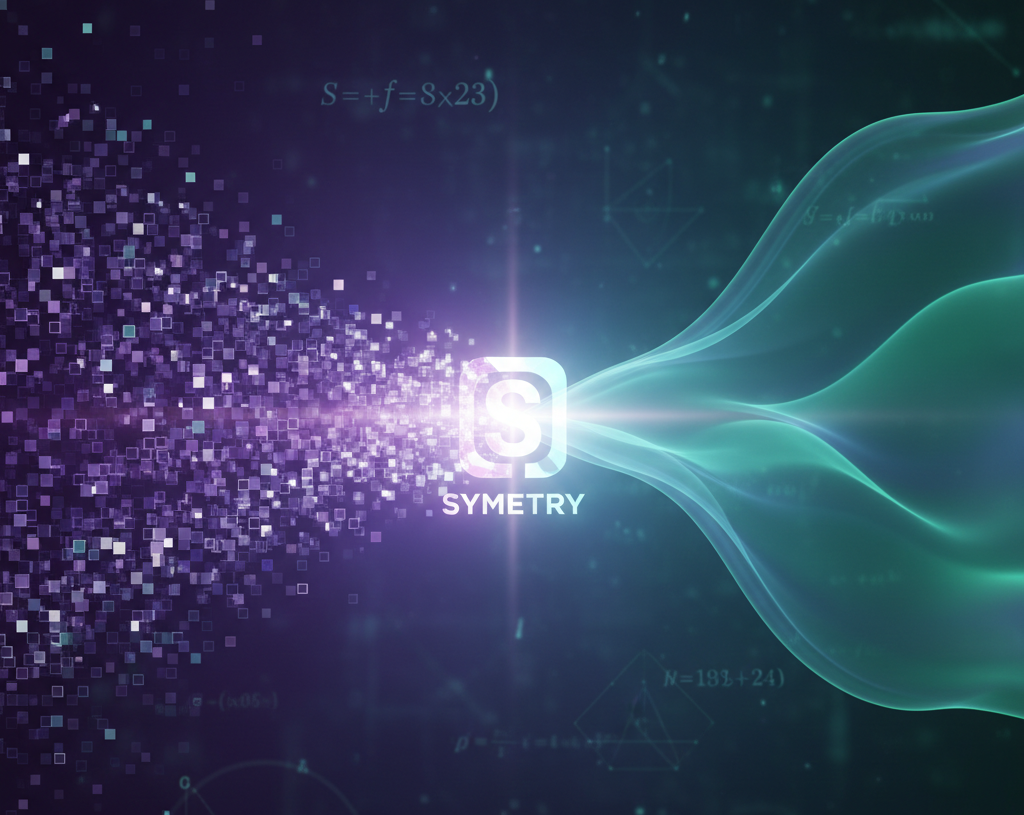
In addition, the authors propose a precise definition of the non-symmetric Askey–Wilson function in the rank‑one case, based on the Cherednik–Stokman kernel, and show that this function admits an explicit decomposition into a symmetric part and an anti-symmetric part. This decomposition allows for a clear description of its spectral properties and its behaviour under DAHA symmetries. Think of the non‑symmetric AW function like an image decomposed into two complementary color layers: warm tones (symmetric layer) and cool tones (anti‑symmetric layer). Each layer is meaningful on its own, but together they render the full picture with contrast and direction. This is exactly what the decomposition achieves: it reveals the internal structure that only becomes visible once you’ve changed scale from polynomials to functions.

Overall, the work combines techniques from algebra, analysis, and the theory of special functions, offering a unified perspective on how algebraic symmetries are reflected in concrete transformations of functions.

A wider landscape for special functions

The results of this article open several promising research directions. On the one hand, they clarify the role of DAHA automorphisms as bridges between different types of special functions, suggesting that analogous transformations may exist in higher rank or for other types of Hecke algebras.

On the other hand, the systematic study of non-symmetric Askey–Wilson functions reinforces their importance as fundamental objects, with potential applications in non-commutative harmonic analysis, representation theory, and models of mathematical physics related to quantum symmetries.

Finally, this work contributes to a deeper understanding of the q-Askey scheme and its internal symmetries, representing an important step towards a more global theory connecting orthogonal polynomials, Hecke algebras, and algebraic geometry.


Symmetry here acts like a change of scale: it asks us to move from the discrete world of polynomials to the continuous world of functions.
By shifting the focus to Askey–Wilson functions, this work shows where the natural language of DAHA symmetries truly lives.
From this unified viewpoint, new paths emerge toward deeper structures, richer connections, and future breakthroughs across mathematics and mathematical physics.
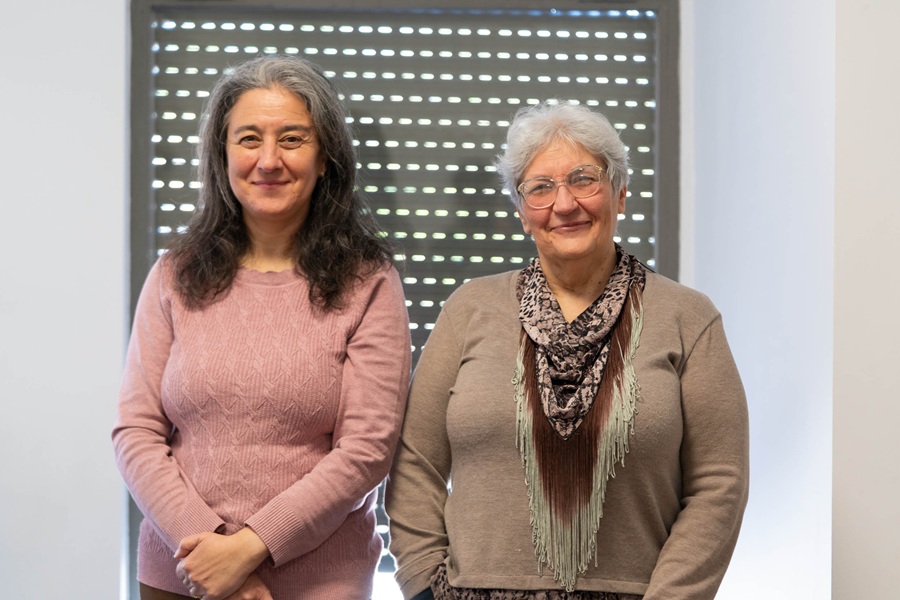
Marta Mazzocco is an ICREA Research Professor at the Universitat Politècnica de Catalunya (UPC) and an affiliated researcher at the Centre de Recerca Matemàtica (CRM).

A distinguished mathematical physicist, she earned her PhD from SISSA (1998) and held key academic positions at Oxford, Cambridge, and Birmingham before co-founding the excellence unit SYMCREA in Barcelona.

Her research specializes in Integrable Systems at the intersection of geometry, algebra, and analysis, with specific expertise in isomonodromic deformations and quantum algebra. Recently, she was a Distinguished Speaker for the European Mathematical Society and joined the ArXiv scientific advisory board.

Subscribe for more CRM News

Stay updated to our mailing list to get the lastest information about CRM activities.

CRM Comm

Natalia Vallina

CRMComm@crm.cat


Axel Masó Returns to CRM as a Postdoctoral Researcher

Axel Masó Returns to CRM as a Postdoctoral Researcher

Axel Masó returns to CRM as a postdoctoral researcher after a two-year stint at the Knowledge Transfer Unit. He joins the Mathematical Biology research group and KTU to work on the Neuromunt project, an interdisciplinary initiative that studies…

The post When Symmetry Breaks the Rules: From Askey–Wilson Polynomials to Functions first appeared on Centre de Recerca Matemàtica.

Go to Source

ICN2 Stands Out as a Leader in Innovation and Spin-off Creation

The 2025 BioRegion Report, published by Biocat, highlights ICN2’s role in technology transfer through the creation of high-impact start-ups.

Go to Source

Sidebar