Author Archive

La mosca del vinagre ayuda a entender las múltiples caras de una proteína supresora de tumores

Un equipo del Centro de Biología Molecular Severo Ochoa (CBM, CSIC-UAM), liderado por Carlos Estella y Antonio Baonza, ha utilizado la mosca del vinagre (Drosophila melanogaster) para estudiar cómo funciona una proteína clave en la prevención del cáncer.

Conocida como el “guardián del genoma”, la proteína p53 actúa como un sistema de control de calidad celular: detecta daños en el ADN —la molécula que contiene la información genética— y decide si la célula debe repararse, dejar de dividirse o activarse su autodestrucción mediante un proceso controlado llamado apoptosis. Este mecanismo evita que células defectuosas se conviertan en cancerosas.

Cuando el sistema de defensa falla

Las mutaciones en esta proteína están presentes en más de la mitad de los cánceres humanos. En estos casos, la proteína puede perder su función protectora o incluso adquirir propiedades que favorecen el crecimiento tumoral. Esto ocurre, por ejemplo, cuando se acumulan versiones incompletas de la proteína p53 que ya no controlan correctamente la proliferación celular.

Además, un mismo gen puede dar lugar a distintas versiones de esta proteína. En humanos existen al menos 12 versiones, cada una con funciones específicas en procesos como el desarrollo, la muerte celular o la progresión tumoral, lo que complica enormemente su estudio.

Para abordar esta complejidad, los investigadores recurrieron a Drosophila melanogaster, o mosca del vinagre, un organismo modelo ampliamente utilizado en biología.

A diferencia de los humanos, la mosca solo tiene tres versiones de la proteína p53 (A, B y E), lo que permite estudiar sus funciones de manera más sencilla. Además, el equipo introdujo la versión humana de la proteína en células de mosca y comprobó que muchos de sus mecanismos básicos están conservados, lo que refuerza la relevancia de este modelo.


Diferentes estrategias para eliminar células dañadas

El estudio demuestra que no todas las versiones de la proteína de la mosca actúan igual.

Por un lado, las versiones A y E funcionan como “directores de orquesta”: se unen al ADN y activan genes que desencadenan la apoptosis, actuando como interruptores que encienden programas de muerte celular. Este tipo de acción, conocida como función transcripcional, requiere que las células estén en proceso de división para activar los genes que inducen la muerte celular.

En cambio, la versión B utiliza una estrategia distinta y más directa: no actúa sobre el ADN, sino que interactúa físicamente con otras proteínas, como una enzima responsable de ejecutar la muerte celular. De este modo, puede inducir este proceso incluso en células que no se están dividiendo.

“Estos resultados muestran que no existe una única forma de actuar de la proteína p53, sino un repertorio de estrategias celulares que dependen de la isoforma y del contexto”, explica Carlos Estella, autor del estudio e investigador principal en el CBM.

Un giro inesperado: células “zombi” que favorecen tumores

El trabajo también revela un mecanismo menos conocido. Cuando la muerte celular falla, las distintas versiones de la proteína p53 pueden activar una vía de señalización celular que responde al estrés y al daño celular.

En este contexto, las células no mueren, sino que entran en un estado conocido como senescencia. Estas células, a veces llamadas “zombi”, dejan de dividirse, pero siguen activas y liberan señales químicas que alteran su entorno.

Lejos de ser inofensivas, su acumulación puede favorecer el crecimiento descontrolado de células vecinas y contribuir al desarrollo tumoral.


Implicaciones para la investigación en cáncer

Publicado en la revista Cell Death and Disease, de Nature Publishing Group, este trabajo aporta una visión más completa del papel de la proteína p53, mostrando cómo puede actuar tanto como supresora de tumores como facilitadora de su crecimiento, dependiendo del contexto celular.

Los resultados abren nuevas vías para comprender la regulación de las distintas versiones de p53 en cáncer humano y subrayan el potencial de la mosca del vinagre como modelo experimental para estudiar estos procesos.


Referencia

Pérez-Aguilera M, Ruiz-Losada M, Gil Cortes P, Benchaib M, Rubio C, Baena-López LA, Baonza A, Estella C. Transcription-dependent and -independent functions of Drosophila p53 isoforms in the induction of apoptosis and senescence-associated tumorigenesis. Cell Death Dis. 2026 Mar 25. doi: 10.1038/s41419-026-08571-x.


La entrada La mosca del vinagre ayuda a entender las múltiples caras de una proteína supresora de tumores se publicó primero en Centro de Biología Molecular Severo Ochoa.

Go to Source

Job Verdonschot: “The next challenge is the full integration of genetics into cardiology training programs”

Job Verdonschot, MD, PhD, is a clinical geneticist and associate professor at the Maastricht University Medical Center and the Cardiovascular Research Institute Maastricht. Within the Department of Cardiology, he is the director of the Cardiogenetics Unit, which is an essential part of the expertise center for rare inherited cardiac diseases.

With funding from (inter)national consortia grants, as well as prestigious fellowships from the Dutch Heart Foundation and the Dutch Research Council, he has been able to expand his research group. His work focuses on integrating genetic testing results into the clinical care of cardiomyopathy patients and their families by cardiologists.

Although knowledge of the genetic basis and clinical impact of genetic testing is increasing, there are still barriers to its implementation in daily practice. As co-organizer of the Dutch course on cardiogenetics and chair of the Dutch Working Group on Cardiogenetics, efforts are being made to include cardiogenetics as an essential part of cardiology education.

  • What motivated you to specialize in cardiogenetics? It’s not a very common field.

That’s true—it’s not widely represented in medical training. I started in biomedical sciences, where I was trained in laboratory research. During my final internship, I worked in cardiogenetics, focusing on molecular cardiogenetics. It wasn’t part of a long-term plan—it just happened.

Later, I went to medical school intending to become a cardiologist. However, once I started clinical work, I realized it wasn’t the right fit for me. During a cardiology internship, I discovered cardiogenetics, and it felt like the perfect combination. It allows me to solve complex cases while also interacting with patients, especially through counseling about what genetic findings mean for them and their families.

  • How do you explain cardiogenetics to someone unfamiliar with the field?

I usually say that I see patients with heart disease who want to understand why they got the disease and what it means for their family. For example, they often ask whether their children could develop the same condition.

I help by assessing whether a disease could be genetic, guiding patients through genetic testing, and explaining the results and their implications for both the patient and their relatives.

  • How challenging is it to guide families in preventing genetic heart diseases?

It can be quite challenging because people react very differently to genetic information. Some patients are not very concerned when a mutation is found, while others feel overwhelmed and may need psychological support. Also, family dynamics and interaction can be challenging. But it is very important that family members at risk are informed, even if the relationships within the family are not close.

I spend time helping patients understand their reactions and cope with the information. Family members also respond differently; some want to be tested immediately, while others need time to consider the pros and cons. It’s a very personal process.

  • How well is cardiogenetics integrated into cardiology practice today?

It’s improving, but it’s still not fully integrated. Many cardiologists don’t routinely consider genetics, partly because it’s not strongly emphasized in training.

Job Verdonschot & Pablo García Pavía

However, genetics has become essential, especially in conditions like cardiomyopathies. It can significantly impact patient care and family screening, so it should become a standard part of cardiology practice.

  • What role do families play in cardiogenetics?

Families are central. First, they are often the reason patients seek genetic testing—most people say they do it for their children.

Second, the results often matter more for family members than for the patient. If a genetic mutation is found, relatives may also be at risk. That’s why understanding family relationships and communication is crucial.

  • What is the role of patient associations?

Patient organizations are extremely important, especially because genetic diseases are often rare. They help raise awareness, connect patients, and support research efforts.

They also collaborate with healthcare professionals and play a key role in promoting clinical trials and improving understanding of these conditions.

  • Do we have reliable data on how many people are affected in Europe?

It’s difficult to provide exact numbers. Cardiomyopathies are a broad group of diseases, and only some are genetic. Additionally, many patients have not undergone genetic testing, so cases are often underdiagnosed.

This is why there is a strong push for more widespread genetic testing.

  • How is cardiomyopathy management evolving internationally?

There has been significant progress. Specialized groups and councils focused on cardiovascular genetics are producing guidelines and recommendations.

However, genetics is still mainly adopted by those already interested in it. The next challenge is to fully integrate it into cardiology training programs.

  • What research directions are most promising for improving patient outcomes?

Two areas stand out. First, improving risk prediction. When someone has a genetic mutation, we often don’t know whether they will develop the disease. Being able to predict this more accurately would greatly help patients and families.

Second, developing therapies—especially gene therapy. This field is advancing quickly, although it is still in its early stages.

  • Is gene therapy progressing quickly in this field?

Yes, but it’s still early. Safety remains a key concern, and some trials have been stopped due to complications. One of the biggest challenges is delivering the therapy effectively to the heart.

  • Do patients consider reproductive options after a genetic diagnosis?

Yes, increasingly so. Many patients ask about options like preimplantation genetic testing (PGT) to avoid passing on a genetic condition.

In the past, this was mainly used for severe early-onset diseases, but perspectives have changed. Now, certain cardiac genetic conditions are also considered, and awareness is growing.

  • Do you collaborate with other centers internationally?

Yes, I’ve been collaborating with colleagues in Madrid since early in my PhD. We continue to work closely together. I was awarded a travel grant in 2020 to visit the CNIC for three months, but unfortunately, the COVID-19 pandemic prevented that. I hope to have the opportunity to visit in the future.

Poster Job Verdonschot

Go to Source

SOMMa reconoce la trayectoria de Luis Serrano en su despedida como director del CRG tras quince años de liderazgo

La Alianza SOMMa ha participado hoy en Barcelona en el acto de despedida de Luis Serrano como director del Centre for Genomic Regulation (CRG), cargo que ha desempeñado durante los últimos quince años.

Al homenaje han asistido la actual presidenta de SOMMa, Isabel Márquez, y el anterior presidente de la Alianza, Antonio Molina, quienes han querido acompañar a Serrano en una jornada de reconocimiento a una trayectoria científica e institucional marcada por la excelencia, la visión transformadora y el compromiso con el sistema español de I+D+I.

Además de su labor al frente del CRG, Luis Serrano fue el primer presidente de SOMMa y una figura clave en la puesta en marcha y consolidación de la Alianza, impulsando una voz conjunta de los centros de excelencia Severo Ochoa y María de Maeztu para fortalecer la ciencia española y mejorar su interlocución con las instituciones públicas.

Durante su intervención, Antonio Molina destacó la capacidad de liderazgo de Serrano y su impulso reformista:

“Luis ha sido una inspiración. Ha contribuido de forma decisiva a cambiar y mejorar el sistema de I+D, aportando nuevas ideas, nuevas maneras de hacer las llamadas cosas clásicas y una visión ambiciosa de largo plazo”.

Molina recordó también su incorporación al comité ejecutivo de SOMMa por invitación de Serrano, y agradeció la confianza depositada en él durante esos años de trabajo compartido.

Por su parte, Isabel Márquez trasladó en nombre de toda la Alianza el reconocimiento institucional de SOMMa y agradeció a Serrano su papel fundador y su defensa constante de la investigación de excelencia en España. Márquez subrayó que su legado trasciende la dirección del CRG y deja una huella duradera en el ecosistema científico del país.

Desde SOMMa ponemos en valor no solo la brillante trayectoria científica y de gestión de Luis Serrano, sino también su compromiso para que la política científica española esté a la altura de la excelencia investigadora que se desarrolla en nuestros centros.

Agradecemos también profundamente a Luis Serrano su trabajo, su energía y su visión durante todos estos años, y le deseamos lo mejor en esta nueva etapa personal y profesional.

Revealing how minuscule magnetic impurities disrupt superconductivity

An international team led by the Autonomous University of Madrid (UAM), in collaboration with the Niels Bohr Institute (NBI), the Donostia International Physics Centre (DIPC), the University of Valencia and centres in Argentina and the Netherlands, has demonstrated that minuscule amounts of magnetic impurities combined with structural disorder are sufficient to destroy the energy gap in a conventional superconductor. The finding, published in Advanced Materials, challenges some classical predictions about the extent to which superconductivity tolerates imperfections, and could have implications for the design of future quantum devices.

Go to Source

Desvelado el insólito funcionamiento de una proteína implicada en cáncer de pulmón y tiroides

Iván Plaza y Julia Contreras, coautora del trabajo. / CNIO

Una investigación del Centro Nacional de Investigaciones Oncológicas (CNIO) revela un comportamiento inesperado en una proteína implicada en varios tipos de cáncer: consigue autoactivarse, es decir, darse a sí misma la orden de empezar a hacer su trabajo en la célula. El nuevo resultado desvela que es una activación acelerada, mucho más rápida que en proteínas normales.

El hallazgo abre vías a buscar formas de bloquear esta proteína, llamada CCDC6-RET y considerada un antiguo problema no resuelto en la investigación del cáncer.

CCDC6-RET fue descubierta hace más de tres décadas y ha sido muy estudiada por su papel en el cáncer de tiroides y del adenocarcinoma pulmonar, pero “las bases moleculares y estructurales de su mecanismo de acción (oncogénico) han seguido siendo en gran medida desconocidas”, escriben los autores en Nature Communications. Iván Plaza, jefe del Grupo de Quinasas, Fosforilación de Proteínas y Cáncer del CNIO, autor principal y firmante del trabajo, y Ana Martín-Hurtado primera autora.

Genes que se fusionan y dan lugar a un oncogén

A veces, dos genes se fusionan de manera anómala y dan lugar a una entidad única. Hay genes más propensos que otros a fusionarse, y a menudo cuando lo hacen facilitan la formación de tumores. Las proteínas expresadas por esos genes de fusión son ‘quimeras’ que pueden ser mucho más activas que las proteínas derivadas de los genes aislados.

Un gen con tendencia a la fusión es RET, que en su forma ‘normal’ -no fusionada-, es importante para la multiplicación y división celulares. La proteína CCDC6-RET, en que se centra la nueva investigación del CNIO, resulta de la fusión de RET con otro gen. CCDC6-RET ya está siendo estudiada como diana terapéutica, pero no se conocían ni su estructura, ni sus mecanismos detallados de acción.

El nuevo estudio caracteriza la arquitectura de CCDC6-RET y descubre que puede activarse por sí sola –sin interferencia de otras proteínas–. También desvela que esa autoactivación ocurre a una velocidad mucho más rápida que la activación de la proteína expresada sólo por el gen RET. Al ser una proteína oncogénica, la aceleración resulta especialmente relevante.

Reutilizar al máximo el combustible

El grupo del CNIO ha conseguido identificar el mecanismo de esa autoactivación. La proteína normal de RET se va activando al ir añadiendo un grupo fosfato a cada uno de sus componentes, uno tras otro, de manera progresiva. Los grupos fosfatos proceden de moléculas ATP, que actúan como combustible de los procesos celulares. La molécula que queda como resto de ese proceso, una vez que la ATP pierde el grupo fosfato, se denomina ADP.

Sin embargo, los autores del estudio han visto que CCDC6-RET activa todos sus componentes a la vez, y que, después de tomar un grupo fosfato de la molécula ATP, es capaz de volver a tomar energía de ADP. Algo así como si se pudiera volver a llenar el depósito de un vehículo con los gases del tubo de escape. Es la primera vez que se detecta esa realimentación. Se abre así un nuevo paradigma que sugiere que el ADP es una molécula de señalización activa, y no un mero producto residual.

“Se conocían proteínas quinasas que utilizan específicamente el ADP, pero es la primera vez que se describe una quinasa capaz de usar tanto ATP como ADP”, destaca Plaza. Los investigadores creen que esta capacidad puede asociarse al hecho de que el metabolismo tumoral es distinto al de las células normales. La capacidad de emplear dos fuentes de energía distintas –ATP y ADP– podría conferir a la proteína oncogénica mayor flexibilidad, lo que ayudaría a las células tumorales a adaptarse a condiciones adversas, como la escasez de nutrientes o la acción de fármacos dirigidos.

Para Plaza, “es importante diseccionar al detalle el mecanismo de activación de CCDC6-RET”. Estos resultados sugieren que los tratamientos actuales dirigidos contra las fusiones de RET podrían no ser completamente eficaces si no tienen en cuenta este doble mecanismo de activación. En consecuencia, el estudio abre la puerta al desarrollo de nuevas estrategias terapéuticas más precisas.

Modelo en 3D de su estructura

El nuevo estudio reconstruye un modelo tridimensional de la proteína de fusión CCDC6-RET. Mediante la combinación de diversas técnicas de biología estructural e inteligencia artificial han visualizado la arquitectura de la proteína inactiva (antes de unirse al ATP) y también de la forma activa, así como de los cambios asociados a dicha activación, y describen la estructura de esos modelos.

“Esta es la primera fusión oncogénica del gen RET de la que se obtiene información detallada a nivel estructural y de mecanismo molecular. Es fundamental, porque podemos aplicar nuestra metodología y enfoque a otras fusiones de RET, de las que se han descrito recientemente unas 20, implicadas en otros tipos de cáncer”.

Entidades financiadoras

Ministerio de Ciencia, Innovación y Universidades (MCIU), fondos FEDER “A way of making Europe”, Agencia Estatal de Investigación (AEI) y COFUND Marie Sklodowska Curie Action (MSCA) de la Unión Europea.

Sobre el Centro Nacional de Investigaciones Oncológicas (CNIO)

El Centro Nacional de Investigaciones Oncológicas (CNIO) es un centro público de investigación dependiente del Ministerio de Ciencia, Innovación y Universidades. Es el mayor centro de investigación en cáncer en España y uno de los más importantes en Europa. Integra a medio millar de científicos y científicas, más el personal de apoyo, que trabajan para mejorar la prevención, el diagnóstico y el tratamiento del cáncer.

La entrada Desvelado el insólito funcionamiento de una proteína implicada en cáncer de pulmón y tiroides se publicó primero en CNIO.

Go to Source

Professor Sonia Garel receives the 12th Remedios Caro Almela Prize for Research in Developmental Neurobiology

  • Sonia Garel’s research has reshaped the paradigm of brain development by revealing the role of corridor cells and microglia in the formation of neuronal circuits.
  • The Remedios Caro Almela Prize recognizes, every two years, scientific excellence in developmental neurobiology and is endowed with €25,000.

The award ceremony for the 12th Remedios Caro Almela Prize for Research in Developmental Neurobiology took place today in the Assembly Hall of the Institute for Neurosciences (IN), a joint center of the Miguel Hernández University of Elche (UMH) and the Spanish National Research Council (CSIC). The Rector of UMH, Juan José Ruiz, and the Director of the Institute for Neurosciences, Juana Gallar, presented the award to Sonia Garel, Professor at the Collège de France, who leads the Brain Development and Plasticity laboratory at the Institut de Biologie de l’École Normale Supérieure in Paris (IBENS).

The Rector of UMH, Juan José Ruiz, and the Director of the IN UMH-CSIC, Juana Gallar, present the award to Professor Sonia Garel. Source: IN UMH-CSIC.

During the ceremony, remarks were also delivered by the Regional Director of Health of the Generalitat Valenciana in Alicante, Francisco J. Ponce Lorenzo, and the CSIC Vice President for Innovation and Knowledge Transfer, Ana Castro Morera. Following the reading of the jury’s decision, the awardee addressed the audience, emphasizing the collective nature of research: “This distinction reflects, above all, a shared effort built over years of work with students, collaborators, and colleagues. For me, research is a collective endeavor, grounded in the exchange of ideas and the joint construction of knowledge”.

A cellular choreography

Sonia Garel’s research focuses on understanding how the brain is built during development, a process that can be understood as a complex cellular choreography in which neurons, glial cells, and environmental signals interact with remarkable precision in space and time. Her work has helped transform the classical view of this process as a linear program, showing instead that it is a dynamic construction based on continuous interactions between cells, signals, and context.

Among her most influential contributions is the identification of the role of transient cell populations, such as the so-called corridor cells, which act as essential guides for axonal growth during the formation of brain circuits. These findings changed the way cortical development is understood by demonstrating that neuronal migration not only positions neurons but also actively participates in circuit organization by generating key signals at specific times and locations. Her work has also highlighted how early neuronal activity influences these processes, modulating neuronal movement, integration, and survival.

Professor Garel delivered the 12th Remedios Caro Almela Lecture, “Microglia in the early choreography of brain construction”, before the award ceremony. Source: IN UMH-CSIC.

Another central focus of her research has been the incorporation of microglia, the brain’s immune cells, into the study of neural development. Her team has shown that these cells do not act solely as sentinels, but as active participants in brain construction, regulating neuronal migration and network integration, as well as responding to external signals such as inflammation and the microbiota.

More recently, her work has revealed a protective role for microglia during brain morphogenesis, contributing to the preservation of tissue integrity under conditions of stress. Taken together, these findings provide a new framework for understanding how early interactions between cells and their environment influence brain function and vulnerability throughout life.

Professor Sonia Garel, awarded the 12th Remedios Caro Almela Award for Research in Developmental Neurobiology. Source: IN UMH-CSIC.

The aim of the Remedios Caro Almela Prize for Research in Developmental Neurobiology is to recognize the work of European researchers who have made particularly outstanding scientific contributions in this field and who are currently conducting cutting-edge research on the development of the nervous system. The biennial award is organized by the Institute for Neurociencias UMH-CSIC and the Miguel Hernández University of Elche, in collaboration with the Martínez-Caro family, and is endowed with €25,000.

Source: Institute for Neurociencias UMH-CSIC (in.comunicacion@umh.es)


La entrada Professor Sonia Garel receives the 12th Remedios Caro Almela Prize for Research in Developmental Neurobiology se publicó primero en Instituto de Neurociencias de Alicante.

Go to Source

Memorandum of Understanding signed between DIPC and Sejong University in South Korea

This agreement between Donostia International Physics Center (DIPC) and Sejong University establishes a strategic framework for developing fresh opportunities for joint research, and for promoting projects in emerging fields of physics, new materials and quantum technologies

Go to Source

Carolina Benedetti: Lluís Santaló Visiting Fellow 2026

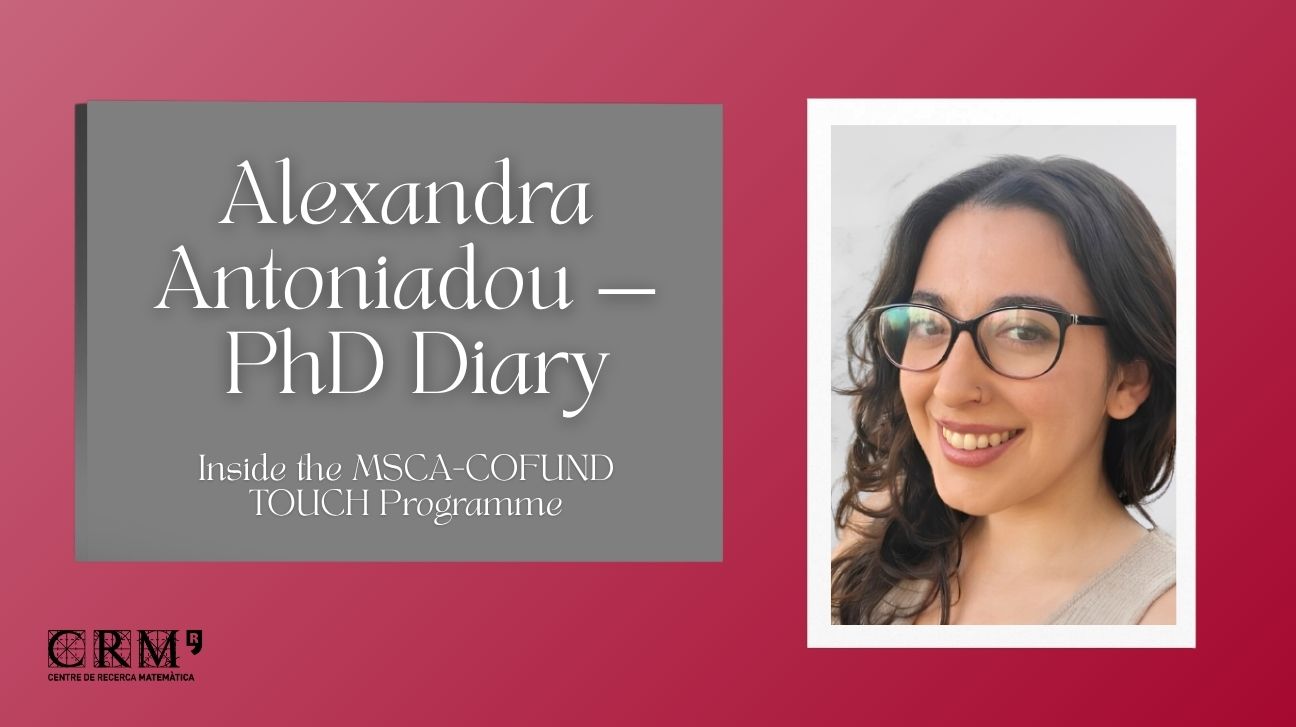
Carolina Benedetti, associate professor at the Universidad de los Andes in Bogotá, spent March at the CRM as a Lluís Santaló Fellow. A specialist in algebraic and geometric combinatorics, she is collaborating with Kolja Knauer (UB/CRM) on questions at the intersection of polytopes, permutations, and non-negativity.

Research runs on a resource that grant applications rarely mention. Funding can be estimated, and travel costs projected. Time is harder to account for: not calendar time, but the kind of accumulated, unhurried hours in which a mathematical conversation can go wrong, restart, and find its way somewhere neither person expected. A week at a conference, however stimulating, rarely produces that. You teach, you listen, you have lunch with people you have been meaning to contact for years, and the week ends before any of it has had time to settle.

In October, Carolina Benedetti came to Barcelona exactly like that. She was one of two invited lecturers at the CRM’s Research School on Combinatorial Geometries and Geometric Combinatorics, a week-long intensive course that brought together more than fifty researchers from institutions across three continents. Each morning, she gave one of her five minicourse sessions. Each afternoon, she sat through the parallel course or worked with participants in the exercise sessions that filled most of the schedule. In the evenings, she went back to the hotel and prepared the next day’s class. “Teaching my class, attending the other talks, trying to digest a little of what was happening, going back to the hotel, preparing the next day’s class, and repeat,” she says. Ideas surfaced. Names got written down. There was no room to follow anything further.

What a research stay offers is something more basic: the chance to actually be somewhere with enough time to work. Ideas that appeared during a week of intensity can, weeks later, be picked up and examined properly. Collaborations that felt promising at a conference dinner can be tested against a real problem, in a shared room, over several mornings. “The difference is really enormous,” Benedetti says. She is back in Barcelona now, this time as a Lluís Santaló Fellow at the CRM, and things, she says, are materialising.


Discrete objects, multiple angles

Benedetti works at the intersection of algebraic and geometric combinatorics. The objects that interest her are discrete: finite sets with algebraic or geometric structure, rather than continuous curves or surfaces. Permutations (the different ways to arrange a set of elements) are a recurring protagonist. So are matroids, which are abstract structures that generalise the notion of independence in linear algebra, and positroids, a specific subfamily with particularly rich geometric properties that has drawn considerable attention in recent years for its connections to non-negativity in tropical geometry.

Two geometric realisations of permutation structure on four elements. Each vertex represents a permutation (labelled in red and blue), and edges connect permutations differing by a simple adjacent swap. The left figure shows the full permutohedron on 24 vertices, with dotted lines indicating an internal combinatorial decomposition. The right figure presents a constrained substructure, where only a subset of permutations is retained, yielding a reduced polytope. The diagrams below encode the associated partial order on combinatorial shapes (Young diagram–like objects), illustrating how these geometric configurations reflect an underlying order relation.

The reach of these objects is broader than it might look. In algebraic geometry, there is a classical problem of counting how many points lie at the intersection of certain spaces called Schubert varieties. The geometry involved is complicated and difficult to manipulate directly. What Benedetti’s work shows is that permutations and the operations between them can encode the answer. “With combinatorics you can respond to certain problems,” she explained at the 5 Talks in Combinatorics thematic day held at the Universitat de Barcelona on 18 March, “by forgetting that you are asking about the intersection of spaces, and simply focusing on how the underlying combinatorial objects reflect that intersection problem.” Her talk, on the combinatorics of products of quantum Schubert polynomials, drew on threads that go back to her doctoral work in Toronto and connect directly to what she is building now.

Her October minicourse at the CRM covered different territory: flags of matroids and positroids, and in particular what can be said about subdivisions of the flag polytope D_n into flags of lattice path matroids. The course introduced participants to positroids, flags of matroids, the corresponding polytopes, and the structural properties that make them interesting objects to subdivide. It ended with a set of open problems, some of them fresh from her current work. That, it turned out, was not just a rhetorical device. Several of the researchers who sat in that room in October are now working on those problems with her.

“It is not the same when you have the chance to collaborate in person, because that is where a little more of the magic actually happens.”

The current collaboration with Knauer, Deligeorgaki and Giardino grew directly from that week, though it has roots that go further back. Knauer and Benedetti first crossed paths during the pandemic, in Bogotá, in the kind of encounter that is almost impossible to engineer deliberately. He was visiting; she was there; they started talking about mathematics. What they found was that they were looking at some of the same objects from genuinely different angles. Benedetti’s approach is more combinatorial, focused on the discrete structures and their properties. Knauer’s tends toward the order-theoretic, more interested in the partially ordered sets that underlie those structures. “He has a different point of view on how I approach the discrete objects we have in common,” she says. “That was complementary.” A paper on lattice path matroids followed. Then further meetings. Then this month.

What the four of them are investigating now concerns polytopes whose vertices are permutations, objects that carry a double life: geometrically, they are polyhedra in high-dimensional space, and algebraically, they arise from vector spaces. The question pulling the group forward has to do with a notion of non-negativity in those spaces, and whether the structure of the underlying partially ordered sets can be used to understand it better than the polytopes alone allow. It is, by Benedetti’s own account, work that is still finding its shape. That is precisely what this kind of stay is for.


Mathematics is not done the same way everywhere

Benedetti did her PhD at York University in Toronto, held a postdoctoral position at Michigan State University, and has been back in Bogotá since 2023, teaching at Los Andes. Each move, she says, added something harder to name than technical breadth: a feel for which tools from which tradition fit which problem. Before Canada, she barely spoke English, a prerequisite for working internationally. Beyond language, each country had a different centre of gravity. In Canada, algebra dominated everything. “Algebra is like the queen there,” she says. The approach she encountered in Toronto bore little resemblance to what tends to go usually under the name of combinatorics, where counting and enumeration have traditionally been more central. Spain adds another angle again. One of the things a career built on moving between communities gives you, eventually, is the ability to recognise which version of a problem you are looking at.

Back in Colombia, Benedetti is one of the people behind two initiatives that have shaped how the country’s mathematical community sees itself. As founder of Círculos Matemáticos Colombia, she works to bring mathematical thinking to students and communities well outside the university circuit. And as a member of the Comunidad Colombiana de Combinatoria, a network whose growth owes a great deal to the mathematician Federico Ardila, she has been part of an effort to show that Colombian mathematicians can work at the highest level without leaving their culture at the door. “Mathematics is not done the same way everywhere,” Benedetti says, and that has something to do with idiosyncrasy, with music, with how people celebrate, with the particular texture of where you grew up.

The Lluís Santaló fellowship carries its own version of that logic. Santaló (born in Girona, 1911; died in Buenos Aires, 2001) was a Catalan mathematician who, like thousands of others, had to leave Spain when the Civil War ended and settle elsewhere. He chose Argentina, arriving in 1939, and spent the rest of his career there, first in Rosario, then in Buenos Aires, building what became one of the founding contributions to integral geometry and leaving a mark on an entire generation of Argentine mathematicians. He also cared, throughout his life, about mathematical education and about making mathematics visible beyond the university walls.

The CRM fellowship that bears his name was created specifically for researchers from Latin American institutions, to make collaboration between Latin America and Europe a little less costly than it would otherwise be. The distance is real, the expense is real, and the asymmetry of who gets to travel to whom is real. A programme that exists to push against that carries genuine weight. “To make something with lasting impact from an unfortunate situation,” Benedetti says of Santaló’s story. “That is an honour.”

She adds, without much elaboration, that there is now a new wave of mathematicians moving from the Americas towards Europe for reasons that are not entirely different from Santaló’s. The fellowship named after him has been running since 2011. It keeps finding new reasons to matter.

Watch the full interview with Carolina Benedetti Velásquez on the CRM YouTube channel.

___________________________________________________

The Lluís Santaló Visiting Fellowship call for 2027 stays is currently open. The application deadline is 30 April 2026. More information here.

Newsletter

Get the latest CRM news and activities delivered to your inbox

Subscribe now

Recent newsletters →
Carolina Benedetti: Lluís Santaló Visiting Fellow 2026

Carolina Benedetti: Lluís Santaló Visiting Fellow 2026

Carolina Benedetti, associate professor at the Universidad de los Andes in Bogotá, spent March at the CRM as a Lluís Santaló Fellow. A specialist in algebraic and geometric combinatorics, she is collaborating with Kolja Knauer (UB/CRM) on questions at the intersection…

Sant Jordi 2026 al CRM

Sant Jordi 2026 al CRM

Per celebrar Sant Jordi hem demanat a la gent del CRM que ens recomani un llibre. Un. El que tingueu al cap ara mateix. Set persones han respost, i entre les set han aconseguit cobrir quatre idiomes, almenys tres segles i cap gènere repetit….

Yves Chevallard (1946–2026)

Yves Chevallard (1946–2026)

Yves Chevallard passed away on 16 March 2026. He was 79 years old. Born in Tunis, he trained at the École normale supérieure in Paris, where he earned an agrégation de mathématiques. He went on to become a professor at Aix-Marseille Université, and it was there, over…

One Day, One Family, One Place: Poisson Geometry at CRM

One Day, One Family, One Place: Poisson Geometry at CRM

On March 23rd, 2026, the Centre de Recerca Matemàtica hosted the thematic day “Poisson Geometry and Its Relatives”, a full‑day event that brought together researchers exploring Poisson geometry and several of its neighbouring areas. The programme combined classical…

CRM Comm

Pau Varela

CRMComm@crm.cat


The post Carolina Benedetti: Lluís Santaló Visiting Fellow 2026 first appeared on Centre de Recerca Matemàtica.
Go to Source

Extractivism in Myanmar causes severe social and emotional impacts beyond environmental damage

More than half of extractive conflicts in Myanmar are associated with stress-related health problems and emotional distress, alongside livelihood loss, displacement, and environmental degradation. This is one of the main findings of a study led by researchers May Aye Thiri and Joan Martinez-Alier from ICTA-UAB.

Go to Source

Seminar by David Berenstein (U. California, Santa Barbara)

Image
seminar ICCUB
Seminar

Seminar by David Berenstein (U. California, Santa Barbara)

Date
Place
Pere Pascual V5.07 Room

Abstract: TBA

Go to Source

New Laser-Fabrication Method for On-Site Detection of Heavy Metals in Water

A team of ICN2 researchers has developed a laser-assisted method to produce nanosensors for fast and sensitive detection of water contaminants such as lead, cadmium, and copper.

Go to Source

Gradient Day

Go to Source

Sidebar