Scalar-Induced Gravitational Waves as a probe for Modified Gravity
Date
Place
DAM 7.24 Seminar Room
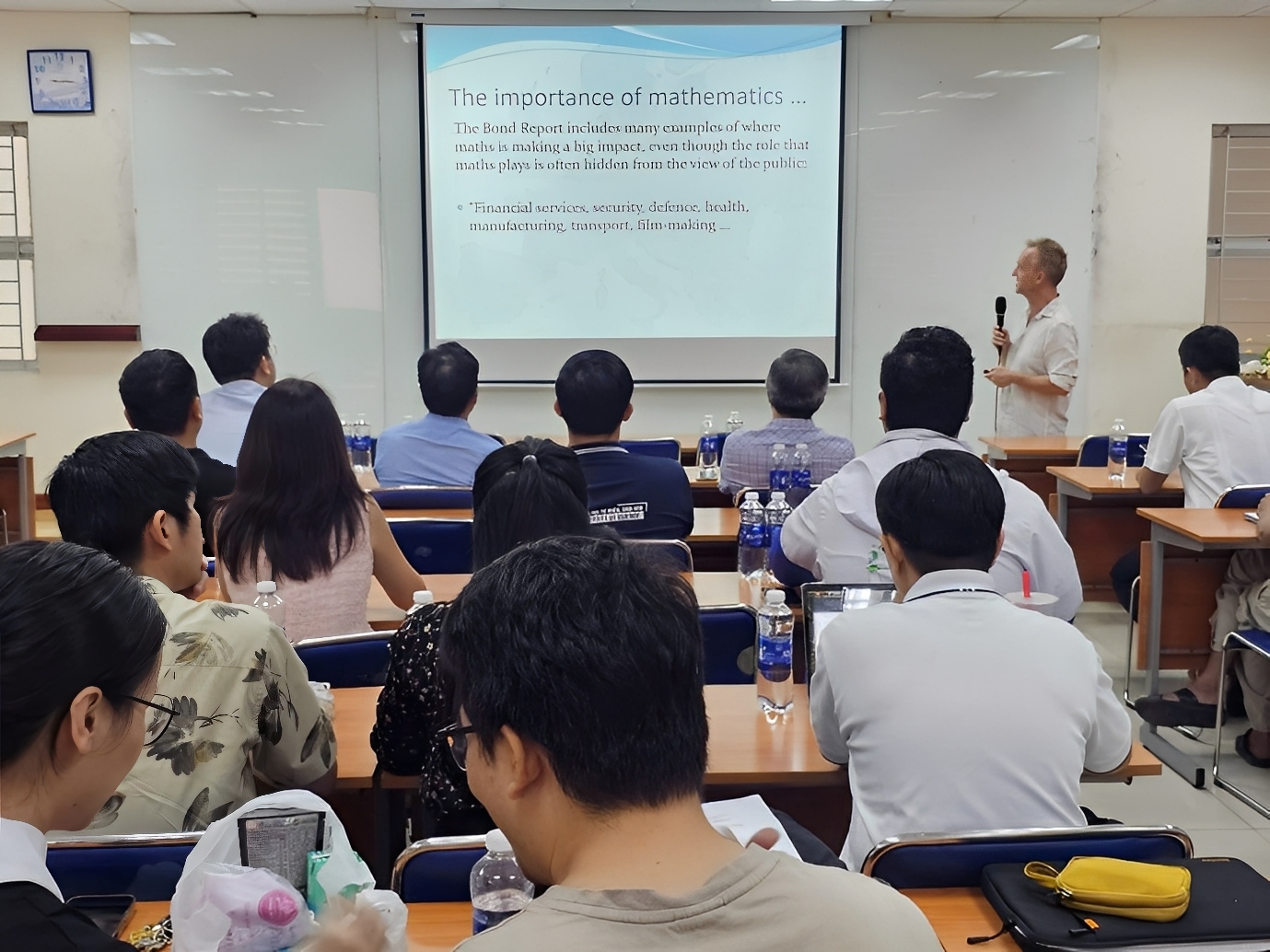
Abstract: An open question to answer is if we can use gravitational waves (GWs) to probe beyond General Relativity. Due to their weak interaction with matter, we hope to observe Primordial GWs which come in the form of a stochastic background (SGWB). One contribution to the latter arises from second-order effects and coupling of scalar fluctuations, known as “scalar-induced” GWs (SIGWs). In this talk, I present computations of the behavior of SIGW in modified gravity, specifically considering the f(R) modified gravity model. We concentrate on the understanding the effect of the first-order corrections to the source term and power spectrum w.r.t. General Relativity. By comparing the results of standard cosmology to its modification, we can see the order of the effect and how observations of this signature can help in improving our understanding.
The Catalan Agency for Management of University and Research Grants (AGAUR) published the final resolution of the R&D&I Networks Grants, which support programs aimed at valorizing and transferring research results.
Among the networks that have received funding, ICIQ will actively participate in the following two:
The Xarxa RDI-IA is a network designed to provide transfer and valorization mechanisms to intensive research groups in Artificial Intelligence throughout Catalonia. With over 60 research groups from 25 different institutions, the network aims to consolidate the Catalan AI ecosystem and position it as a hub for research and innovation in Southern Europe.
ICIQ researchers Prof. Pau Ballester, Dr. Carla Casadevall, Prof. Núria López and Prof. Julio Lloret will contribute their expertise to this network.
The Xartec Salut is a network aimed at fostering R&D&I in the field of HealthTech by promoting the exchange of knowledge between research groups, institutions, hospitals and companies. The network comprises 117 research groups from 29 different institutions. It focuses on promoting company creation and offering more efficient instruments for technology transfer.
ICIQ researchers Prof. Pau Ballester, Prof. Emilio Palomares and Prof. Beatriz Prieto-Simón will participate in this network.
By joining these networks, ICIQ will work with other institutions and companies to apply their research in practical ways. This shows ICIQ’s commitment to tackle real-world problems through scientific research and innovation.
Health equity remains one of Europe’s most pressing challenges. Differences in access to care, diagnosis, and treatment continue to determine health outcomes across the region. Gender diversity is emerging as a particularly critical dimension, as women in Europe with cardiovascular disease face worse outcomes, from higher mortality after heart attacks to longer delays in receiving treatment. In addition, data from the European Society of Cardiology (ESC Atlas of Cardiology) reveal that 40% of women in the EU die from cardiovascular disease.
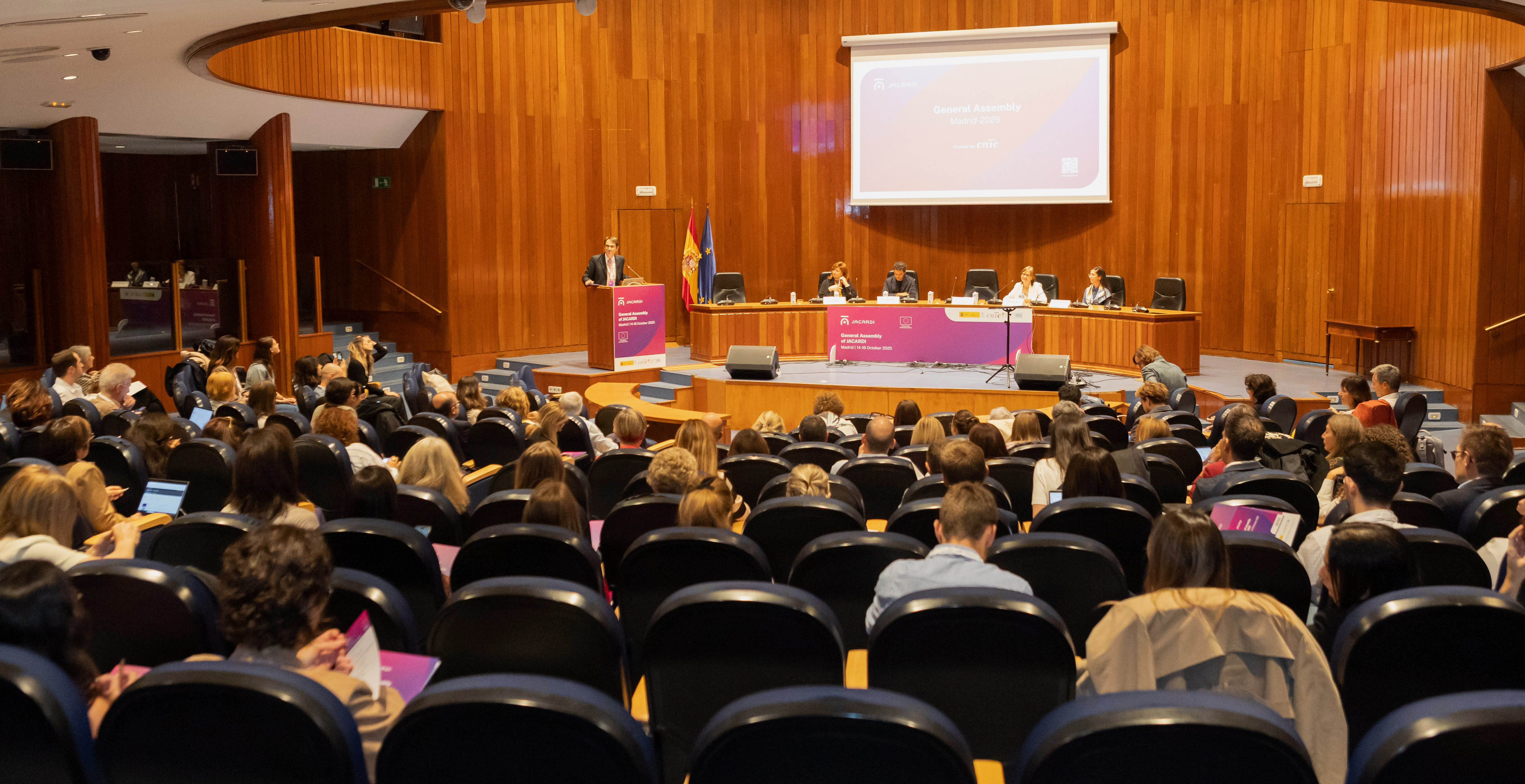
The inauguration was attended by Marina Pollán, director of the Carlos III Health Institute (ISCIII); Dr. Valentín Fuster, general director of the CNIC; Antonio Parenti, director of Public Health at the European Commission (DG Sante); Maria Vasile, representative of the European Executive Agency for Health and Digital (HaDEA); Silvia Torres, general director of Health and Social Care Planning, Training, and Quality at the Regional Ministry of Health and Social Services of Extremadura; and Pedro Gullón, general director of Public Health and Health Equity at the Ministry of Health.
The Assembly brought together more than 200 representatives from 21 European countries, as well as spokespersons from the European Commission, the WHO Regional Office for Europe, scientific societies, and patient organizations. This year’s program placed gender and equity at the center of the agenda, along with sustainability, data monitoring, and the upcoming EU Cardiovascular Health Plan.
JACARDI is a joint action of the European Union under the EU4Health program, which will run from 2023 to 2027. With 81 partner institutions in 21 countries, it coordinates European efforts to strengthen health literacy, improve early detection, promote integrated and person-centered care, empower patient self-management, and support the labor participation of people living with noncommunicable diseases.
With equitable access to prevention and quality care as a priority, participants in this assembly reflected on the progress made during the first two years of JACARDI, highlighting lessons learned and obstacles overcome, while improving care pathways in various settings across European health systems.
Focus on equity and diversity
“At the heart of JACARDI is the belief that healthcare systems should serve everyone, fairly and equitably. That is why equity and diversity are not secondary issues at JACARDI, but fundamental to everything we do. This General Assembly in Madrid is an opportunity to show that together we can accelerate change towards a more equitable and healthy future,” says Dr. Benedetta Armocida, coordinator of JACARDI.
«Women are more likely to die from a heart attack, yet they remain underrepresented in clinical trials»
“Women are more likely to die from a heart attack, yet they remain underrepresented in clinical trials, leaving significant gaps in knowledge that perpetuate inequality in healthcare. Recognizing gender differences in cardiovascular disease is not about division, but about improving care to meet each person’s unique needs,” says Dr. Héctor Bueno, leader of the JACARDI working group on data availability and quality, coordinator of the clinical hospitalization and research area at the i+12 Research Institute at the Hospital 12 de Octubre in Madrid, and leader of a CNIC research group.
European Cardiovascular Health Plan
The meeting took place at a crucial moment, as the European Commission is preparing the Cardiovascular Health Plan. By connecting JACARDI’s ideas and pilot experiences with this political momentum, the Assembly aims to strengthen motivation, collaboration, and collective capacity to reduce the burden of noncommunicable diseases across Europe.
To this end, a roundtable discussion dedicated to the EU Cardiovascular Health Plan was held during the event, with the participation of representatives from the European Commission’s Directorate-General for Health and Food Safety (DG SANTE), the European Public Health Alliance (EPHA), and scientific societies such as the European Society of Cardiology, the European Heart Network, the European Diabetes Forum, and the International Diabetes Federation.
The event also featured contributions from the WHO Regional Office for Europe and the european JA PreventNCD initiative on systems for monitoring and reducing health inequalities, as well as pilot experiences from Portugal, Spain, Iceland, Romania, Belgium, Ireland, Italy, and Poland, highlighting the initial results of the 143 JACARDI pilot projects.
Finally, areas such as sustainability and the translation of scientific evidence into real policies were explored, ensuring that JACARDI’s pilot actions contribute to long-term change. On October 15 and 16, specific sessions were held to explore particular areas of interest, such as health literacy, integrated care pathways, data accessibility, and patient self-management. These workshops were designed to facilitate in-depth discussions and promote practical ideas that improve health outcomes across Europe.
JACARDI has received funding from the EU4Health Program 2021-2027 under Grant Agreement 101126953.
Abstract: Red Supergiants (RSGs) are cool, evolved massive stars (8–30 M⊙) that represent the final evolutionary phase before a Type II supernova. However, the absence of luminous RSGs as confirmed SN progenitors has raised a sparkling debate about their fate. Mass loss is a critical factor in their evolution, and recent discoveries of large episodic mass-loss events suggest an alternative mechanism beyond steady winds. Yet, the frequency and impact of such episodes remain uncertain. In this work, we investigate two extreme RSGs using long-term photometry and multi-epoch spectroscopy. We find that [W60] B90 shows recurrent dimming events, consistent with episodic mass loss, and may be a more massive, subsolar metallicity analog of Betelgeuse. We also report a dramatic transformation in WOH G64, the most extreme RSG in the LMC. It recently transitioned into a Yellow Hypergiant in a fast, yet smooth transition. We identify it as part of a massive symbiotic system and propose that this evolution may result from a decades-long silent eruption or partial atmospheric ejection during a common-envelope phase. These findings challenge existing models of massive star evolution and highlight the need for further observational constraints.
Jingjing Meng, a PhD student who is under Prof. Julio Lloret-Fillol supervision, has successfully defended his PhD thesis entitled ” Transition Metal-Catalyzed Functional Group Transfer: Photoredox CN- Transfer from Acetonitrile and Electrochemical O Atom Transfer from Water” publicly Monday, 20 October.
The members of the evaluation committee were Prof. Maria González Bejar (Universitat de València), Dr. Arnau Call Quintana (Universitat de Girona) and Prof. Arjan W. Kleij (ICIQ)
Jingjing Meng is from China and obtained his Master’s degree at Shanghai Normal University. His hobbies include hiking, listening to music, and meditation, which help him stay calm and inspired both in and outside the lab. His PhD studies are supported by the China Scholarship Council (CSC).
Why did you become a scientist?
I love creating things that have never existed before. As a chemist, it’s fascinating to build new molecules and discover new reactivity. This creativity is what excites me most about science.
What triggered your interest for the subject of your thesis?
Before coming to ICIQ, I was mainly doing traditional organic synthesis. When I arrived here, I was impressed by my group’s work on photochemical and electrochemical CO2 reduction, which opened my eyes to green and energy-driven catalysis. That experience inspired me to pursue this direction for my PhD.
What applications can your thesis have in the future?
My work provides an example of combining different catalytic strategies to use abundant and sustainable raw materials for making value-added chemicals, while reducing environmental impact.
The thing that I like most about my thesis is….
Transforming simple and abundant reagents into useful products through green catalytic methodologies like photo- and electrocatalysis.
From the lessons learnt (or skills developed) at ICIQ, which one do you value the most?
Before coming to ICIQ, I mainly focused on synthetic work based on experience. After joining the group, I became more interested in mechanistic studies, and I also learned to use high-throughput experimentation (HTE) for data analysis. Most importantly, I learned to stay humble, curious, and eager to keep learning.
What will you miss the most from ICIQ?
I guess I will miss the time when I doing experiment with my colegues. I can still remember how much fun we make together while we doing our experiment in the lab under the happy music environment.
What do you wish you had known at the beginning of your PhD?
Working smart also requires working hard.
What advice do you have for someone who’s starting their PhD now?
Try to balance work and life, that’s an important part of the PhD journey too.
Who/What has been your biggest influence/motivation?
My supervisor, who is always patient, knowledgeable, and passionate about learning. His attitude toward science and curiosity in many fields deeply inspire me.
What is your favourite molecule?
Water, which is simple, essential, and powerful.
If you were a piece of lab equipment, what would you be?
A glovebox, because it “breathes” like a human and protects sensitive chemistry at the same time.
The book is the result of a collaborative effort by more than 80 experts from the SNSSN Network, of which ICN2 is a member, and it offers a comprehensive look at the role of nanotechnology in tackling today’s and tomorrow’s major global challenges.
A new paper involving ICTA-UAB researcher Álvaro-Fernández-Llamazares offers clear, practical guidance for policymakers and others working at the science-policy interface to craft fair and sustainable solutions to today’s global challenges.
The ninth edition of the ICIQ–URV PhD Day took place from 16 to 17 October 2025 at the Institute of Chemical Research of Catalonia (ICIQ), bringing together around 200 participants from ICIQ and the Universitat Rovira i Virgili (URV). The event once again served as a platform for young scientists to share their research, exchange ideas, and strengthen collaborations.
This year’s invited speakers included Dr. Amadeu Bonet (Co-founder of Synkotech Biocompatible Materials), Dr. Cristina Fernández-García (Technician at Oficina C, FECYT), Dr. Manuel González (Science Disseminator and Manager at ESERO España), Dr. Arianna Brandolese (Junior Group Leader at the University of Birmingham) and Dr. Marc Magre (Senior Scientist at Johnson & Johnson). The opening ceremony was performed by Prof. Rosa Maria Marcé, from URV, and the closing remarks by Prof. Beatriz Prieto-Simón, from ICIQ.
“It’s an honour to attend ICIQ’s PhD Day,” said Dr. Manuel González. “On one hand, I believe it’s crucial to support initiatives organised by PhD students. On the other, I deeply believe in the power of collaboration. I hope my experience as a former PhD student can be of help to anyone attending these inspiring sessions.”
“It’s been a pleasure to close this year’s PhD Day and to witness the energy, talent, and commitment of our PhD students,” said Prof. Beatriz Prieto-Simón, Group Leader at ICIQ. “Events like this remind us that science is built on curiosity, collaboration, and perseverance – qualities that clearly shine in our young researchers.”
This year’s edition also featured 22 flash talks and 20 posters, showcasing the diversity and creativity of PhD research at ICIQ and URV. Two awards were presented to recognise outstanding contributions: Angelo Scopano received the prize for the best flash talk, while Giona Armellin, both from the Prof. Kleij group, won the award for the best poster.
Entirely organised by PhD students, the PhD Day is a unique event that highlights the initiative and dedication of the institute’s young researchers. This year’s organising committee was formed by Alisa Denisiuk, María Martín López and Eva Prat i Font from ICIQ; and Jennifer Lozano Castro, Dahiana Peñuela and Laura Solé Domènech from URV.
As said by Alisa Denisiuk, “Organising an event is never an easy and straightforward process, so it is very important to tackle it as a team. It was my pleasure to be a part of this year’s organising committee, I think we worked really well together. I am very happy with the invited speakers, who gave us a lot of hope for what is to come after the PhD. And I am also very proud on behalf of all the fellow PhD researchers who presented their work during the conference.
Beyond the scientific sessions, the programme also included social and wellbeing activities such as a yoga session and a salsa class, promoting networking and a relaxed atmosphere among participants. The event concluded with a gala dinner on Friday evening.
The logo for this year’s edition, designed by Laia Plana, former graphic designer at ICIQ, symbolically combines an ether crown with the rosette of Tarragona’s Cathedral, merging chemistry and local heritage.
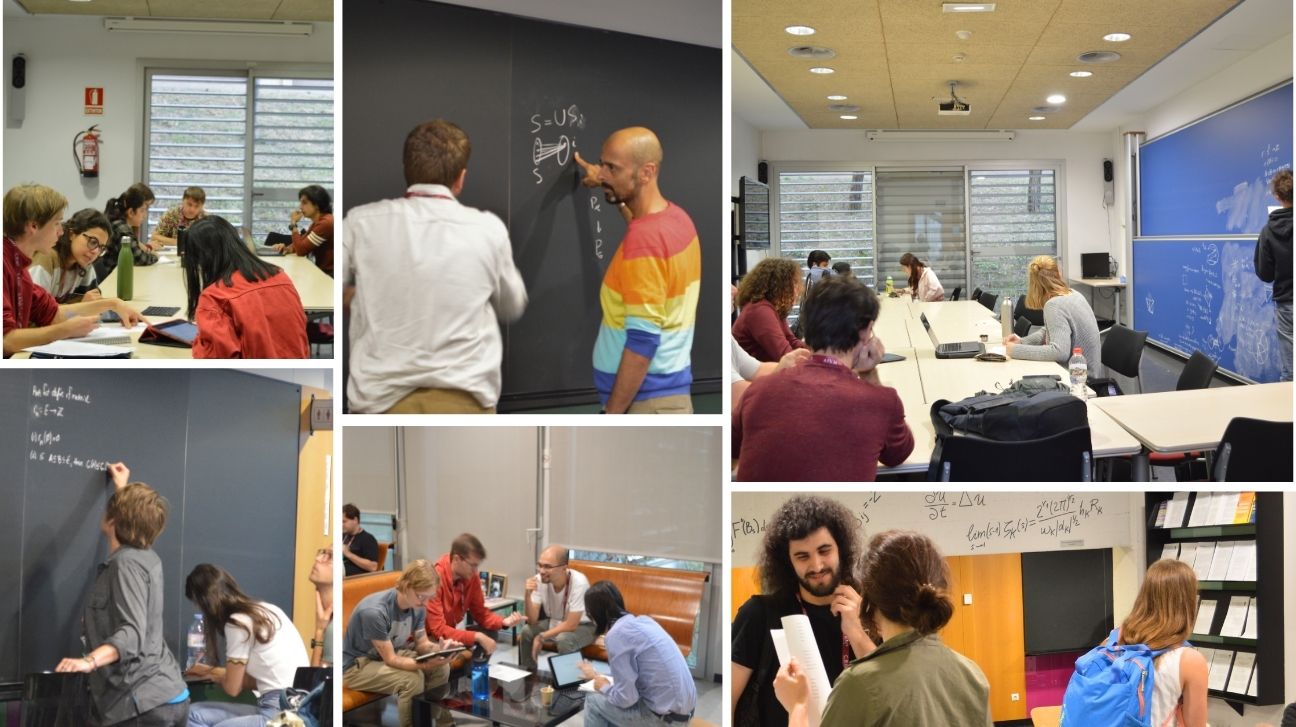
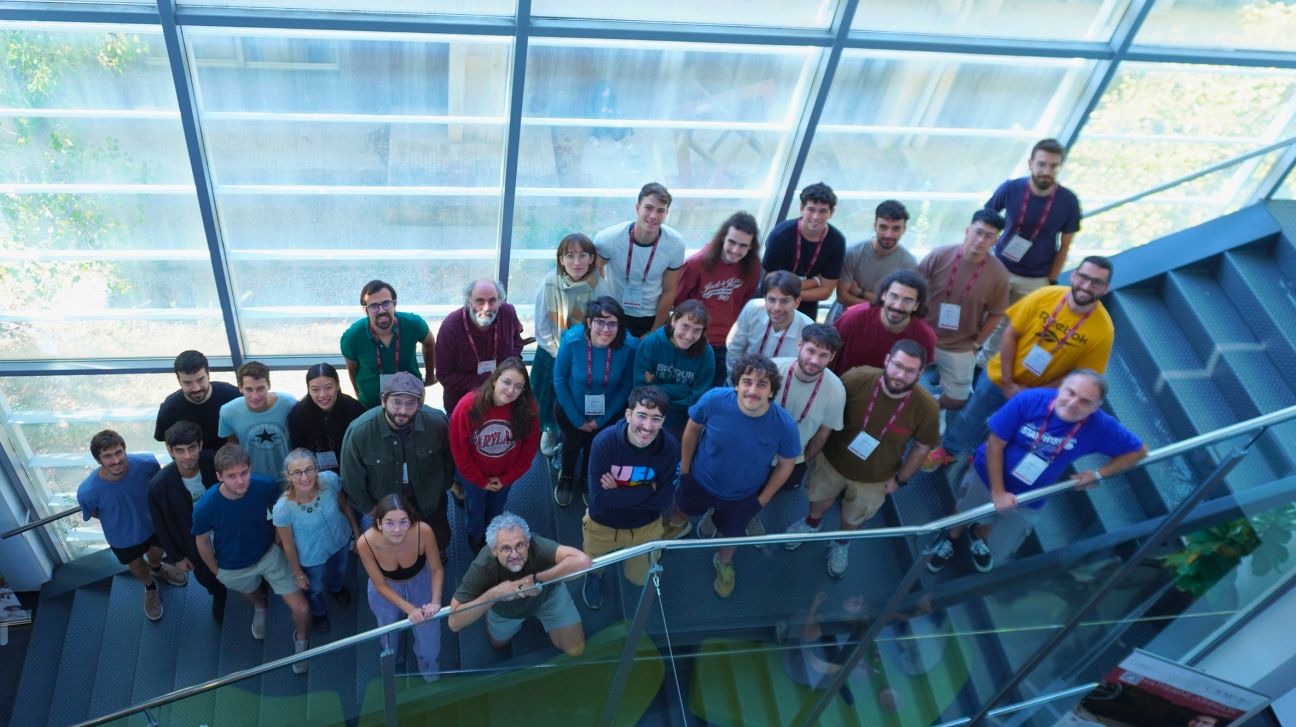
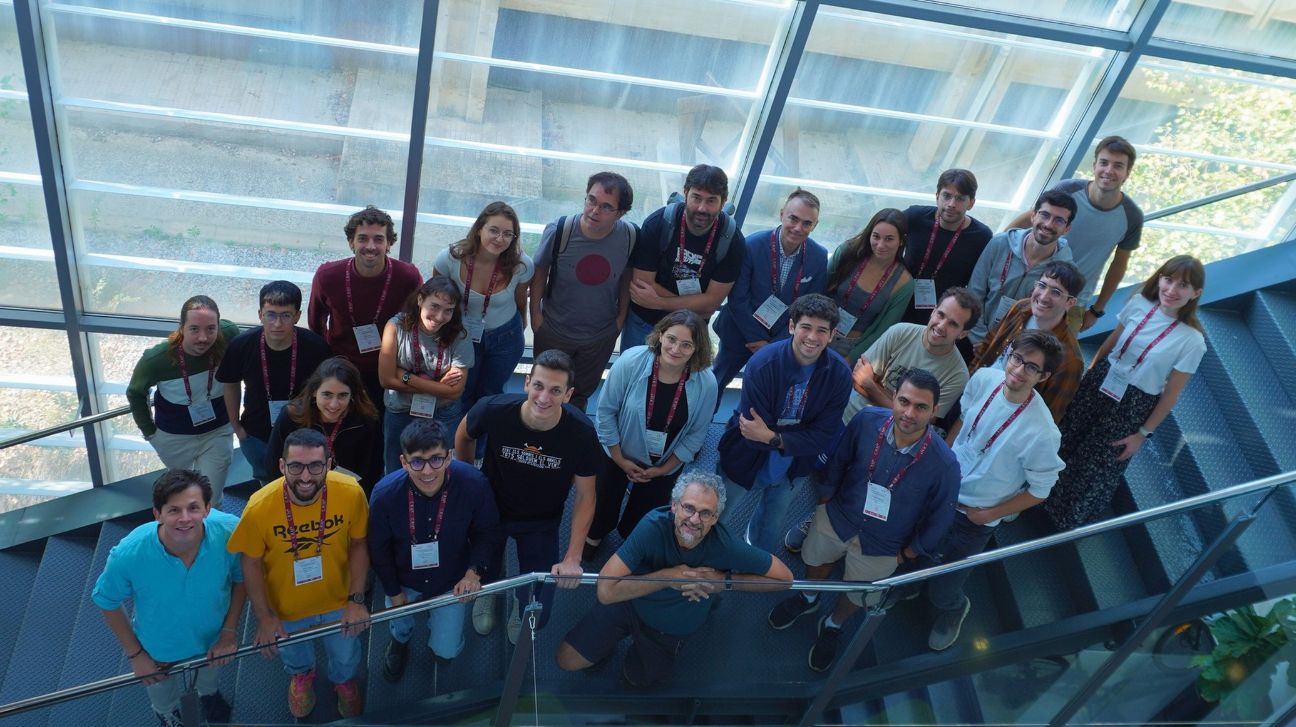
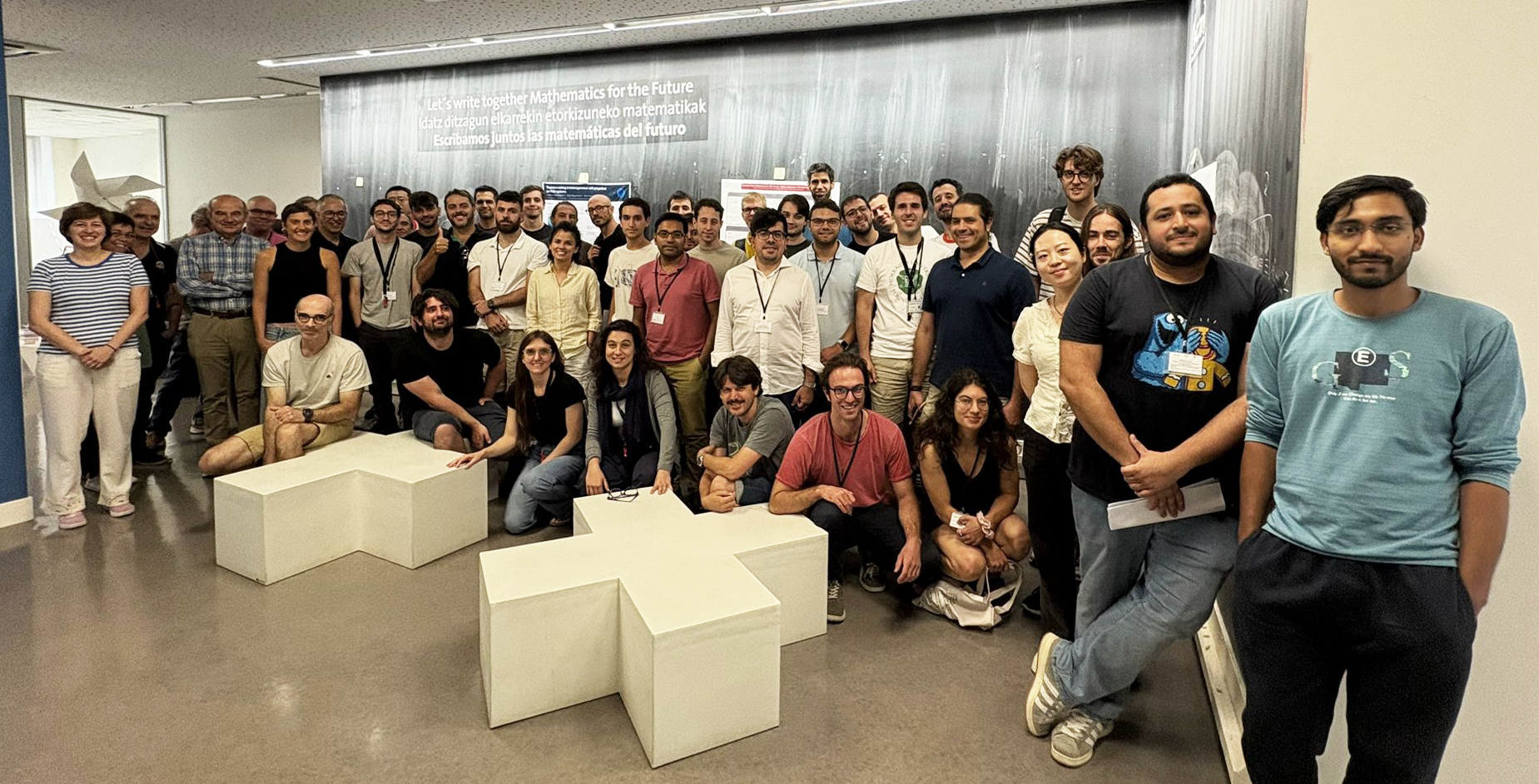
From October 13 to 17, 2025, the CRM hosted Matroid Week, a research school on combinatorial geometries and matroid theory. Courses by Laura Anderson and Geoff Whittle explored intersection properties and structural emergence in matroids. The event fostered deep theoretical exchange, international collaboration, and a vibrant research community.
From October 13 to 17, 2025, the Centre de Recerca Matemàtica (CRM) hosted the Research School on Combinatorial Geometries and Geometric Combinatorics – Matroid Week, an intensive school within the MdM research program. Over five days, researchers from around the world delved into matroid theory—a branch of combinatorics that connects deeply with geometry, algebra, and topology.
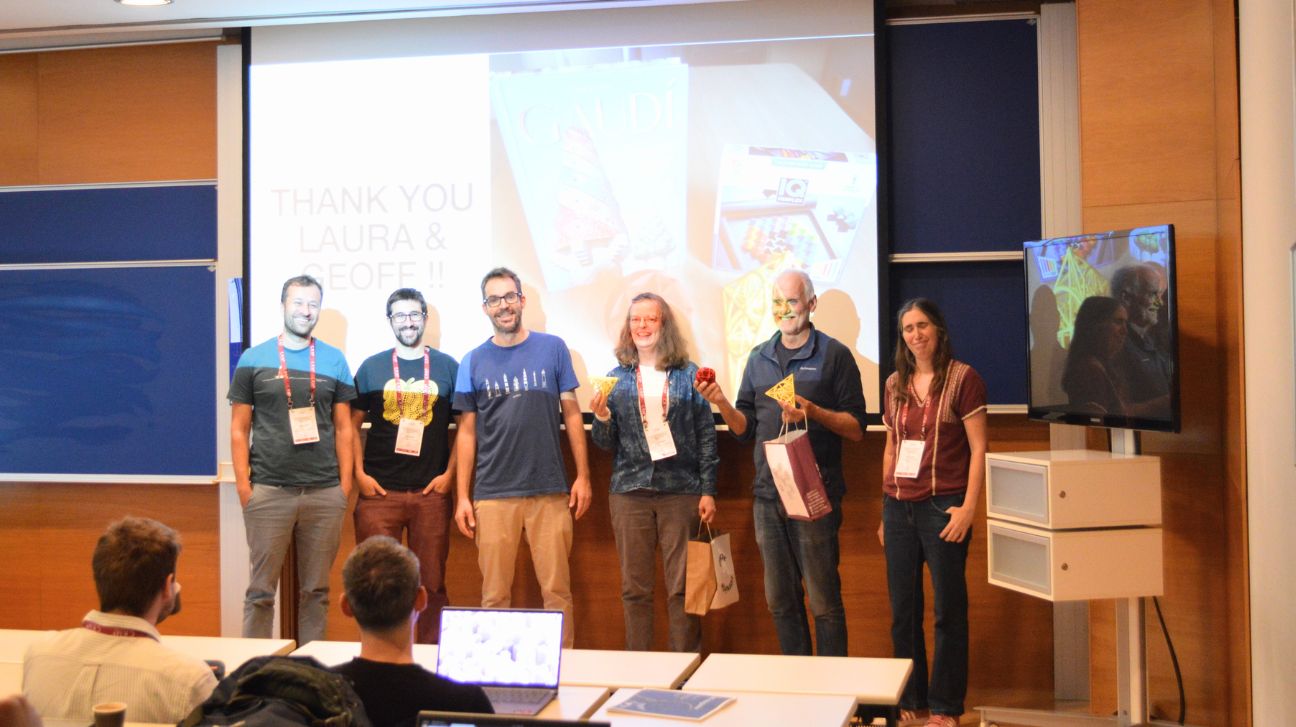
The school featured two main courses led by prominent figures in the field:
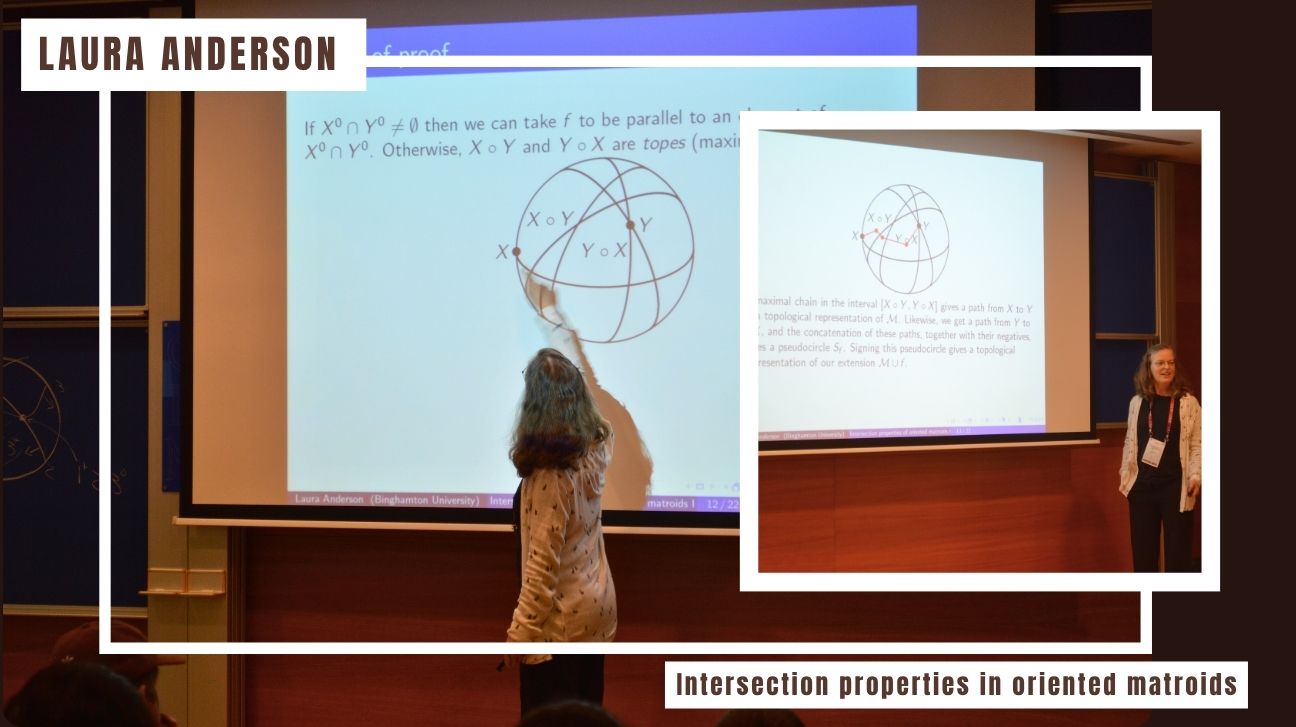
Laura Anderson, professor at Binghamton University, focuses her research on the interplay between combinatorics and topology, especially oriented matroids, convex polytopes, and combinatorial models of topological spaces. She is the author of Oriented Matroids (Cambridge University Press, 2025), a geometrically motivated and accessible introduction to the subject. In her course, Intersection properties in oriented matroids, Anderson explored how non-realizable matroids can violate basic geometric and topological intuitions. She discussed properties such as the Euclidean property and other intersection phenomena that challenge our understanding of combinatorial space.
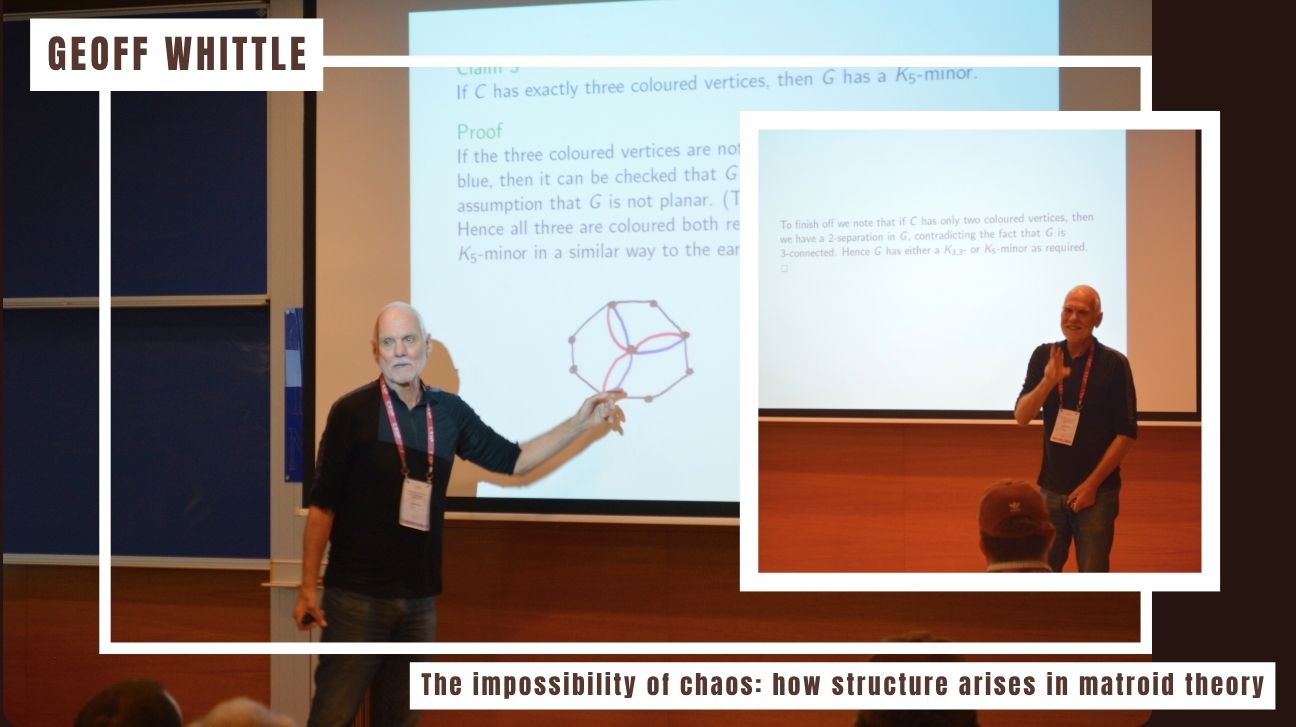
Geoff Whittle, professor at Victoria University of Wellington, is known for his contributions to the structural theory of matroids. In his course, The impossibility of chaos: how structure arises in matroid theory, Whittle showed how, despite the apparent wildness of general matroids, structure inevitably emerges. He explained how the exclusion of certain substructures leads to highly organized classes of matroids, such as binary matroids and those representable over all fields, drawing on seminal theorems by Tutte and Seymour.
In addition to the courses, the week included collaborative working sessions and open discussions around problems proposed by the speakers. These activities will continue in the coming weeks as part of the Intensive Research Programme, which features specialized seminars and will culminate in a closing conference in November.
Matroid Week was a vivid example of how mathematical research can combine theoretical depth, international collaboration, and a strong sense of community. At CRM, we celebrate the success of this initiative and look forward to the new research directions it will inspire.
Subscribe for more CRM News
Stay updated to our mailing list to get the lastest information about CRM activities.
From October 13 to 17, 2025, the CRM hosted Matroid Week, a research school on combinatorial geometries and matroid theory. Courses by Laura Anderson and Geoff Whittle explored intersection properties and structural emergence in matroids. The event fostered deep…
Mathematician László Lovász received the 2025 Erasmus Medal from the Academia Europaea yesterday at the PRBB in Barcelona, where he delivered the lecture “The Beauty of Mathematics”. Renowned for his work in graph theory and discrete mathematics, Lovász has shaped…
For one week in early October, the Centre de Recerca Matemàtica became a meeting ground for the world of combinatorial geometry. The Polytope Week research school gathered more than fifty participants from three continents to study the interplay…
From October 6–10, 2025, the Centre de Recerca Matemàtica hosted the XIII GEFENOL-DIFENSC Summer School, bringing together young researchers and leading experts to explore the role of statistical physics in understanding complex systems. The program featured courses…
The first CS³ Summer School on Complex Systems transformed the Centre de Recerca Matemàtica into a crossroads of ideas, where physicists, biologists, economists, and mathematicians explored how order and chaos intertwine across nature and society….
Full professor at the Universitat Politècnica de Catalunya and researcher at the Centre de Recerca Matemàtica, Jezabel Curbelo has been honored with the 2025 National Research Award for Young Researchers in the María Andresa Casamayor category (Mathematics and ICT)….
ICIAM Board and VIASM Members during a breakVietnam hosted the ICIAM Board Meeting and Workshop this September at the Vietnam Institute for Advanced Study in Mathematics (VIASM), gathering 70 delegates from five continents. CRM researcher Tim Myers attended as the…
La Nit Europea de la Recerca va portar a Barcelona, l’Hospitalet i Vic tres investigadors del CRM que van mostrar la diversitat i la vitalitat de la recerca matemàtica. A la Casa Golferichs, Leticia Pardo (UB-CRM) va introduir el públic en el món dels fractals,…
In the article “Wigglyhedra”, researchers Asilata Bapat (Australian National University) and Vincent Pilaud (Universitat de Barcelona – Centre de Recerca Matemàtica) introduce the wiggly complex, a novel combinatorial and geometric structure, along with its associated…
From September 3 to 5, 2025, the Basque Center for Applied Mathematics (BCAM) hosted the Bilbao–Barcelona Analysis and PDE Meeting. For three days, researchers from both cities met face to face, joined by colleagues from other institutions, to…
Javier Gómez-Serrano, professor at Brown University, has received the 2025 R. E. Moore Prize for Applications of Interval Analysis together with Tristan Buckmaster and Gonzalo Cao-Labora. The award honours their article Smooth imploding solutions…
La investigadora del Centro Nacional de Investigaciones Oncológicas (CNIO) Eva González-Suárez ha recibido este año por segunda vez una ayuda del Consejo Europeo de Investigación (ERC) para avanzar hacia una nueva terapia dirigida contra el cáncer de mama triple negativo. Este subtipo representa entre el 15 y 20% de los cánceres de mama, y uno de sus rasgos es la propensión a formar metástasis.
El equipo de González, el Grupo de Transformación y Metástasis del CNIO, está desarrollando la prueba de concepto de un tratamiento basado en nuevos inhibidores contra la proteína RANKL, que pueden beneficiar al 30% de pacientes con tumores de mama triple negativo.
¿Hay ahora más cáncer de mama que antes, o se diagnostica más?
Probablemente se da una combinación de ambos factores, porque sin duda se diagnostican más casos que hace unos años. Todos los cribados para la detección precoz del cáncer de mama están encontrando muchos casos que antes pasaban desapercibidos. Gracias a ello se pueden empezar antes los tratamientos, con el consecuente aumento de supervivencia.
Pero la incidencia también puede haber aumentado por factores del estilo de vida: más consumo de tabaco en mujeres –que afecta notablemente al cáncer de pulmón, pero también a otros tumores, incluido el de mama–, de alcohol, la enfermedad metabólica –sin ser necesariamente obesidad– o el estrés, entre otros factores.
Grupo de Transformación y Metástasis del CNIO, liderado por Eva González Suárez. /CNIO
¿Qué avance en investigación desea especialmente que ocurra, porque cree que tendrá más impacto?
A mí me gustaría que se avanzara en la caracterización no solo del tumor, sino del tumor y la paciente en su conjunto. El tumor no está aislado. En los últimos años se ha avanzado primero en conocer el tumor, a nivel genético, su DNA, mutaciones, y más recientemente en el microentorno/microambiente tumoral, pero ha llegado el momento de estudiar el “macroentorno”, a la paciente en su conjunto, y todos los factores externos a los que está sometida.
Ahora los tumores se clasifican en grupos según sus características generales, pero un tumor no tiene nada que ver con otro, y cada paciente es diferente. Esa caracterización “conjunta” estandarizada permitiría conocer realmente su heterogeneidad, e identificar nuevas dianas para un diagnóstico y tratamiento mucho más personalizados.
¿Cómo valora el avance de la investigación en cáncer de mama?
Los últimos avances en cáncer de mama, con los pocos años que se lleva trabajando a nivel molecular, son espectaculares. Es indiscutible el impacto positivo de nuevos tratamientos como los inhibidores de la proteína HER2 o la terapia hormonal. Y hay muchas otras dianas terapéuticas que van dando lugar a tratamientos cada vez más personalizados. Por ejemplo, los inhibidores de CDKs (palbociclib y su familia), los inhibidores de inmunoterapia, los inhibidores PARP, los inhibidores de PI3 quinasa, que solo tienen sentido si tienes mutaciones en esa vía, etcétera.
Este es el camino, con claras ventajas: un aumento en la supervivencia, menos efectos secundarios, y una medicina cada vez más personalizada. Sin embargo, sigue habiendo grandes retos. Es necesario continuar investigando para identificar nuevas dianas para el tratamiento de la enfermedad metastásica, que sigue siendo devastadora.
Con la llegada de las terapias que menciona, dirigidas a dianas concretas, ¿sigue siendo importante en cáncer de mama la quimioterapia, que es menos específica y tiene más efectos secundarios?
La quimioterapia es hoy el tratamiento más eficiente para reducir el volumen tumoral. En los tumores diagnosticados con un tamaño grande, la quimioterapia previa es esencial para poder eliminarlos, ya reducidos, con cirugía. Creo que se seguirá usando, al menos a medio plazo, porque ninguna de estas terapias personalizadas, más dirigidas, tiene un efecto tan claro sobre el volumen tumoral, afectan más a recurrencias y supervivencias.
Dicho esto, hay estudios muy prometedores para conseguir los mismos efectos con dosis mucho más bajas de quimioterapia y menos efectos secundarios asociados.
Además, hay muchos tipos diferentes de quimioterapia. Actualmente, se prueba un tipo y, si no hay respuesta, se pasa a otro. Pero hay líneas de investigación que buscan marcadores que predigan esa respuesta de forma que se pueda preseleccionar qué quimioterapia va a resultar más eficiente para cada paciente.
¿Hay tumores en que se pueda ya evitar la quimioterapia?
En aquellos detectados en estadíos muy tempranos y con un tamaño lo bastante pequeño para poder eliminarlos con cirugía. Incluso muchas pacientes diagnosticadas en estos estadíos de ‘buen pronóstico’ están recibiendo sólo tratamientos hormonales o en combinación con otros dirigidos contra marcadores específicos, como HER2, sin necesidad de quimioterapia.
También hay pacientes con cáncer de mama más avanzado en ensayos clínicos para probar combinaciones de terapias dirigidas –terapia hormonal con inhibidores de HER2 y añadiendo inhibidores de CDKs– con resultados positivos y mejores tasas de supervivencia que la quimioterapia convencional. A medio plazo es posible que incluso pacientes con cáncer de mama avanzado no tengan que recibir quimioterapia, o solo la reciban durante un breve período de su tratamiento.
Dentro de, digamos, 20 años, ¿será el cáncer de mama una enfermedad fácilmente superable en todas sus variantes?
Creo que, para el cáncer de mama se pueda curar en su totalidad, es fundamental un abordaje sistémico. Además de conocer el tumor, ahora conocemos mejor su microentorno, principalmente en el sistema inmunitario y las células inmunitarias que rodean al tumor, pero el cáncer –de mama y de otros tumores– es una enfermedad sistémica y tenemos que empezar a verla como tal, con tratamientos y estudios que contemplen su implicación con el resto del organismo.
En este sentido, estoy ahora mismo en un congreso de la recién nacida neurociencia del cáncer, que estudia cómo la enfermedad afecta a los circuitos neuronales y al sistema nervioso, y al revés, cómo desde el sistema nervioso –central o periférico– se puede afectar la enfermedad. Este es uno de los múltiples ejemplos del cáncer como enfermedad sistémica.
¿La inteligencia artificial puede contribuir a ese enfoque sistémico?
Ahora todo el mundo habla de inteligencia artificial, están ya establecidos algoritmos se analizan nuestros gustos con fines comerciales. Ha llegado el momento de recoger y analizar datos que afectan a nuestra salud.
Cada individuo es diferente y vive en un entorno diferente; tenemos que ser capaces de recoger todos esos datos individualizados, para saber cómo tratar a cada persona individualmente. Igual que diferentes personas no tenemos el mismo metabolismo y no reaccionamos igual a una dieta, lo mismo sucede con los tratamientos. Tengo confianza en que, con todos estos avances, aumentar la tasa de curación del cáncer de mama como tal, o convertirlo en una enfermedad crónica, no estén tan lejos en un futuro.
Más información sobre la investigación de Eva González-Suárez:
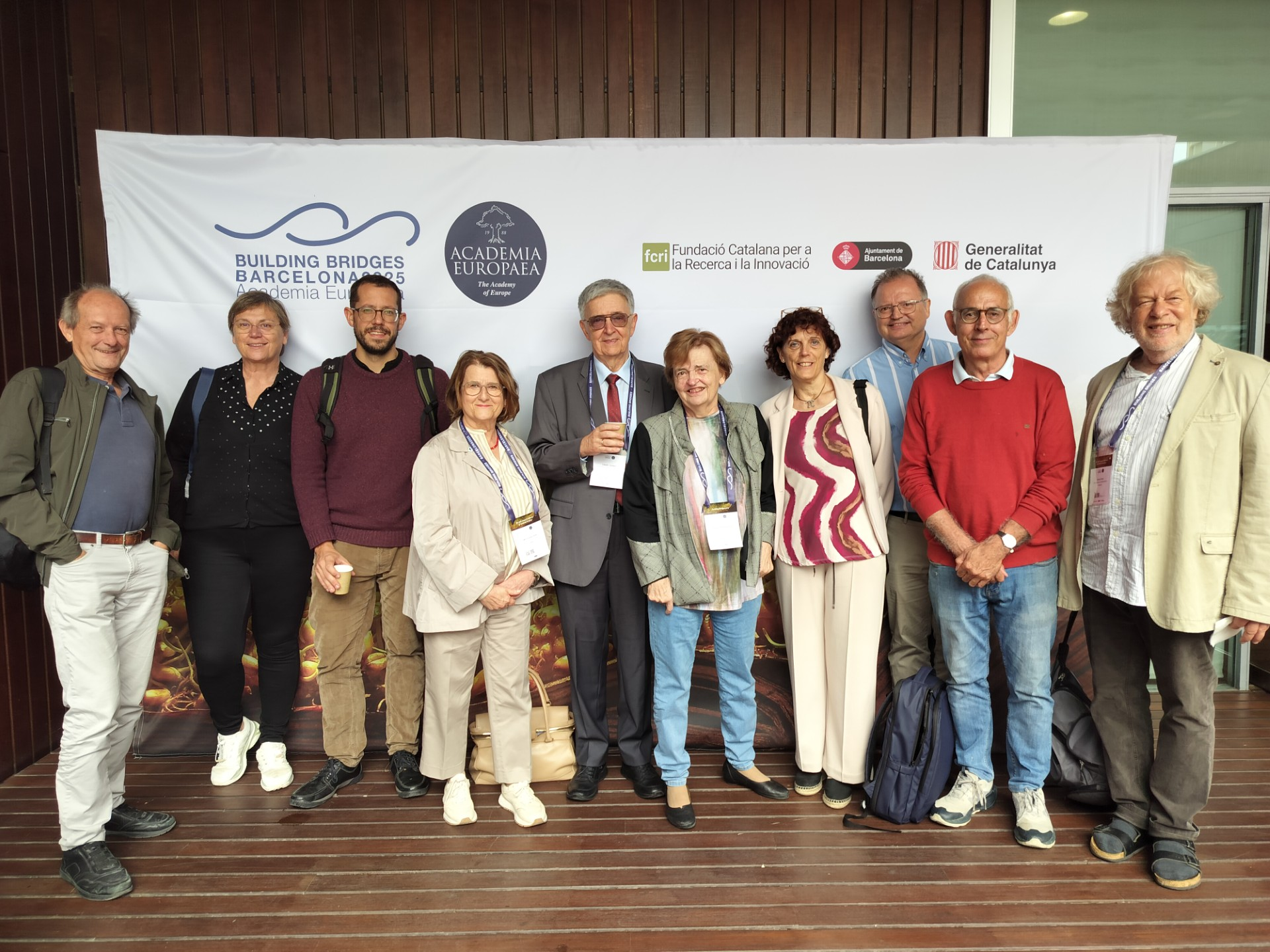
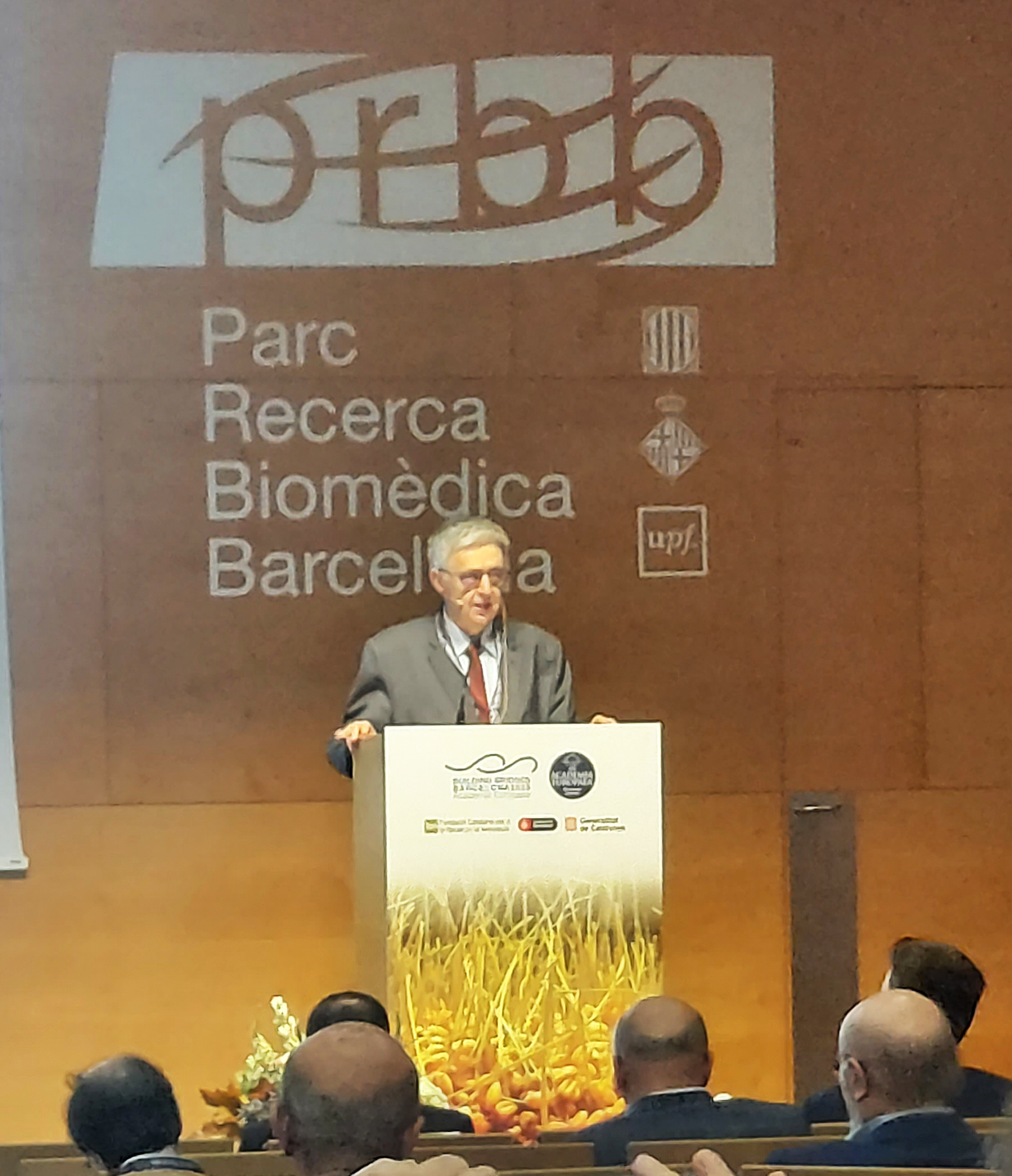
Mathematician László Lovász received the 2025 Erasmus Medal from the Academia Europaea yesterday at the PRBB in Barcelona, where he delivered the lecture “The Beauty of Mathematics”.
Renowned for his work in graph theory and discrete mathematics, Lovász has shaped modern understanding of the links between mathematics, computer science, and information theory.
The award recognises his exceptional career in discrete mathematics and computer science, as well as his significant contributions to European scientific culture. A former President of the Hungarian Academy of Sciences, Professor Emeritus at Eötvös Loránd University (ELTE), and Research Professor at the HUN-REN Alfréd Rényi Institute of Mathematics, Lovász is regarded as one of the most influential theorists of his generation.
The Erasmus Medal citation described Lovász as “a towering mathematician of our age”, whose work has transformed the landscape of discrete mathematics and its links with classical branches of pure and applied mathematics. Over six decades, his elegant and powerful ideas have solved major open problems and created entirely new subfields, from the Lovász Local Lemma and the proofs of the weak perfect graph and Kneser conjectures to the Lenstra–Lenstra–Lovász lattice reduction algorithm, the ellipsoid method in combinatorial optimisation, and the theory of graph limits.
The ceremony, introduced by Jaume Bertranpetit, Academic Director of the Academia Europaea Barcelona Hub, featured a laudation by János Pach (Rényi Institute and EPFL), who outlined Lovász’s long-standing influence across mathematics and computer science. The event concluded with Lovász’s Erasmus Lecture, titled “The Beauty of Mathematics”, a reflection on the inner elegance and coherence that connect seemingly distant branches of the mathematical sciences.
The event was attended by Guillem Perarnau, Marc Noy, and Oriol Serra, researchers at the Universitat Politècnica de Catalunya (UPC) and affiliated members of the CRM, along with Carme Cascante, Director of the CRM, who represented the centre at the ceremony.
The Erasmus Medal is one of the most prestigious honors granted by the Academia Europaea for outstanding scientific achievements. With this award, László Lovász joins a distinguished group of laureates who have strengthened the bridges between science, technology, the humanities, and society.
From October 13 to 17, 2025, the CRM hosted Matroid Week, a research school on combinatorial geometries and matroid theory. Courses by Laura Anderson and Geoff Whittle explored intersection properties and structural emergence in matroids. The event fostered deep…
Mathematician László Lovász received the 2025 Erasmus Medal from the Academia Europaea yesterday at the PRBB in Barcelona, where he delivered the lecture “The Beauty of Mathematics”. Renowned for his work in graph theory and discrete mathematics, Lovász has shaped…
For one week in early October, the Centre de Recerca Matemàtica became a meeting ground for the world of combinatorial geometry. The Polytope Week research school gathered more than fifty participants from three continents to study the interplay…
From October 6–10, 2025, the Centre de Recerca Matemàtica hosted the XIII GEFENOL-DIFENSC Summer School, bringing together young researchers and leading experts to explore the role of statistical physics in understanding complex systems. The program featured courses…
The first CS³ Summer School on Complex Systems transformed the Centre de Recerca Matemàtica into a crossroads of ideas, where physicists, biologists, economists, and mathematicians explored how order and chaos intertwine across nature and society….
Full professor at the Universitat Politècnica de Catalunya and researcher at the Centre de Recerca Matemàtica, Jezabel Curbelo has been honored with the 2025 National Research Award for Young Researchers in the María Andresa Casamayor category (Mathematics and ICT)….
ICIAM Board and VIASM Members during a breakVietnam hosted the ICIAM Board Meeting and Workshop this September at the Vietnam Institute for Advanced Study in Mathematics (VIASM), gathering 70 delegates from five continents. CRM researcher Tim Myers attended as the…
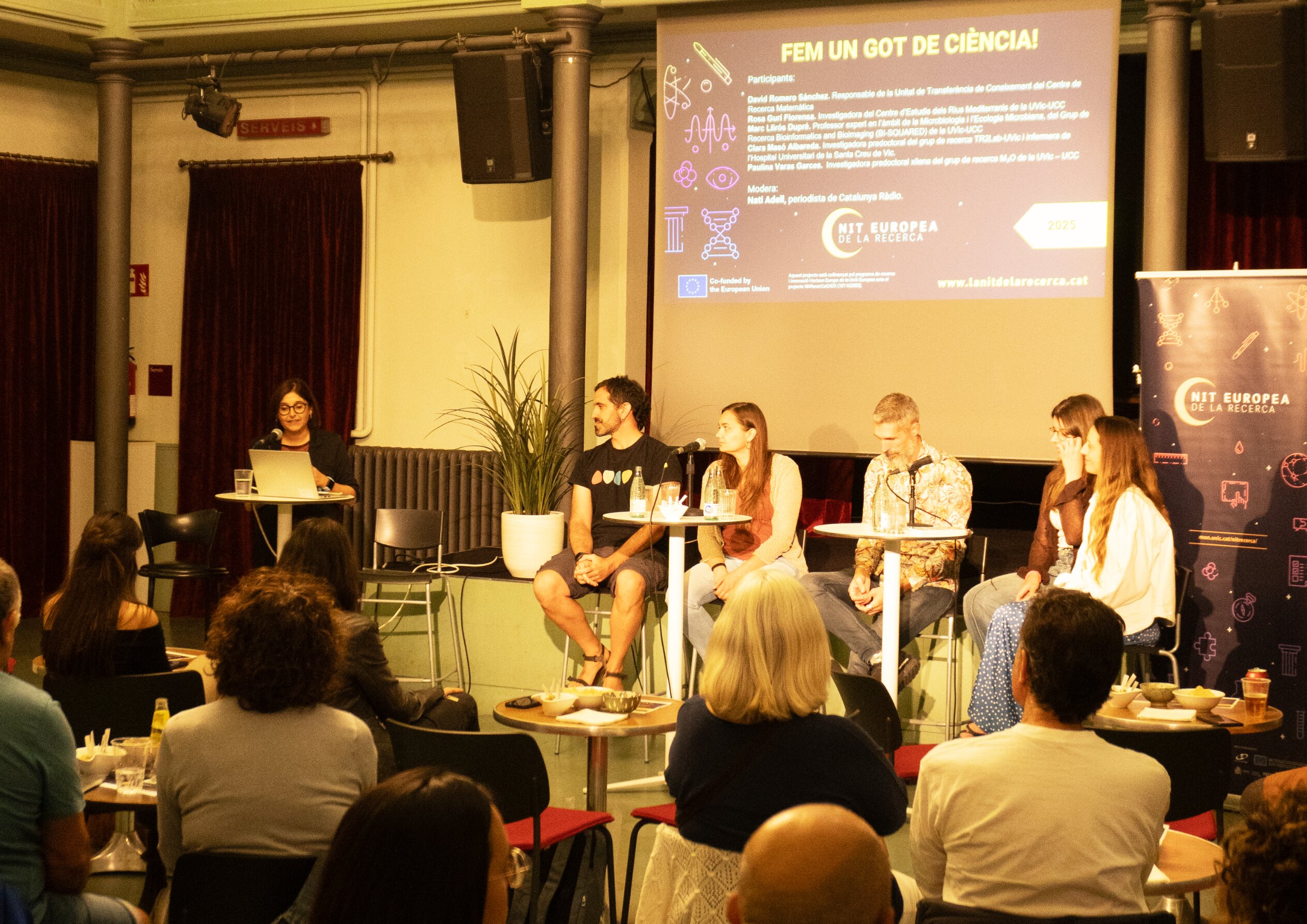
La Nit Europea de la Recerca va portar a Barcelona, l’Hospitalet i Vic tres investigadors del CRM que van mostrar la diversitat i la vitalitat de la recerca matemàtica. A la Casa Golferichs, Leticia Pardo (UB-CRM) va introduir el públic en el món dels fractals,…
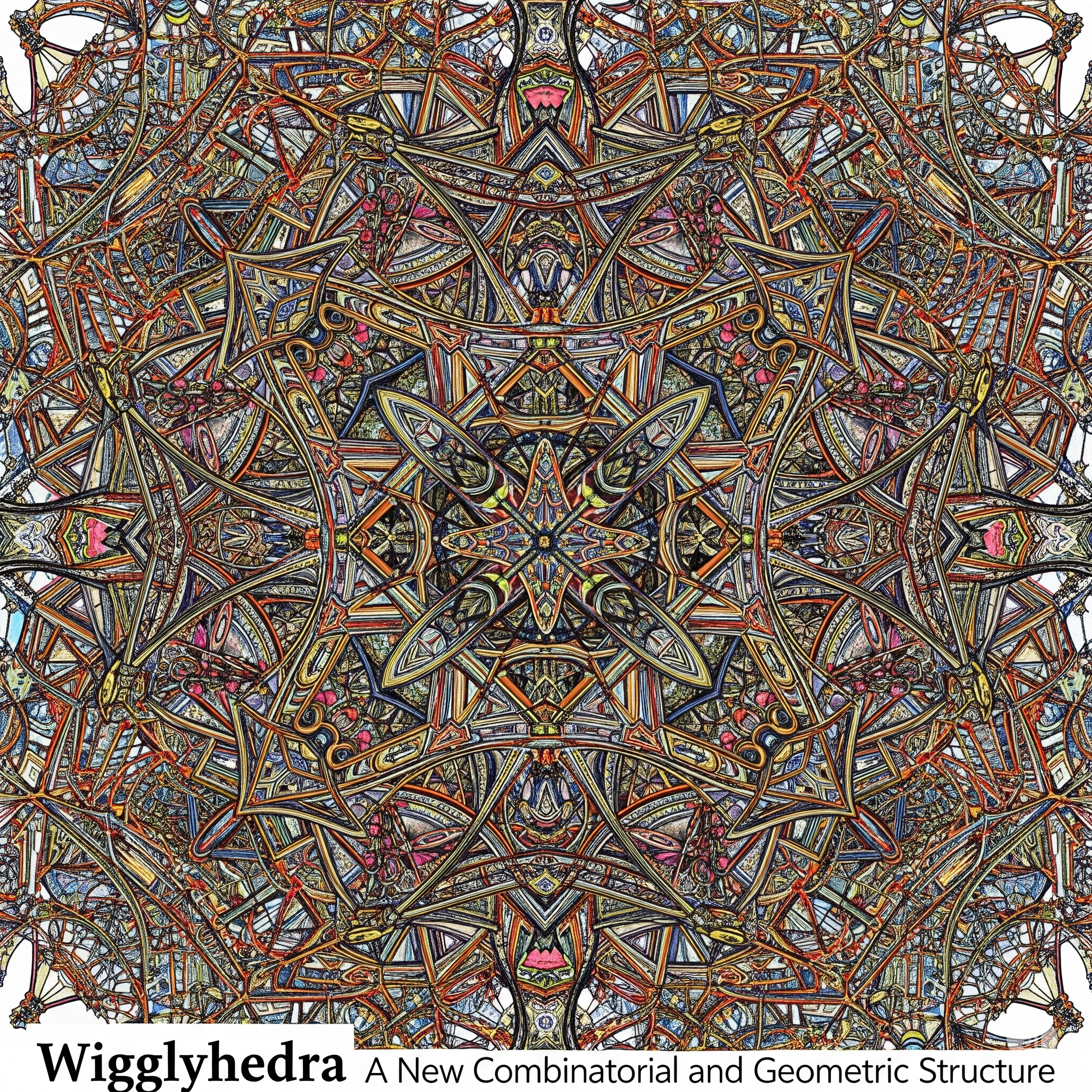
In the article “Wigglyhedra”, researchers Asilata Bapat (Australian National University) and Vincent Pilaud (Universitat de Barcelona – Centre de Recerca Matemàtica) introduce the wiggly complex, a novel combinatorial and geometric structure, along with its associated…
From September 3 to 5, 2025, the Basque Center for Applied Mathematics (BCAM) hosted the Bilbao–Barcelona Analysis and PDE Meeting. For three days, researchers from both cities met face to face, joined by colleagues from other institutions, to…
Javier Gómez-Serrano, professor at Brown University, has received the 2025 R. E. Moore Prize for Applications of Interval Analysis together with Tristan Buckmaster and Gonzalo Cao-Labora. The award honours their article Smooth imploding solutions…