Author Archive

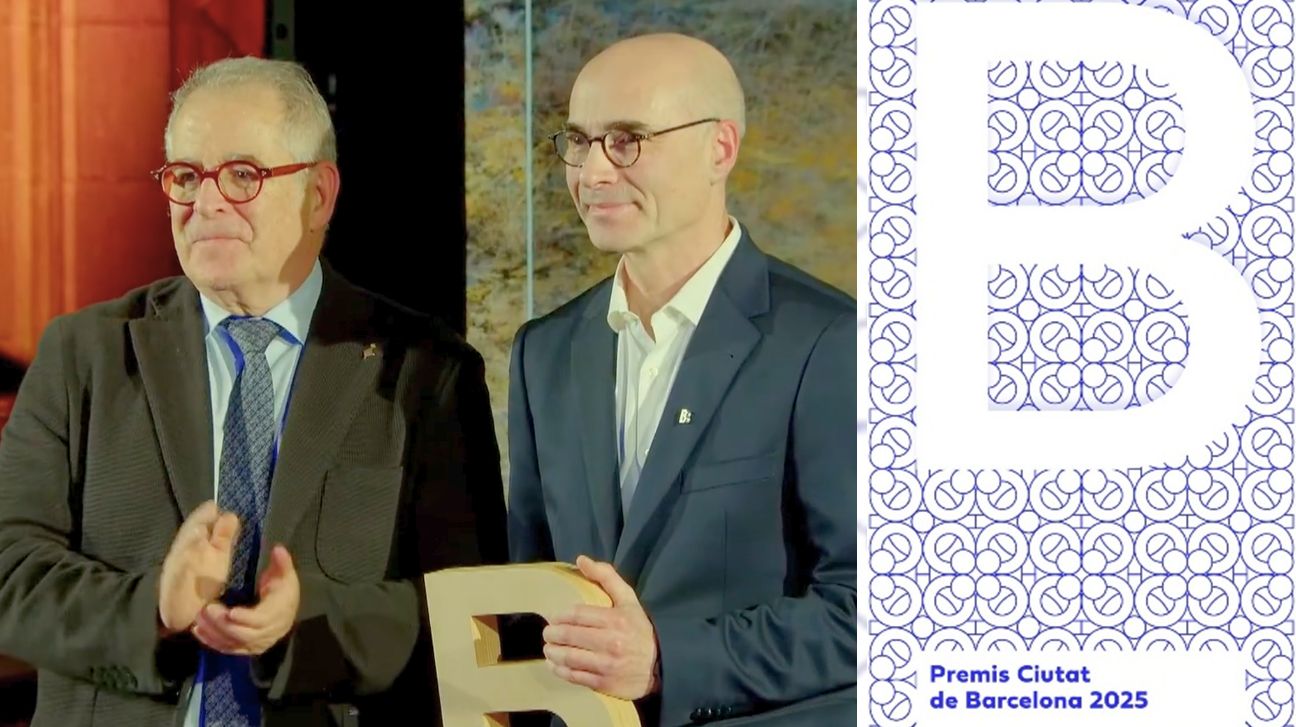
ICCUB-IEEC researcher Nadejda Blagorodnova ​​wins the National Youth Talent Research Award 2025

Image
IEEC-ICCUB researcher Nadejda Blagorodnova
English

Nadejda Blagorodnova Mujortova, a researcher at the Institute of Cosmos Sciences of the University of Barcelona, ​​the Institute of Space Studies of Catalonia (ICCUB-IEEC) and professor at the Faculty of Physicshas jointly received the 2025 National Research Award for Young Talent, with Katherine Villa Gómez, ICREA research professor and group leader at the Institute of Chemical Research of Catalonia (ICIQ). The announcement was made today by the Catalan Minister for Research and Universities, Núria Montserrat, at a press conference.

The award carries a €15,000 endowment, which is equally shared between the two awardees.

Nadejda Blagorodnova Mujortova‘s

research focuses on observational astronomy in the time domain, which studies transient astrophysical phenomena such as supernovae, stellar mergers, and stars disrupted by supermassive black holes.

With the research group Common Envelope Transients – Progenitors, Precursors, and Properties of their Outbursts (CET-3PO), funded by a grant from the European Research Council (ERC), she studies the interaction and merger of close binary stars. These studies combine stellar evolution models with observations from the most advanced ground-based telescopes, such as the Gran Telescopio Canarias, the Very Large Telescope (Chile), and the Southern African Large Telescope (South Africa), as well as observations Hubble Space Telescope and James Webb Space Telescope.

“I sincerely thank the Catalan Foundation for Research and Innovation for this recognition, which gives visibility to new generations of researchers. This award represents an incentive to continue working with passion and to reinforce research excellence and innovation,” says Blagorodnova.


Other awardees

The other categories of the National Research Awards were also announced today. Luis Serrano, director of the Centre for Genomic Regulation (CRG), has been awarded the 2025 National Research Award for his pioneering research in systems biology and protein design.

The National Research Award for Knowledge Transfer and Innovation went to the Eurecat Foundation, and the Joan Guinovart and Cirera Award for Science

Communication was given to biochemist and science communicator Pere Estupinyà. The National Award for Patronage and Public-private Scientific Collaboration has been given to the ARI Project, of Hospital Clínic and the August Pi i Sunyer Biomedical Research Institute (IDIBAPS), and the National Award for the Creation of a Science-based Company, was given to the University of Lleida and the University of Sherbrooke (Canada), for their start-up UniSCool.

News Type
Date
SEO Title
ICCUB-IEEC researcher Nadejda Blagorodnova ​​wins the National Youth Talent Research Award 2025

Go to Source

IFAE and Escola Sant Martí de Cerdanyola launch Magnet alliance

The Institut de Física d’Altes Energies (IFAE) and the Escola Sant Martí de Cerdanyola have officially launched their Magnet alliance, within the ‘Magnet. Aliances per a l’èxit educatiu’ programme promoted by the Fundació Bofill. The presentation brought together representatives from the school community, the local council, the education administration and IFAE.

Go to Source

Astronomers image and model extremely rare gravitationally lensed supernova

Image
High-resolution image taken with the Large Binocular Telescope on Mount Graham in Arizona, USA, displaying the two lens galaxies in a warm tone, and the five lensed copies of SN Winny in blue.
Credits
SN Winny Research Group
English

That the universe is expanding has been known for almost a hundred years now, but how fast? The exact rate of that expansion remains hotly debated, even challenging the standard model of cosmology. A research team led by the Technical University of Munich (TUM), and with the participation of ICREA-ICCUB-IEEC researcher Frédéric Courbin, has now imaged and modelled an exceptionally rare supernova that could provide a new, independent way to measure how fast the universe is expanding.

The supernova is a rare superluminous stellar explosion, 10 billion lightyears away, and far brighter than typical supernovae. It is also special in another way: the single supernova appears five times in the night sky, like cosmic fireworks, due to a phenomenon known as gravitational lensing.

Two foreground galaxies bend the supernova’s light as it travels toward Earth, forcing it to take different paths. Because these paths have slightly different lengths, the light arrives at different times. By measuring the time delays between the multiple copies of the supernova, researchers can determine the universe’s present-day expansion rate, known as the Hubble constant.

Sherry Suyu, Associate Professor of Observational Cosmology at TUM and Fellow at the Max Planck Institute for Astrophysics, explains: “We nicknamed this supernova SN Winny, inspired by its official designation SN 2025wny. It is an extremely rare event that could play a key role in improving our understanding of the cosmos. The chance of finding a superluminous supernova perfectly aligned with a suitable gravitational lens is lower than one in a million. We spent six years searching for such an event by compiling a list of promising gravitational lenses, and in August 2025, SN Winny matched exactly with one of them.”


High-resolution color image of unique supernova

Because gravitationally lensed supernovae are so rare, only a handful of such measurements have been attempted to date. Their accuracy depends strongly on how well one can determine the masses of the galaxies acting as a lens, because these masses control how strongly the supernova’s light is bent. To measure those masses, the team obtained images with the Large Binocular Telescope in Arizona, USA, using its two 8.4-meter diameter mirrors and an adaptive optics system that corrects for atmospheric blurring. The result is the first high-resolution color image of this system published to date.

The observations reveal the two foreground lens galaxies in the center and five bluish copies of the supernova — reminiscent of a firework exploding. This is quite unusual, since galaxy-scale lens systems normally produce only two or four copies. Using the positions of all five copies, Allan Schweinfurth and Leon Ecker, junior researchers in the team, built the first model of the lens mass distribution.

“Until now, most lensed supernovae were magnified by massive galaxy clusters, whose mass distributions are complex and hard to model,” says Allan Schweinfurth. “SN Winny, however, is lensed by just two individual galaxies. We find overall smooth and regular light and mass distributions for these galaxies, suggesting that they have not yet collided in the past despite their close apparent proximity. The overall simplicity of the system offers an exciting opportunity to measure the universe’s expansion rate with high accuracy.”


ICCUB expertise in time-delay measurements

Frédéric Courbin has long been a leading figure in the field of time-delay cosmography. Courbin pioneered the field of time delay measurements in lensed quasars with the COSMOGRAIL program, which has provided some of the most precise measurements of the Hubble constant using gravitational lensing techniques.

His experience in long-term monitoring of gravitational lenses was instrumental in the present work. In particular, he organized the observations at the Maidanak Observatory, whose data have already been crucial in the past for monitoring lensed quasars and are now contributing to the study of this exceptional lensed supernova.

“It is particularly impressive to finally see a supernova lensed by a galaxy and with measurable delays. This will be done in the near future, in particular with Maidanak observations, which have already been crucial in the past for the observations of lensed quasars,” says Frédéric Courbin.


Two methods, two very different results

So far, scientists have mostly relied on two methods to measure the Hubble constant, but these methods yield conflicting results. This puzzle is known as the Hubble tension.

The first is the local method, which measures distances to galaxies one step at a time, much like climbing a ladder, where each step depends on the previous one; hence, it is referred to as the cosmic distance ladder. It uses objects with well-known brightness to estimate distances and then compares those distances with how fast galaxies are moving away. Because this method involves many calibration steps, even small errors can accumulate and affect the final result.

The second method looks much farther back in time. It studies the cosmic microwave background, the faint afterglow of the Big Bang, and uses models of the early universe to calculate today’s expansion rate. This approach is highly precise, but it relies heavily on assumptions about how the universe evolved, and these assumptions are still subject to debate.


A new, one-step approach

A third, independent method now enters the picture: using a gravitationally lensed supernova. Stefan Taubenberger, a leading member of Professor Suyu’s team and first author of the supernova-identification study, explains that by measuring the time delays between the multiple copies of the supernova and knowing the mass distribution of the lensing galaxy, scientists can directly calculate the Hubble constant: “Unlike the cosmic distance ladder, this is a one-step method, with fewer and completely different sources of systematic uncertainties.”

Astronomers worldwide are currently observing SN Winny in detail using both ground-based and space-based telescopes. Their results will provide crucial new insights and help clarify the long-standing Hubble tension.

News Type
Date
SEO Title
Astronomers image and model extremely rare gravitationally lensed supernova

Go to Source

Professor Giorgos Kallis brings the post-growth perspective to the Tokyo Forum 2025

ICREA researcher at ICTA-UAB, Giorgos Kallis, participated as a featured speaker at the Tokyo Forum 2025, held at the Yasuda Auditorium of the University of Tokyo. The event, jointly organized by the University of Tokyo and the Choi Jonghyun Academy of Social Sciences (South Korea), brought together researchers, business leaders, and institutional representatives to discuss the current challenges facing capitalism and explore its possible future transformations.

Go to Source

Krylov Complexity in the Double-Scaled Complex SYK Model

Image
Krylov Complexity in the Double-Scaled Complex SYK Model
Seminar

Krylov Complexity in the Double-Scaled Complex SYK Model

Date
Place
Josep Maria Codina Seminar Room, 5th floor

Abstract: Different proposals such as Complexity=Volume and the Python’s Lunch conjecture have linked complexity in the boundary theory to geometric features in the bulk within the AdS/CFT correspondence. In one concrete realization of this connection, the duality between JT gravity and the SYK model provides a mapping between the renormalized length of the wormhole in the bulk and the Krylov complexity in the boundary theory. Such a relation was obtained explicitly in the double-scaling limit of the SYK model. 

In this talk, I will present recent work on the Krylov complexity of the U(1) symmetric complex SYK model in the double-scaling limit. We show that, in the (n,Q)-basis of chord states, the grand canonical transfer matrix is block diagonal and thus the grand canonical Krylov complexity is just the sum over the canonical Krylov complexities in the charge sectors weighted by a probability function that depends on the grand potential.

Go to Source

Un estudio sobre el melanoma más frecuente en América Latina, África y Asia alerta de la falta de investigación en genética del cáncer en poblaciones no europeas

Carla Daniela Robles-Espinoza / Carla Daniela Robles-Espinoza.

El melanoma, el cáncer de piel más agresivo, no siempre está causado por la exposición al sol. De hecho, el melanoma más frecuente en varios países de África, Asia y América Latina es el melanoma acral, que no tiene que ver con el sol. Pero este cáncer se ha estudiado poco precisamente porque representa una proporción muy baja de los casos de melanoma en personas de origen europeo. Un estudio aborda en Nature, por primera vez, la genética del melanoma acral en población en México, y da información con la que se podría comprender mejor cómo abordar el tratamiento en muchos casos.

Sus autoras principales, de la Universidad Nacional Autónoma de México (UNAM) y con quienes colabora el Centro Nacional de Investigaciones Oncológicas (CNIO), alertan de que las poblaciones latinoamericanas están muy poco representadas en la investigación en genómica del cáncer.

La mayoría de las muestras, de ascendencia europea

En concreto, estiman que solo el 1% de las muestras que hay en bases de datos, indispensables para investigar genes implicados en cáncer y su interacción con el ambiente, y para mejorar los tratamientos, son de personas de origen latinoamericano.

El problema afecta a poblaciones no europeas en general: “Más del 80% de las muestras en The Cancer Genome Atlas [un proyecto internacional de estudio genómico de 30 tipos de cáncer] se clasificaron como de ascendencia europea”, señalaba en un estudio anterior Carla Daniela Robles-Espinoza, autora principal del trabajo ahora publicado en Nature. El Pan-Cancer Analysis of Whole Genomes, otra colaboración internacional, contiene solo un 5% de muestras de ascendencia africana.

Según explicaba Robles-Espinoza el mencionado estudio del 2023, el 70% de las líneas celulares comúnmente utilizadas en investigación de cáncer son de ascendencia europea, “aunque esto va mejorando”, afirma hoy la investigadora.

Melanoma bajo las manos, pies y uñas  

“Para aprender a tratar el cáncer en distintas poblaciones necesitamos estudiar genómicamente pacientes de ancestría y procedencia geográfica distintas”, explica Robles-Espinoza. “El cáncer se origina y desarrolla tanto por factores genéticos, que varían dependiendo de la población, como por exposiciones ambientales, que también varían con la localización geográfica; por eso es muy importante tener representación de pacientes de diferentes orígenes en bases de datos”.

Su estudio en Nature pone de relieve la poca diversidad genética en los repositorios globales de muestras, y “la relativa falta de estudios sobre melanoma acral”, el tipo de melanoma más reportado en algunos países de ingresos bajos y medios.

El melanoma acral, como todos los tipos de melanoma, es un cáncer de los melanocitos, las células que producen el pigmento que da color a piel, ojos y cabello. Pero mientras el melanoma más habitual en Europa aparece en zonas expuestas al sol, como brazos y piernas, el acral se da en la planta de los pies, la palma de las manos y bajo las uñas, y no se asocia a la luz solar.

El estudio en Nature descubre alteraciones genéticas que son específicas del melanoma acral. Los autores estudiaron melanomas de casi un centenar de pacientes mexicanos e identificaron “los genes que estaban más frecuentemente mutados, y las regiones del genoma que presentaban alteraciones”, explica Robles-Espinoza.

Pilar Gallego y Marcos Díaz-Gay (CNIO) / Esther Sánchez. CNIO

Alteraciones genéticas propias

Concluyeron que el melanoma acral podría tener su origen en distintos tipos de melanocitos, y que en función de ello sus alteraciones genéticas serían distintas. Hallaron que los pacientes con ascendencia europea tenían más probabilidad de tener mutado el gen BRAF, un resultado importante porque hay tratamientos dirigidos especialmente a este gen. 

“Los demás pacientes tienen otras mutaciones, no se verían beneficiados de estas terapias, necesitarían de otras estrategias”, señala Robles-Espinoza.

En el estudio colaboró el Grupo de Genómica Digital del CNIO, que investiga los patrones de mutaciones que se producen en el ADN por determinados procesos moleculares y exposiciones ambientales. En términos simples, cada agente carcinogénico –como el tabaco, o la exposición al sol– genera un conjunto de mutaciones propio, como una huella en el genoma del tumor.

Analizando estas firmas mutacionales en las muestras mexicanas de melanoma acral ayudaron a confirmar “que no tenían en su genoma rastros de exposición a luz solar. Las firmas mutacionales asociadas a luz solar son muy evidentes en melanomas cutáneos y en otros tumores en partes expuestas al sol, como el cáncer de labio”, explica Marcos Díaz Gay, jefe del grupo del CNIO.

Este investigador también destaca que la investigación del cáncer ha sido históricamente limitada en términos de diversidad de ancestrías genéticas y orígenes geográficos. Esto “hace más difícil el diagnóstico y el desarrollo de mejores tratamientos para grupos poblacionales no europeos”, dice Díaz Gay.

Sobre el Centro Nacional de Investigaciones Oncológicas (CNIO)

El Centro Nacional de Investigaciones Oncológicas (CNIO) es un centro público de investigación dependiente del Ministerio de Ciencia, Innovación y Universidades. Es el mayor centro de investigación en cáncer en España y uno de los más importantes en Europa. Integra a medio millar de científicos y científicas, más el personal de apoyo, que trabajan para mejorar la prevención, el diagnóstico y el tratamiento del cáncer.

La entrada Un estudio sobre el melanoma más frecuente en América Latina, África y Asia alerta de la falta de investigación en genética del cáncer en poblaciones no europeas se publicó primero en CNIO.

Go to Source

Scientists discover a key mechanism regulating how oxytocin is released in the mouse brain

  • A study led by the Institute for Neurosciences CSIC-UMH has identified an essential protein responsible for the slow and sustained release of oxytocin in the brain, a process that is fundamental for the regulation of social behavior.
  • This work, published in Communications Biology, provides new insights into how the brain maintains basal levels of this hormone and how subtle adjustments in its release modulate sociability.

Link video: https://youtu.be/9daJYmiUj5Y

Photo:  IN CSIC-UMH researchers Beatriz Aznar Escolano and Sandra Jurado. Source: IN CSIC-UMH

The brain does not only communicate through fast electrical impulses; it also relies on slower, more diffuse chemical signals that modulate our emotional and social states over time. A study led by the Institute for Neurosciences (IN), a joint center of the Spanish National Research Council (CSIC) and the Miguel Hernández University of Elche (UMH), has identified a key molecular mechanism that regulates the release of oxytocin within the brain. Published in the journal Communications Biology, the work sheds light on how this hormone maintains a “social tone” and how its release contributes to the quality of social interactions.

SNAP-47 mediates somatic oxytocin dynamics in hypothalamic neurons.  Aznar-Escolano B, Royo M, Madrigal MP, Portalés Montes A, Villanueva J, Gutiérrez, LM & Jurado S. Communications Biology (2026) 9,137

https://doi.org/10.1038/s42003-025-09442-5

Oxytocin is a hormone widely recognized for its role in emotional bonding, sociability, and emotional regulation. Unlike classical neurotransmitters such as glutamate or GABA, which are released quickly and locally from neuronal axons, oxytocin belongs to the group of neuropeptides and can also be released from the cell body (soma) and dendrites. This slower, more diffuse type of release affects broad regions of the brain, yet its underlying molecular mechanisms have remained largely unknown—until now.

“We knew that oxytocin is released within the brain from compartments other than the axon, but we had limited understanding of how this process is regulated”, explains researcher Sandra Jurado, who leads the Synaptic Neuromodulation Laboratory at the IN CSIC-UMH and headed the study. “Our work focuses precisely on understanding the mechanisms that enable this slow and sustained release, which likely prepares the brain for social interaction”, she adds.

A Key Protein for Unconventional Release

In this study, the team identified the protein SNAP-47 as an essential component of the machinery that enables the transport and release of oxytocin from the soma and dendrites of hypothalamic neurons—the brain region where this hormone is produced. SNAP-47 belongs to the SNARE family of proteins, which are involved in vesicle fusion and the release of chemical signals, but it displays distinctive properties: “While other proteins in this family mediate fast and highly efficient release, SNAP-47 operates more slowly”, explains Beatriz Aznar, first author of the study. “This fits well with the type of release we observe for oxytocin within the brain, which does not occur in rapid pulses but rather in a more sustained manner”, she adds.

This difference is key to understanding oxytocin’s function in the central nervous system. Oxytocinergic neurons in the hypothalamus send their axons outside the brain to release the hormone into the bloodstream. However, within the brain, the oxytocin that modulates social behavior is largely released from the soma and dendrites of these neurons through a mechanism that is independent of axonal release.

Confocal microscopy image showing oxytocin (green) and vasopressin (red) circuits in the mouse hypothalamus, both of which are highly relevant for regulating social behaviors in mammals. Author: Mª Pilar Madrigal

Experiments in Cell Culture and Animal Models

To unravel this process, the team combined experiments in neuronal cultures with studies in mice. In an initial phase, they examined how reducing SNAP-47 affected vesicular trafficking and oxytocin release in cultured cells. They then extended these findings to animal models using genetic manipulations specifically targeted to oxytocin-producing neurons.

The results showed that reducing SNAP-47 expression disrupts oxytocin release from the soma and dendrites, without affecting the classical mechanism of axonal release. This alteration had functional consequences for the animals’ social behavior: although the mice still displayed sociability, their interactions were shorter and less robust.

“The effects are subtle, but highly revealing”, explains Jurado. “This is not a complete loss of sociability, but rather a fine-tuning of the quality of interactions. This suggests that this release pathway maintains a basal level of oxytocin that primes the brain to respond appropriately to social stimuli”.

The authors suggest that this mechanism may function as a background system that regulates the brain’s social state, maintaining a steady flow of oxytocin that modulates processes such as social anxiety, motivation, and the propensity to interact. “It represents a basal tone that does not trigger strong responses on its own, but that shapes how we react when a relevant social stimulus appears”, Aznar explains.

This finding broadens our understanding of how hormonal signaling is regulated in the brain and opens new avenues of research into how subtle alterations in these mechanisms could contribute to neuropsychiatric disorders in which oxytocin plays a significant role. “The next step will be to identify the remaining components of this molecular machinery and understand how the different modes of oxytocin release are coordinated to produce a coherent response”, Jurado concludes.

This study was made possible thanks to funding from the Spanish State Research Agency–Ministry of Science, Innovation and Universities, the Prometeo Programme of the Valencian Regional Government (Generalitat Valenciana), and the Severo Ochoa Programme for Centres of Excellence.

Source: Institute for Neurosciences CSIC-UMH (in.comunicacion@umh.es

La entrada Scientists discover a key mechanism regulating how oxytocin is released in the mouse brain se publicó primero en Instituto de Neurociencias de Alicante.

Go to Source

The largest radio astronomy survey of the sky maps the universe in unprecedented detail

Researcher Javier Moldón, from the Institute of Astrophysics of Andalusia (IAA-CSIC), is participating in the international collaboration “LOFAR Surveys,” a LOFAR Key Science Project that has published the largest map of the sky at very low frequencies obtained with this radio telescope. The survey opens a new window for studying a wide variety of astrophysical phenomena at the low-frequency end of the electromagnetic spectrum.

Go to Source

El CIMCYC se suma al programa “Superpoderes” de Maldita.es, una red para combatir la desinformación

superpoderes maldita - cimcyc
El Centro de Investigación Mente, Cerebro y Comportamiento (CIMCYC) se ha asociado con la Fundación Maldita.es para aportar conocimiento científico en la lucha contra los bulos y la desinformación.
Seguir leyendo

Go to Source

Indigenous Peoples and local communities in three continents report a drastic decline in bird body mass over the past eight decades

Birds currently inhabiting many territories across Africa, Latin America and Asia are, on average, considerably smaller than those that predominated in 1940. This is the conclusion of an international study led by the ICTA-UAB, which documents—drawing on the collective ecological memory of ten Indigenous Peoples and local communities—a reduction of up to 72% in the mean body mass of the bird species present in their territories between 1940 and 2020.

Go to Source

IMDEA Energía, un agente clave en el futuro de la sostenibilidad de la región a través del hub Madrid Vuela Sostenible

La entrada IMDEA Energía, un agente clave en el futuro de la sostenibilidad de la región a través del hub Madrid Vuela Sostenible se publicó primero en IMDEA ENERGÍA.

Go to Source

TANC The Apocalypse Is Not Coming: A transdisciplinary conference involving ICTA-UAB

From 12 to 15 May 2026, the UAB will host TANC. The Apocalypse Is Not Coming, an international transdisciplinary conference that will take place at the Faculty of Arts and Humanities. The event is organised by a consortium of UAB institutions and external partners, with researchers from the ICTA-UAB actively participating in the conference’s organising committee.

Go to Source

Sidebar