The ICN2 and CSIC spin-off has been selected for its innovative CO₂ mineralisation technology, which transforms industrial emissions of this gas into valuable carbonated products.

The ICN2 and CSIC spin-off has been selected for its innovative CO₂ mineralisation technology, which transforms industrial emissions of this gas into valuable carbonated products.
Abstract: The simultaneous description of the recent Lead Radius Experiment II (PREX2) and Calcium Radius Experiment (CREX) parity-violating electron-scattering data poses a big challenge for nuclear energy density functional theory, which is referred to as the RREX2-CREX puzzle. While in the non-relativistic Skyrme-like energy density functional, it has been shown that a strong isovector spin-orbit interaction can reconcile the tension, I will present how this puzzle can be resolved within relativistic density functional theory using density-dependent point-coupling functionals with tensor couplings.
Abstract: Let’s start with a thought experiment: Imagine an ideal river in which we can measure with perfect precision both the position and the velocity of every water particle. If this river is unperturbed, these particles move together, with their velocity vectors pointing to the same direction. Now place a rock somewhere upstream: as particles encounter the obstacle, their paths are deflected, and downstream the once–uniform velocity distribution bears a characteristic distortion that encodes the rock’s size, shape, and location.
In galactic dynamics, the water becomes the stars and the rock can be anything from the Galactic bar to a passing dwarf galaxy. Thanks to the Gaia mission and other surveys, we now have an amazing six-dimensional map of stellar positions and velocities in the Solar Neighbourhood. By measuring local deviations from an equilibrium velocity distribution, we aim to infer the unseen mass distribution of the Milky Way and reconstruct its past encounters with other galaxies.
Tribunal:
President: Dr. Amina Helmi
Secretary: Dr. Francesca Figueras Siñol
Vocal: Dr. Jason Hunt
Suplents:
Dr. Friedrich Anders
Dr. Daisuke Kawata
Directors: Dr. Maria Teresa Antoja Castelltort and Dr. Pau Ramos Ramírez
Tutor: Dr. Alberto Manrique Oliva
Abstract: I will review recent progress on obtaining regular (non-singular) black holes as exact solutions of gravitational theories built from resummations of infinite towers of higher-curvature corrections. After introducing the relevant quasi-topological gravities and their key structural features, I will explain how resumming these terms yields everywhere-regular black hole geometries. I will then outline some of the main achievements of this approach to date, including dynamical studies of regular black hole formation in spherical symmetry. I will conclude by highlighting open problems the formalism is poised to tackle.
Prof. Arjan W. Kleij, Group Leader at ICIQ and ICREA Researcher, has been awarded the Rafael Usón Medal, the most prestigious recognition granted by the Specialized Group of Organometallic Chemistry (GEQO) of the Royal Spanish Society of Chemistry (RSEQ).
This award honours his outstanding contributions to the field of organometallic chemistry, particularly in transition metal-catalyzed carbon–carbon bond formation and the valorisation of CO₂, always with a focus on sustainability. The award ceremony took place on October 3rd, at the Rectorate of the University of Alcalá, during the XLIII GEQO Meeting.
“I am grateful to all current and former members of the Kleij laboratory and I want to express my gratitude to both ICIQ and ICREA for the long-term support of our research. The internal and external collaborators over the years have also been crucial to achieve the key advances we have reported in the last decade”, said Prof. Kleij during his acceptance speech.

Prof. Kleij received various recognitions/awards; in 2000 he received an NWO TALENT fellowship, was elected ICREA junior fellow in 2006, and featured in the “Author Profile section” of Angewandte Chemie in 2018. He joined Organic Chemistry Frontiers (RSC) as an Associate Editor (2019). He also was endowed with the 2020 Excellence award from the Spanish Chemical Society, elected a Fellow of the Royal Society of Chemistry (FRSC) in 2021, and received the 2023 European Sustainable Chemistry Award (ESCA) and the 2023 Catalan Chemical Society Scientific Excellence award. Since 2023, he is the scientific coordinator of the HORIZON-TMA-MSCA-DN-JD joint doctoral network “D-Carbonize”.
He has been an invited professor at Tokyo University (2022) and visiting professor at the university of Salerno (Italy) in 2024. In 2019 he was the chair of the 4th EuCheMS Congress on Green and Sustainable Chemistry (EuGSC-4) in Tarragona. Prof. Kleij has (co)authored around 240 international (journal) publications and 6 patent applications with total citations >17350 (h-index 72, i10-index 188).
La entrada Prof. Arjan W. Kleij receives Rafael Usón Medal, the highest distinction from GEQO-RSEQ se publicó primero en ICIQ.
Daniel Torren, researcher at ICTA-UAB, has been recognized with the Best PhD Student Article Award by the Journal of Artificial Societies and Social Simulation (JASSS) for his groundbreaking study “An Agent-Based Model of Cultural Change for a Low-Carbon Transition”, co-authored with ICTA-UAB researchers Ivan Savin and Jeroen van den Bergh.
To view this protected post, enter the password below:
The post Protected: Slowing Down in Genetic Systems: The Role of Bifurcation Proximity and Noise first appeared on Centre de Recerca Matemàtica.
Abstract: RR Lyrae stars have long been considered tracers of exclusively old (>10 Gyr) and metal-poor stellar populations. Recent independent results in different scenarios, however, are challenging this view and pointing at the existence of intermediate-age RR Lyrae, only a few (2–5) Gyrs old.
In this seminar I will present the first detection of an RR Lyrae star reliably associated to an intermediate-age cluster: the nearby 2-4 Gyr-old Trumpler 5. I will frame this result in the context of recent works on the expected and observed rates of these stars per unit mass, both from observations of intermediate-age clusters in the Magellanic Clouds and from previous results on possible binary evolution origins for these stars. The association of an RRL star to a decidedly intermediate-age simple stellar population is, so far, the most direct evidence of the existence of these ‘young’ RRLs and adds firm support to the evidence that has been systematically accumulating toward the existence of these highly controverted stars.
Personal científico del Centro de Biología Molecular Severo Ochoa (CBM, CSIC-UAM) liderado por el investigador F. Javier Diez Guerra ha desarrollado CaMK2rep, un nuevo sensor biológico que permite monitorizar con gran sensibilidad la actividad de CaMKII. Esta proteína actúa como un distribuidor de señales dentro de las células nerviosas y está directamente relacionada con procesos tan importantes como la memoria, el aprendizaje y la salud del corazón.
La proteína CaMKII es una enzima clave en la señalización celular. Aunque se encuentra en todo tipo de tejidos, se expresa sobre todo en el cerebro y en el corazón. En el caso de las neuronas, actúa como interruptor molecular, es decir, se activa cuando la concentración de iones de calcio dentro de la célula aumenta rápidamente como respuesta a un estímulo. Ello permite a las células responder a los cambios en su entorno, lo que es clave en procesos como la plasticidad neuronal. En este sentido, la actividad de CaMKII contribuye a fortalecer las conexiones neuronales al regular la morfología y el tamaño de las espinas dendríticas (las estructuras de las neuronas que reciben los impulsos nerviosos de otras neuronas).
Sin embargo, hasta ahora, los científicos y científicas tenían pocas herramientas a su alcance para medir de manera precisa cómo trabaja esta proteína en condiciones reales. Con el objetivo de superar esta limitación, la nueva herramienta desarrollada en el CBM permite obtener más sensibilidad y una imagen más clara y fiable de su actividad.
Esta nueva herramienta, denominada CaMK2rep y publicada en la revista Analytical Chemistry, es un sensor biológico, es decir, un dispositivo producido por las propias células y fosforilable por CaMKII. El sensor utiliza los cambios en su fosforilación como indicador de la actividad CaMKII.
“Este desarrollo responde a una necesidad real en la investigación biomédica: disponer de una herramienta sensible y fiable para cuantificar la actividad de CaMKII. Con ella podremos abordar preguntas clave en neurociencia y fisiopatología cardiovascular que hasta ahora resultaban inaccesibles”, explica F. Javier Díez Guerra, autor principal del estudio e investigador del CBM. En concreto, “el nuevo biosensor nos permitirá conocer cómo aumentos excesivos en la actividad CaMKII contribuyen a la patología de episodios de isquemia en neuronas y células cardíacas”.
CaMK2rep también ha permitido al personal investigador estudiar otra proteína, llamada Neurogranina, que abunda en las espinas dendríticas de las neuronas, en especial en regiones clave para la cognición como el hipocampo y la corteza cerebral. Esta proteína regula cómo CaMKII se activa o permanece en reposo. Sus resultados concluyen que Neurogranina limita la actividad de CaMKII y el estrés celular favoreciendo la viabilidad y el funcionamiento de las neuronas, esencial para prevenir enfermedades neurológicas.
Las aplicaciones prácticas de la nueva plataforma incluyen una mejor comprensión de los mecanismos de la memoria y el aprendizaje, la posibilidad de avanzar en el estudio de enfermedades neurodegenerativas como el alzhéimer, o poder analizar cómo ciertos fármacos afectan a la actividad cerebral y al sistema cardiovascular. En concreto, la inflamación del miocardio y la isquemia cardíaca.
En resumen, “CaMK2rep aporta una herramienta clave para nuevas vías de investigación en neurociencia y medicina, con potencial impacto en la salud y en el desarrollo de futuros tratamientos”, concluye Díez Guerra.
Elena Martínez-Blanco, Raquel de Andrés, Lucía Baratas-Álvarez, and F. Javier Díez-Guerra. CaMK2rep: A Highly Sensitive Genetically Encoded Biosensor for Monitoring CaMKII Activity in Mammalian Cells. Analytical Chemistry. DOI: 10.1021/acs.analchem.5c03227
La entrada Un sensor biológico revela cómo funciona una proteína clave para la memoria y el corazón se publicó primero en Centro de Biología Molecular Severo Ochoa.
Full professor at the Universitat Politècnica de Catalunya and researcher at the Centre de Recerca Matemàtica, Jezabel Curbelo has been honored with the 2025 National Research Award for Young Researchers in the María Andresa Casamayor category (Mathematics and ICT). The prize highlights her work in fluid dynamics applied to geophysics.

Jezabel Curbelo, full professor at the Universitat Politècnica de Catalunya (UPC) and researcher affiliated with the Centre de Recerca Matemàtica (CRM), has been awarded the 2025 National Research Award for Young Researchers in the category María Andresa Casamayor (Mathematics and Information and Communication Technologies). These awards, granted by the Spanish Ministry of Science, Innovation and Universities (MICIU), recognise researchers under the age of 40 who have achieved outstanding contributions in the early stages of their careers. Each award is endowed with 30,000 euros and covers ten different areas.
For Curbelo, the recognition comes at a key point in her trajectory: “It is a great joy! It is an honour to see the work carried out over these years recognised, and also a source of motivation to keep moving forward and looking for new challenges.” Her research focuses on fluid dynamics applied to geophysics, particularly on the simulation and modeling of complex processes in the atmosphere, the ocean, and the Earth’s interior. She is currently leading projects that seek new ways to understand climate change, such as the Ramón Areces Foundation-funded project CLaCos – Deciphering Climate Change, and developing techniques based on particle trajectories to study geophysical fluid systems: “Right now I am working on several projects, on the one hand, deciphering climate change, and on the other, applying a dynamical perspective to study different geophysical fluid systems using various techniques based on particle trajectories and spectral clustering methods of these trajectories.”
“Applied mathematics is a very powerful tool to provide solutions to problems that have a great impact on everyday life.”
Her academic career has taken her through leading international centers and universities such as ICMAT in Madrid, UCLA in the United States, and the Laboratoire de Géologie de Lyon, before joining UPC and CRM. She emphasises the profound impact of these experiences on her scientific approach: “They have completely shaped my way of doing science and have been key to my training and development. I would not be here answering this interview or have received this award if it weren’t for all the people I have had the good fortune to work with.”
Beyond scientific results, Curbelo highlights the social importance of applied mathematics: “I would like people to understand that applied mathematics is a very powerful tool to provide solutions to problems that have a great impact on everyday life. Moreover, it is not a solitary job: doing research in applied mathematics means collaborating with physicists, engineers, oceanographers… and this joint effort allows us to address questions that would be very difficult, or impossible, to solve separately.”
With this recognition, Jezabel Curbelo strengthens her position as one of the leading voices in applied mathematics in Spain. The CRM warmly congratulates Jezabel on this award.
Jezabel Curbelo is a full professor at the Universitat Politècnica de Catalunya (UPC). Previously, she was a “Ramón y Cajal” research fellow at the UPC (July 2020–June 2025), Visiting Assistant Researcher in the Department of Atmospheric and Oceanic Sciences at the University of California, Los Angeles (2019 and 2020), and Assistant Professor (“Profesor Ayudante Doctor”, 2016–2020) in the Department of Mathematics at the Universidad Autónoma de Madrid.
She also held postdoctoral positions as a LabEX LIO fellow at the Laboratoire de Géologie de Lyon: Terre, Planètes, Environnement (CNRS, ENS, Lyon 1), and as a Juan de la Cierva Formación postdoc at the Escuela Técnica Superior de Ingeniería Aeronáutica y del Espacio of the Universidad Politécnica de Madrid. She began her academic career as a PhD student in the JAE-Predoc program at the Instituto de Ciencias Matemáticas (ICMAT), where she also worked as a teaching assistant (2012–2014).
She co-organizes the UB-UPC Dynamical Systems Seminar. She serves as an editor for Nonlinear Processes in Geophysics and The EMS Magazine (European Mathematical Society), and is Early Career Editor for Physica D: Nonlinear Phenomena.
Currently, she is Deputy Director of Research in the Department of Mathematics at the UPC and Science Officer of NP6: Turbulence, Transport and Diffusion in the Nonlinear Processes in Geoscience division of the European Geosciences Union.
|
|
CRM CommPau Varela
|

Full professor at the Universitat Politècnica de Catalunya and researcher at the Centre de Recerca Matemàtica, Jezabel Curbelo has been honored with the 2025 National Research Award for Young Researchers in the María Andresa Casamayor category (Mathematics and ICT)….
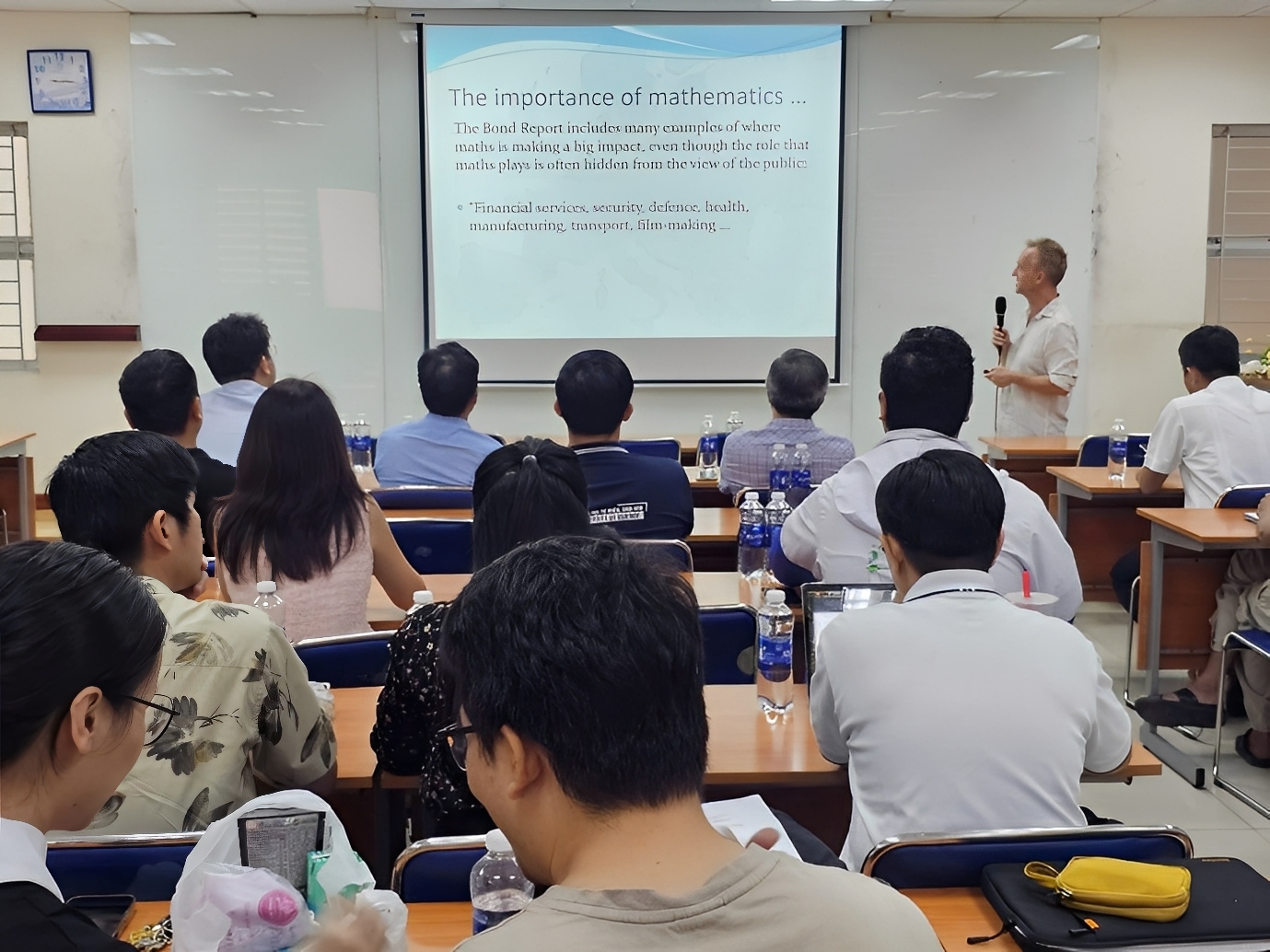
ICIAM Board and VIASM Members during a breakVietnam hosted the ICIAM Board Meeting and Workshop this September at the Vietnam Institute for Advanced Study in Mathematics (VIASM), gathering 70 delegates from five continents. CRM researcher Tim Myers attended as the…
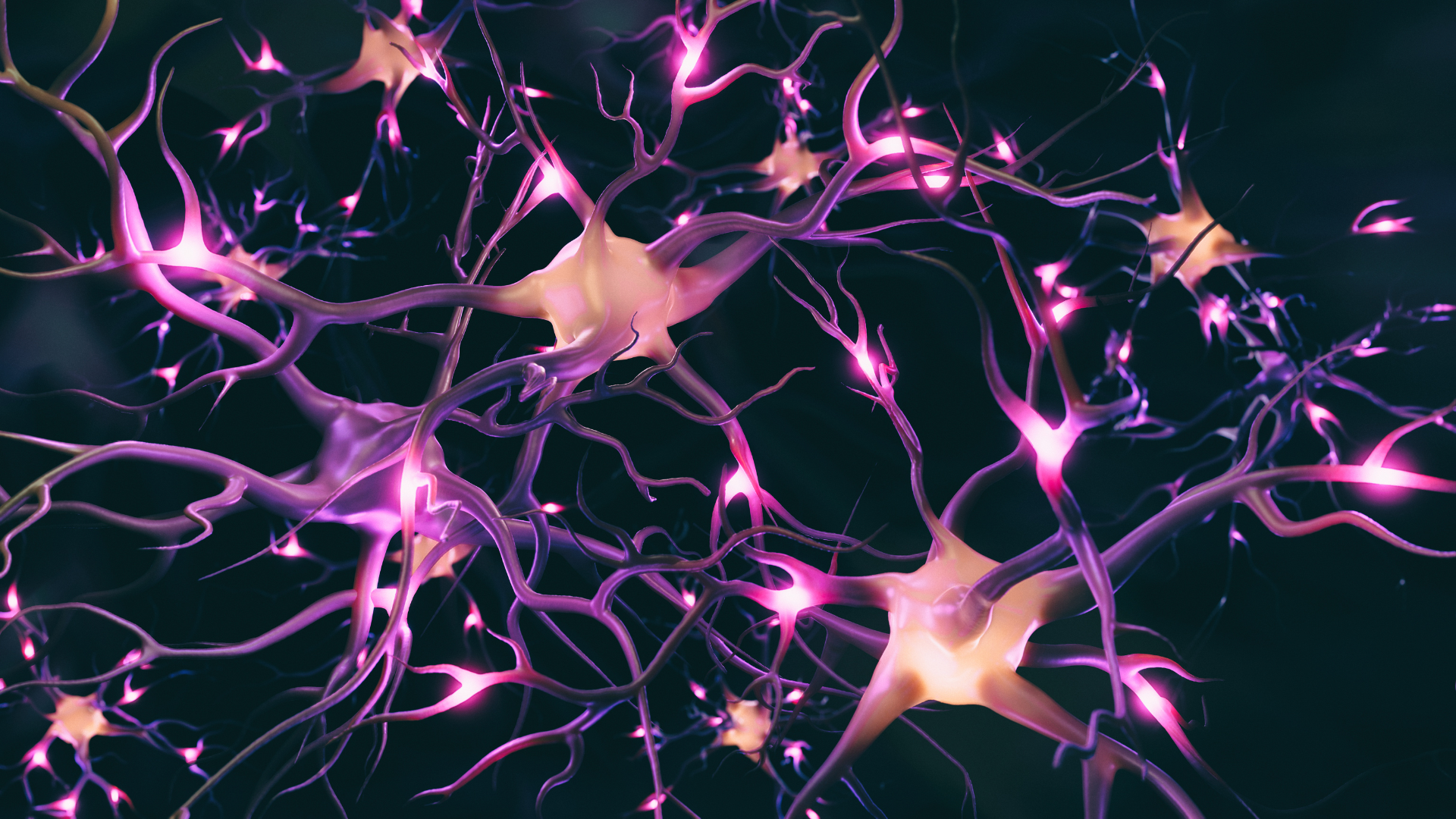
A paper recently published in Current Opinion in Neurobiology by Jens-Bastian Eppler, Matthias Kaschube, and Simon Rumpel shows that…
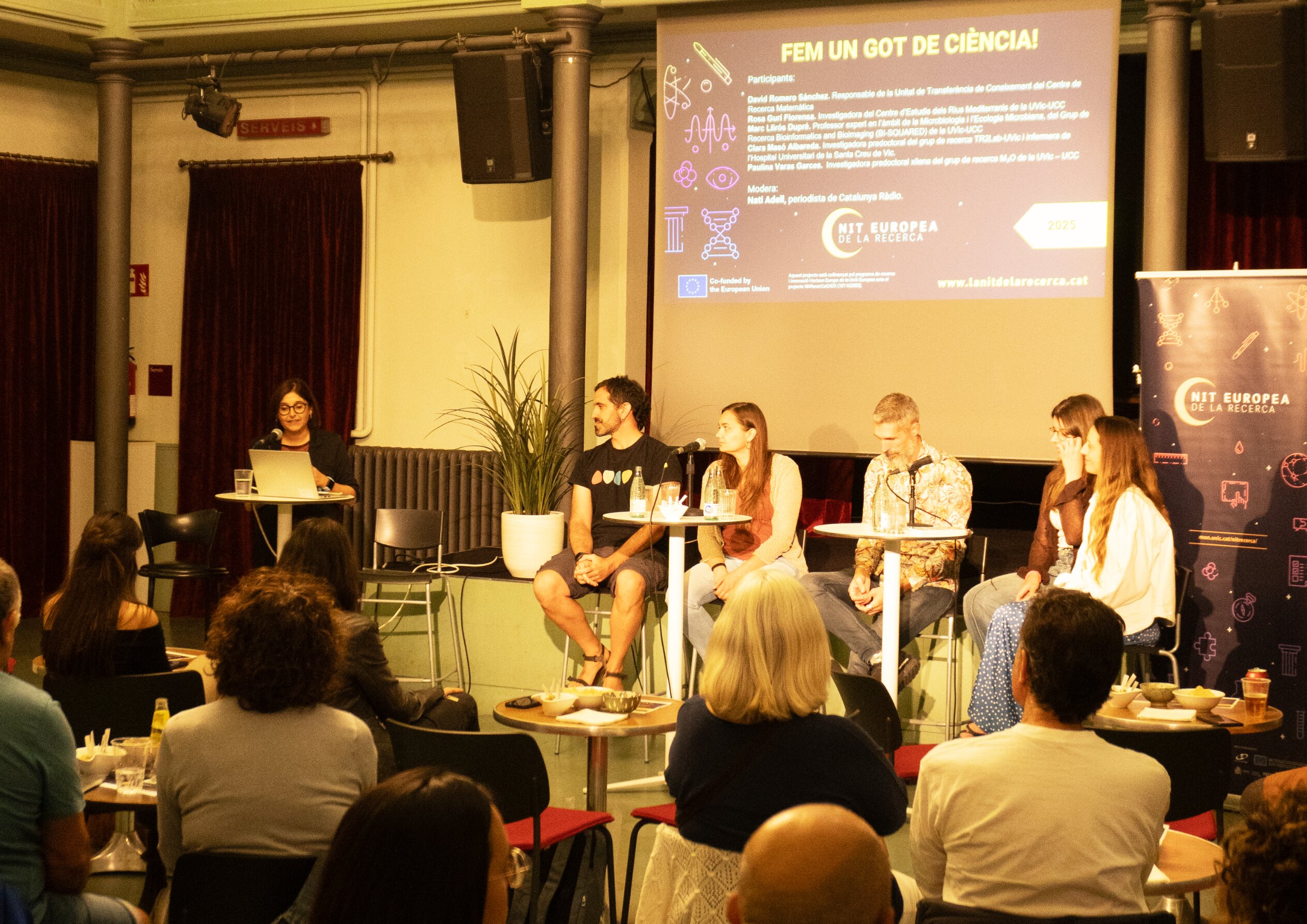
La Nit Europea de la Recerca va portar a Barcelona, l’Hospitalet i Vic tres investigadors del CRM que van mostrar la diversitat i la vitalitat de la recerca matemàtica. A la Casa Golferichs, Leticia Pardo (UB-CRM) va introduir el públic en el món dels fractals,…
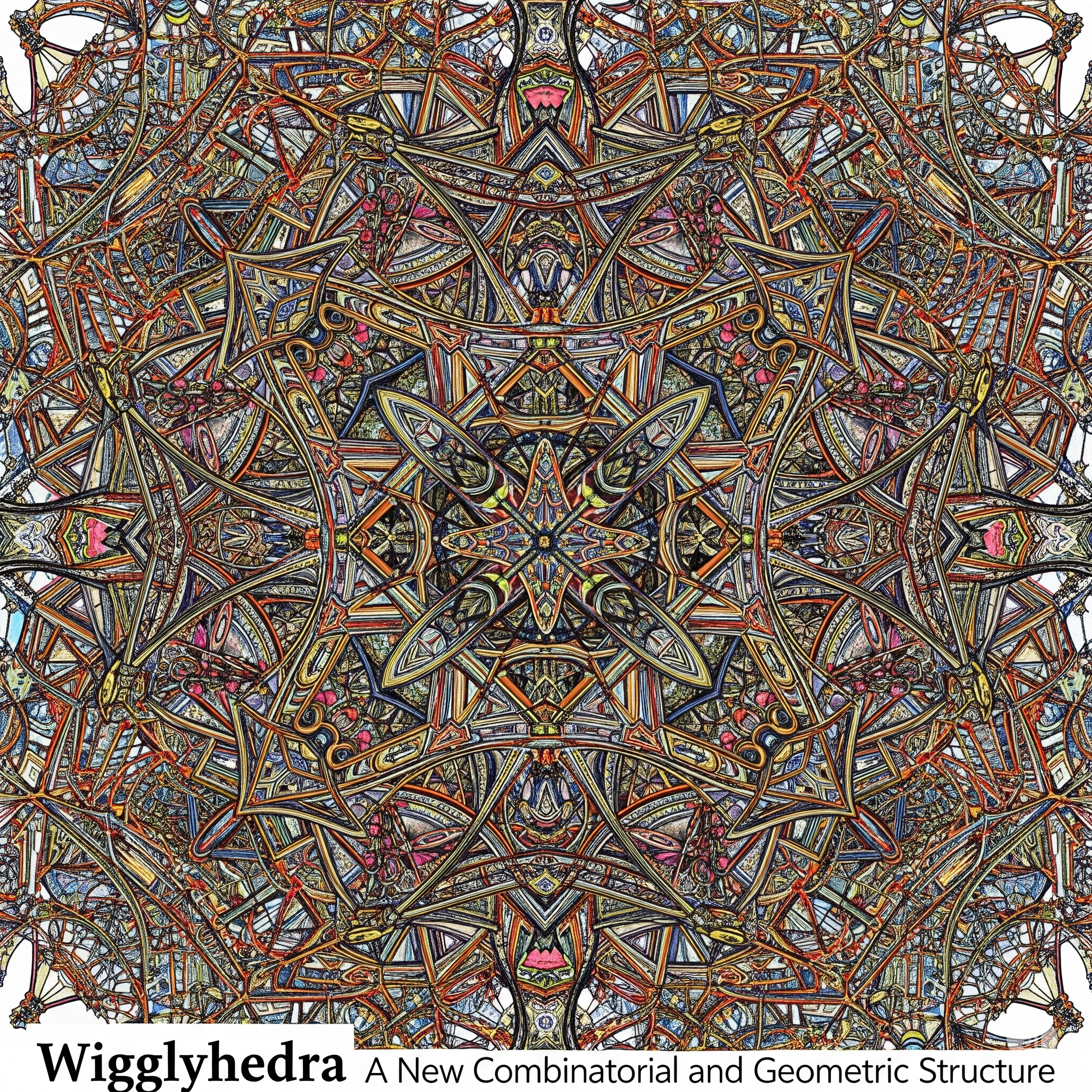
In the article “Wigglyhedra”, researchers Asilata Bapat (Australian National University) and Vincent Pilaud (Universitat de Barcelona – Centre de Recerca Matemàtica) introduce the wiggly complex, a novel combinatorial and geometric structure, along with its associated…
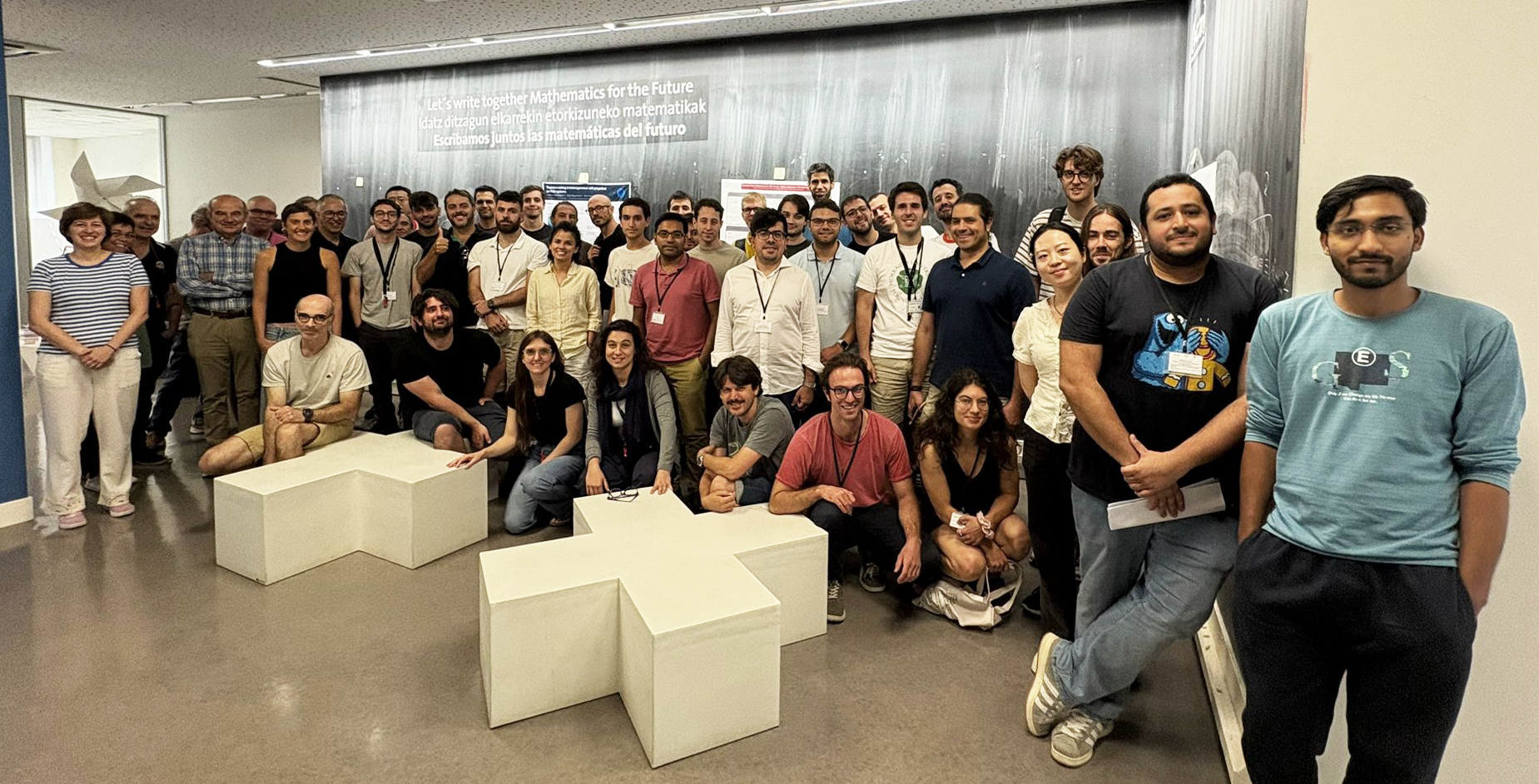
From September 3 to 5, 2025, the Basque Center for Applied Mathematics (BCAM) hosted the Bilbao–Barcelona Analysis and PDE Meeting. For three days, researchers from both cities met face to face, joined by colleagues from other institutions, to…

Javier Gómez-Serrano, professor at Brown University, has received the 2025 R. E. Moore Prize for Applications of Interval Analysis together with Tristan Buckmaster and Gonzalo Cao-Labora. The award honours their article Smooth imploding solutions…
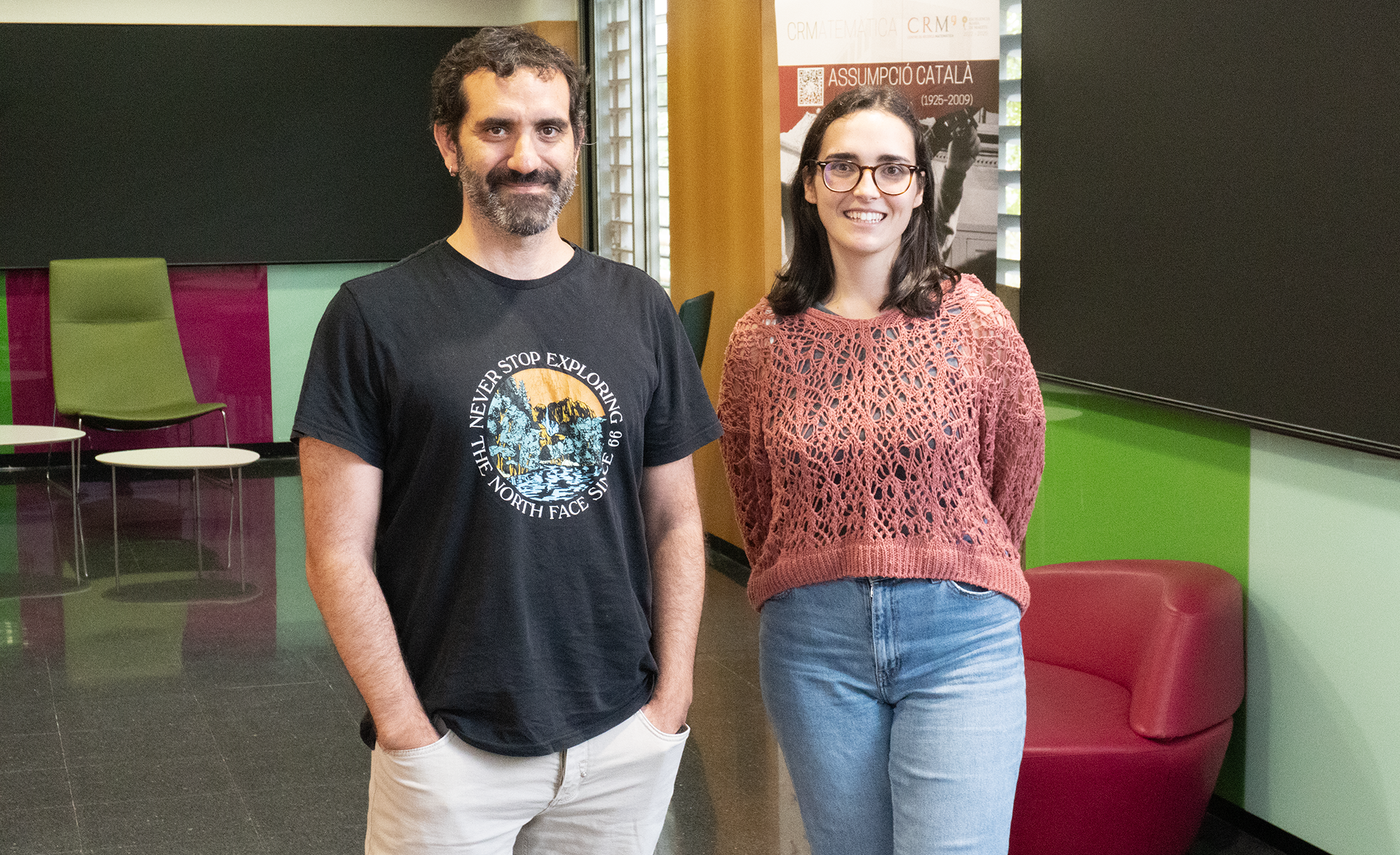
The Centre de Recerca Matemàtica (CRM) participates in Enhance Europe. This European research project explores how solar heat from asphalt can be harvested and reused as thermal energy in cities. Through its Knowledge Transfer Unit, CRM leads the…
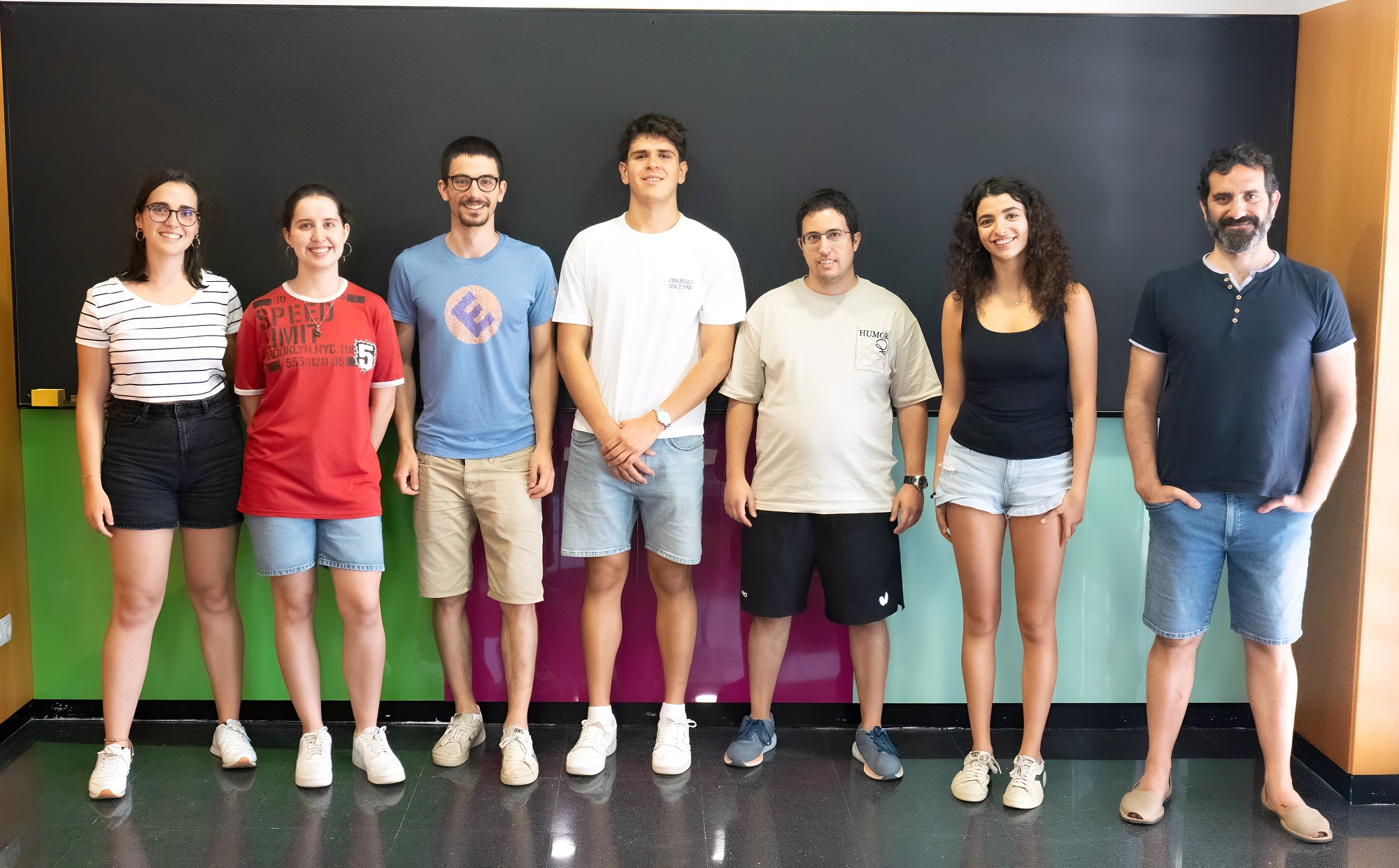
D’esquerra a dreta: Lucía Escudero, Clara Castelló, Marc Homs-Dones, Roger Carrillo, Manel Mas, Maria Borrell i David Romero. Per segon any, la Unitat de Transferència del CRM ha acollit tres estudiants del programa Joves i Ciència de la Fundació…
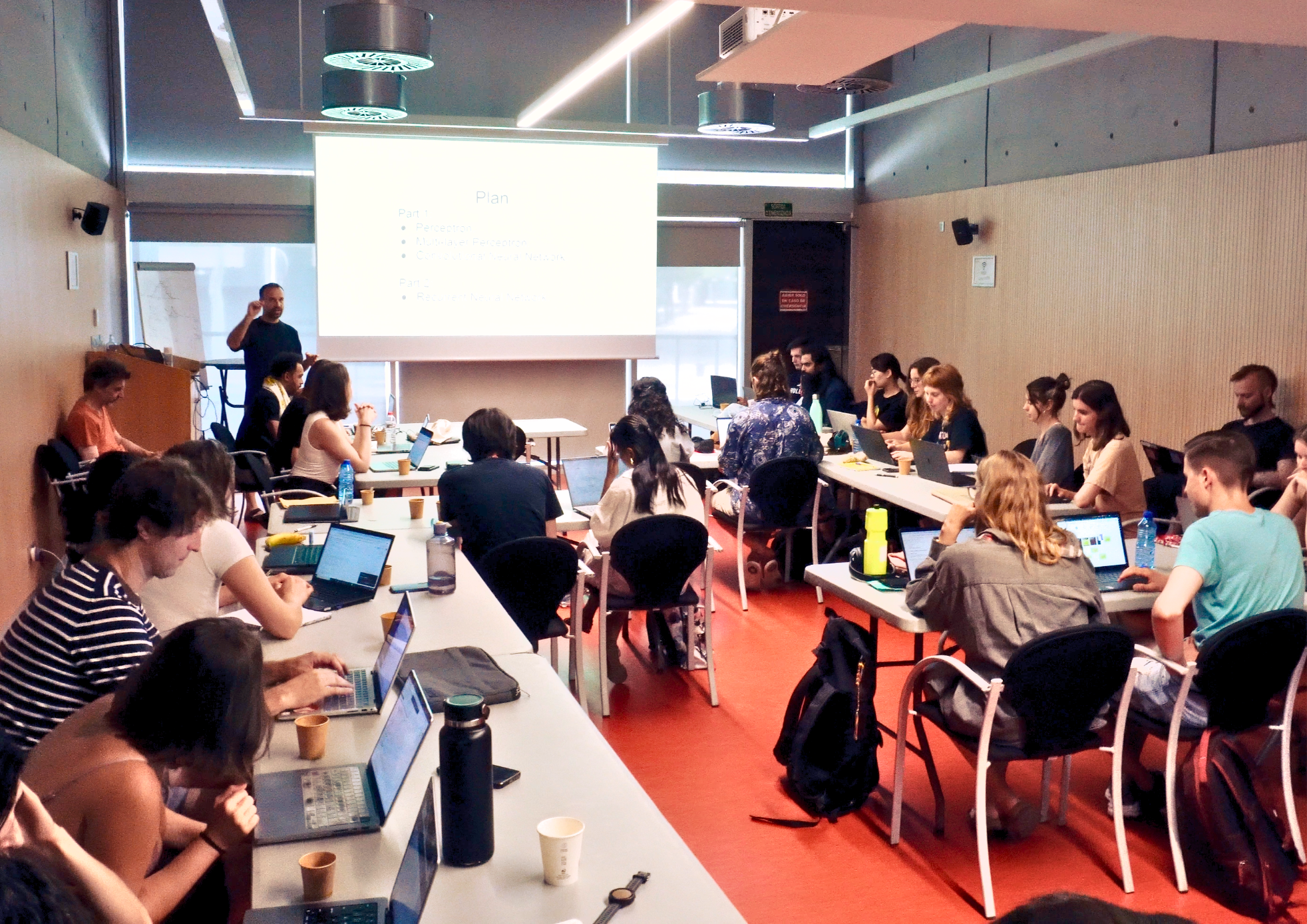
BAMB! 2025 brought together thirty early-career researchers in Barcelona for an intense nine-day training on model-based analysis of behaviour. Organised by the Centre de Recerca Matemàtica with top international researchers, the school combined…
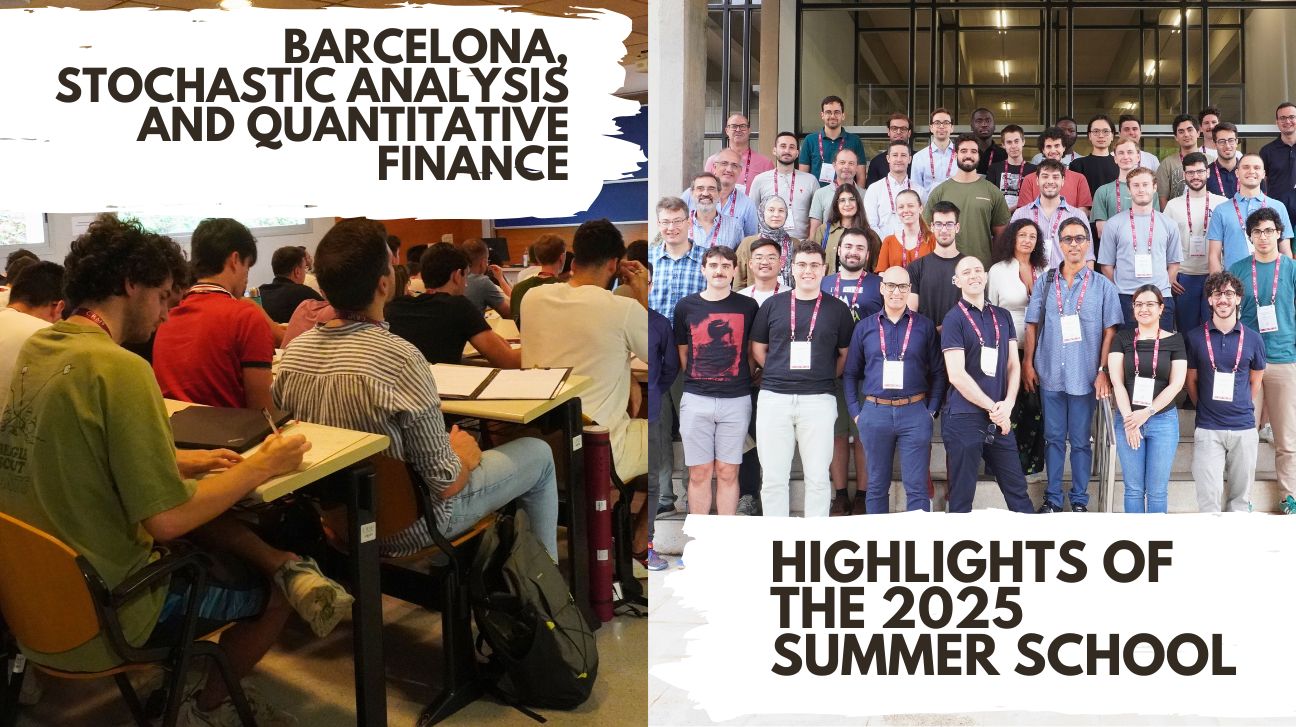
The 5th edition of the Barcelona Summer School on Stochastic Analysis and Quantitative Finance took place from July 21 to 25, 2025, at the Centre de Recerca Matemàtica (CRM), marking the revival of an academic tradition interrupted by the pandemic. The program offered…
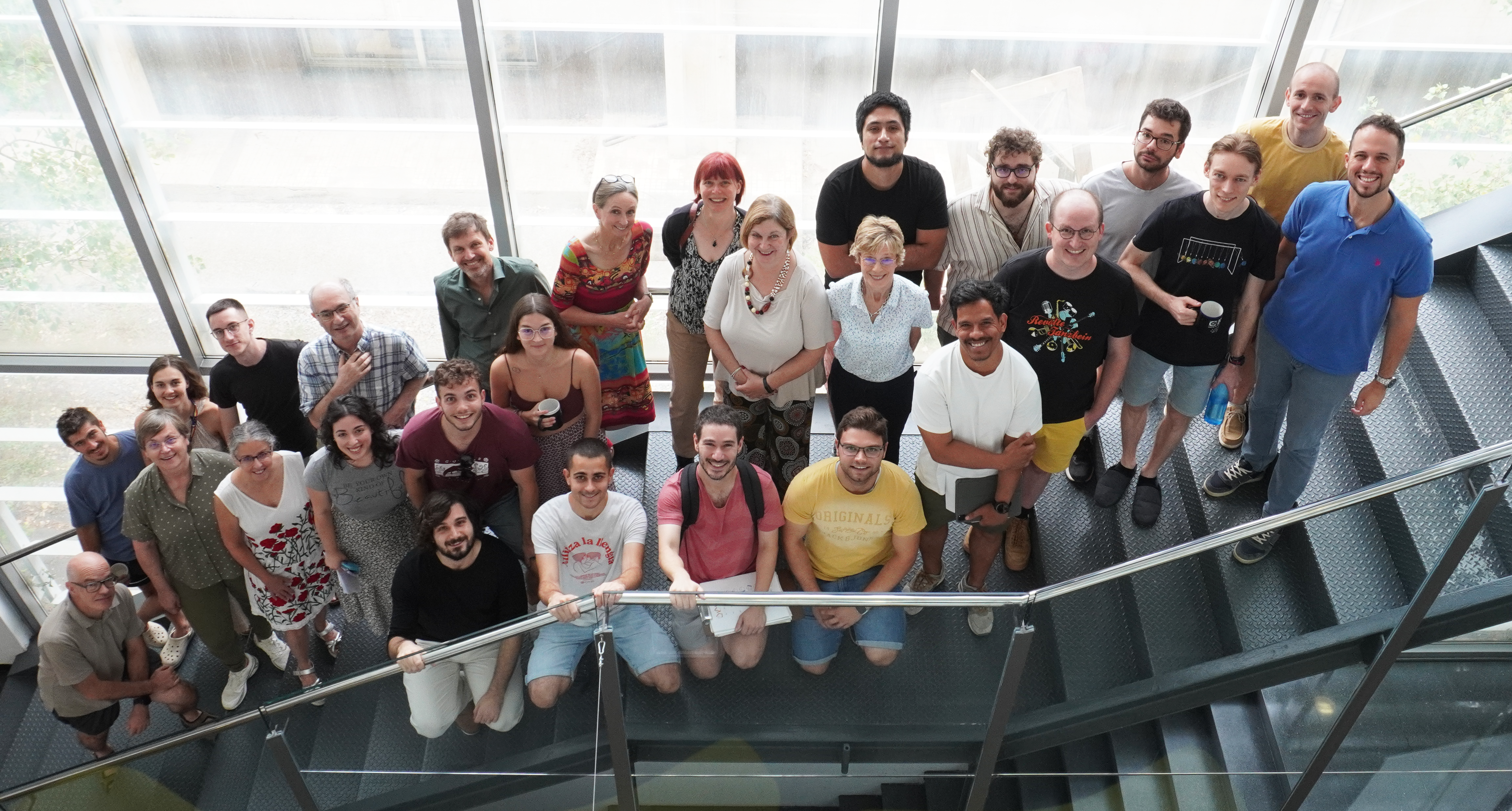
The Scientific Advisory Board of the CRM met in July 2025 to advise on the centre’s scientific direction and review key aspects of its activity. In addition to looking at strategic plans and recruitment priorities, Board members took part in a…
The post Jezabel Curbelo receives the 2025 National Research Award for Young Researchers in Mathematics and ICT first appeared on Centre de Recerca Matemàtica.

The evolutionary systems genetics of microbes research group, led by Dr. Alejandro Couce, shows in a new study published in PLoS Genetics that a simple change in a DNA letter can be enough to determine whether a bacterium becomes a superbug or is left without a way out. The discovery opens new avenues for anticipating antibiotic resistance and improving epidemiological surveillance.