Author Archive

Can spacecraft Hayabusa2 touchdown? New study reveals space mission’s target asteroid is tinier and faster than thought

Image
An artist's impression of Japan’s Hayabusa2 space mission touching down on the surface of the asteroid 1998 KY26. New observations with ESO’s Very Large Telescope (VLT)  have revealed that 1998 KY26 is just 11 m wide, almost three times smaller than previously thought, and is spinning once every 5 minutes, which is much faster than expected. The image above shows an updated size comparison between the asteroid and spacecraft.
Credits
ESO/M. Kornmesser. Asteroid: T. Santana-Ros et al. Hayabusa2 model: SuperTKG (CC-BY-SA).
English


Astronomers have used observatories around the world, including the European Southern Observatory’s Very Large Telescope (ESO’s VLT), to study the asteroid 1998 KY26, revealing it to be almost three times smaller and spinning much faster than previously thought. The asteroid is the 2031 target for Japan’s Hayabusa2 extended mission. The new observations offer key information for the mission’s operations at the asteroid, just six years out from the spacecraft’s encounter with 1998 KY26.


This animation shows the touchdown manoeuvre that Japan’s Hayabusa2 spacecraft is likely to perform when it reaches its target in 2031, in a brief encounter with the asteroid 1998 KY26. Now that a new study has shown that this asteroid is roughly three times smaller than previously expected, and spinning twice as fast, this procedure may be more difficult to conduct. Credit: ESO/M. Kornmesser. Asteroid: T. Santana-Ros et al. Hayabusa2 model: SuperTKG (CC-BY-SA).


We found that the reality of the object is completely different from what it was previously described as,” says astronomer Toni Santana-Ros, a researcher from the University of Alicante and the Institute of Cosmos Sciences of the University of Barcelona (ICCUB), Spain, who led a study on 1998 KY26 published today in Nature Communications. The new observations, combined with previous radar data, have revealed that the asteroid is just 11 metres wide, meaning it could easily fit inside the dome of the VLT unit telescope used to observe it. It is also spinning about twice as fast as previously thought: “One day on this asteroid lasts only five minutes!” he says. Previous data indicated that the asteroid was around 30 metres in diameter and completed a rotation in 10 minutes or so. 


This artist's impression illustrates the size of the asteroid 1998 KY26 in comparison to one of the Very Large Telescope’s (VLT's) Unit Telescopes, which has a main mirror about 8m in diameter. As a recent study using ESO’s VLT has shown, 1998 KY26 is only 11 metres wide, meaning the asteroid would fit inside the structure of the very telescope that observed it. This image includes a person for scale in the bottom right. Japan’s Hayabusa2 space mission is planning to rendezvous with this tiny asteroid in six years' time.
This artist’s impression illustrates the size of the asteroid 1998 KY26 in comparison to one of the Very Large Telescope’s (VLT‘s) Unit Telescopes, which has a main mirror about 8m in diameter. As a recent study using ESO’s VLT has shown, 1998 KY26 is only 11 metres wide, meaning the asteroid would fit inside the structure of the very telescope that observed it. This image includes a person for scale in the bottom right. Japan’s Hayabusa2 space mission is planning to rendezvous with this tiny asteroid in six years’ time. Credit: ESO/M. Kornmesser, A. Ghizzi Panizza (www.albertoghizzipanizza.com). Asteroid model: T. Santana-Ros et al.


The smaller size and faster rotation now measured will make Hayabusa2’s visit even more interesting, but also even more challenging,” says co-author Olivier Hainaut, an astronomer at ESO in Germany. This is because a touchdown manoeuvre, where the spacecraft ‘kisses’ the asteroid, will be more difficult to perform than anticipated. 

1998 KY26 is set to be the final target asteroid for the Japanese Aerospace eXploration Agency (JAXA)’s Hayabusa2 spacecraft. In its original mission, Hayabusa2 explored the 900-metre-diameter asteroid 162173 Ryugu in 2018, returning asteroid samples to Earth in 2020. With fuel remaining, the spacecraft was sent on an extended mission until 2031, when it’s set to encounter 1998 KY26, aiming to learn more about the smallest asteroids. This will be the first time a space mission encounters a tiny asteroid — all previous missions visited asteroids with diameters in the hundreds or even thousands of metres. 

Santana-Ros and his team observed 1998 KY26 from the ground to support the preparation of the mission. Because the asteroid is very small and, hence, very faint, studying it required waiting for a close encounter with Earth and using large telescopes, like ESO’s VLT in Chile’s Atacama Desert. 

The observations revealed that the asteroid has a bright surface and likely consists of a solid chunk of rock, which may have originated from a piece of a planet or another asteroid. However, the team could not completely rule out the possibility that the asteroid is made up of rubble piles loosely sticking together. “We have never seen a ten-metre-size asteroid in situ, so we don’t really know what to expect and how it will look,” says Santana-Ros, who is also affiliated with the University of Barcelona. 

The amazing story here is that we found that the size of the asteroid is comparable to the size of the spacecraft that is going to visit it! And we were able to characterise such a small object using our telescopes, which means that we can do it for other objects in the future,” says Santana-Ros. “Our methods could have an impact on the plans for future near-Earth asteroid exploration or even asteroid mining.” 

Moreover, we now know we can characterise even the smallest hazardous asteroids that could impact Earth, such as the one that hit near Chelyabinsk, in Russia in 2013, which was barely larger than KY26,” concludes Hainaut.


More information

This research was presented in a paper titled “Hayabusa2♯ mission target 1998 KY26 preview: decametre size, high albedo and rotating twice as fast” to appear in Nature Communications (doi: 10.1038/s41467-025-63697-4). 

The team is composed of T. Santana-Ros (Departamento de Física, Ingeniería de Sistemas y Teoría de la Señal, Universidad de Alicante, and Institut de Ciències del Cosmos (ICCUB), Universitat de Barcelona (IEEC-UB), Spain), P. Bartczak (Instituto Universitario de Física Aplicada a las Ciencias y a las Tecnologías, Universidad de Alicante, Spain and Astronomical Observatory Institute, Faculty of Physics and Astronomy, A. Mickiewicz University, Poland [AOI AMU]), K. Muinonen (Department of Physics, University of Helsinki, Finland [Physics UH]), A. Rożek (Institute for Astronomy, University of Edinburgh, Royal Observatory Edinburgh, UK [IfA UoE]), T. Müller (Max-Planck-Institut für extraterrestrische Physik, Germany), M. Hirabayashi (Georgia Institute of Technology, United States), D. Farnocchia (Jet Propulsion Laboratory, California Institute of Technology, USA [JPL]), D. Oszkiewicz (AOI AMU), M. Micheli (ESA ESRIN / PDO / NEO Coordination Centre, Italy), R. E. Cannon (IfA UoE), M. Brozovic (JPL), O. Hainaut (European Southern Observatory, Germany), A. K. Virkki [Physics UH], L. A. M. Benner (JPL), A. Cabrera-Lavers (GRANTECAN and Instituto de Astrofísica de Canarias, Spain), C. E. Martínez-Vázquez (International Gemini Observatory/NSF NOIRLab, USA), K. Vivas (Cerro Tololo Inter-American Observatory/NSF NOIRLab, Chile). 

The European Southern Observatory (ESO) enables scientists worldwide to discover the secrets of the Universe for the benefit of all. We design, build and operate world-class observatories on the ground — which astronomers use to tackle exciting questions and spread the fascination of astronomy — and promote international collaboration for astronomy. Established as an intergovernmental organisation in 1962, today ESO is supported by 16 Member States (Austria, Belgium, Czechia, Denmark, France, Finland, Germany, Ireland, Italy, the Netherlands, Poland, Portugal, Spain, Sweden, Switzerland and the United Kingdom), along with the host state of Chile and with Australia as a Strategic Partner. ESO’s headquarters and its visitor centre and planetarium, the ESO Supernova, are located close to Munich in Germany, while the Chilean Atacama Desert, a marvellous place with unique conditions to observe the sky, hosts our telescopes. ESO operates three observing sites: La Silla, Paranal and Chajnantor. At Paranal, ESO operates the Very Large Telescope and its Very Large Telescope Interferometer, as well as survey telescopes such as VISTA. Also at Paranal ESO will host and operate the Cherenkov Telescope Array South, the world’s largest and most sensitive gamma-ray observatory. Together with international partners, ESO operates ALMA on Chajnantor, a facility that observes the skies in the millimetre and submillimetre range. At Cerro Armazones, near Paranal, we are building “the world’s biggest eye on the sky” — ESO’s Extremely Large Telescope. From our offices in Santiago, Chile we support our operations in the country and engage with Chilean partners and society. 


Links


Contacts

Toni Santana-Ros
Planetary Scientist, University of Alicante and University of Barcelona
Alicante and Barcelona (Catalonia), Spain
Tel: +34 965903400 Ext: 2645 / 600948703
Email: tsantanaros@icc.ub.edu

Olivier Hainaut
ESO Astronomer
Garching bei München, Germany
Tel: +49 89 3200 6754
Cell: +49 151 2262 0554
Email: ohainaut@eso.org

Bárbara Ferreira
ESO Media Manager
Garching bei München, Germany
Tel: +49 89 3200 6670
Cell: +49 151 241 664 00
Email: press@eso.org

Connect with ESO on social media

News Type
Date
SEO Title
Can spacecraft Hayabusa2 touchdown? New study reveals space mission’s target asteroid is tinier and faster than thought.

Go to Source

Addressing the Hubble tension with strong gravitational lensing

Addressing the Hubble tension with strong gravitational lensing secretaria Thu, 18/09/2025 – 08:07
Deadline

The Hubble constant, H0, that measures the current expansion rate of the Universe is one of the key parameters of the cosmological model. It can be measured from the Cosmic Microwave Background or directly in the local Universe. While the two measurements should give the same value, as they measure the same universe, they do not agree in practice. This can be a sign that the cosmological model does not describe well-enough our universe, or that the measurements of H0 somehow suffer from systematics. One fully independent way of measuring H0 locally is to use the so-called time delays in strongly lensed quasars, in combination with detailed models of the potential well for the galaxy(ies) responsible for the lensing effect. The PhD is fully devoted to the measurement of H0 with strong lenses and will involve lens modeling, dynamical modeling of lenses as well as processing of HST and JWST observations of such objects. This work, and therefore the student, is/will be part of the TDCOSMO collaboration.

The student will join the new research group of Prof. Frédéric Courbin, at ICCUB but will of course benefit from and contribute to the other groups in observational cosmology at ICCUB.

Description of the group:

F. Courbin works in close collaboration with the ICCUB Physical Cosmology group (Profs. Verde, Jimenez, Gil-Marin), studying connections between theory and observations in large sky surveys. F. Courbin is more oriented towards observations and modeling but also has a strong signal processing component in his research, as a full member of the ESA Euclid mission and as one of the leads of strong lensing in Euclid. He also collaborate with the cosmostat group in CEA-Saclay.

https://www.icrea.cat/community/icreas/30123/frederic-courbin/

Requirements:

Who can apply?

Applicants may be all those who are enrolled or admitted to a doctoral program at the University of Barcelona for the 2025/2026 academic year, at the time of the application submission. Applicants may also be all those people who, even though at the time of the application submission are not enrolled or admitted to a doctoral program, they will be on the date the contract is formalized.

Applications must be submitted online through this link.

Documents to be attached to the application:

a) For studies not completed at the UB, including qualifications obtained outside Spain: copy of the candidate’s personal academic transcript for the completed university studies (bachelor’s degree, pre-EHEA degree, master’s degree) stating the grades obtained in the relevant exam sittings expressed as failed (S), passed (A), merit (N), excellent (E) or excellent with honor’s (MH), the corresponding numerical grades, the credits earned and the date the qualifications were awarded, as well as the corresponding certified translation, where applicable.

b) For studies completed outside Spain: statement of equivalence of the grade point average for bachelor’s degree and master’s degree studies, submitted using the template provided by the Spanish Ministry of Education, Vocational Training and Sport.

c) Curriculum vitae, using the AEI template, in Spanish or English, which must list the merits the candidate wishes to be considered. The curriculum vitae template.

d) Accreditation of degree of disability, if applicable.

Employment conditions:

·         Which is the salary?

The minimum salary compensation that researchers in training must receive will be around 17.700 euros gross per year for each of the first two years, 19.000 for the third year and 23.700 for the fourth year.

You will also get an additional funding of 7.000€ that you will be able to spend on tuition or research stays, for example.

·         What is the duration of the contract?

A maximum of four years.

More information here

Contract funded by PID2024-155455NB-I00, funded by MICIU/AEI /10.13039/501100011033

About the Institute of Cosmos Sciences:

The Institute of Cosmos Sciences (ICCUB) created in 2006 at the University of Barcelona is an interdisciplinary center dedicated to fundamental research in cosmology, astrophysics, particle physics, quantum physics, and nuclear physics. The ICCUB is involved in international collaborations in all these areas and aims to exploit the connections and synergies between them from theoretical, observational, and experimental perspectives. Additionally, the institute has a strong technology transfer and knowledge dissemination program linked to these research areas.

Embedded within the University of Barcelona, the ICCUB enhances and complements UB’s mission in excellent and high-impact interdisciplinary research, talent attraction, training, technology transfer, and social impact, all with a global and international perspective. The institute has been awarded the Maria de Maeztu Excellence award three times.

The ICCUB provides a stimulating and inclusive intellectual environment, encouraging strategic participation in international collaborations and fostering synergies and partnerships among researchers and the local scientific and technological community. The research lines cover diverse topics such as cosmology and large-scale structure, high-energy experimental physics, galaxy structure and evolution, gravitational wave sources, theory, nuclear physics, and high-energy astrophysics, among others. The institute also houses an Advanced Technology Unit supporting experimental research requiring cutting-edge technology.

In addition to cutting-edge research, ICCUB’s activities include graduate student training, technology and knowledge transfer to society, and a scientific outreach program. Detailed information about their activities can be found on their website, https://icc.ub.edu/. They also offer a wealth of material for learning about their science on Serviastro, their astrophysics outreach website at https://serviastro.ub.edu/es, and Serviparticulas, their particle and nuclear physics outreach website at https://serviparticules.ub.edu/en

Go to Source

D-Carbonize School 2025: a week full of transformative CO₂ innovations and circular chemistry

From 8 to 12 September 2025, the University of Liège hosted the D-Carbonize School, a week-long event dedicated to share advances in CO₂-based technologies, sustainable polymers, flow chemistry and recycling innovations. Organized by the D-Carbonize project, this programme brought together doctoral candidates, researchers and industry experts to explore innovative solutions for a circular carbon economy. 

During the first two days, the event centered on internal sessions for project members only. On Monday, the D-Carbonize doctoral candidates gave scientific presentations sharing their research findings during the last couple of months. The following day continued with a Supervisory Board meeting and a hands-on workshop on designing flow reactor components using 3D printing. This session provided practical insights into combining flow chemistry with additive manufacturing techniques. 

The public sessions of the D-Carbonize School, which brought together project members and around 50 external researchers, were held on Wednesday and Thursday and focused on carbon dioxide and biobased chemistries for producing greener polymers and organics.  


Experts shared strategies for sustainable polymer design, including degradable vinyl polymers, recyclable thermoset networks, and CO₂-based polyurethanes. Discussions also covered biobased chemistry, advanced-flow reactors, catalytic systems for CO₂ valorisation, and catalytic biomass upgrading. In addition, the importance of Life Cycle Assessment (LCA) was emphasized, while industry representatives showcased practical solutions such as converting CO₂ waste streams into polyesters to benefit a circular economy. 

The D-Carbonize School concluded on Friday with a session dedicated to essential soft skills for industry. These broad personal growth trainings were not limited to the final day, as throughout the week participants took part in workshops on scientific writing, preparing competitive CVs and grant applications, and exploring the role of artificial intelligence in sustainable chemistry. These sessions complemented the technical discussions and provided valuable tools for personal career development. 


This project has received funding from the European Union (Marie Sklodowska-Curie Grant Agreement No 101073223)

La entrada D-Carbonize School 2025: a week full of transformative CO₂ innovations and circular chemistry se publicó primero en ICIQ.

Go to Source

New genetic clock mechanism discovered in plant roots

An international team led by the CBM in collaboration with CBGP has discovered that plant roots have an “internal clock” that governs when and how cells divide. This discovery explains how plants coordinate their growth and could be used to develop crops with more resilient and efficient roots.

Go to Source

New EHT images reveal a dynamic and turbulent environment around the supermassive black hole M87*

The discovery, the result of observations of the James Webb telescope, has allowed the research team to test the theories about the formation of mass stars. The jet has been detected in Sharpless 284, a stellar formation region where metallicity is significantly lower than in other areas of our galaxy.

Go to Source

El CIMCYC se suma a la Noche Europea de l@s Investigador@s 2025

Noche Europea de los investigadores e investigadoras
El CIMCYC ofrecerá actividades gratuitas y abiertas al público en dos stands en el Paseo del Salón, con el objetivo de mostrar de manera accesible, mediante charlas y talleres interactivos, el trabajo de sus investigadores e investigadoras en el ámbito de la psicología.
Seguir leyendo

Go to Source

CNIC to host CardioTox 25, the leading international congress on cardiovascular health in cancer patients

From November 4 to 6, the Centro Nacional de Investigaciones Cardiovasculares (CNIC) will host CardioTox 25, the leading international congress dedicated to cardiovascular health in cancer patients.

As in previous editions, the event will bring together professionals from multiple disciplines—including oncology, hematology, cardiology, primary care, nursing, and other health fields—with a shared goal: optimizing cardiovascular care throughout the cancer journey. The congress will be chaired by cardiologist Dr. Teresa López-Fernández, who also participates in CNIC-coordinated research projects.

The program features a distinguished panel of national and international experts who will address the latest advances and practical approaches in cardio-oncology and onco-hematology.

Dr Borja Ibáñez, CNIC Scientific Director, cardiologist at Fundación Jiménez Díaz, and senior member of the Spanish cardiovascular research network CIBERCV , serves on the congress scientific committee. Dr. Ibáñez leads several cardio-oncology projects that will be discussed during the meeting, including RESILIENCE (Remote Ischemic Conditioning in Lymphoma Patients Receiving Anthracyclines), funded by the European Commission, and LURK (Anthracycline Legacy in Bone Marrow and Long-Term Cardiovascular Risks in Cancer Survivors), supported by the Fundación “La Caixa”.

More information: https://tacticsmd.net/congreso/cardiotox


Go to Source

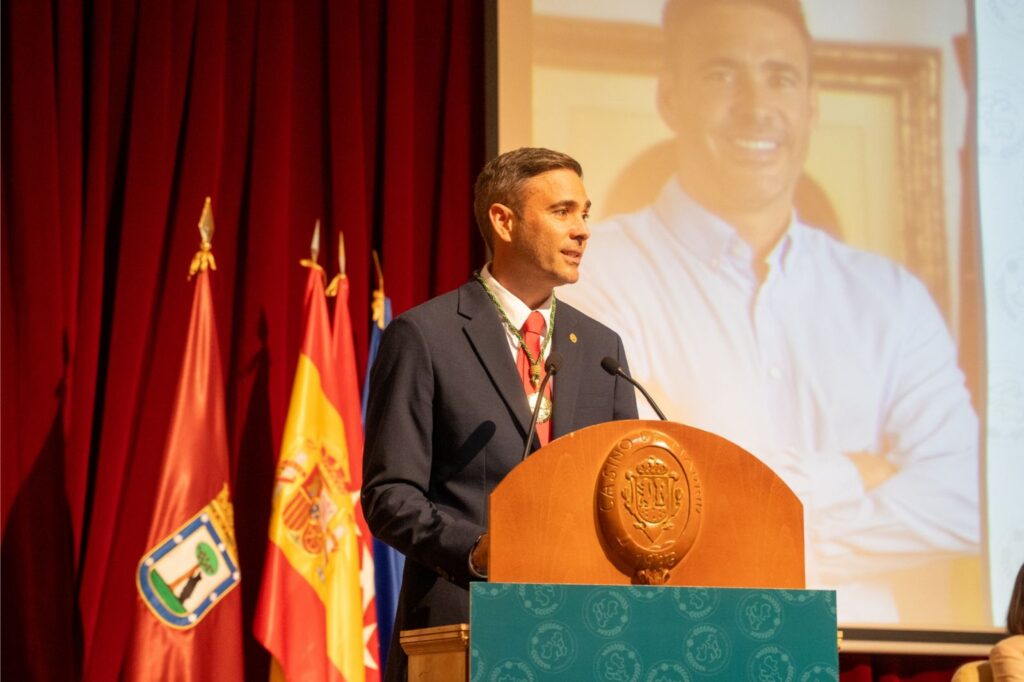
Gonzalo Moreno del Val, new President of the Spanish Veterinary Association

The Director of the Animal Facility Service at the Institute for Neurosciences, a joint center of the Spanish National Research Council (CSIC) and the Miguel Hernández University (UMH) of Elche, Gonzalo Moreno del Val, has assumed the presidency of the Spanish Veterinary Association (Organización Colegial Veterinaria – OCV), the highest representative body of the profession in Spain, in a ceremony held last Saturday at the Real Casino de Madrid.

Photo: Gonzalo Moreno del Val during the swearing-in ceremony held at the Real Casino de Madrid.

Moreno del Val succeeds Luis Alberto Calvo Sáez, who has led the institution since 2019, and embarks on this new stage with a clear message: to promote science, strengthen the unity of the veterinary profession, and place it in its rightful position within society. Alongside him, the new Executive Board was sworn in, composed of Miquel Molins as Vice President, José Ramón Caballero as Secretary General, and board members Luis Colmenar, Yasmina Domínguez, José Miguel Gil, Elena Laguno, Juan Antonio de Luque, Antonio Rubio, Santiago Sánchez-Apellániz, and José Marín Sánchez.

The new president graduated in Veterinary Medicine from Cardenal Herrera University, is a specialist in Animal Health and Welfare at CSIC, and a specialist in Reproductive Biology at UMH. He also holds a Master’s in Occupational Risk Prevention from the Centro de Estudios Financieros and a Master’s in Clinical Medicine Research from UMH. In addition to directing the Animal Facility Service at the Institute for Neurosciences CSIC-UMH, he serves as Secretary of the institute’s Bioethics and Biosafety Committee.

Since 2014, he has presided over the Alicante Official College of Veterinarians, where he has promoted projects for modernization, continuing education, and enhancing the profession’s social visibility. In 2023, he was elected Vice President of the General Council of Veterinary Colleges of Spain, a position from which he has worked closely with public institutions and provincial veterinary colleges.

His career reflects a consistent commitment to defending the profession, advancing science, and disseminating the essential role of veterinarians in public health, animal welfare, and food safety, principles that will also guide his leadership at OCV. In his inaugural speech, Moreno del Val emphasized that science must be the banner that legitimizes and lends credibility to veterinary work, that prevention constitutes a silent yet decisive pillar for ensuring public health and food safety, and that professional unity is indispensable to strengthening institutional influence and projecting the true image of veterinary medicine to society.

Source: Institute for Neurosciences CSIC-UMH (in.comunicacion@umh.es)

La entrada Gonzalo Moreno del Val, new President of the Spanish Veterinary Association se publicó primero en Instituto de Neurociencias de Alicante.

Go to Source

Los diez centros del Campus UAM-CSIC desembarcan en la Fundación Telefónica con decenas de actividades por la Noche de la Investigación

Vuelve el evento de divulgación científica del año. Vuelve La Noche Europea de los y las Investigadoras, que este 2025 vuelve, también, a superarse. Los diez centros del Consejo Superior de Investigaciones Científicas (CSIC) ubicados en el Campus de Cantoblanco desembarcarán, el 26 de septiembre, en Espacio Fundación Telefónica. Será una feria científica por todo lo alto para todos los públicos y de entrada gratuita.

La Noche Europea de los y las Investigadoras de Madrid (NIGHTMADRID) es un macroevento de divulgación científica en el que investigadores e investigadoras de todas las áreas de conocimiento sacan su ciencia a la calle para que la sociedad la conozca. Este 2025, y como en ediciones anteriores, el evento estará dividido en dos: uno por la mañana, específico para público escolar (de Primaria y de Secundaria) y que requerirá reserva previa; y otro por la tarde, con muchas más actividades y de entrada libre hasta completar aforo.

“Los centros educativos que consigan plaza para la actividad de la mañana podrán disfrutar de una gran variedad de talleres científicos, además de nuestra tradicional yincana de mujeres Nobel, nuestro ‘Escape Road’”, describe Jesús Ricote, vicedirector del Instituto de Ciencia de Materiales de Madrid (ICMM-CSIC) y coordinador del evento. “Pero este año, además, subimos la apuesta y disfrutaremos de la grabación en directo de un capítulo del podcast ‘Ciencia para Leer’, que estará dedicado a los microplásticos”, continúa el también investigador. El encuentro estará dirigido por Carmen Guerrero, de la Vicepresidencia Adjunta de Cultura Científica y Ciencia Ciudadana del CSIC, y contará con la presencia de varias investigadoras expertas en el campo.

Será por la tarde, a partir de las 16.30 horas, cuando comience una feria científica por todo lo alto cuya entrada es completamente libre: “los centros del CSIC en Cantoblanco trabajamos en prácticamente todas las áreas de conocimiento, y sobre todas ellas habrá talleres o demostraciones científicas”, continúa Ricote. El menú incluye talleres sobre fruta, extracciones de ADN, demostraciones de superconductividad y vacío, un cuentacuentos científico… y un largo etcétera.

Año cuántico

“Este año estrenamos un ‘pasaporte científico’ por el que invitamos a los y las visitantes a pasar por todos los puestos que tendremos desplegados. Quienes más centros visiten, se llevarán un premio al final de la jornada”, explica el investigador, que añade que este pasaporte dará un protagonismo especial al Año Internacional de la Ciencia y la Tecnología Cuánticas 2025: “la cuántica es un área del conocimiento en la que trabajamos muchos centros del CSIC, y esta Noche Europea será una excusa excepcional para que el gran público la descubra desde diferentes puntos de vista”, añade Ricote.

Los y las visitantes podrán pasear por los diversos puestos de demostraciones científicas de lo más variadas, pero también podrá entrar a talleres a puerta cerrada, donde la interacción con los y las investigadoras será más cercana aún. Además, se invitará al personal a jugar para reflexionar sobre el papel de la mujer en la ciencia en el tradicional ‘Escape Road: a la búsqueda de las mujeres Nobel’, y se reservará un espacio especial para la risa y el asombro con una programación única en el Auditorio.

Rafael Pérez del Real, también investigador del ICMM-CSIC, será el encargado de conducir un nuevo ‘talent show’, un concurso de talentos en los que los y las investigadoras se batirán en duelos artísticos: monólogos, canciones y hasta pintura en directo se darán cita en dos sesiones consecutivas en el Auditorio de Espacio Fundación Telefónica.

El encuentro culminará con un concierto de ‘Las Biolocas’, una banda de música que hace versiones de canciones “de nuestra vida” con nuevas letras vinculadas a la biología y la mujer en ciencia, y una de cuyos miembros pertenece al Centro de Biología Molecular Severo Ochoa (CBM, CSIC-UAM). La programación completa, así como los pases horarios para algunos talleres y el concurso de talentos, podrá consultase en la web del ICMM. La entrada será gratuita hasta completar aforo.

Centros CSIC Cantoblanco

Los centros que participan en esta actividad son el Instituto de Ciencia de Materiales de Madrid (ICMM, como organizador), el Centro de Biología Molecular “Severo Ochoa” (CBM), el Centro Nacional de Biotecnología (CNB), el Instituto de Cerámica y Vidrio (ICV), el Instituto de Catálisis y Petroleoquímica (ICP),  el Instituto de Ciencias de la Alimentación (CIAL), el Instituto de Física Teórica (IFT), el Instituto de Ciencias Matemáticas (ICMAT), el Instituto de Nano y Microelectrónica (IMN) y el Instituto de Investigaciones Biomédicas Sols-Morreale (IIBM).


Información práctica

Título de la actividad: El CSIC te llama esta noche

Lugar de celebración: Espacio Fundación Telefónica (calle Fuencarral, 3, Madrid)

Horario: de 10 a 14 horas (centros educativos) y de 16.30 a 20 horas (público genera)

Es necesario reserva: solo para centros educativos

Más información: https://www.icmm.csic.es/index.php/en/actualidad-y-divulgacion/el-csic-te-llama-esta-noche-noche-europea-de-los-y-las-investigadoras-2025

La entrada Los diez centros del Campus UAM-CSIC desembarcan en la Fundación Telefónica con decenas de actividades por la Noche de la Investigación se publicó primero en Centro de Biología Molecular Severo Ochoa.

Go to Source

New electrochemical method tracks biofilms in real time

A team led by Prof. Beatriz Prieto-Simón at the Institute of Chemical Research of Catalonia (ICIQ) has developed a new way to monitor bacterial biofilms as they grow, using simple, low-cost electrochemical tools. This breakthrough could open the door to real-time tracking of how treatments or antibiotics affect biofilms, which are notorious for their resistance to medical interventions.

Biofilms are clusters of bacteria that stick to surfaces and become wrapped in a self-produced protective layer. While they are common in nature, biofilms are also linked to serious health problems. They can form in chronic wounds, where they block healing, or attach to medical devices, increasing the risk of infection and device failure. More worryingly, biofilms can withstand antimicrobial treatments up to a thousand times more effectively than free-floating bacteria, contributing to the global challenge of antimicrobial resistance. Detecting and monitoring them early is therefore essential for preventing long-lasting infections.

Inside the experiment

The ICIQ team created carbonised mesoporous silicon (C-pSi) substrates that serve two purposes: as a surface for biofilms to grow and as electrodes capable of detecting their development through electrochemical signals. By applying techniques such as cyclic voltammetry and electrochemical impedance spectroscopy, the researchers were able to capture distinctive electrochemical patterns linked to biofilm growth. Crucially, these measurements can be made with affordable, portable devices, raising the possibility of point-of-need applications in healthcare.

“Biofilms are difficult to eradicate once they are established, which is why detecting them early and monitoring their evolution is key,” said Professor Prieto-Simón. “Our work shows that simple electrochemical tools can be combined with advanced nanomaterials to follow biofilm development in real time, potentially paving the way for new strategies to assess the effectiveness of treatments.”

Reference publication

Carbonised porous silicon as scaffold and sensor for the electrochemical detection and characterisation of bacterial biofilm growth
O’Connor, F.; Lazanas, A.; Prieto-Simón, B.
J. Mater. Chem. B 2025
DOI: 10.1039/D5TB01036E

La entrada New electrochemical method tracks biofilms in real time se publicó primero en ICIQ.

Go to Source

Halo Bias in the Peak Model: A First-principles Nonparametric Approach

Halo Bias in the Peak Model: A First-principles Nonparametric Approach

Salvador-Solé E.; Manrique A.
Astrophysical Journal, Vol. 974, Num. 226 (2024)
Article

Go to Source

Measurement of (Formula presented), (Formula presented), and (Formula presented) Decay Parameters Using (Formula presented) Decays

Measurement of (Formula presented), (Formula presented), and (Formula presented) Decay Parameters Using (Formula presented) Decays

Dekkers S.; Egede U.; Fujii Y.; Hadavizadeh T.; Henderson R.D.L.; Lane J.J.; Liu F.L.; Monk M.; Song R.; Walton E.J.; Ward J.A.; Bediaga I.B.; Camargo Magalhaes P.; Cruz Torres M.; De Freitas Carneiro Da Graca U.; De Miranda J.M.; dos Reis A.C.; Falcao L.N.; Gomes A.; Massafferri A.; Santoro L.; Sundfeld D.; Torres Machado D.; Amato S.; De Paula L.; Ferreira Rodrigues F.; Gandelman M.; Hicheur A.; Lopes J.H.; Nasteva I.; Nogarolli P.; Otalora Goicochea J.M.; Polycarpo E.; Rangel M.S.; Souza De P
Physical Review Letters, Vol. 133, Num. 261804 (2024)
Article

Go to Source

Sidebar