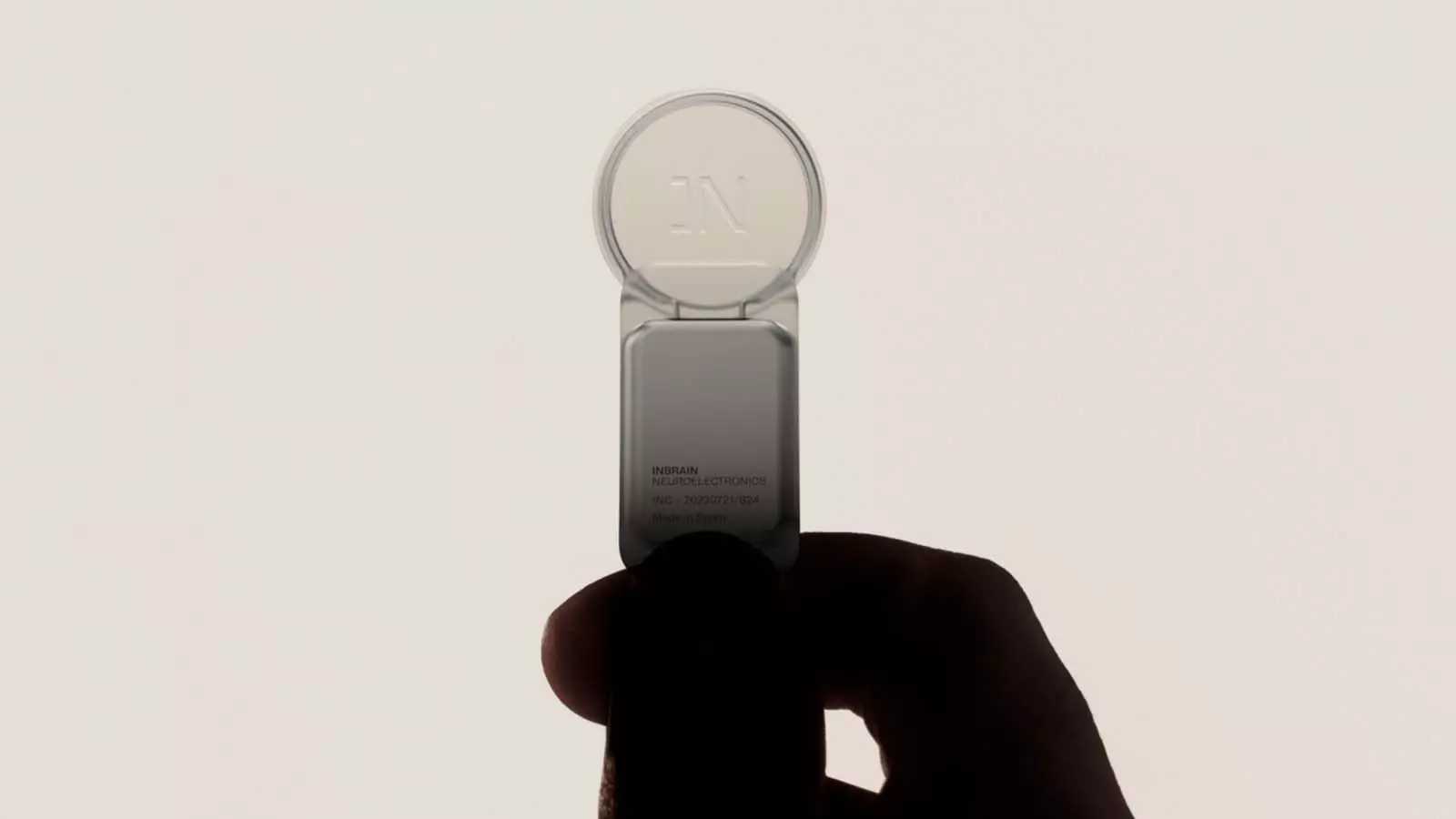
The ICN2 spin-off will collaborate with this prestigious US medical foundation and hospital to further develop its graphene Brain-Computer Interfaces (BCI) for the treatment of neurological disorders.

The ICN2 spin-off will collaborate with this prestigious US medical foundation and hospital to further develop its graphene Brain-Computer Interfaces (BCI) for the treatment of neurological disorders.
European citizens show greater support for climate change mitigation policies that allocate subsidies for rail transport or home insulation, among others, while they strongly oppose policies that foresee any kind of tax on polluting behaviors, such as those on cars and meat.
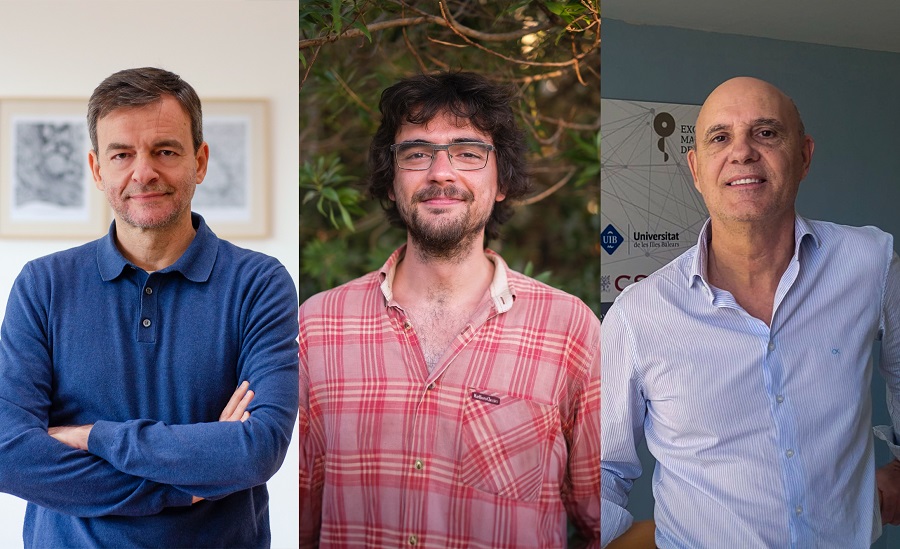
Photo: From left to right: researchers Santiago Canals, from the Institute for Neuroscience CSIC-UMH, Dimitrios Chalkiadakis, and Claudio Mirasso, from the Institute for Cross-Disciplinary Physics and Complex Systems UIB-CSIC.
When we recall something familiar or explore a new situation, the brain does not always use the same communication routes. An international study led by Claudio Mirasso at the Institute for Cross-Disciplinary Physics and Complex Systems (IFISC), a joint center of the Spanish National Research Council (CSIC) and the University of the Balearic Islands (UIB), and Santiago Canals at the Institute for Neurosciences (IN), a joint center of the CSIC and the Miguel Hernández University (UMH) of Elche, has discovered how the brain flexibly changes its communication pathways by modulating the balance between two fundamental inhibitory circuits.
These results, recently published in PLoS Computational Biology, show that this flexibility depends on the balance between two types of inhibitory mechanisms, which regulate the interaction between slow (theta) and fast (gamma) rhythms. Thanks to this mechanism, the brain can select different sources of information, such as sensory stimuli from the external environment or stored sensory experience from memory.
“The role of feedforward and feedback inhibition in modulating theta-gamma cross-frequency interactions in neural circuits.” Chalkiadakis D, Sánchez-Claros J, López-Madrona VJ, Canals S and Mirasso CR. PLoS Computational Biology, 2025. 21(8): e1013363.
To reach these conclusions, the researchers combined computational models with experimental recordings in the hippocampus, a brain region crucial for memory and navigation. They observed that in familiar environments, where sensory experiences are already known, neurons favor a direct communication mode that facilitates transmission from the entorhinal cortex to the hippocampus. In this mode, the reactivation of established memory is prioritized. By contrast, when facing novelty, the brain activates another mode that integrates memory reactivation with novel sensory inputs. In this mode, memory updating is prioritized.
Until now, it was thought that the phase of slow brain rhythms organized the amplitude of faster activity; however, this study demonstrates that the relationship is bidirectional: “This work provides a mechanistic explanation of how the brain flexibly changes communication channels depending on the context,” says Dimitrios Chalkiadakis, first author of the study. “By adjusting the balance between different types of inhibition, circuits define which inputs to prioritize, whether from memory-related pathways or from new sensory information,” highlights the researcher.
Through a theoretical framework integrating electrophysiological data from rats exploring new and familiar environments, the experts identified two modes of operation: in one, feedforward inhibition leads to gamma-to-theta interactions, while in the other, feedback inhibition produces theta-to-gamma interactions. Neuronal circuits in the brain naturally implement both modes of inhibitory connectivity. The study shows that the transition between them is continuous, and prioritizing one or the other depends solely on the strength of synaptic connections between neurons in the circuit. This allows the mode of operation to be flexibly adjusted to context and cognitive demands.
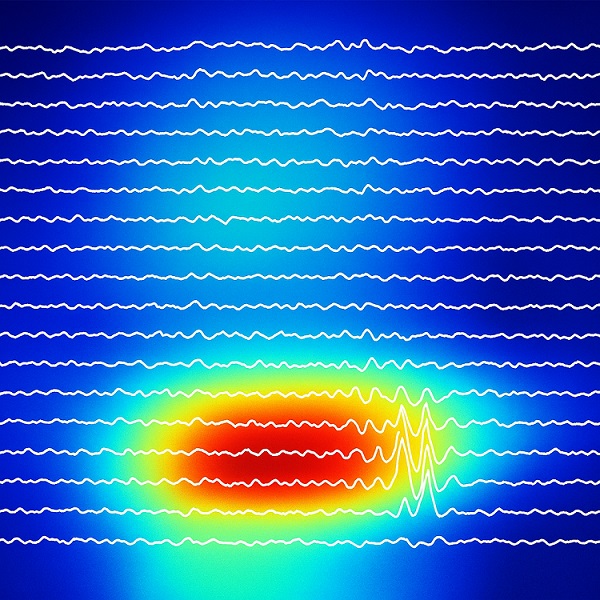
Coupling between fast and slow brain activity frequencies. Warm-colored areas indicate stronger interaction, in this case between gamma-band frequencies (Y axis) and theta-band frequencies (X axis). Intracranially recorded brain activity is overlaid in white.
Beyond memory
The study suggests that this flexible form of coordination between brain rhythms could extend to other cognitive functions, such as attention. In fact, recent work in humans shows patterns consistent with the computational model. This points to a general principle of the brain: the balance between inhibitory circuits is key to directing information within its complex network of connections.
“Our results help unify opposing views on how brain rhythms of different frequencies interact”, explains Mirasso. “Rather than being purely local or inherited from earlier regions, these rhythms emerge from the interaction between external inputs and local inhibitory dynamics. This dual mechanism enables the brain to optimize information processing under different conditions,” adds Canals.
Beyond memory and navigation, the findings could extend to other cognitive functions. Looking ahead, the researchers intend to expand their model to include a greater diversity of neuronal types and architectures specific to each brain region. The aim is to better understand how this balance is altered in pathologies such as epilepsy, addiction, or Alzheimer’s disease: “Studying these dynamics at a mechanistic level could ultimately inspire new therapeutic intervention strategies,” both authors conclude.
This work was made possible thanks to funding from the Spanish Ministry of Science, Innovation, and Universities through the R&D Project Program (Knowledge Generation and Research Challenges) and from the Spanish State Research Agency through the Severo Ochoa Centers of Excellence and the María de Maeztu Units of Excellence Program.
Source: Institute for Neurosciences CSIC-UMH (in.comunicacion@umh.es) and Institute for Cross-Disciplinary Physics and Complex Systems UIB-CSIC (agarcia@ifisc.uib-csic.es)
La entrada Brain rhythms reveal how the brain chooses routes to process information se publicó primero en Instituto de Neurociencias de Alicante.
Abstract: Achieving a first-principles description of the interaction of nuclei with external probes is a fundamental, yet challenging, problem, that bears implications to our understanding of the internal structure of nuclei and of the nuclear matter equation of state.
In this talk, I will present developments in the coupled-cluster framework that enable us to determine the response of open-shell nuclei near magicity [1]. I will focus on electric dipole excitations and discuss predictions for the electric dipole polarizability and the photonuclear cross sections.
In the second part of the seminar, I will then discuss state-of-the-art predictions for the nuclear matter equation of state determined with a recently introduced Green’s function approach [2].
References:
[1] F. Marino, F. Bonaiti, S. Bacca, G. Hagen, and G. R. Jansen, Structure and dynamics of open-shell nuclei from spherical coupled-cluster theory”, Phys. Rev. C 112, 014315 (2025).
[2] F. Marino, W. G. Jiang, and S. J. Novario, “Diagrammatic ab initio methods for infinite nuclear matter with modern chiral interactions”, Phys. Rev. C 110, 054322 (2024).
Abstract: As researchers, we are constantly writing and interacting with code. Coding helps us model and simulate the real world, automate tasks, and produce visualizations. However, publishing and maintaining a codebase is a completely separate skillset. When sharing your code with a wide audience, preparing a robust project structure that ensures concise organization and intuitive direction for new users becomes crucial. This talk focuses on Python packaging: structuring your project such that it can be installed by pip, and then uploading it to the Python Package Index. This talk provides context for the Python packaging ecosystem, and afterwards covers more general software maintenance aspects such as automated workflows, testing, and writing documentation.
Abstract: Massive stars are chemical factories producing key elements, they are progenitors of supernovae, neutron stars and black holes, and they play a crucial role in the formation and evolution of galaxies. Given their prevalence in binary systems, at the end of their lives they may produce double-compact objects, which are potential gravitational-wave sources. During their life cycles, interactions with their companion stars can drastically alter the evolution of both stars. Yet, the complex interaction physics as well as the outcome of the interactions remain poorly understood, especially at low metallicity.
In my talk, I will introduce the Binarity at LOw Metallicity (BLOeM) Survey that obtains multi-epoch spectroscopy of almost 1000 massive stars in the Small Magellanic Cloud. I will present recent results of the multiplicity properties of different types of massive stars, including OB main-sequence stars as well as blue and yellow supergiants. In particular, I will focus on the so-called classical OeBe stars, which are rapidly rotating OB-type stars with emission lines indicative of a circumstellar disk. I will discuss the multiplicity fractions obtained in the upper HRD, report observational evidence that massive OeBe stars are predominantly binary interaction products, and discuss how our findings can be used to constrain binary interaction physics, especially at low metallicity.
Abstract: We present Denario, an AI multi-agent system designed to be a scientific research assistant. Denario can perform many different tasks, such as generating ideas, checking the literature, developing research plans, writing and executing code, making plots, and writing a scientific paper. Denario is built as a modular system, and therefore, can perform either very specific tasks, such as generating an idea, or carrying out end-to-end scientific analysis using cmbagent as a deep-research backend. In this talk, we describe Denario and its modules in detail and illustrate its capabilities by presenting multiple AI-generated papers generated by it. These papers cover many scientific disciplines, such as astrophysics, biology, biophysics, biomedical informatics, chemistry, material science, mathematical physics, medicine, and planetary science. Denario can also perform research combining ideas from different disciplines, and we illustrate it by showing a paper that applies methods from quantum physics and machine learning with astrophysical data. We publicly release the code at https://github.com/AstroPilot-AI/Denario. A Denario demo can also be run directly on the web at https://huggingface.co/spaces/astropilot-ai/Denario, and the full app will be deployed on the cloud.
At month 18 of its three-year Horizon Europe project, the PEARL consortium has made decisive progress toward its target of 25% efficient, low-cost flexible perovskite solar cells with carbon electrodes. By combining cutting-edge materials research, pilot-scale roll-to-roll (R2R) manufacturing and comprehensive sustainability measures, partners across Europe have delivered a series of significant achievements.
The researchers have developed solar cells with an efficiency of over 21% on flexible PET substrates. The most important achievements of the project partners include:
– Power conversion efficiency of 21.6% through special surface treatments (molecular surface passivation with fullerene and silane self-assembled materials) was achieved by ICIQ.
– University of Rome Tor Vergata achieved 17.03 % using greener perovskite solvents and optimized blade-coating protocols.
– Finnish research organization VTT demonstrated a lab-scale champion cell power conversion efficiency of 14.8% with a new printing process (gravure printed perovskite with DMSO-based ink).
– 9.1% power conversion efficiency with a fully roll-to-roll slot-die coated perovskite stack was achieved by the Dutch research institute TNO.
In parallel, VTT and TNO have scaled up R2R coating and patterning to larger formats and developed flexible minimodules with an area of 36 cm² and a power conversion efficiency of 4.5%.
The consortium has also developed protective encapsulation that keeps the solar cells stable for over 2,000 hours under damp-heat conditions (85°C temperature and 85% humidity), proving their durability for real-world applications.
“Our flexible perovskite cells have already surpassed 21 % efficiency on bendable substrates, and we’ve demonstrated scalable roll-to-roll processes,” said Dr. Riikka Suhonen, PEARL Project Coordinator at VTT. “These achievements bring us firmly within reach of our 25 % target—paving the way to low-cost, high-performance solar modules for applications from building-integrated photovoltaics to the Internet of Things.”
Focus on sustainability
The consortium attaches great importance to sustainability. Initial life cycle assessments show that the use of carbon electrodes, recycled PET, and green energy can reduce the carbon footprint by more than 50%. In addition, processes have been developed to recover valuable materials such as lead and cesium from production waste, an important step toward a circular economy.
Outlook
In the second phase of the project, PEARL will further optimize its roll-to-roll pilot manufacturing processes, test larger modules for outdoor use, and publish the results of the life cycle assessments. The goal is to bring flexible solar cells to market for applications such as building-integrated photovoltaics and the Internet of Things. Deliverables will include an optimized module design report, R2R encapsulation processes, and pilot-scale production protocols that collectively establish Europe’s leadership in flexible perovskite PV manufacturing.
Together with its partners from the Network of EU-funded Perovskite projects, PEARL will be exhibiting at the joint stand F6 at EU PVSEC in Bilbao, September 22 to 24, 2025. PEARL is also represented at this conference as a panelist in the “Perovskite Innovation Roundtable: Driving EU Leadership in Perovskite Innovation” (Monday, September 25 at 17:00).
About PEARL:
The PEARL project aims to achieve improvements in solar energy technology by incorporating carbon electrodes into perovskite solar cell architecture. This enhancement is expected to lead to reduced material costs, increased device stability, simplified fabrication processes, and significantly lower emissions. The project started on 1st October 2023 and will run 36 months. PEARL receives funding from the European Union’s Horizon Europe research and innovation programme.
The ICIQ research group led by Prof. Emilio Palomares is involved in the project, which is coordinated by Teknologian Tutkimuskeskus VTT Oy, and also counts with the collaboration of the Nederlandse Organisatie voor Toegepast Natuurwetenschappelijk Onderzoek TNO, Helmholtz-Zentrum für Materialien und Energie GmbH, Università degli Studi di Roma Tor Vergata, Dycotec Materials LTD, Fraunhofer Institute for Electron Beam and Plasma Technology FEP, Fachhochschule Nordwestschweiz, Saule Spółka Akcyjna and Eni SPA.
For more information, please visit the project’s website and follow us on LinkedIn.

This project has received funding from the European Union’s Horizon Europe research and innovation programme under grant agreement no. 101122283.
La entrada Milestone in flexible perovskite solar cells: EU-funded PEARL consortium demonstrates roll-to-roll production se publicó primero en ICIQ.
Abstract: Heavy quarks are ideal probes of the quark–gluon plasma: they are created early, lose energy as they traverse the medium, and eventually hadronize. I will present a unified heavy-quark implementation within the Hybrid Model that stitches together the AdS/CFT energy-loss limits—massless (lightlike) and infinitely massive (trailing-string)—into a single ansatz valid for any heavy quark velocity allowing one to follow its dynamics from the ultra-relativistic limit to the Brownian motion regime. I will also discuss ongoing theoretical work for a unified calculation of the strongly coupled energy loss of a finite-mass quark using AdS/CFT. At late times gaussian momentum broadening satisfying the Einstein relation is included to allow late-time thermalization. Hadronization is modelled through a combination of coalescence with soft medium partons and fragmentation of Lund strings for those heavy quarks remaining color-connected to shower partons. Confronting our results with data, I will show results for the $R_{AA}$ and $v_2$ of D- and B-mesons, the $Lambda_c/D^0$ ratio and b-jet $R_{AA}$. I will then discuss potential future heavy-quark-jet substructure measurements such as Lund-plane and EEC observables.
Abstract: The era of gravitational wave science is unfolding in spectacular fashion, with multiple detections reported by the LIGO-Virgo-KAGRA collaboration and many more anticipated from future observatories such as LISA and the Einstein Telescope. Motivated by these experimental breakthroughs and the expected scientific output, the community has embarked on a concerted effort to construct high-accuracy waveform models for the emission of gravitational waves from binary systems. In this talk, I review how ideas and techniques from particle physics — such as effective field theory methods and modern integration techniques from collider physics — have impacted our understanding of the two-body problem in general relativity.
Abstract: Linear-perturbation theory has proven to be an extremely powerful tool to compare inflationary models with observational data. Recently, the newcoming high-precision observations call for predictions beyond linear perturbations. Such effects are known to be relevant for example in the production of primordial black holes or scalar-induced gravitational waves. The delta N formalism proposes to capture some of these non-linearities by describing the universe as a set of homogeneous patches evolving independently. After reviewing its formulation, I will apply it to the case of a single scalar field following a slow-roll evolution, briefly interrupted by a phase of ultra-slow roll where the potential is nearly flat. Taking care of the correlation of the patches, I will show how to obtain correlation functions of scalar perturbations. As a final note, I will briefly show how this procedure can also be applied to describe primordial gravitational waves.
Abstract: The physics of quarkonium created in heavy-ion collisions is intrinsically connected to the correlation functions of adjoint chromoelectric fields in quantum chromo-dynamics. In this talk I will discuss the study of such correlation functions in a weak-coupling expansion at next-to-leading order in a thermal medium. The results are shown to agree well with recent lattice calculations at high temperatures. I will then discuss the spectral function associated with these correlation functions and possible implications the results have on the lattice.

.png?itok=VLkzeKOb)

.png?itok=lb7_ySl2)


