Author Archive

Matchgate synthesis via Clifford matchgates and T gates

Image
Matchgate synthesis via Clifford matchgates and T gates
Seminar

Matchgate synthesis via Clifford matchgates and T gates

Date
Place
Pere Pascual V5.07 Room and via Zoom

Abstract: Matchgate unitaries are fundamental to quantum computation due to their relation to non-interacting fermions and their utility in benchmarking quantum hardware. In fault-tolerant settings, general unitaries must be decomposed into discrete sets compatible with error-correction primitives, typically the Clifford+T gate set. Here, we propose an alternative paradigm: compiling matchgates using only matchgates. By leveraging the correspondence between n-qubit matchgate circuits and the standard representation of SO(2n), we reduce the compilation task from 2^n times 2^n unitaries to 2n times 2n matrices, achieving an exponential reduction in dimensionality. Our first result identifies a discrete gate set that densely generates the matchgate group. We then address approximate synthesis, rigorously showing that approximation errors in the SO(2n) representation propagate only linearly into the full unitary representation. Finally, we characterize exact synthesis, demonstrating that matchgates meeting specific algebraic conditions can be exactly synthesized without ancilla qubits. This allows us to frame optimal synthesis as a Boolean satisfiability (SAT) problem, enabling the construction of circuits with provable guarantees on depth.

Go to Source

Internal structure of near-threshold exotic hadrons using compositeness

Image
Internal structure of near-threshold exotic hadrons using compositeness
Seminar

Internal structure of near-threshold exotic hadrons using compositeness

Date
Place
Pere Pascual V5.07 Room and via Zoom

Abstract: Motivated by recent observations of exotic hadrons in the near-threshold energy region, the internal structure of near-threshold states has been intensively studied. In various works, a qualitative measure, called the compositeness, has been used to characterize the structure of near-threshold states. The compositeness represents the fraction of the hadronic molecular component in the wavefunction [1]. It is shown that in the limit where the binding energy goes to zero, the compositeness becomes unity as a consequence of the low-energy universality [2]. This indicates that the states exactly at the threshold commonly have a purely molecular structure, independently of the details of the system. Based on this fact, near-threshold states with small but finite eigenenergies are naively expected to be molecular dominant states whose compositeness is close to unity (the threshold energy rule) [3]. However, this rule is empirical, and its theoretical foundation has not yet been established. To understand the nature of near-threshold exotic hadrons, we aim to provide the theoretical foundation of the threshold rule by analyzing the structure of near-threshold states in light of the low-energy universality.

We first focus on near-threshold bound states slightly below the threshold with small and negative eigenenergies. Using an effective field theory model, the model dependence of the compositeness of bound states is examined. We show that the shallow bound states are usually composite dominant without significant fine tuning, which is explained by the emergence of the low-energy universality [4]. This provides the theoretical foundation of the threshold energy rule for bound states. We then consider the structure of the near-threshold resonances, which exist above the threshold with small and positive excitation energy. Using the effective range expansion, we calculate the compositeness of near-threshold resonances, and find that the near-threshold resonances are non-composite dominant [5]. This shows that the structure of near-threshold resonances is completely different from that of bound states, which is another aspect of near-threshold phenomena that deviates from the expectations based on the threshold energy rule. Finally, we also discuss how the Coulomb interaction affects the structure of the near-threshold states.


References:

[1] T. Kinugawa, T. Hyodo, Eur. Phys. J. A 61 , 154 (2025).

[2] T. Hyodo, Phys. Rev. C 90, 055208 (2014).

[3] K. Ikeda, and N. Takigawa, and H. Horiuchi, Prog. Theor. Phys. Suppl. E68, 464-475 (1968).

[4] T. Kinugawa and T. Hyodo, Phys. Rev. C 109 , 045205 (2024).

[5] T. Kinugawa and T. Hyodo, arXiv:2403.12635 [hep-ph].

Go to Source

An unusual dust storm reveals how Mars lost some of its water

The IAA-CSIC co-led a study published in Communications: Earth & Environment that demonstrates for the first time the impact of these anomalous events on the transformation of Mars into the arid planet we know today. The findings are based on observations from the Trace Gas Orbiter (TGO) of the ESA’s ExoMars mission and its NOMAD instrument, co-led by the IAA-CSIC.

Go to Source

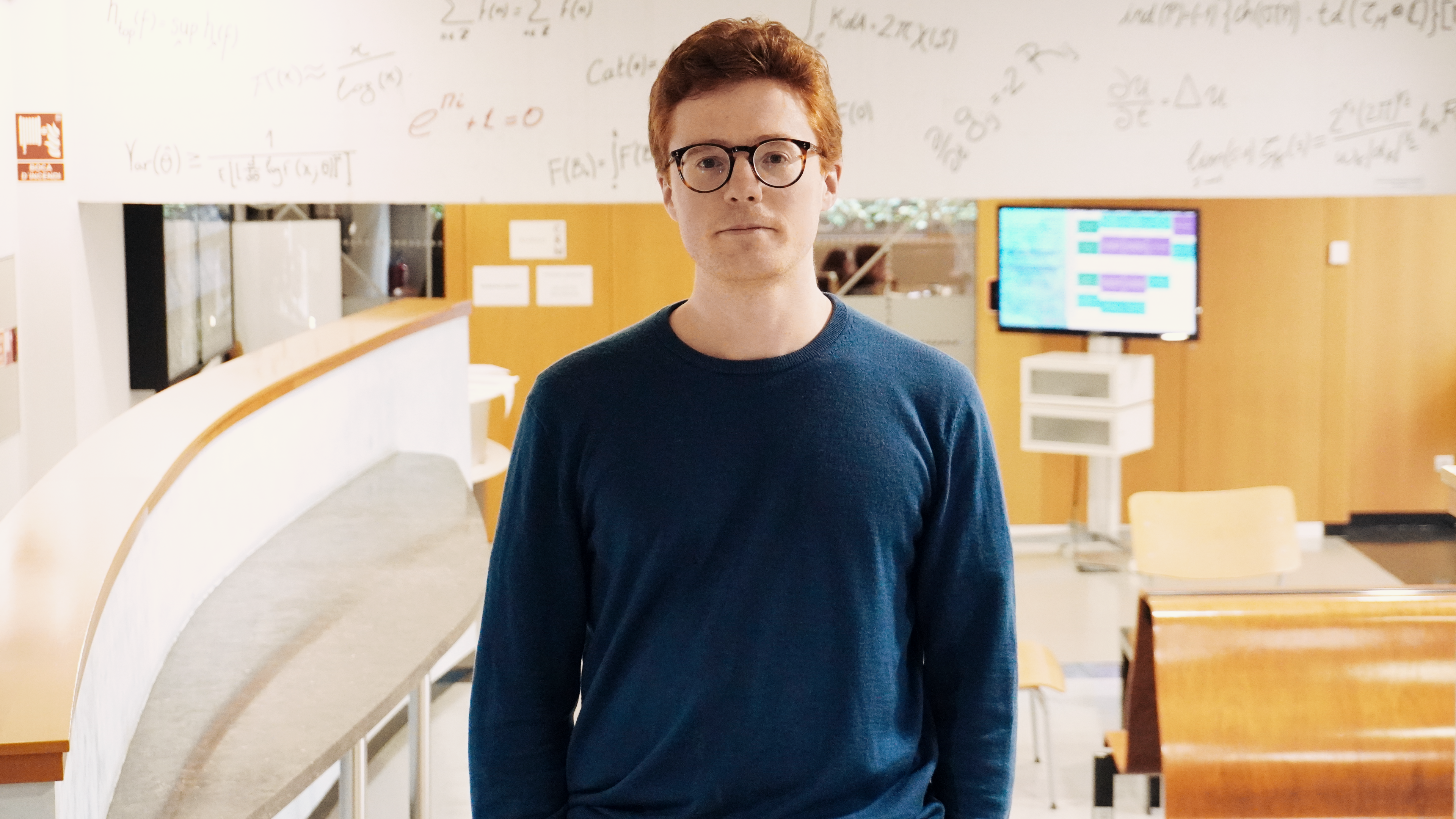
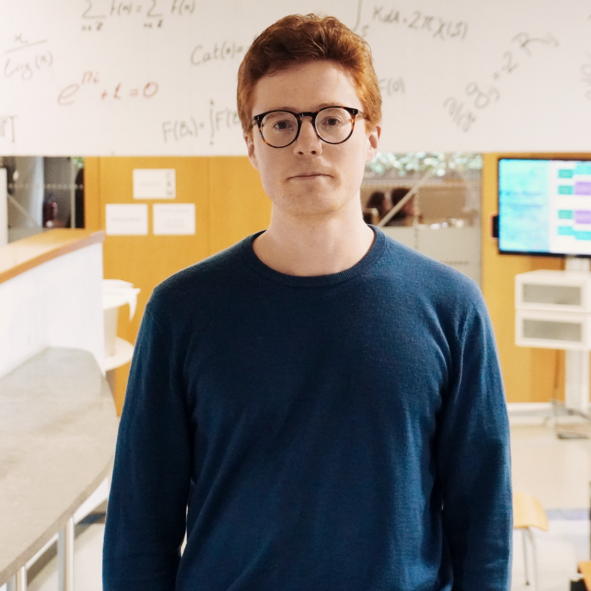
From Phase Separation to Chromosome Architecture: Ander Movilla Joins CRM as Beatriu de Pinós Fellow

Ander Movilla has joined CRM as a Beatriu de Pinós postdoctoral fellow. Working with Tomás Alarcón, Movilla will develop mathematical models that capture not just the static architecture of DNA but its dynamic behaviour; how chromosome contacts shift as chemical marks on histones change over time.

Ander Movilla Miangolarra has joined the Centre de Recerca Matemàtica with a physicist’s training, a biologist’s curiosity, and a mathematician’s toolkit. His path here traces an unusual trajectory, from studying how droplets form inside cells to understanding how chromosomes fold in three dimensions, but the thread connecting it all is a fascination with how physical principles shape biological behaviour.
Movilla arrives at CRM as a Beatriu de Pinós postdoctoral fellow, a program funded by the Catalan Government’s AGAUR that brings international researchers to Catalonia for three-year research stays.

Working with CRM principal investigator Tomás Alarcón, he’ll join the Mathematical Biology research group at CRM to tackle one of molecular biology’s most intricate puzzles: how the three-dimensional architecture of chromosomes influences which genes get expressed.


A Physicist’s Entry into Biology

Movilla’s background is in physics, he completed his undergraduate degree at the University of the Basque Country, but his PhD at Institut Curie in Paris was already crossing disciplinary boundaries. He worked on reaction-diffusion equations, the mathematical framework that describes how substances spread and interact in space. But these weren’t the textbook versions.

“They weren’t the classic ones that you’d use for solutions where these things don’t happen,” Movilla explains. “They were for cases where, due to different interactions between the solutes, these droplets form.” He was studying liquid-liquid phase separation: how the cytoplasm inside cells spontaneously organises into distinct compartments, like oil separating from water in a vinaigrette. It’s a phenomenon that’s become central to understanding cellular organisation, especially under stress conditions when metabolic components aggregate into visible droplets.

“Describing that mathematically, especially in a way that’s intelligible to a human and not just a thousand-by-thousand matrix that only a computer can understand, that’s also an interesting question from a purely mathematical standpoint.”

The work was computationally driven but biologically motivated. Then, three months into his PhD, reality intervened. “The experimentalists said, well, this can’t actually be done in the end. And so, your project collapses,” he recalls. “You start thinking, okay, now what do we do?” It was an early lesson in research pragmatism. “I think in science, most of the things you try don’t work out,” Movilla says. “Of course, the ones that do work out get published, and everything goes well. But you try many things that don’t work. And I learned that in the first three months of my PhD.”


The Turn Toward Gene Regulation

During his postdoctoral work at the John Innes Centre in Norwich, UK, Movilla shifted his focus to gene regulation and epigenetics. The questions became more explicitly biological: How do cells with identical DNA differentiate into neurons, skin cells, or muscle? How do they maintain their identities across divisions?

The answers involve histones, proteins that bind to DNA and control whether a gene is expressed. Histone modifications form patterns: blocks with one type of modification, others without, and some stretches are empty in the middle. Tomás Alarcón has been working on mathematical models of these patterns for years, and lately he’s been focused on how they relate to chromosome folding. The patterns appear linear when you look at a genome browser, but in the cell nucleus, the DNA is folded in three dimensions, and that matters.

“When you look at the genome browser, as biologists typically do, it shows up as a line,” Movilla explains. “But then in the cell nucleus, it’s all folded.” Regions of the chromosome that are far apart on the linear sequence might be physically adjacent in three-dimensional space, and that proximity matters. “In zones where there are contacts between the chromosomes, it’s much more likely that those histone interactions happen, even if they’re far apart.”

Tomás Alarcón at CRM has been working on mathematical models of histone modifications for years, examining how these chemical patterns relate to chromosome folding. But most of that work has treated the structure as relatively static. Movilla’s project aims to make it dynamic.


Dynamic Networks and Adaptive Systems

When there’s a contact between two parts of the chromosome, you get a network of contacts. If the network is fixed, you know what it is, and how to describe it. But when that network becomes dynamic, the challenge changes entirely. “When that network is no longer static but adaptive, because the histones change due to their own dynamics, which then implies that the contacts change, that network is no longer static,” Movilla says. “And describing that mathematically, especially in a way that’s intelligible to a human and not just a thousand-by-thousand matrix that only a computer can understand, well, that’s also an interesting question from a purely mathematical standpoint.”

This is where the interdisciplinary work becomes essential. Movilla will be working with data from cell lines, clones of pluripotent embryonic cells that can be experimentally differentiated into various cell types. The datasets are massive: expression levels of 20,000 genes at the single-cell level, histone modifications mapped across the genome, and chromosome conformation capture experiments showing three-dimensional contacts. “You end up with gigabytes and gigabytes of data that’s very complicated to work with,” he says. “And I think one of the things that could help us understand it better would be these kinds of mathematical approaches, where you try to extract the most important things from that data.”

One of the aspects of the work Movilla finds compelling is the bidirectional exchange with experimentalists. Mathematical models don’t just analyse data, they generate hypotheses. “At the John Innes Centre, we often tried to encourage information to flow both ways,” he says. “They inform us on how to do the analyses and what would be important in these data. But then our model, based on these analyses, might suggest you could try this experiment, and you might observe this. This model perhaps tells you that this gene could be important.”

Sometimes the predictions are more tentative. “You tell them; I don’t have much confidence, so don’t invest too many resources in this. But I’ll leave it there as an idea.” Other times, given the data and the model’s assumptions, the direction is clearer. “That’s usually what ends up getting done, because experimentalists generally go for what they’re most confident in,” Movilla says.

The work calls for a steady relationship with uncertainty and failure. For Movilla, that feels inseparable from doing research. A project that collapsed three months into his PhD made the point clearly and early. The CRM now welcomes Ander Movilla as a Beatriu de Pinós postdoctoral fellow for the next three years.

About Ander Movilla

Ander Movilla trained as a physicist, earning a bachelor’s degree at the University of the Basque Country before completing a PhD in Paris at the Institut Curie, Université PSL. His doctoral work focused on reaction–diffusion equations, with particular attention to systems where components interact and solutions depart from ideal behaviour. During a postdoctoral stay at the John Innes Centre in Norwich, he turned his attention to gene regulation and epigenetics, developing stochastic models to make sense of data from genomics experiments. At the CRM, working with Tomás Alarcón, he builds on this line of work by studying models that capture the three-dimensional organization of chromosomes and its relationship with gene expression.

About the Beatriu de Pinós Programme

The Beatriu de Pinós fellowship, launched in 2005 and managed by the Catalan Agency for Management of University and Research Grants (AGAUR), is one of Catalonia’s flagship programs for attracting international postdoctoral talent. The fellowship provides three-year contracts and research funding to support early-career researchers as they develop independent research programs within Catalan institutions. The program is open to researchers from any country who have completed at least two years of postdoctoral work outside Spain and aims to strengthen Catalonia’s science and technology ecosystem through international mobility and interdisciplinary collaboration.

Subscribe for more CRM News

Stay updated to our mailing list to get the lastest information about CRM activities.

CRM Comm

Pau Varela

CRMComm@crm.cat


Barcelona + didactics + CRM = CITAD 8

Barcelona + didactics + CRM = CITAD 8

From 19 to 23 January 2026, the CRM hosted the 8th International Conference on the Anthropological Theory of the Didactic (CITAD 8), a leading international event in the field of didactics research that brought together researchers from different countries in…

Seeing Through Walls: María Ángeles García Ferrero at CRM

Seeing Through Walls: María Ángeles García Ferrero at CRM

From October to November 2025, María Ángeles García Ferrero held the CRM Chair of Excellence, collaborating with Joaquim Ortega-Cerdà on concentration inequalities and teaching a BGSMath course on the topic. Her main research focuses on the Calderón problem,…

BAMB! 2025: Participants Return to the CRM for Research Stays

BAMB! 2025: Participants Return to the CRM for Research Stays

In October 2025, the Centre de Recerca Matemàtica hosted Josefine Meyer (ISTA) and Cate MacColl (University of Queensland) for a month-long research stay following their participation in the BAMB! Summer School. Despite studying vastly different subjects, from…

The post From Phase Separation to Chromosome Architecture: Ander Movilla Joins CRM as Beatriu de Pinós Fellow first appeared on Centre de Recerca Matemàtica.

Go to Source

Educational pills on quantum physics for educational centers in collaboration with Aran Garcia Lekue

Kutxa Fundazioa and DIPC have collaborated to develop dissemination capsules on quantum physics in Basque with the participation of Aran Garcia Lekue, physicist at DIPC and Ikerbasque Research Professor.

Go to Source

Supernova Cosmology Under Scrutiny: Acceleration and the Hubble Tension

Image
Supernova Cosmology Under Scrutiny: Acceleration and the Hubble Tension
Seminar

Supernova Cosmology Under Scrutiny: Acceleration and the Hubble Tension

Date
Place
DAM 7.24 Seminar Room

Abstract: Type Ia supernovae play a central role in both the discovery of cosmic acceleration and the measurement of the Hubble constant. In this talk, I will discuss two recent results that test the robustness of these foundations. First, I will show that recent claims of strong progenitor-age evolution undermining supernova cosmology are not supported by current data once standard environmental corrections are applied. Second, I will present the Local Distance Network, a community-driven, covariance-weighted consensus measurement of the local Hubble constant at 1% precision, confirming a significant tension with early-Universe predictions.

Go to Source

Ellie Tzima: “Genuine interest and enthusiasm are essential; skills can be learned, motivation cannot”

Ellie Tzima is a Wellcome Senior Fellow and Professor of Cardiovascular Science at the University of Oxford; positions she has held since 2015. Before that, she spent a decade as Assistant and Associate Professor at the University of North Carolina at Chapel Hill. She completed her postdoctoral work at the Scripps Research Institute, where she discovered the junctional mechanosensory complex — a major contribution to vascular biology. Tzima has led NIH-funded projects, served on editorial boards of Circulation Research and ATVB, and received several prestigious awards. She currently works on the UK Medical Research Council Review Panel. Her lab studies how mechanical forces regulate cardiovascular function. They have developed one of the most comprehensive models of endothelial mechanotransduction to date. Her recent work identifies a new class of mechanosensors that explains why atherosclerosis develops in specific regions of blood vessels.

  • What is the main question your lab is trying to answer?

These are always the hardest questions to summarize. At the moment, we are trying to understand why atherosclerotic plaques develop only in specific regions of our blood vessels. If you look at lipid- and cholesterol-rich plaques in human arteries, you’ll see they are not uniformly distributed — they appear in very focal areas. This localization is strongly linked to irregular blood flow.

Just like in a river: in straight segments, flow is uniform and smooth, and disease does not develop there. But in bends, where whirls and eddies form, the flow becomes turbulent — and turbulent flow promotes disease. We want to understand why that is: how blood vessels detect the type of flow they experience, how they communicate this information to neighboring cells, and how this ultimately leads either to protection or to disease. It’s a fundamental biological question with very significant clinical implications.

  • Because I understand this happens in all patients, always in the same places. Do you know why?

Yes — turbulent flow triggers chronic inflammation. Combined with systemic risk factors like high cholesterol or hypertension, this primes blood vessels for plaque development. Endothelial cells become sticky, attracting circulating cholesterol and leukocytes, which initiates inflammation and, over time, plaque formation.

  • What technologies do you use to study this?

We use live cultured cells and specialized systems that can simulate both turbulent and steady, protective blood flow. We also work with genetically engineered mice and rely heavily on microscopy. In addition, we use a broad range of omics technologies — single-cell approaches, proteomics, and more — which are essential today.

  • Once you understand why this happens, will prevention be easy?

Prevention is difficult to imagine, especially because atherosclerosis begins in the first decade of life — we won’t be giving medications to children. Instead, we aim to develop therapeutics that interrupt the mechanosensing of turbulent flow. These drugs could be used together with statins: one to lower cholesterol, the other to block harmful mechanosensing.

A plaque itself isn’t necessarily dangerous; the problem arises when it ruptures and blocks blood flow to the brain or heart. If we can stabilize plaques by interfering with mechanosignaling, they can remain harmless. Delivering drugs locally is another major challenge, but promising technologies are emerging.

  • Why is it important to understand how blood flow controls signaling in blood vessels?

If we understand how turbulent flow is sensed and how it triggers disease, we can selectively interrupt those harmful pathways while preserving protective ones. Distinguishing between different flow patterns and the signaling networks they activate is crucial for developing targeted therapies.

Both projects involve mechanosensing but in very different contexts.

ERC  is a collaboration between four groups: a neuroscientist, a vascular biologist, a nanoscientist, and us — mechanobiologists. Starting next month, we will study the blood–nerve barrier in peripheral nerves, which is far less understood than the blood–brain barrier.
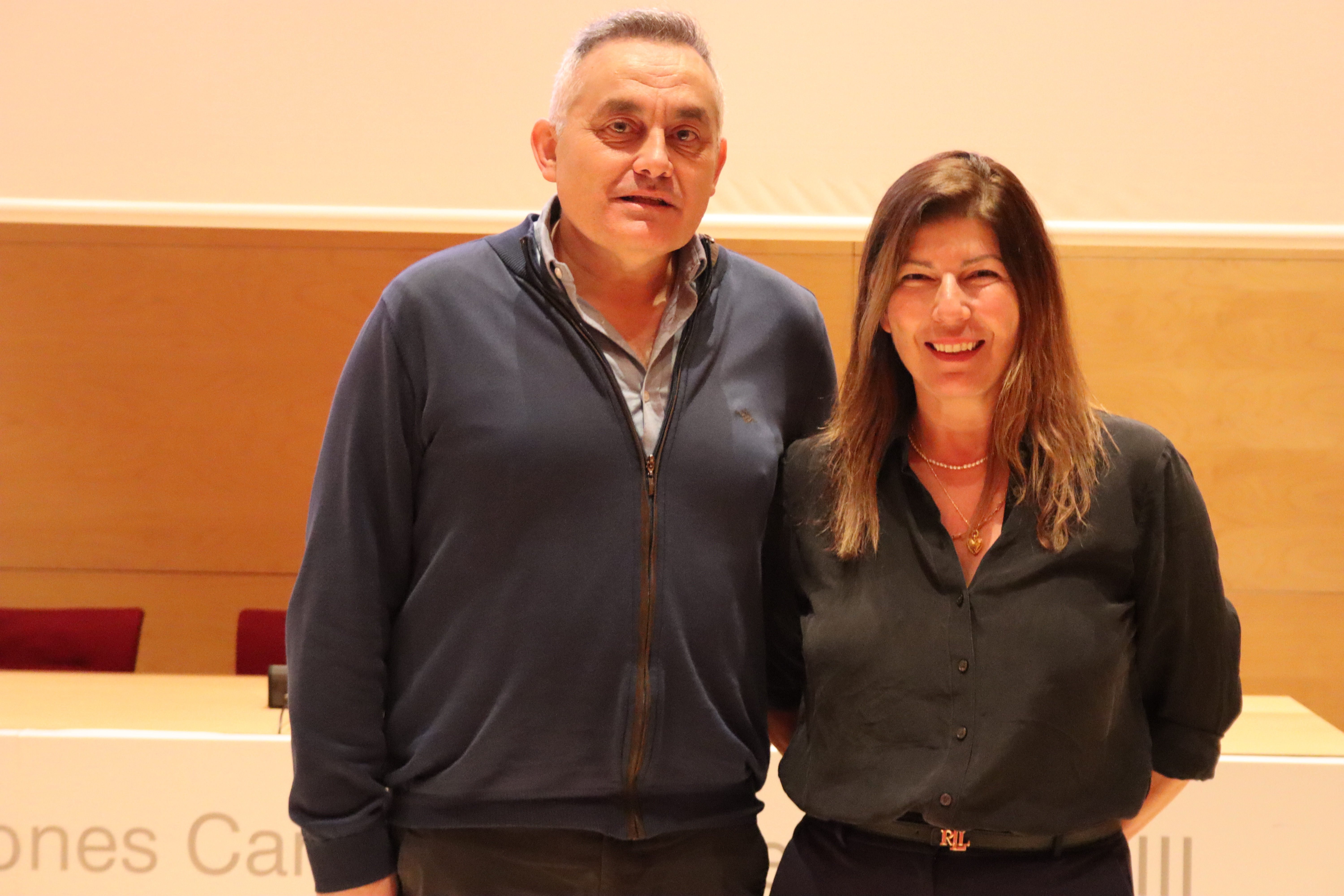
Ellie Etzima

  • What is the blood–nerve barrier?

It’s the interface between blood vessels and neurons in the peripheral nervous system — essentially all the nerves in our limbs. It is clinically important: peripheral neuropathies, carpal tunnel syndrome, nerve injuries requiring regeneration, and chemotherapy-induced neuropathy all involve disruptions in this barrier.

Peripheral nerves experience constant mechanical stimuli — every touch, every movement. We want to understand how mechanical forces regulate the blood–nerve barrier in health and how this signaling becomes disrupted in disease. Our role is to investigate the mechanosignaling, while other groups study nerve function and vessel–neuron communication. Ultimately, we plan to design nanoparticles capable of interrupting pathological mechanosignaling to treat peripheral pain. It’s an ambitious project.

  • How difficult is it to work with all these different people?

We haven’t officially started yet, and even the preparation has been challenging. We come from very different disciplines and even use different vocabularies. We spent a week in Paris preparing for the interview, working side by side to craft a joint presentation. Our styles were completely different — I prefer minimalistic slides, while another collaborator includes everything — so we had to find middle ground. It was humbling but also a lot of fun.

This collaboration will take us into areas of biology I would never have explored alone, and that’s extremely exciting.

  • Did you find a common language?

Yes. We developed a shared style for writing, presenting, and answering questions. We also coordinated who would answer which type of question, especially the unexpected general ones.

  • And Leducq Project?

This project focuses on peripheral arterial disease (PAD), which is related to atherosclerosis but affects arteries in the limbs, like the femoral artery. Statins are less effective for PAD patients, and severe cases can lead to limb amputation.

Our hypothesis is that cell stress and mechanosensing are essential for forming collaterals — natural bypass vessels that can reroute blood flow around blockages. Clinical trials using VEGF, a molecule that promotes new blood vessel formation, have failed because VEGF alone is insufficient. We propose that combining VEGF with mechanosensing pathways could synergistically promote collateral growth and restore blood flow.

  • You work across many areas and lead a large team. How do you keep up?

Two things help. First, I have excellent long-term team members who understand the system in depth and help train newcomers. Second, despite the different projects, they all share a common theme: endothelial mechanosensing. Each tissue adds its own “flavor” through specific molecular players, but the core mechanisms remain the same. Once you understand the core, the variations become manageable — like adding accessories to a good outfit.

  • Did you always want to be a scientist?

Yes. I wasn’t good at much else, and I never wanted to do medicine.

– But your work is closely related to medicine.
It is, but we focus on discovery. Medicine applies these discoveries to patient care. My daughter is training to be a doctor and agrees — doctors apply knowledge, while we uncover how diseases arise in the first place.

  • Some scientists pursue pure knowledge; others seek application. Where do you stand?

Both matter. Applications help communicate why we do what we do, but curiosity is essential. Many breakthroughs began with curiosity-driven research. We must continue funding it.

  • How do you select and train new researchers?

I don’t have a rigid system. Personal interaction is key — if communication doesn’t flow during the interview, it won’t work in the lab. My team also meets candidates and shares their impressions, which I value highly.

Genuine interest and enthusiasm are essential. Skills can be learned; motivation cannot.

  • Do most applicants have this curiosity?

Often, yes. But Oxford can also attract people who want the name on their CV rather than the science. It doesn’t happen often, but we stay vigilant.

  • How difficult is it to be a good mentor?

It’s an ongoing process. I often learn from how other labs operate. I also try to pass on the opportunities my mentors gave me, even if students don’t always appreciate them immediately. You don’t do it for gratitude — you do it because mentorship should be passed on.

  • Do you think the turbulent international political situation is affecting science?

Brexit affected us significantly. We now have far fewer EU applicants because visas and work permits are barriers. The US political landscape hasn’t affected students much, but more US group leaders are considering moving to the UK, which used to be rare.

Go to Source

Protected: When Symmetry Breaks the Rules: From Askey–Wilson Polynomials to Functions — and a New Split Formula

Password Protected

To view this protected post, enter the password below:

The post Protected: When Symmetry Breaks the Rules: From Askey–Wilson Polynomials to Functions — and a New Split Formula first appeared on Centre de Recerca Matemàtica.

Go to Source

First 2D discrete time crystal in a quantum computer

The research published in Nature Communications, involving scientists from Basque Quantum (BasQ), NIST, and IBM, demonstrates how it is possible to create two-dimensional time crystals using state-of-the-art quantum computing infrastructure and techniques. The study was conducted using an IBM Quantum Heron processor, one of the most advanced architectures developed by IBM.

Go to Source

El proyecto YAF, coordinado por IMDEA Energía, recibe el Premio al Mejor Proyecto en Biocircularidad en el II BioCircular Summit

La entrada El proyecto YAF, coordinado por IMDEA Energía, recibe el Premio al Mejor Proyecto en Biocircularidad en el II BioCircular Summit se publicó primero en IMDEA ENERGÍA.

Go to Source

Weak interactions and the gravitational collapse

Image
Weak interactions and the gravitational collapse
Seminar

Weak interactions and the gravitational collapse

Date
Place
DAM 7.24 Seminar Room

Abstract: The chart of nuclei could be enlarged with a branch describing neutron stars that are huge nuclei of a few solar masses held together by gravity force and sustained by the pressure due to the degenerate Fermi sea and repulsive nuclear forces. We contend that yet another branch could be added: objects with a large weak charge, with masses less than 10^−3 solar masses and having radii of a few meters, very compact, only slightly larger than their Schwarzchild radius, and sustained by the pressure generated by the weak force due to Z exchange. This interaction, insignificant in normal neutron stars, could become dominant when ultrahigh densities are reached due to the action of gravity and lead to stable configurations if the appropriate conditions are met. They would constitute a physical realization of the equation of state proposed by Zeldovich some decades ago.

Go to Source

IMDEA Energía refuerza su presencia en el ecosistema de innovación en Science for Industry (S4i)

La entrada IMDEA Energía refuerza su presencia en el ecosistema de innovación en Science for Industry (S4i) se publicó primero en IMDEA ENERGÍA.

Go to Source

Sidebar