Author Archive

ICCUB welcomes three new doctoral researchers funded by ”la Caixa” Foundation INPhINIT fellowships

Image
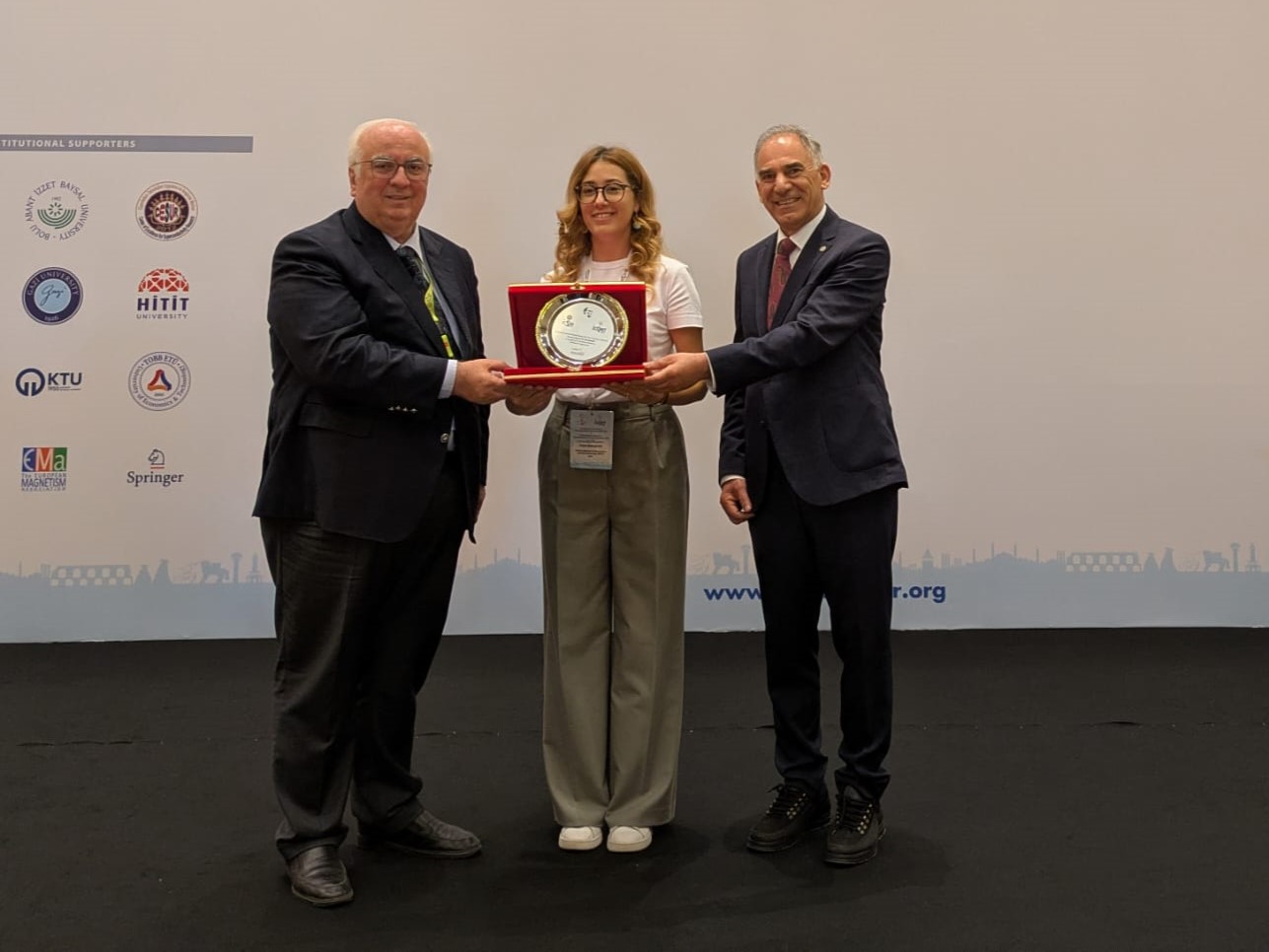
ICCUB Director Domènec Espriu with the three awarded INPhINIT researchers Nell Weidemann, Sebastián Nicolás Mendoza Vasconez and Mariami Mtchedlidze
Credits
Fundació ”la Caixa”
English

The Institute of Cosmos Sciences of the University of Barcelona (ICCUB) will host three new PhD researchers through the prestigious INPhINIT doctoral fellowships awarded by the ”la Caixa” Foundation. These highly competitive fellowships aim to attract and retain outstanding international talent at leading research centres in Spain and Portugal.

As part of the 2025 call, the ”la Caixa” Foundation has awarded 60 doctoral and 40 postdoctoral fellowships to excellent researchers to carry out their projects. The programme not only provides competitive funding, but also offers comprehensive cross-disciplinary training in areas such as scientific communication, leadership, and career development .
 

Group picture of all the
Group picture of all the “La Caixa” foundation fellowship awardees. Credits: La Caixa Foundation


The three doctoral researchers joining ICCUB will contribute to the institute’s research in fundamental physics, strengthening its activities in cosmology, gravitation, and theoretical physics.


International talent in fundamental physics
 

Mariami Mtchedlidze, from Georgia, will pursue a PhD in Particle Physics and Gravitation. Her academic path has been shaped by strong international experience, with studies in Tbilisi, Rome, and Bremen במסגרת the Erasmus Mundus Master’s programme in Astrophysics and Space Science. Her research interests focus on gravitational physics and cosmology, with the aim of fostering collaboration and innovation in these fields.

Nell Weidemann, born in Liège (Belgium), joins the PhD programme in Physics. Specialised in cosmology and the large-scale structure of the Universe, she completed both her Bachelor’s and Master’s degrees at the University of Liège with high honours. She aims to combine research and teaching, contributing to major open questions in physics while inspiring future generations.

Sebastián Nicolás Mendoza Vasconez, from Quito (Ecuador), will carry out his PhD in Physics with a focus on theoretical physics. He completed his undergraduate studies at Jacobs University Bremen and further specialised through the Mathematical Tripos (Part III) at the University of Cambridge. His interests lie at the intersection of quantum physics and gravity, particularly in holography, as well as in condensed matter physics, machine learning, and quantum information science.


A programme fostering research excellence
 

The ”la Caixa” Foundation fellowship programme is one of the most significant initiatives promoted by a private organisation in Europe, both in terms of the number of fellowships awarded and the breadth of disciplines covered. In this edition, more than €22 million will be allocated to doctoral and postdoctoral fellowships, co-funded by the European Commission through the Marie Skłodowska-Curie COFUND Actions .

With the incorporation of these three researchers, ICCUB continues to strengthen its international outlook and its commitment to excellence in cosmos sciences.
 

News Type
Date
SEO Title
ICCUB welcomes three new doctoral researchers funded by ”la Caixa” Foundation INPhINIT fellowships

Go to Source

CIMCYC Sessions: Combining Psychology with Artificial Intelligence. What could possibly go wrong?

psychology IA
Tenemos el placer de anunciar la próxima sesión de las CIMCYC Sessions IA, Mente y Cerebro el jueves 19 de marzo de 2026. Siguiendo el formato de encuentros anteriores, la sesión se articulará en torno a la discusión del texto propuesto. Se invita a las personas asistentes a preparar ideas, preguntas o dudas previas (con una estimación de 5 minutos de preparación) para enriquecer el diálogo conjunto. 
Seguir leyendo

Go to Source

CIMCYC Sessions: Combining Psychology with Artificial Intelligence. What could possibly go wrong?

psychology IA
Tenemos el placer de anunciar la próxima sesión de las CIMCYC Sessions IA, Mente y Cerebro el jueves 19 de marzo de 2026. Siguiendo el formato de encuentros anteriores, la sesión se articulará en torno a la discusión del texto propuesto. Se invita a las personas asistentes a preparar ideas, preguntas o dudas previas (con una estimación de 5 minutos de preparación) para enriquecer el diálogo conjunto. 
Seguir leyendo

Go to Source

100 projects and growing: the Spanish node of the SKA Regional Centres Network strengthens its role in the scientific community

The Spanish node of the SKA Regional Centres Network (espSRC), developed by the Institute of Astrophysics of Andalusia (IAA-CSIC), has reached a total of 100 scientific, technological and training projects. This figure represents a key milestone in its trajectory and reflects its consolidation as an operational infrastructure, as well as the growing interest of the scientific community in both the espSRC and the SKA Observatory (SKAO).

Go to Source

The Psychometric Lab Validates a Scale for Measuring Moral Attention in the Spanish Population

atencion moral
Desde el Psychometric Lab del Centro de Investigación Mente, Cerebro y Comportamiento (CIMCYC) de la Universidad de Granada se ha llevado a cabo la adaptación y validación de la versión española de la Escala de Atención Moral, basada en la escala original Moral Attentiveness Scale desarrollada por Reynolds (2008).
Seguir leyendo

Go to Source

El Psychometric Lab valida una escala para medir la atención moral en población española

atencion moral
Desde el Psychometric Lab del Centro de Investigación Mente, Cerebro y Comportamiento (CIMCYC) de la Universidad de Granada se ha llevado a cabo la adaptación y validación de la versión española de la Escala de Atención Moral, basada en la escala original Moral Attentiveness Scale desarrollada por Reynolds (2008).
Seguir leyendo

Go to Source

Publication of the provisional prioritization of applications  FI Joan Oró 2026 Call

The provisional prioritization of applications for the FI- Joan Oró 2026 call has now been published, in accordance with the prioritization criteria approved by AGAUR.

Candidates have 10 working days from the publication date to submit any appeals. Appeals must be sent by email to: gpr@iciq.es


.     

La entrada Publication of the provisional prioritization of applications  FI Joan Oró 2026 Call se publicó primero en ICIQ.

Go to Source

More than 2,500 people attended the Brain Awareness Week at the Institute for Neurosciences UMH-CSIC

  • This edition of Brain Awareness Week was a great success thanks to the involvement of more than 140 volunteers

Group photo of the volunteers and organizers of Brain Awareness Week 2026.

Once again, the Institute for Neurosciences (IN), a joint center of Miguel Hernández University of Elche (UMH) and the Spanish National Research Council (CSIC), celebrated Brain Awareness Week with the aim of bringing the importance of basic research in neuroscience closer to the general public. From March 9 to 13, the Francisco Javier Balmis building on the UMH Sant Joan d’Alacant campus became the main venue for these open days, during which IN researchers brought the science carried out in their laboratories to visitors through an extensive program of exhibitions, short outreach talks, and educational workshops.

Throughout the week, more than 2,000 students from 62 schools across the Valencian Community visited the campus to learn first-hand about research on the brain and the Central Nervous System conducted at the IN through the many stands included in the program and the various short outreach talks held each day. In addition to the scheduled visits for schools, three afternoon sessions open to the general public were also organized, all of which were fully booked until closing time.

This edition was a success thanks to the participation of more than 140 volunteers. Among them were researchers, technical staff, and PhD students, who led educational workshops on topics such as animal models in research, sensory illusions, brain anatomy, virtual reality applied to neuroanatomy, and the mysteries hidden in our DNA, among many others. In addition, every morning featured short outreach talks on different topics related to neuroscience, including genetic engineering applied to new therapies, memory and emotions, sleep, how neurons work, and the effects of drugs on the brain. Other topics addressed included neurodevelopment, research on diseases such as Alzheimer’s, and how the environment can influence genes and memory.

In addition, this year’s Brain Awareness Week featured four exhibitions that could be visited alongside the rest of the activities. The first was the artistic exhibition ‘Scientific Photography #SciencePhoto_IN’, composed of high-resolution prints representing the different research lines developed at this center of research excellence. Visitors could also explore the exhibition #HicieronHistoria, part of the UMH BEATRICS project, consisting of a series of totems available in Spanish, Valencian, and English that highlight the scientific and technical milestones achieved by several women from different fields and historical periods.

Another exhibition, ‘Human Brain Photo Expo’, presented a photographic showcase by the UMH Department of Histology and Anatomy dedicated to the human central nervous system. Finally, the program included the presentation of the artwork ‘Two Hemispheres, Infinite Possibilities’, an artistic panel depicting a top view of the two human cerebral hemispheres, created by the artist Lorenzo Higueras, a scholarship holder of the Madrid-based Association of Mouth and Foot Painting Artists. The work was officially inaugurated on Tuesday during an institutional event attended by José Manuel Ramos Rincón, Coordinator of the Innovation Area at Miguel Hernández University of Elche (UMH), and the IN’s Deputy Director, Santiago Canals, among other authorities.

From left to right: Santiago Canals, Deputy Director of the IN UMH-CSIC; José Manuel Ramos Rincón, Coordinator of the UMH Innovation Area; Lorenzo Higueras, author of the artwork; and Juan Antonio Sánchez Alcañiz, coordinator of Brain Awareness Week

In addition, the Brain and Society series was held once again with the support of the Remedios Caro Almela Chair of Neurobiology. Within this framework, the round table “The Challenge of Longevity: Science and Mind in the Face of a Longer Life” took place on March 12 at the Club Información in Alicante. The event featured Ángela Nieto, CSIC Research Professor at the IN; CSIC Research Scientists Silvia De Santis and José Vicente Sánchez Mut, also at the IN; and Domingo Orozco, Professor of Medicine at UMH and Vice-Rector for Planning and Social Responsibility. The session was moderated by Jesús Mula Grau, Professor in the Journalism Area at UMH.

From left to right: Jesús Mula Grau, José Vicente Sánchez Mut, Ángela Nieto, Juana Gallar, Domingo Orozco, and Silvia De Santis.

Brain Awareness Week is an initiative organized with the collaboration of the Vice-Rectorates for Research, Students, and Planning and Social Responsibility at Miguel Hernández University of Elche (UMH); the Remedios Caro Almela Chair of Neurobiology at UMH; the Dana Foundation; the companies QUIMA S.L. and Leica Microsystems; the Federation of European Neuroscience Societies (FENS); and the European University of Brain and Technology (NeurotechEU).

More information: https://semanadelcerebroin.umh.es/

Source: Institute for Neurosciences UMH-CSIC (in.comunicacion@umh.es)

La entrada More than 2,500 people attended the Brain Awareness Week at the Institute for Neurosciences UMH-CSIC se publicó primero en Instituto de Neurociencias de Alicante.

Go to Source

Heavy Quarkonium and 2-Loop Quarkonium Hamiltonian

Image
Heavy Quarkonium and 2-Loop Quarkonium Hamiltonian
Seminar

Heavy Quarkonium and 2-Loop Quarkonium Hamiltonian

Date
Place
Pere Pascual V5.07 Room

Abstract: Heavy quarkonium system provides an ideal laboratory to investigate theoretical and phenomenological aspects of QCD deeply. We have recently computed the 2-loop quarkonium Hamiltonian. This is the first non-trivial calculation of the N^4 LO corrections to the quarkonium Hamiltonian, defined in the potential-NRQCD effective field theory. In the first part, we review phenomenological motivations to compute the Hamiltonian. In the latter part, we explain the procedure of this computation as well as theoretically interesting points, and then we present the new results and some phenomenological impacts.

Go to Source

ICTA-UAB Researcher Participates in the Transitioning Away From Fossil Fuels Conference in Colombia

With the participation of over 2,600 organizations from various sectors and regions, the Transitioning Away From Fossil Fuels Conference will take place on April 24 in Santa Marta, Colombia. Marcel Llavero Pasquina, researcher at ICTA-UAB, will represent the institute as a member of the conference Scientific Board.

Go to Source

New research outlines pathway to achieve high well-being and a safe climate without economic growth

Roadmap shows how to achieve good lives for all and a safe climate by reorienting production and distribution toward well-being and ecological transformation instead of capital accumulation and elite consumption.

Go to Source

The Centre de Recerca Matemàtica Approves Its Strategic Plan for 2026–2030

The Centre de Recerca Matemàtica has approved its Strategic Plan for 2026 – 2030, setting priorities in research, training, and knowledge transfer. Four flagship initiatives anchor the scientific programme. 

The Centre de Recerca Matemàtica approved its Strategic Plan for 2026 – 2030 last month, a document that lays out where the institution is heading across research, training, and its relationship with the broader scientific community. It contains eight global objectives, four core scientific blocks, and four flagship programmes.

The CRM was founded in 1984, which makes it Spain’s oldest mathematics research institute. Since 2021, it has grown considerably, partly through framework agreements with the three main Catalan universities (UAB, UPC, and UB) and partly through the renewal of the María de Maeztu Unit of Excellence distinction, which brought two million euros in additional funding. Eight ERC grants have been awarded to CRM affiliated researchers over the past decade. Between 2022 and 2024, the centre hosted over 120 scientific events with nearly 4,500 participants from across the world. The plan takes this recent period as its starting point without treating it as a guarantee of what comes next.

The scientific programme is organised around four core areas: analysis and PDEs together with dynamical systems, algebra and geometry, mathematical modelling, and combinatorics. Additionally, the document also signals four flagship initiatives. Two of them sit at the intersection of mathematics and artificial intelligence. One develops the mathematical underpinnings of generative AI, drawing on transport theory, partial differential equations, and high-dimensional dynamical systems. The other aims to position the CRM as a reference centre in computer-assisted proofs, a field that has expanded rapidly as computational tools become capable of verifying arguments that would take humans years to check by hand. A third flagship supports the formalisation of mathematics; writing proofs in computer-verifiable language using systems like Lean or Coq, a shift that some in the field consider genuinely transformative. The fourth addresses multiscale modelling for problems in biology, climate change, and public health. These are not easy problems to put numbers on.

The document also acknowledges the CRM’s Knowledge Transfer Unit role in translating abstract mathematical results into applications with legible real-world effects. A project optimising bus networks for Transports Metropolitans de Barcelona, and collaborations with the Institut de Ciències del Mar and Alba Synchrotron, point to what this looks like when it does happen. The plan sets out mechanisms to make it happen more often.

On training, the aim is to develop the Barcelona Graduate School of Mathematics into a genuinely international reference for doctoral and postdoctoral education. The CRM currently supervises 15 to 16 defended theses per year. The plan wants to convert more master’s students into doctoral candidates (the 2023–2024 data suggests that the gap is wider than it should be), and to give postdoctoral researchers clearer pathways toward independent positions, something that has historically been left somewhat to chance.

The Strategic Plan 2026–2030 is available on the CRM website.

PDF Loading…

Newsletter

Get the latest CRM news and activities delivered to your inbox

Subscribe now

Recent newsletters →

CRM Comm

Pau Varela

CRMComm@crm.cat


Axel Masó Returns to CRM as a Postdoctoral Researcher

Axel Masó Returns to CRM as a Postdoctoral Researcher

Axel Masó returns to CRM as a postdoctoral researcher after a two-year stint at the Knowledge Transfer Unit. He joins the Mathematical Biology research group and KTU to work on the Neuromunt project, an interdisciplinary initiative that studies…

The post The Centre de Recerca Matemàtica Approves Its Strategic Plan for 2026–2030 first appeared on Centre de Recerca Matemàtica.

Go to Source

Sidebar