Author Archive

The external scientific advisory committee meets at the CBGP

The CBGP new External scientific Advisory Board (EAB), composed of internationally renowned researchers in the fields of plant biotechnology and genomics, met on Thursday 15th of January. This meeting, the first since the renewal of this committee, was attended in person by Professor Nick Talbot, Executive Director of The Sainsbury Laboratory (TSL, UK) and Chair of the EAB; Professor Ari Pekka Mähönen, Principal Investigator of the Plant Growth Dynamics group at the University of Helsinki (Finland); Professor Purificación López-García, Scientific Director at the CNRS (France); and Professor José Manuel Pardo Prieto, Principal Investigator at the IBVF in Seville (Spain). Professor Maria J. Harrison, Adjunct Professor at Cornell University (USA); Professor Jose Miguel Alonso, Principal Investigator at the University of North Carolina (USA); and Professor Nicola Patron, Associate Professor at the University of Cambridge (UK), participated remotely in this first meeting of this new phase of the CBGP EAB.

Go to Source

AGAUR FI prioritisation criteria for early-career research staff Joan Oró contracts in 2026

The shared document outlines how contracts will be prioritised.

Go to Source

Criteris de priorització de les sol·licituds dels ajuts Joan Oró per a la contractació de personal investigador predoctoral en formació (FI) 2026

A continuació podeu consultar la publicació dels criteris de priorització de les sol·licituds dels ajuts Joan Oró per a la contractació de personal investigador predoctoral en formació (FI 2026), dirigits a les universitats públiques i privades del sistema universitari de Catalunya, els centres de recerca, les fundacions hospitalàries i les Infraestructures Científiques i Tècniques Singulars (ICTS).

WEB AGAUR

DESCARREGA DOCUMENT

CRM Comm

Natalia Vallina

CRMComm@crm.cat


Barcelona + didactics + CRM = CITAD 8

Barcelona + didactics + CRM = CITAD 8

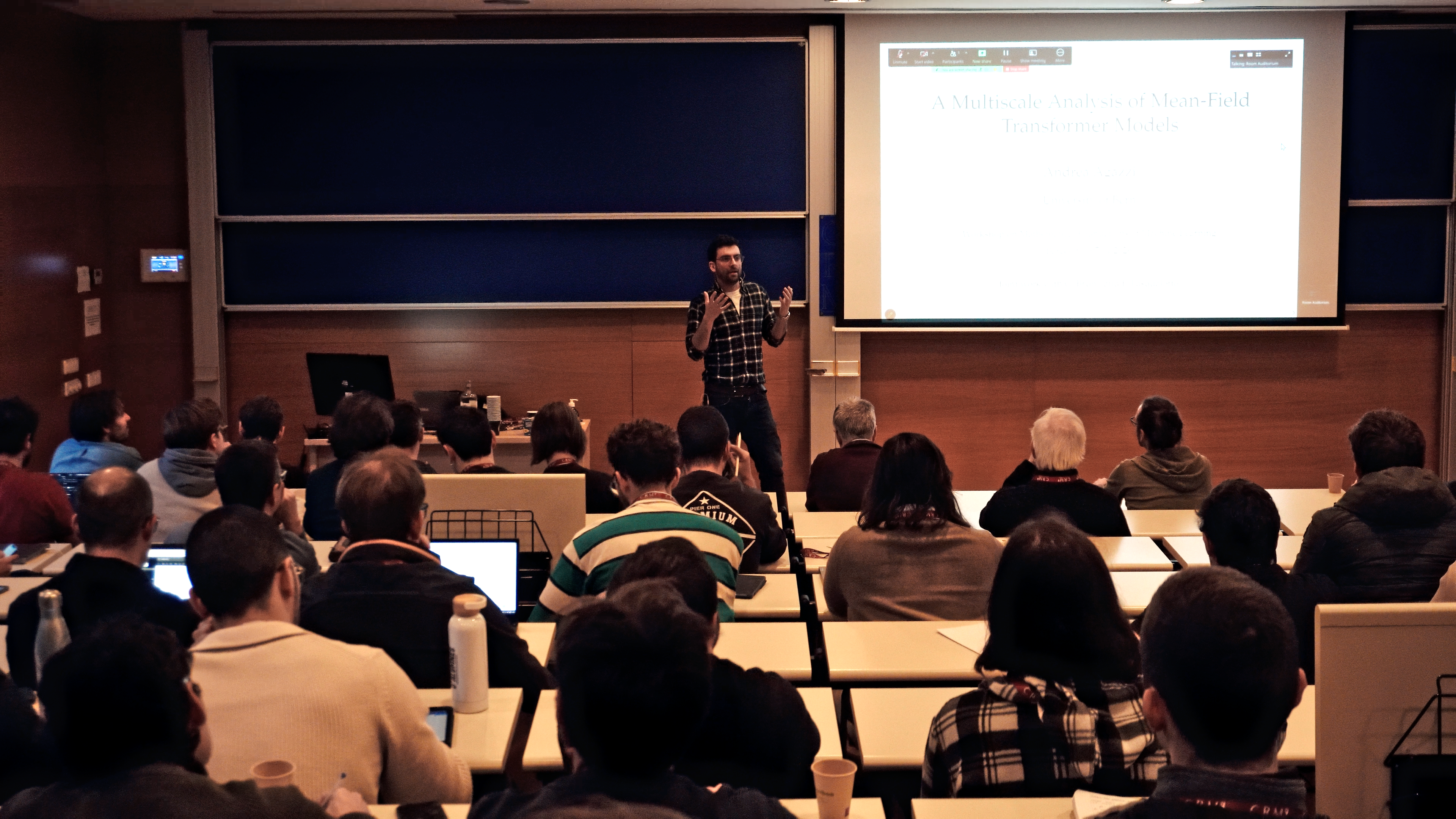
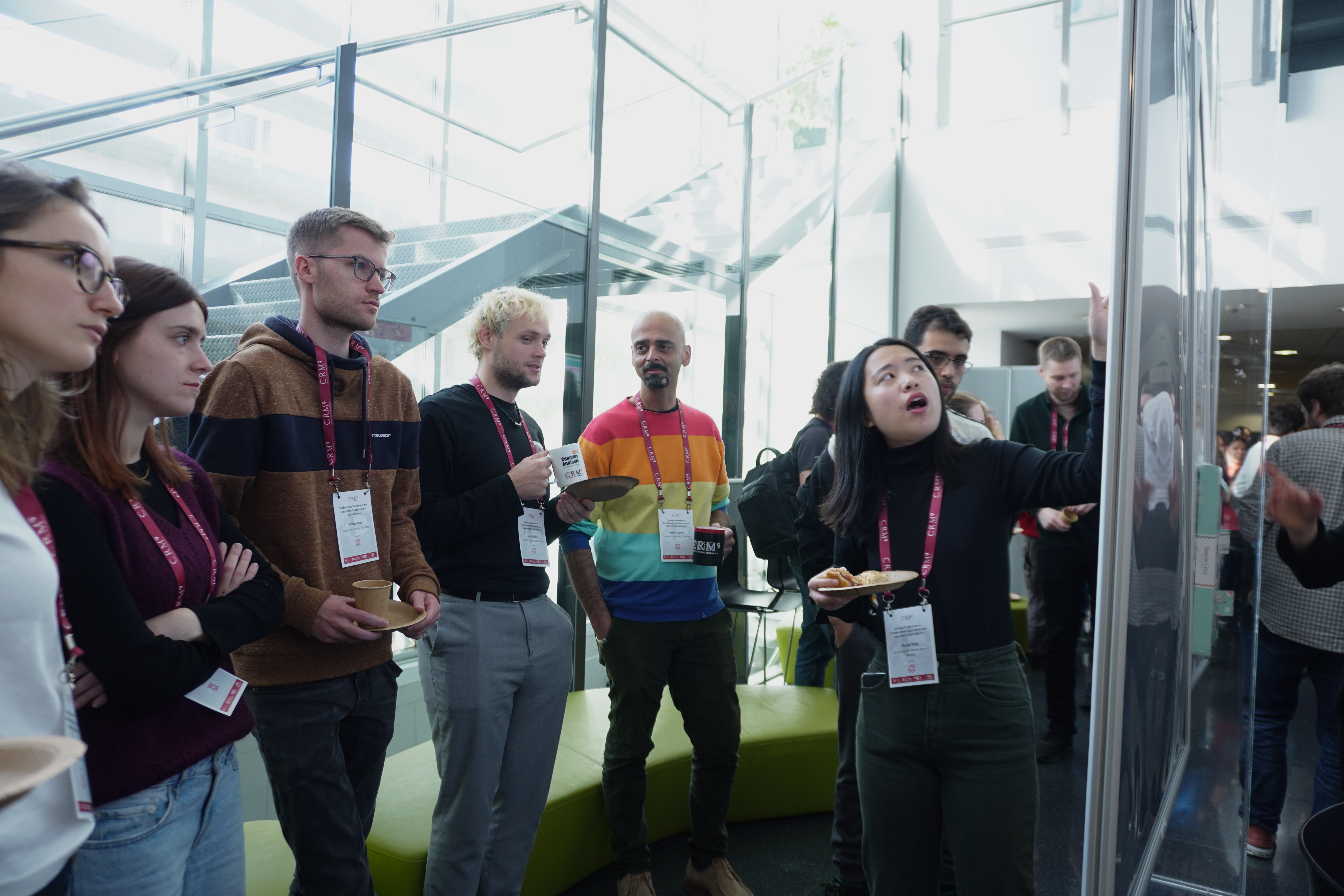
From 19 to 23 January 2026, the CRM hosted the 8th International Conference on the Anthropological Theory of the Didactic (CITAD 8), a leading international event in the field of didactics research that brought together researchers from different countries in…

Seeing Through Walls: María Ángeles García Ferrero at CRM

Seeing Through Walls: María Ángeles García Ferrero at CRM

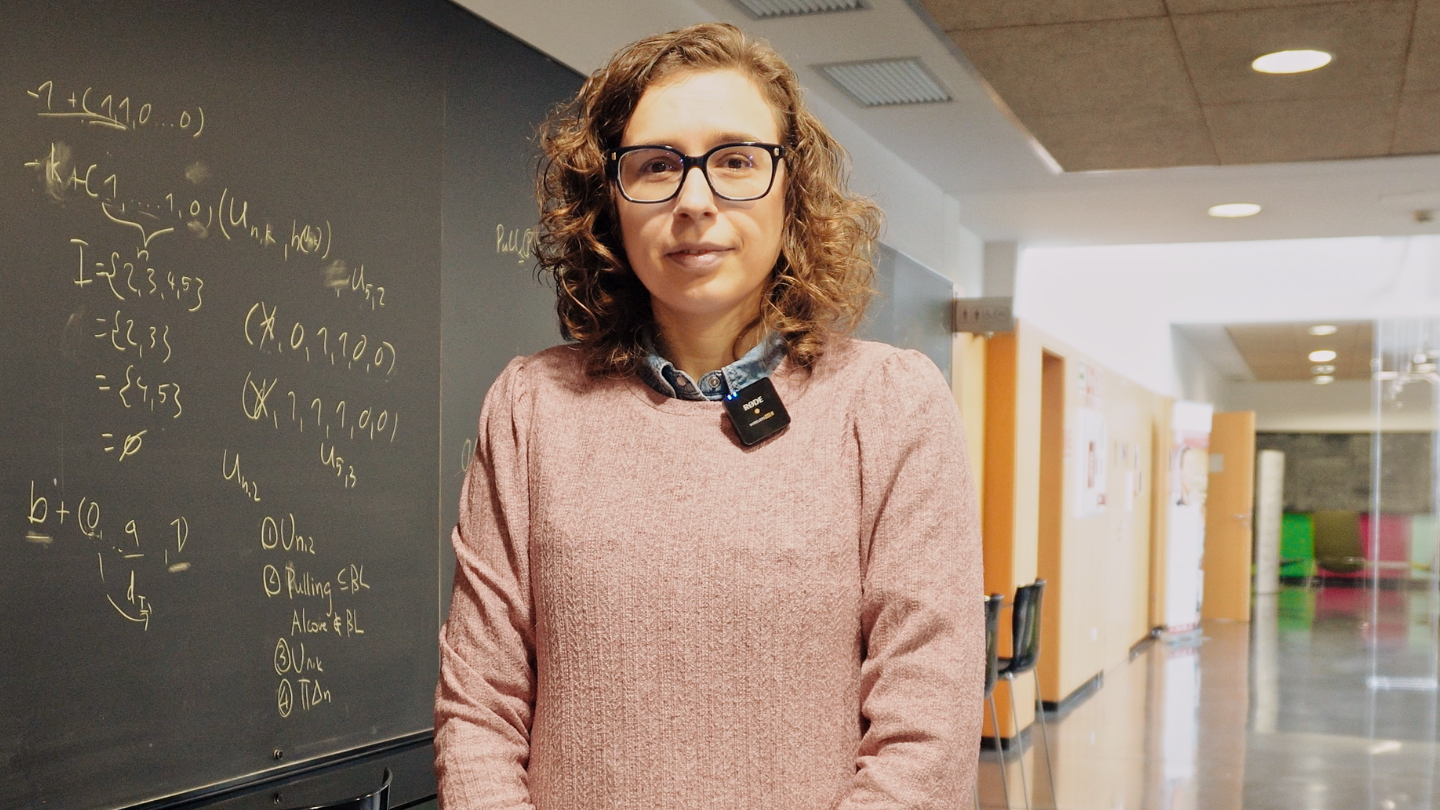
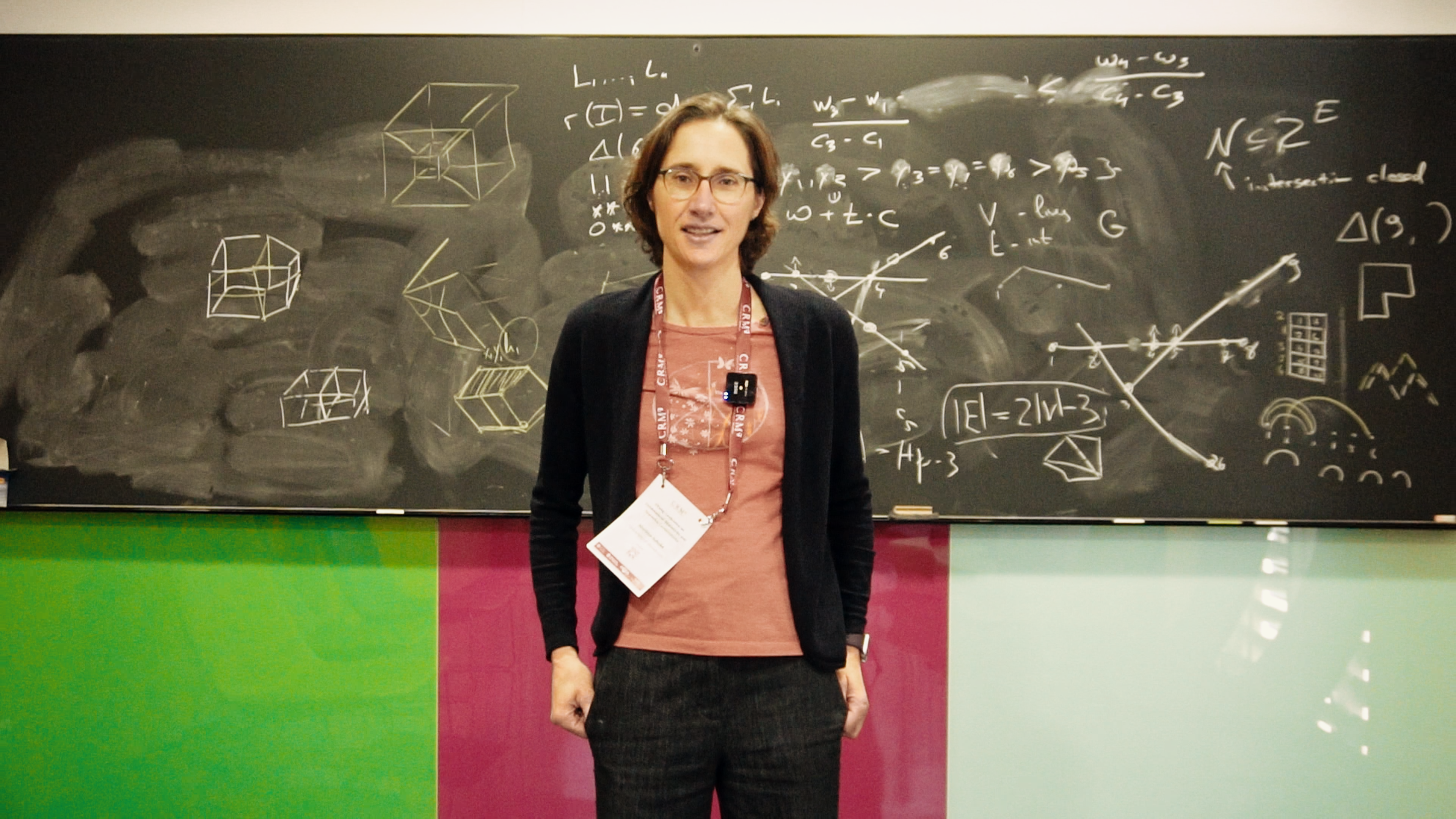
From October to November 2025, María Ángeles García Ferrero held the CRM Chair of Excellence, collaborating with Joaquim Ortega-Cerdà on concentration inequalities and teaching a BGSMath course on the topic. Her main research focuses on the Calderón problem,…

BAMB! 2025: Participants Return to the CRM for Research Stays

BAMB! 2025: Participants Return to the CRM for Research Stays

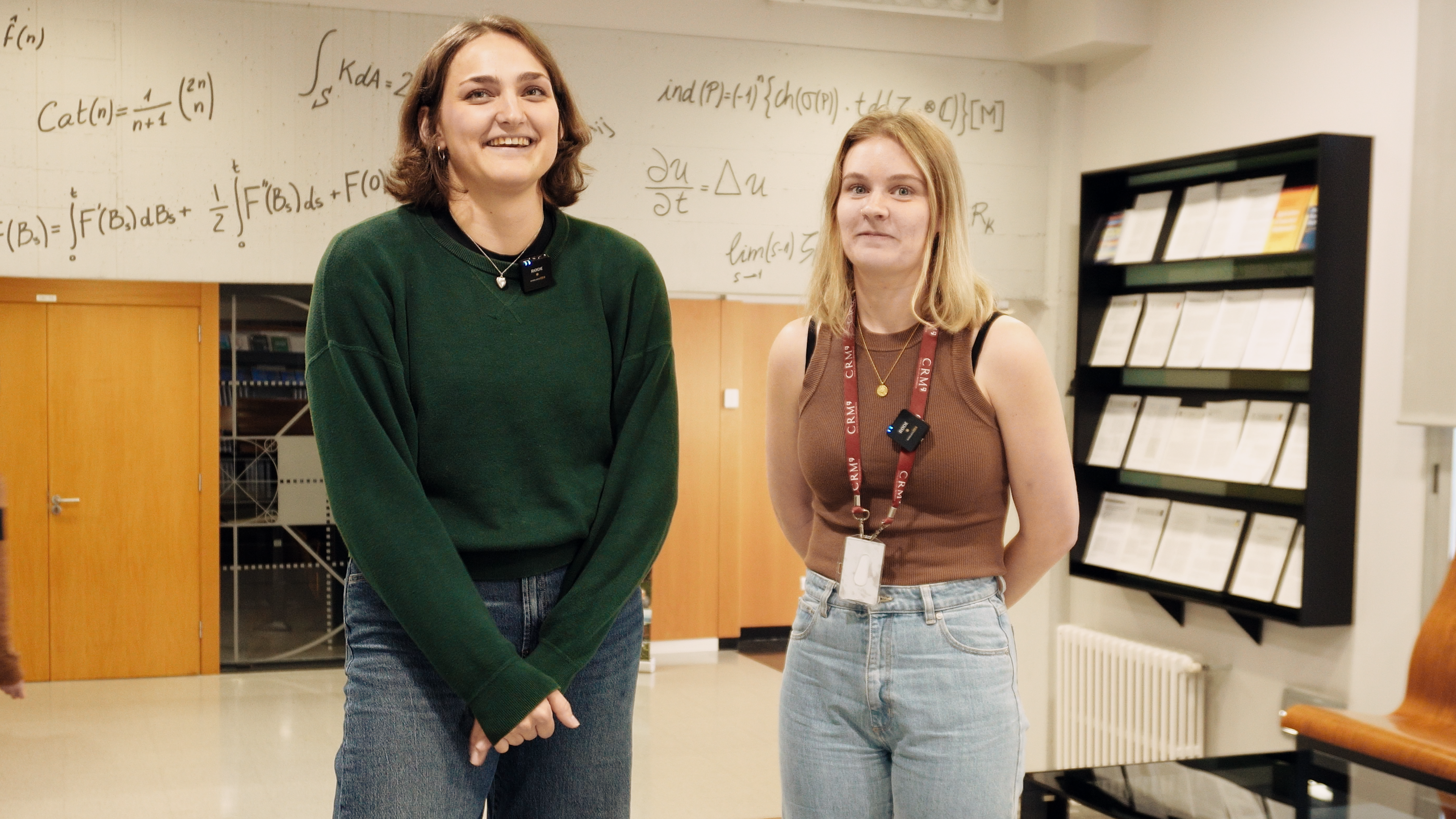
In October 2025, the Centre de Recerca Matemàtica hosted Josefine Meyer (ISTA) and Cate MacColl (University of Queensland) for a month-long research stay following their participation in the BAMB! Summer School. Despite studying vastly different subjects, from…

The post Criteris de priorització de les sol·licituds dels ajuts Joan Oró per a la contractació de personal investigador predoctoral en formació (FI) 2026 first appeared on Centre de Recerca Matemàtica.

Go to Source

The Institute of Astrophysics of Andalusia succeeds in characterizing the atmospheric composition of the exoplanet GJ 436 b with record precision

The study reveals that the clouds are located very high in the atmosphere and that their metallicity is about 900 times that of the Sun. The results regarding the atmosphere of GJ 436 b expand our knowledge of Neptune-like planets outside our solar system.

Go to Source

They map magnetic “highways” in the winds of a galaxy with bursts of star formation

The Spanish National Research Council (CSIC), through the Institute of Space Sciences (ICE-CSIC) and the Institute of Astrophysics of Andalusia (IAA-CSIC), participated in this international study, published in The Astrophysical Journal (ApJ). For the first time, ALMA is tracking polarized light to map the magnetic fields in the high-speed winds of Arp 220, an ultraluminous infrared galaxy.

Go to Source

Tamara Vázquez Schröder participates in the launch of ‘científiques 2026’

Tamara Vázquez Schröder, researcher in the Collider Physics Group at the Institut de Física d’Altes Energies (IFAE), took part in the launch event of the 2026 edition of the #científiques programme, held on 27 January 2026 at the UAB Casa Convalescència in Barcelona. The event marked the start of this year’s activities ahead of the International Day of Women and Girls in Science, celebrated on 11 February.

Go to Source

Impulso a la excelencia internacional: el CIMCYC da la bienvenida a los “Visiting Scholars” 2026

Mind, Brain and Behavior Research Center
El Centro de Investigación Mente, Cerebro y Comportamiento (CIMCYC) refuerza su excelencia internacional mediante la colaboración con talento científico de primer nivel. A lo largo de 2026 y 2027, el CIMCYC contará con la presencia de varios destacados investigadores e investigadoras internacionales gracias al programa Visiting Scholars de la Universidad de Granada
Seguir leyendo

Go to Source

Strengthening international excellence: The CIMCYC welcomes the 2026 Visiting Scholars

Mind, Brain and Behavior Research Center
The Mind, Brain and Behavior Research Center (CIMCYC) steadily strengthens international excellence by collaborating with top-tier scientific talent.
Throughout 2026 and 2027, the CIMCYC will host several prominent international researchers thanks to the University of Granada’s Visiting Scholars program.

Seguir leyendo

Go to Source

School sessions of Cinema and Science 2026 are here, registration opens on 2 February!

Go to Source

Magnetic Superhighways Discovered in a Starburst Galaxy’s Winds

Image
The Atacama Large Millimeter/submillimeter Array (ALMA), of which the NSF NRAO is a partner
Credits
NSF/AUI/NSF NRA O/B. Foote
English

Using the Atacama Large Millimeter/submillimeter Array (ALMA), an international team of astronomers, with the participation of ICCUB-IEEC researcher Gemma Busquet, has mapped a magnetic highway driving a powerful galactic wind into the nearby galaxy merger of Arp 220, revealing for the first time that its fast, molecular outflows are strongly magnetized and likely helping to drive metals, dust, and cosmic rays into the space around the galaxy. By watching how tiny dust grains and gas molecules line up with these fields, researchers have drawn the most detailed magnetic map yet of Arp 220’s buried, star‑forming cores and their outflows. The result is a new way to see how gravity, starbirth, black holes, and magnetic forces all work together in a chaotic cosmic environment. 
 

Arp 220 is an ultraluminous infrared galaxy (ULIRG) made up of two spiral galaxies in the final stages of merging. Because Arp 220 is the nearest galaxy of its kind, it serves as a powerful time machine: what happens here today likely mirrors what happened in the first generations of massive, dusty galaxies more than 10 billion years ago.
 

“We used ALMA to map the orientation and strength of magnetic fields in the twin galaxies,” shared Enrique Lopez-Rodriguez, the lead author of this research, and an Associate Professor with the University of South Carolina. “This revealed previously unseen details about Arp 220’s dust-enshrouded cores and molecular outflows, including the first detection of a polarized CO(3–2) molecular line emission,”  adds Josep Miquel Girart,  the lead in the observational work, and a researcher at the Institut de Ciències de l’Espai. This emission traced the galactic outflow in the external galaxy, showing that the outflowing gas itself carries a well-ordered magnetic field.
 

The Atacama Large Millimeter/submillimeter Array (ALMA), of which the NSF NRAO is a partner. Photo credit NSF/AUI/NSF NRAO/B.Foote.
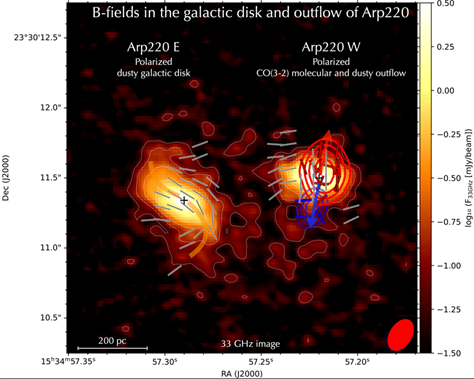
The magnetic fields of the galactic disk and dusty and molecular outflow of the merging galaxy Arp220 observed by ALMA. The magnetically aligned dust grains (grey lines) show a magnetic field parallel to the disk in Arp 220 East, while in Arp 220 West, the magnetic field is parallel to the outflow (red and blue contours) driven by the starburst activity. The CO molecular emission shows a collimated magnetic field (blue and red lines) along the fast molecular outflows of Arp 220 West. Credits: Lopez-Rodriguez, E. (USC; polarization data), Girart, J.M. (ICE-CSIC and IEEC; polarization data); (Barcos-Muñoz, L. (NRAO; 3GHz data).


Observations of the west nucleus of Arp 220 revealed a nearly vertical magnetic field that runs alongside a bipolar molecular outflow moving at up to roughly 500 kilometers per second, driving a powerful, magnetic superhighway out of the galaxy. Galaxy mergers and starbursts are known to launch powerful winds that can shut down, or regulate, star formation by removing gas. However, these new results show that magnetic fields are a crucial, previously unknown driver in the force of these winds.


The team obtained full-polarization ALMA observations at 870 microns (Band 7), measuring both dust continuum polarization and CO(3–2) line polarization at a resolution of about 0.24 arcseconds (≈96 parsecs), fine enough to separate the two compact nuclei and their outflows. The dust polarization traces magnetically aligned grains in the cold, dense interstellar medium, while the Goldreich–Kylafis effect imprints linear polarization on the CO(3–2) emission line in the presence of anisotropic radiation and magnetic fields, together providing a three-dimensional view of the field geometry.

By combining the polarization geometry with measurements of gas mass, turbulence, and outflow speed, the authors applied and refined versions of the Davis–Chandrasekhar–Fermi method to estimate the magnetic field strengths in the blue- and redshifted outflow lobes. In the eastern nucleus, ALMA revealed a spiral-like magnetic pattern threading a compact, dust-enshrouded disk and arm, suggesting that ordered spiral fields can survive deep into the merger stage.


A highly polarized highway of dust between the two nuclei, with polarization fractions of about 3–5 percent, traces a magnetized ridge that may be funneling material and magnetic flux between the merging cores. Adds Lopez-Rodriguez, “When Arp 220 is observed as a whole, it’s one of the best places in the Universe for astronomers to study how gravity, star formation, and powerful winds work together with strong magnetic fields to reshape a galaxy and seed its surroundings with magnetized gas and dust.”


The team estimates magnetic field strengths of roughly 1–10 milligauss in the molecular outflows—hundreds to thousands of times stronger than the average magnetic field in the Milky Way’s disk—implying that compressed and turbulence-amplified fields help steer material into the circumgalactic medium. Because Arp 220 is the closest analog to the extreme, dusty star-forming galaxies in the early Universe, these results suggest that strong, organized magnetic fields may be common in high-redshift starbursts and could regulate star formation and feedback across cosmic time.

These ALMA observations show that magnetic fields are a major engine in driving material out of galaxies like Arp 220. The strong, ordered fields in its galactic winds act like invisible guardrails, guiding metals, dust, and cosmic rays into the vast cocoon of gas surrounding the system. That material will eventually help build and enrich future generations of stars and galaxies. As astronomers turn ALMA and future telescopes toward ever more distant galaxies, they expect to find similar magnetic superhighways at work across the cosmos. Studies like this transform Arp 220 from a single spectacular merger into a crucial blueprint for understanding how galaxies grow, shut down, and recycle their material over cosmic time—shaping the Universe we see today.


About NRAO
The National Radio Astronomy Observatory (NRAO) is a facility of the U.S. National Science Foundation, operated under cooperative agreement by Associated Universities, Inc.


About ALMA
The Atacama Large Millimeter/submillimeter Array (ALMA), an international astronomy facility, is a partnership of the European Southern Observatory (ESO), the U.S. National Science Foundation (NSF) and the National Institutes of Natural Sciences (NINS) of Japan in cooperation with the Republic of Chile. ALMA is funded by ESO on behalf of its Member States, by NSF in cooperation with the National Research Council of Canada (NRC) and the National Science and Technology Council (NSTC) in Taiwan and by NINS in cooperation with the Academia Sinica (AS) in Taiwan and the Korea Astronomy and Space Science Institute (KASI).

ALMA construction and operations are led by ESO on behalf of its Member States; by the National Radio Astronomy Observatory (NRAO), managed by Associated Universities, Inc. (AUI), on behalf of North America; and by the National Astronomical Observatory of Japan (NAOJ) on behalf of East Asia. The Joint ALMA Observatory (JAO) provides the unified leadership and management of the construction, commissioning and operation of ALMA.


News Type
Date
SEO Title
Magnetic Superhighways Discovered in a Starburst Galaxy’s Winds

Go to Source

Glückwunsch Dr. Bäuerle!

Dominik Bäuerle a PhD student under Dr. Elisabet Romero and Prof. Pau Ballester’s supervision has succesfully defended his thesis entitled “Towards photosynthetic studies with user-friendly two-dimensional electronic spectroscopy” publicly on Wednesday 28 January 2026.

The members of the evaluation committee have been Prof. Tom Oliver (University of Bristol, United Kingdom), Dr. Luca Bolzonello (ICFO, Spain) and Dr. Parveen Akhtar (HUN-REN Biological Research Centre, Hungary).

First, we will know more about yourself: where are you from, where and what you studied, your hobbies, and any other information you would like to include.

I was born and raised in the Breisgau, a German region located in the Rhine Valley close to France and Switzerland. After obtaining my undergraduate degree in Physics in my hometown of Freiburg, I specialised in renewable energy science in Amsterdam, which eventually led me to study photosynthesis. Learning languages, playing the piano and endless podcast listening are among the hobbies that I spent most of my time on so far.

Have you received any special external funding? If so, which one?

Thankfully I was granted a Severo Ochoa fellowship for my PhD at ICIQ, especially since it has a decent amount of money assigned for secondments that can be chosen flexibly and imposes a certain structure on the research goals right from the start. I encourage anyone to apply if possible!

Why did you become a scientist?

Science class in school was the only one for which I didn’t mind doing homework – that felt like a strong hint for someone who wanted to put in as little effort as possible! Even though I didn’t have the enthusiasm or brilliance of some other kids, I always felt at home among other scientists, and that’s the ultimate proof it was the right call.

What do you want to achieve as a scientist?

I want to be someone that effectively collaborates with people and tries to do produce clean data, while I try to avoid falling victim to my cognitive biases and waste other people’s hard-earned taxes by doing bad laboratory work. These things alone are already quite hard to achieve, but I’d like to get there.

What is your thesis about?

It is about making it easier to use a spectroscopic technique called two-dimensional electronic spectroscopy (2DES). In 2DES, one uses several short pulses of visible laser light to excite molecules and track processes that follow excitation. This can be useful for any type of molecule absorbing the visible with dynamics on timescales slower than about 100 femtoseconds, for example when studying the chromophore-protein complexes that are responsible for running the first energy conversions following light absorption in photosynthetic organisms.

From the lessons learnt at ICIQ, which one do you value the most?

I learned that what really matters is whether I gave it my best. If you focus on your work it will give results eventually. Complaining about things I can’t change, which I did more than I should have, gets you nowhere. I hope I’ll internalize this forever!

What will you miss the most from ICIQ?

Luckily nothing, since I will continue as postdoc.

What advice do you have for someone who’s starting their PhD now?

Asking questions is always a good thing, but only once you gave your mind the opportunity to tackle the question without help for a day or so. Furthermore, calmly taking time to read things will not be a problem for your experimental success, because every minute of reading invested will save hours in the lab, help grow your horizon and deepen your insight. It is, however, important to move back and forth between experiment and literature regularly to first face the practical issues and then search for answers and new ideas in publications.

Have you ever been emotional over an experiment? Why?

I’ve been emotional about my experiment most of the time, usually because something didn’t let the measurement achieve the quality I decided I need. But every time something goes wrong, it’s a unique opportunity to finally figure out what to do better and which questions to ask, so being emotional is a good thing as long as it merely means you care about the science and it doesn’t affect relationships with colleagues in a negative way.

Science is fun because…

The best part of science for me is that I meet people from many different cultures. As scientists we share a common basis in our work, but hearing stories about other places and customs across the globe is a lot of fun and feels so enriching.

If you were a piece of lab equipment, what would you be?

The entire 2DES setup in PB8 – I feel I know more details about it than can be considered reasonable/sane.

La entrada Glückwunsch Dr. Bäuerle! se publicó primero en ICIQ.
Go to Source

IMDEA Energía acoge la reunión de lanzamiento del proyecto internacional WAVE

La entrada IMDEA Energía acoge la reunión de lanzamiento del proyecto internacional WAVE se publicó primero en IMDEA ENERGÍA.

Go to Source

Sidebar