Author Archive

How Does the Brain Resolve Ambiguous Images?

 ¿Cómo resuelve el cerebro las imágenes ambiguas?
Investigadores/as del Centro de Investigación Mente, Cerebro y Comportamiento (CIMCYC) de la Universidad de Granada, en colaboración con Martin N. Hebart (Justus Liebig University Giessen y el Max Planck Institute for Human Cognitive and Brain Sciences), han publicado un nuevo estudio que explora cómo el cerebro da sentido a la información visual ambigua.
Seguir leyendo

Go to Source

El CIMCYC refuerza su Comité Científico Asesor con dos nuevas incorporaciones

comite cientifico asesor cimcyc
El CIMCYC ha ampliado su Comité Científico Asesor. Este órgano, fundamental para la estrategia de nuestra institución, se refuerza con la llegada de dos nuevas integrantes que se suman a la labor desempeñada por los miembros iniciales.
Seguir leyendo

Go to Source

The CIMCYC Strengthens its Scientific Advisory Committee With Two New Members

comite cientifico asesor cimcyc
El CIMCYC ha ampliado su Comité Científico Asesor. Este órgano, fundamental para la estrategia de nuestra institución, se refuerza con la llegada de dos nuevas integrantes que se suman a la labor desempeñada por los miembros iniciales.
Seguir leyendo

Go to Source

Cazadores de genes: aprende a descifrar el código del cáncer en el Máster de Bioinformática

Desde la izda., Gonzalo Gómez, Tomás Di Domenico y Fátima Al-Shahrour, bioinformáticos en el Centro Nacional de Investigaciones Oncológicas (CNIO)./ CNIO

Los servidores del Centro Nacional de Investigaciones Oncológicas (CNIO) guardan los genomas de millones de células, de treinta tipos distintos de cáncer. Estudiando sus mutaciones, y la respuesta de cada paciente a los fármacos, se podría descubrir por qué algunas personas se curan, y otras no. En algunos casos ya se sabe; ya existen terapias dirigidas a mutaciones específicas, así que es su presencia o no lo que determina la curación. Pero es solo el principio de la medicina personalizada. El futuro depara terapias realmente a medida, diseñadas por sistemas informáticos que tienen en cuenta cada rasgo personal.

Para llegar a ese escenario la clave es la bioinformática, la disciplina que integra e interpreta grandes volúmenes de datos multi-ómicos, moleculares y clínicos. «Queremos sacarle el máximo partido a los datos oncológicos», dice Fátima Al-Shahrour, jefa de la unidad de Bioinformática del CNIO. «Queremos crear modelos que ayuden a curar el cáncer, y validarlos».

La bioinformática es hoy un área indispensable en la investigación oncológica, que en los últimos años además hace sinergia con la inteligencia artificial. Al-Shahrour y Alfonso Valencia, profesor de Investigación ICREA y director del Departamento de Ciencias de la Vida del Barcelona Supercomputing Center – Centro Nacional de Supercomputación (BSC-CNS), son pioneros de su implantación en España, y co-dirigen el Máster de Bioinformática y Ciencia de Datos en Medicina Personalizada de Precisión y Salud.

Diez años formando especialistas en bioinformática

El Máster ha formado a más de 450 especialistas en bioinformática en las últimas dos décadas. En su configuración actual, el próximo curso celebra su décima edición. Dirigido a «licenciados y profesionales con interés en biología molecular, biomedicina e ingeniería informática aplicadas al ámbito clínico y sanitario» -se explica en su web– es un título propio de la Escuela Nacional de Sanidad del Instituto de Salud Carlos III, organizado por el Instituto de Salud Carlos III (ISCIII), el CNIO, el Barcelona Supercomputing Center-Centro Nacional de Supercomputación (BSC-CNS) y la Sociedad Española de Biotecnología (SEBiot). Tiene la certificación de la International Society for Computational Biology (ISCB)

El próximo curso -preinscripción actualmente abierta-, se impartirá en el nuevo edificio de la Escuela Nacional de Sanidad, una «nueva infraestructura que supone una apuesta por espacios docentes más modernos, funcionales y adaptados a las necesidades actuales de la formación biomédica y tecnológica». 

«Transformar los datos en conocimiento útil»

En el grupo de Al-Shahrour analizan datos de familias con más casos de cáncer de lo habitual, para encontrar las mutaciones responsables. También estudian muestras de pacientes con metástasis cerebral y ayudan a determinar qué fármacos pueden ser más eficaces en cada caso. Su máxima ambición, por ahora, es un atlas de la heterogeneidad del cáncer: en realidad, un cáncer son muchas células tumorales que no son idénticas, cada una tiene rasgos genéticos propios; entender cómo estas diferencias afectan al tratamiento es uno de los retos de la investigación oncológica actual.

«Desarrollamos herramientas para analizar, interpretar e integrar datos con aplicación en oncología», explica Gonzalo Gómez, investigador en la Unidad del CNIO y profesor del Máster. «Buscamos comprender mejor la heterogeneidad biológica y terapéutica de los tumores con tecnologías de célula única (single-cell), estudiando, entre otros, las metástasis cerebrales y los tumores tiroideos. También diseñamos estrategias para interpretar alteraciones genómicas con relevancia clínica en tumores hereditarios, combinando información molecular, genómica, imágenes médicas y datos clínicos de pacientes con cáncer».

Para Tomás Di Domenico, también investigador y profesor del Máster, «nuestro objetivo es transformar estos datos en conocimiento útil, interpretable y accionable desde el punto de vista clínico. Para ello desarrollamos métodos para identificar biomarcadores, caracterizar molecularmente los tumores y priorizar opciones terapéuticas. Queremos contribuir tanto a la investigación traslacional como a la toma de decisiones en la medicina de precisión».

Fin de curso 2025/26.

La entrada Cazadores de genes: aprende a descifrar el código del cáncer en el Máster de Bioinformática se publicó primero en CNIO.

Go to Source

La investigación del CNIO, referente para desarrollar la medicina genómica en Rumanía

Delegación de Rumanía con representantes del CNIO. / CNIO

El Centro Nacional de Investigaciones Oncológicas (CNIO) lidera o participa en programas nacionales e internaciones que buscan trasladar a los pacientes los avances en genómica, mejorando la prevención, el diagnóstico y el tratamiento del cáncer. Por eso el CNIO ha sido el centro de investigación español escogido para recibir a la delegación de Rumanía que busca asesoramiento para desarrollar la medicina genómica en su país.

Encabezada por Octavian Bucur, Director General de Investigación y Desarrollo en Genómica (Bucarest), la delegación de Rumanía ha sido recibida por la dirección del CNIO y ha asistido a varias presentaciones sobre la actividad del centro en genómica.

En especial la genómica que incorpora también datos de imágenes médicas -radiológicas y patológicas- es un área en auge, dado que los biomarcadores genómicos, la modelización de la evolución del tumor y la integración de los nuevos datos –ómicos es indispensable para mejorar los actos clínicos.

Las presentaciones del CNIO se han centrado en proyectos a cargo de Núria Malats, directora del programa de Genómica de Poblaciones y de Precisión del CNIO; Anna González Neira, jefa del Grupo de Genómica Humana y de Poblaciones; Lucas Tafur, jefe del Grupo de Mecanismos Estructurales del Crecimiento Celular; y Solip Park, jefa del grupo de Genómica Computacional del Cáncer.

El CNIO es uno de los ‘nodos’ de la participación de España en la iniciativa europea 1+Million Genomes (1+MG), que busca extender los beneficios de la genómica a los sistemas de salud nacionales. También lidera el programa MamoRisk, el primer estudio español para predecir riesgo personalizado de cáncer de mama según su genética y estilo de vida.

El CNIO coordina además IMPaCT_VUSCan, el mayor proyecto español para identificar genes que aumentan el riesgo de desarrollar cáncer, que analiza millones de variantes genéticas para identificar las que más influyen en la predisposición al cáncer y, en última instancia, ampliar los programas de detección precoz.

La jornada ha incluido también varias presentaciones sobre el proyecto europeo PANCAID, acrónimo en inglés de Detección Inicial de Cáncer de Páncreas mediante biopsia líquida, un consorcio de centros de ocho países, entre ellos el CNIO.

La entrada La investigación del CNIO, referente para desarrollar la medicina genómica en Rumanía se publicó primero en CNIO.

Go to Source

The Institute for Neurosciences UMH-CSIC inaugurates the expansion of its facilities on the Sant Joan d’Alacant campus

  • The expansion, funded through the European Regional Development Fund (ERDF), has involved an investment of more than €2.1 million and will strengthen the centre’s research capacity.

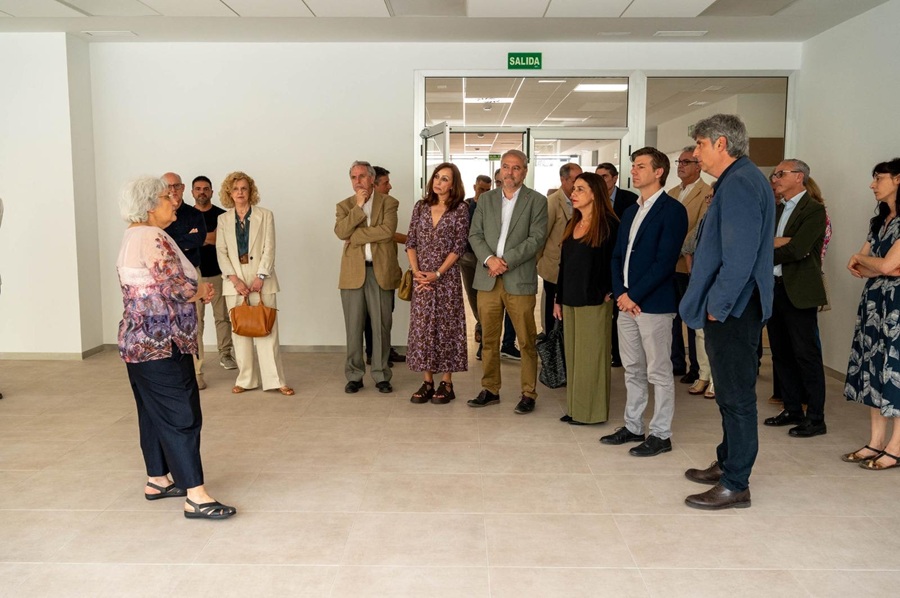
The Institute for Neurosciences (IN), a joint research centre of Miguel Hernández University of Elche (UMH) and the Spanish National Research Council (CSIC),  inaugurated the expansion of its facilities on the Sant Joan d’Alacant campus today. The project has added more than 800 square metres to the Ramón y Cajal building and connected it to the Muhammad Al-Shafra building, improving research spaces and supporting the centre’s future growth. The expansion was carried out by UMH’s Vice-Rectorate for Infrastructure within the framework of the Valencian Community’s 2021–2027 European Regional Development Fund (ERDF) programme, with a total investment of €2,196,309.82.

Photo: Institute for Neurosciences CSIC-UMH

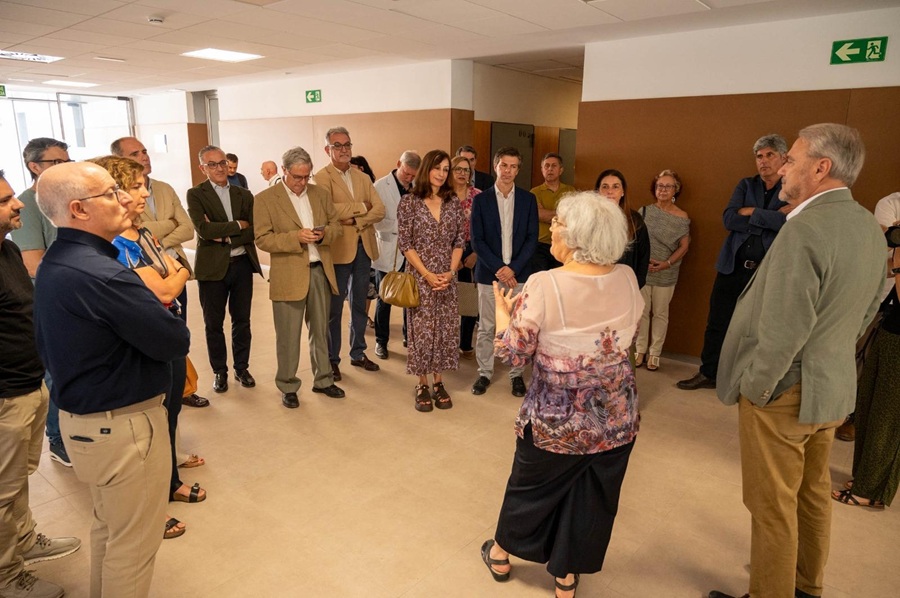
As part of the inauguration, attendees toured the new facilities to gain first-hand insight into the additional spaces and improvements made to the centre. The visit was attended by the Regional Secretary for Universities of the Generalitat Valenciana (Valencian Regional Government), María Esther Gómez Martín, and the Director General for Science and Research, Rafael Sebastián; the Rector of Miguel Hernández University of Elche, Juan José Ruiz Martínez, accompanied by the Vice-Rector for Infrastructure, Pedro Vicente, and members of the University’s Executive Board; the CSIC’s Deputy Vice-President for Institutional Relations, Ana Isabel Criado Contreras, and the CSIC Delegate for the Valencian Community, Juan Fuster; the Director of the UMH-CSIC Institute for Neurosciences, Juana Gallar, and the Institute’s Deputy Director, Guillermina López-Bendito; as well as academic representatives and representatives of the construction company.

The expansion addresses a strategic need of the Institute for Neurosciences, whose scientific growth in recent years has highlighted the need for additional space dedicated to research, collaboration and technological development. The new infrastructure will improve working conditions for the Institute’s staff and facilitate the incorporation of new scientific capabilities in the future.

“This expansion represents a major step forward for the Institute for Neurosciences. Limited space constrains our ability to incorporate new technologies, attract talent and launch new lines of research. Thanks to these new facilities, we will be able to continue growing and further strengthen our scientific excellence”, said Juana Gallar, IN UMH-CSIC Director.

The connection between the Ramón y Cajal and Muhammad Al-Shafra buildings will further enhance the integration of the Institute’s facilities, create new research spaces for the Institute for Neurosciences and foster interaction among researchers, strengthening a highly collaborative scientific environment. Through this project, UMH and CSIC reaffirm their commitment to the development of world-class scientific infrastructure and to cutting-edge research capable of addressing some of the major challenges in the field of neuroscience.

Source: Institute for Neurosciences UMH-CSIC (in.comunicacion@umh.es)

La entrada The Institute for Neurosciences UMH-CSIC inaugurates the expansion of its facilities on the Sant Joan d’Alacant campus se publicó primero en Instituto de Neurociencias de Alicante.

Go to Source

Nuclear density functional theory: Achievements, limits, and perspectives

Image
Nuclear density functional theory: Achievements, limits, and perspectives
Seminar

Nuclear density functional theory: Achievements, limits, and perspectives

Date
Place
Pere Pascual V5.07 Room and via Zoom

Abstract: Nuclear theories span a broad range of refinement from the liquid drop model to highly involved ab-initio theories. In the middle of that scale lie self-consistent models, also known as nuclear Density Functional Theory (DFT). They constitute presently the best compromise between expense and benefit. The talk will give an overview of thepresent status of this class of models.

Nuclear DFT aims at a universal description of nuclei and nuclear matter.  Its structure is deduced from general considerations.  Its parameters require calibration to a well selected set of empirical data.  The goal is to cover as many observables as possible. Nuclear radii and binding energies are the most prominent observables for which the present DFT models work very well.  More demanding are excitation properties and isotopic radius differences. These observables probe the models and stimulate actual developments. The talk will report on both, successes and still unsolved problems.

Go to Source

ICN2 Board of Trustees Reviews Scientific Activity and 2025 Results

The first ordinary meeting of the ICN2 Board of Trustees in 2026 was held on Thursday, 4 June. The session also served to advance the update of new management and governance measures.

Go to Source

XVII Reunión Científica de la Sociedad Española de Astronomía

Image
XVII Reunión Científica de la Sociedad Española de Astronomía
Conference

XVII Reunión Científica de la Sociedad Española de Astronomía

Date
Place
Palacio Ferial y de Congresos de Tarragona

La Sociedad Española de Astronomía se complace en anunciar la celebración de su XVII Reunión Científica, que tendrá lugar en la ciudad de Tarragona del 13 al 17 de julio de 2026. Este encuentro bienal constituye el foro más importante para el intercambio y la difusión de los avances en la investigación astronómica en nuestro país, así como una oportunidad única para reforzar la colaboración entre instituciones y profesionales tanto a nivel nacional como internacional.

El encuentro está dirigido a profesionales, estudiantes de máster, grado y posgrado, así como a astrónomos aficionados, cuya contribución resulta esencial para el desarrollo de nuestra disciplina.

Tarragona, una ciudad con una larga tradición científica y cultural, ofrecerá un marco excepcional para la discusión, el debate y la creación de nuevas colaboraciones que impulsarán la astronomía en el siglo XXI.


Comité Organizador Científico (SOC):

CHAIR: José M. Vílchez (Instituto de Astrofísica de Andalucía – Consejo Superior de Investigaciones Científicas)

CO-CHAIR: Fernando Buitrago (Universidad de Valladolid – Laboratory for Disruptive Interdisciplinary Science, Instituto de Astrofísica e Ciências do Espaço)

  • Juan Antonio Fernández Ontiveros (Centro de Estudios de Física del Cosmos de Aragón)
  • Mateo Fernández Torreiro (Laboratoire de Physique Subatomique et de Cosmologie – Centre National de la Recherche Scientifique, Universidade da Coruña)
  • Francisco González Galindo (Instituto de Astrofísica de Andalucía – Consejo Superior de Investigaciones Científicas)
  • Laura Hermosa Muñoz (Centro de Astrobiología – Consejo Superior de Investigaciones Científicas — Instituto Nacional de Técnica Aeroespacial)
  • Maria Jesús Martínez González (Instituto de Astrofísica de Canarias)
  • Mar Mezcua (Instituto de Ciencias del Espacio – Consejo Superior de Investigaciones Científicas)
  • Mercè Romero-Gómez (Institut de Ciències del Cosmos-Universitat de Barcelona, Institut d’Estudis Espacials de Catalunya)
  • Ana Ulla Miguel (Universidade de Vigo – Departamento de Física Aplicada, Centro de Investigación Mariña)


Comité Organizador Local (LOC):

CHAIR: Mar Mezcua (Instituto de Ciencias del Espacio – Consejo Superior de Investigaciones Científicas)

CO-CHAIR: Mercè Romero-Gómez (Institut de Ciències del Cosmos-Universitat de Barcelona, Institut d’Estudis Espacials de Catalunya)

  • Lola Balaguer Núñez (Institut d’Estudis Espacials de Catalunya, Institut de Ciències del Cosmos-Universitat de Barcelona)
  • Diego Blas (Institut de Física d’Altes Energies, Institució Catalana de Recerca i Estudis Avançats)
  • Gemma Busquets (Institut de Ciències del Cosmos-Universitat de Barcelona, Institut d’Estudis Espacials de Catalunya)
  • Eugenio Coccia (Institut de Física d’Altes Energies)
  • Francesco Coti Zelati (Instituto de Ciencias del Espacio – Consejo Superior de Investigaciones Científicas, Institut d’Estudis Espacials de Catalunya)
  • Martin Crocce (Instituto de Ciencias del Espacio – Consejo Superior de Investigaciones Científicas, Institut d’Estudis Espacials de Catalunya)
  • Barbara De Marco (Universitat Politècnica de Catalunya)
  • Francesca Figueras (Institut de Ciències del Cosmos-Universitat de Barcelona, Institut d’Estudis Espacials de Catalunya)
  • Andreu Font (Institut de Física d’Altes Energies, Institució Catalana de Recerca i Estudis Avançats )
  • Lluis Font (Universitat Autònoma de Barcelona, Institut d’Estudis Espacials de Catalunya)
  • Pablo Fosalba (Instituto de Ciencias del Espacio – Consejo Superior de Investigaciones Científicas, Institut d’Estudis Espacials de Catalunya)
  • Lluis Galbany (Instituto de Ciencias del Espacio – Consejo Superior de Investigaciones Científicas, Institut d’Estudis Espacials de Catalunya)
  • Jordi Jose (Universitat Politècnica de Catalunya, Institut d’Estudis Espacials de Catalunya)
  • Ciska Kemper (Instituto de Ciencias del Espacio – Consejo Superior de Investigaciones Científicas, Institució Catalana de Recerca i Estudis Avançats, Institut d’Estudis Espacials de Catalunya)
  • Xavier Luri (Institut d’Estudis Espacials de Catalunya, Institut de Ciències del Cosmos-Universitat de Barcelona)
  • Miquel Nofrarias (Instituto de Ciencias del Espacio – Consejo Superior de Investigaciones Científicas, Institut d’Estudis Espacials de Catalunya)
  • Nanda Rea (Instituto de Ciencias del Espacio – Consejo Superior de Investigaciones Científicas, Institut d’Estudis Espacials de Catalunya)
  • Ignasi Ribas (Instituto de Ciencias del Espacio – Consejo Superior de Investigaciones Científicas, Institut d’Estudis Espacials de Catalunya)
  • Alvaro Sanchez-Monge (Instituto de Ciencias del Espacio – Consejo Superior de Investigaciones Científicas, Institut d’Estudis Espacials de Catalunya)
  • Aldo Serenelli (Instituto de Ciencias del Espacio – Consejo Superior de Investigaciones Científicas, Institut d’Estudis Espacials de Catalunya)
  • Carlos Sopuerta (Instituto de Ciencias del Espacio – Consejo Superior de Investigaciones Científicas, Institut d’Estudis Espacials de Catalunya)
  • Santiago Torres Gil (Universitat Politècnica de Catalunya, Institut d’Estudis Espacials de Catalunya)
  • Licia Verde (Institut de Ciències del Cosmos-Universitat de Barcelona, Institució Catalana de Recerca i Estudis Avançats )
  • Daniele Viganò (Instituto de Ciencias del Espacio – Consejo Superior de Investigaciones Científicas, Institut d’Estudis Espacials de Catalunya)

Go to Source

A proposal from the IAA-CSIC brings AI from astrophysics to medicine and reaches the final of CSIC ACTIVA-T

José María García Morillo and Cristian Pozo González, predoctoral researchers from the VHEGA group at the Institute of Astrophysics of Andalusia (IAA-CSIC), have been selected as finalists for the CSIC ACTIVA-T 2026 program. On June 12, they will present “AstroPET” in Santiago de Compostela, a proposal that transfers artificial intelligence techniques developed for astrophysics to the field of medical physics.

Go to Source

ICIQ’s success at Expoquimia: strengthening ties with the chemical sector

The Institute of Chemical Research of Catalonia (ICIQ) has concluded its participation in the Expoquimia 2026 trade fair, held last week in Barcelona, with highly positive results. Over four intensive days, the institute positioned itself as a key meeting point connecting cutting-edge science with the industry, society, and talent, reaffirming its role as a driving force behind the energy transition and the circular economy.

ICIQ’s presence at the fair exceeded initial expectations, both in terms of forging synergies with companies in the sector and the widespread interest generated by its technological solutions. The ICIQ stand at the Expoquimia 2026 fair was conceived as an open space to showcase the centre’s research and technology transfer to industry, which attracted numerous companies interested in collaborating with ICIQ to drive their innovation.

Dr. Fernando Bravo, Knowledge and Technology Transfer (KTT) Manager at ICIQ, expressed great satisfaction at the close of the event: “We are thrilled because we have comfortably exceeded all the goals we set for this edition of Expoquimia. It has been a resounding success. We have proven that we can successfully transform laboratory research into market solutions with high industrial value.”

Strong Institutional Support

Throughout the four-day event, the ICIQ booth welcomed top-tier institutional visitors. On the opening day, Miquel Sàmper, Minister of Business and Labour of the Government of Catalonia, accompanied by Carles Navarro, President of Expoquimia, learned firsthand about the institute’s pilot plant project for carbon capture and utilization (CCU) aimed at industrial decarbonization.

Minister of Research and Universities of the Government of Catalonia, Núria Montserrat, also gave her support to the ICIQ, and took an interest in both the research currently being carried out and the industrial transfer and collaboration projects.

Additionally, the booth received several high-profile figures interested in the potential of ICIQ’s research, including Andreu Mas-Colell, President of the Barcelona Institute of Science and Technology (BIST); Lucia López, Delegate of the Governmentof Catalonia in Tarragona; Elisabet Romero, Sub-delegate of the Government in Tarragona; Maria Mas, Managing Director of the AEQT; Andreu Martín, Member of Parliament; and a delegation of directors from ACCIÓ’s International Offices.


Scientific Debate and Innovation

ICIQ maintained a highly active debate agenda through several panel discussions, where researchers and experts shared forward-looking insights on strategic issues:

Sustainability and Energy: Discussions focused on renewable energies, industrial decarbonization, and the current state of sustainable polymers.

Health and Technology: Analyzing the chemical revolution within the healthcare sector and the role of digitalization (artificial intelligence, computing, and automation) in future research, highlighting tools like the ioChem-BD platform and ICIQ’s institutional research digitalization project.

Talent: A live broadcast from the booth featured a special episode of Tarragona Ràdio’s ‘Blau de Prússia’ podcast, discussing international talent acquisition and ICIQ’s IVORI program.

Outreach: Bringing science closer to the general public in a fun way through the SUPERVAL card game, which focuses on the carbon and nitrogen cycles.


The institute’s capacity for technology transfer was also on full display. Dr. Fernando Bravo participated in ACCIÓ’s Innovation Day with an elevator pitch presentation. Furthermore, Prof. Emilio Palomares, Director of ICIQ, spoke at the Smart Chemistry Ágora, and Dr. Júlia Viladoms, Head of the Industrial Decarbonization Unit, shared her expertise at ACCIÓ’s Innovation Hub.

With these excellent results, ICIQ concludes its participation in Expoquimia 2026, consolidating existing ties and opening new pathways for collaboration to translate scientific knowledge into a real-world impact on society.

La entrada ICIQ’s success at Expoquimia: strengthening ties with the chemical sector se publicó primero en ICIQ.

Go to Source

ICCUB researchers participate in the World’s Leading Conference on computing for particle and nuclear physics in Thailand

Image
International Conference on Computing in High Energy and Nuclear Physics (CHEP)
English

ICCUB researchers Carla Marin Benito and Paloma Laguarta attended last week the International Conference on Computing in High Energy and Nuclear Physics (CHEP), the world’s leading conference on computing for particle, nuclear, and astroparticle physics, held this year in Thailand. The event brought together more than 500 international participants and had significant national impact, including coverage in local media and the presence of Her Royal Highness Princess Maha Chakri Sirindhorn at the opening ceremony.

of Her Royal Highness Princess Maha Chakri Sirindhorn at the opening ceremony of CHEP 2026.
Her Royal Highness Princess Maha Chakri Sirindhorn at the opening ceremony of CHEP 2026.


Marin Benito was chair of the scientific track “Offline Data Processing,” one of the main areas of the event, focused on the systems and methodologies used to process and analyse data from large-scale scientific infrastructures. In addition, she was responsible for presenting the summary of this track during the final session of the conference, highlighting key developments and challenges discussed throughout the week.

She also attended CHEP as a representative of the LHCb experiment at CERN, where she currently serves as Vice-Coordinator for Software and Computing, a central role in the development and coordination of the tools required to process the vast amounts of data generated by the detector.

The conference also featured the participation of ICCUB PhD researcher Paloma Laguarta, who presented a project on the use of autoencoders for real-time event selection. Her work explores machine learning techniques to improve trigger systems in particle physics experiments, enabling more efficient identification of relevant events for further analysis. The contribution was very well received by the scientific community.


ICCUB researcher Paloma Laguarta presents a project on the use of autoencoders for real-time event selection at the LHCb experiment.

CHEP is the leading international forum for experts in scientific computing applied to fundamental physics, covering topics such as large-scale data processing, distributed infrastructures, artificial intelligence, and software development for major international collaborations. ICCUB’s participation in this conference highlights the institute’s active role in a strategic field that is essential for the future of physics research.


More information about the conference: https://indico.cern.ch/event/1471803/overview

News Type
Date
SEO Title
ICCUB researchers participate in the World’s Leading Conference on computing for particle and nuclear physics in Thailand

Go to Source

Sidebar